
If A Wolf Spider Sprints Across Your Garage Floor, Here’s The Night Shift It’s Working Against Pests You Actually Fear
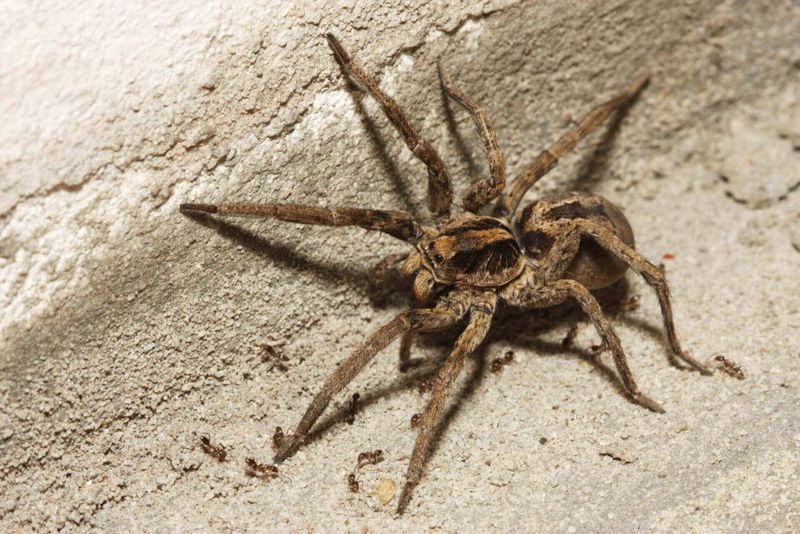
You glance down and a big, hairy spider rockets across your garage floor and disappears behind a shelf. Before you grab a shoe, it helps to know what you are actually looking at and what, if anything, it is doing for you.
Wolf spiders have a reputation as garage guardians that hunt the pests you really worry about, but that story is more complicated than the headlines suggest. Getting the identification right and understanding what one spider can and cannot do will help you make a smarter call than simply sweeping it out or leaving it in charge.
That Fast, Hairy Spider May Not Be a Wolf Spider
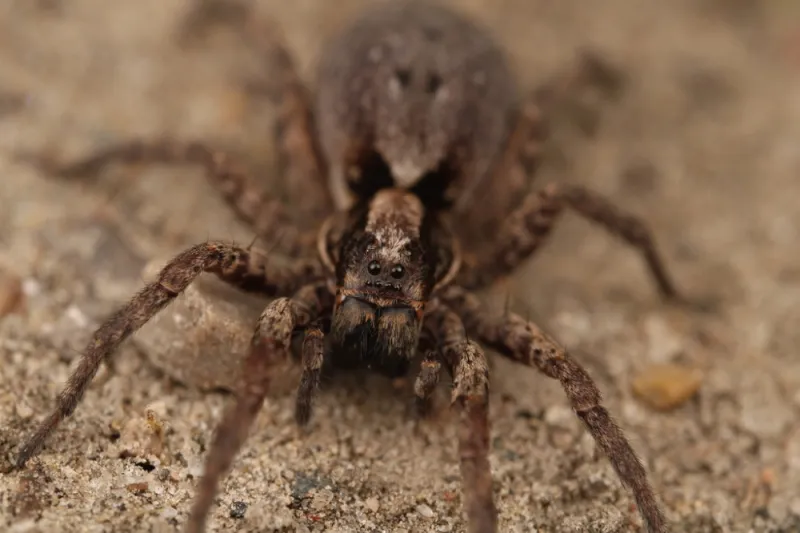
Speed and hairiness are not a reliable ID card. Many large, fast spiders that startle homeowners in garages turn out to be house spiders or other wandering species, not wolf spiders at all.
The Burke Museum notes that true North American wolf spiders are primarily outdoor animals, and that many large indoor spiders people label as wolf spiders belong to entirely different groups.
“Wolf spider” is itself a family-level common name covering hundreds of species in the family Lycosidae. Size, coloring, habitat, and behavior vary considerably across that family, so there is no single look that pins the label down.
A quick glimpse of a fleeing spider rarely gives you enough detail to be certain.
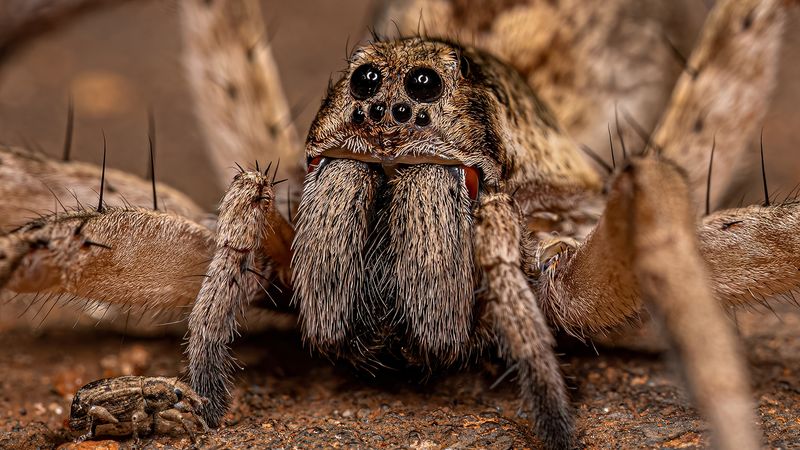
The most useful physical clue is eye arrangement. University of Minnesota Extension describes the wolf spider’s eyes as four small eyes in a front row, a larger middle pair, and a rear pair positioned on top of the head, giving the spider an unusually wide field of view.
No other common garage spider shares that exact pattern.
Getting close enough to count eye rows on a running spider, though, is nearly impossible without a container and a steady hand. Oregon State University Extension recommends slowing down identification and using multiple features together rather than relying on a single trait like size or color.
All of the advice that follows assumes you have a correctly identified wolf spider. If you cannot confirm the ID, treat the spider as an unknown species and apply the same cautious, practical response: do not handle it bare-handed, and address the garage conditions that attracted it in the first place.
The Night Shift Means Active Hunting, Not Prey-Catching Webs
When a wolf spider crosses your garage floor after dark, it is not wandering aimlessly. Clemson University’s Home and Garden Information Center explains that wolf spiders do not build the sticky, prey-catching webs you associate with orb weavers or cellar spiders.
Instead, they roam on the ground and chase down walking or resting prey directly.
Possible targets include houseflies, crickets, cockroaches, and other small arthropods that share the garage floor. Diet shifts depending on the species of wolf spider, the habitat it is in, and what prey happens to be available on a given night.
A spider that eats crickets one week may take a small roach the next, simply because that is what crossed its path.
That opportunistic style is worth understanding clearly. The spider is not following a programmed patrol route or targeting specific pest species out of preference.
It moves, detects prey through vibration and its wide-field vision, and strikes when the opportunity arises. Nighttime activity is a behavioral description, not evidence of a measured work schedule.
University of Minnesota Extension describes wolf spiders as beneficial predators, and that label is fair in a limited sense. An occasional wolf spider hunting in your garage may take a few insects that would otherwise breed or multiply.
That is a genuine, if modest, contribution.
Where the story breaks down is in the leap from “can eat a cockroach” to “will control your cockroach problem.” Diet flexibility does not equal pest management. The spider hunts for its own survival, not yours, and a single predator operating on its own schedule cannot reliably reduce an established insect population in a garage.
Think of it as an opportunistic guest worker, not a hired exterminator.
Why the 100-Foot Security Detail Does Not Hold Up
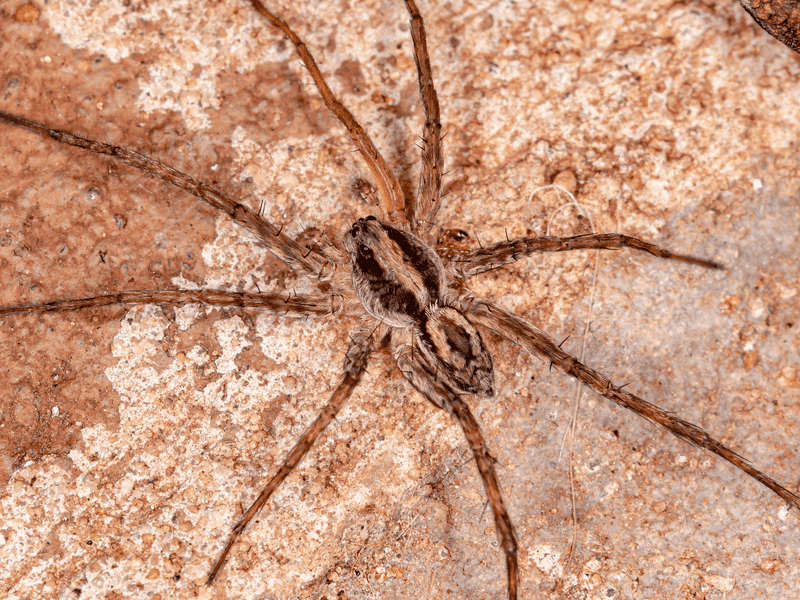
Online articles about wolf spiders often claim the spider patrols 100 feet every night, framing it as a tireless security guard working your garage perimeter. No authoritative study establishes that distance as a general wolf-spider behavior.
Publishing it as fact misrepresents what the research actually shows about how far individual spiders move in a given period.
A related claim holds that wolf spiders reliably hunt brown recluse spiders, making them a natural defense against the pest homeowners fear most. That framing is also unsupported.
Wolf spiders eat varied prey, and while one might occasionally encounter and eat another spider, no evidence demonstrates that wolf spiders meaningfully suppress brown recluse populations in homes or garages.
The distinction between an opportunistic predator and an intentional security system matters practically. A study on spider scavenging behavior found that many spider species can scavenge dead prey under laboratory conditions, but the author explicitly cautions against overgeneralizing feeding observations from controlled settings to real-world pest control outcomes.
Agricultural research does sometimes show that predatory arthropods reduce pest pressure in crop systems. A meta-analysis of predator effects across crop types found meaningful pest suppression at the field scale, but that finding applies to managed agricultural environments with many predators operating across large areas, not to a single spider in a suburban garage.
For actual brown recluse management, published integrated pest management guidance recommends monitoring with sticky traps, sealing entry points, reducing clutter and harborage, and targeted professional treatment when needed. Preserving or introducing wolf spiders does not appear in that guidance as a recommended control strategy.
An opportunistic predator that occasionally catches a pest is genuinely useful in a limited way. Treating it as a dependable security system, though, sets an expectation the spider cannot meet and may delay the exclusion and sanitation steps that actually reduce pest pressure.
The Spider You Fear Needs Its Own Identification Rules
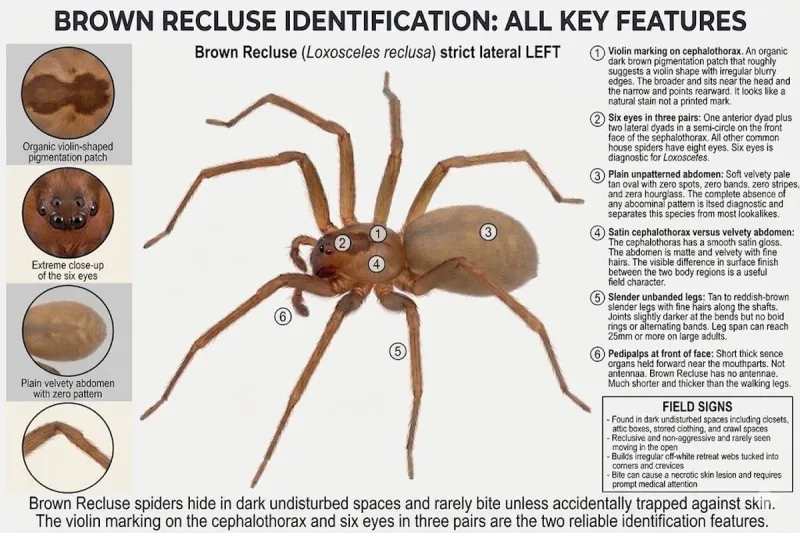
Brown recluse concerns are legitimate in the right geography, but they are also one of the most over-diagnosed spider fears in the country. Geography is the first filter worth applying.
CDC and NIOSH guidance on venomous spiders places the brown recluse primarily in the south-central United States and parts of the broader South, covering states like Missouri, Kansas, Oklahoma, Texas, Arkansas, and neighboring areas. If you live well outside that range, a suspected brown recluse identification deserves real skepticism before you act on it.
The violin-shaped mark on the spider’s back gets most of the attention, but relying on it alone leads to frequent misidentification. Many spider species carry similar markings.
More reliable identification combines geography with a specific eye arrangement: six eyes in three pairs arranged in a semicircle, rather than the eight eyes most spiders have. Overall body shape and size matter too, and expert confirmation from a local extension office or pest professional is the most dependable route when the stakes feel high.
CDC guidance on skin conditions also notes that many suspected spider bites turn out to have other causes entirely, including bacterial skin infections, which can produce lesions that look similar to what people associate with recluse bites. A painful or blistering wound does not confirm a spider was involved, especially if no one saw a spider biting.
Worsening pain, expanding redness, blistering, tissue changes, or any systemic symptoms like fever or chills call for medical evaluation, not a home diagnosis. A doctor can treat the wound and order appropriate tests regardless of whether a spider was the cause.
If you find a spider you genuinely cannot identify and you live in an established brown recluse range, capture it carefully in a sealed container and bring it to your county extension office. That step costs nothing and produces an actual answer instead of a guess.
Leaving It Alone Is Reasonable—Handling It Is Optional
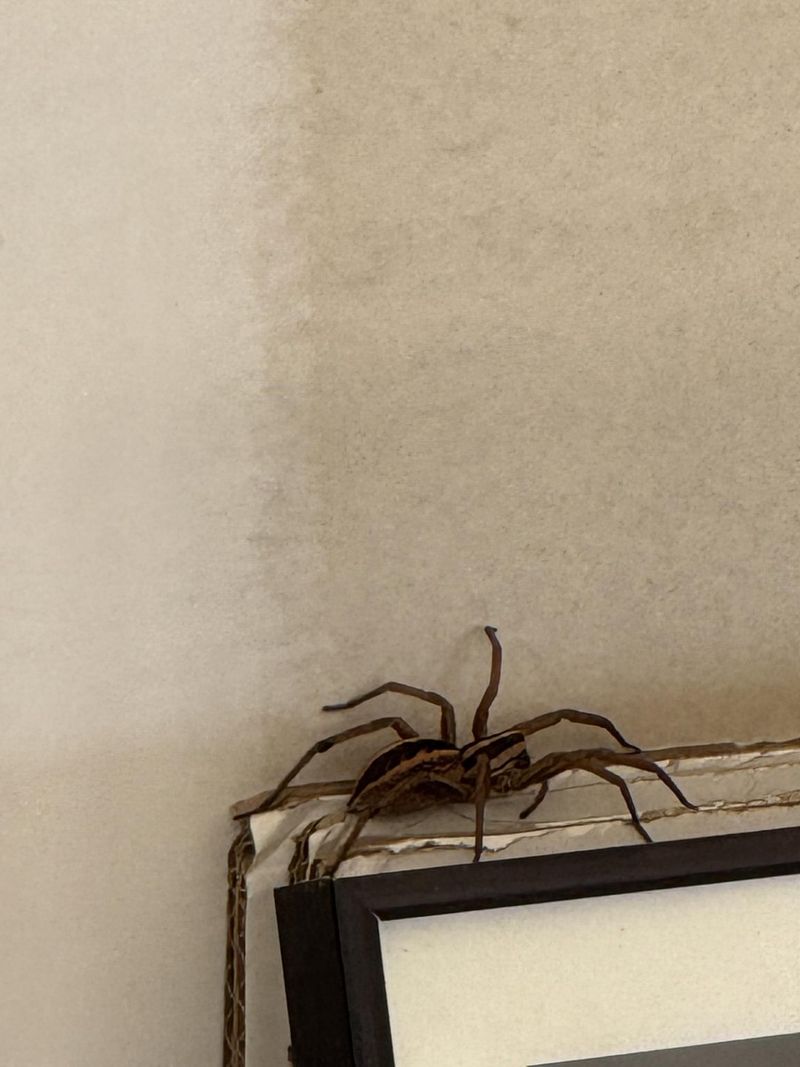
Calm is the right starting point. University of Minnesota Extension considers wolf spiders beneficial and does not classify them as dangerous to people.
If you have correctly identified one and it is not somewhere it will be repeatedly disturbed, leaving it alone is a perfectly reasonable choice.
That said, “low-risk” is not the same as “harmless.” Penn State Extension notes that wolf spiders may bite when handled, trapped against skin, or otherwise threatened. Reported reactions are typically localized pain, redness, and swelling at the bite site, which resolve on their own in most cases.
The risk is real but modest for a healthy adult who is not allergic.
If you want the spider out of the garage, the simplest approach is capture and release. Place a container over the spider, slide a stiff piece of cardboard underneath, and carry it outside away from the foundation.
Clemson University’s guidance also supports removing an unwanted spider with a vacuum, which is faster when the spider is in a corner or along a baseboard.
Wear gloves any time you are reaching into boxes, moving stored items, or working in corners where spiders may be hiding. That habit protects you from any spider species, not just wolf spiders, and costs nothing beyond remembering to put the gloves on before you start digging through the shelf.
One practical boundary: keeping one wolf spider around does not substitute for addressing whatever is drawing insects and spiders into the garage. The spider is a visitor responding to available prey, not a solution to the conditions that created the prey in the first place.
A Pest-Free Garage Depends on the Garage, Not One Spider
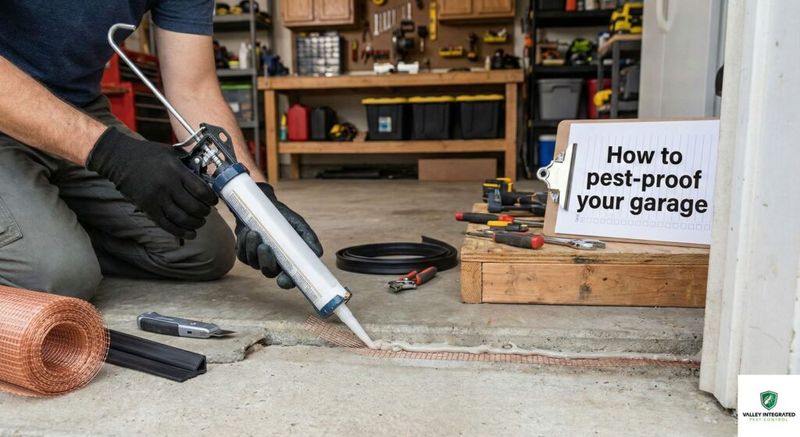
Recurring spiders and insects in a garage are almost always a sign that the garage itself is offering something they need: entry points, shelter, moisture, food, or all four. Fixing those conditions is more dependable than hoping a single predator manages the problem on your behalf.
Colorado State University Extension’s guidance on spiders in the home prioritizes sealing cracks and gaps around doors, windows, pipes, and utility penetrations. Replacing worn door sweeps and repairing damaged screens closes the most common entry routes for both insects and the spiders that follow them inside.
Moving firewood, lumber, and debris away from the garage exterior removes harborage that shelters pests right next to your entry points.
Inside the garage, clutter is the biggest friend a spider has. Cardboard boxes stacked on the floor, rarely moved equipment, and piles of fabric or paper create exactly the dark, undisturbed retreats that spiders and insects prefer.
Switching to sealed plastic bins and keeping items off the floor makes the environment noticeably less hospitable.
Moisture control matters too. Insects concentrate where humidity is high or where standing water is available.
Fixing leaks, improving ventilation, and keeping drains clear reduces the insect population that attracts spiders in the first place.
Sticky traps placed along walls and in corners are a practical diagnostic tool. They reveal whether you have a recurring spider or insect problem, identify which areas have the highest activity, and catch individuals without requiring any chemicals.
Check and replace them every few weeks.
For a suspected brown recluse problem, published integrated pest management recommendations call for intensive monitoring with sticky traps, thorough decluttering, exclusion of entry points, and targeted professional treatment when trapping confirms an infestation. Broad pesticide spraying without a confirmed identification and a targeted plan is a poor first response; it can kill non-target predators and does nothing about the entry points and harborage driving the problem.
UC IPM’s spider guidance reinforces that habitat modification and exclusion consistently outperform chemical-only approaches for long-term results.
Read the Sprint as a Clue, Not a Pest-Control Plan
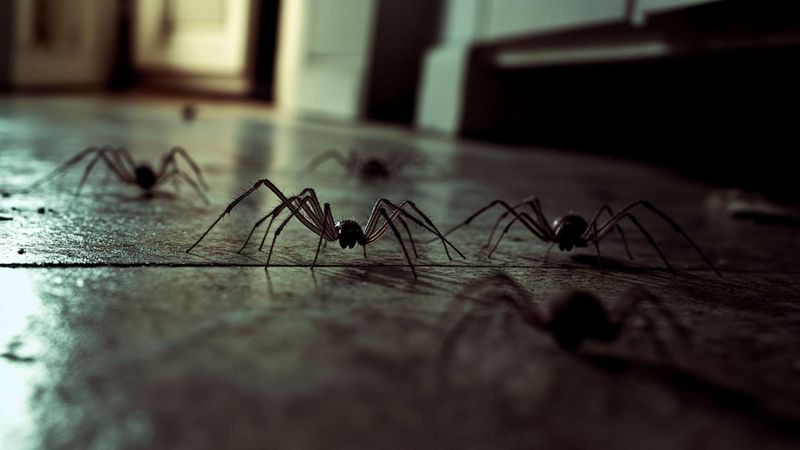
A wolf spider bolting across your garage floor is telling you something useful, just not what the popular story claims. It is not clocking in for a measured 100-foot patrol or positioning itself between you and a brown recluse infestation.
What it is doing is hunting opportunistically in a space that has enough insects to make the trip worthwhile.
A correctly identified wolf spider is generally low-risk and may be left alone or moved outdoors without drama. University of Minnesota Extension considers them beneficial, and that is fair as far as it goes.
What it does not mean is that one spider substitutes for sealing gaps, reducing clutter, or calling a professional when monitoring confirms a real infestation.
If the spider keeps coming back, or if you are seeing multiple spiders regularly, treat that pattern as a signal about your garage rather than a sign you have good natural pest control working. Colorado State University Extension and brown recluse IPM research both point the same direction: identification, exclusion, sanitation, monitoring, and targeted professional help when the evidence calls for it.
The garage that gives insects nowhere to hide and no easy way inside is a far better pest-control plan than any spider working alone. Fix the conditions, and you reduce the need for both the pests and the predators chasing them.