
If Birds Keep Crashing Into Your Windows At Night, Here’s The Free Switch That Turns A Death Trap Back Into Glass
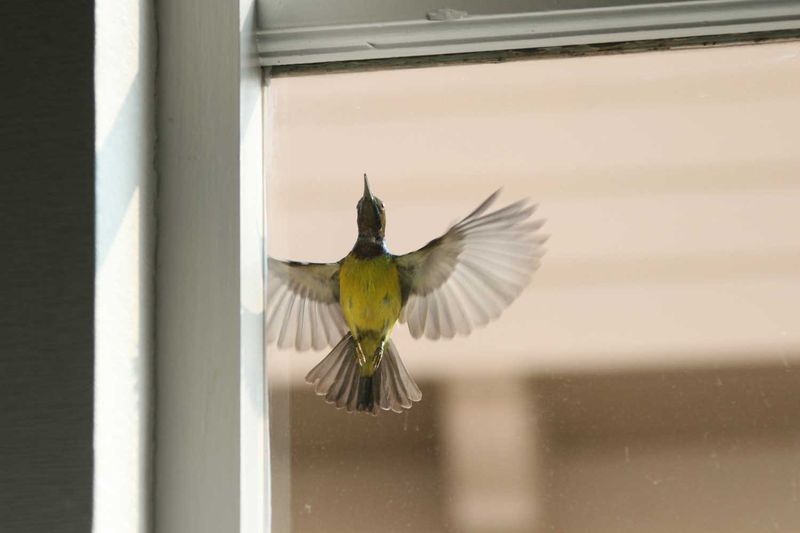
Finding a bird on the ground beneath your window is unsettling, especially when you are not sure what happened or when. Glass kills somewhere between hundreds of millions and more than one billion birds in the United States every year, and a surprising share of those deaths happen at ordinary homes rather than skyscrapers.
The good news is that one free action you can take tonight reduces a real nighttime risk pathway, and understanding exactly how it works will help you protect birds far more effectively than a single switch ever could.
A bird noticed in the morning may have hit glass hours earlier
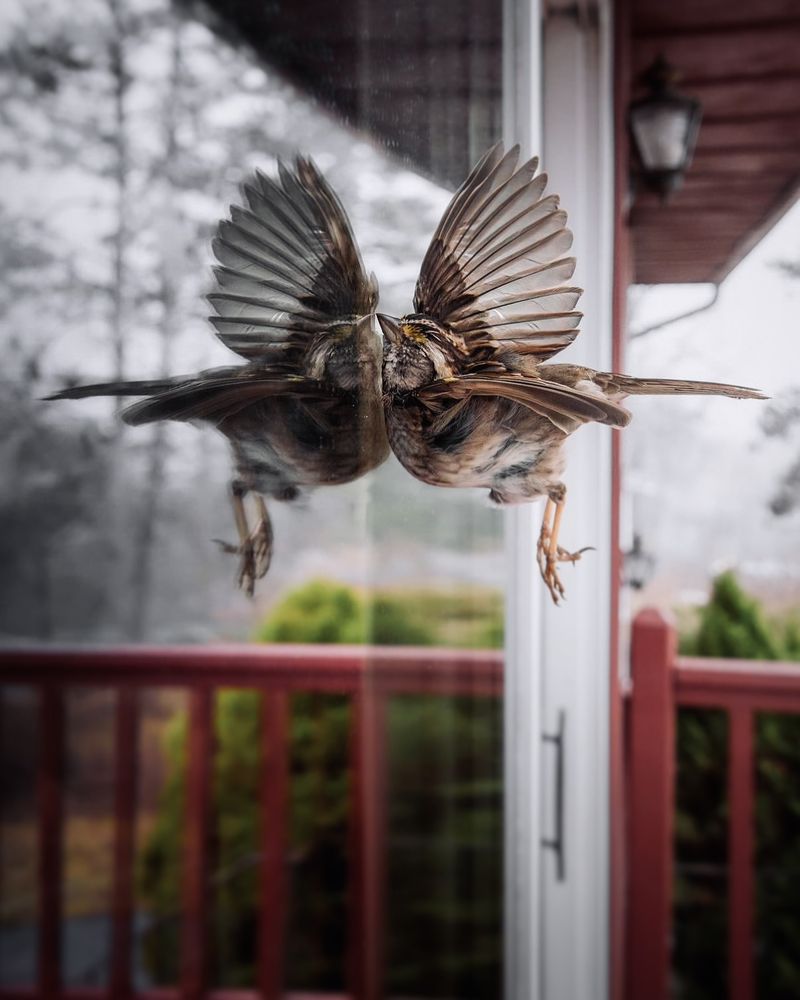
Finding a bird beneath your window after dark or first thing in the morning does not tell you when the collision actually happened. Many residential strikes occur during daylight hours, when a bird sees reflected sky, trees, or vegetation in the glass and flies straight toward what looks like open space.
The window does not warn them, because birds generally do not perceive transparent or reflective glass as a solid barrier.
A bird drawn toward a lighted window overnight might also make it past the glass and collide after dawn, when reflections take over as the dominant hazard. So the morning discovery and the nighttime light may both be part of the same chain of events, even if the impact itself happened in full sun.
Homes and low-rise buildings are not a minor footnote to this problem. Research on bird-window collisions consistently shows that residential windows account for a large share of annual deaths, meaning backyard homeowners can make a meaningful difference.
Exact national totals vary by study and method, so treat any single number as an estimate rather than a settled figure.
Correcting this premise matters before any solution is offered. If you assume the problem is purely a nighttime one and flip a single light switch, you may feel reassured while daytime reflections continue to pose a risk.
The free lighting change described below reduces one real pathway. Knowing where it stops working is what allows you to go further.
Why unnecessary light can increase nighttime risk
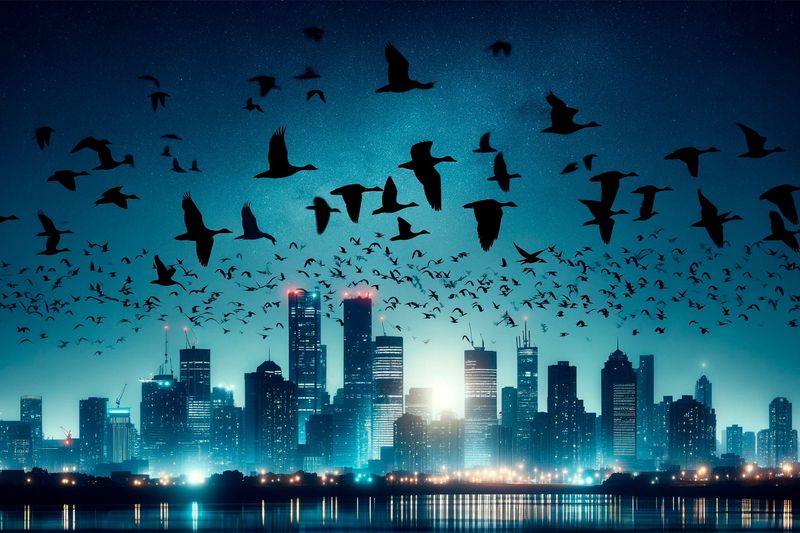
Night-migrating birds navigate partly by natural light cues, and artificial light can pull them off course. USGS research on artificial light at night shows that lit environments can confuse broad-scale habitat use for migrating birds, drawing them toward buildings and away from the routes they would otherwise follow.
The effect is stronger during fog, rain, or low cloud cover, when birds fly lower and have fewer natural reference points to rely on.
Once a bird is circling a lit building, the glass becomes the next hazard. Bright interior light shining through a window can make the window appear as open, illuminated space rather than a solid surface.
That combination, attraction toward the light and then an inability to recognize the glass, is what links unnecessary nighttime lighting directly to collision risk.
The clearest large-scale evidence comes from Chicago’s McCormick Place convention center, where a 21-year study found that reducing lighted window area was associated with approximately a 60% reduction in bird mortality. That peer-reviewed analysis is notable building-scale evidence, though the percentages reflect conditions at one large structure and are not a guaranteed result for every home.
A related analysis, published separately in peer-reviewed literature, reported a 59% reduction in mortality when half the lights were turned off during migration periods.
Earlier USGS work also examined how low-rise, downward-cast artificial lights affect nocturnally migrating land birds, finding measurable effects even from fixtures not aimed at the sky. The takeaway for homeowners is practical: light you do not need at night is doing active harm to migrating birds, and reducing it costs nothing.
Start tonight by switching off what you do not need
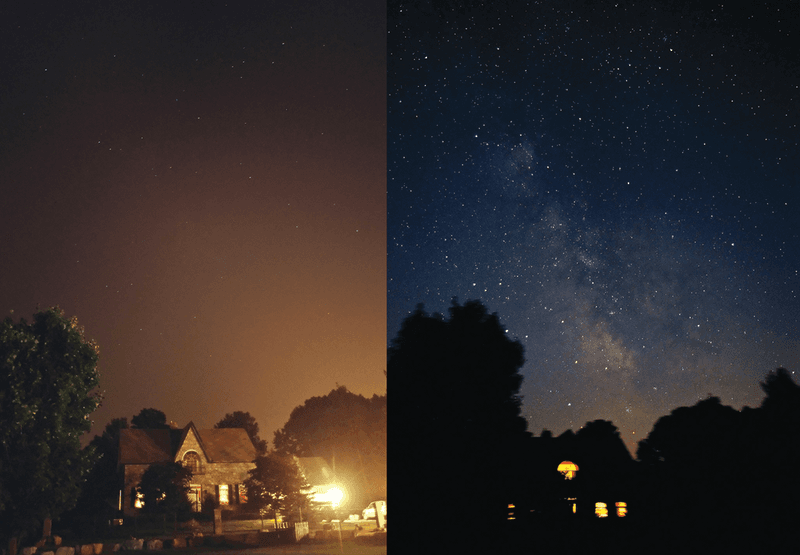
The no-cost action is straightforward: go through your home tonight and turn off porch lights, landscape spotlights, flood lights, decorative string lights, and any indoor lights in rooms you are not using. Audubon’s Lights Out program asks building owners and homeowners to do exactly this during migration season, and the logic applies whether you live near a flyway corridor or simply have a window facing trees.
When indoor lights must stay on, close your curtains, blinds, or shades before dark. Interior light shining outward through uncovered glass is part of what makes a window look like open space to a bird passing overhead.
Closing the shades keeps that glow contained and reduces the window’s visibility as an attractant.
Outdoor fixtures that cannot be turned off entirely should be aimed downward rather than upward or horizontally toward windows and the sky. U.S.
Fish and Wildlife Service guidance on low-cost collision reduction recommends shielded, downward-directed fixtures as a safer alternative to unshielded floodlights. Timers and motion sensors let you keep safety lighting functional without leaving it running all night when no one is outside.
One clarification that matters: this guidance is not asking you to remove security lighting or leave an entry dark. Audubon’s collision-prevention guidance and federal recommendations both draw the same line, reduce unnecessary lighting, and manage the rest with better controls rather than eliminating it.
A motion-activated, downward-facing fixture at your front door protects both your safety and the birds overhead. The goal is to stop light from reaching the sky and shining through glass, not to leave your home in darkness.
Use migration forecasts to choose the most useful nights
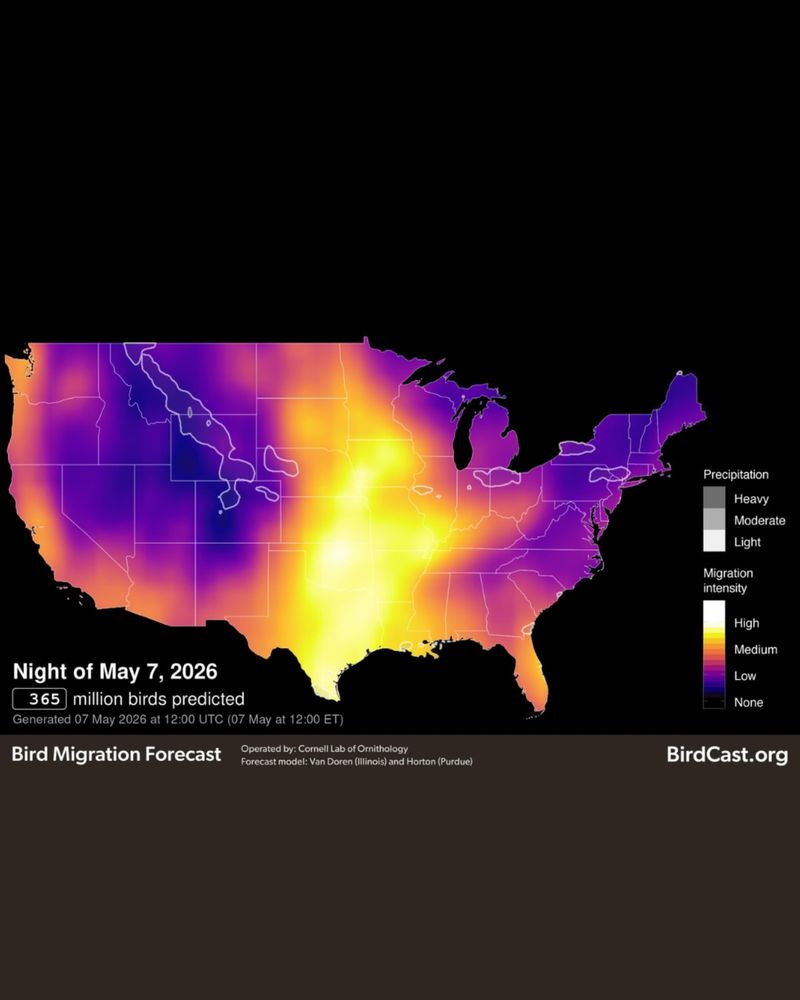
Switching off unnecessary lights every single night is ideal, but the nights when it matters most are the ones when millions of birds are actively moving overhead. Spring migration runs roughly from March through May, and fall migration spans August through November.
Peak movement within those windows can shift week to week depending on weather, wind direction, and temperature.
BirdCast, a project supported by Cornell Lab of Ornithology and Colorado State University, translates weather radar data into real-time migration forecasts. Cornell’s bird-friendly action resources point homeowners toward these forecasts as a way to identify high-flight nights when extra care with lighting makes the biggest difference.
You can check the forecast for your region before bed and decide whether that night warrants turning off the porch light you might otherwise leave on.
BirdCast does not predict whether a bird will hit your specific window. What it tells you is whether large numbers of migrants are moving through your area on a given night, which is a reasonable signal that unnecessary lighting poses a higher risk than usual.
Think of it as a weather forecast for bird activity: you still make your own choices, but you have better information to guide them.
Researchers have also explored using real-time bird data to adjust artificial lighting automatically. Cornell work on photometrics and AI-adjusted streetlights shows that data-driven lighting control is a growing field, though for most homeowners the practical version is simply checking BirdCast and flipping a switch before a heavy migration night.
Make recurring collision windows visible from the outside
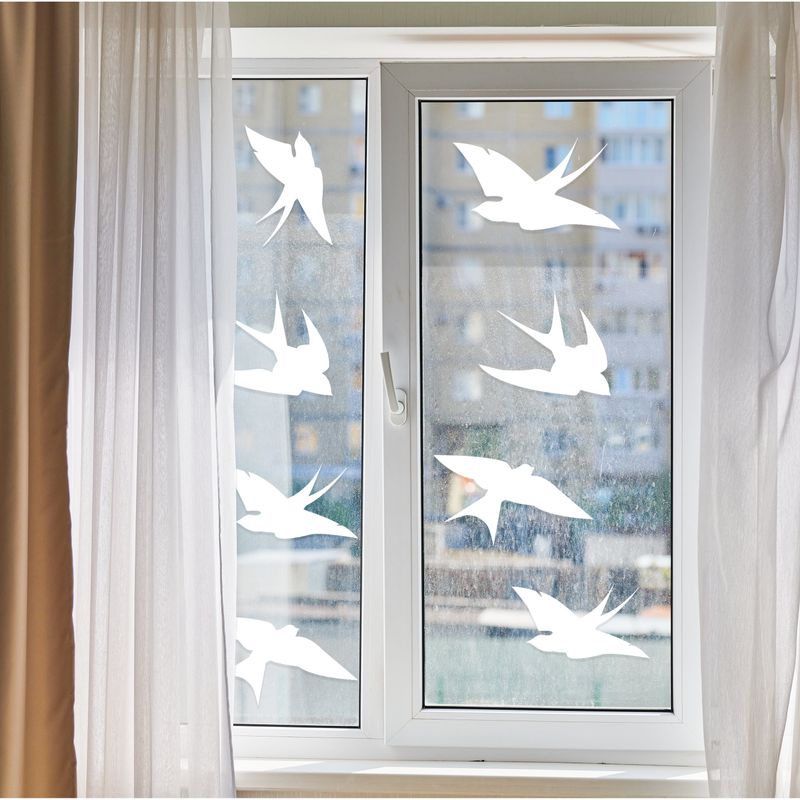
Turning off lights at night addresses one pathway, but if strikes keep happening, or if they occur during the day, the glass itself needs to be treated. Darkness does not remove the reflections of sky, trees, and vegetation that make windows invisible to birds in full sunlight.
For those situations, the fix has to go on the outside of the glass.
Full external insect screens are one of the most practical options because they reduce reflections and soften any impact. American Bird Conservancy’s glass and birds guidance highlights screens as an accessible solution for homeowners, provided the screen covers the window surface rather than leaving large untreated sections open at the edges.
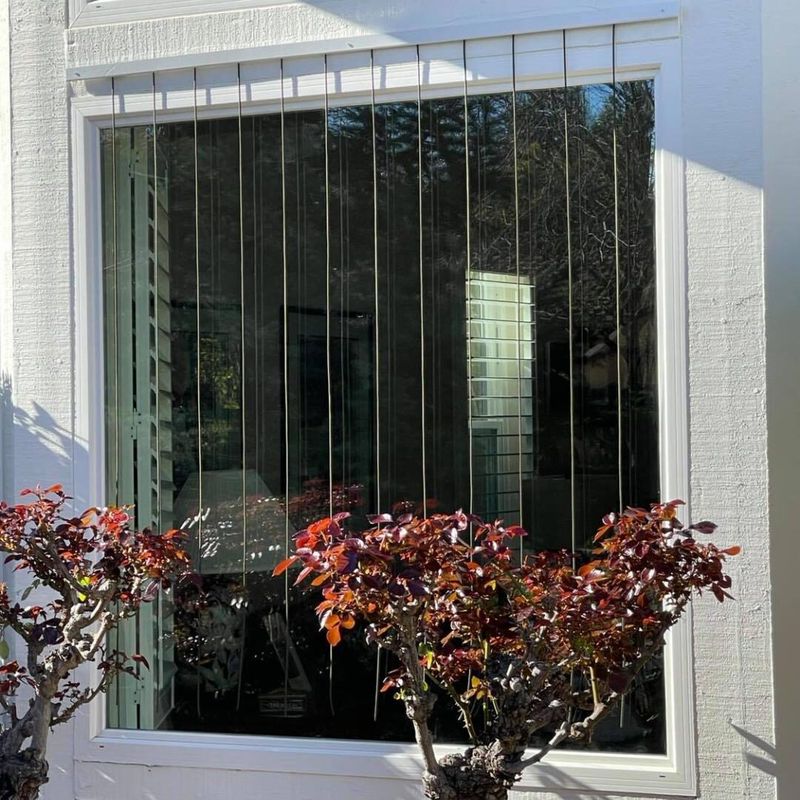
If screens are not an option, dense exterior patterns work well. These include exterior-grade tape or decals, tempera paint applied directly to the glass, or closely spaced vertical cords hung in front of the window.
ABC’s home solutions page and USGS Bird Banding Laboratory collision research both point toward the same spacing standard: markers placed in approximately a 2-inch-by-2-inch grid across the window surface. Dots should be at least one-quarter inch in diameter, and lines at least one-eighth inch wide.
The reason spacing matters so much is that birds assess gaps, not patterns. A few stickers scattered across a large window leave what looks like a wide-open fly-through corridor.
National Park Service collision guidance confirms that sparse decals are not a reliable solution. Predator silhouettes share the same problem: a hawk shape in one corner does nothing for the rest of the glass.
UV-reflective products may help in some cases, but their performance varies by bird species, glass type, product design, and how well the markers remain visible under different lighting conditions, so they should not be treated as a universal answer.
Treatments applied to the interior surface can work if the pattern is still clearly visible when viewed from outside under normal daylight conditions. Research on interior versus exterior treatments notes that reflections can hide interior markings, making exterior application the more reliable starting point.
Check your window from the outside before relying on an interior-only approach.
Match the fix to the kind of daytime strike
Not every bird-window encounter has the same cause, and the right fix depends on what is actually happening. Daytime strikes generally fall into a few recognizable patterns, and sorting them out helps you avoid applying the wrong solution.
The most common daytime problem is a bird flying toward a reflection. Cornell’s All About Birds collision guide explains that birds mistake reflected sky or vegetation for real space, and this happens regardless of what is happening indoors.
Closing the blinds in a bright room helps at night, but a window reflecting a sunny yard looks the same from outside whether your living room light is on or off.
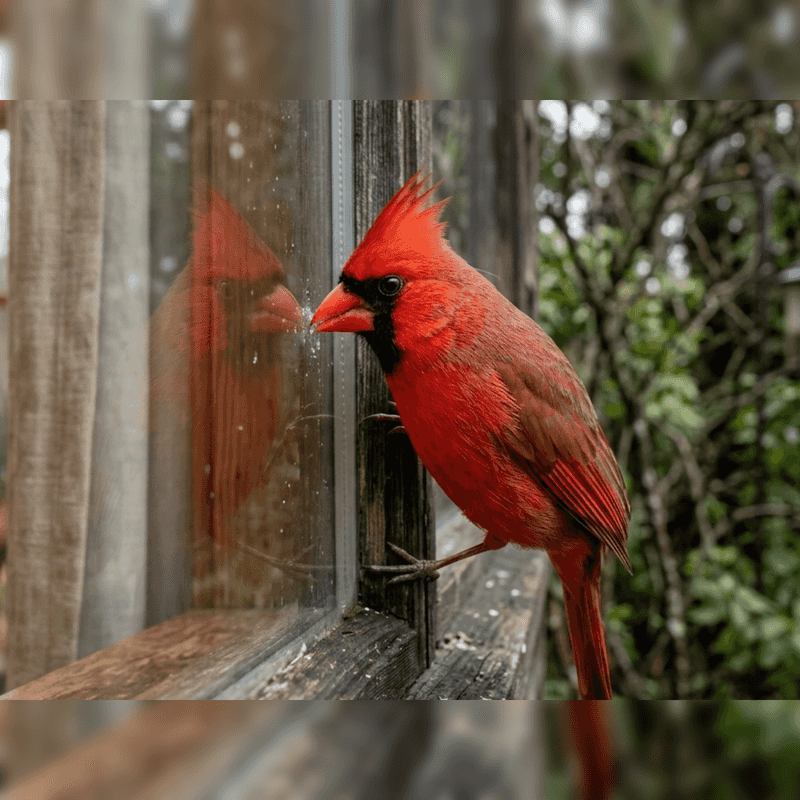
A separate behavior worth recognizing is reflection aggression. During spring, male birds of certain species, cardinals and robins are common examples, may repeatedly strike a window because they see their own reflection and interpret it as a territorial rival.
Published research on bird-glass collision factors treats this as a distinct behavior from collision events. The bird is not confused about the glass; it is fighting what it perceives as another bird.
Turning off your bedroom light will not stop that. An exterior visual barrier, a piece of screen, paper, or a dense pattern applied to the outside of the glass at the level where the bird is striking, is what breaks the reflection and ends the behavior.
The time you notice a bird near your window is also not reliable evidence of when any collision occurred. A bird found in the morning may have struck at midday the day before and remained nearby.
Federal wildlife guidance on glass collisions reinforces that discovery time and collision time are separate things. Resist the urge to rely on a simple feeder-distance rule, such as keeping feeders exactly three feet or thirty feet away, as a substitute for making the glass itself visible to approaching birds.
Treat every stunned bird as potentially injured
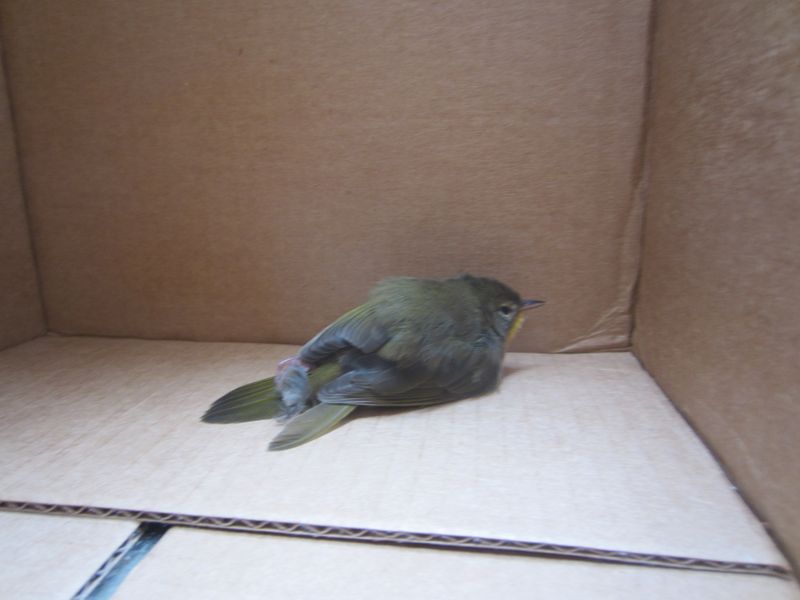
A bird sitting quietly on the ground after hitting a window may look like it just needs a few minutes to recover. That appearance can be misleading.
Internal injuries from a window strike are not visible from the outside, and a bird that seems alert enough to fly away may still have damage that proves fatal hours or days later.
The right first step is to contact a licensed wildlife rehabilitator as quickly as possible. Cornell’s All About Birds post-collision guidance is direct on this point: do not assume the bird will be fine on its own, and do not wait to see whether it flies away before seeking help.
A rehabilitator can assess the bird’s condition and advise on next steps in a way that a homeowner cannot.
If the rehabilitator instructs you to contain the bird while waiting for transport or pickup, use a closed paper bag with small ventilation holes, or a small cardboard box lined with a paper towel. Keep the container in a dark, quiet space away from people and pets, and maintain a comfortable room temperature.
Do not add water to the box, do not attempt to feed the bird, and do not handle it more than necessary. These steps hold unless the rehabilitator gives you different instructions, in which case follow their guidance specifically.
You can find a licensed wildlife rehabilitator through your state wildlife agency’s website or through national directories maintained by rehabilitation organizations. Having that contact saved before you ever find an injured bird means you are not searching for it while the bird is waiting on your porch.
Reduce the nighttime pathway, then treat the glass
The free action that started this article, switching off unnecessary lights and closing shades at night, is real and worth doing. Building-scale research shows meaningful mortality reductions when lighted window area is reduced during migration, and the cost to a homeowner is nothing.
Use timers or motion sensors for any outdoor lighting that genuinely needs to stay on, aim fixtures downward, and check BirdCast during spring and fall to know which nights carry the heaviest migration traffic.
When strikes continue after you have addressed your nighttime lighting, or when they are clearly happening in daylight, the next step is an exterior treatment on the glass itself. Federal guidance on glass collisions and American Bird Conservancy’s home solutions both point toward full external screens, dense patterns spaced roughly 2 inches apart, or closely hung vertical cords as reliable options.
Darkness reduces one risk pathway. Making the glass visible from the outside is what closes the others.