
If A Fuzzy-Leafed Weed Lines Your Gravel Roadside, Here’s The Chest Remedy Its Velvet Leaves Held For Thousands Of Years
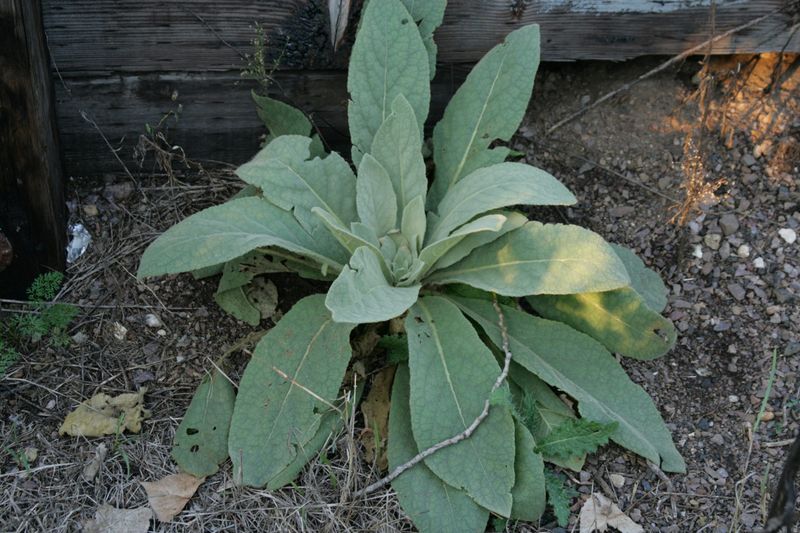
Walk along almost any gravel road in the United States and you may spot a large, silvery-green plant with leaves so soft they feel like flannel. That plant is most likely common mullein, a roadside weed with a surprisingly long history as a traditional remedy for coughs and sore throats.
Knowing what it is, what tradition actually claims, and where the real limits of that tradition lie can help you make sense of a plant you have probably passed dozens of times without a second look.
The fuzzy roadside rosette points to common mullein
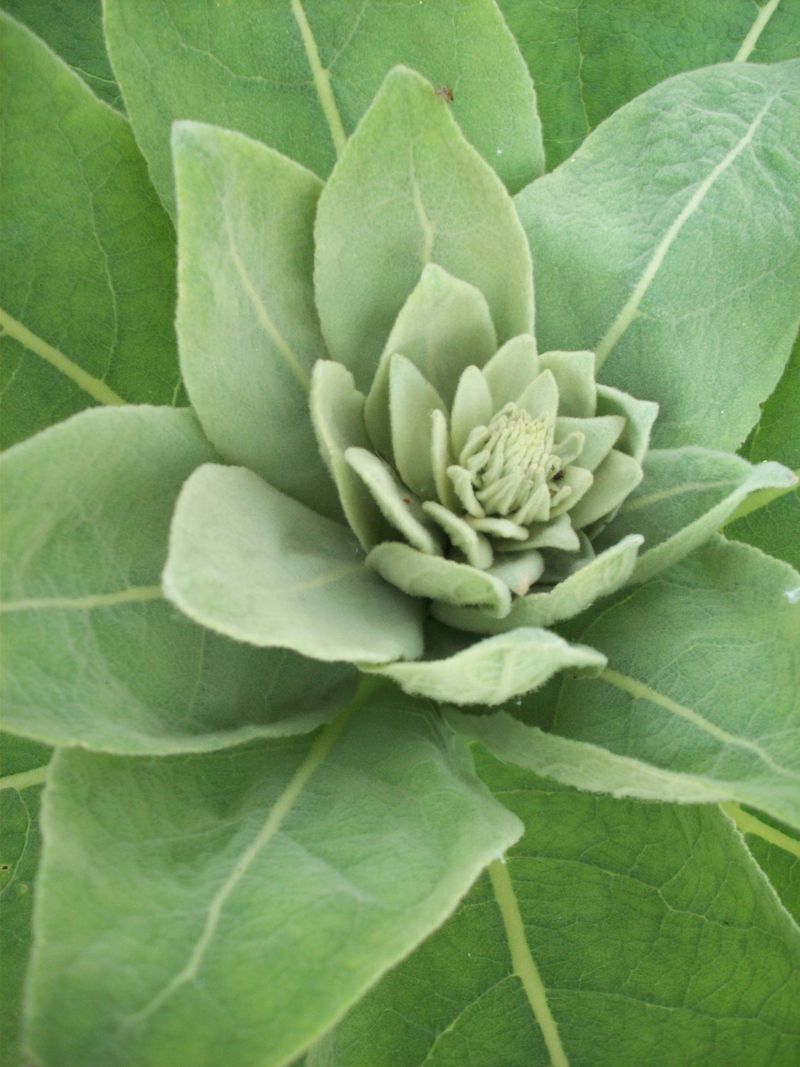
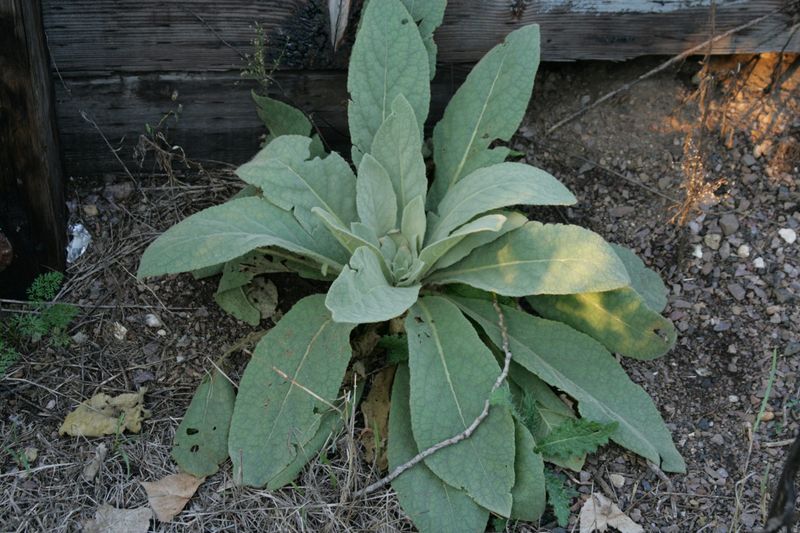
Soft, thick, and almost impossibly gray-green, the rosette that catches your eye along a gravel shoulder has a look unlike most roadside weeds. The plant most likely responsible is common mullein, known botanically as Verbascum thapsus.
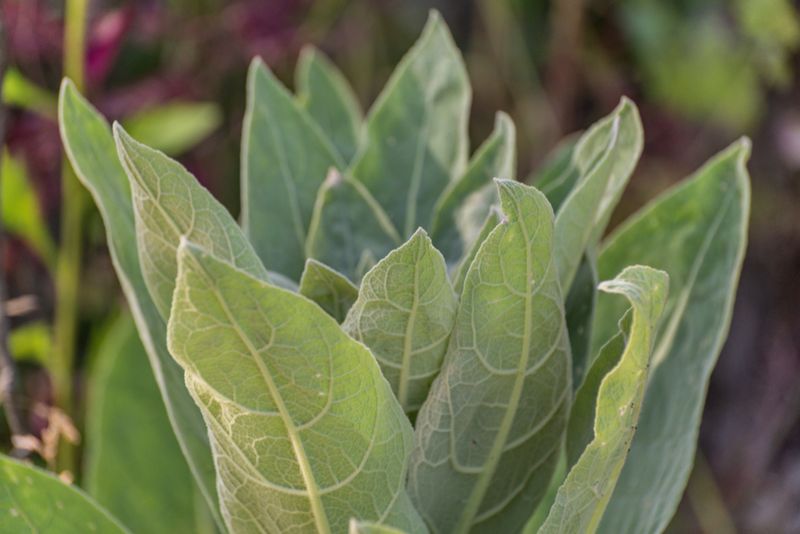
University of Nevada Extension’s mullein profile describes the leaves as oblong to lance-shaped, densely covered in branched hairs called trichomes, and largest near the base of the plant, where they can reach a foot or more in length.
Common mullein is generally biennial, meaning it takes two growing seasons to complete its life cycle. In its first year, it stays low, producing a flat rosette of those flannel-textured leaves.
In the second year, a stout central stalk shoots upward, sometimes reaching six or seven feet, carrying smaller leaves and topped with a dense spike of small yellow flowers.
You are most likely to find it on disturbed, well-drained ground: roadsides, gravel shoulders, old pastures, fence lines, railroad rights-of-way, and recently cleared lots. Iowa State University Extension’s common mullein entry notes that the plant thrives especially where soil has been disturbed and competition from other plants is low, which is exactly the kind of habitat a gravel roadside provides.
Even with these clear features, a brief description or a photograph is not a guarantee of correct identification. Other fuzzy-leaved rosettes grow in similar spots, and some of them are toxic.
The thick hairs, the gray-green color, the basal arrangement, and the tall yellow spike together build a strong case for mullein, but they do not close it completely. The USDA Plants Database profile for Verbascum thapsus confirms its introduced status and wide US distribution, reinforcing that this is a common plant worth learning to recognize carefully rather than casually.
Why the plant became a memorable wayside herb
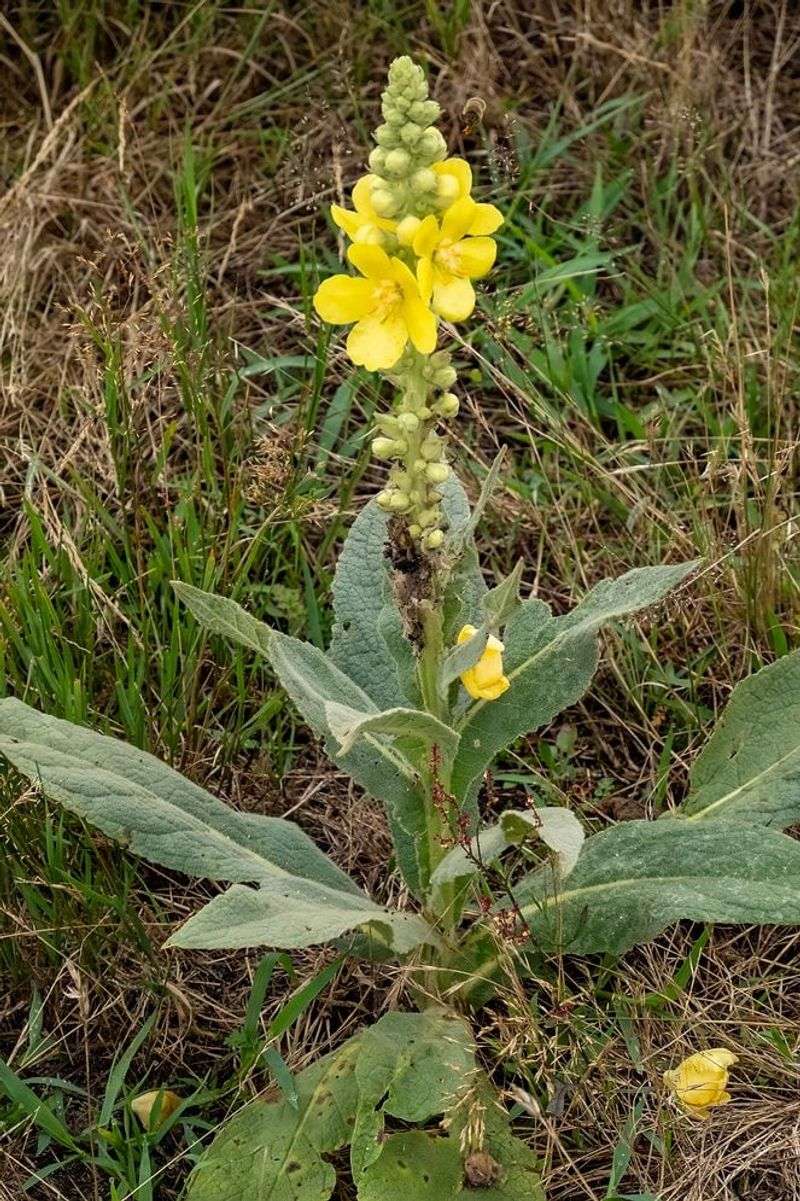
Part of what made mullein so hard to ignore throughout history is pure spectacle. A six-foot stalk rising from a flat rosette of silver-gray leaves is not easy to walk past, and the velvety texture of those leaves has a tactile quality that invites handling.
Plants that look and feel distinctive tend to attract attention from people looking for remedies, and mullein checked both boxes in the disturbed, well-traveled places where human communities spent a lot of time.
Common mullein is not a native US plant. USDA records classify Verbascum thapsus as introduced, brought to North America from Europe and western Asia, where it already had a long folk-medicine history.
Once here, it spread quickly into disturbed habitats across the continent, following the same roadsides and cleared land that human activity kept opening up.
Its abundance and management status are not uniform. The USDA Forest Service Fire Effects Information System review of Verbascum thapsus documents its spread across a wide range of North American habitats, while also noting that its competitive impact varies considerably by region and ecosystem.
Some states treat it as an invasive or noxious weed requiring active management; others have no specific restrictions. NC State Extension’s mullein profile similarly reflects that regional context shapes how land managers respond to the plant.
Before you collect or cultivate mullein, check your state or local guidance. Rules about gathering plants from roadsides, public land, or managed natural areas differ by location, and a plant’s traditional reputation does not override current land-management regulations where you live.
Mullein has a traditional role in cough and throat remedies
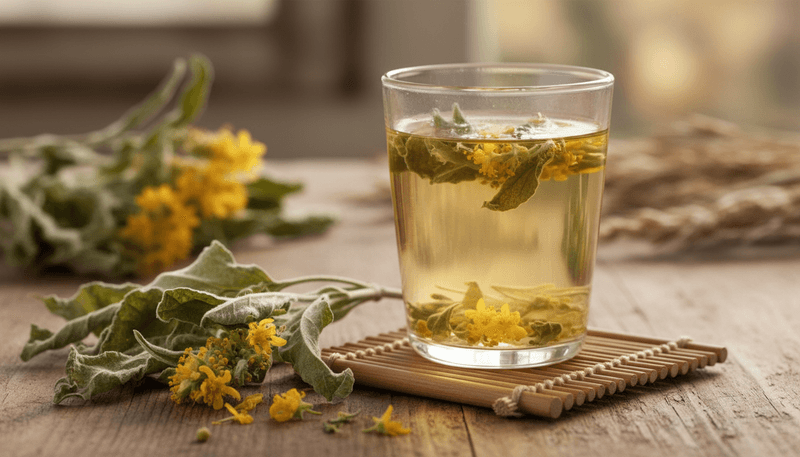
Across European folk medicine and early North American herbal traditions, mullein leaves and flowers turned up repeatedly in preparations meant to ease coughs, hoarseness, and what older sources called bronchial complaints. Healers prepared infusions, decoctions, and poultices from different parts of the plant.
A 2021 ethnobotanical review in the journal Plants documents this widespread traditional association across multiple cultures, describing mullein as one of the more consistently cited plants for respiratory complaints in European herbal traditions spanning centuries.
A separate historical survey, published in the Journal of Ethnopharmacology, similarly records mullein’s place in folk systems as a remedy for cough, sore throat, and related upper-respiratory discomfort. These records reflect genuine and longstanding practice, not a fringe claim.
The proposed explanation for why mullein might ease throat irritation involves two groups of plant compounds: mucilage, a gel-like substance that may coat and temporarily soothe irritated mucous membranes, and saponins, which have been suggested to thin mucus and support its clearance. These are reasonable hypotheses drawn from plant chemistry, but laboratory findings about plant compounds are not the same as evidence that patients feel better after using a preparation.
The mechanism is proposed, not proven.
Modern authoritative assessment narrows the claim considerably. The European Medicines Agency’s monograph on mullein flower (Verbasci flos) recognizes a traditional-use indication for sore throat associated with dry cough and colds, applying primarily to adults and adolescents over 12.
Critically, the EMA states explicitly that clinical studies are lacking. That means the recognition is based on documented historical use, not on controlled trials showing that patients improved.
The EMA’s assessment also concerns mullein flowers specifically, formulated into recognized herbal medicines. That scope matters: recognizing a traditional role for processed flower preparations is a much narrower statement than saying that mullein in general treats chest disease, clears the lungs, or relieves pneumonia or asthma.
The EMA’s underlying assessment report for Verbascum thapsus reinforces that point, describing the evidence base as traditional use rather than clinical demonstration of efficacy.
Traditional skin uses do not validate raw leaves
Mullein’s soft leaves attracted skin-related folk uses alongside its respiratory reputation. Historical and ethnobotanical sources describe topical applications for wounds, rashes, eczema, insect bites, and general skin irritation.
The 2021 ethnobotanical review in Plants catalogs these uses across multiple folk traditions, reflecting that the plant’s physical softness likely reinforced its appeal as something to press against irritated skin.
A more recent literature survey, published in Phytotherapy Research in 2022, also documents the breadth of reported topical applications in folk traditions while noting that the strength of modern evidence supporting those uses remains limited.
One clinical trial does exist in this space, and it is worth understanding precisely what it showed. A randomized controlled trial published in Complementary Medicine Research found that participants who used a specific formulated Verbascum thapsus cream after episiotomy showed better wound-healing scores at 10 days compared to a placebo cream group.
That is a real and specific finding, but its scope is narrow: it describes one standardized cream, tested in a controlled clinical setting, applied to a specific type of surgical wound.
That result does not mean rubbing a raw mullein leaf on broken skin, a burn, an eczema patch, or an infected area is safe or effective. The cream used in the trial was a formulated product with consistent composition and controlled application.
A fresh leaf picked from the roadside is none of those things. Transferring a finding from a clinical cream to an unprocessed plant part skips over nearly every factor that makes a trial result meaningful.
The leaf, the flower, and the finished product are different evidence questions
One of the most important things to understand about mullein’s traditional reputation is that the plant is not a single, uniform remedy. Different plant parts, different preparations, and different finished products carry different evidence profiles, and treating them as interchangeable leads to real confusion.
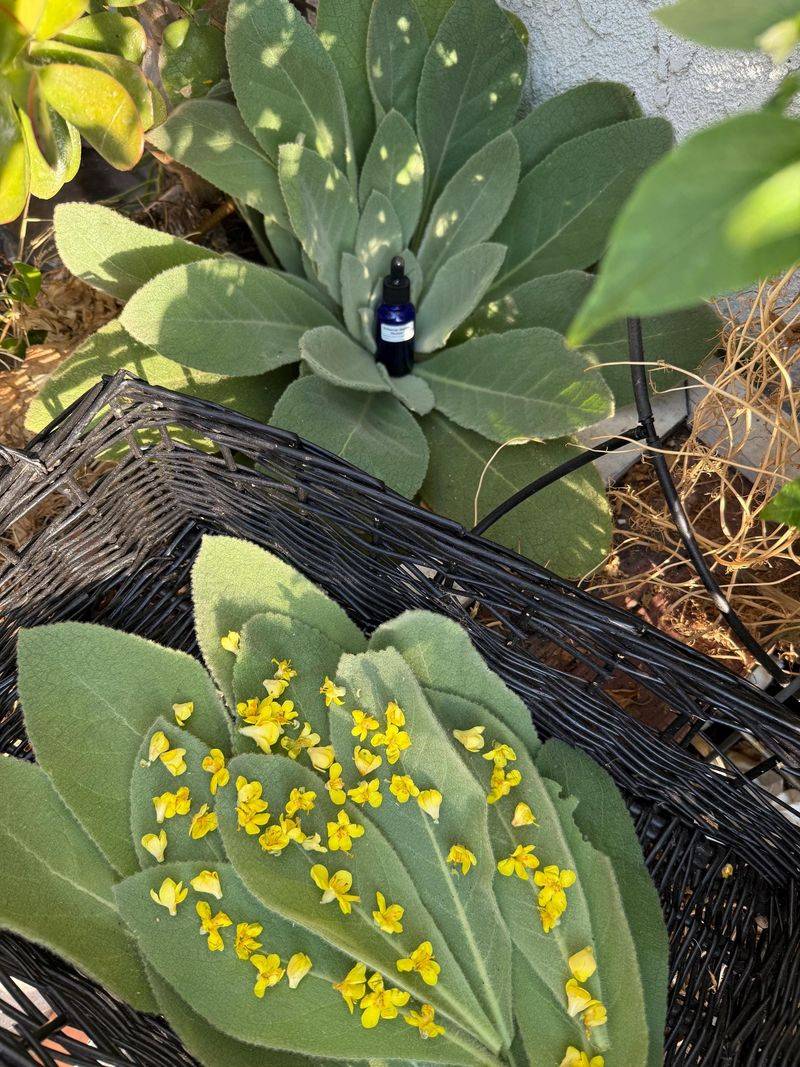
The EMA’s recognized traditional-use monograph applies specifically to mullein flowers, Verbasci flos, prepared as a herbal medicine. That EMA monograph does not extend its conclusions to unprocessed leaves, homemade leaf teas, or raw plant material gathered from the roadside.
Traditional sources, including the ethnobotanical literature reviewed in the 2021 Plants review, discuss both leaves and flowers in folk contexts, but historical practice and regulatory recognition are two different standards.
A fresh leaf differs from a dried flower, which differs from a standardized extract, which differs from a formulated cream tested in a clinical trial. Each step in that chain changes the concentration of active compounds, removes or introduces contaminants, and alters how the preparation behaves.
Commercial herbal products add another layer of variability: MedlinePlus guidance on herbal products notes that supplements and herbal preparations are not required to prove safety or effectiveness before going to market in the United States, and their actual contents can differ from what labels claim.
Quality control is a genuine concern. Memorial Sloan Kettering Cancer Center’s integrative medicine herb resource similarly cautions that herbal products vary in composition, concentration, and purity, and that interactions with other medications are possible.
A tradition of use, however long, does not guarantee that a specific product, plant part, or homemade preparation is safe or that its effects will match what the tradition described.
A gravel shoulder is the wrong place to gather a remedy
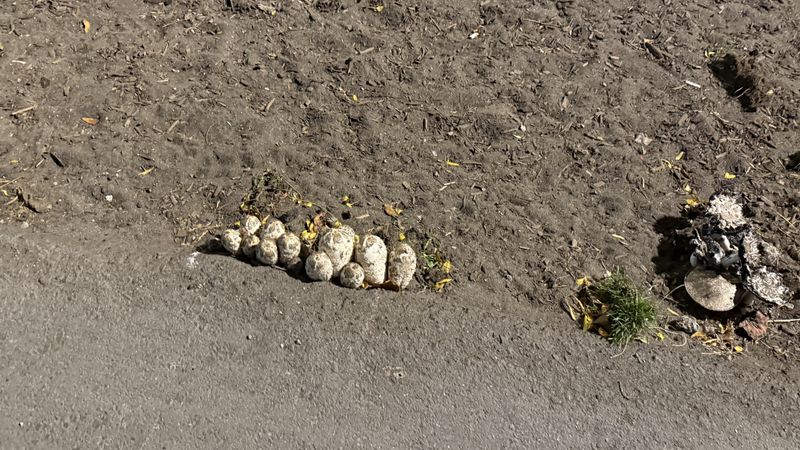
Even if mullein’s traditional reputation were stronger than the evidence currently supports, the plant growing beside a road or gravel shoulder would still be the wrong plant to harvest. Roadside environments are among the most contaminated spots a wild plant can occupy, and that contamination does not always wash off or stay on the surface.
ATSDR guidance on environmental exposure pathways explains that plants growing near contaminated soil or surfaces can take up pollutants through their roots or accumulate them on leaf surfaces through dust, runoff, and direct contact. Roadsides concentrate vehicle exhaust residue, heavy metals, road salt, oil, and whatever has been applied nearby for weed control.
EPA documentation on plant uptake of contaminants reinforces that soil chemistry near roads is often very different from garden soil, and that difference can end up inside the plant you are considering eating or applying to skin.
Misidentification adds a separate layer of risk. Fuzzy-leaved rosettes are not all mullein.
Some toxic plants produce rosettes with similar textures and colors, and a plant-identification app or a quick visual check is not a reliable substitute for careful botanical identification. A CDC public health newsletter on foraging risks notes that wild-plant misidentification is a recognized poisoning hazard, and that even experienced foragers make errors.
Smoking mullein is sometimes suggested online as a way to deliver its traditional benefits directly to the lungs. That idea runs in exactly the wrong direction.
CDC and NIOSH guidance on plant hazards warns that inhaling smoke from burning plant material can cause serious respiratory irritation. Smoke is not a delivery mechanism for respiratory relief; it is an irritant, regardless of what plant is burning.
No preparation recipe appears here because the roadside plant is not a safe starting point for any homemade remedy.
Let the history inform curiosity, not replace medical care
Common mullein is almost certainly the fuzzy plant lining your gravel road, and its place in longstanding folk traditions involving cough, sore throat, and skin complaints is real. That history is worth knowing.
What it does not do is substitute for a medical evaluation when something is genuinely wrong.
The European Medicines Agency’s mullein-flower monograph represents the strongest modern authoritative recognition of mullein’s traditional role, and even that recognition is limited to sore throat associated with dry cough and colds, based on traditional use rather than clinical trial evidence. The EMA also advises that anyone using a traditional mullein-flower medicine should seek medical advice if symptoms worsen or do not improve within one week.
That is a meaningful caution, not a footnote.
Shortness of breath, chest pain, high fever, wheezing, bloody sputum, suspected pneumonia, or a cough that keeps worsening are not situations for a traditional plant remedy. Published reviews of mullein’s pharmacological evidence consistently find that the available research does not support treating serious respiratory or chest conditions with mullein preparations.
MedlinePlus guidance on herbal products reinforces that herbal remedies can interact with medications and carry risks that are easy to underestimate.
Mullein’s velvet leaves earned their place in folk memory because they were conspicuous, soft, and present exactly where people traveled and worked for centuries. Appreciating that history and understanding its limits are not in conflict.
The plant is worth knowing; the roadside is not a pharmacy.