
If Birds Keep Stealing Your Strawberries Right Before They Ripen, Here’s The Little Mesh Trick That Guards Every Cluster
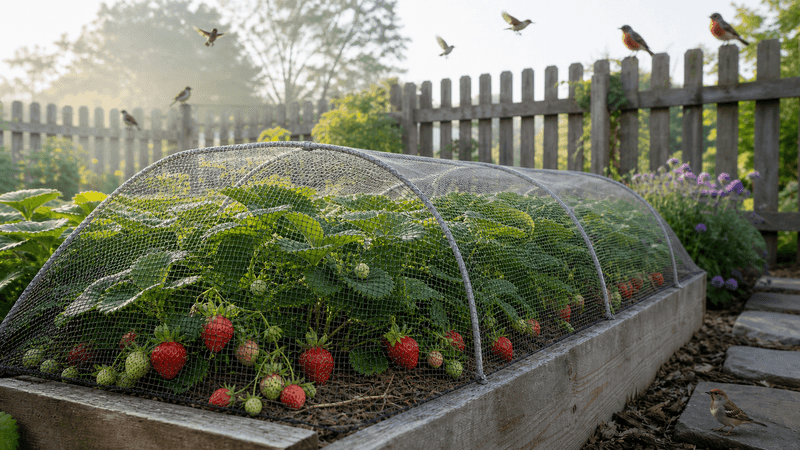
You spend weeks watching your strawberries grow, and then one morning you head outside to find the ripest ones pecked apart or missing entirely. It is one of the most frustrating moments in backyard gardening, especially when it keeps happening just before picking day.
Birds are a common culprit in strawberry beds, but the good news is that a simple raised netting cover can significantly cut your losses during the ripening window. This guide walks you through how to set it up correctly, when to put it on, and what it can and cannot do.
Protect strawberries as they approach ripeness
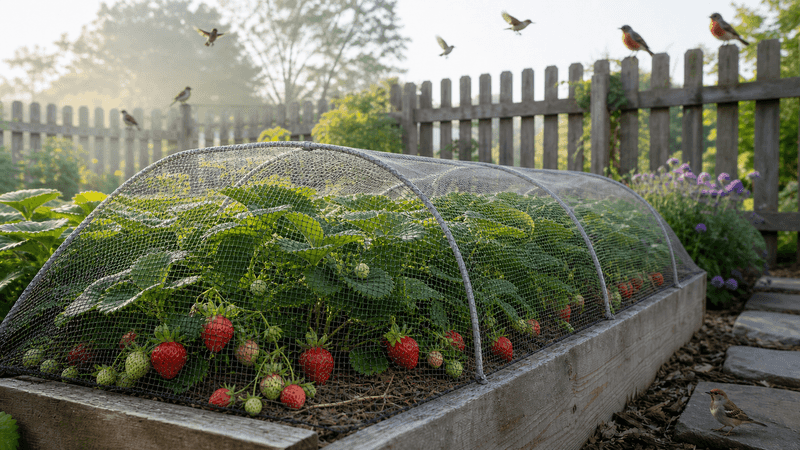
Finding half-eaten strawberries scattered across your bed the morning before you planned to pick them is a particular kind of gardening heartbreak. The damage feels sudden, but it usually builds over a few days as birds discover the ripening fruit and return repeatedly.
Before blaming birds, though, take a closer look at what the damage actually looks like.
Peck marks are a reliable clue. Birds leave shallow, irregular gouges on the surface of the berry, often exposing the flesh in a ragged pattern.
Missing fruit with no trace left behind can also suggest bird activity, but squirrels, rodents, and even slugs can remove or damage berries in ways that look similar. Watching the bed in the early morning, when bird feeding is most active, can help confirm whether birds are the primary cause before you commit to any protective measure.
If you do spot birds landing on or near the bed, or you see the telltale peck damage, a temporary raised netting cover is one of the most reliable options for a small backyard planting. Oregon State University Extension guidance on growing strawberries at home identifies netting as an effective way to reduce bird damage when fencing the entire garden is not practical.
The key word is reduce. A well-installed cover can protect much of your crop, but gaps, weather damage, or animals other than birds can still cause losses.
Think of it as a meaningful barrier, not a guarantee.
Choose physical exclusion over bird scare tactics
Shiny tape, plastic owls, and noise makers get a lot of attention as bird deterrents, and they can produce short-term results in some situations. The problem is that birds are adaptable.
Once they realize a spinning reflector or a stationary owl poses no real threat, they simply ignore it and go back to feeding. Penn State Extension guidance on controlling birds on fruit crops notes that physical exclusion is generally more dependable than visual or auditory deterrents for small fruit plantings, precisely because it removes access rather than trying to change behavior.
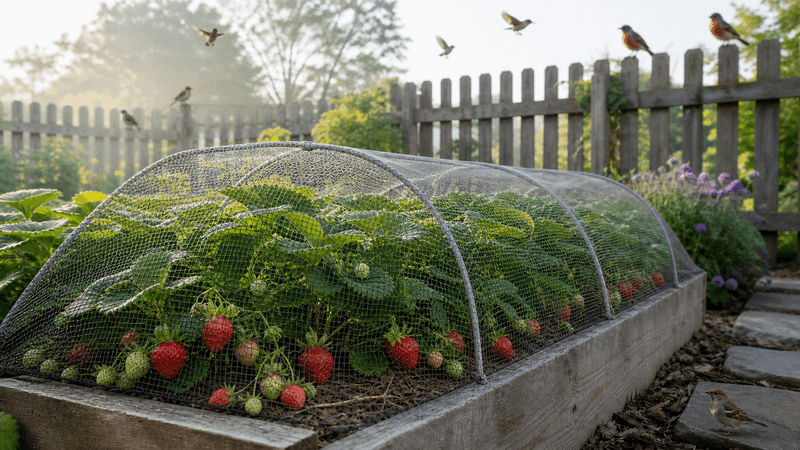
Raised bird netting is the physical barrier that extension sources consistently recommend for backyard strawberry beds. When installed correctly over a supporting frame, it keeps birds from landing on the fruit or reaching it from above.
The method does not rely on frightening or confusing wildlife, so there is no habituation effect to worry about.
Choosing the right material matters as much as choosing the right method. Bird netting is not the same product as fine insect-exclusion mesh, frost fabric, or floating row covers, and those materials are not interchangeable for this job.
Fine insect mesh can block pollinators during flowering, which can reduce fruit set and produce misshapen berries. Frost fabric holds heat and is designed for temperature protection, not bird exclusion.
OSU Extension strawberry guidance recommends netting or row covers specifically for bird management, and the Royal Horticultural Society’s strawberry growing guide similarly points to netting over a frame as the appropriate tool. Match the material to the problem you are actually solving, and make sure the product you select is labeled for bird exclusion rather than insect or frost management.
Build a simple frame above the foliage
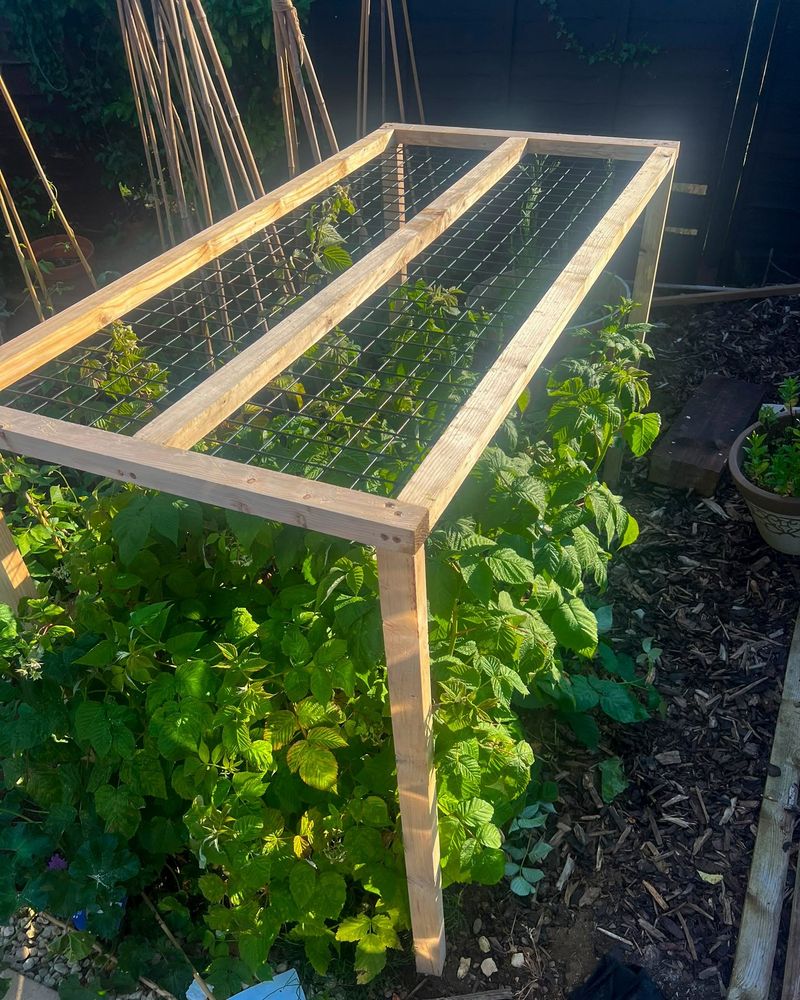
The frame does not need to be complicated or expensive to do its job well. For most small backyard beds, a row of short stakes or bamboo canes pushed into the soil around the perimeter, connected at the top with horizontal canes or a length of flexible conduit, gives you a stable structure to drape netting over.
The RHS strawberry growing guide specifically recommends bamboo canes or wood as frame supports, with the netting pulled taut and fastened securely at the edges.
Height matters more than most people expect. The net needs to sit high enough above the foliage and fruit that a bird perching on top of the mesh cannot reach down and peck through it.
A clearance of at least six to eight inches above the tallest berry clusters is a practical target for most low-growing strawberry varieties. If the net sags down and rests on the fruit, it defeats a large part of the purpose.
Keeping the net taut also reduces the chance of it billowing in the wind, catching on foliage, or creating loose pockets where birds could get tangled. Use enough support points across the span of the bed that the netting stays relatively flat between them.
For a bed wider than three or four feet, adding a central ridge pole or a few intermediate stakes will help maintain that tension without requiring constant adjustment.
One practical benefit of building even a modest frame is that it makes harvesting far easier than peeling loose mesh off plants. Penn State Extension notes that netting can be inconvenient to work around, but a raised frame with a liftable or clip-fastened edge turns that inconvenience into a quick, repeatable step rather than a frustrating tangle.
Aim for a structure you can open and close in under a minute.
Cover the bed after flowering and before full ripeness
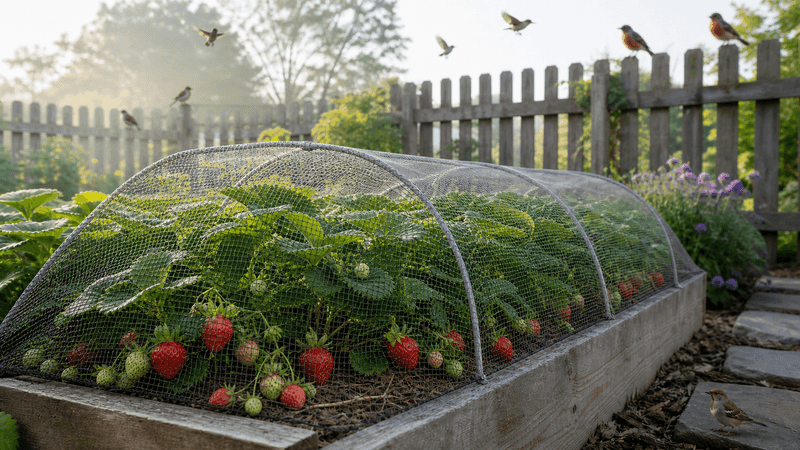
Timing the installation of your bird net is just as important as building the frame correctly. Strawberry blossoms need insect pollinators to develop into full, well-shaped fruit.
Penn State Extension’s strawberry production guidance explains that restricted pollination during bloom can result in misshapen or poorly filled berries, which means covering the plants too early costs you fruit quality before birds ever get a chance to cause damage.
Leave the bed fully open and accessible to bees and other pollinators from the moment the first flowers open until the blossoms have finished and small green fruitlets appear in their place. Once you can see that fruit has set and the berries are beginning to size up, that is the window to install the bird net over your frame.
Installing it at this stage means you are protecting developing fruit before birds establish the bed as a reliable food source, rather than reacting after they have already learned where the ripe berries are.
The RHS strawberry guide advises putting protection in place before the berries ripen rather than waiting until losses begin. Once a bird has found your bed and returned a few times, it will keep coming back even after you add a cover, and it will be more motivated to probe for gaps.
Getting the net up early, while the fruit is still green or just beginning to color, gives you a head start.
Build the picking routine into your habit from day one. When you go out to harvest, lift or unclip one side of the net, pick what is ready, and resecure that edge before you walk away.
Leaving the cover open even briefly while you are working nearby is usually fine, but an unsecured edge left unattended is an invitation.
Close every edge to keep birds from walking underneath
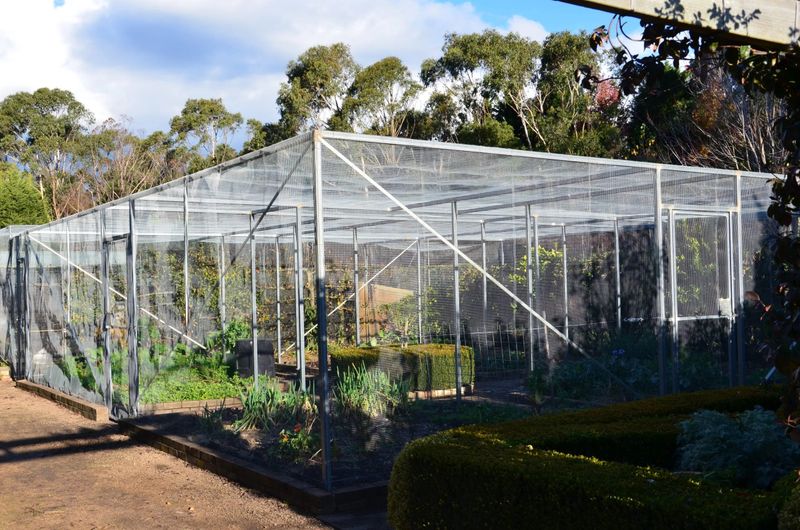
A frame covered in netting but left open at the sides is not much of a barrier. Birds are persistent and surprisingly bold around ripe fruit.
Robins, starlings, and sparrows will walk along the ground and slip under a loose edge rather than give up on an accessible food source. Securing the perimeter is what turns a draped net into a functioning enclosure.
Run the netting all the way to the ground on every side, then fasten it down. Landscape staples, tent pegs, stones, bricks, or lengths of wood laid along the edge all work as anchors depending on what you have available.
Oregon State University Extension guidance on nonlethal bird deterrents specifies that netting used on fruit crops must be attached to support posts and secured at the ground to prevent bird entry from below. The perimeter seal matters as much as the top cover.
Pay particular attention to corners and any spot where the frame changes direction. These are the places where tension in the net tends to pull the fabric away from the ground, leaving gaps just wide enough for a small bird to squeeze through.
A little extra weight or an additional staple at each corner can close those problem spots before they become entry points.
Loose or fallen sections of netting create a second problem beyond just defeating the barrier. The RHS warns specifically that loose netting can entangle birds and other wildlife, which is both harmful to the animals and distressing to discover.
A well-secured, taut net helps prevent entanglement by reducing the slack folds and open loops where a bird’s foot, leg, or wing can catch. Taut and anchored is always the safer and more effective configuration.
Inspect the net and remove it when protection ends
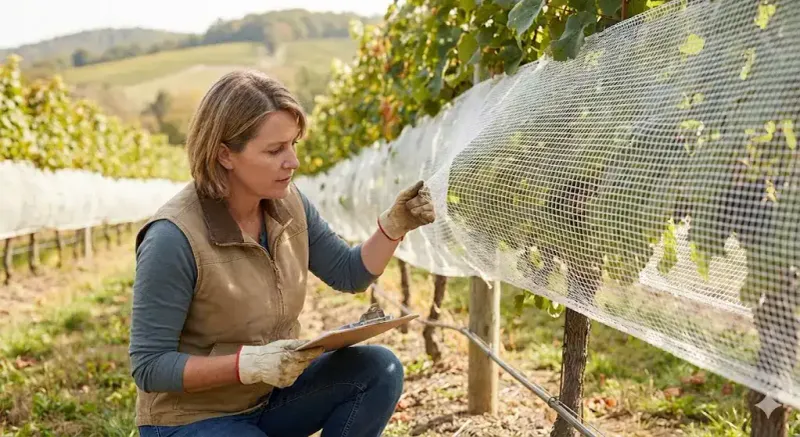
Installing the net is not a one-time task you can forget about until harvest. Weather is hard on netting.
A windy night can loosen anchors, pull edges away from the ground, and create sagging sections that birds can reach through or animals can push against. Checking the cover every couple of days, and always after a significant storm, keeps the barrier doing what it is supposed to do.
When you find a tear or a hole, repair it promptly. A small gap that looks insignificant to you is plenty large enough for a determined sparrow.
Patches of garden twine, zip ties, or a piece of spare netting sewn across the opening all work as temporary fixes. If a section of the frame has shifted and caused the net to sag against the plants, reset the support and re-tension the mesh before you walk away.
The picking routine is also the best time to scan the full perimeter. RHS guidance specifically warns that loose netting poses an entanglement risk to wildlife, so any section that has come free from its anchor should be re-secured immediately rather than left for the next visit.
If you find a bird or other small animal caught in the net, free it carefully and then address the slack that allowed the entanglement.
Once the main harvest window closes and the ripening pressure eases, take the net down. Penn State Extension and OSU Extension both support netting as a reusable resource when it is removed carefully, inspected for damage, cleaned if needed, and stored out of direct sunlight.
UV exposure and physical wear shorten netting’s lifespan, so how long a particular piece holds up depends on how it was stored and how much stress it took during the season. A net that comes off the frame intact and goes into a bag or bin has a good chance of being useful next year.
Know what bird netting cannot solve
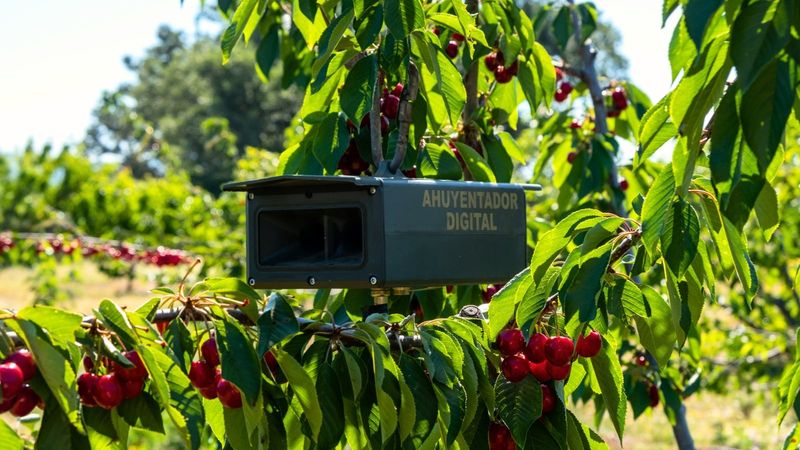
Bird netting does one job: it physically blocks birds from reaching your fruit. That is genuinely useful, but it leaves a long list of other problems untouched.
Squirrels are strong enough and motivated enough to push through, chew through, or lift the edges of most lightweight netting. Raccoons and deer can dismantle a frame entirely if the structure is not robust.
Rodents often work from below ground level, where the net offers no barrier at all.
Inside the bed, insects continue to operate regardless of what covers the top. Spotted-wing drosophila, a small fly that lays eggs in ripening fruit, is one of the most damaging strawberry pests in many parts of the United States.
OSU Extension’s home strawberry guide identifies it as a significant concern, and it requires finer insect-exclusion mesh and a separate management approach, not standard bird netting. Slugs, disease, and weather damage also fall entirely outside what a bird net can address.
Mesh size is one factor in choosing netting, not a complete solution on its own. Utah State University Extension berry guidance has suggested approximately three-quarter-inch openings for excluding small birds from berry plantings, but the material, its tension, its visibility, and how well it is maintained all influence both effectiveness and safety.
A three-quarter-inch opening in a stiff, rigid material behaves very differently from the same opening in a loose, flexible polypropylene net.
On that point: U.S. Fish and Wildlife Service avoidance guidance warns that some flexible nylon and polypropylene products sold as bird netting can entrap and kill birds and other wildlife.
Mesh size alone does not make a product safe. Finally, fine insect-exclusion covers that could theoretically block small insects from fruit should not be used during flowering because they also block pollinators.
Penn State Extension strawberry production guidance makes clear that pollinator access during bloom is essential for well-formed fruit.
Use the raised net as a temporary ripening shield
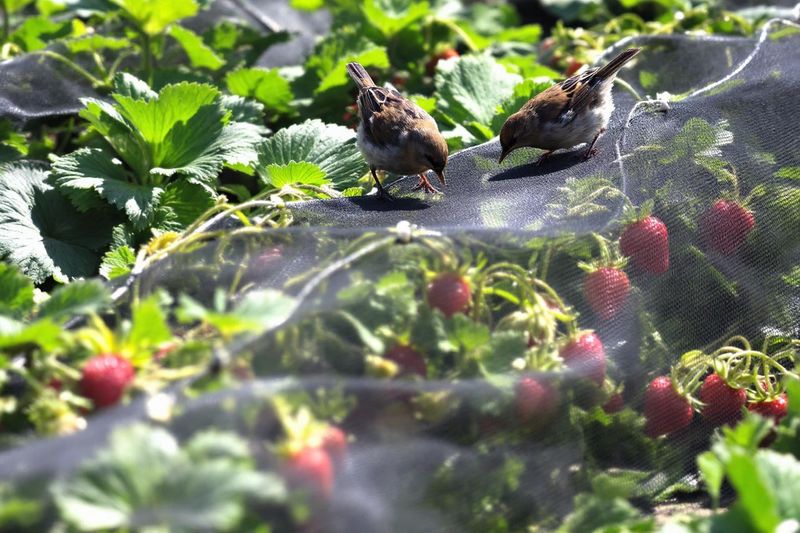
Putting the whole approach together comes down to a clear sequence. First, watch the bed and confirm that birds are actually the problem before investing time in a cover.
Look for peck marks, watch for bird activity in the early morning, and rule out slugs, rot, or other causes if the damage pattern does not match.
Once fruit has set after flowering, raise suitable bird netting over a stable frame, pull it taut, and anchor every edge to the ground. Lift one section when you pick, then resecure it before walking away.
Check the cover after every storm, repair any tears promptly, and remove the net once the main ripening window has passed. OSU Extension and the RHS both support this kind of temporary, maintained netting as a practical way to reduce bird losses on small fruit plantings.
How well it works depends almost entirely on how carefully it is installed and maintained, not on simply having mesh over the bed. A taut, well-anchored net that you check regularly will protect far more of your crop than a loose one you set and forget.
Think of it as a ripening-season shield that reduces bird losses while your strawberries finish, not a promise that every berry makes it to your bowl.