
If Your Hollyhocks Line The Garden Fence, Here’s What History Actually Shows About Their Roots
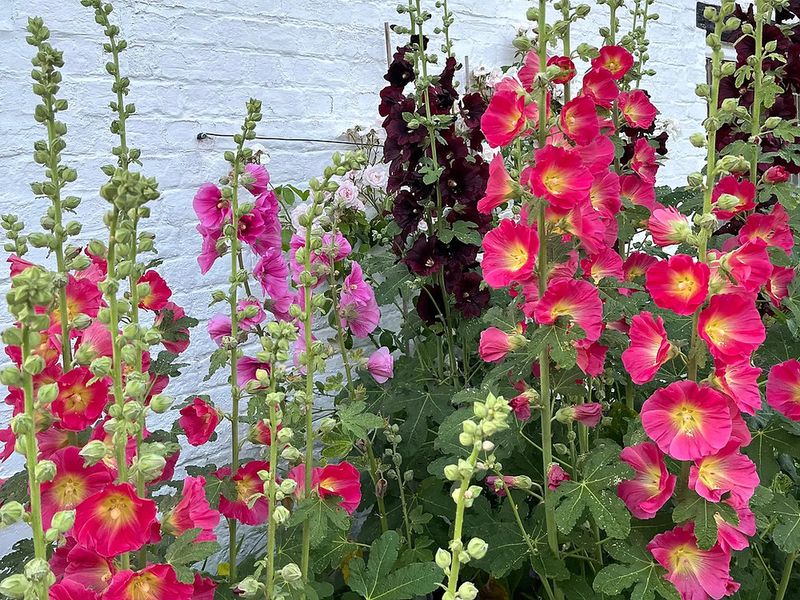
Those tall, ruffly hollyhocks growing along your garden fence have a reputation that stretches back centuries, with some people claiming their roots hold an old-fashioned sore-throat cure. That story is more complicated than it sounds, and getting the plant names right matters before anything else.
The garden hollyhock you grow is not the same species as the marshmallow plant used in the traditional herbal record, and that difference changes everything about what the roots can and cannot do.
The Plant Name Comes Before the Remedy
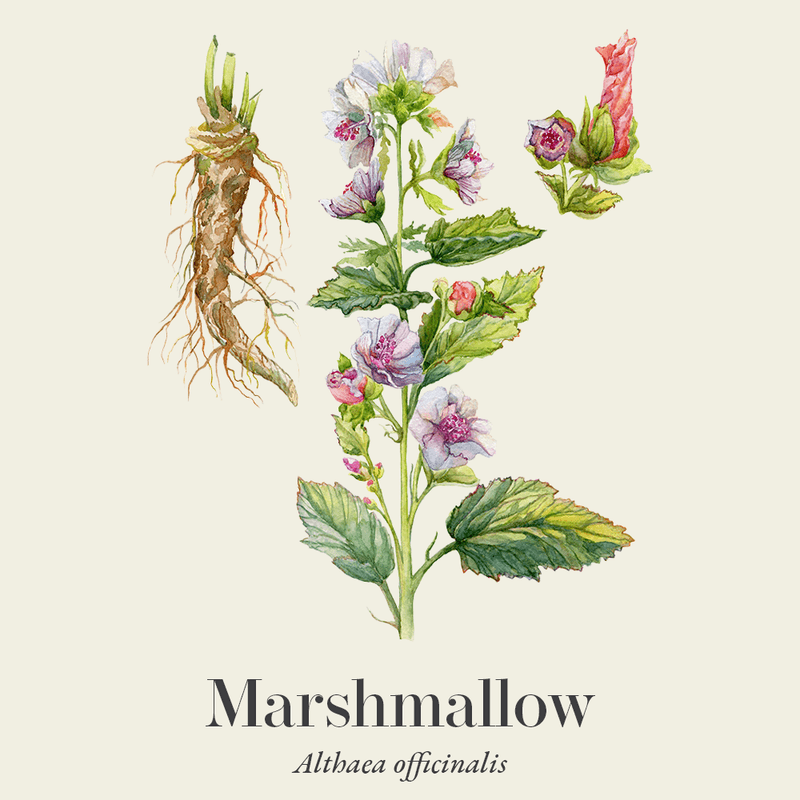
Garden hollyhocks are everywhere in American backyards, lining fences and climbing past porch rails every summer. Most people know them by their towering spikes of crepe-paper blooms, and fewer people know their scientific name: Kew’s Plants of the World Online records the common garden hollyhock as Alcea rosea, a species that was previously grouped under the name Althaea rosea before botanists separated the two genera.
That old naming overlap is the root of a lot of confusion.
The plant behind the documented herbal tradition is an entirely different species: Althaea officinalis, commonly called true marshmallow. Both plants belong to the mallow family, Malvaceae, and they share a family resemblance in leaf shape, flower structure, and the slippery, gel-like quality of their plant tissue.
Shared family traits do not make them interchangeable as remedies, any more than a crabapple and a Honeycrisp are the same fruit because both grow on apple trees.
Common names make the problem worse. “Hollyhock” and “marshmallow” have drifted across both species in historical writing, which means a reference to “hollyhock root” in an old text might describe Alcea rosea, Althaea officinalis, or a plant the author could not precisely identify. The European Medicines Agency’s monograph on marshmallow root applies specifically to Althaea officinalis, not to garden hollyhock.
Botanical classification exists precisely so that a plant name points to one species and not a cluster of loosely related possibilities.
The central answer for anyone who came here hoping for a root-tea recipe is this: ordinary garden hollyhock has not been established as an effective sore-throat treatment. Understanding why the association feels so believable requires looking at history and plant chemistry, but neither one overturns that basic fact.
What the Ancient Record Does—and Does Not—Show
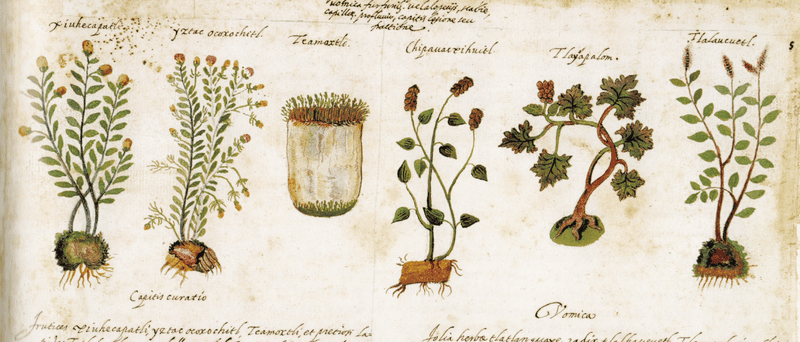
Pliny the Elder, the Roman naturalist who compiled his encyclopedic Natural History in the first century CE, described a plant he called alcea and attributed medicinal properties to it. That reference is one of the oldest pieces of writing that people connect to hollyhock, and it shows up repeatedly in popular articles as proof of an “ancient” remedy.
Pliny’s Book 27 does describe alcea and its uses, but the text does not allow a confident identification of that plant as the modern species Alcea rosea, and it does not specifically establish sore-throat relief as the targeted use.
Ancient botanical names were applied loosely. Without a herbarium specimen or a genetic sample, there is no reliable way to trace Pliny’s alcea to the hollyhock growing in a twenty-first-century American backyard.
The word traveled through centuries of copying, translation, and reinterpretation before landing in modern plant names, and each step introduced the possibility of slippage between what the author meant and what a later reader understood.
Later herbal writers are somewhat more specific. One historical herbal reference describes hollyhock flowers as the primary medicinal part and compares their action to that of marshmallow, suggesting a soothing quality rather than a targeted throat treatment.
Modern research has also examined mucilage from hollyhock flowers and leaves rather than focusing exclusively on roots. That pattern does not mean roots were never discussed in historical writing, but it does mean the popular image of an ancient, well-established hollyhock-root throat remedy oversimplifies a messier historical record.
Historical association and reliable botanical identification are two different things. A plant that appears in old texts under a similar name is not automatically the ancestor of the garden plant you grow today, and a general traditional use is not the same as a documented, species-specific sore-throat treatment.
Hollyhock Mucilage Makes the Folk Theory Plausible

Mucilage is a gel-forming polysaccharide, a long-chain carbohydrate molecule that swells and becomes slippery when it contacts water. Plants produce it for several reasons, including moisture retention and seed dispersal, and Alcea rosea contains measurable amounts of it.
When mucilage coats a surface, it can temporarily reduce friction and create a physical barrier between the tissue underneath and whatever is irritating it. That property is why mallow-family plants have attracted attention as potential demulcents, meaning substances that may soothe irritated mucous membranes.
A study on mucilage extracted from Alcea rosea examined how to isolate the polysaccharide, what it is made of at the molecular level, and how it behaves in laboratory conditions. Investigators measured properties such as viscosity, water-binding capacity, and antioxidant activity in test-tube settings.
Those findings tell researchers what the compound is and how it behaves chemically. They do not tell anyone how much mucilage reaches the throat when a person chews a raw root, whether it stays there long enough to matter, or whether the effect translates into measurable relief for a person with a sore throat.
Earlier work on high-molecular-weight polysaccharides from mallow-family plants including Alcea rosea similarly characterized the chemical structure and molecular weight of the compounds rather than testing outcomes in patients. High molecular weight can matter for how a gel behaves physically, but characterizing a molecule is a starting point for research, not a finished proof of clinical benefit.
Chemical plausibility is genuinely useful. Knowing that hollyhock contains mucilage gives researchers a rational hypothesis worth investigating.
What it does not provide is a verified dose, a safe preparation method, or evidence that a backyard root preparation produces the same effect as a standardized extract in a controlled study. Plausibility supports a question; it does not answer one.
Marshmallow Root Has a Better-Documented Traditional-Use Record
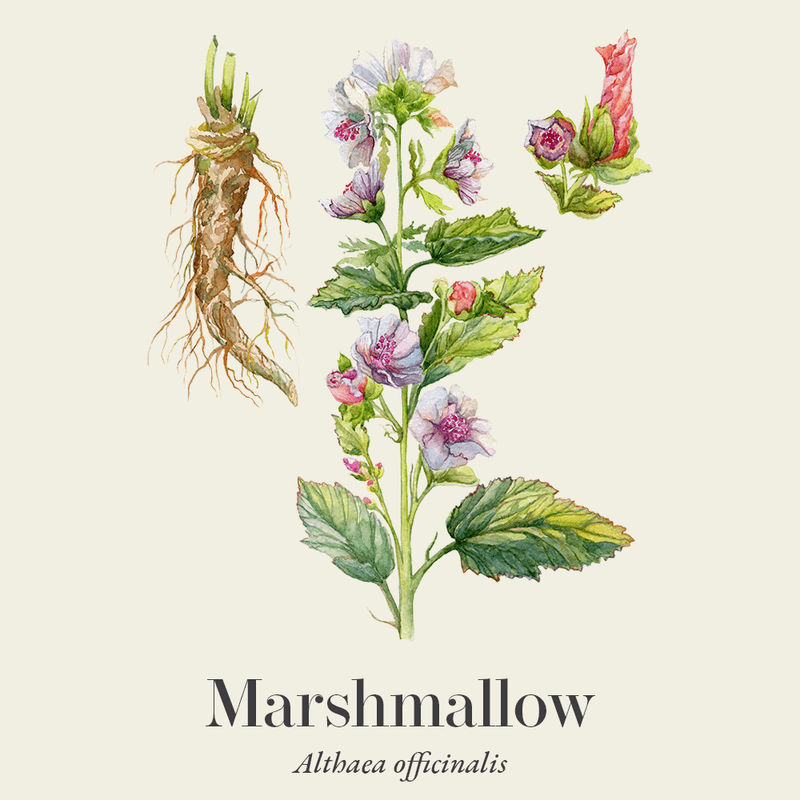
When herbalists and regulatory agencies discuss a traditional throat remedy from the mallow family, they are pointing to Althaea officinalis, not Alcea rosea. The distinction matters because the evidentiary record behind Althaea officinalis is considerably more developed, even if it still falls well short of what modern clinical standards require.
The European Medicines Agency recognizes preparations made from dried Althaea officinalis root for mouth or throat irritation and associated dry cough under a traditional-use framework. That recognition reflects a long history of documented use across European herbal practice.
The EMA explicitly states, however, that clinical-trial evidence for marshmallow root is insufficient to establish efficacy by the standards applied to conventional medicines. “Traditional use” in regulatory language means the remedy has a consistent track record in the historical literature, not that controlled studies have confirmed it works.
A better-documented traditional-use record does not equal stronger clinical evidence. Those are two separate measurements.
Marshmallow root scores higher on the first measure than Alcea rosea does, but neither plant has cleared the bar of rigorous, replicated clinical trials showing reliable, measurable benefit for sore-throat symptoms. The EMA’s final assessment report for Althaea officinalis root describes the evidentiary basis in detail and makes clear that the traditional-use classification is the ceiling of what the available data supports.
Commercial marshmallow-root products sold in health food stores or pharmacies are made from identified plant material, processed under defined conditions, and formulated to deliver a specific preparation. That chain of identification and consistency is exactly what is missing when someone digs a root from a backyard bed.
A product made from confirmed Althaea officinalis root cannot validate an improvised preparation made from Alcea rosea, because the species, the plant part, the preparation method, and the dose are all different variables that have not been tested together in a garden setting.
Why a Garden-Root Tea Is Not a Safe Substitute
Curiosity about a plant’s chemistry is reasonable. Acting on that curiosity by digging up a backyard root, chewing it, or brewing it into a tea to treat a sore throat is a different matter, and the practical risks are real enough to take seriously.
The first problem is identification. Hollyhocks are distinctive when they are blooming, but roots pulled from the ground do not carry obvious labels.
A confident gardener who grows multiple plants in adjacent beds can still make a misidentification when working with roots alone. Poison Control consistently cautions against consuming unidentified plant material, noting that even experienced adults can confuse species at the root level.
Misidentification is not a remote possibility reserved for beginners.
The second problem is what the plant may have absorbed from its environment. FDA guidance on botanical dietary supplements makes clear that a plant’s safety depends on its chemistry, the dose consumed, and how it is prepared, and that “natural” is not a synonym for safe.
Backyard hollyhocks may have been treated with pesticides or herbicides, grown in soil that contains heavy metals or other contaminants, or exposed to animal waste from pets or wildlife. Roots concentrate whatever is in the surrounding soil.
None of those variables are controlled in a home garden the way they are in an agricultural setting that supplies commercial herbal products.
A third issue is dose. No standardized preparation or dosage for Alcea rosea root as a sore-throat treatment has been established in the research covered here.
FDA materials on natural toxins in food note that some plant compounds that appear harmless in small amounts can cause problems at higher concentrations, and that concentration varies by plant age, growing conditions, and preparation method. Without knowing the mucilage content of a specific root from a specific plant in a specific soil, there is no way to calibrate a home preparation.
None of this means that every hollyhock is dangerous to touch or that the plant is poisonous in the conventional sense. The point is narrower: digging, brewing, and dosing a backyard root as a medicinal preparation introduces a set of unknowns that a commercial product, made under quality controls from identified plant material, has already addressed.
Use Medical Judgment When Your Throat Hurts

A sore throat feels miserable, and it is natural to want a quick fix from whatever is growing nearby. Before reaching for any remedy, garden-grown or otherwise, it helps to understand what a sore throat usually is and when it signals something that needs professional attention.
CDC guidance on sore throats explains that most cases are caused by viruses and improve on their own within about a week. Bacterial infections, including strep throat, can look nearly identical to a viral sore throat in the early stages, and distinguishing between them requires a throat swab, not a visual inspection.
Treating a strep infection with rest and herbal preparations while skipping antibiotics carries real risks, including the possibility of complications that affect the heart or kidneys.
The CDC lists several situations that call for medical evaluation rather than watchful waiting. Seek care if you or your child experiences difficulty breathing or swallowing, signs of dehydration, blood in saliva or phlegm, excessive drooling in a young child, a skin rash appearing alongside throat pain, symptoms that keep worsening after the first few days, or symptoms that simply do not improve within about a week.
These are not rare edge cases; they are the signals that separate a self-resolving viral illness from something that needs a clinician’s assessment.
If you are interested in commercially prepared marshmallow-root products and want to try one alongside conventional care, the starting point is the product label, not a homemade recipe. EMA guidance for Althaea officinalis root preparations advises following the specific product leaflet and consulting a healthcare provider if symptoms persist beyond one week.
Special caution applies for children, people who are pregnant or breastfeeding, anyone taking prescription medications, and situations where medication absorption could be affected, since mucilaginous substances can potentially alter how quickly the gut absorbs other compounds. Those conversations belong with a pharmacist or clinician, not with a gardening article.
Throat pain that sends you to the garden looking for answers is throat pain that deserves a straightforward medical evaluation. Herbal interest and medical judgment are not mutually exclusive, but medical judgment comes first.
Let the Hollyhock Stay a Plant, Not a Proven Remedy
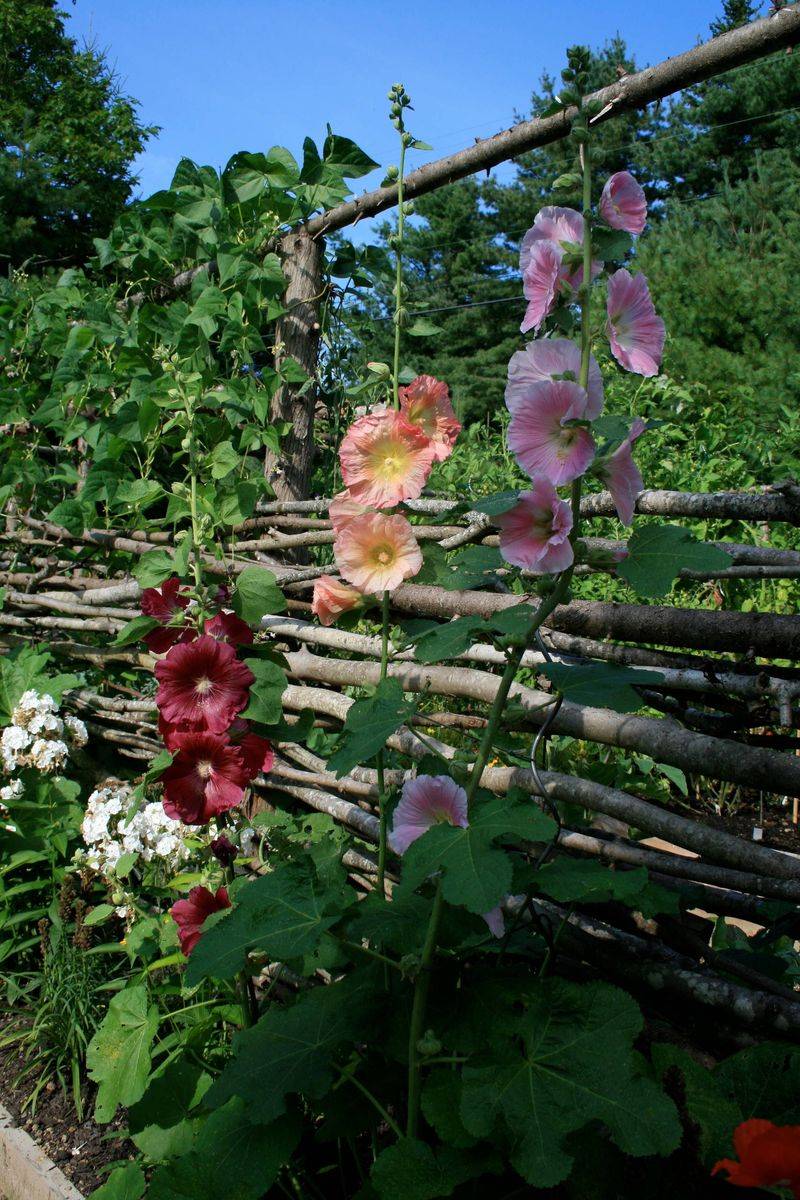
Hollyhocks earn their place along the fence on the strength of their blooms, their height, and the reliable way they return each season. The folklore connecting them to sore-throat cures earns its persistence from two real features: the plant genuinely contains mucilage, and its family relationship to Althaea officinalis made the association feel logical to writers working centuries before modern botanical classification existed.
Neither feature adds up to an ancient, proven cure. Laboratory research on Alcea rosea mucilage characterizes the compound’s chemistry without establishing a clinical benefit.
EMA’s recognition of marshmallow root applies to a different species under a traditional-use standard that the agency itself describes as insufficient clinical evidence. And the taxonomy is clear: Alcea rosea and Althaea officinalis are distinct species with distinct records.
Four practical rules follow from everything above. First, identify the species before drawing any conclusions about medicinal use.
Second, do not substitute Alcea rosea for Althaea officinalis on the assumption that similar-looking plants work the same way. Third, avoid improvised garden-root preparations regardless of how plausible the chemistry sounds.
Fourth, treat a persistent or severe sore throat as a health question for a clinician, not a gardening experiment. CDC guidance exists precisely because sore throats vary widely in cause and seriousness.
A plant that survives drought, towers over the fence, and blooms in colors from white to nearly black is already doing something remarkable. It does not need an unproven medicinal claim to justify its spot in the yard.