
If You Plant These 15 Small Trees This Fall, Your Yard Becomes The One Neighbors Slow Down For Next Spring
Fall is the secret season for planting trees, even though most people wait until spring. The soil is still warm, the air is cool, and roots can grow strong before winter without baking in summer heat.
A small tree planted now can be blooming like a showpiece by April or May. Here are 15 compact trees that fit real backyards and give you a big payoff for one weekend of digging.
1. Flowering Dogwood
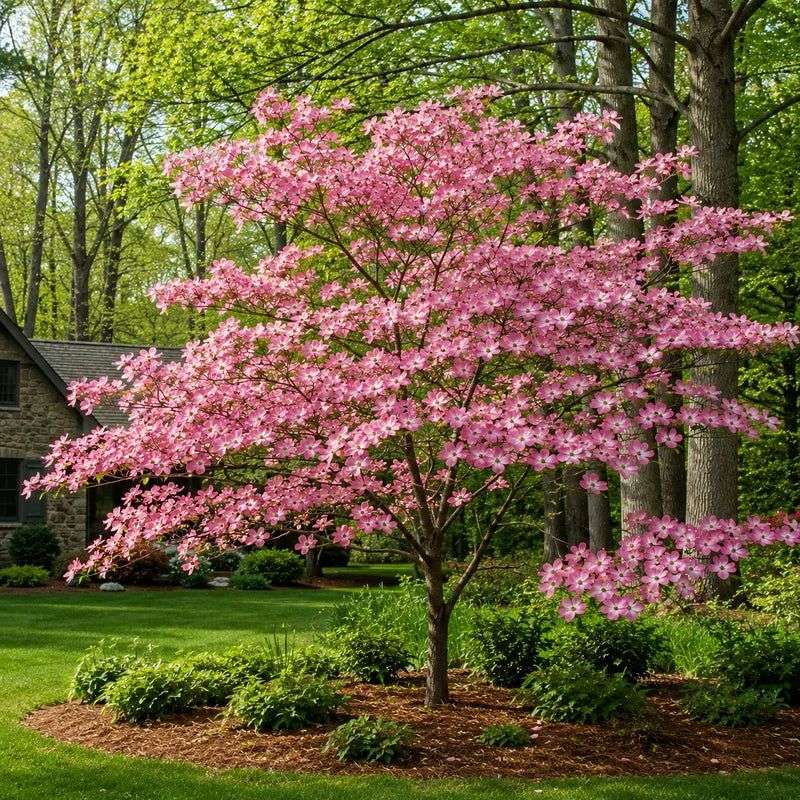
Ask anyone who grew up in the eastern US about spring, and a dogwood in full bloom usually shows up in the memory. Those pink, white, or red flower-like bracts open on the branches and make a yard look dressed for a party.
Fall planting suits dogwoods well because their shallow roots hate summer stress. Pick a spot with morning sun and afternoon shade, since hot afternoon sun can scorch leaves.
Kousa dogwood is a tougher cousin that blooms a few weeks later and shrugs off a common leaf disease called anthracnose better than Cornus florida.
Keep a 2 to 3 inch ring of mulch around the base, but pull it back a few inches from the trunk. Water deeply once a week until the ground freezes.
Come autumn, you also get red leaves and bright berries the birds love.
2. Eastern Redbud
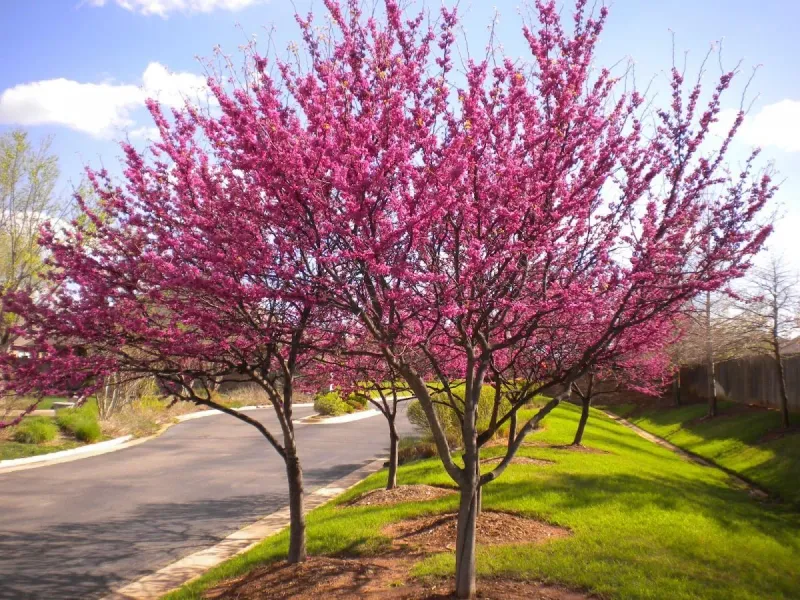
Bare branches suddenly coated in magenta-pink? That is the redbud trick, and it happens before a single leaf appears.
Drivers really do tap the brakes when they see one.
Redbuds are native across much of the US and stay around 20 to 30 feet tall, often smaller. They handle sun or light shade and are not picky about soil, as long as it drains.
Varieties like Flame Thrower add rainbow foliage in red, orange, and yellow through the seasons.
One caution: redbuds dislike being moved once settled. Choose the final spot carefully, plant it at the same depth it sat in the pot, and leave it alone to grow.
3. Crabapple
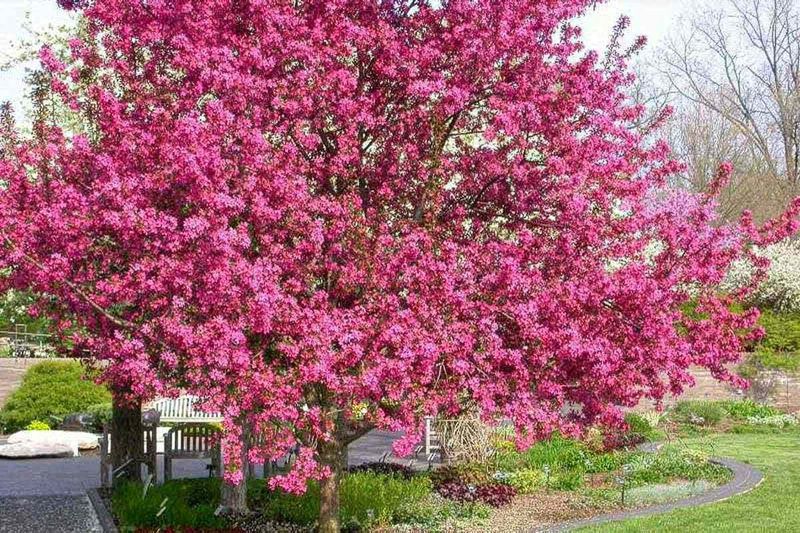
Grandma’s crabapple might have dropped messy fruit all over the sidewalk, but modern varieties are a different story. Many newer types hold tiny fruits on the branches well into winter, where birds pick them off instead of you raking them up.
The spring show is the main event. Clouds of pink, white, or deep rose blossoms cover the tree for a week or two, and the bees go wild.
Golden Raindrops and Sargent Tina are compact choices that suit smaller lots.
Look for disease-resistant varieties on the tag, since apple scab can cause spotted, dropping leaves. Full sun and decent airflow help keep foliage clean.
Plant now and you can expect a light bloom next spring, then a bigger one every year after.
4. Serviceberry
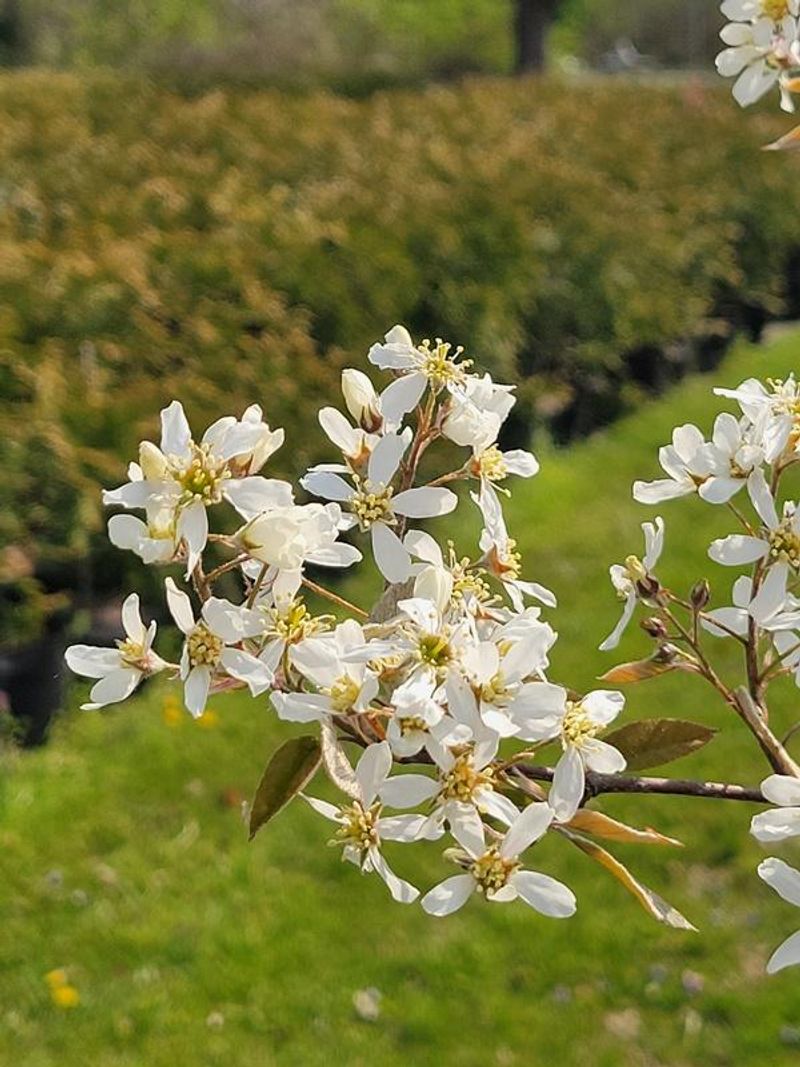
Few trees work as hard across four seasons as the humble serviceberry. Early spring brings starry white flowers, summer brings sweet berries that taste a bit like blueberries, and fall turns the leaves fiery orange-red.
Autumn Brilliance is a popular pick for its strong color and tidy shape. Serviceberry is native, tolerates a range of soils, and grows well in full sun to part shade.
It stays modest, often 15 to 25 feet.
Fun fact: the old nickname shadbush comes from blooming when shad fish ran upstream each spring. If you want berries for yourself, you may need a little netting, because robins know exactly when they ripen.
5. Crape Myrtle
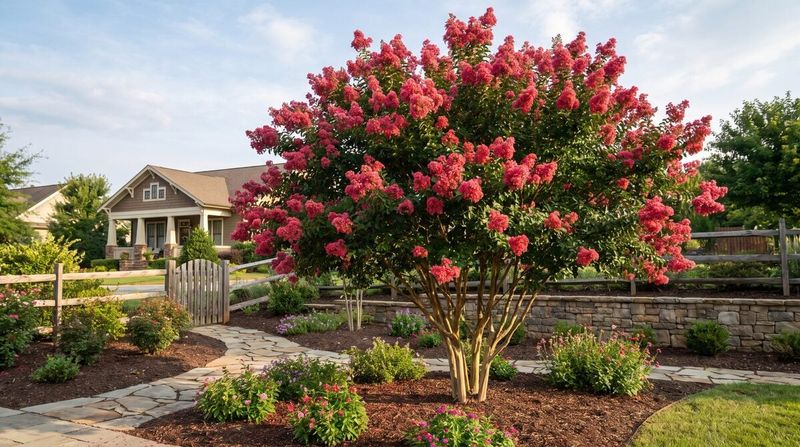
Southern gardeners treat crape myrtle like a summer best friend. While spring trees fade, it pumps out pink, red, purple, or white flowers for weeks in the heat.
Dwarf and semi-dwarf types fit under windows or along a fence. The peeling, smooth bark looks great in winter, and leaves turn orange and red in fall.
It loves full sun and handles hot spots where other trees sulk.
The biggest mistake is what folks call crape murder: chopping the trunks into stumps each winter. That can lead to weak, floppy growth.
Pick a size that fits the space and just trim off small twigs or crossed branches. Best for zones 7 through 10.
6. Japanese Maple
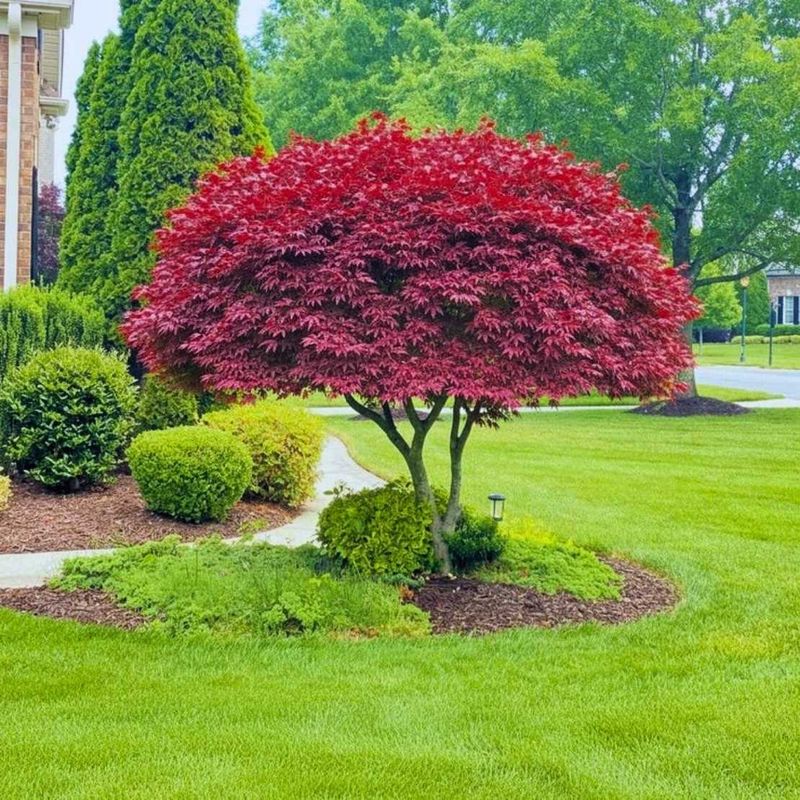
Some trees shout with flowers. A Japanese maple speaks quietly with its leaves, and people still stop to stare.
Bloodgood holds deep burgundy foliage from spring to fall, while Shin Deshojo opens in a shocking pinkish red in spring. Compact forms stay under 10 to 15 feet, and weeping types work in containers or small beds.
If your maple’s leaf edges turn crispy brown in summer, that is usually leaf scorch from hot sun or dry soil. Give it morning sun and afternoon shade in warm regions, plus steady water the first year.
Fall planting lets roots get settled before that first summer test.
7. Japanese Stewartia
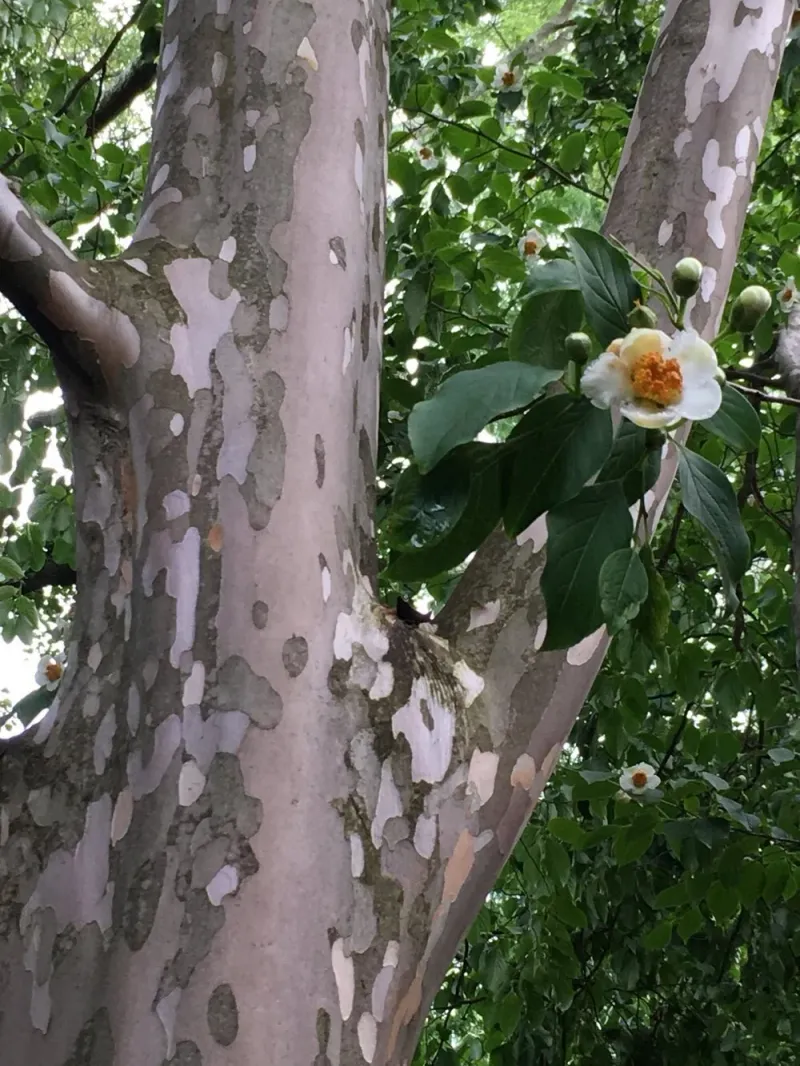
Garden collectors whisper about stewartia like it’s a well-kept secret. Most neighbors have never seen one, which is exactly why it gets noticed.
In early summer, white flowers that look like camellias open one after another. Fall brings red, orange, and yellow leaves.
Then winter reveals bark that peels in patches of gray, tan, and cinnamon, almost like camouflage.
Stewartia wants moist, acidic soil that drains well and some afternoon shade. It grows slowly, so buy the biggest one your budget allows.
Patience pays off here, and the bark alone is worth the wait.
8. Star Magnolia
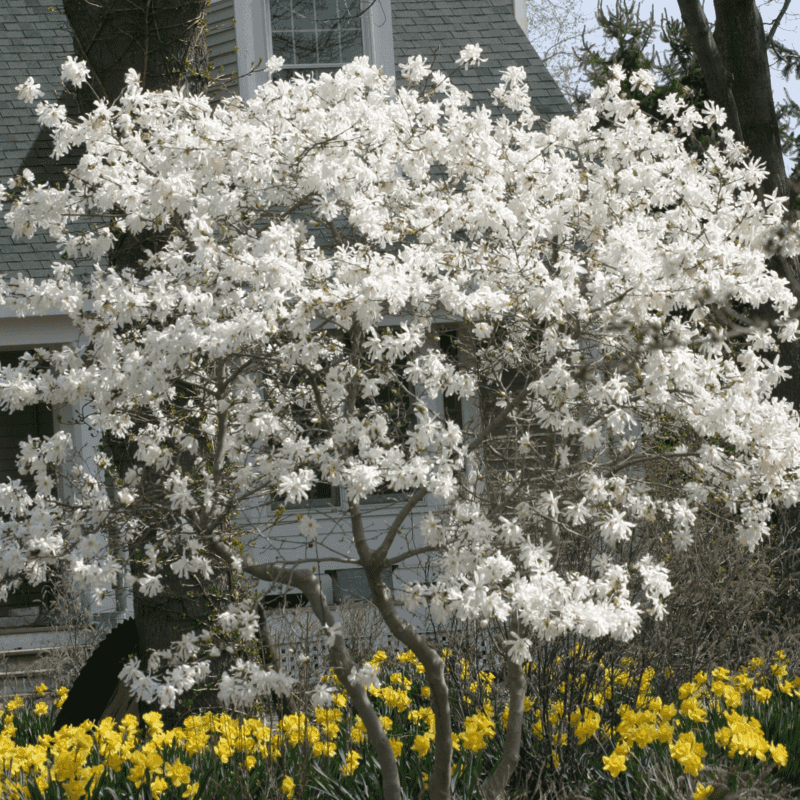
Picture walking outside on a chilly March morning and smelling something sweet. A star magnolia in bloom does that.
Royal Star opens big, white, double flowers early, and it is known for handling late freezes better than many magnolias. Jane magnolia, one of the Little Girl hybrids, blooms a bit later with purple-pink tulip shapes, which helps it dodge frost damage.
Both stay small enough for a front yard. Plant in full sun to part shade, away from windy corners that can brown the petals.
If blooms turn brown overnight, a frost likely hit them, and the tree itself is usually fine.
9. Witch Hazel
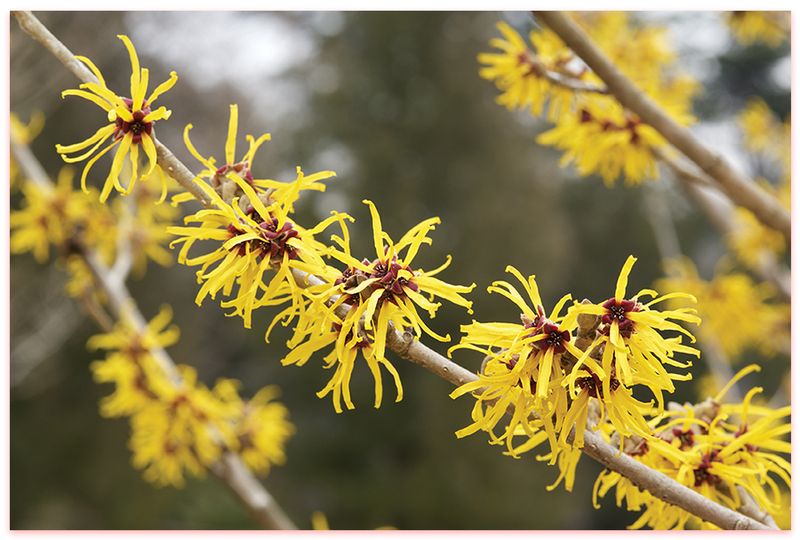
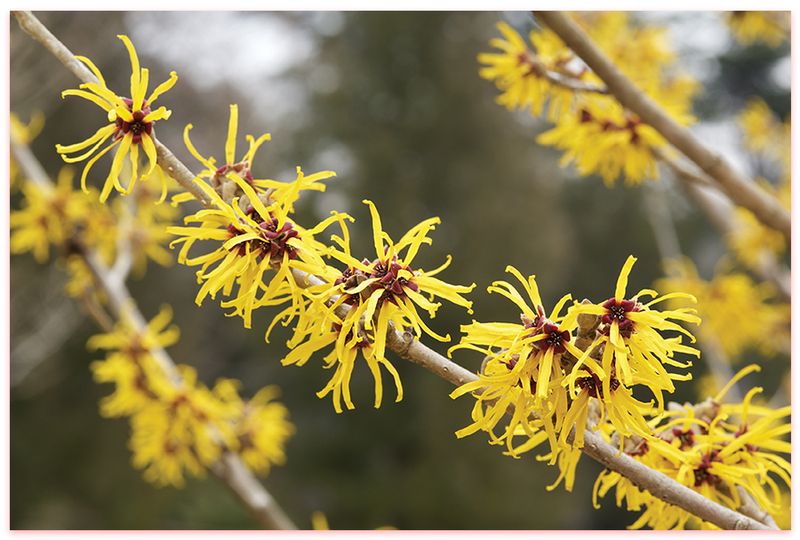
Just when the garden looks finished for the year, witch hazel throws a party. Bright yellow, spidery flowers pop out in late fall or early winter with a light, spicy scent.
Native Hamamelis virginiana grows as a small tree or large shrub, usually 15 to 20 feet. Leaves turn yellow and orange first, then the flowers take over.
It does well in sun or part shade and tolerates clay.
Here’s the history bit: early settlers used forked witch hazel branches as divining rods to search for water. Today you are more likely to see its extract in a drugstore.
In your yard, it fills a quiet season nothing else covers.
10. Sourwood
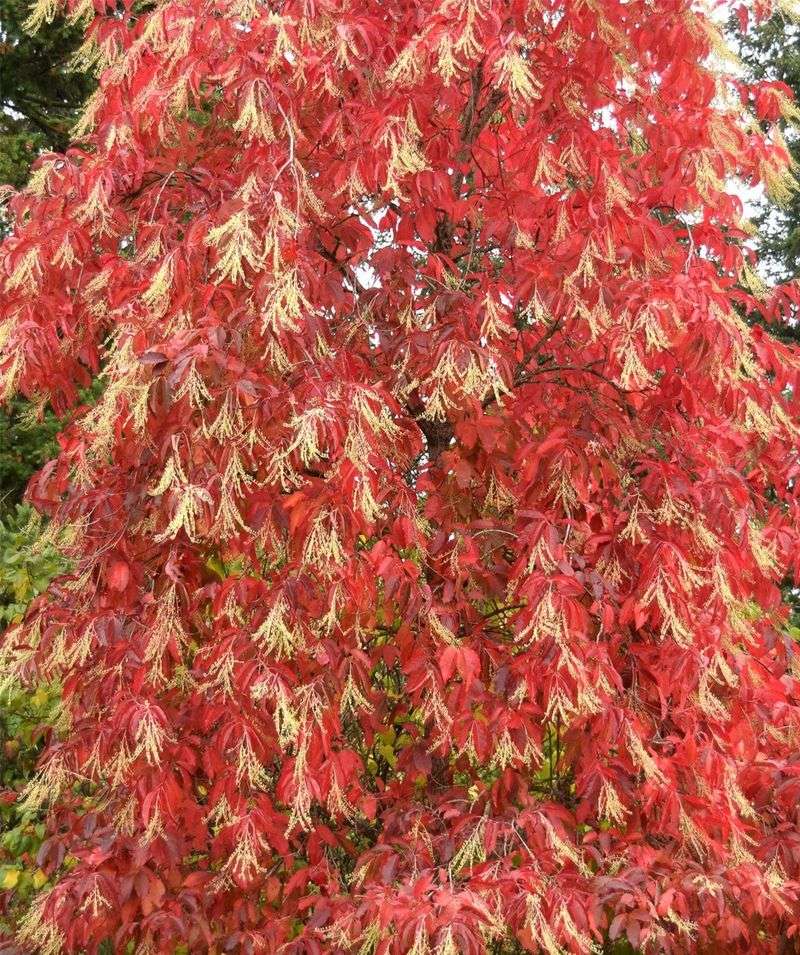
Beekeepers in the Appalachians prize sourwood honey, and one look at the tree explains why. In midsummer, long sprays of tiny white bells hang like lace from the branches.
Then autumn arrives, and sourwood turns red, burgundy, pink, and purple, often while the flower stalks still linger. It is one of the earliest native trees to color up.
Mature size is often 20 to 30 feet in home gardens.
Sourwood needs acidic soil that drains well and does not care for pollution or compacted ground. If your soil is heavy clay or alkaline, choose another tree on this list.
In the right spot, it is a showstopper.
11. American Holly
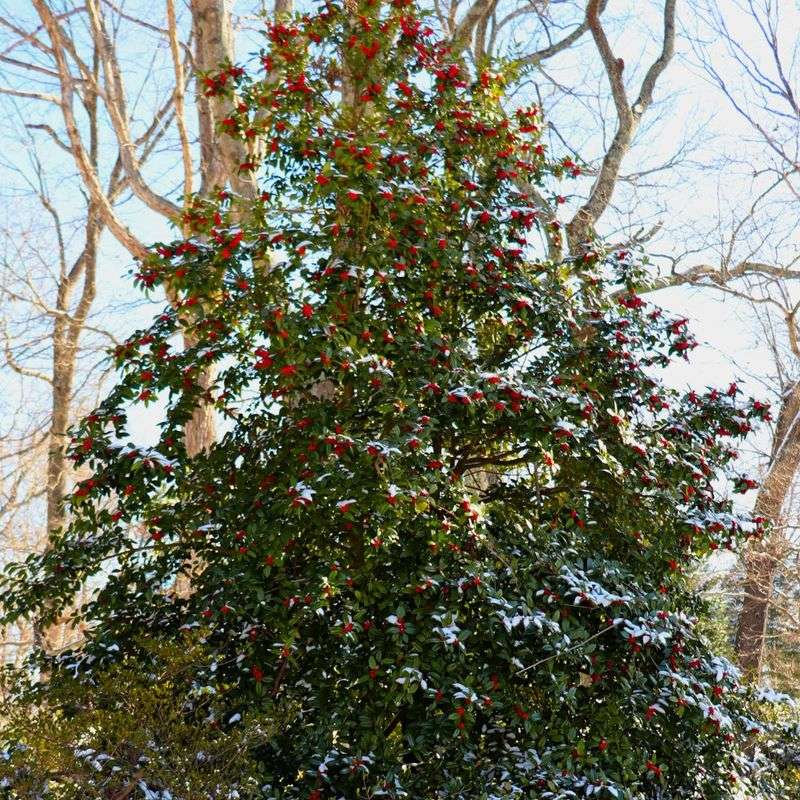
Plenty of yards go brown and bare from December to March. An American holly keeps the lights on.
Glossy evergreen leaves and red berries stand out against snow and gray skies, and the berries often hang on into spring. Birds use it for shelter, too.
It grows slowly into a neat pyramid shape.
The catch most people miss: only female hollies make berries, and they need a male holly nearby for pollination. If your holly never fruits, that is often the reason.
Buy plants labeled by sex, or plant one male for every few females.
12. Japanese Tree Lilac
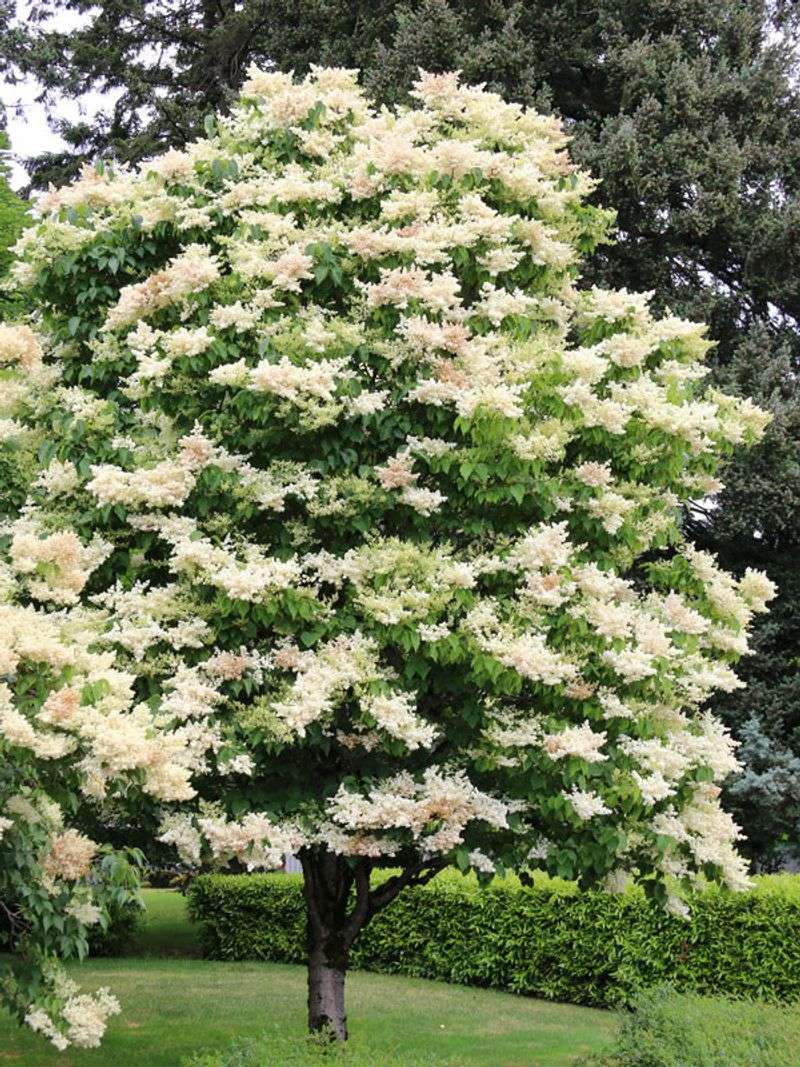
Spring bloomers are fading, the tulips are done, and then Ivory Silk steps in. Large creamy-white flower clusters cover the tree in early summer.
Japanese tree lilac is tough enough for street plantings, which means it handles heat, cold, and rough soil better than many ornamentals. It stays around 20 to 25 feet with a tidy rounded crown.
Shiny cherry-like bark adds winter interest.
The scent is different from old-fashioned shrub lilacs, a bit more like privet, so give it a sniff at the nursery first. It also resists powdery mildew better than common lilac.
Full sun gives you the most flowers.
13. Pagoda Dogwood
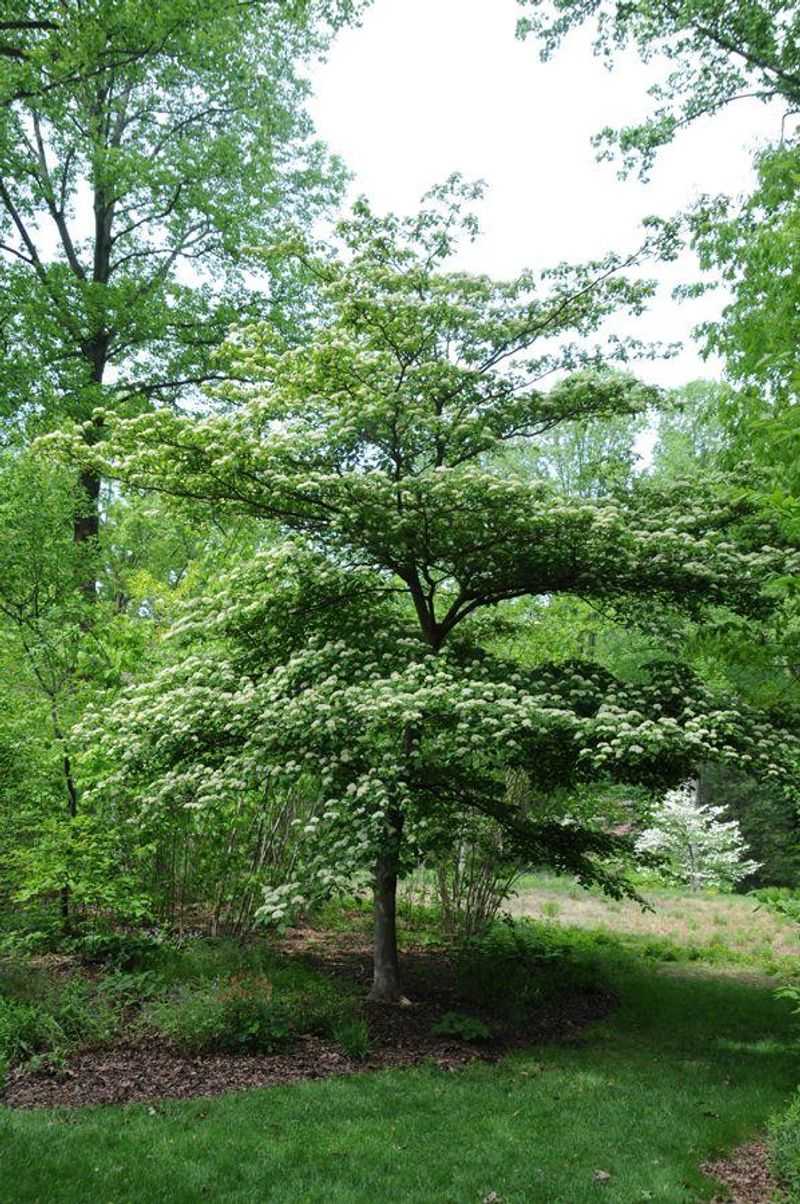
Layered like a wedding cake, pagoda dogwood has branches that grow out in flat, horizontal tiers. Even in winter, that shape makes a shady corner look designed.
In late spring, small fragrant white flowers sit on top of each layer. Dark blue-black berries follow on red stems, and birds clean them up fast.
It is native and usually stays 15 to 25 feet.
Pagoda dogwood likes cool, moist soil and part shade. If you have a spot under tall trees where nothing seems happy, this is a strong candidate.
Avoid hot, dry sites, where it can struggle.
14. Golden Chain Tree
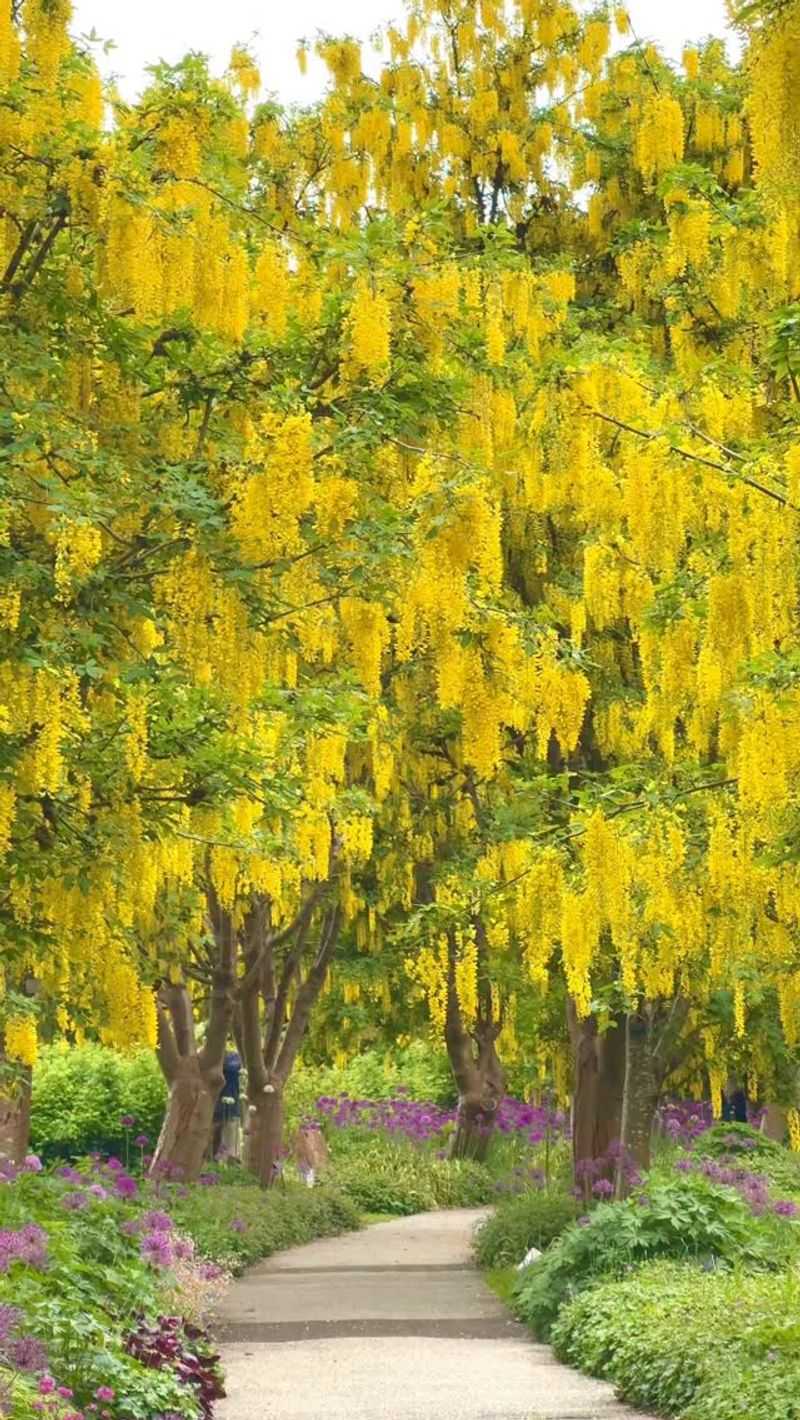
Yellow flower chains hanging a foot or more long look almost unreal. Golden chain tree delivers that drama for a couple of weeks in late spring.
It does best in areas with cool summers, such as the Pacific Northwest and northern states. Hot, humid summers can stress it.
Give it sun, good drainage, and shelter from harsh afternoon heat.
Fair warning: all parts of the tree, especially the seeds, are poisonous. If kids or pets roam the yard, plant it where seed pods can be picked up, or choose another tree.
Snipping off spent flowers before pods form can help.
15. Smoke Tree
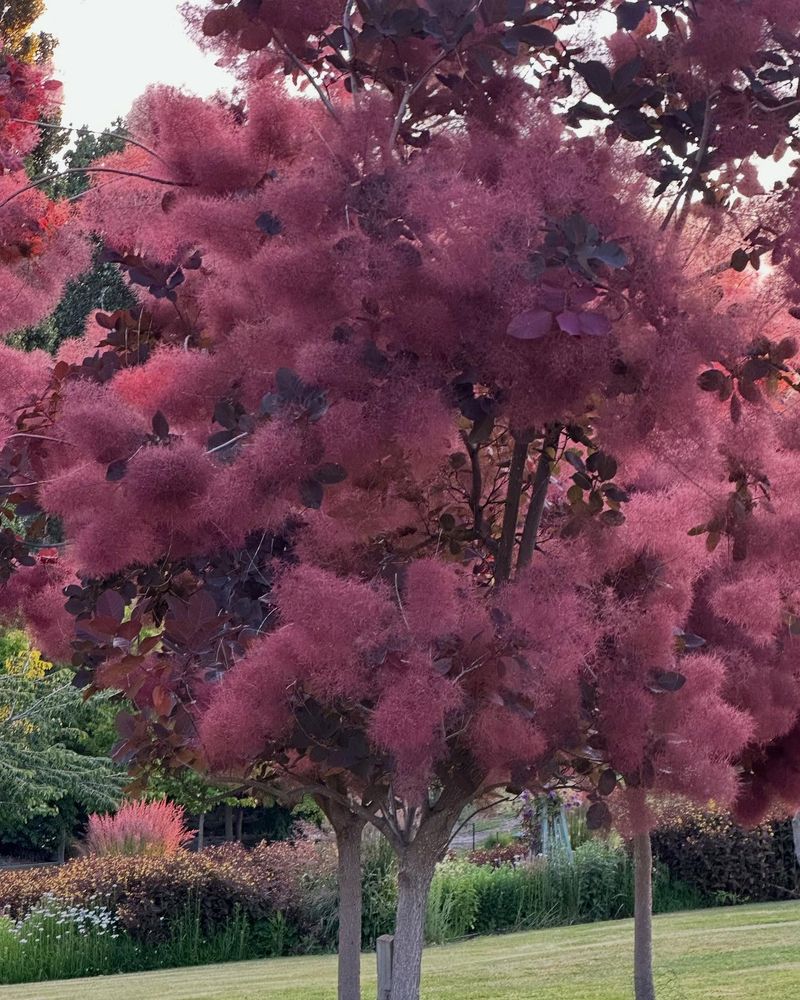
From across the street, it really does look like the tree is wrapped in pink smoke. Those airy plumes are actually fuzzy flower stalks that hang on for weeks.
Grace is a popular variety with purple-red leaves that glow when sun shines through them. In fall, the foliage turns orange, red, and yellow.
It handles dry, poor soil and heat once established.
You can grow it as a small multi-stemmed tree or cut it back hard in late winter for bigger, bolder leaves, though that may mean fewer plumes. Either way, full sun brings the best color.
It ends this list as proof that small trees can steal the whole block.