
Why Your Snake Plant Hasn’t Bloomed Indoors, and What You Can Safely Do
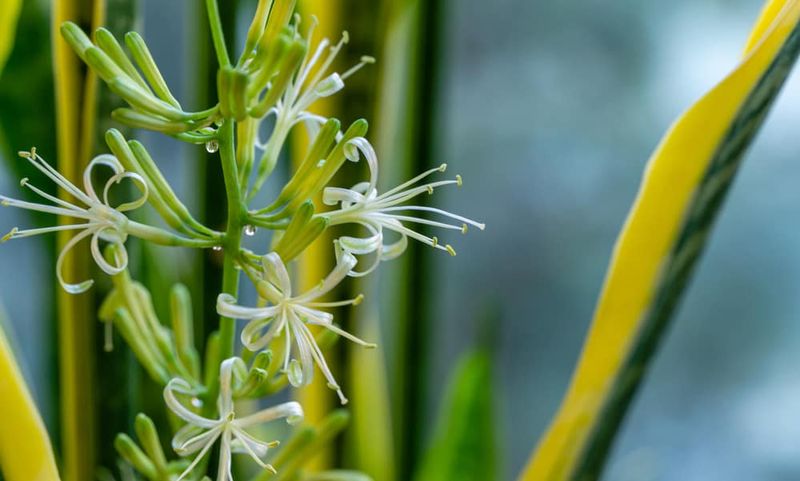
You water it, you dust it, and you keep it away from the cold window, yet your snake plant has never shown a single flower. Take a breath, because that is the normal story for most people who grow one at home.
The blooms are fragrant and lovely, but they almost never appear indoors. Here is what is known, what is not, and how to care for your plant without chasing a bloom.
Indoor flowering is the exception, not a care test
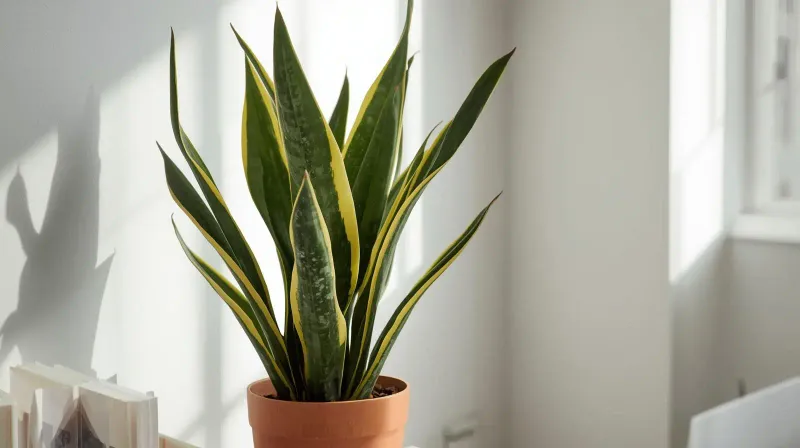
Few houseplant owners ever see a snake plant bloom, and that is not a sign you did anything wrong. UF/IFAS Extension describes the small, fragrant, greenish-white flowers as something that shows up on mature plants, and it notes that flowers rarely appear indoors.
Orange berries may follow a bloom, but that is uncommon in a living room too.
Rare does not mean impossible. Some indoor plants do bloom, and a few owners get a pleasant surprise.
It just does not happen on a schedule, and no one has pinned down a dependable way to make it happen.
The same goes for houseplants in general. NC State Extension lists the plant as Dracaena trifasciata, which is the current scientific name.
You may still see Sansevieria trifasciata on plant tags, since that is the older name and it stuck around in stores.
So here is a practical way to think about it. A snake plant without flowers is just a typical snake plant.
A snake plant with flowers is a lucky one. Neither fact, on its own, tells you whether the plant is thriving or struggling.
For that, look at the leaves: firm, upright, and steady in color are better clues than any bloom stalk.
Maturity matters, but there is no reliable countdown
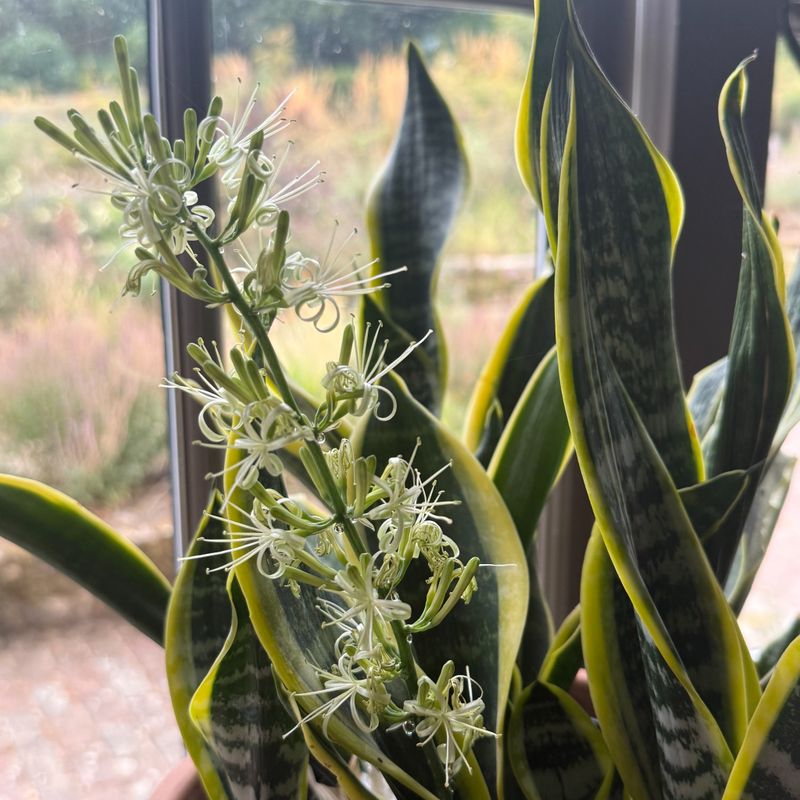
If you have read that flowers come on mature plants, that part checks out. UF/IFAS Extension ties the blooms to mature snake plants, which is why a young pup from a friend probably will not flower soon.
What the source does not tell us is how mature a plant must be, or what indoor conditions make a mature plant bloom.
That gap matters. You will see claims online about five years, ten years, or some magic pot size, but none of those numbers are backed up here.
Treat them as guesses.
Think of maturity as one piece of a puzzle rather than a countdown clock. An older, bigger plant may have a better shot than a baby one, yet waiting longer is not a promise of flowers.
Plenty of long-lived snake plants spend decades indoors without a single bloom stalk.
A useful next step is simple: stop counting years. Mark the plant’s birthday on your calendar if it makes you smile, but judge your care by leaf health, steady growth, and a pot that drains well.
If a flower spike ever does appear, enjoy it and enjoy the scent, which tends to be stronger in the evening.
Low-light tolerance does not make light irrelevant
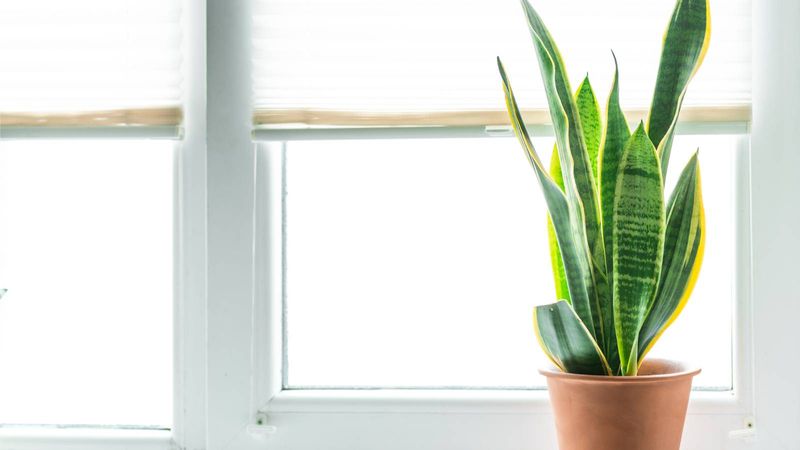
Snake plants have a reputation as the plant that survives a dark corner. NC State Extension says it tolerates very low light, and that is true.
Tolerating a dim spot, though, is not the same as being at its best there.
General houseplant advice points the same way. Iowa State Extension explains that light is often a limiting factor for indoor plants, and that too little light can go hand in hand with flowers failing to develop.
That is broad houseplant guidance, not a controlled test on snake plants.
So low light may be one limit on your plant, but it is not a proven reason your particular plant has not bloomed. Plenty of snake plants in bright rooms never flower either.
If your plant lives in a dim hallway, a brighter spot is a low-risk experiment. Move it closer to a window a little at a time over a couple of weeks, so the leaves can adjust.
Avoid sudden, harsh sun through glass, which can scorch the leaves and leave pale or brown patches. If scorching shows up, back off.
The goal is a happier plant, and any bloom would be a bonus rather than the expected result.
Protect the roots before chasing flowers
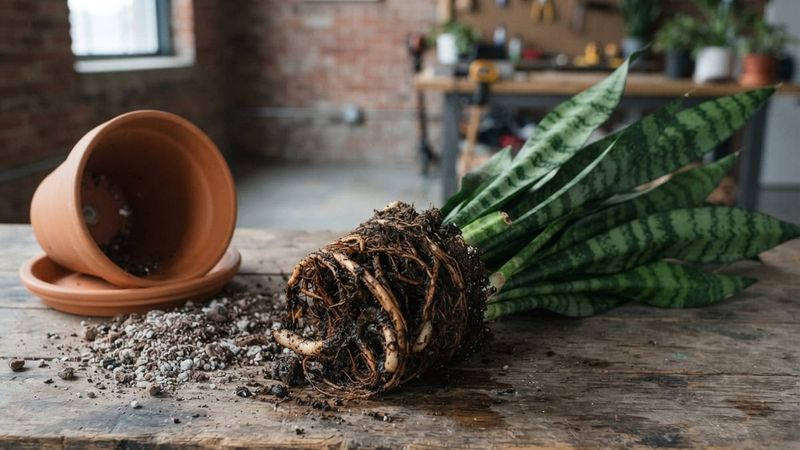
Root health comes first, because a rotted plant will not bloom or do much of anything else. NC State Extension recommends a well-drained potting mix and warns that overwatering can lead to root rot.
Those two habits protect the plant you already have.
Pick a pot with a drainage hole and a loose mix that lets water run through. Water, then wait until the soil has dried out before watering again.
Poke a finger a couple of inches into the soil to check, and if it still feels damp, give it more time.
UGA Extension also cautions against too much water for this tough plant. Warning signs include soft, mushy leaf bases, a sour smell from the soil, or leaves that yellow and flop over.
None of this is a recipe for flowers. It is simply the kind of care that keeps a snake plant steady for years.
If a bloom ever comes along, it will arrive on a plant with healthy roots, which is where you want to be anyway.
A tight pot is not a proven flowering switch
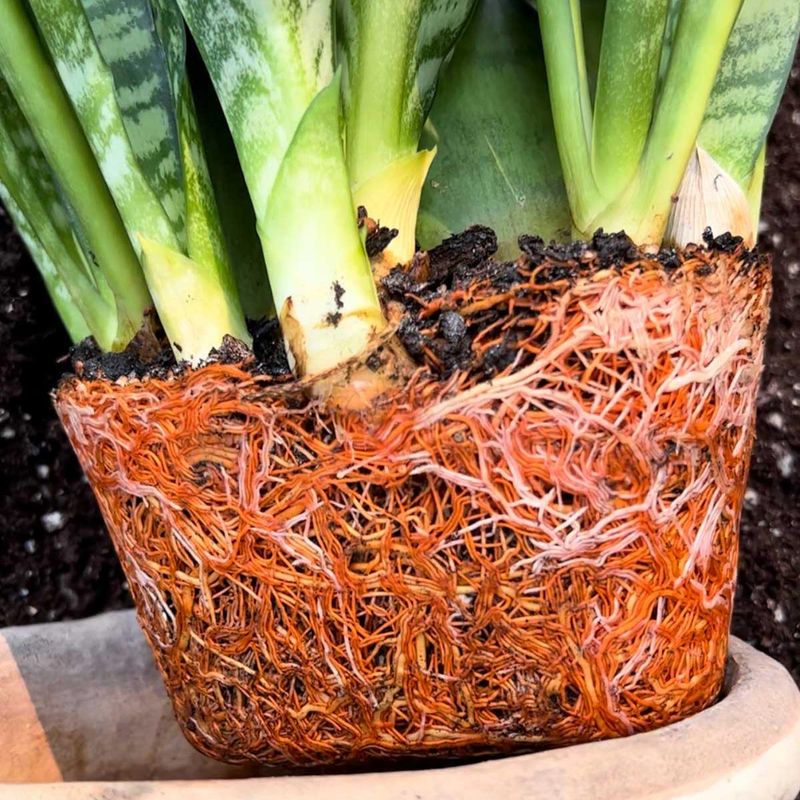
You may have heard that snake plants bloom when their roots are crammed in a pot. It is a popular tip, and it is tempting because it costs nothing.
The sources reviewed here do not back it up.
UGA Extension says snake plants put up with being root-bound and may eventually need repotting. That is a statement about toughness, not about flowers.
Nothing in it says a tight pot causes a bloom.
So please do not pick your pot size as a flowering treatment. Skipping a repot to squeeze the roots, or upsizing the pot in hope of a change, are both guesses.
Choose the pot based on the plant’s needs.
Here are some practical signs that a repot is due: roots poking out of the drainage hole, a pot that bulges or cracks, or a plant that tips over because the base is too heavy. When that happens, go up one size and keep the mix well-drained.
Otherwise, a snug pot is fine, and a roomy pot is fine too, as long as the soil does not stay wet.
Skip stress tactics and guaranteed bloom recipes
Search online and you will find advice to starve the plant of water, soak it, or shock it with cold. Please skip all of that.
The reviewed sources do not show that stress makes a snake plant flower.
The same goes for extra fertilizer, a surprise repot, a temperature swing, or a special watering schedule. No snake-plant-specific source here shows any of these to be a dependable trigger.
Meanwhile, NC State Extension and UGA Extension both warn that too much water can cause root rot, so a soggy experiment could cost you the plant.
Deliberate drought is no better, since a plant left bone dry for long stretches is just a neglected plant.
A safer rule is to keep care steady. Water when the soil has dried out, give it decent light, and leave the dramatic experiments alone.
Also keep the plant out of reach of curious pets, since the ASPCA lists snake plant as toxic to cats and dogs, with nausea, vomiting, and diarrhea as possible signs after chewing.
A rare bloom is nice. It is not worth risking a plant you have kept alive for years.
Let flowers be a bonus, not a report card
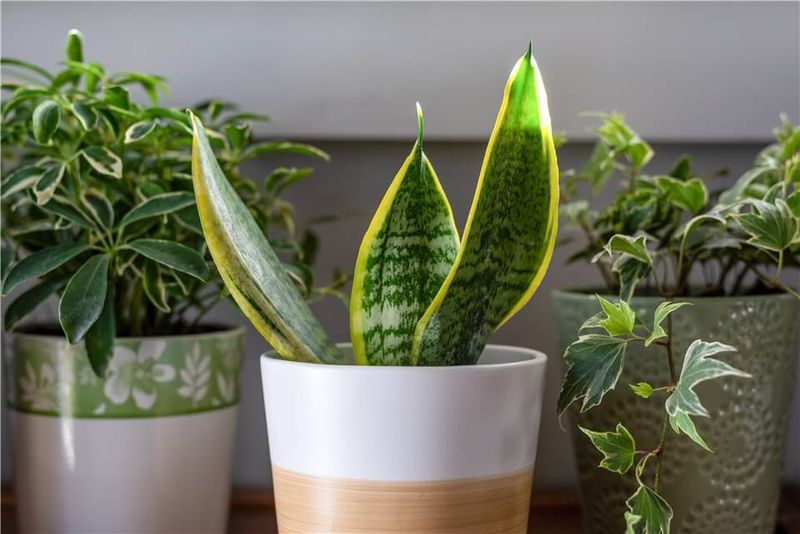
Snake plant flowers are an uncommon treat indoors, as UF/IFAS Extension points out, and a plant with or without them can be perfectly fine. Keep up the basics from NC State Extension: a well-drained mix and soil that dries between waterings.
If a flower stalk does show up one day, treat it as a gift. If it never does, your snake plant is still doing its job as a sturdy, handsome green companion.