
These Native North Carolina Wildflowers Keep Blooming In Dry Shade Where Coneflowers Give Up
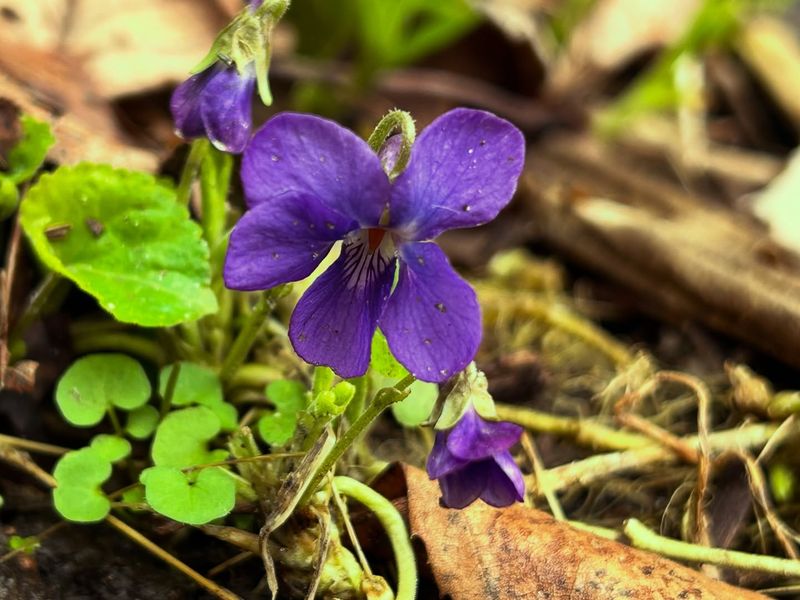
Coneflowers love sun, so they sulk and flop under oak trees and along shady fences. Dry shade is one of the hardest spots in any North Carolina yard, but our state has wildflowers that grew up in exactly those conditions.
Planting them can feed native bees, hummingbirds, butterflies, and songbirds while crowding out invasive weeds like English ivy. Here are eight tough natives that keep that shady corner blooming and buzzing.
1. Green-and-Gold (Chrysogonum virginianum)
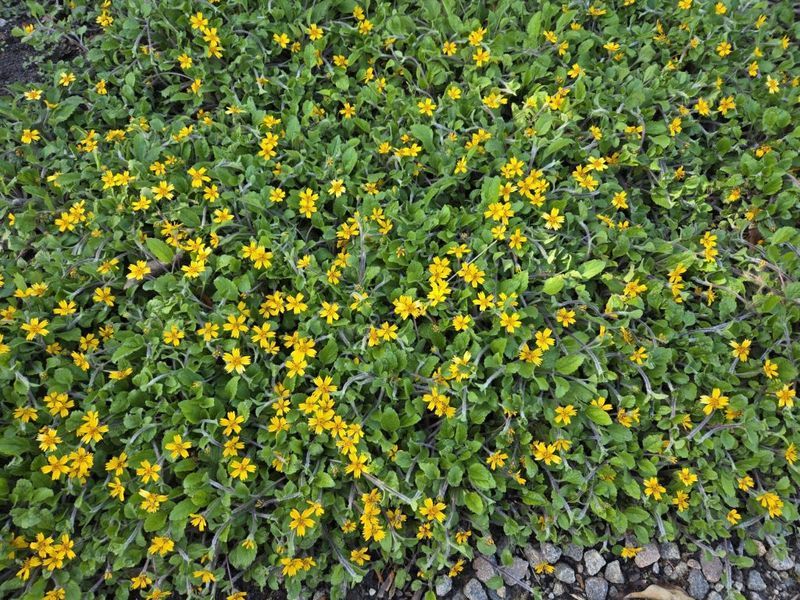
Picture a carpet of little yellow stars spreading under a dry oak where grass gave up years ago. Green-and-gold is that carpet, and it often stays green through a mild Piedmont winter.
Its main flush of flowers comes in spring, but scattered blooms can pop up into summer and fall. Bees and small butterflies visit for nectar and pollen, and songbirds may pick at the seeds later.
Once roots settle in, it handles dry spells well and creeps slowly to help hold soil on shady slopes. Deer usually leave it alone.
Try it as a swap for English ivy or vinca along a woodland edge, and you trade an invasive smotherer for a plant that actually feeds local wildlife.
2. Heart-Leaf Aster (Symphyotrichum cordifolium)
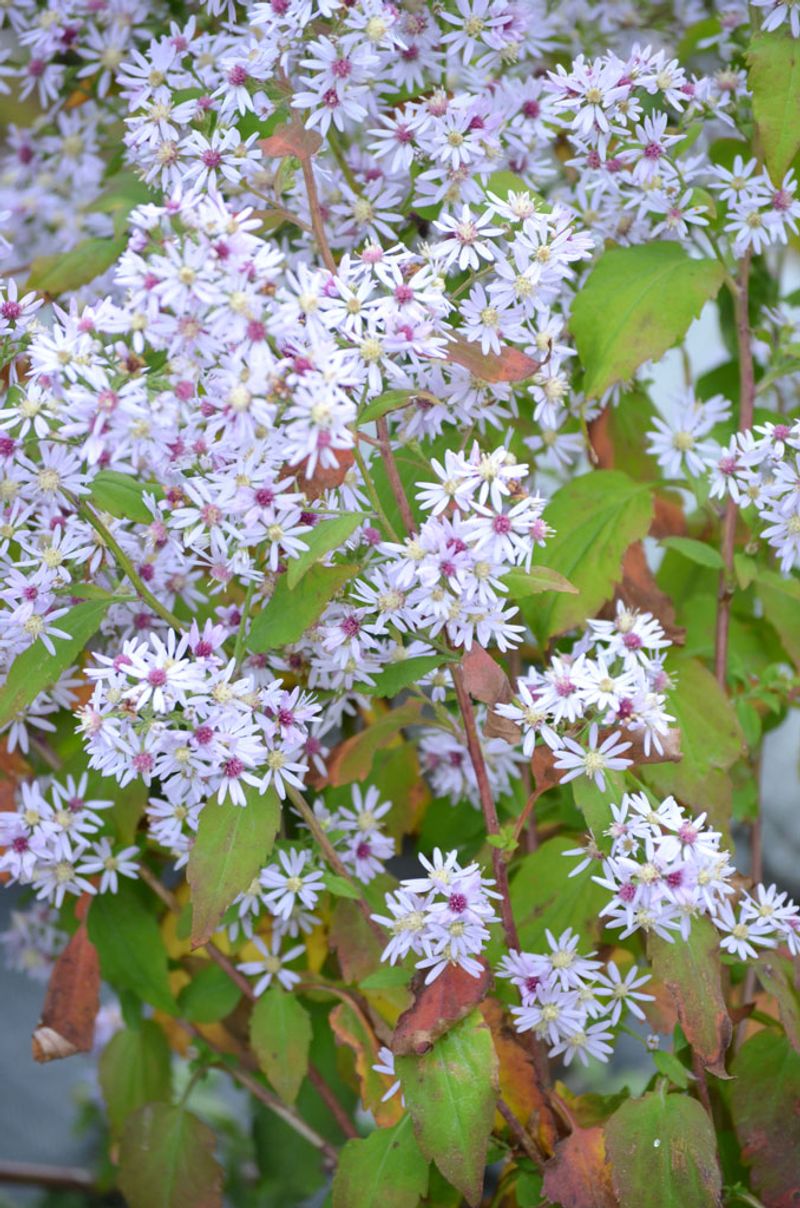
Late September is when most shade gardens go quiet. Heart-leaf aster picks that moment to explode into hundreds of tiny lavender-blue daisies.
That timing matters for the bees and butterflies fueling up before cold weather. It also serves as a host plant for the Pearl Crescent butterfly, so you may spot small caterpillars nibbling leaves.
Let them be, since that is the plant doing its job.
Plants reach about 1 to 3 feet tall and handle clay, loam, or sand as long as the soil is not soggy. Leave the seed heads standing into winter, because finches and other songbirds will thank you.
3. Eastern Columbine (Aquilegia canadensis)
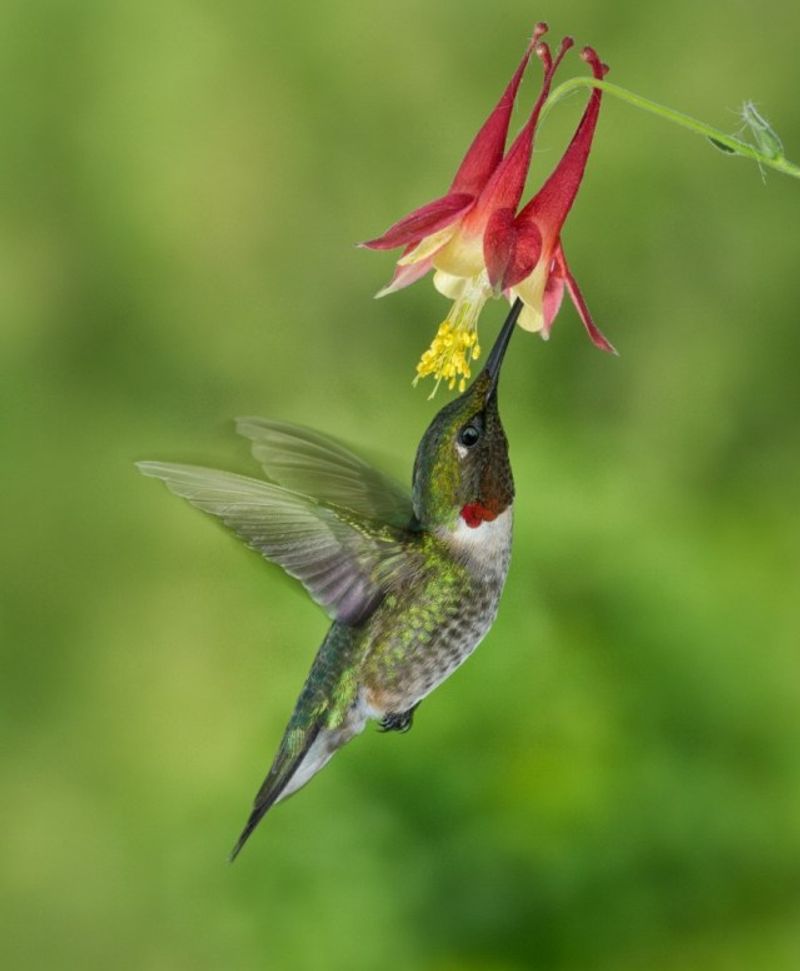
Ask any mountain gardener which flower signals the hummingbirds are back, and columbine tops the list. Its red-and-yellow lanterns dangle from wiry stems from about March into June.
Those long spurs hold nectar perfectly shaped for ruby-throated hummingbirds just returning north. The leaves feed the Columbine Duskywing caterpillar too.
Give it well-drained soil, even a rocky crack near a shady wall, and it often reseeds into new spots on its own. Deer and rabbits tend to skip it.
Plants can be short-lived, so letting a few seed pods ripen keeps the show going for years.
4. Dwarf Crested Iris (Iris cristata)
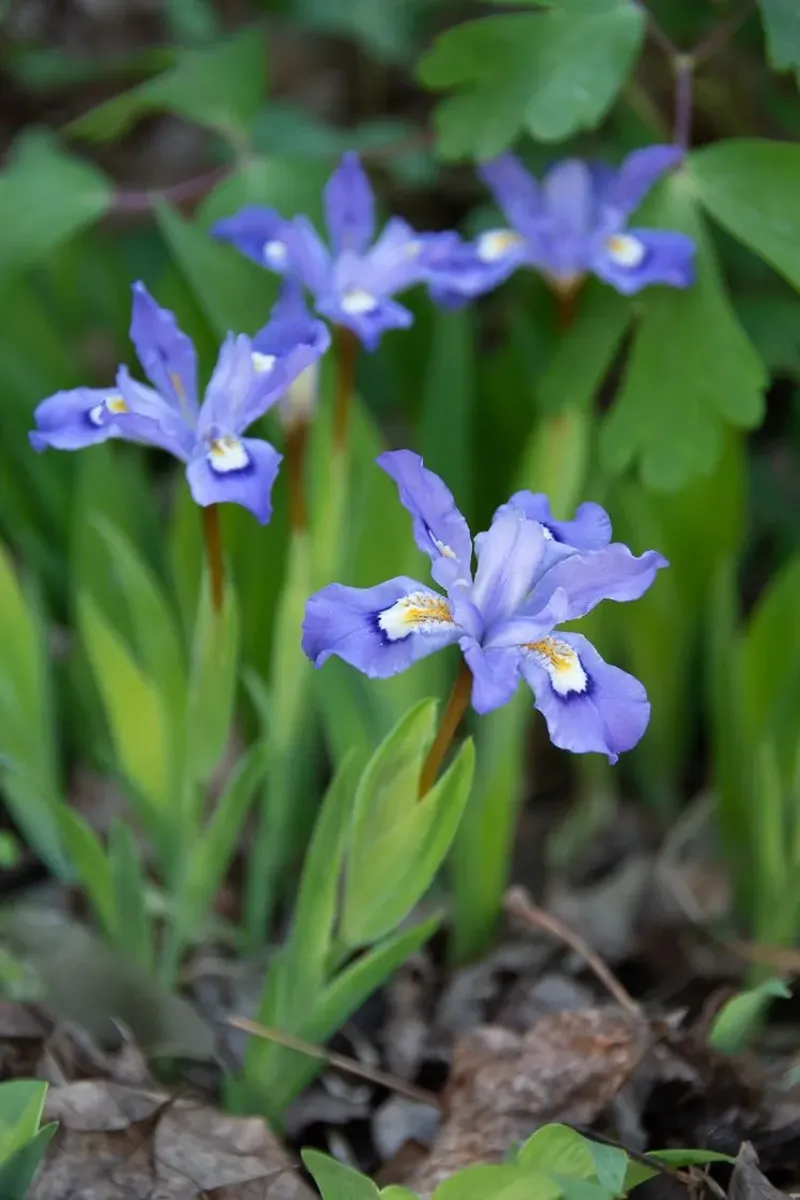
Only 4 to 9 inches tall, it is easy to overlook until April hits. Then the dwarf crested iris covers bare shady ground with blue-purple blooms, each marked with a tiny gold-and-white crest.
Bumblebees crawl right into those flowers, and early hummingbirds may check them out too. Deer rarely bother it.
It prefers rich soil but is known for coping with tricky dry shade, slowly forming mats under trees. Tuck it near a path where you can admire the details up close.
5. Native Violets (Viola species)
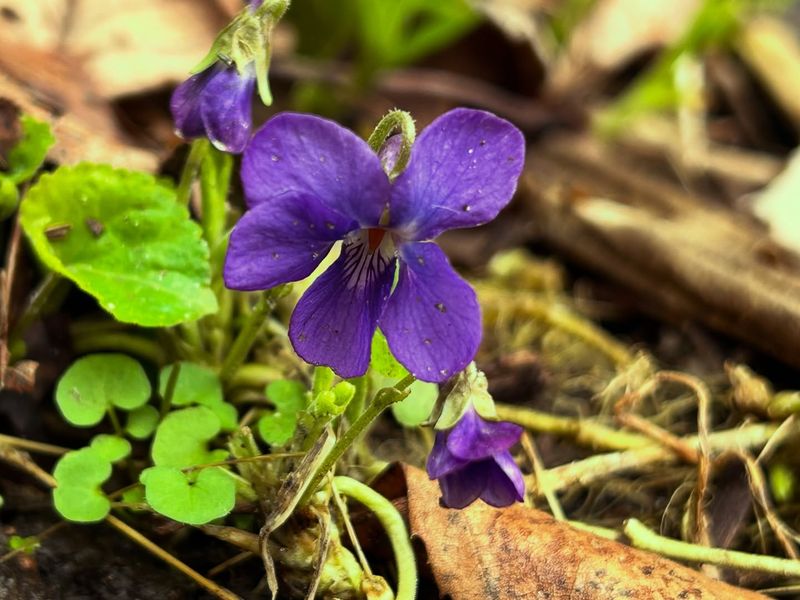
Here is a plant many folks spray as a weed that butterflies desperately need. North Carolina has over a dozen native violet species, and fritillary butterflies depend on them.
Great Spangled, Meadow, and Variegated Fritillary caterpillars eat violet leaves, and only violets will do for many of them. Early spring blooms also feed native bees emerging from winter.
Wood violet and southern wood violet grow naturally in dry woods, while smooth yellow violet likes rich, dry soil. Let a patch spread under trees instead of fighting it.
Your lawn edge becomes a butterfly nursery for free.
6. White Wood Aster (Eurybia divaricata)
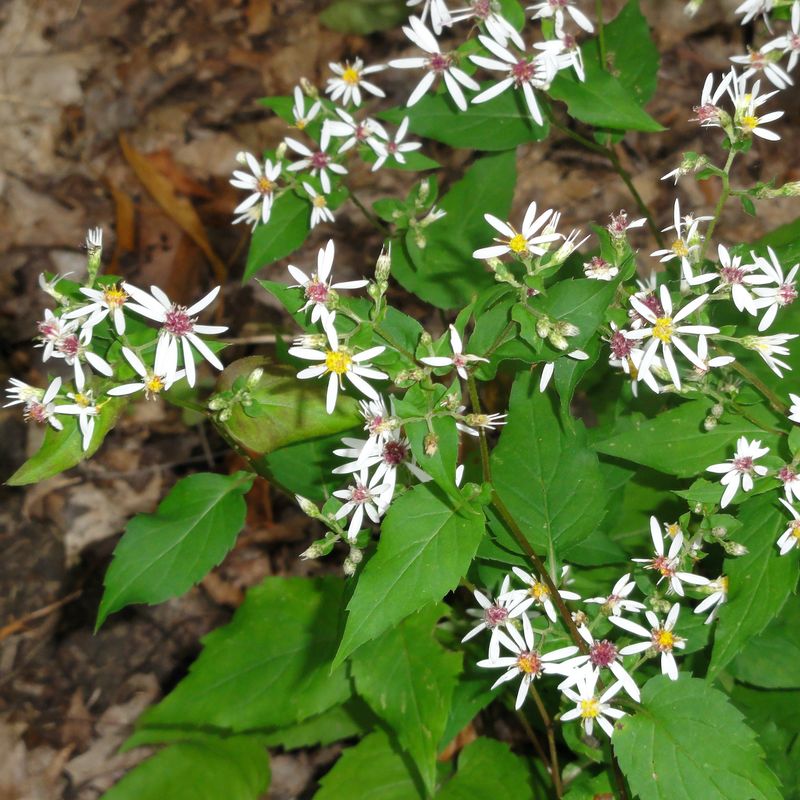
Some flowers shout. White wood aster sparkles quietly, like someone tossed confetti under your maples.
Starry white flowers with yellow centers turn pinkish as they age, blooming from late summer into fall on dark, zigzag stems. It handles dry shade and root competition better than most perennials, which makes it a lifesaver under thirsty trees.
Small native bees, flies, and butterflies visit through the season. It spreads gently, so it works as a living mulch that leaves less room for invasive Japanese stiltgrass to sneak in.
7. Blue Wood Sedge’s Bloom Partner: Wild Geranium (Geranium maculatum)
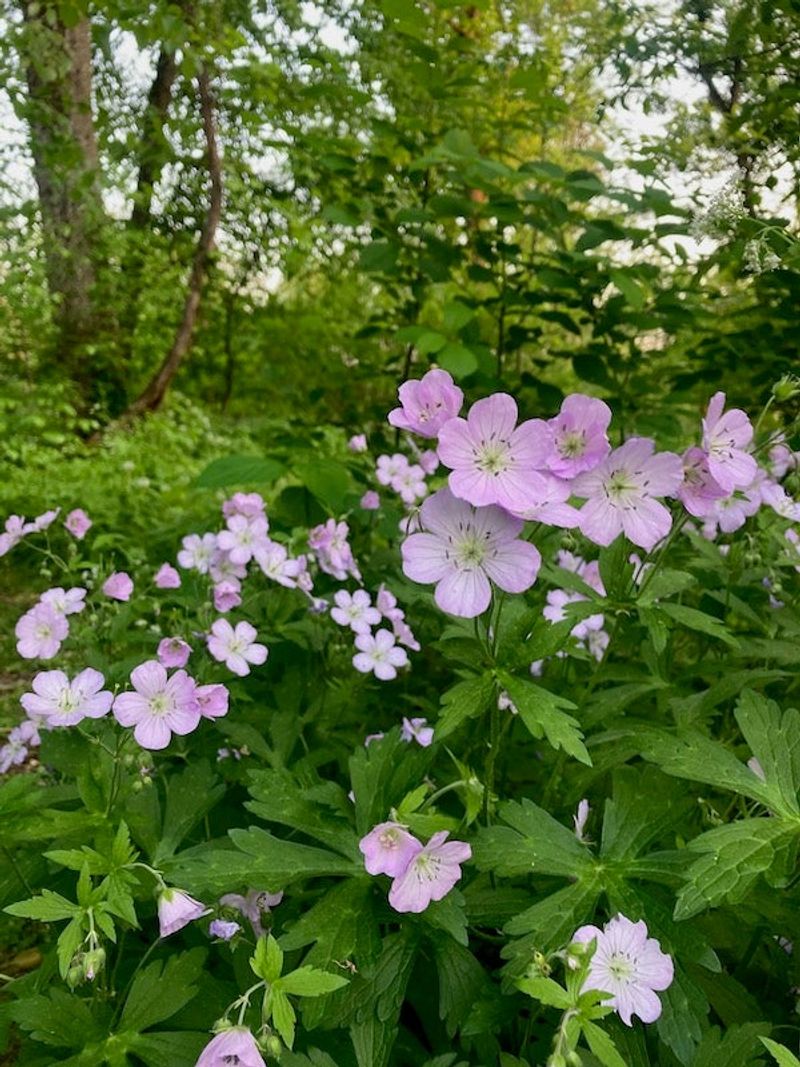
Spring walks in Piedmont woods often reveal soft pink-lavender cups dotting the forest floor. That is wild geranium, and it brings the same easy charm to a backyard.
Flowers open in April and May, attracting mason bees, bumblebees, and other early pollinators. After bloom, the seed pods fling seeds like tiny catapults, which is why one old name is cranesbill.
It tolerates dry spells once established, especially in humus-rich soil under deciduous trees. Pair it with sedges or ferns for a layered look that feels like a real NC woodland.
8. Woodland Goldenrod (Solidago caesia)
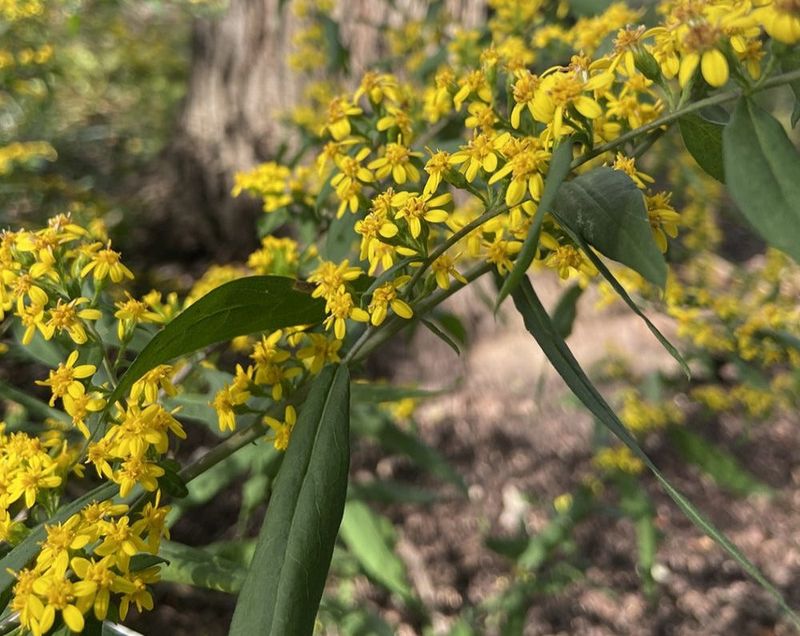
Goldenrod in the shade? Blue-stemmed goldenrod proves the sun-loving family has a woodland cousin.
Arching purple-blue stems carry small tufts of yellow along their length in September and October. It stays tidy, around 1 to 3 feet, and does not run wild like field goldenrods.
Monarchs, bees, and late butterflies swarm it when little else blooms. And no, it does not cause hay fever, since ragweed is the real culprit.
Plant it beside heart-leaf aster for a gold-and-purple fall finale that keeps your shady yard feeding wildlife right up to frost.