
If You Want Color Until The First Hard Frost, Here Are 15 Perennials That Bloom From August Into Fall
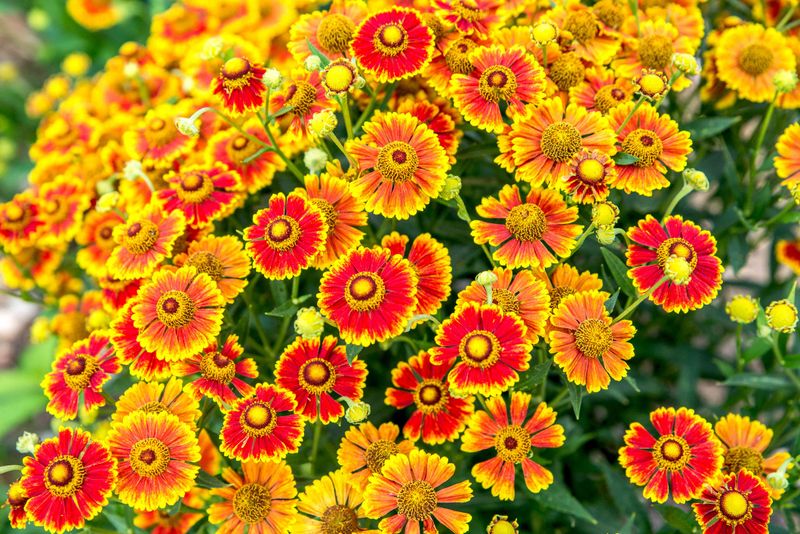
By August, a lot of gardens start to look tired, with petunias fading and hydrangeas turning papery. That does not mean your yard has to go quiet until spring.
Some tough perennials save their best show for the end of summer and keep going until a hard frost finally knocks them back. Here are 15 that can carry your garden through the fall, plus simple tips to help each one bloom longer.
1. Asters
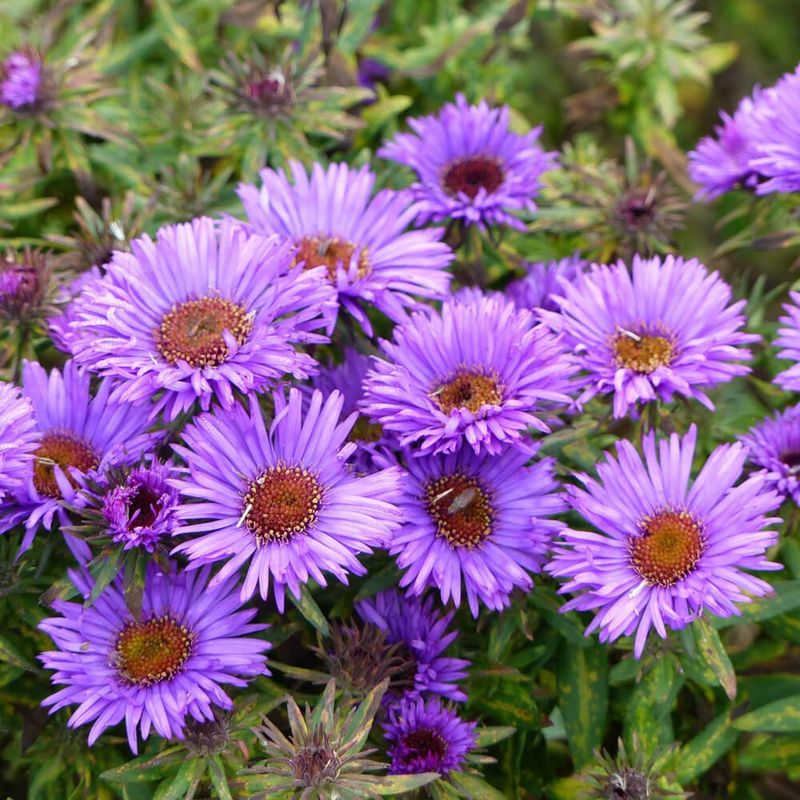
When the rest of the garden is winding down, asters act like they just got the party invitation. Their daisy-like flowers in purple, blue, pink, and white open in late summer and often hang on right up until frost.
Pollinators love them, too. Late-season bees and migrating monarchs count on aster nectar when little else is blooming.
Tall types like New England asters can flop over by September. A quick fix is to pinch the stems back by about a third in early June, which gives you bushier plants with even more flowers.
Give them full sun and decent air flow to help reduce powdery mildew on the leaves.
2. Chrysanthemums (Mums)
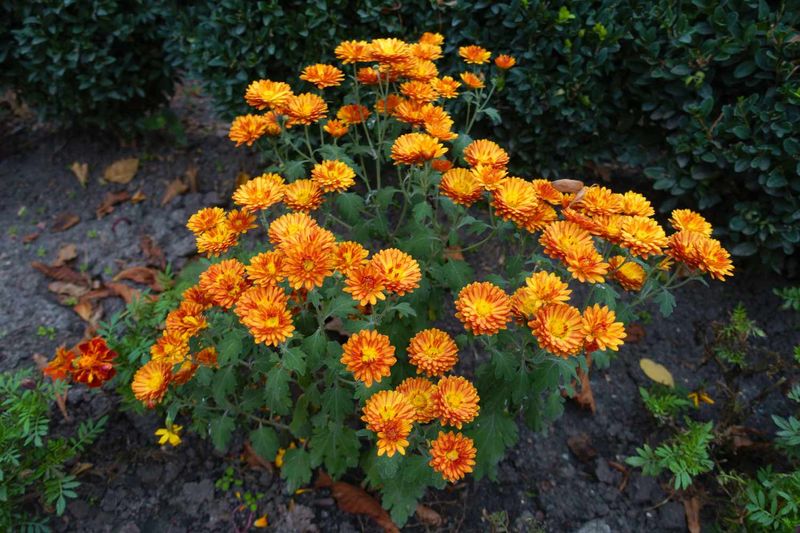
Grocery store mums get tossed every November, and that is a little sad. Hardy garden mums, planted in the ground, can come back year after year and bloom from early fall until a hard freeze.
The trick is timing. If you buy potted mums, plant them by early September so the roots have time to settle before cold weather arrives.
For mums already in your beds, pinch the tips every few weeks until about the Fourth of July. That simple habit stops them from blooming too early and turns them into tidy, flower-covered domes.
In fall, leave the old stems standing over winter, since they may help protect the crown from cold.
3. Sedum ‘Autumn Joy’
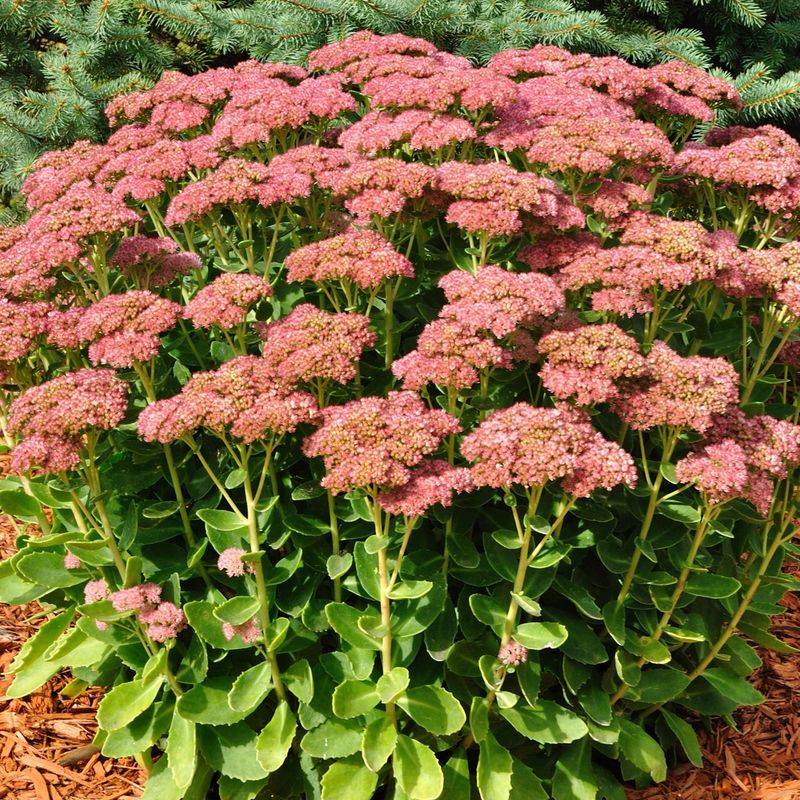
Here is a plant that changes outfits all season long. Sedum ‘Autumn Joy’ starts with flat heads that look like broccoli, turns pink in August, then deepens to brick red as fall cools down.
Its thick, juicy leaves store water, so it shrugs off heat and dry spells that would make other flowers droop. Too much water and rich soil are actually the bigger risks, causing stems to split open in the middle.
If your sedum flops, cut it back by half in late May. You will get shorter, sturdier stems that stay upright.
The dried flower heads look great into winter, so skip the fall cleanup on this one.
4. Coreopsis (Tickseed)
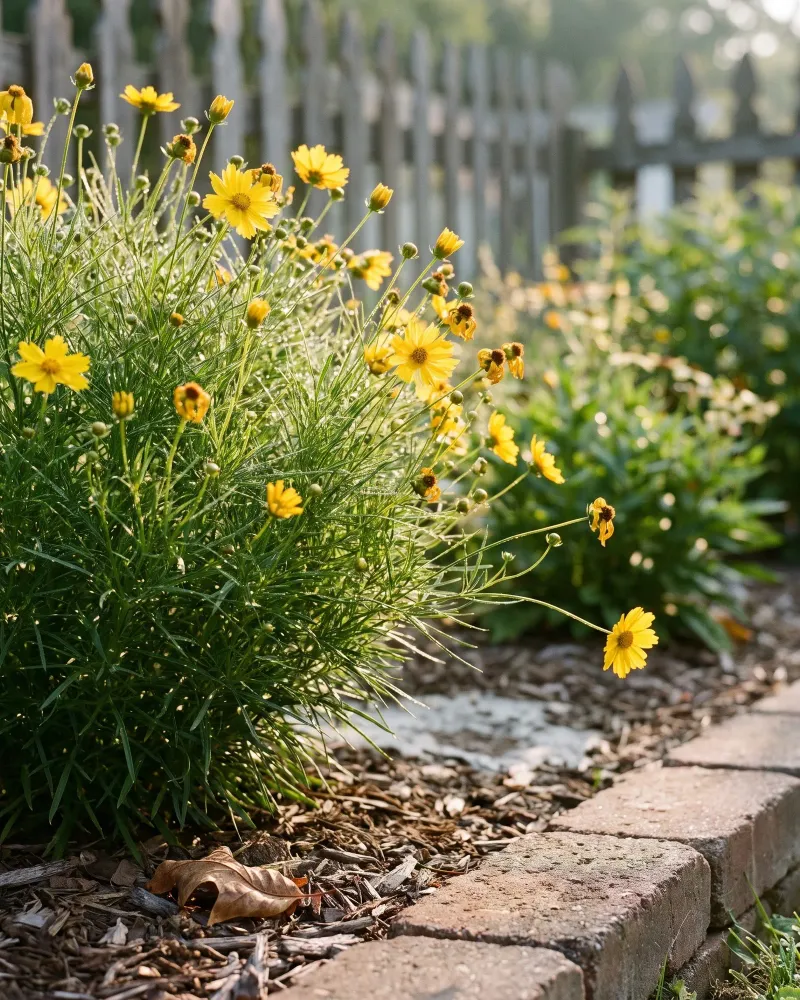
Cheerful is the best word for coreopsis. Its small, sunny flowers in yellow, coral, red, and orange can bloom for weeks from summer into fall.
Many gardeners notice it slows down in August heat and assume it is done. It usually is not.
Shear the whole plant back by about one third once the blooms fade, and give it a good drink. In two or three weeks, a fresh wave of flowers often appears and can carry into October.
Coreopsis prefers lean, well-drained soil, so go easy on fertilizer.
5. Gaillardia (Blanket Flower)
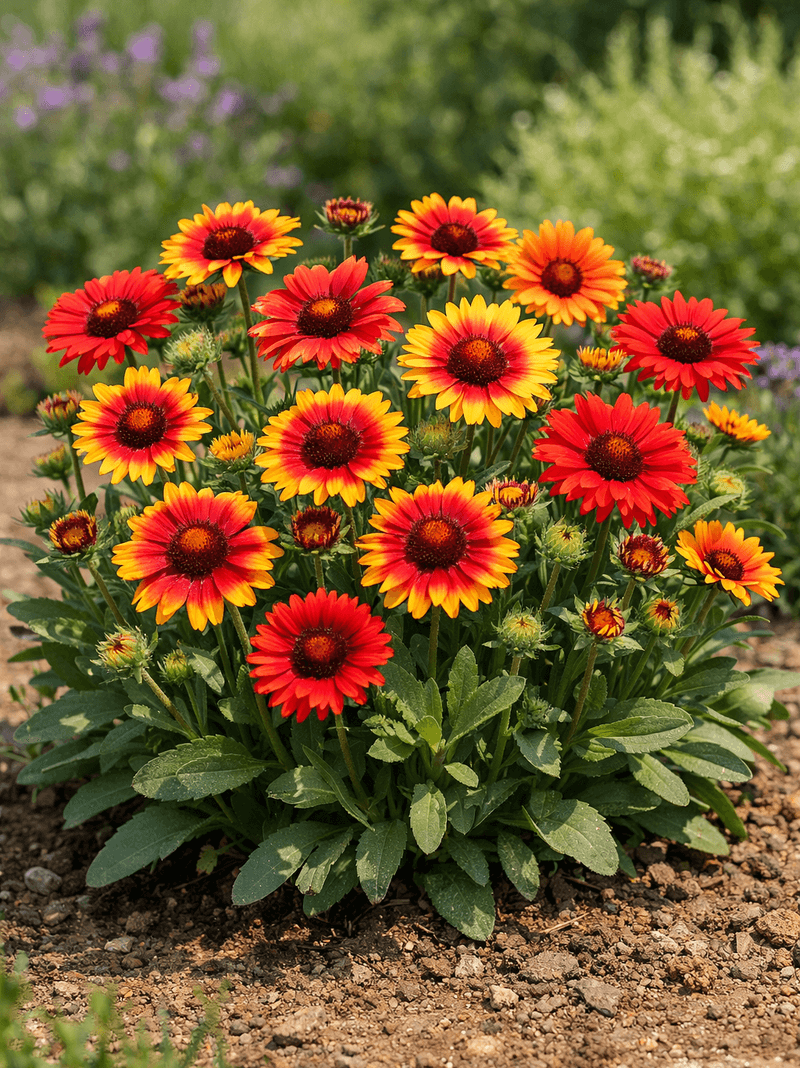
Got a hot spot where petunias fried in July? Blanket flower was made for that patch.
Its red, orange, and yellow blooms look like a woven Southwest blanket, which is how it got its name. It handles heat, drought, and poor soil with almost no fuss, blooming from early summer into fall.
Deadheading keeps it going strong, so snip faded flowers every week or so. Avoid heavy clay and overwatering, since soggy roots are one of the few things that can shorten its life.
6. Agastache (Anise Hyssop)
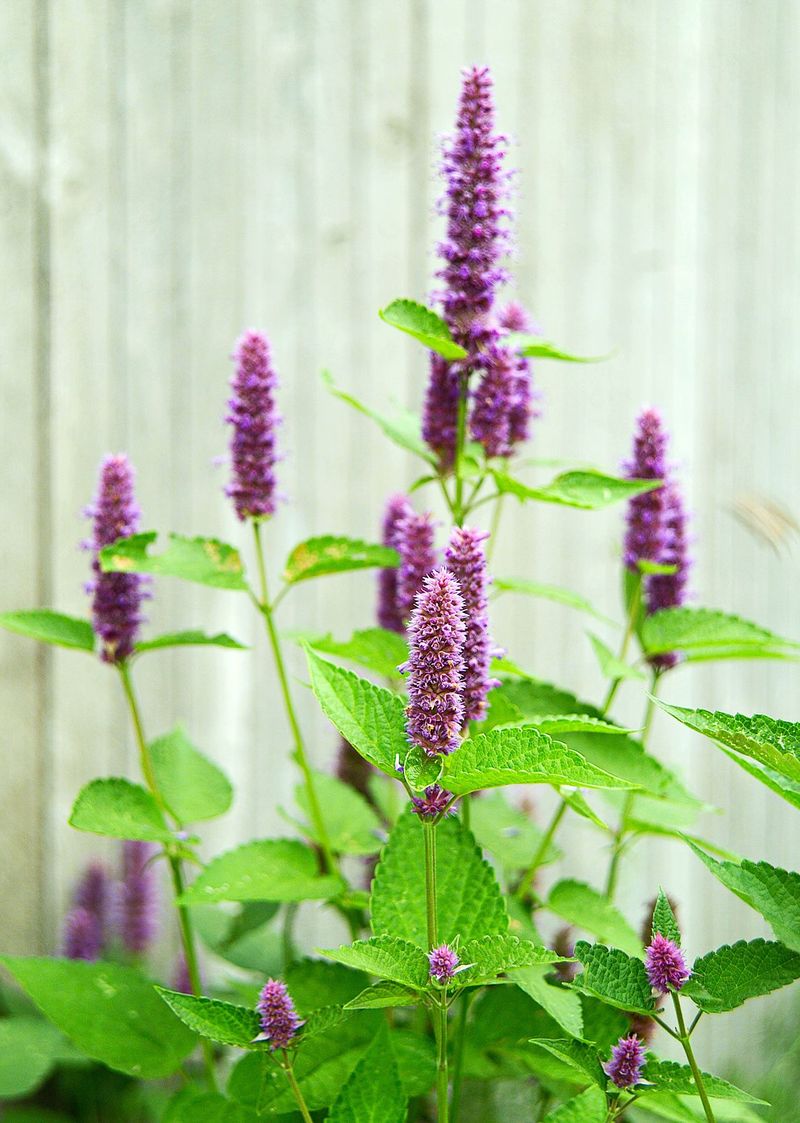
Brush against agastache and you will smell licorice and mint. That scent is just a bonus, because the real show is the tall spikes of tubular flowers that bees, butterflies, and hummingbirds can not resist.
It blooms from midsummer well into fall, often in purple, orange, or pink. Hummingbirds in particular seem to treat it like a fueling station before migration.
Agastache hates wet winter feet. Plant it in sharp-draining soil, and wait until spring to cut back old stems, which can help the plant survive cold weather.
7. Russian Sage (Perovskia)
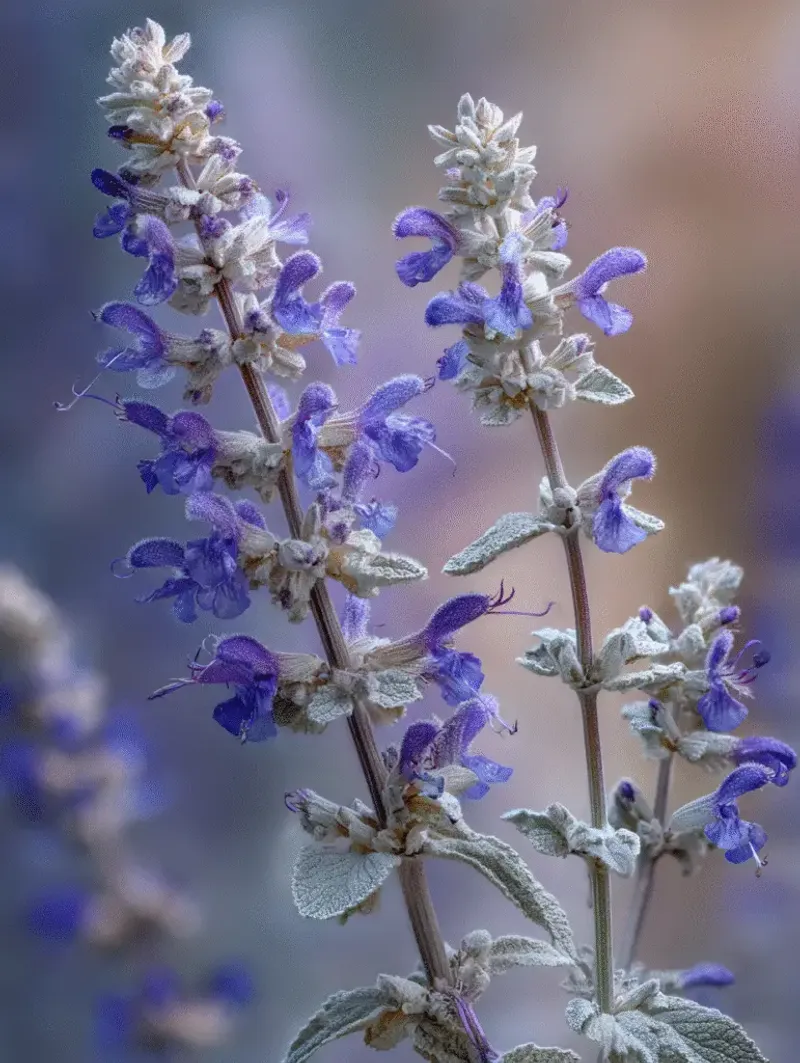
From a distance, Russian sage looks like a soft blue cloud floating over the garden. Up close, it is covered in tiny lavender flowers on silvery, scented stems.
It begins in midsummer and keeps that hazy color going into fall. Deer usually leave it alone, and it thrives in heat and dry soil.
Wait to prune until new growth shows in spring, then cut stems down to about 12 inches. Fertilizer and shade tend to make it floppy, so keep it lean and sunny.
8. Japanese Anemone
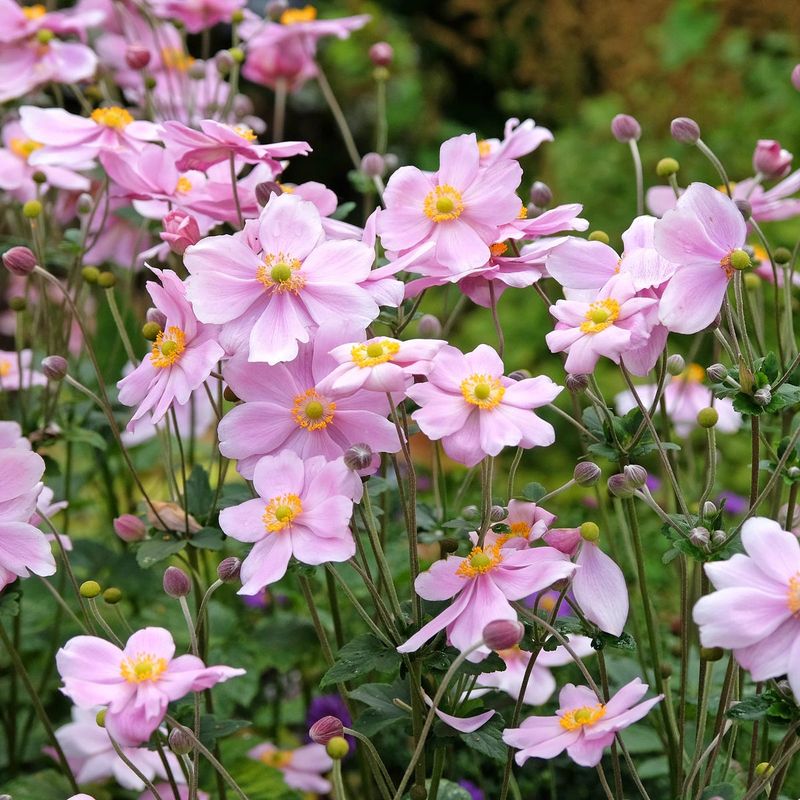
Japanese anemones bring a little elegance to the season, with cup-shaped flowers in white, pink, or mauve dancing on wiry stems. They open in late summer and keep going into fall.
Unlike many fall bloomers, they enjoy some afternoon shade. That makes them a nice partner for hydrangeas, picking up the show as hydrangea flowers fade.
Be patient the first year, since they can sulk before settling in. Once happy, they spread, so give them room or plan to share.
9. Goldenrod (Solidago)
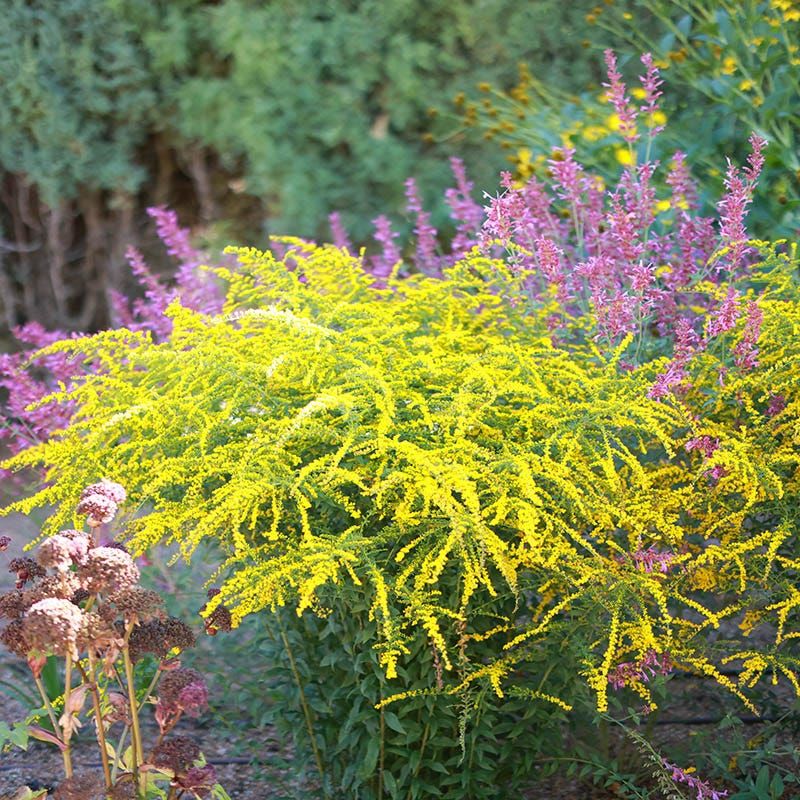
Poor goldenrod gets blamed for fall allergies, but ragweed is usually the real culprit. Goldenrod pollen is heavy and sticky, carried by insects rather than the wind.
This North American native lights up late summer and fall with golden plumes that feed bees and butterflies. Newer garden varieties like ‘Fireworks’ stay more compact and spread less than wild types.
It grows in tough spots with full sun and average soil. If it spreads too much, dig out a few clumps in spring.
10. Joe Pye Weed (Eupatorium)
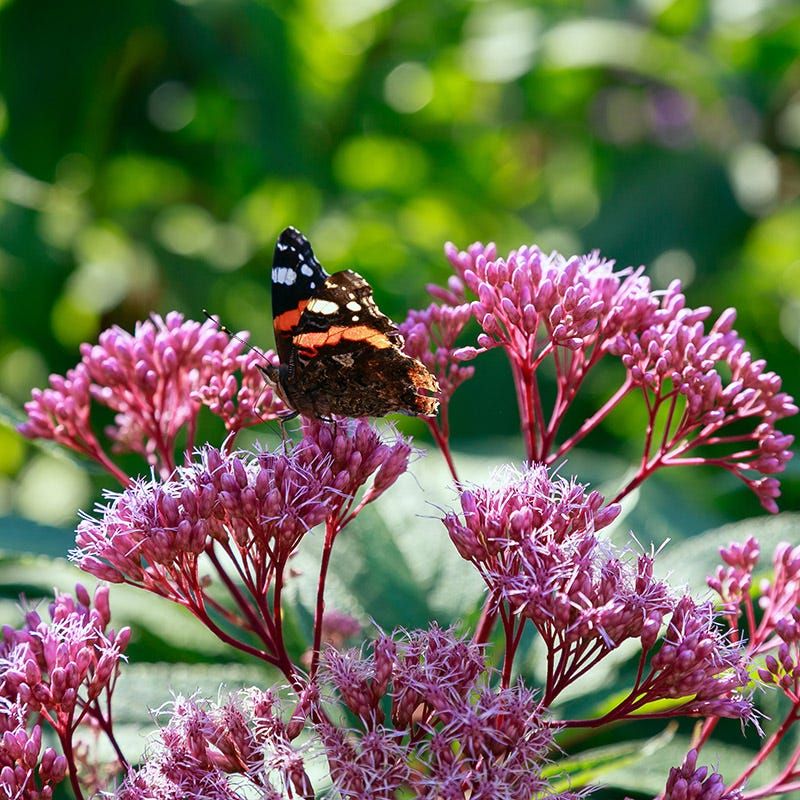
Some plants whisper, and Joe Pye weed shouts. Wild types can hit six feet tall, topped with big domes of rosy-purple flowers from late summer into fall.
Butterflies swarm it, especially swallowtails. If your garden has a damp low spot where other plants rot, this native may be your answer.
For smaller yards, try a dwarf variety like ‘Little Joe’ or ‘Baby Joe’. Keep it watered during dry spells, since drought can cause lower leaves to brown.
11. Helenium (Sneezeweed)
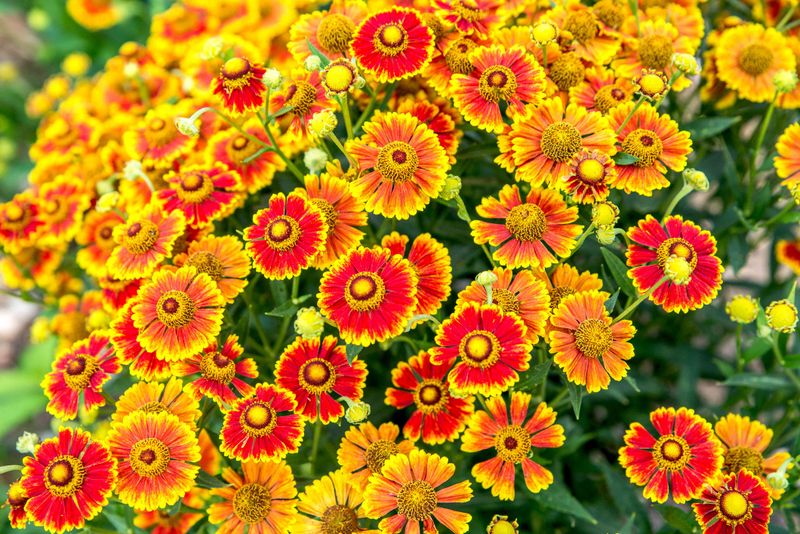
Don’t let the name scare you off. Sneezeweed won’t make you sneeze, it got the nickname because its dried leaves were once used to make snuff.
Its daisy-like flowers come in warm fall shades of yellow, orange, and rusty red, blooming in clusters from late summer through fall. It’s a native that likes moist soil and full sun.
Tall stems can flop, so cut plants back by half in early June. Also water during dry stretches, since dry soil can make lower leaves crisp up.
12. Black-Eyed Susan (Rudbeckia)
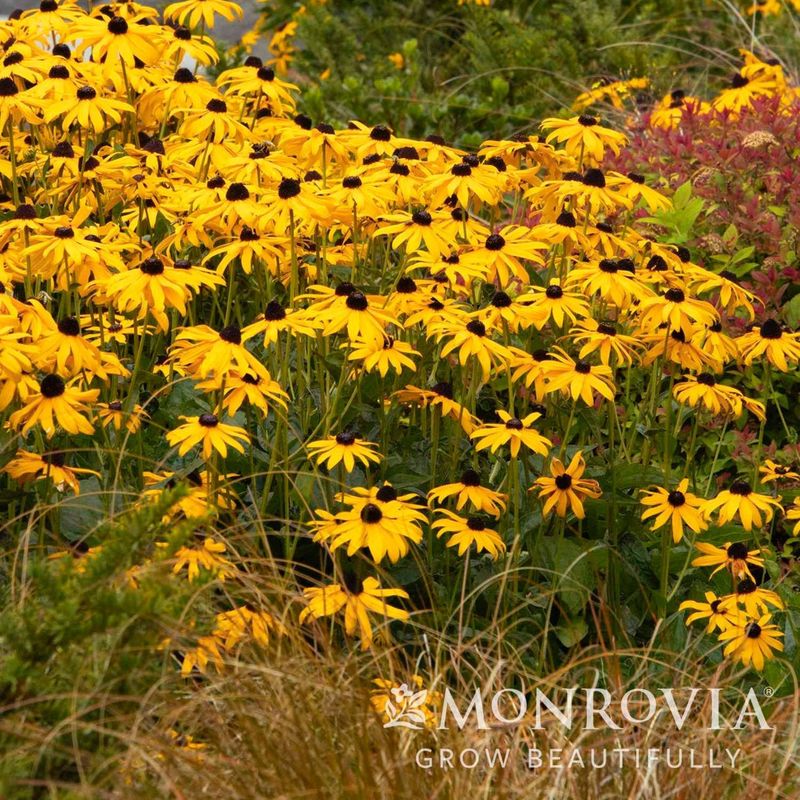
Ask almost any gardener which flower never lets them down, and black-eyed Susan comes up fast. Golden petals and dark brown centers bloom from midsummer until fall.
Varieties like ‘Goldsturm’ are long-lived and easy. Snip spent flowers to keep new buds coming.
Notice dark spots on lower leaves in late summer? That’s often a fungal leaf spot.
Remove the worst leaves and water at the base instead of overhead, which can help reduce spreading.
13. Echinacea (Coneflower)
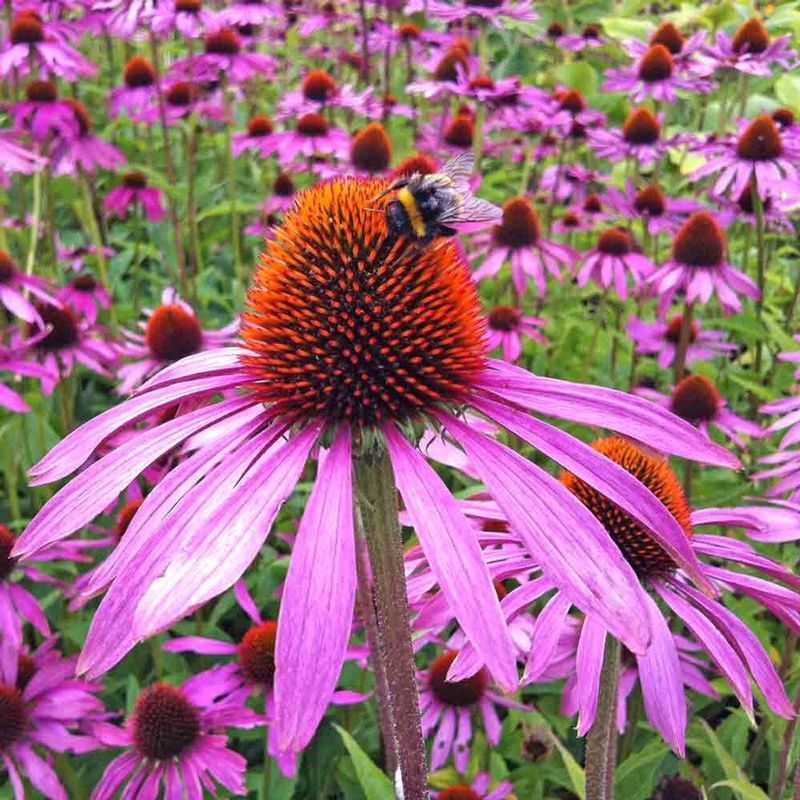
Coneflowers work two jobs. In summer and early fall, bees and butterflies love the flowers, then in autumn, goldfinches pick seeds from the spiky cones.
They start blooming in late July and continue into September, longer if you deadhead regularly. Near the end of the season, let the last flowers go to seed for the birds.
Coneflowers dislike soggy soil, which can lead to root rot. Plant in full sun with good drainage, and let them dry a bit between waterings once established.
14. Nepeta (Catmint)
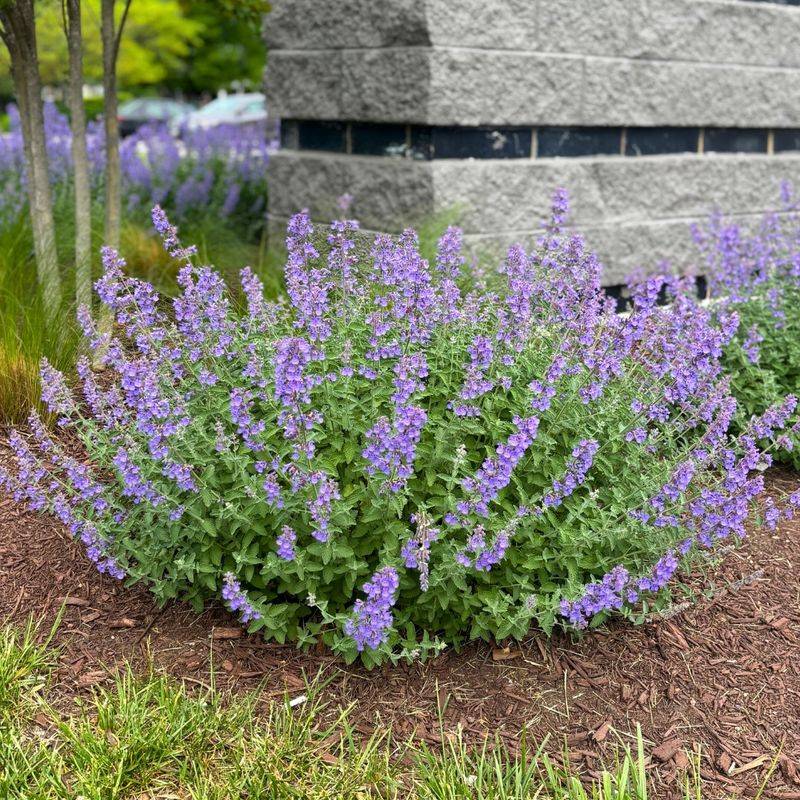
Catmint is the marathon runner of this list. Its lavender-blue flowers often show up in late spring and, with a little help, keep coming until fall.
The help is easy. After the first flush fades and the plant looks floppy in midsummer, shear it back by about half and water well.
Fresh leaves and new flowers usually return within a few weeks. Bees love it, deer don’t, and it handles heat and dry soil well.
15. Toad Lily (Tricyrtis)
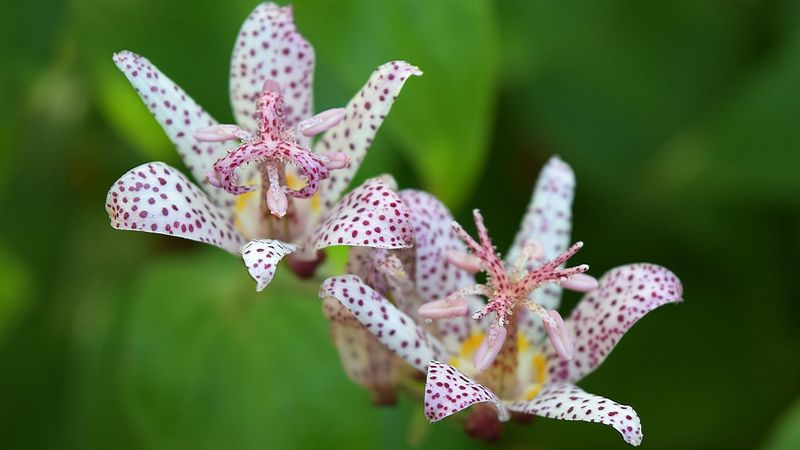
Lean in close to a toad lily and you’ll swear it’s an orchid. Freckled flowers in white, pink, and purple appear from late summer into fall.
It’s one of the few fall bloomers that loves shade, making it perfect under trees or near a north-facing wall. Keep the soil evenly moist, since dry spells can brown leaf edges.
Plant it near a path where you can actually see the tiny details.
Once frost finally arrives, you can cut it back, knowing it will return next year. Together with the rest of this list, it helps your garden finish strong right up until the cold.