
If You Rip Black-Eyed Susans Out As Weeds, Here Are 17 Native Bees That Vanish With Them
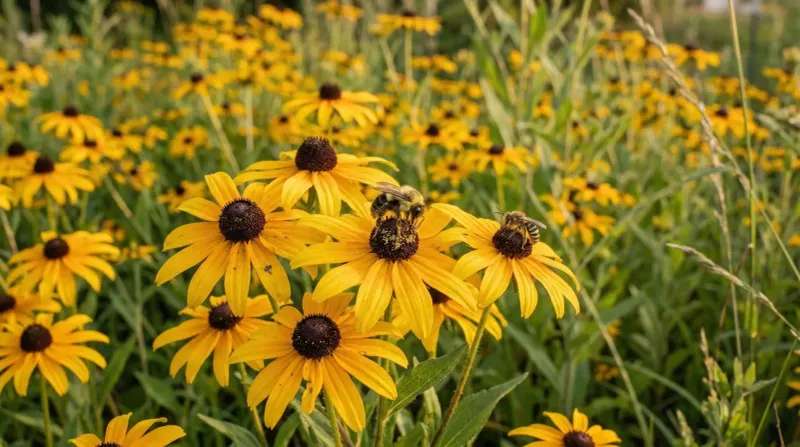
Those cheerful yellow flowers with the dark centers popping up in your garden might look like weeds, but Black-Eyed Susans are actually native wildflowers doing serious work. When you yank them out, you are also pulling the rug out from under dozens of native bees that depend on their nectar and pollen.
Before you reach for your gloves, meet the 17 tiny pollinators that could disappear from your yard. You might just decide to let those Susans stay.
1. Metallic Green Sweat Bee
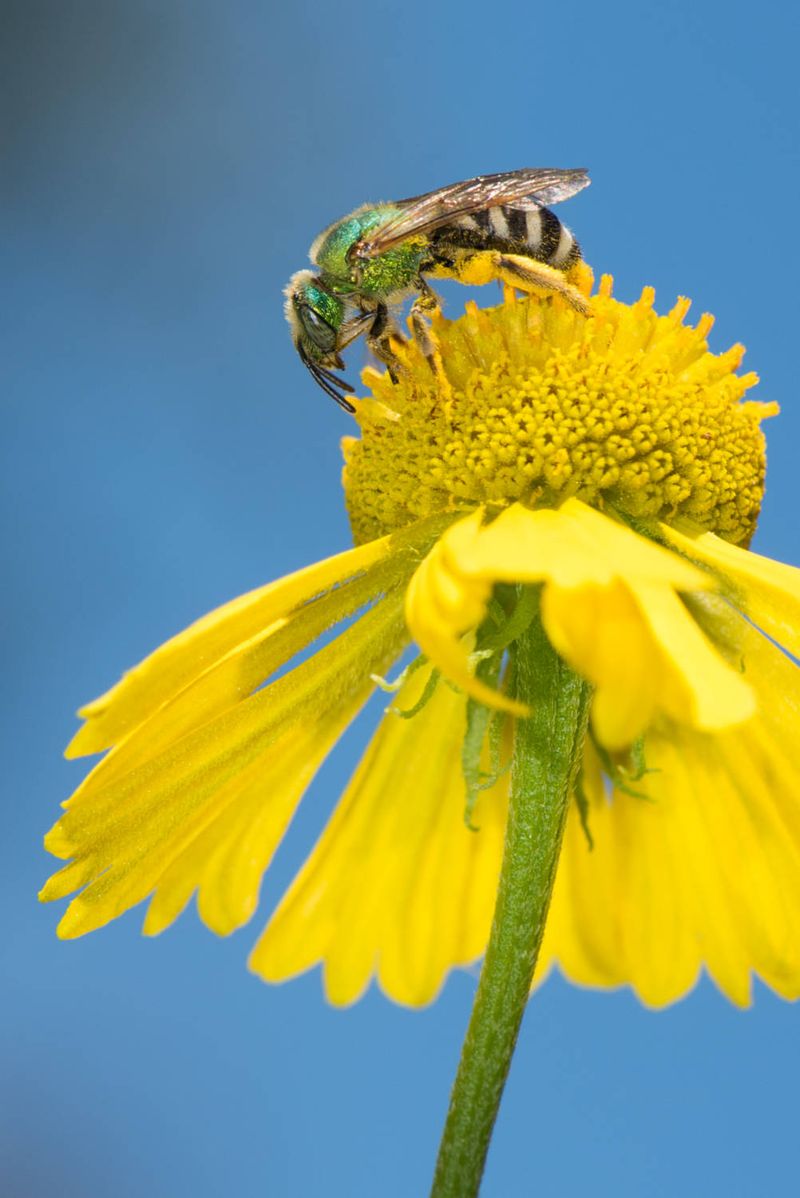
Shimmering like a tiny living emerald, the metallic green sweat bee is one of the most eye-catching visitors your Black-Eyed Susans attract. People often mistake these little jewels for flies because of their speed and shine, but they are hardworking pollinators.
They love the flat, open landing pad that a Rudbeckia bloom provides. The dense center packed with tiny florets gives them an easy buffet of nectar and pollen.
Rip out the flowers, and these glittering bees lose one of their favorite summer feeding stops. In many yards, they are the difference between a buzzing bed and a silent one.
2. Tiny Halictid Sweat Bees
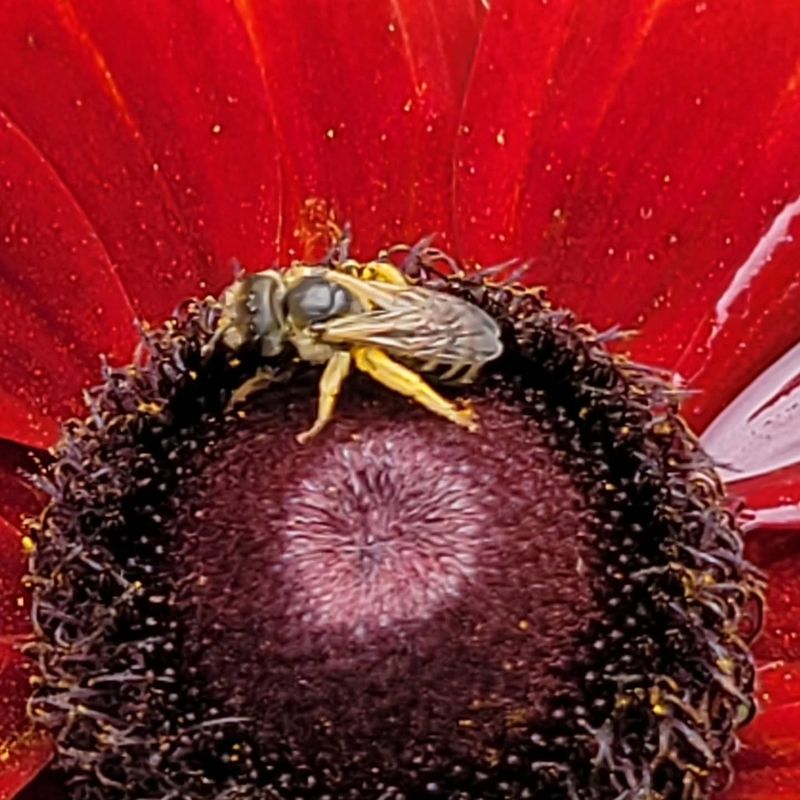
Not every sweat bee dazzles with color. The smaller, darker members of the Halictidae family are so tiny you might never notice them working the middle of a flower.
Named for their odd habit of landing on sweaty skin for salt, these little bees are gentle and rarely sting. Their real job is quietly moving pollen from bloom to bloom.
Black-Eyed Susans give them the perfect size and shape to crawl across. Lose the flowers and you lose a whole crew of pollinators most gardeners never even knew were helping.
3. Coneflower Mining Bee
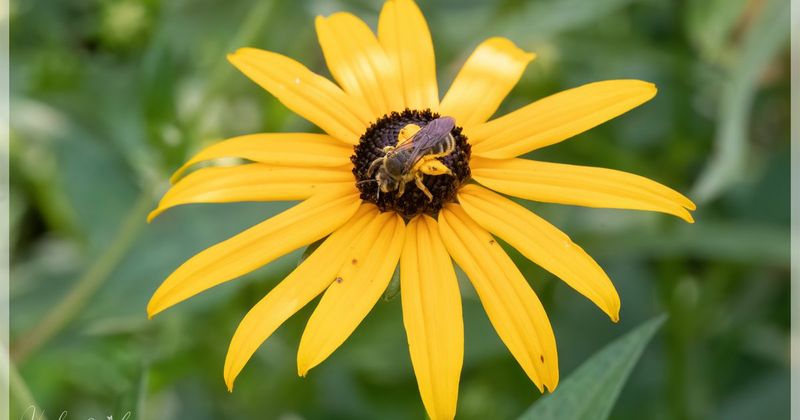
Here is a bee with a serious specialty. The Coneflower Mining Bee (Andrena rudbeckiae) is so tied to Rudbeckia and its cousins that it times its whole life around their bloom.
As a specialist pollinator, it emerges from underground nests right when coneflowers open. If the flowers are gone, this bee has almost nowhere else to turn.
That makes it one of the most fragile names on this list. Pulling Black-Eyed Susans could quietly erase a bee that literally shares their name.
4. Oblique Longhorn Bee
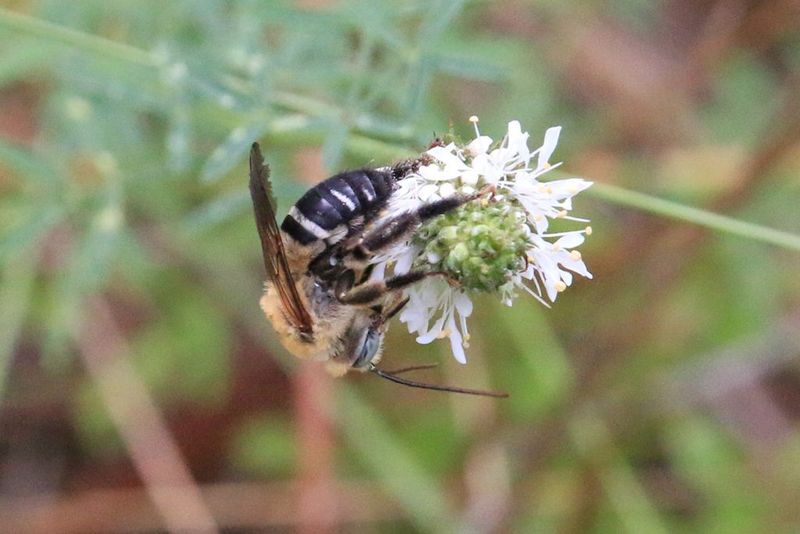
Sporting antennae almost as long as its body, the oblique longhorn bee looks like it wandered in from a cartoon. Those exaggerated feelers belong mostly to the males, who use them while searching for mates.
Longhorn bees adore composite flowers like Black-Eyed Susans, where they gather pollen in the late summer heat. You will often spot several males sleeping curled on the petals at dusk.
Take away their favorite blooms and that whimsical bedtime scene disappears too. These bees are peak-summer regulars you would truly miss.
5. Two-Spotted Longhorn Bee
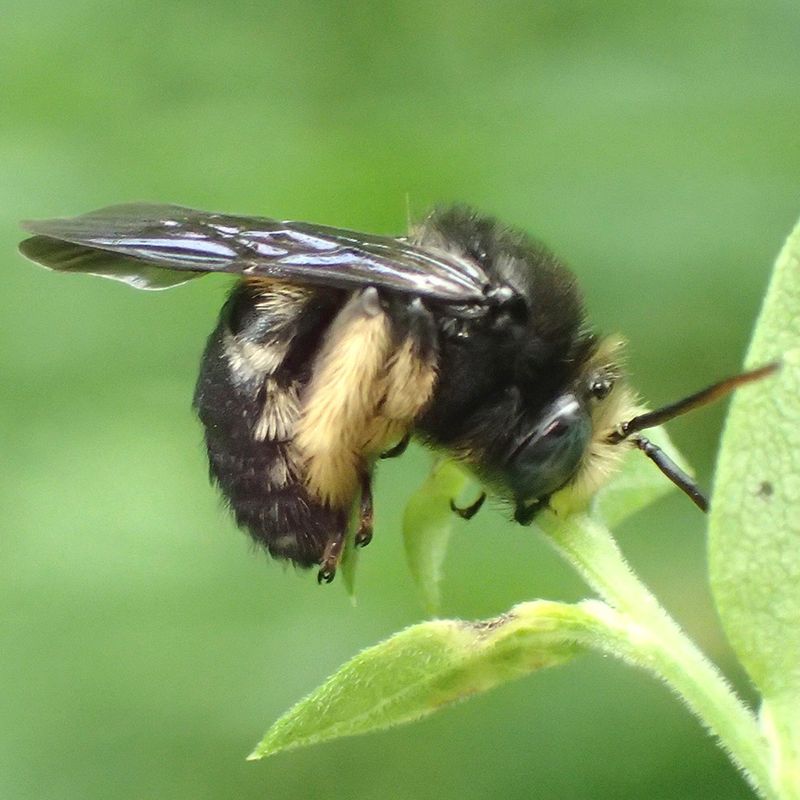
Another member of the longhorn crew, the two-spotted longhorn bee earns its name from the pale markings on its fuzzy body. It is a bit chunkier than its oblique cousin and just as fond of yellow flowers.
Come mid to late summer, these bees swarm patches of Rudbeckia to load up on pollen. Their fuzzy legs make them excellent at spreading it around.
They rely heavily on native blooms during the hottest stretch of the year. Remove your Susans and you strip away a lifeline right when they need food most.
6. Common Eastern Bumble Bee
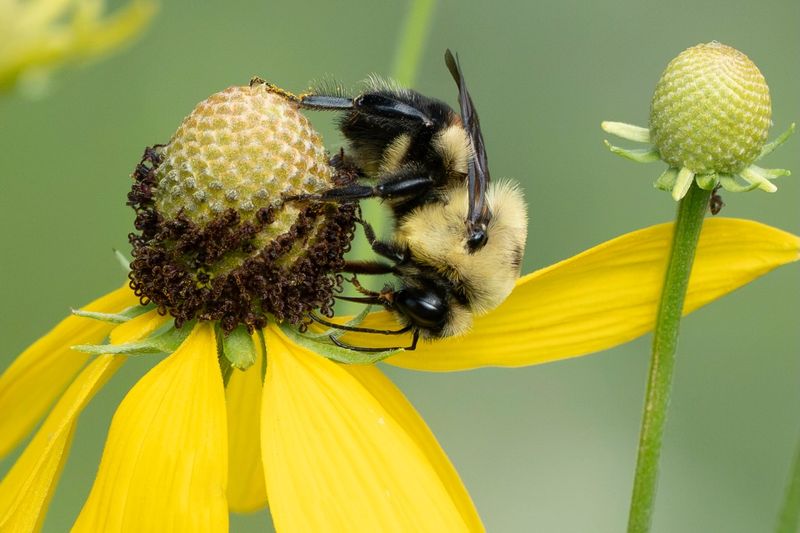
Everybody recognizes the bumble bee, that big fuzzy bumbler that seems too round to fly. The common eastern bumble bee is one of the most familiar faces in American gardens.
They love the sturdy, wide blooms of Black-Eyed Susans because there is plenty of room to land and dig in. Their loud buzz actually helps shake pollen loose, a trick called buzz pollination.
Bumble bees are colony builders, so feeding one worker helps support an entire nest. Clear out the flowers and that whole family feels the pinch.
7. Brown-Belted Bumble Bee
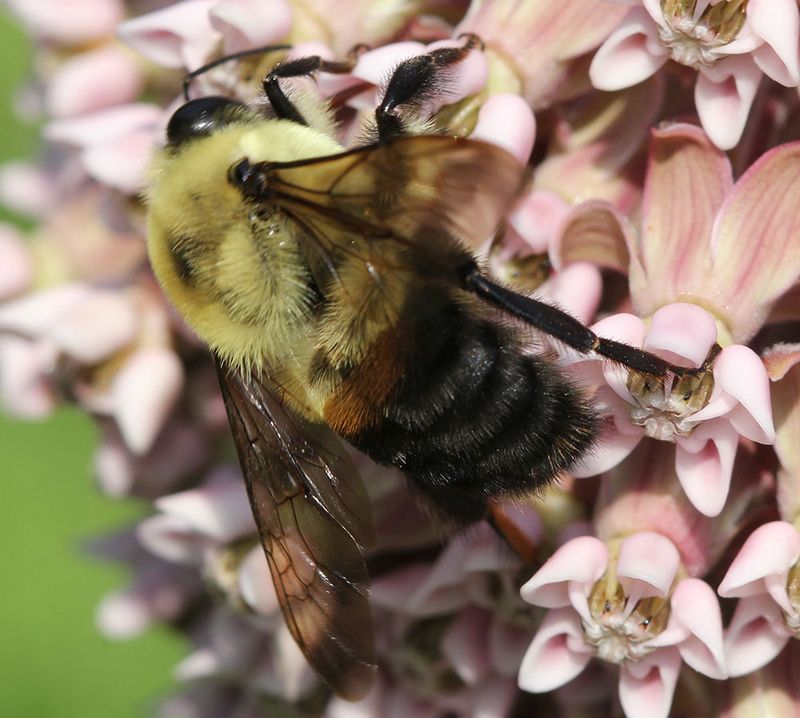
Wearing a caramel-colored sash across its middle, the brown-belted bumble bee is a subtle standout among its striped relatives. That warm band makes it easy to pick out once you know to look.
Like other bumbles, it treats a bed of Black-Eyed Susans as a reliable pantry from summer into early fall. It works fast and covers a lot of ground.
These bees stay active on cooler mornings when other pollinators are still asleep. Keeping your Susans gives them early-season fuel that many other flowers cannot match.
8. Leafcutter Bee
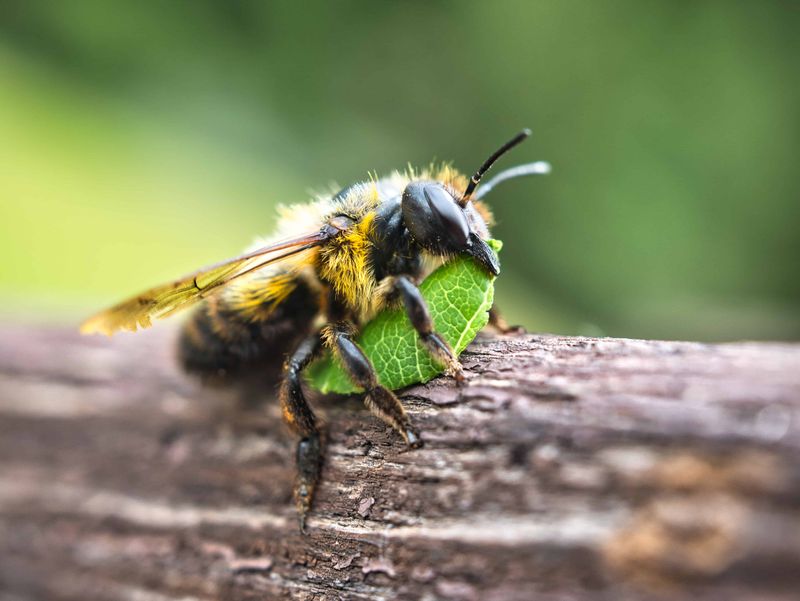
Ever seen a leaf with a perfect half-circle bite taken out of the edge? That neat little snip is the calling card of the leafcutter bee, who uses the pieces to wrap its eggs.
Instead of carrying pollen on their legs, these bees haul it on the underside of their bellies, giving them a dusty golden tummy. Black-Eyed Susans are a favorite refueling stop.
They are gentle solitary bees that rarely bother people. Lose their flower supply, and your garden loses one of nature’s tidiest little engineers.
9. Little Carpenter Bee
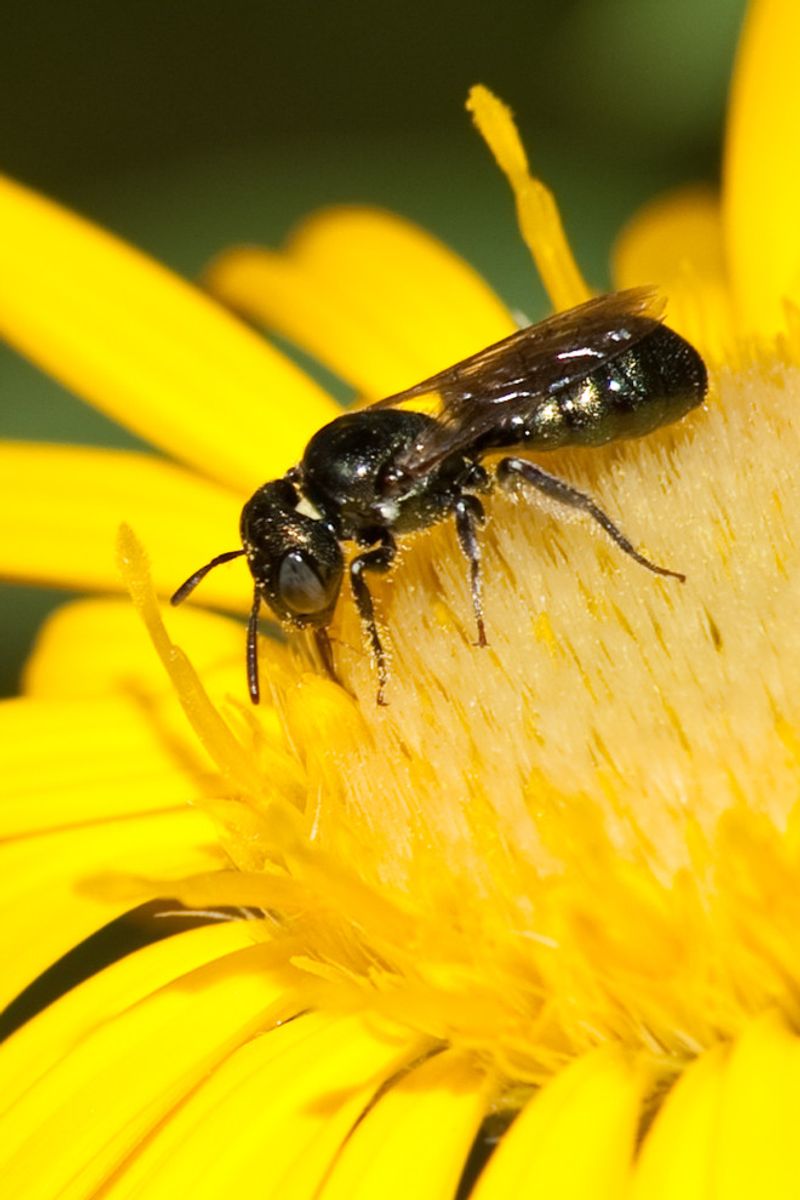
Do not confuse this pint-sized bee with the big carpenter bees drilling into your porch. The little carpenter bee (Ceratina) is small, sleek, and often has a faint metallic blue-green sheen.
They nest in the hollow or pithy stems of old plants, which is one more reason to leave your garden a little wild. Black-Eyed Susans feed them through the warm months.
Because they are so small, they slip right into the center of the flower for nectar. Tear out the blooms and these easy-to-miss helpers quietly vanish.
10. Mason Bee
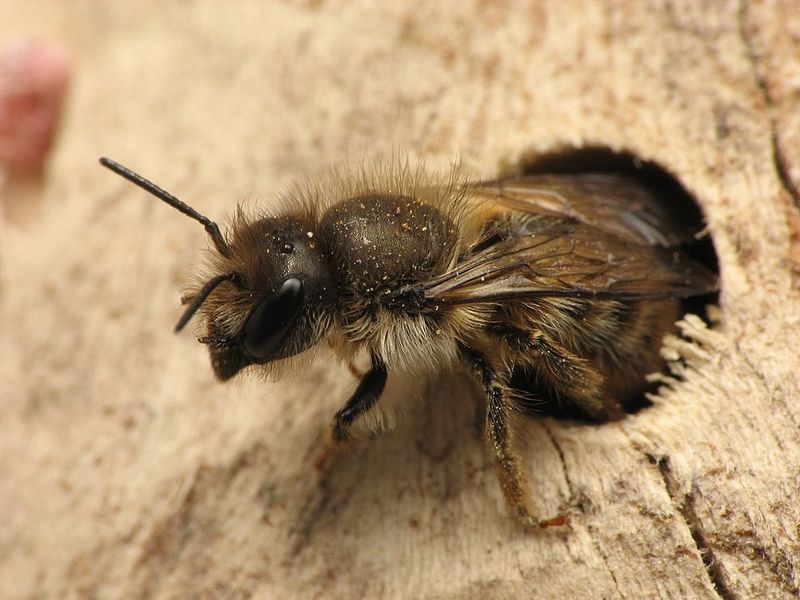
Gardeners who grow fruit trees already owe a debt to the mason bee, one of the best early pollinators around. These stout, often blue-black bees build nests using mud, hence the name.
While they are famous for spring blooms, many mason bees keep foraging into summer where Black-Eyed Susans await. Their fuzzy bodies grab huge loads of pollen.
A single mason bee can out-pollinate dozens of honeybees. Removing native flowers like Rudbeckia chips away at the food they need to keep those numbers up.
11. Furrow Bee
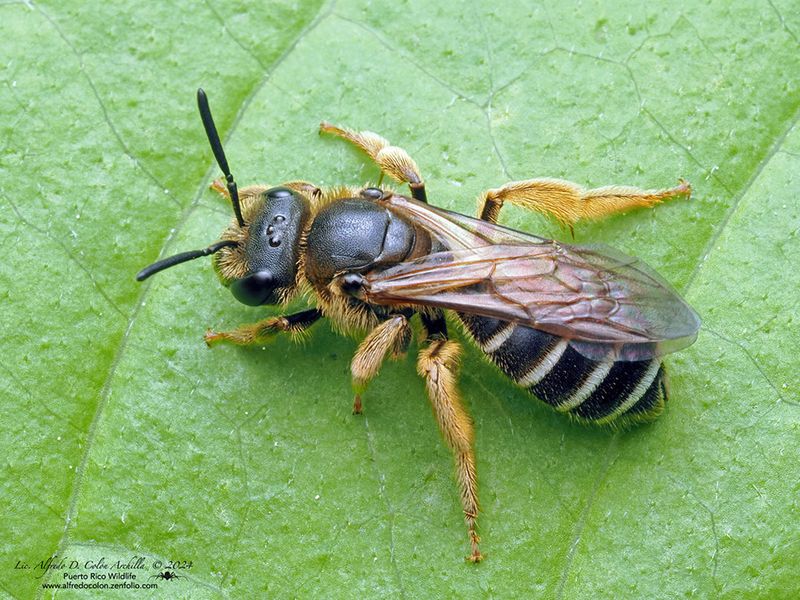
Meet the furrow bee, a cousin of the sweat bees with neat pale bands wrapping its abdomen. The name comes from a tiny groove on the female’s body, a detail only a bug lover would notice.
Furrow bees are steady, dependable visitors to open-faced flowers like Black-Eyed Susans. They show up in good numbers through summer and into fall.
Some species even live in small social groups, sharing a nest. Wipe out their flower supply and you disrupt those little communities all at once.
12. Poey’s Bee
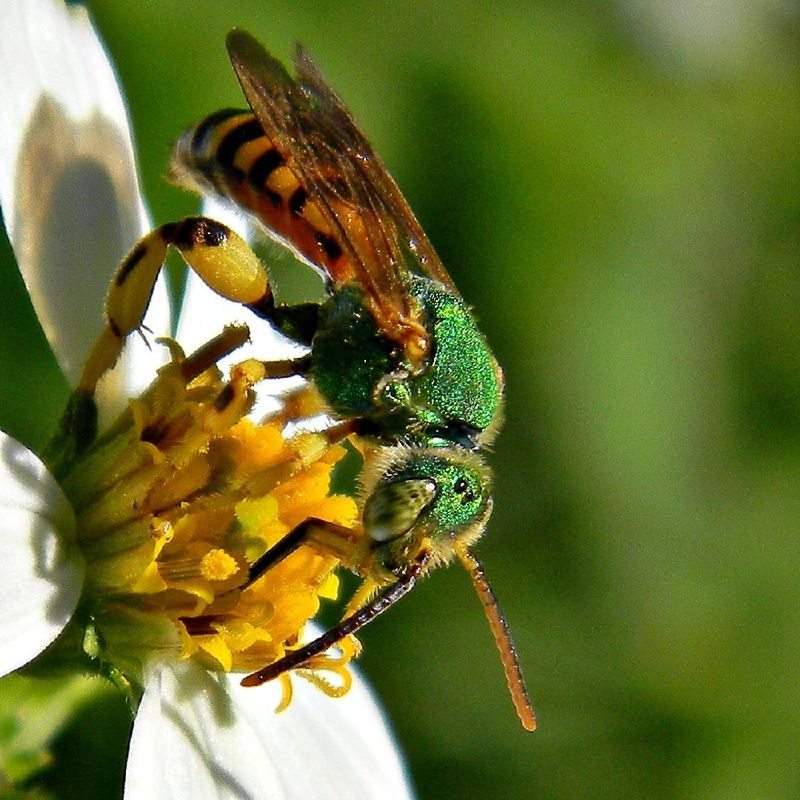
Down in the warmer southern states, Poey’s bee (Halictus poeyi) is a common little worker that often goes completely unnoticed. It looks a lot like other furrow bees, greenish and small.
Because it thrives in the South, it leans on long-blooming natives like Black-Eyed Susans to carry it through hot stretches. These flowers are practically built for its size.
It is a reminder that native bees vary by region, and each area has its own hidden helpers. Pull the Susans and southern gardens lose a quiet local favorite.
13. Lasioglossum Sweat Bees
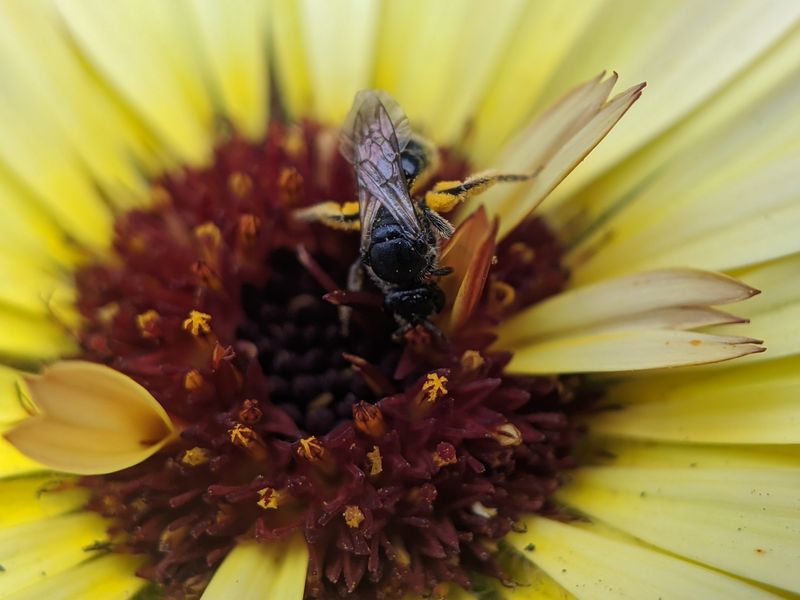
If you want to talk about bees that nobody notices, the Lasioglossum group takes the prize. These are among the smallest and most numerous bees in North America, sometimes barely the size of a grain of rice.
Their tininess lets them crawl right into the packed center of a Black-Eyed Susan, sipping nectar from florets bigger bees skip. What they lack in size they make up in numbers.
Add up thousands of these little visits and they do a huge share of pollination. Remove their flowers and a massive but invisible workforce simply fades away.
14. Bicolored Striped Sweat Bee
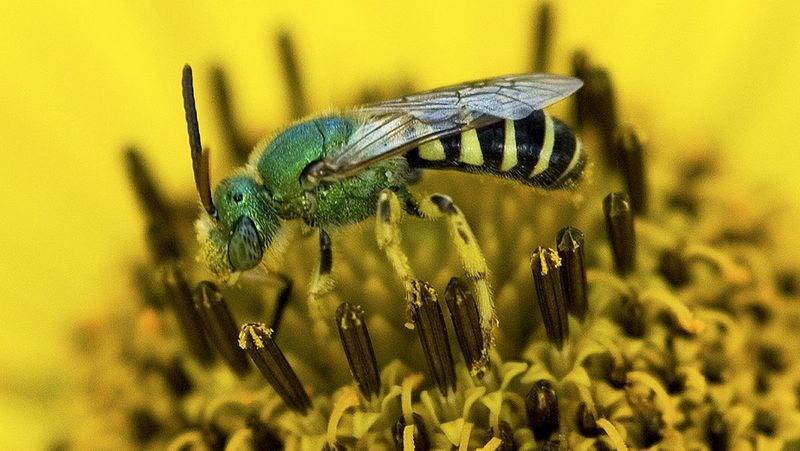
Talk about a bee dressed in two outfits at once. The bicolored striped sweat bee wears a brilliant metallic green head and thorax paired with a black-and-yellow striped rear.
That flashy combo makes it a showstopper on the flat gold face of a Black-Eyed Susan. Females and males each carry the look a little differently.
They are common across much of the country and love composite flowers. Take away the Susans and one of the prettiest bees in your yard loses its runway.
15. Small Resin Bees
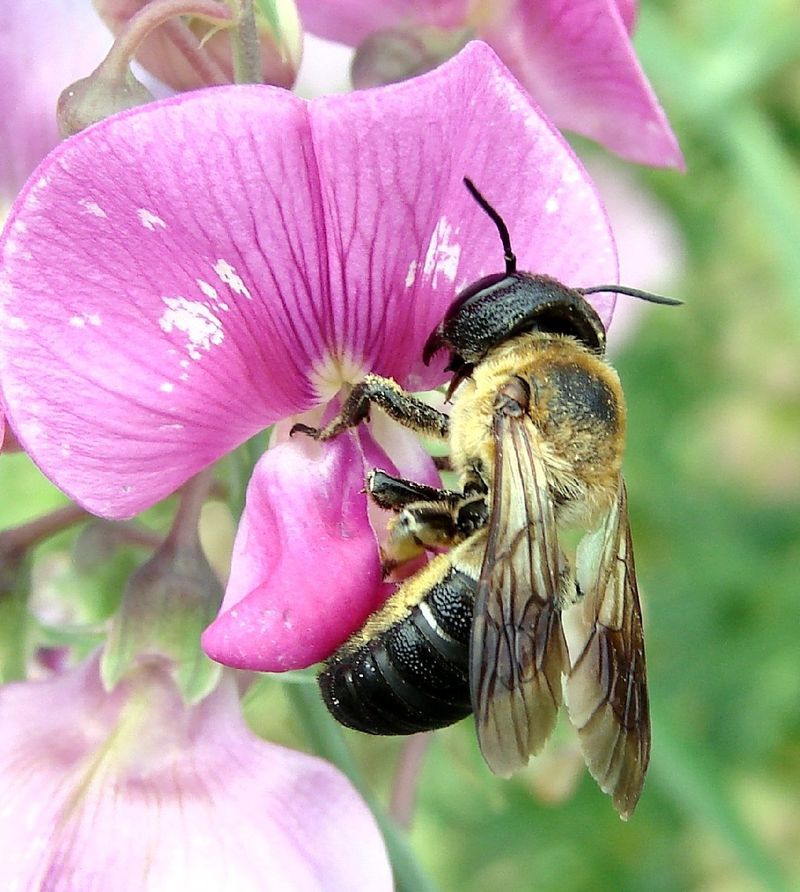
Cousins of the leafcutters, resin bees do something clever: they seal up their nests with sticky plant resin instead of leaf pieces. It is like nature’s version of caulk.
These solitary bees drop by Black-Eyed Susans to gather pollen on the belly-brushes typical of the Megachilidae family. They are efficient and low-key.
Because they nest in small cavities and hollow stems, a tidy, over-cleaned garden already works against them. Losing native flowers on top of that leaves them with almost nothing.
16. Unsung Solitary Bees
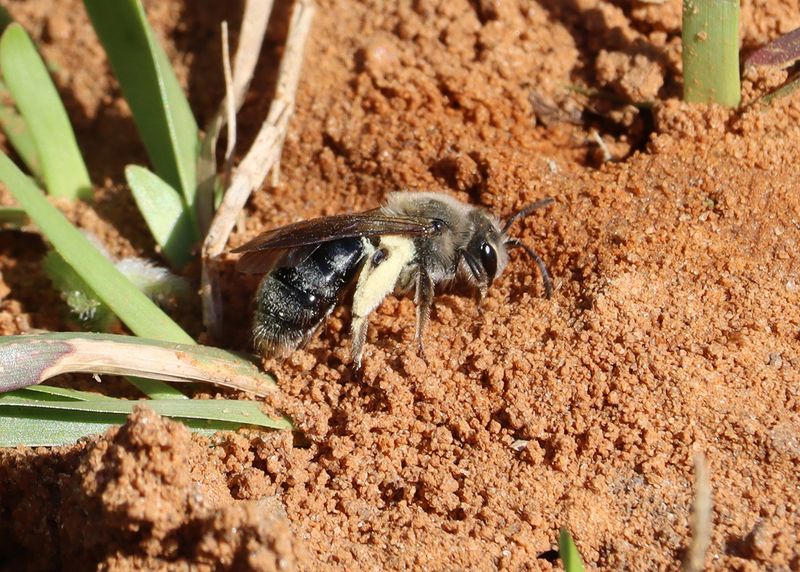
Most people picture bees living in big hives, but the truth is that the majority are solitary. Each female builds and stocks her own nest with no colony to help.
These loners do a shocking amount of the quiet pollination work in wild spaces and backyard beds alike. Black-Eyed Susans are exactly the kind of dependable, long-blooming native they count on.
Without hives to fall back on, a bad food year hits them hard. Every patch of Rudbeckia you keep is one more safety net for these under-appreciated workers.
17. Small Carpenter and Cavity-Nesting Bees
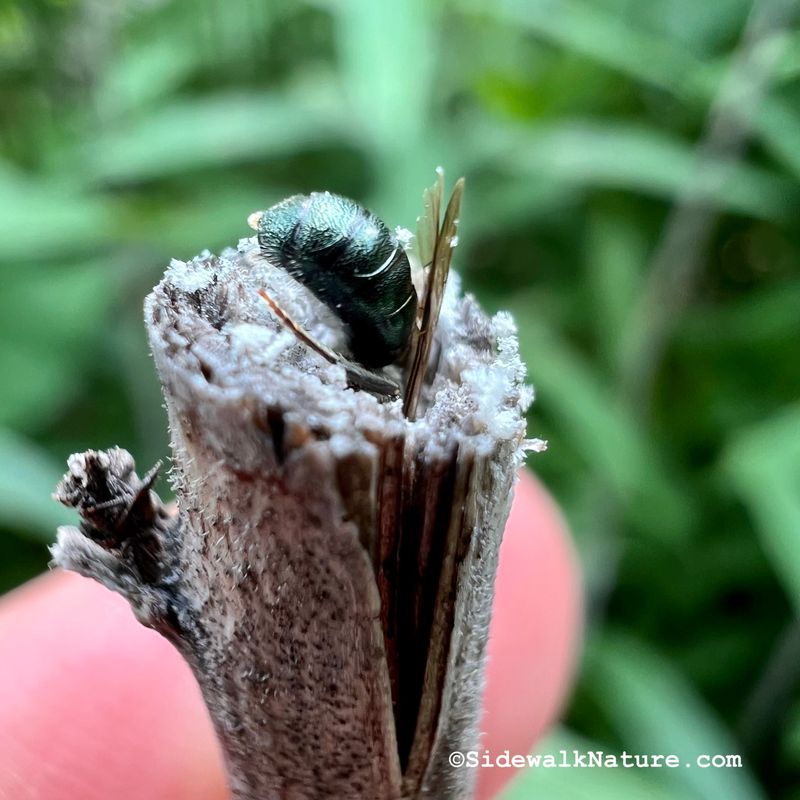
Rounding out the list is a whole crowd of small cavity-nesting bees that make their homes in hollow stems, old wood, and pithy plant stalks. They are the reason experts say to leave your dead flower stems standing over winter.
During the growing season, they feed at Black-Eyed Susans and other natives, then tuck their young into stems for the cold months. It is a two-for-one deal: the flowers feed them and the stalks house them.
Rip everything out at once and you break both halves of their life cycle. Leaving your Susans standing, seeds and stems and all, keeps these bees coming back year after year.