
If You Spot This Bug In Your North Carolina Yard Leave It Alone And Here’s Why
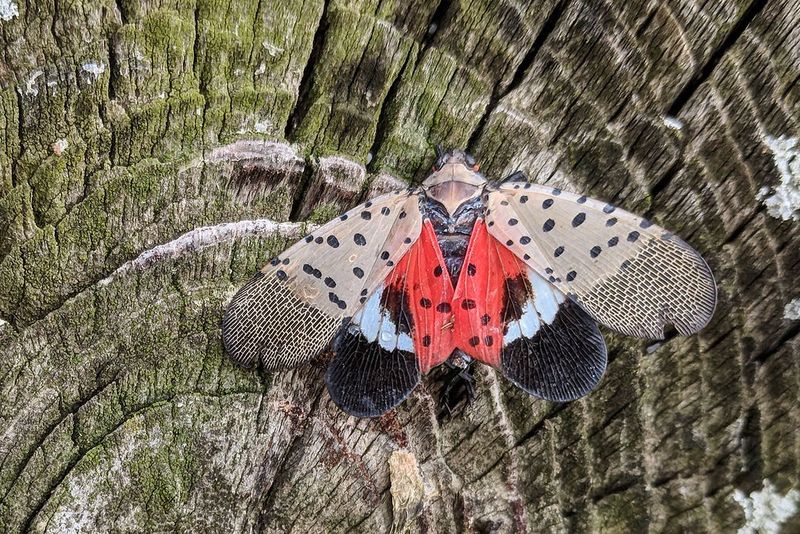
Something unfamiliar has been turning up in North Carolina yards, and it’s stopping homeowners in their tracks. With its flashy red wings and spotted body, the spotted lanternfly looks like it could be dangerous, but the real story is more nuanced than its alarming appearance suggests.
Knowing what you’re actually looking at, and what to do next, can make a real difference for your plants, your neighbors, and the broader ecosystem you work hard to protect.
The Likely Visitor Is a Spotted Lanternfly
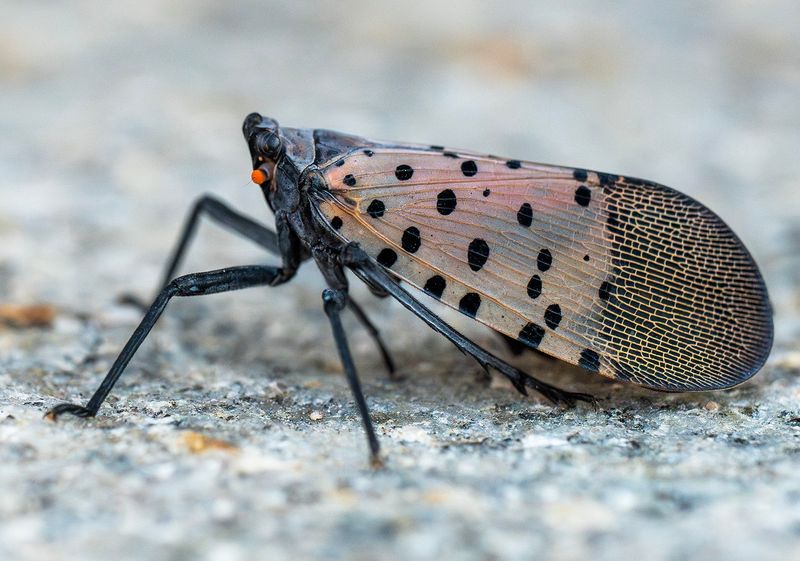
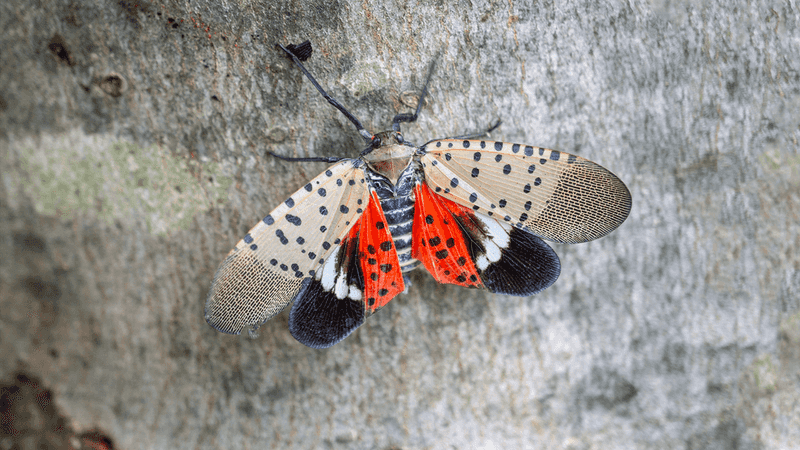
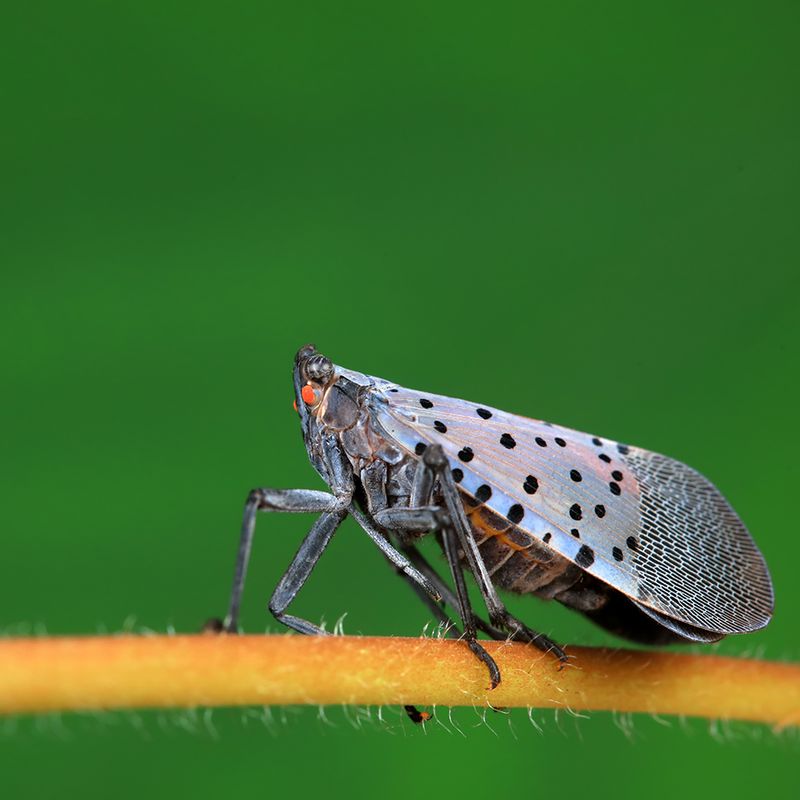
Spotted lanternflies are planthoppers, not beetles or moths, and the distinction matters before you do anything else. An adult measures roughly one inch long and holds its wings flat against its body when resting.
The outer wings are gray-brown with a scattering of black spots, and the abdomen beneath shows bands of yellow and black. Open those wings, and you’ll see a flash of bright red hindwings with black spots near the tips.
That color combination is eye-catching, but it does not mean the insect is toxic or dangerous to touch.
Life stage changes the picture entirely. Early nymphs are black with white spots and are easy to miss on dark bark.
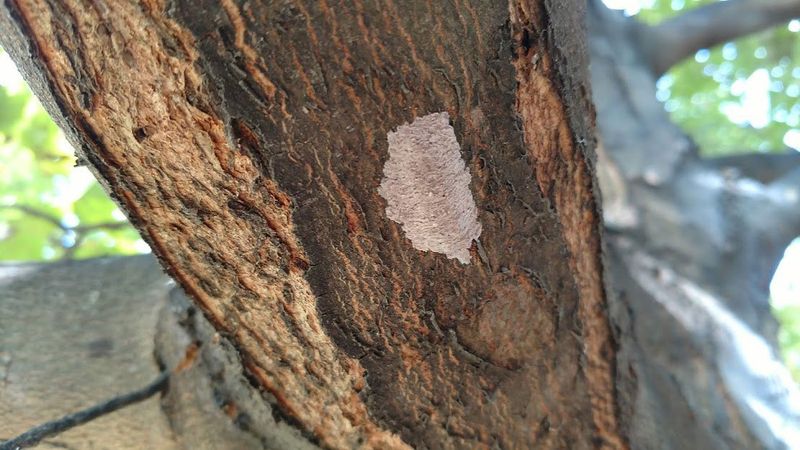
Later nymphs develop patches of red alongside those white spots, which can trip up a homeowner who expects only the adult’s coloring. Egg masses look nothing like the adult at all: USDA APHIS describes them as gray or brownish smears resembling dried mud, roughly one inch long, and they can appear on bark, fencing, outdoor furniture, and vehicles.
The most practical first step when you spot a suspected spotted lanternfly is to avoid picking it up unnecessarily and photograph it instead. A clear shot from the side, showing the wing pattern and body markings, gives you something to compare against reference images and submit to authorities if needed.
NC State Extension confirms that spotted lanternflies do not bite or sting at any life stage, so the concern is not your safety but your yard’s health and the insect’s potential to spread.
Why This Planthopper Matters to a Backyard
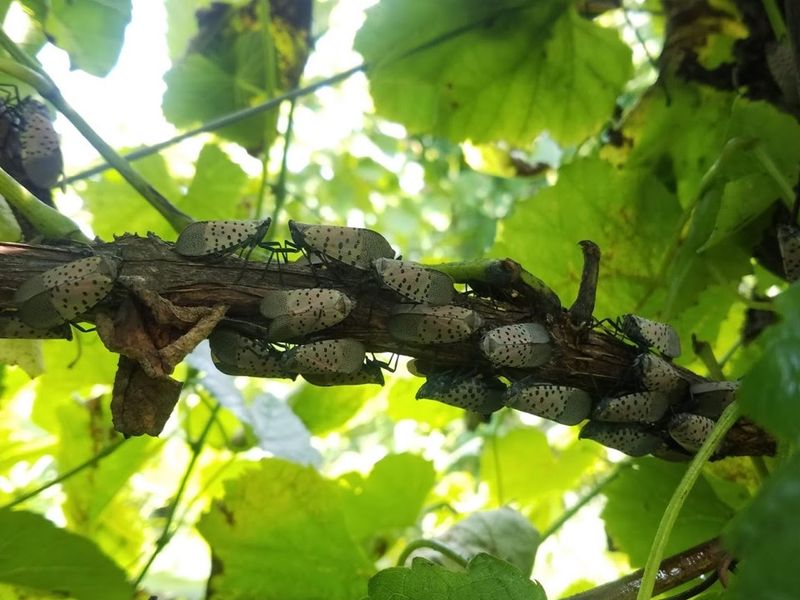
Spotted lanternflies feed by pushing piercing-sucking mouthparts into plant tissue and drawing out sap. That feeding process sounds minor at the scale of one insect, but the byproduct, sticky honeydew, accumulates on leaves, stems, and surfaces below the feeding site.
Honeydew draws ants and wasps looking for a sugar source, and it also creates the right conditions for black sooty mold to develop on foliage and nearby patio furniture.
NC State Extension documents that spotted lanternflies have been recorded feeding on more than 100 plant species. Grapevines, apples, and stone fruits rank among the most vulnerable, but the list also includes maples, walnuts, willows, sycamores, oaks, and dogwoods.
For a North Carolina homeowner with a persimmon tree, a row of muscadines, or a Japanese maple near the patio, that host range covers a lot of familiar ground.
A single insect on a healthy mature tree is not an emergency. NC State Extension Forestry notes that visible plant damage depends on population size, how long feeding continues, the host species, and the plant’s overall condition.
One lanternfly will not kill a tree. A large, sustained population feeding on a stressed grapevine or young fruit tree is a different situation.
For a backyard steward who wants healthy plants and thriving wildlife, understanding that difference helps you respond proportionately rather than reaching for a spray bottle at the first sighting.
What You See Depends on the Season and the County
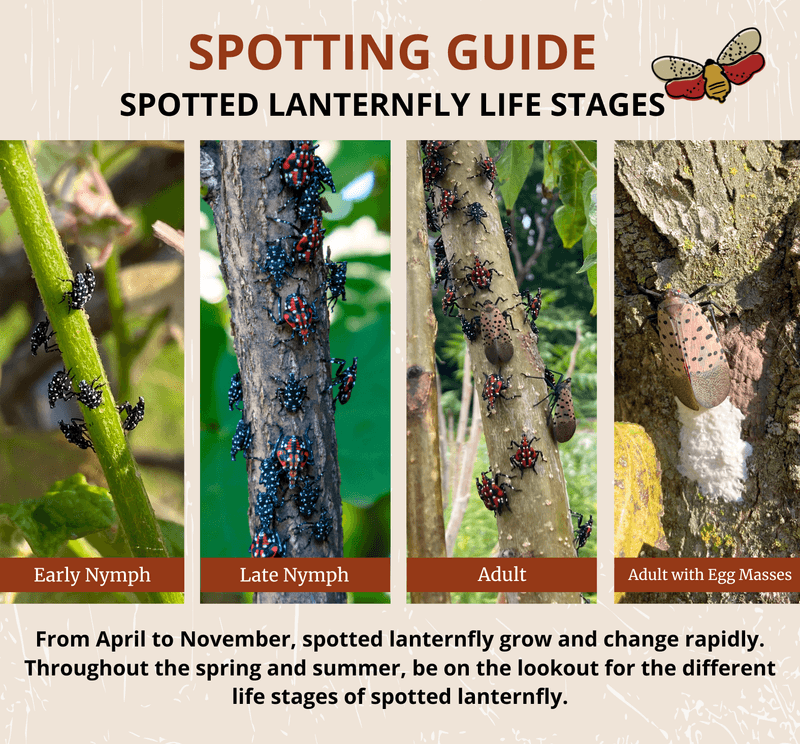
Timing your search to the right life stage saves a lot of frustration. In North Carolina, egg masses are generally visible from fall through spring, laid on bark and hard outdoor surfaces after adults mate in late summer and fall.
Nymphs begin hatching from roughly late March and continue developing through summer. Adults become most noticeable from summer into fall, when they aggregate on host plants in large numbers.
Weather and geography shift these windows, so a warm Piedmont spring may bring nymphs earlier than a cooler mountain location.
The county-level picture in North Carolina is moving quickly. A February 10, 2026 NCDA&CS announcement confirmed established populations in seven counties: Forsyth, Guilford, Rockingham, Caldwell, Davidson, Rowan, and Caswell.
The agency’s main spotted-lanternfly webpage contained older language at the time of that release, so any reader checking county status should use the dated announcement and verify the current agency map before acting on a specific county list.
The NC State scouting guide gives homeowners a practical framework for checking their property by season, including where to look for each life stage and what surfaces to prioritize. Pairing that guide with the current NCDA&CS county map tells you both what to look for and whether your location falls inside or outside a known established area, which affects what you should do with a confirmed sighting.
Could It Be a Look-Alike?
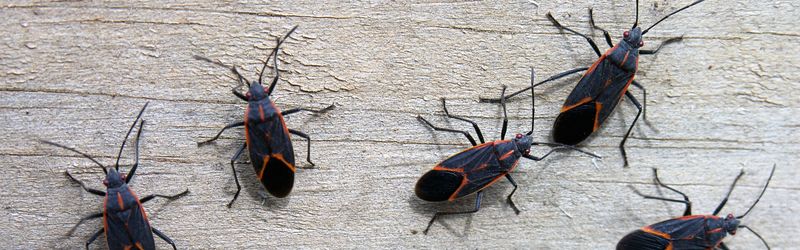
North Carolina yards are home to several red-and-black or spotted insects that get mistaken for spotted lanternflies every season. Before reporting or treating anything, a clear photograph is your most important tool.
NC State’s look-alikes guide lists several local species that share coloring or wing patterns with the spotted lanternfly, including the ornate bella moth, the harnessed tiger moth, the ailanthus webworm, milkweed bugs, boxelder bugs, and certain stink-bug nymphs. Each has distinctive markings that separate it from a spotted lanternfly once you know what to look for.
Getting a usable photograph means placing a coin or pen beside the insect for scale, then shooting from the side to capture the full wing and body pattern. NC State Extension recommends this approach specifically because many reports turn out to involve native look-alikes, and submitting a clear image helps state experts confirm or rule out spotted lanternfly without a physical specimen.
Avoid handling the insect to reposition it; most insects will stay still long enough for a steady photo if you approach slowly.
Two insects deserve a separate safety note because they are sometimes confused with spotted lanternflies but carry very different risks. Wheel bugs are beneficial predatory assassin bugs with a gear-shaped crest on the thorax, and they can deliver a genuinely painful defensive bite if handled.
Kissing bugs are blood-feeding triatomines; CDC guidance on Chagas disease explains that infected kissing bugs, not spotted lanternflies, are associated with that illness. Spotted lanternflies feed exclusively on plant sap and pose no biting, stinging, or disease-transmission risk to people.
Keeping these distinctions clear protects both you and the beneficial insects sharing your yard.
Document and Report the Sighting Correctly
Once you have a clear photograph and a reasonable confidence in your identification, the next question is whether and how to report it. The answer depends on where you live.
NCDA&CS guidance asks residents outside generally established areas to submit a photograph along with the location and date through the agency’s reporting system. That information helps officials track the pest’s movement and prioritize responses in counties where populations are not yet confirmed.
The rules are different for two specific areas. Residents in western Guilford County and eastern Forsyth County are directed not to submit routine individual reports.
Instead, those homeowners should contact their county Cooperative Extension office or a licensed pest management professional for management advice. The February 10, 2026 NCDA&CS release reflects the agency’s current approach of treating well-established areas differently from areas where the pest is newly detected or still rare.
A single spotted lanternfly in your yard does not automatically mean you have a breeding population or that your plants are in immediate danger. NC State Extension notes that risk depends on population size and sustained feeding, not a one-time sighting.
Still, a credible first observation in a county with no prior record is worth documenting carefully. Record the date, the address or GPS coordinates, the plant or surface where you found the insect, and its life stage if you can determine it.
That kind of precise, organized report is far more useful to state agencies than a vague description submitted days later.
Check Hard Surfaces Before the Pest Travels
One of the most effective things a homeowner can do is slow the spotted lanternfly’s spread before it leaves the property. USDA Forest Service research identifies human-mediated movement on cars, trucks, trains, and transported items as a primary driver of how spotted lanternflies reach new counties and states.
The egg mass is the life stage most likely to hitchhike, because it looks like a patch of dried mud and can go unnoticed on dozens of surfaces.
Egg masses turn up on tree bark, but also on grills, fences, trailers, patio furniture, bricks, stones, and outdoor equipment. USDA APHIS egg-mass removal guidance recommends scraping and smashing suspected egg masses on suitable hard surfaces into a sealed plastic bag that contains hand sanitizer or rubbing alcohol, then placing the sealed bag in household trash.
Pressure washing is another option for hard outdoor surfaces where scraping is impractical. Do not use the same method on surfaces that could be damaged by alcohol or water pressure.
Before moving a vehicle, trailer, camper, lawn equipment, firewood, or outdoor furniture out of an area with known spotted-lanternfly activity, USDA APHIS vehicle inspection guidance advises checking wheel wells, bumpers, grills, roofs, and undercarriages for egg masses or resting adults. USDA APHIS also recommends checking any outdoor items stored against buildings or under trees, since adults and egg masses can accumulate on sheltered vertical surfaces that are easy to overlook.
A few minutes of inspection before you pull out of the driveway is a real contribution to keeping the pest out of counties that do not yet have it.
Manage a Confirmed Problem Without Harming the Yard
Confirmed spotted lanternfly activity in your yard calls for measured responses, not a broad chemical application. Start with the simplest physical options.
Egg masses on hard surfaces can be scraped off and sealed in a bag with rubbing alcohol as described in the previous section. Individual adults and nymphs can be vacuumed off plants using a shop vac with a small amount of soapy water in the reservoir, or stomped directly on the ground when populations are small enough to manage that way.
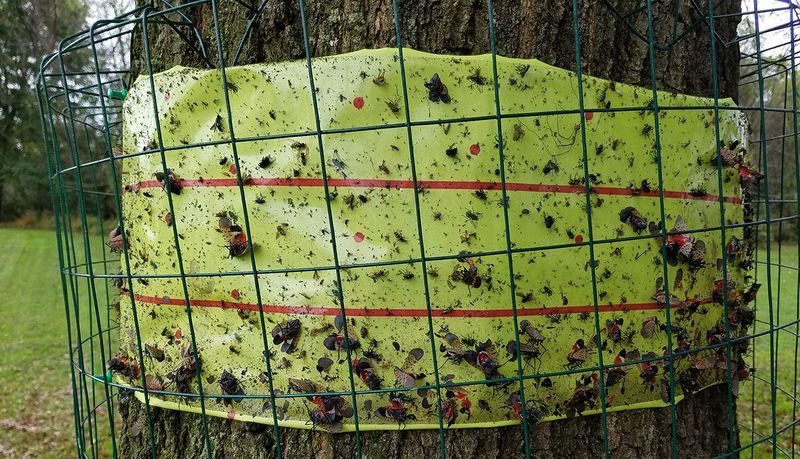
Sticky bands placed around tree trunks can intercept nymphs climbing upward, but they require consistent monitoring. The NC State homeowner management guide cautions that sticky bands can trap birds, lizards, and other non-target animals, so any band left in place needs a protective wire cage or mesh barrier around it to keep wildlife from contacting the adhesive surface.
Check and replace bands regularly. NC State’s guidance on beneficial insects reinforces why protecting non-target species matters: indiscriminate trapping or spraying can harm the native predators and pollinators your yard depends on.
Chemical treatment should come only after you have confirmed the pest identity and reviewed your options. USDA APHIS and NC State Extension both advise following pesticide labels exactly, because the label specifies legal application rates, target sites, and covered pests.
Applying a product to a pest or location not listed on the label is illegal and can harm non-target insects.
Tree-of-heaven deserves a careful look if it grows on your property, because spotted lanternflies strongly prefer it as a feeding and aggregation site. Removing it can reduce local attractiveness to the pest.
NC State’s tree-of-heaven profile notes that the tree resprouts aggressively after cutting, so removal typically requires follow-up herbicide treatment by a professional. More importantly, research cited by NC State found that spotted lanternflies can complete development and reproduce without tree-of-heaven, so removing one tree will not automatically eliminate an established population from your yard.
Stay Calm, Confirm First, and Act Precisely
The title’s instruction to leave this bug alone is really about staying calm rather than panicking, handling the insect unnecessarily, or spraying whatever is under the sink. A confirmed spotted lanternfly will not bite you, sting you, or harm your pets.
NC State Extension is clear on that point. The actual concern is the insect’s effect on your plants and its ability to reach new areas on vehicles and gear.
The practical sequence is straightforward: photograph it without handling it, confirm the identification against a reliable source, then follow current NCDA&CS guidance for your specific county. Remove egg masses from hard surfaces using the sealed-bag method, and inspect anything leaving your property if you live in or near a known established area.
Targeted, well-informed action protects your plants and your backyard wildlife far better than either panic or inaction. USDA APHIS frames it well: the homeowner who checks before moving is doing more for the state’s landscape than any amount of after-the-fact spraying ever could.