
If You Toss Watermelon Rinds In The Trash Every Summer, Here Are 7 Ways They Feed Your Garden Instead
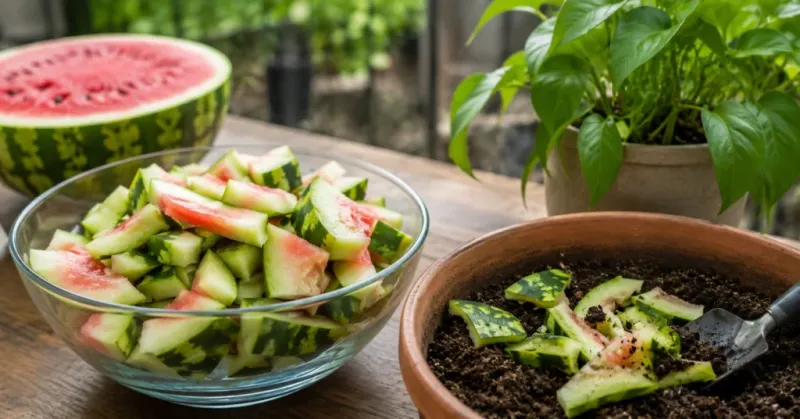
Every summer, millions of watermelon rinds end up in the trash after backyard cookouts. But those leftover green shells are packed with water, minerals, and nutrients your plants would love to have.
Instead of tossing them, you can turn them into free food and moisture for your tomatoes, geraniums, and more. Here are seven simple ways to give your garden a summer boost with something you already have.
1. Boost Your Compost Pile
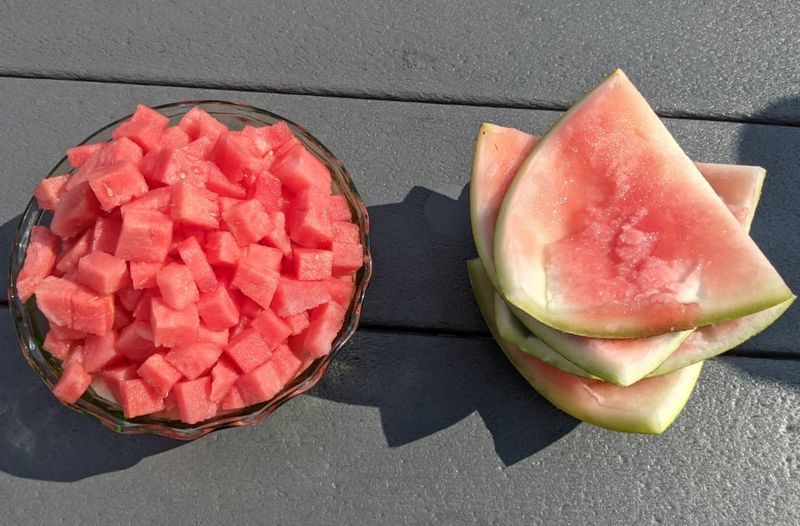
Your compost pile is basically a hungry engine, and watermelon rinds are premium fuel. Counting as a nitrogen-rich “green,” they hand your pile a burst of moisture along with trace minerals like phosphorus that keep the whole thing cooking.
With over 90% water content, rinds help hold the right dampness level that microbes need to break everything down. A pile that dries out stalls, and a slimy chunk of rind is often just the thing to wake it back up.
One tip makes a big difference here: chop the rinds into small 2 to 3 cm pieces before you toss them in. Big slabs can sit for months, but bite-sized bits vanish quickly and feed the pile faster.
Balance them with dry browns like leaves or shredded paper, and you will have crumbly finished compost by the time your beds need it.
2. Directly Amend Soil for Fruiting Plants
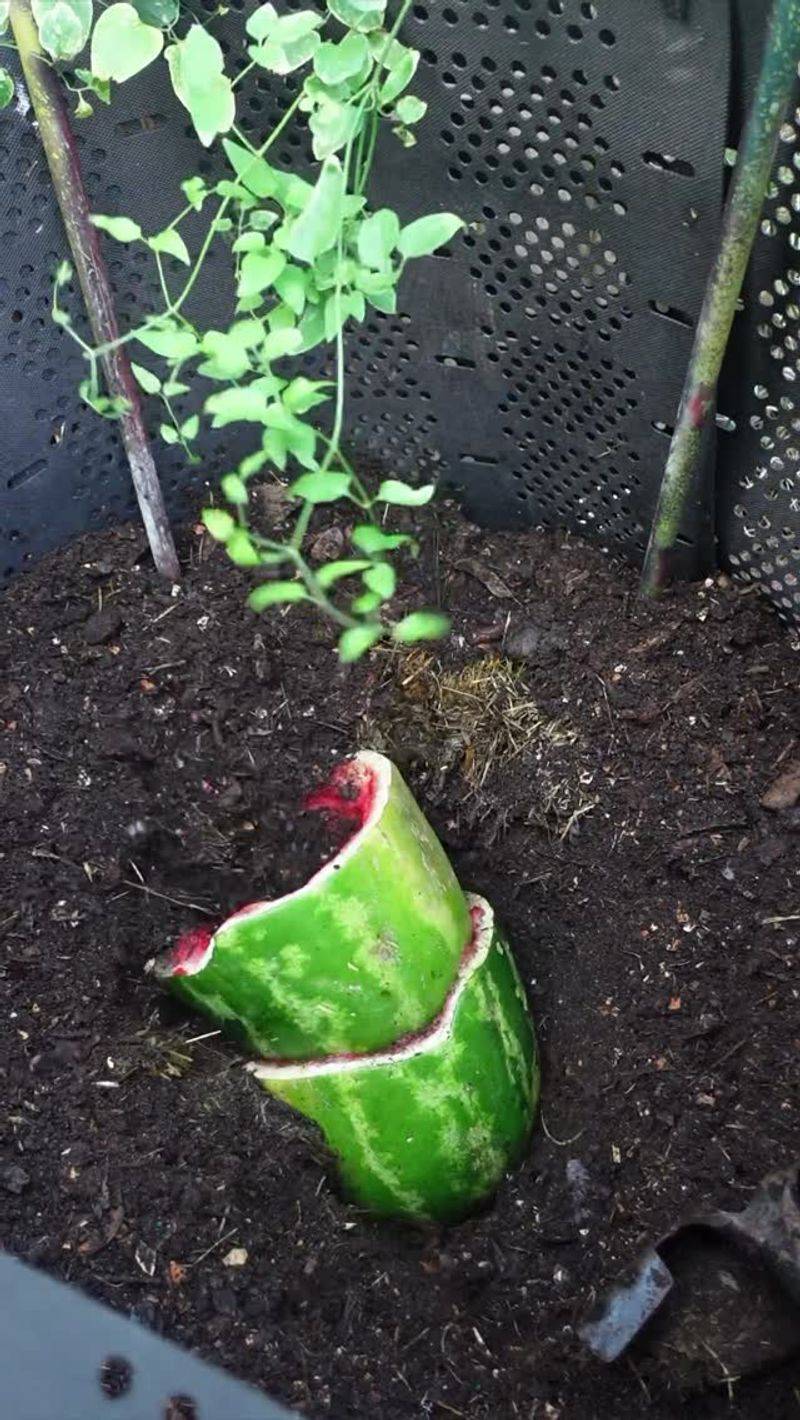
Worried your tomatoes or peppers aren’t getting enough of what they crave? Bury chopped watermelon rinds a few inches down near the base of established plants, and you create a slow-release feeding station right in the root zone.
Over about two to three weeks, soil bacteria and fungi quietly break the rind apart, releasing potassium, calcium, and magnesium exactly where hungry roots can grab them. Heavy feeders love this, which makes it a smart move for tomatoes, peppers, cucumbers, eggplants, and even a pot of basil.
Tuck the pieces roughly 5 to 7 cm deep to keep pests from digging around. As a bonus, the buried rind holds onto moisture, so the surrounding soil stays damp longer during a scorching afternoon.
It is one of the easiest ways to feed a fruiting plant without buying a single bag of fertilizer.
3. Create a Nutrient-Rich Liquid Fertilizer

Gardeners who like a quick feeding routine swear by what some call “rind tea.” It is a homemade liquid fertilizer that lets you nourish plants on a regular schedule using nothing but scraps and water.
Making it is straightforward: chop the rinds small, fill a jar or bucket about halfway, cover with non-chlorinated water, and let it sit loosely covered for 48 to 72 hours at room temperature. During that time, the mix releases potassium, calcium, magnesium, a little nitrogen, and helpful microbes that improve how well your soil takes up nutrients.
Once it is ready, strain out the solids and dilute it, roughly 1 part liquid to 5 to 10 parts water, then pour it around the soil rather than over the leaves. Want extra oomph?
Stir in a tablespoon of unsulfured blackstrap molasses at the start to give those beneficial microbes something to feast on.
4. Mulch Around Plants
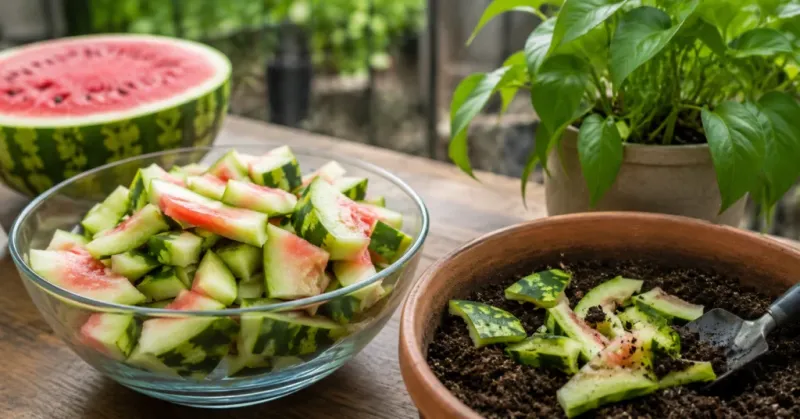
Laid right on top of the soil, roughly chopped watermelon rinds do double duty as a natural mulch. Every time you water or it rains, they release a trickle of nutrients straight into the topsoil.
Beyond feeding, that rind layer helps lock in moisture, keeps weeds from muscling their way up, and slowly builds the organic matter your soil hungers for. Over a season, you are quietly improving the ground beneath your plants without lifting much of a finger.
Save this trick for larger containers or open ground beds. In a small pot, exposed rinds can look messy and may invite fruit flies when the weather turns hot and sticky, so bigger spaces are the sweet spot.
5. Power Up Your Worm Bin
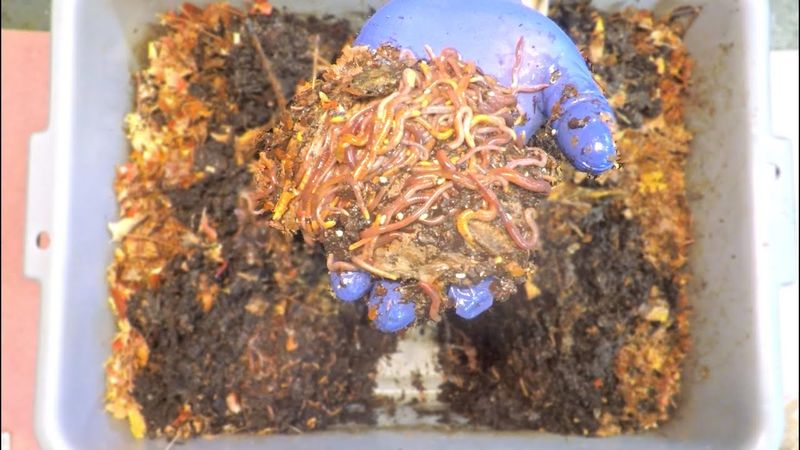
Red wiggler worms treat watermelon rinds like a buffet. In a vermicompost bin, they chomp through the soft flesh and turn it into dark, crumbly castings that gardeners lovingly call “worm gold.”
The catch is that worms work best on small bites, so chop the rinds up finely to speed things along. Then mix in plenty of dry browns like shredded cardboard or dry leaves to soak up all that sugar and moisture.
Getting that balance right matters more than you might think. Too much wet rind can turn the bin sour and airless, and it can attract fruit flies.
Keep the browns generous, and your worms will reward you with some of the richest fertilizer around, perfect for potting mixes and seedlings.
6. Create a Blended Fertilizer for Flowering Varieties
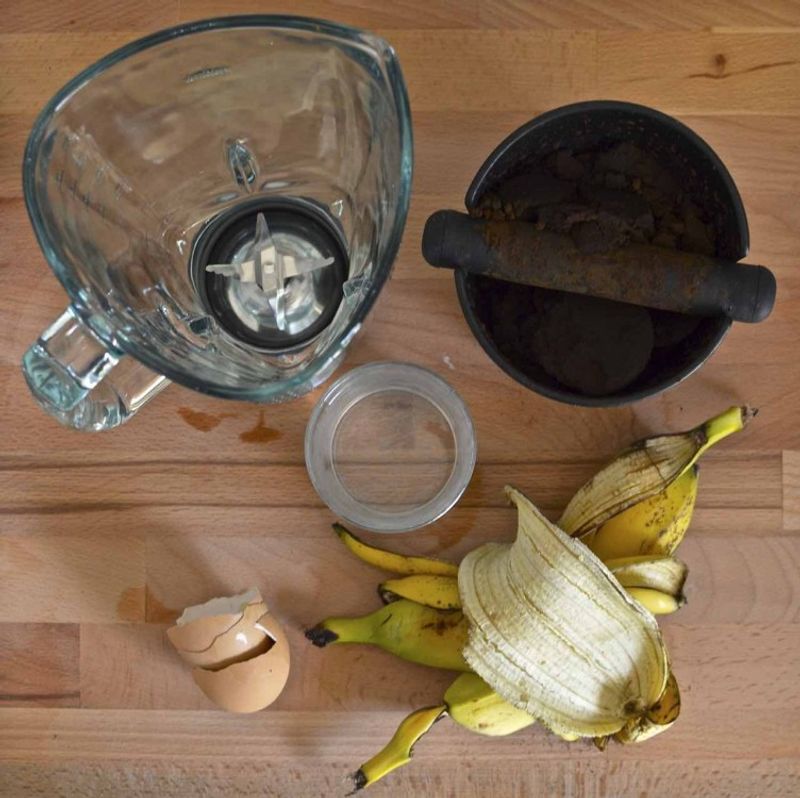
If your geraniums or petunias are stingy with their blooms, a blended kitchen-scrap fertilizer might be the nudge they need. Watermelon rind becomes far more powerful when you team it up with other everyday leftovers.
Blend chopped rind with banana peels for potassium and phosphorus, used coffee grounds for magnesium, nitrogen, and a touch of acidity, and crushed eggshells for calcium. Together they cover a wide range of the nutrients flowering plants lean on all season long.
Feeding this mix to your blooming favorites can encourage fuller growth, more flower buds, and richer color. Geraniums and petunias especially tend to answer back with a stronger show, turning a handful of scraps into a summer full of petals.
7. Enhance Soil Moisture Retention
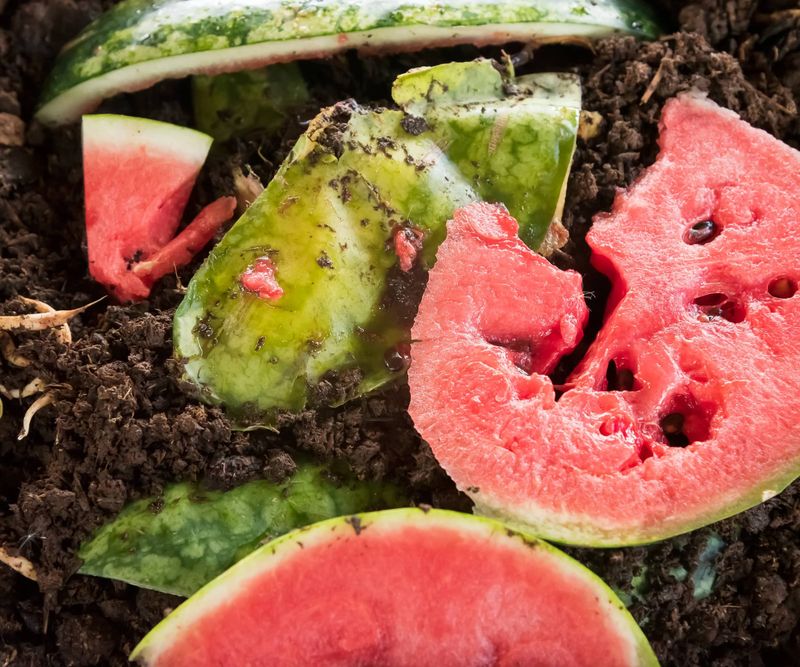
Here is a number that surprises people: watermelon rinds are about 92% water. That built-in reservoir is a gift for any garden fighting the summer heat.
As the rinds break down, whether buried in the soil or resting on top as mulch, they slowly let go of all that stored moisture. The result is a kind of gentle, natural irrigation that keeps the surrounding soil damp longer and can stretch the time between waterings.
Container gardeners feel this benefit the most, since pots dry out fast under a blazing sun. Tuck a few rind pieces into the mix, and your plants get a quiet backup water supply on the hottest days, helping them stay hydrated when you cannot get out to the hose.
Between the free nutrients and the moisture boost, those leftover rinds earn their spot in the garden instead of the trash can all summer long.