
If Your Bedroom Air Feels Stale, Here’s What A Snake Plant Actually Does (And What NASA Says It Can’t)
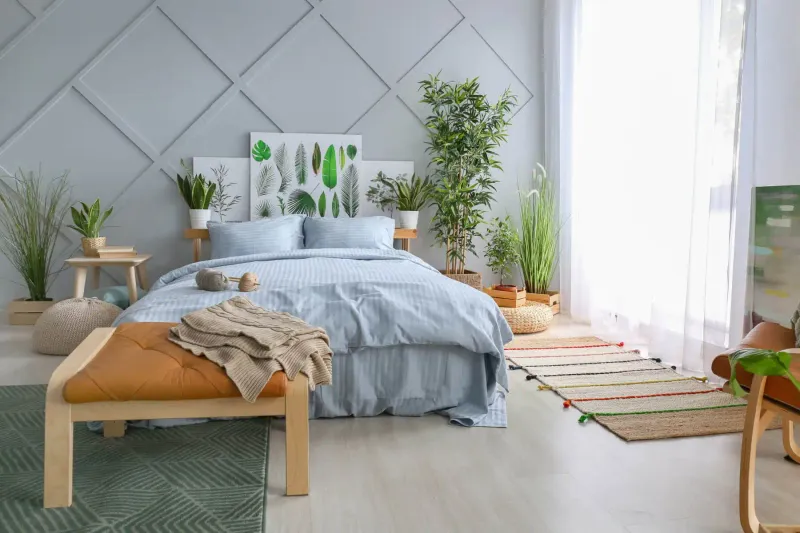
Snake plants have earned a loyal following as the houseplant that supposedly cleans your bedroom air while you sleep, and the claim always comes with a name attached: NASA. The reality is more complicated, and more interesting, than the popular version suggests.
Understanding what the research actually showed, and where it stops short, helps you make smarter decisions about the air in your home.
NASA studied plants in controlled chambers—not ordinary bedrooms

Back in 1989, NASA published a report titled “Interior Landscape Plants for Indoor Air Pollution Abatement.” That study placed plants inside sealed, enclosed laboratory chambers and measured whether they reduced concentrations of specific volatile organic compounds, including benzene, trichloroethylene, and formaldehyde. The chambers were tightly controlled environments with regulated air circulation, known starting pollutant levels, and conditions that bear little resemblance to a typical bedroom.
The narrow finding the research supports is this: certain plants, under those specific test conditions, did reduce measured concentrations of some target chemicals. That is a real and defensible result.
What the research did not show is that placing one snake plant in a normal bedroom will clean the air in any meaningful way, that NASA recommends bedroom plants as an air-quality solution, or that a handful of houseplants delivers measurable health benefits to the people sleeping nearby.
The distinction between a sealed laboratory chamber and a real bedroom matters enormously. A bedroom is not sealed.
It exchanges air with the rest of the house and, ideally, with the outdoors. It has continuous sources of emissions from furniture, bedding, cleaning products, personal care items, and the occupants themselves.
Pollutant concentrations in a real bedroom shift constantly, while the chamber experiments used controlled starting points.
None of this means the NASA research was flawed. It was designed to answer a specific laboratory question, and it answered that question.
The problem is not the study itself but the way its findings traveled into popular culture, growing from “plants reduced some VOC concentrations in a sealed chamber” into “NASA proved snake plants clean your bedroom air.” Those two statements describe very different things, and only the first one is supported by what the research actually measured.
The plant, roots, soil, and microbes work as a system
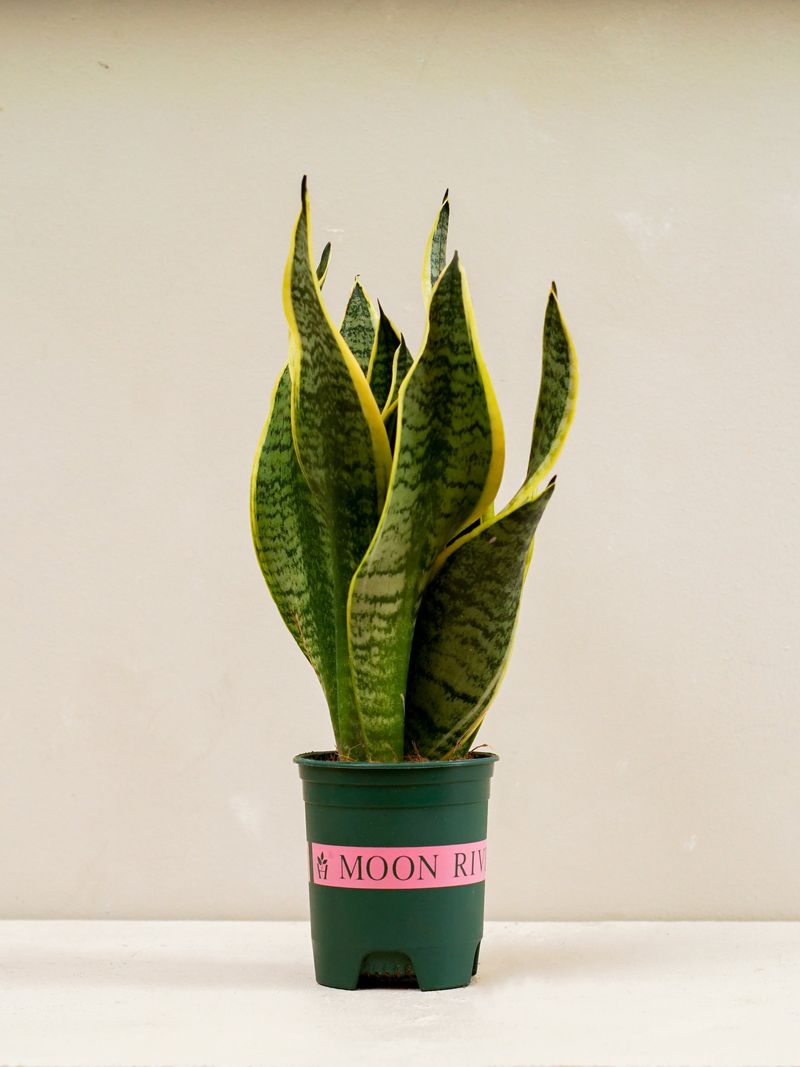
One of the most persistent misconceptions about snake plants is that the leaves act like a sponge or filter, pulling toxins out of the air on their own. NASA’s own later account of the research emphasizes that roots and the associated microorganisms living in the growing medium appeared to contribute substantially to whatever pollutant removal was observed.
The leaf is one part of a larger biological system, not a standalone air-cleaning device.
A 2014 peer-reviewed review of ornamental potted plants and VOC removal confirmed that multiple pathways are involved: direct uptake by plant tissue, absorption through stomata, and microbial transformation happening in the root zone and soil. The review also found that removal rates vary considerably depending on the plant species being tested, the light intensity available, the concentration of the pollutant, the condition of the plant, and other surrounding environmental factors.
Real-world evidence from homes and offices, as opposed to controlled chambers, remained limited and produced mixed results. Some studies found measurable uptake; others found effects too small to matter in ordinary conditions.
That inconsistency reflects how sensitive the process is to variables that shift constantly in a real living space.
So the accurate picture is that a snake plant participates in some gas-exchange and pollutant-uptake activity as part of a plant-roots-soil-microbe system, under conditions that favor it. That is genuinely interesting biology.
Calling the leaf alone an air filter, or suggesting it absorbs every toxin that drifts by, goes well beyond what the evidence shows. The plant is not a machine with a fixed output; it is a living system whose behavior depends on the environment around it.
Why a laboratory effect cannot keep up with a real room
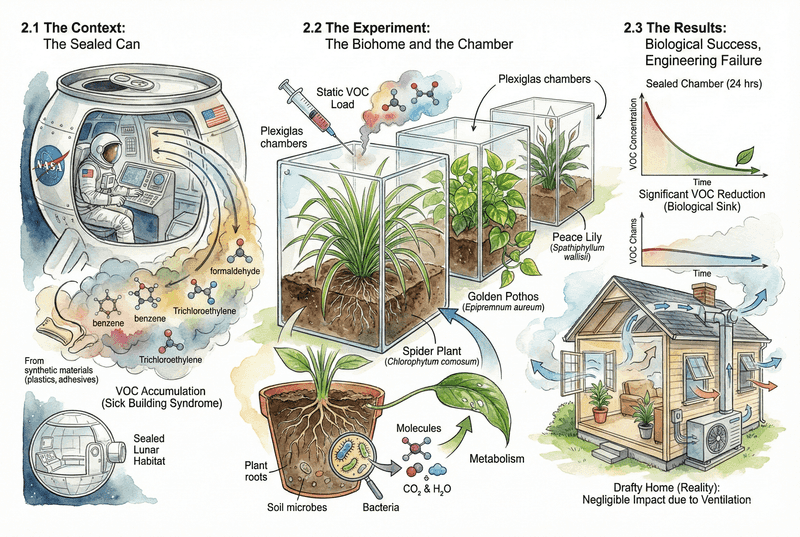
Even if a snake plant removes some VOCs under favorable conditions, the question that matters for your bedroom is whether it removes them fast enough to make a practical difference. A rigorous analysis published after the original NASA work put numbers to that question, and the answer is sobering.
A review by Cummings and Waring converted results from 12 chamber studies into clean-air-delivery-rate estimates, the standard metric used to compare air-cleaning devices. The median single-plant rate came out to roughly 0.023 cubic meters per hour.
To put that in context, the review estimated that achieving a VOC removal rate comparable to typical building ventilation could require somewhere between 10 and 1,000 plants per square meter of floor space, depending on the study and the plant’s performance. That range is not a planting recommendation; it is an illustration of how large the gap is between what one plant does in a chamber and what a building’s ordinary air exchange accomplishes passively.
A normal bedroom is constantly receiving new emissions. Furniture off-gases VOCs.
Bedding, carpets, cleaning sprays, and personal care products all contribute. The occupants themselves exhale CO2 and other bioeffluents continuously through the night.
A sealed chamber with a known starting concentration of one chemical is a fundamentally different environment from a bedroom that refills with pollutants around the clock.
Ordinary outdoor-air exchange, even at modest rates typical of older homes, moves far more air volume per hour than a potted plant can process. The practical limitation here does not come from a specific NASA conclusion.
It comes from later analysis showing that the scale of what a plant does in a laboratory simply does not translate into meaningful air cleaning in an occupied building. That gap is why ventilation, source control, and filtration remain the primary tools for improving indoor air quality, not houseplants.
What nighttime gas exchange really means
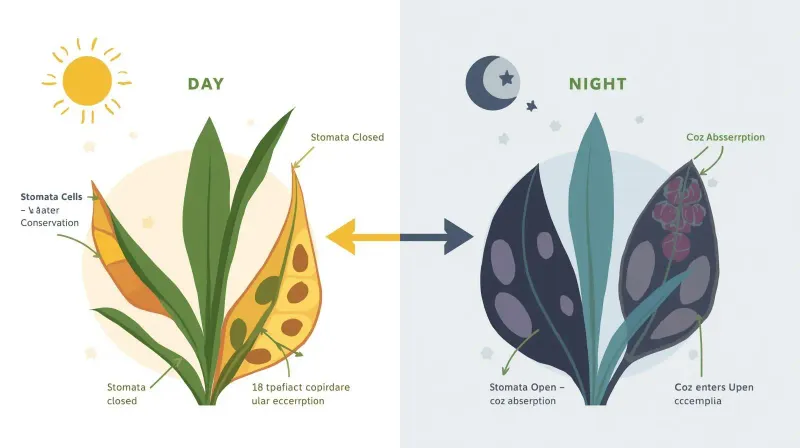
“Snake plants release oxygen at night” is one of the most widely repeated claims about this plant, and it contains a kernel of real biology wrapped in a layer of overstatement. Snake plants use a photosynthetic pathway called Crassulacean acid metabolism, or CAM.
Research on Sansevieria trifasciata has observed nighttime CO2 uptake under controlled conditions, which is how CAM works: the plant opens its stomata at night to take in CO2, stores it as an organic acid, then uses that stored carbon during the day when light is available for photosynthesis.
That mechanism is genuinely different from how most common houseplants operate, and it is why the nighttime-oxygen story took hold. The problem is the leap from “this plant takes in some CO2 at night” to “this plant will meaningfully oxygenate your bedroom or control its CO2 levels.” Those are very different claims.
A sleeping adult exhales roughly 200 milliliters of CO2 per minute. A small potted snake plant’s gas exchange is constrained by its leaf surface area, the absence of strong light at night, ambient temperature, the plant’s overall condition, and how much air is moving around it.
The math does not favor the plant. EPA guidance treats CO2 primarily as an indicator of ventilation adequacy, not as a pollutant that a houseplant can practically manage.
CAM also does not mean the plant photosynthesizes normally in complete darkness. Nighttime CO2 uptake is a storage step, not an oxygen-generating event the way daytime photosynthesis is.
Expecting a snake plant to refresh a sealed bedroom overnight asks the plant to do something its biology is not built for at that scale. The nighttime gas exchange is real; the bedroom-purification story built on top of it is not.
Treat stale air as a source-checking problem
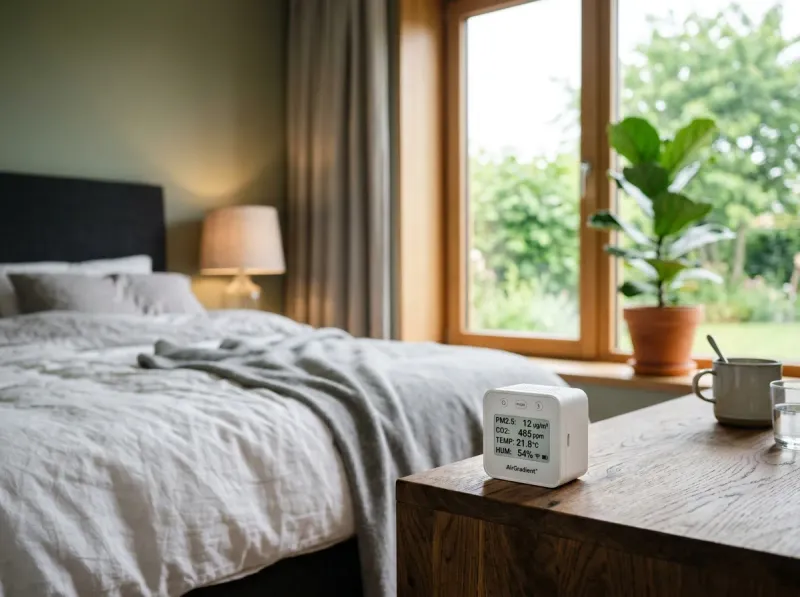
“Stale” is a sensation, not a diagnosis. When a bedroom feels stuffy or close, that feeling could be pointing to any number of different conditions: inadequate outdoor-air ventilation, elevated CO2 from sleeping occupants, odors from furniture or bedding, VOC emissions from products or finishes, excess humidity, dust accumulation, or early signs of mold growth.
Placing a snake plant in the room addresses none of those root causes, and it can mask warning signs that deserve attention.
EPA identifies condensation on windows and walls, visible mold, and a persistent musty smell as possible indicators of inadequate ventilation or moisture problems. Those are signs worth investigating rather than decorating around.
A plant sitting next to a damp wall does not fix the moisture problem; it just adds greenery to it.
A CO2 monitor can be a genuinely useful tool for understanding what happens in a bedroom overnight. Readings that climb steadily while the door and windows are closed tell you something concrete about how well the room is ventilated during sleep.
EPA and CDC caution that CO2 is an imperfect and incomplete indicator, and that a single universal number is not appropriate for every room or occupancy pattern. One commonly cited reference point is below 800 ppm as a general baseline, but that number does not guarantee safe or healthy air, and it does not account for other pollutants present at the same time.
The useful mental shift is to treat stale-feeling air as a prompt to investigate rather than a problem to neutralize with a plant. Ask whether the room gets fresh outdoor air regularly, whether exhaust fans are moving air out of adjacent spaces, whether there are new furniture pieces or products off-gassing, and whether humidity is staying in a reasonable range.
Those questions lead to actual solutions.
Use ventilation and targeted controls for the air
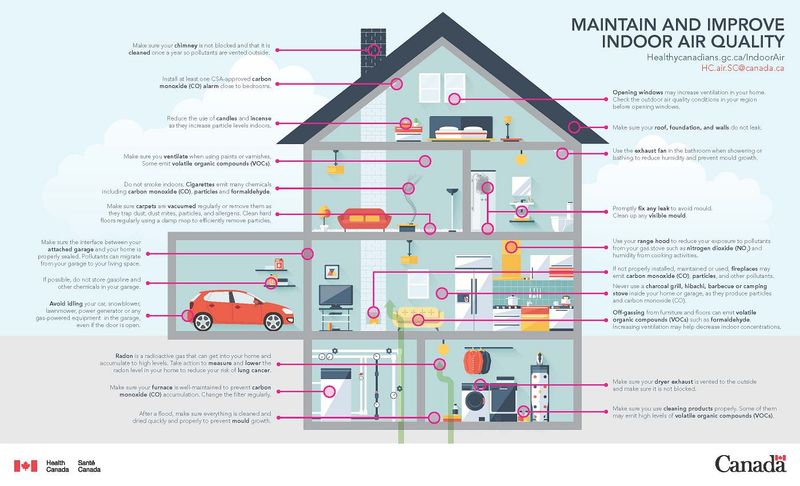
When bedroom air feels stale, the evidence-backed response starts with the air itself, not with a plant. Bringing outdoor air in when conditions permit, meaning when outdoor air quality is acceptable and temperatures are reasonable, is the most direct way to dilute indoor pollutants.
Opening a window for even part of the night can make a measurable difference in how a room feels by morning.
EPA guidance on indoor air quality prioritizes three main strategies: controlling pollution sources, ventilating with outdoor air, and using air cleaning when the first two are insufficient. In a bedroom context, source control means identifying and reducing what is putting pollutants into the air in the first place.
New furniture, synthetic bedding, scented candles, air fresheners, and certain cleaning products all contribute VOCs. Switching to low-emission alternatives or allowing new items to off-gas in a ventilated space before use can reduce the baseline load.
Kitchen and bathroom exhaust fans that vent directly outdoors help remove moisture, odors, and combustion byproducts before they spread through the house. Keeping HVAC filters clean and replacing them on schedule maintains airflow and captures particles that ventilation alone does not address.
Keeping indoor relative humidity between 30 and 50 percent limits conditions that favor dust mites and mold. EPA’s ventilation guidance explains how home size, occupancy, and construction affect how much outdoor air a home actually needs.
For specific concerns, the response needs to match the problem. Smoke and combustion pollutants require source removal and ventilation, not a plant.
Carbon monoxide requires a working detector and immediate source identification. Radon requires professional testing and mitigation.
Serious mold requires remediation, not a decorative workaround. A snake plant cannot address any of those hazards, and counting on one to do so while the underlying problem continues is genuinely unsafe.
Keep the snake plant as decor, not as an air-quality appliance
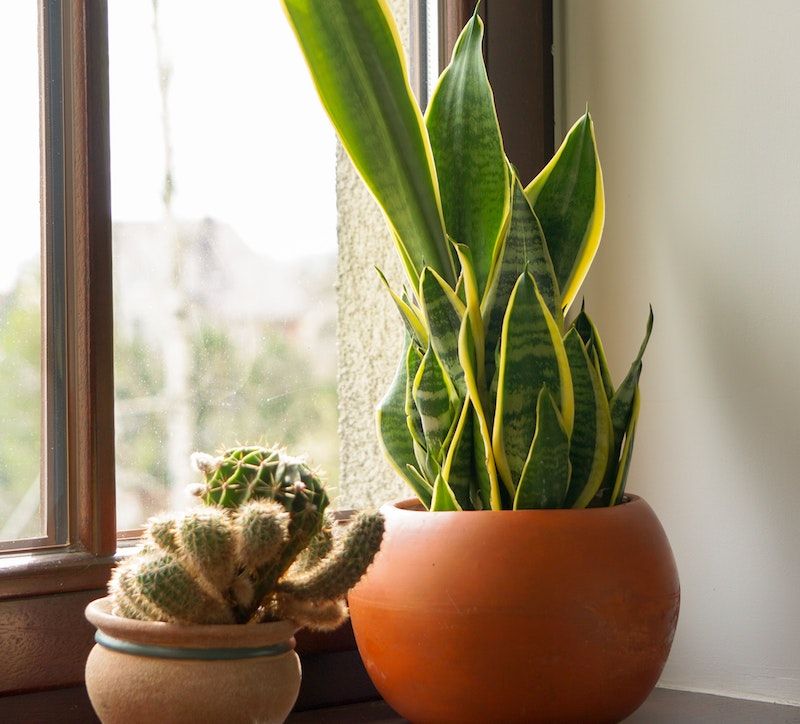
A snake plant is a genuinely appealing houseplant: low-maintenance, architecturally striking, and backed by real laboratory observations of gas-exchange and pollutant-uptake activity. Enjoying one in a bedroom is a reasonable choice.
Treating it as an air-quality appliance is where the logic breaks down.
Chasing purification by adding more plants introduces its own set of problems. The ASPCA lists snake plants as toxic to cats and dogs, with saponins that can cause nausea, vomiting, and diarrhea in pets that chew on the leaves.
Homes with animals need to factor that in before placing multiple plants at floor level or on low furniture. Beyond pet safety, more plants mean more soil, and consistently moist potting mix creates favorable conditions for fungus gnats.
Extension guidance on fungus gnats in houseplants points to overwatered soil as the primary driver; letting the top layer dry out between waterings helps reduce them considerably.
Wet soil in a poorly ventilated space can also nudge indoor humidity in the wrong direction, which EPA notes as a factor that raises mold risk. The practical rule is straightforward: use the plant for decoration and the quiet biological interest it brings, while using ventilation, source control, and appropriate equipment to handle indoor air.
A well-cared-for snake plant on your dresser is a fine thing to have; the air in your bedroom will thank your exhaust fan more.