
If Your Christmas Cactus Drops Its Buds Before They Open, Here’s What It’s Reacting To
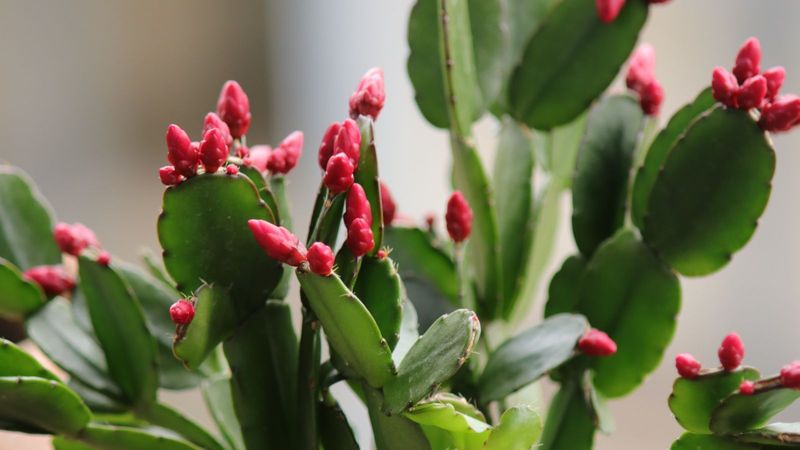
You waited weeks for those little pink buds, and now they are dropping onto the windowsill. It is a stressful sight, but it happens to plenty of careful plant owners.
A holiday cactus often lets go of buds when something around it changes. Here is how to look back over recent days and find what your plant may be reacting to.
Bud drop points to stress, not one guaranteed cause
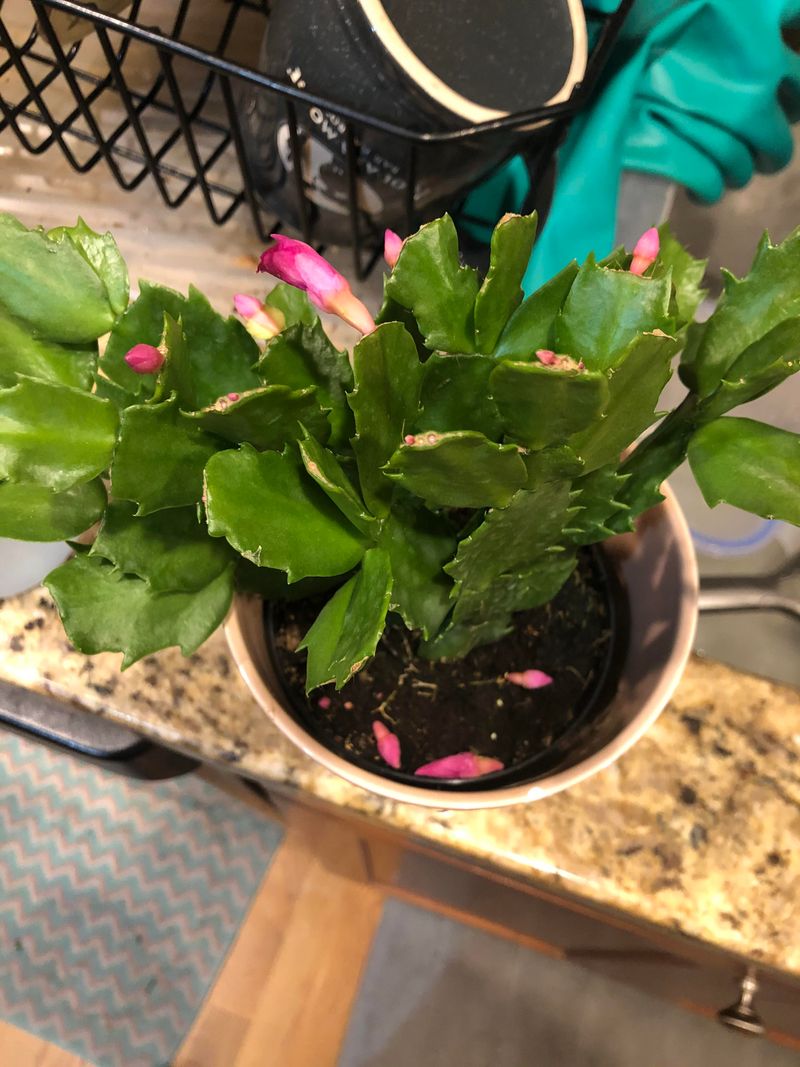
Buds on the floor tell you the plant is unhappy, but they do not tell you why. A holiday cactus tends to react to stress or a shift in its surroundings, and many different things can set it off.
Two or three small stresses can also pile up at once, which makes the cause harder to pin down.
So start with a memory check instead of a fix. Think back over the last couple of weeks.
Did you move the pot, turn it, or set it near a new window? Did the room get colder or hotter?
Did your watering routine change? Iowa State Extension guidance points to sudden changes in temperature and light and to watering problems as leading suspects, and Illinois Extension lists similar triggers.
One more thing to keep in mind is the name on the plant tag. Many plants sold as Christmas cactus are really Thanksgiving cactus or hybrids, and their timing and habits can differ.
Because of that, the common name or the date your plant set buds will not solve the mystery. The checks in the next sections work for any of them, and none of them are guaranteed to be the culprit in your home.
University of Minnesota Extension also stresses steady conditions for budding plants.
Did the plant experience a temperature swing or draft?
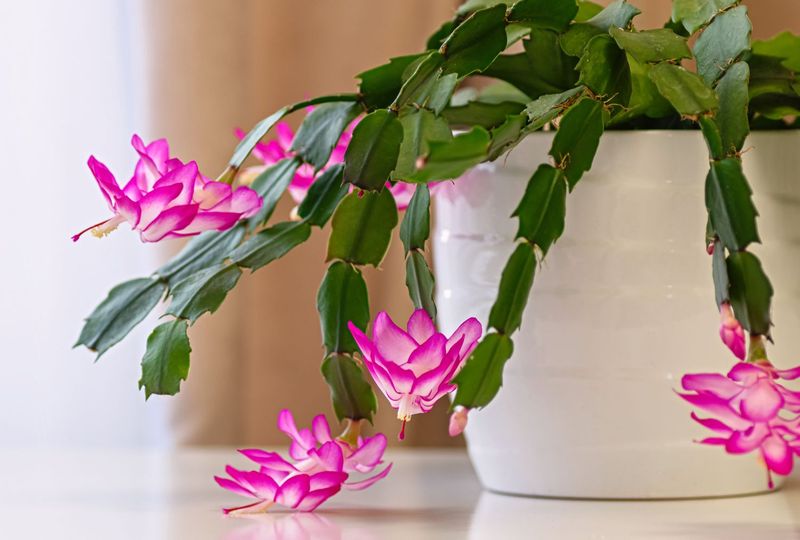
Picture where your cactus sits at night. A spot right against a cold window, beside a door that opens often, or over a heating vent can swing the temperature more than you would guess.
Fireplaces and space heaters do the same thing from the hot side.
Try a simple location check. Stand where the plant sits and hold your hand near the glass, the vent, and the floor around the pot.
If you feel a chill or a blast of warm air, that is a plausible stress. Moving the pot a short distance away from the draft, once, may be better than leaving it there, though every move is its own change to weigh.
Extension sources give rough temperature ranges as examples. Iowa State suggests about 60 to 70 degrees F indoors, and Illinois Extension warns that temperatures below 50 degrees F may cause bud drop.
Treat those numbers as general guidance, not hard lines.
They also will not bring back buds that have already fallen. The goal is to protect the buds still on the plant by keeping the air around it mild and even, away from icy glass and hot vents.
A change in light or location can add stress
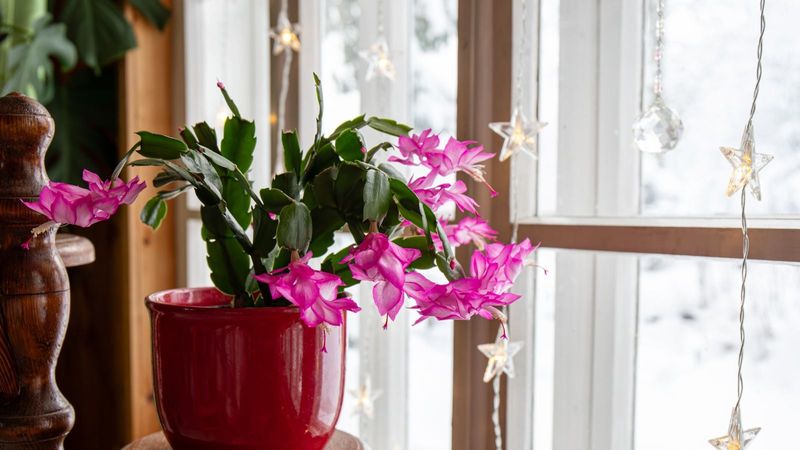
Plants that are covered in buds are surprisingly sensitive to being shuffled around. Carrying the pot to a new room, or even giving it a quarter turn, changes the light angle and sometimes the temperature too.
That makes a move a reasonable suspect, but not a sure one.
Aim for bright, indirect light during the day. A spot near an east or a shaded south window often works, and sheer curtains can soften strong rays.
Once you find a good place, try to leave the pot alone while buds develop. Iowa State says the plant can be moved for display once flowers begin opening.
Night light is a separate matter. Long, uninterrupted nights help start buds in the fall, as explained in another Iowa State answer.
They are not an emergency treatment for buds that have already formed.
If you did move the plant recently, do not move it back and forth trying to undo things. Pick a steady spot with good light and let it settle.
Check the soil before you reach for the watering can
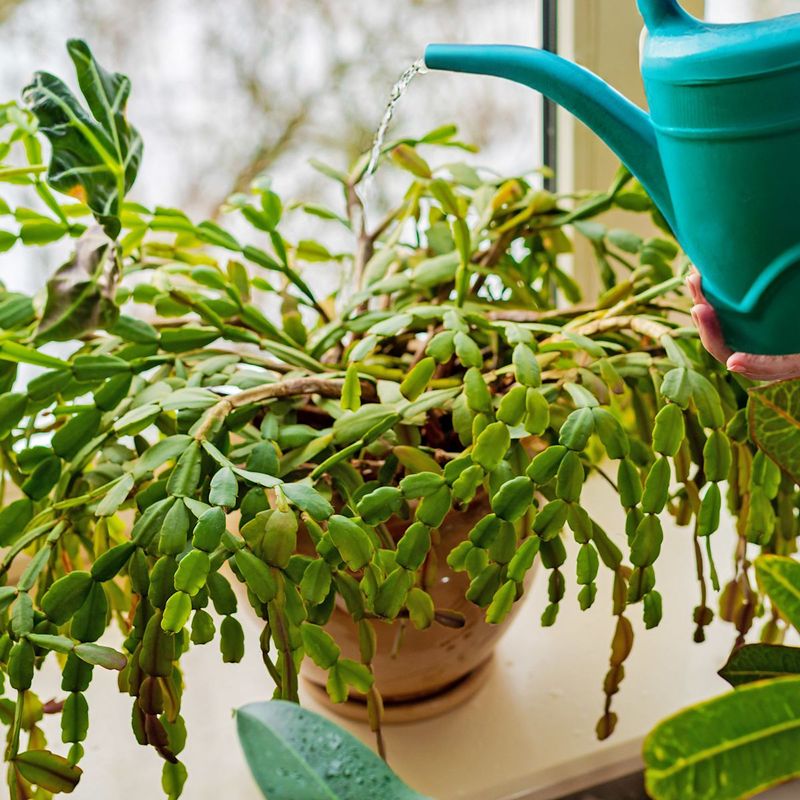
Watering is where good intentions cause trouble. A budding cactus should not be left bone dry, yet it also hates soggy roots.
Skip the calendar and let the pot tell you what it needs.
Push a finger about an inch into the mix. If it is dry, water until extra drains out, then empty the saucer so the pot does not sit in runoff.
If it is still damp, wait. UF/IFAS and Iowa State both point to a well-drained mix and to avoiding extremes.
Extension advice differs a little. Some sources suggest keeping the mix evenly moist during budding, while others let it dry slightly.
The shared message is to avoid both too dry and waterlogged, and to adjust to your mix and room.
Watch for wet soil paired with limp or shriveled stems. That combination does not mean the plant needs more water.
Minnesota Extension notes that too much moisture can lead to root rot, and a Ask Extension answer explains that damaged roots may not take up water normally. Check drainage holes and the roots’ health before adding more.
Humidity can contribute, but it is not a diagnosis
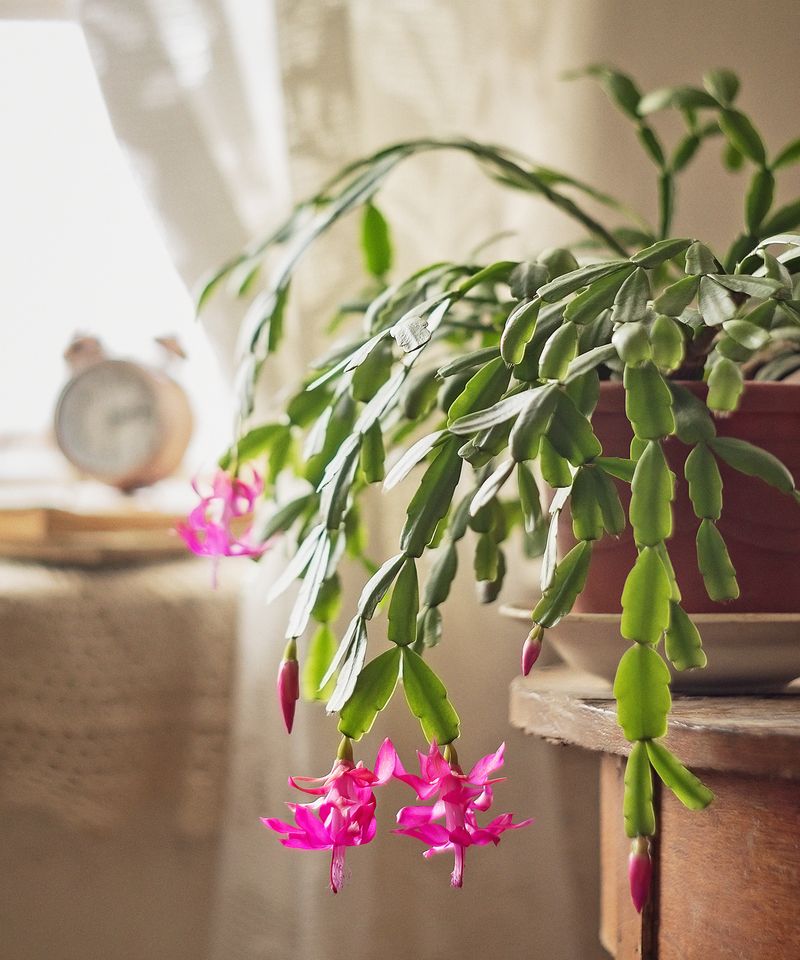
Winter homes can be dry, especially when the furnace runs all day. Some extension guidance lists low humidity as one possible contributor to bud drop, including Illinois Extension and the University of Connecticut.
Notice the word contributor. Dry air may add to the stress, but bud drop has many possible explanations, so humidity should not be your first or only guess.
Think of it as one piece of the room conditions, along with drafts, light, and watering.
If your air is very dry, a pebble tray with water under the pot, or grouping plants together, may nudge the humidity up a bit. Keep the pot bottom above the water so roots do not sit wet.
No single humidity step is promised to stop buds from falling, and misting alone is not a reliable answer.
Formed buds need steady care, not a bloom reset
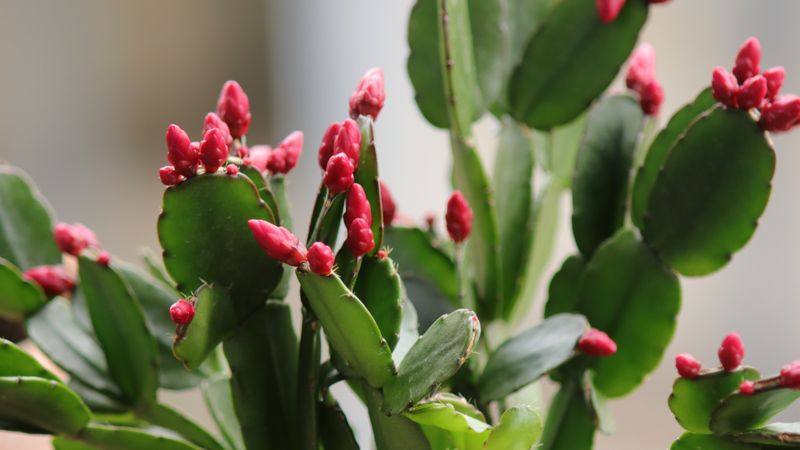
Getting buds and keeping buds are two different jobs. Short days and cool conditions help prompt a holiday cactus to start flowering.
Once buds have formed, the advice shifts to steady, consistent care.
Iowa State notes that some cultivars can form buds under different mixes of day length and temperature, so no single darkness schedule fits every plant. Covering your cactus at night now, hoping to rescue it, could just add another change.
The plant’s flower initiation needs are mainly a fall matter.
Resist the urge to do something dramatic. Repotting, fertilizing, or heavy pruning are not first responses to bud loss.
Iowa State recommends repotting when needed in spring or early summer, when the plant is not blooming.
Instead, fix only the problem you can actually see, such as a cold draft or a waterlogged saucer, and then stop tinkering. Calm, even conditions give the remaining buds their best odds.
Start with the change you can verify
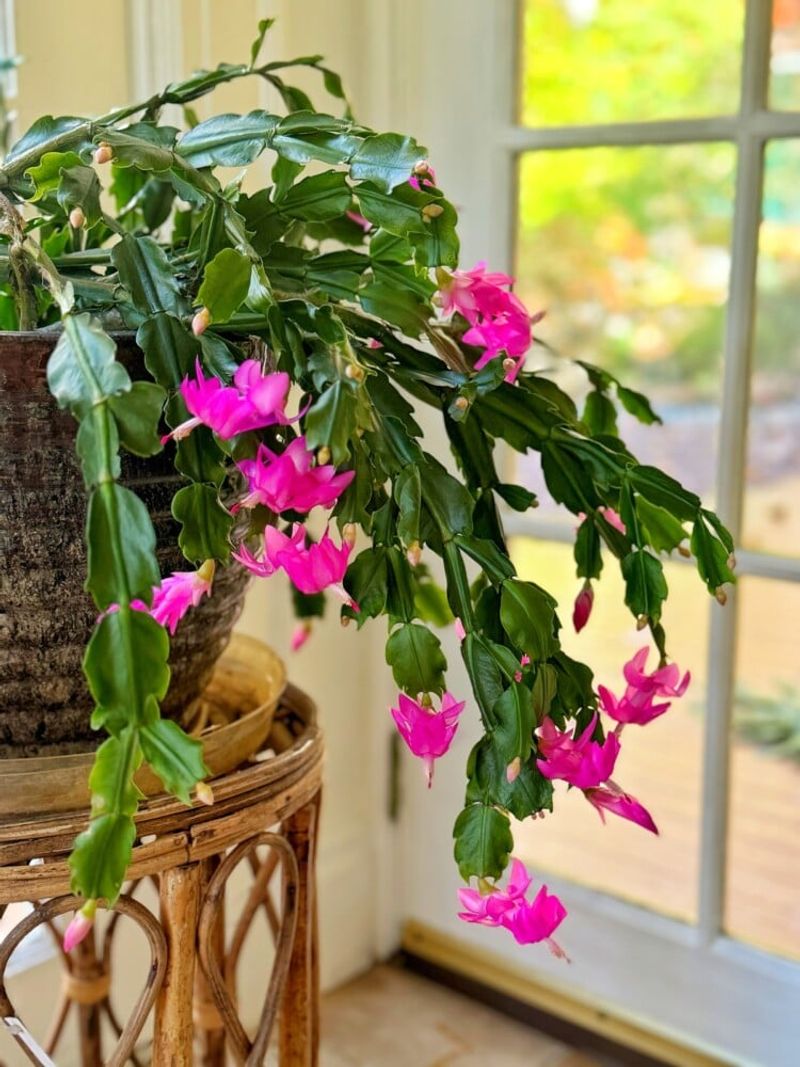
Walk through the list once: recent moves, drafts and vents, light, soil moisture and drainage, and room air. Correct the one thing you can actually confirm, then hold everything else steady, as Iowa State and Minnesota Extension both suggest.
No single fix promises the remaining buds will stay. A quiet plant in a steady spot is still a good bet.