
If Your Christmas Cactus Looks Limp And Droopy, Check This Before You Water It Again
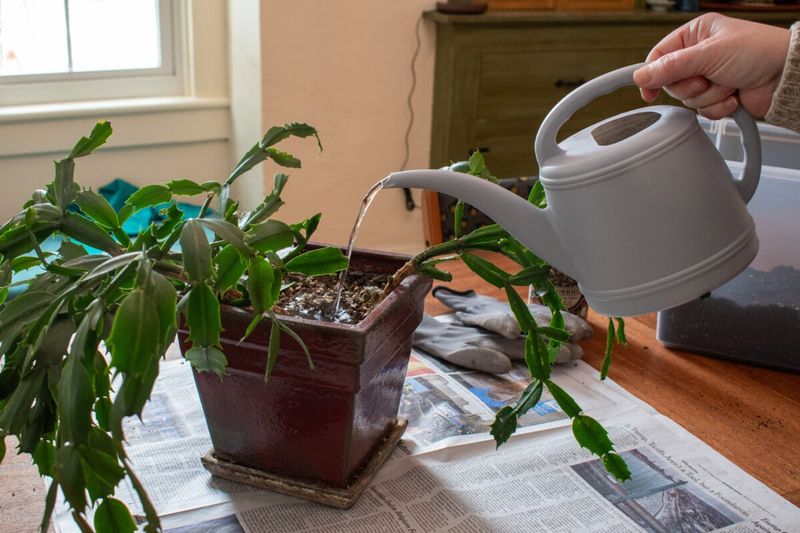
Your Christmas cactus is sagging, and the watering can is calling your name. Hold on for a minute, because a limp plant is not always a thirsty one.
Dry mix and soggy roots can both leave stems looking tired. A quick check of the soil and the pot can tell you what to do next.
Check the mix before you reach for water
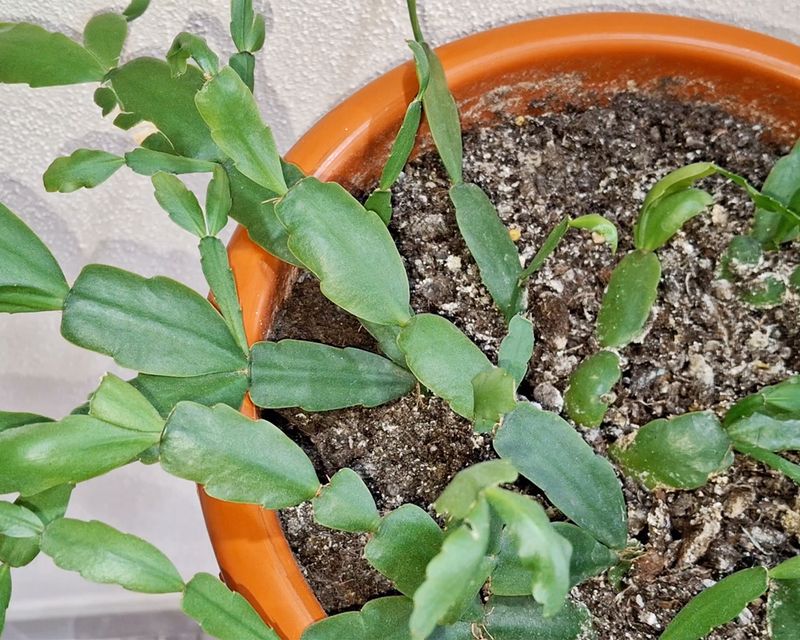
Picture it: the stems are floppy, the plant looks sad, and you are standing there with a full watering can. Stop and push a finger into the potting mix first.
That one minute of checking tells you more than the droop does.
Limp stems can show up when the mix has dried out too much. They can also show up when roots are stressed by soil that stays wet for a long time.
UConn Extension describes wilting after underwatering, and warns that a big watering to make up for it can leave damaged roots sitting in soggy conditions. Meanwhile, Iowa State Extension notes that limp, wrinkled, dull gray-green stems can point to mix that has been kept too wet.
So the droop by itself cannot name the cause.
A handy guide is to water when the top inch of mix feels dry. Treat it as a rule of thumb, not a law, since needs change with the pot size, the mix, the light, and the temperature.
University of New Hampshire Extension also advises against a fixed calendar schedule.
While you are at it, lift the pot and look underneath. Check that the drainage holes are open and that no water is pooled in the saucer.
What you find sends you to one of the next three sections.
When the mix is dry, water thoroughly and let it drain
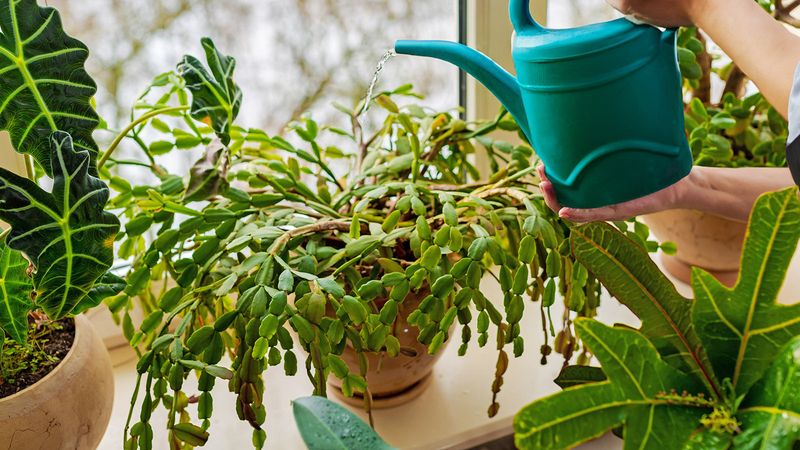
If the top of the mix feels dry, watering is likely a sensible move. Give the pot a good soaking, not just a sprinkle.
Keep going until water runs out of the drainage holes.
Then let that extra water finish draining. A pot left standing in its runoff can turn a thirsty plant into a waterlogged one, so empty the saucer after a few minutes.
Setting the pot in the sink for a short while makes this easy.
Very dry mix can be stubborn. It may shed water like a hard sponge, and the liquid races down the sides without soaking in.
UF/IFAS guidance suggests watering in repeated rounds, letting each one soak in, until the mix holds moisture.
Remember that this fix depends on what the soil check showed. Water is the answer here because the mix was dry, not because the stems drooped.
Once the plant has had a drink, give it a day or two and look again before you decide anything else.
If the soil is still wet, hold off on more water
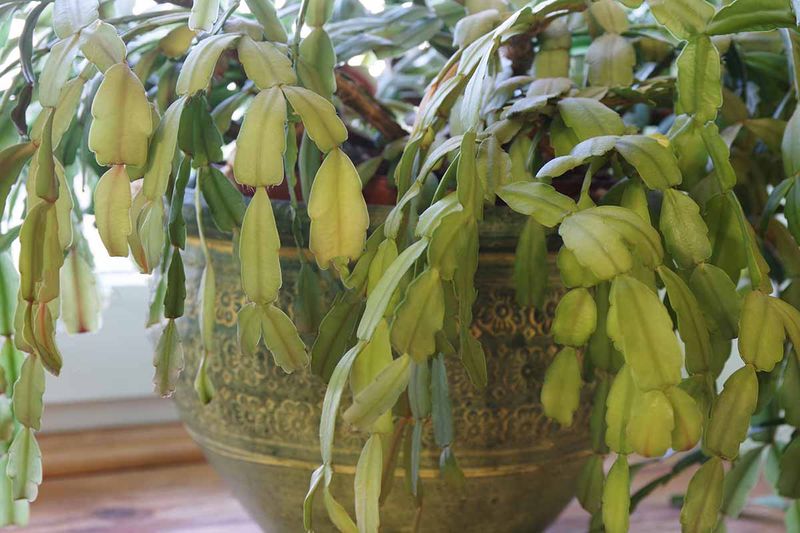
Damp mix with a droopy plant calls for patience. Adding more water will not perk things up, and it may keep the roots wetter than they like.
Put the can down and let the pot work through what it already has.
Next, play detective with the pot. Make sure it has open drainage holes.
Then check the saucer, and any decorative outer pot or cover, for water that has collected, and pour it out.
Why the caution? University of Minnesota Extension links soil that stays wet for a long time, especially in winter, with root rot.
UNH Extension also cautions against leaving the plant in waterlogged soil, even though holiday cacti are not desert plants.
That said, wet soil does not prove the roots are already hurt. It only raises the risk if the wetness lasts.
Wait until the top inch dries, check again, and see whether the stems firm up.
Persistent wilt in moist soil makes the roots worth checking
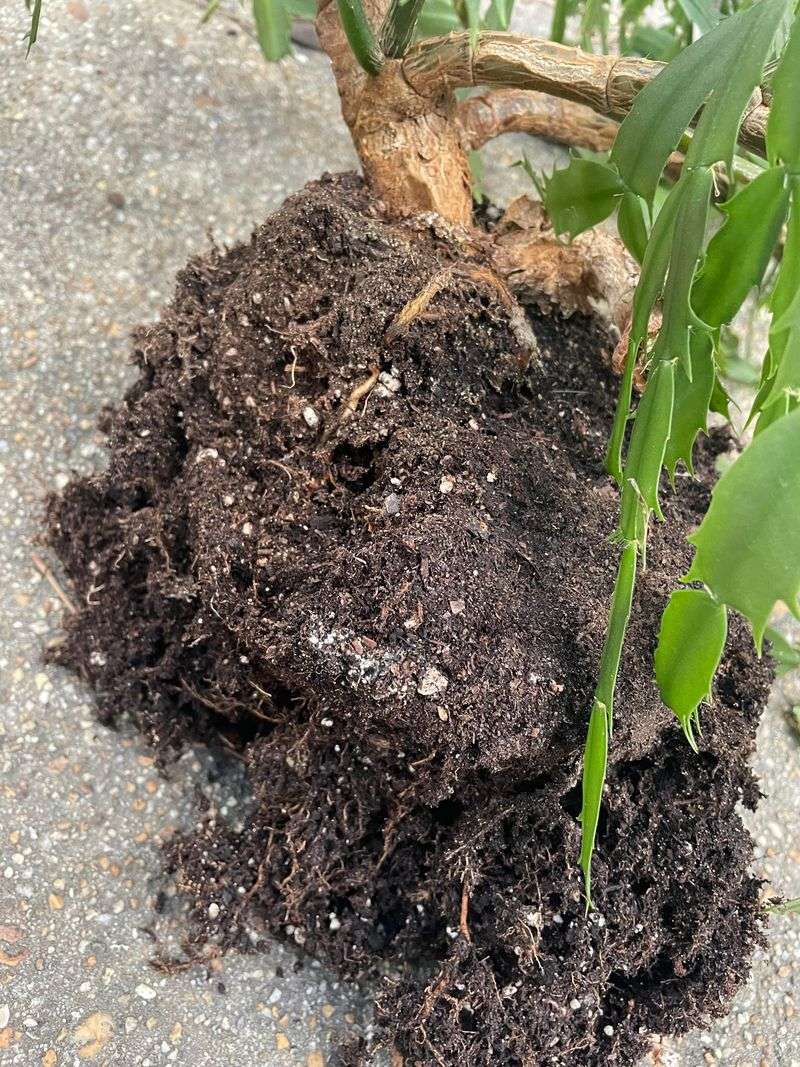
Sometimes the mix stays moist and the plant keeps sagging anyway. That is the moment to stop assuming thirst.
University of Wisconsin Extension advises checking the root system when a plant sags and is not growing despite moist potting mix.
This does not mean every drooping plant needs to come out of its pot. Look for the pattern: wilt that hangs on, moist mix, and no new growth.
If those fit, a closer look makes sense.
Slide the plant out gently and look at the roots. Healthy ones tend to look firm and light.
Dark, mushy roots are a warning sign, and the University of Minnesota guidance describes them in connection with root rot. A warning sign is not proof, though, and not every wilted plant has rot.
Cut off nothing and buy nothing in a panic. No single treatment works for every plant, and no one can promise a rescue.
Root and stem problems can have different causes, as Penn State Extension explains in its guide to Christmas cactus diseases.
If the wilt keeps going or gets worse, ask your local extension office for a more specific diagnosis. Photos of the stems and roots will help them help you.
Improve drainage instead of watering by the calendar
Once you know what the plant needed, make it easier next time. Start with a light, well-drained mix and a pot with open drainage holes.
UF/IFAS recommends this setup for holiday cacti, and it helps water move through instead of lingering around the roots.
Holiday cacti grow in tropical forests, perched on trees. That is why they dislike soggy soil, and also why they are not treated like desert plants.
Let the mix dry somewhat between waterings, but do not let it go to extreme drought. UF/IFAS notes that very dry soil can make flowers drop, so the goal is a middle path, not a bone-dry pot.
Skip the rigid timetable. A plant in a bright warm room in active growth will use water faster than one sitting in a cool spot in winter.
UNH Extension points out that watering needs shift with conditions.
A quick finger test every few days beats a Saturday-morning habit. Add the saucer check and you have a routine that cuts down on long stretches of wet soil.
A drooping shape does not always mean the plant is in trouble
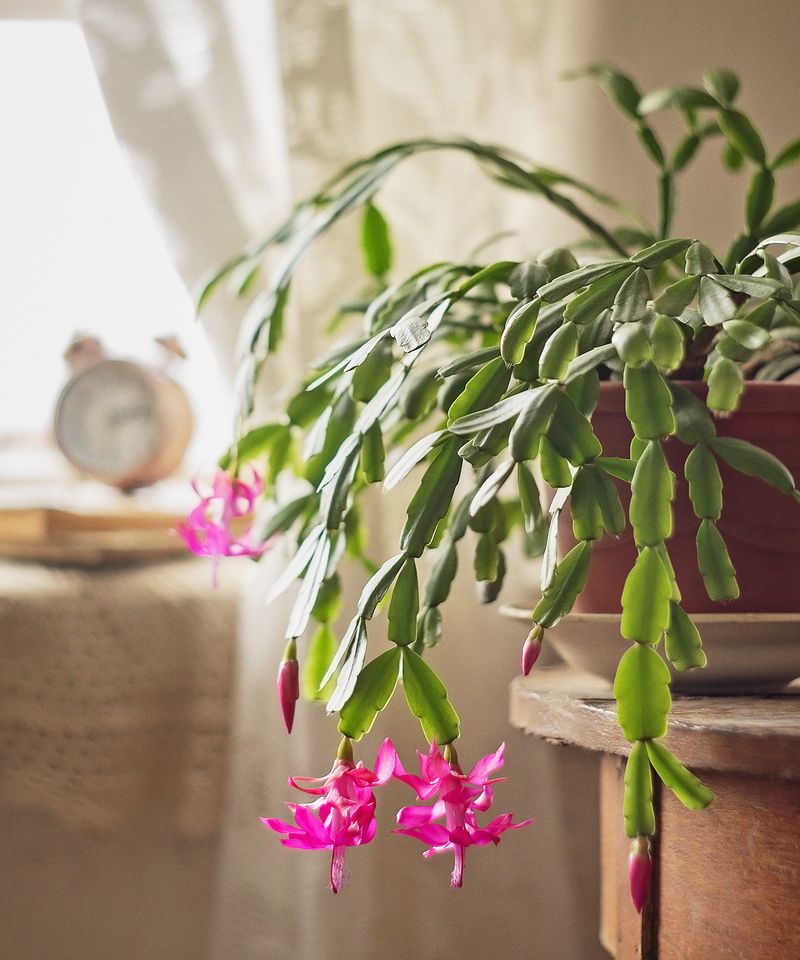
Some droop is simply the way the plant grows. Holiday cactus stems naturally arch and hang, and older plants can sag gracefully, as University of Wisconsin Extension describes.
A cascading shape on its own is not a cry for help.
What matters is a change, paired with clues from the mix or roots. Droop does not prove underwatering, overwatering, or a cramped pot.
Holiday cacti often bloom well while somewhat pot-bound, so an Ask Extension expert response is a good reminder not to repot just because stems hang down.
Feel the mix, check the drainage, then act on what you find. A plant that looks relaxed may just be doing its thing.