
If Your Christmas Cactus Never Blooms On Time, Here’s The Season-By-Season Routine That Sets Buds Before The Holidays
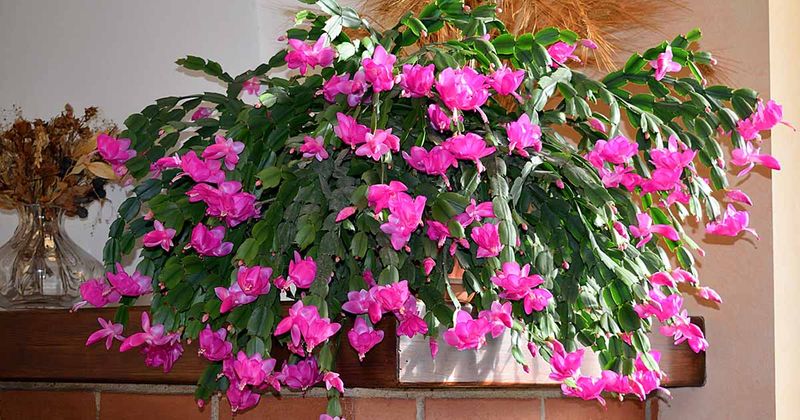
Many gardeners stare at a silent, budless holiday cactus every December and assume they did something wrong. Before you change a single thing about your care routine, it helps to know that the plant sitting on your windowsill may not even be a true Christmas cactus.
Getting familiar with your specific plant, then following a simple seasonal rhythm, can make timely flowering much more likely without complicated tricks or expensive products.
Identify the plant before you judge its timing
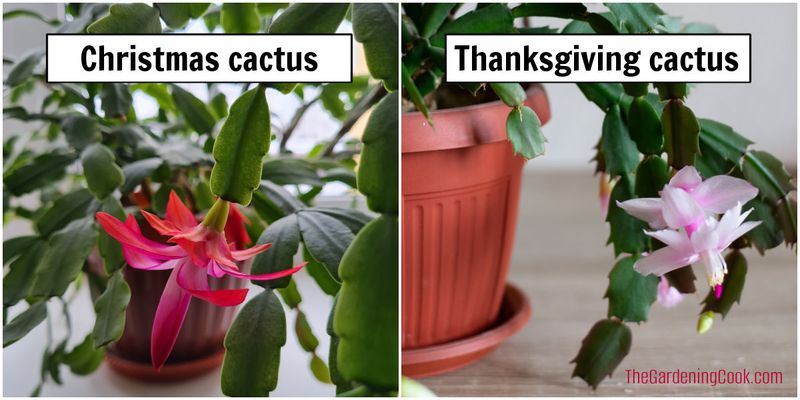
Before assuming your holiday cactus is blooming late, check what plant you actually have. Many plants sold under the “Christmas cactus” label at garden centers and grocery stores are Thanksgiving cactus, hybrids, or plants whose bloom timing was manipulated before they left the greenhouse.
Iowa State University Extension notes that these plants are frequently mislabeled, which means a November display you assumed was early might actually be right on schedule for the plant you own.
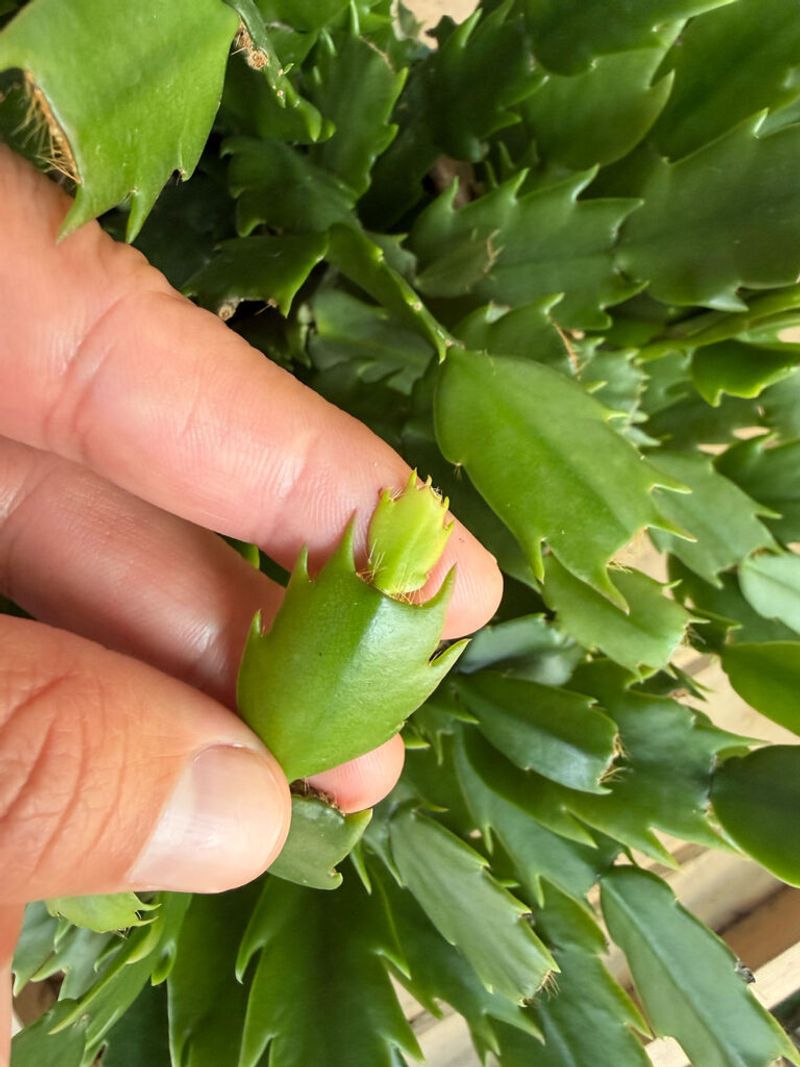
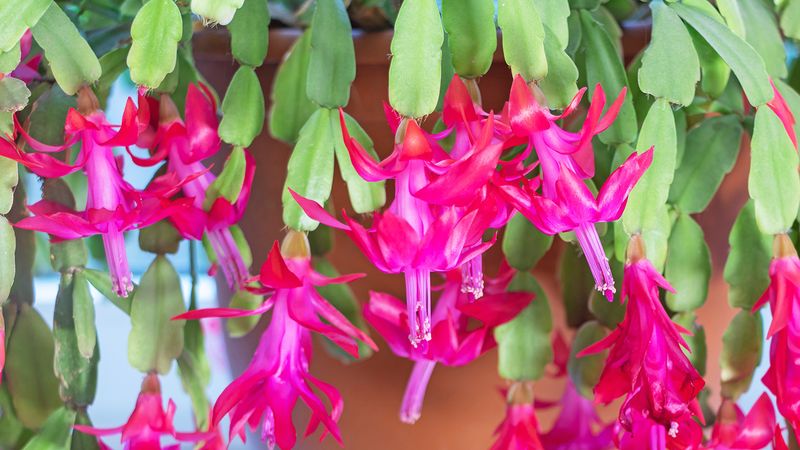
The most reliable way to tell them apart is to look closely at the edges of the stem segments. Thanksgiving cactus has pointed, claw-like teeth projecting from the sides of each flat segment, giving the stems a jagged appearance.
True Christmas cactus has smoother margins with rounded or gently scalloped edges that feel almost soft by comparison.
Bloom timing is a tempting shortcut for identification, but it falls apart quickly with hybrids. NC State Extension explains that Thanksgiving cactus commonly flowers several weeks earlier than Christmas cactus, so a plant blooming in mid-November is probably doing exactly what it was bred to do rather than underperforming.
Segment shape is the more trustworthy clue because it does not shift with temperature, light, or commercial forcing.
Hybrids complicate the picture further. A plant can carry traits from both parents and bloom somewhere between the two typical windows, which is why University of Illinois Extension recommends using physical characteristics rather than calendar date as the primary identification tool.
Once you know roughly what you have, you can set a realistic bloom window and stop measuring your plant against a holiday deadline it was never designed to meet.
The seasonal routine that follows works broadly for all holiday cacti. Knowing your plant’s identity simply helps you choose the right target window before you start counting backward through the calendar.
Understand what starts the bloom cycle
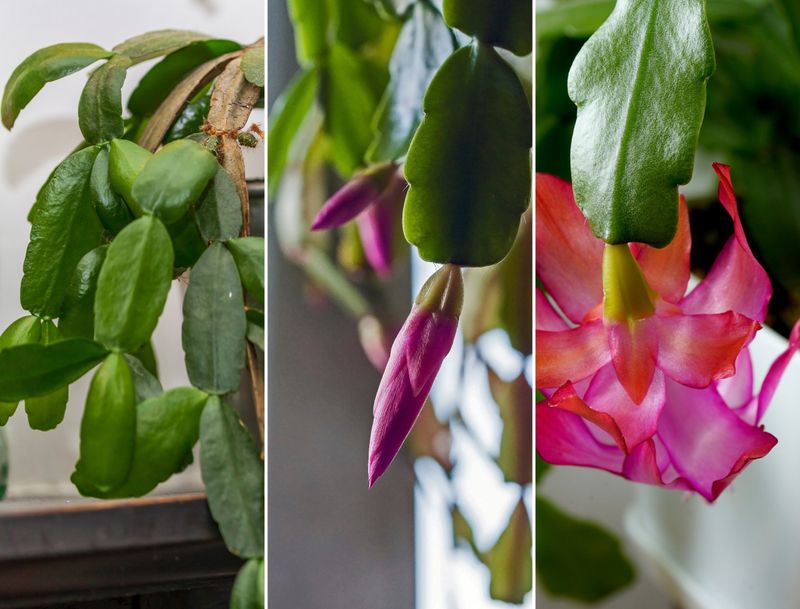
Holiday cacti do not bloom because of a special fertilizer or a lucky coincidence. Flower initiation is triggered mainly by two overlapping environmental signals: sufficiently long, uninterrupted nights and cool temperatures.
When both are present at the right time, the plant redirects energy toward producing buds. When one or both are missing, the bloom window can shift or fail to open at all.
The darkness requirement is roughly 12 to 14 hours of uninterrupted night per day, according to University of Minnesota Extension. The key word is uninterrupted.
A lamp switching on in an adjacent room, a streetlight shining through a curtain, or even a phone screen held near the plant can break the dark period and reduce the signal the plant needs. Repeated or substantial light interruptions may delay or prevent bud initiation, though a single brief exposure is unlikely to permanently derail the process.
Temperature works alongside darkness rather than replacing it. Cool nights generally around 55 to 65 degrees Fahrenheit encourage bud formation, and Iowa State University Extension notes that temperatures near 55 degrees can be especially effective at promoting buds in some plants, even when day length is not tightly controlled.
At warmer indoor temperatures, giving the plant long, dark nights becomes more important to compensate.
What the plant cannot handle is cold that crosses into damaging territory. Temperatures below about 50 degrees Fahrenheit can injure the plant or contribute to bud loss, so chilling is never a safe shortcut.
Penn State Extension and University of Wisconsin Extension both emphasize that frost is off the table entirely for these tropical epiphytes.
Understanding this combination matters because it explains why the same plant in a warm, brightly lit living room may flower weeks later than the same cultivar sitting in a cool spare bedroom. The routine works, but it works within a range, and cultivar differences mean the final bloom date still varies from plant to plant and year to year.
Use spring to restore growth and build branches
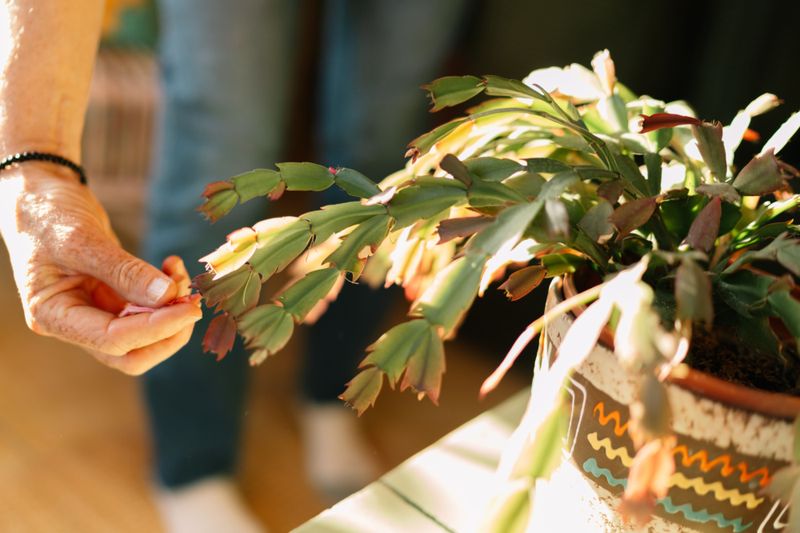
Once your holiday cactus finishes flowering, it needs a short rest before it can put energy into new growth. Reduce watering somewhat during this period, allowing the top of the soil to dry out a bit between waterings, but do not let the plant sit completely dry for weeks at a time.
These are rainforest plants, not desert cacti, and they need consistent moisture even during rest.
When you notice new segment growth beginning, usually in late winter or early spring, that is your cue to return to regular watering. Resume fertilizing at that point with a complete houseplant fertilizer and continue through late summer.
University of Connecticut Extension recommends a balanced fertilizer during active growth, with no need for specialty products. The goal is steady, healthy growth rather than a forced flush of new segments.
Late spring is also the right time for light pruning or pinching. Flowers form at the tips of stem segments, so a plant with more branching has more potential flowering sites come fall.
Pinching back a few segments encourages the plant to push side growth rather than continuing in one long, unbranched chain. University of Illinois Extension notes that this simple step can meaningfully increase the number of blooms later in the season.
Keep in mind that spring pruning and fertilizing rebuild the plant’s foundation. They do not trigger buds on their own.
A well-branched, well-fed plant simply has more capacity to respond when the cool nights and long darkness arrive in fall. Skipping this phase does not guarantee failure, but a stressed or poorly branched plant heading into the trigger window has fewer resources to work with.
Maintain healthy growth through summer
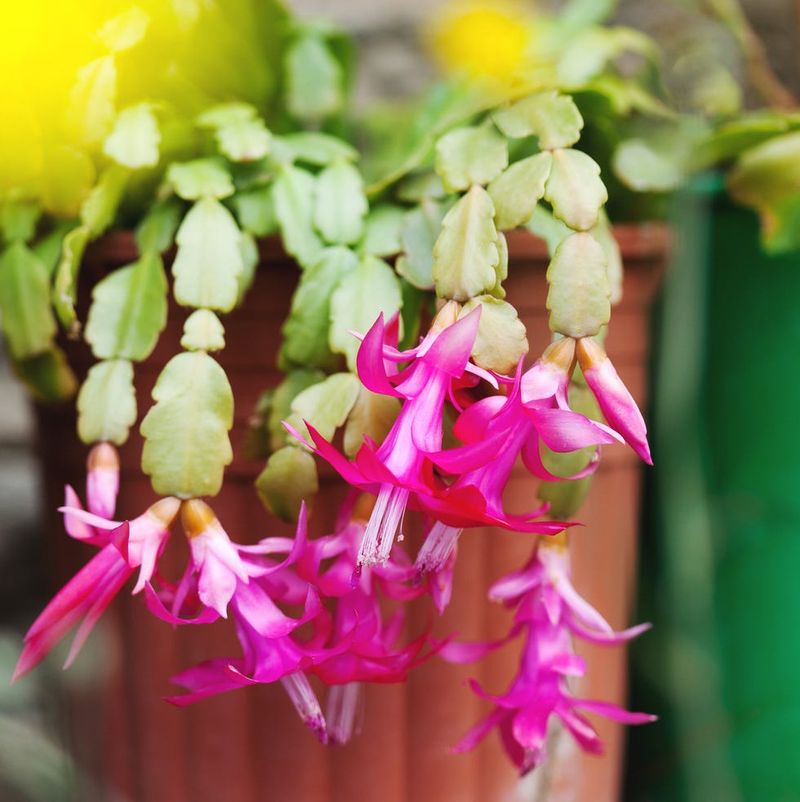
Summer is not a passive season for your holiday cactus. The growth it puts on between June and early September directly affects how well it responds to the fall triggering routine.
A plant that spent summer in low light, in waterlogged soil, or battling a pest problem will struggle to set and hold buds even when the dark-period schedule is perfect.
Bright, filtered or indirect light is ideal through these months. Strong, direct afternoon sun can bleach and damage the segments, so an east-facing window indoors or a shaded porch outdoors works better than full southern exposure.
University of Wisconsin Extension recommends keeping the plant out of prolonged harsh sun while still giving it enough light to grow actively. A plant that looks pale or yellowish by late summer likely did not receive enough light to build the reserves it needs.
Many growers have good results moving their holiday cactus outdoors for the summer. A sheltered spot under a tree canopy or on a north-facing porch works well, provided the plant is protected from heavy rain and wind.
The key rule is to bring it back inside before temperatures approach 50 degrees Fahrenheit. University of Minnesota Extension notes that frost is an obvious danger, but even cool nights in the mid-40s can stress the plant before you notice visible damage.
Watering through summer should keep the growing medium consistently moist but never saturated. Holiday cacti are epiphytic rainforest plants that grow naturally in organic debris with excellent drainage, and persistently wet roots invite rot quickly.
University of Illinois Extension emphasizes that these plants need steady moisture rather than the deep drought-and-drench cycle suited to true desert cacti. Check the soil every few days in warm weather, and water when the top inch or two feels dry.
Root health, adequate light, and steady growth through summer are not glamorous steps, but they are the foundation the fall routine builds on. A plant arriving at September in strong condition is simply better positioned to respond to the conditions you create.
Count backward from the bloom window
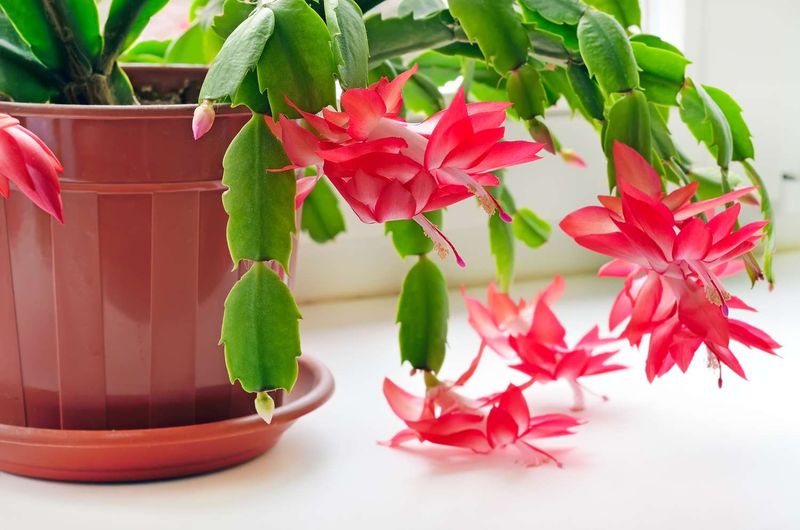
Rather than picking a fixed calendar start date, work backward from when you actually want the plant to flower. For a Christmas bloom, that window is roughly mid-to-late December.
For a Thanksgiving cactus, the target window falls several weeks earlier. Count back approximately four to six weeks from the beginning of that desired window, and that is when you begin the triggering routine.
A September 1 start date appears in some general gardening advice, but it is not a universal rule. Latitude, indoor temperature, natural day length at your location, cultivar, and whether you have a Thanksgiving or Christmas type all shift the appropriate timing.
University of Wisconsin Extension recommends counting backward from the target bloom window rather than relying on a single national date, and that approach gives you a schedule that actually fits your plant and your home.
Once you reach the start of the triggering period, the daily pattern is straightforward. Place the plant where it receives bright light during the day, then move it to a naturally dark room or cover it with a lightproof box or bag each evening so it receives approximately 12 to 14 hours of uninterrupted darkness.
University of Minnesota Extension suggests a spare bedroom, a closet, or a covered plant as practical home options. The following morning, return the plant to its bright daytime spot.
Keep nights cool, generally around 55 to 65 degrees Fahrenheit, throughout this period. Iowa State University Extension notes that temperatures near the lower end of that range can be especially effective for some cultivars.
A spare room that stays naturally cool at night is often the easiest solution without any extra effort.
Home guidance commonly recommends about four to six weeks of this treatment, which is longer than many commercial greenhouse schedules. University of Massachusetts greenhouse research shows that controlled short-day treatments in professional settings may require roughly three weeks, but commercial growers also have precise control over temperature and light that most home environments cannot replicate.
Giving yourself a longer window at home improves the odds that the plant receives enough consistent signal to respond. Once you see small buds forming, the triggering phase is complete and you can stop the dark-period routine.
Protect buds once they become visible
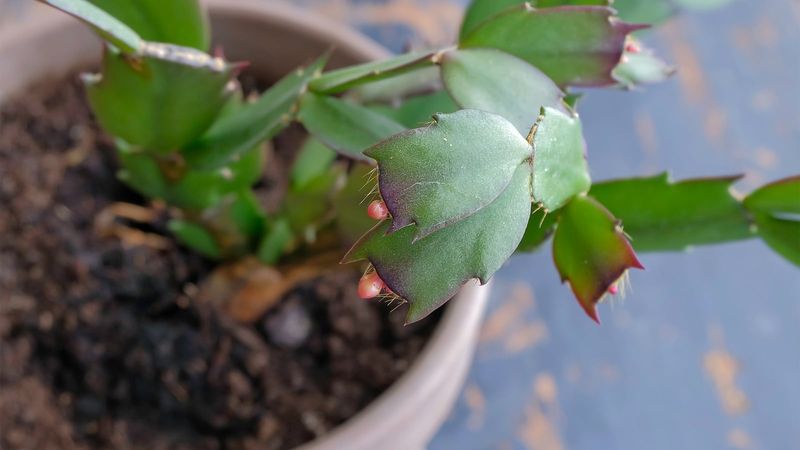
Visible buds are encouraging, but they are also fragile. The most common reason a budded holiday cactus drops its flowers before they open is a sudden change in environment.
Moving the plant to a new room, placing it near a heating vent, or shifting it from dim light to bright sun can all send the plant a stress signal it responds to by shedding buds.
Once buds appear, keep the plant in one spot. Bright, indirect light is still ideal, but stability matters more at this stage than finding the perfect window.
Iowa State University Extension specifically warns against moving the plant between locations with sharply different light or temperature once buds are visible, because bud drop can follow quickly.
Watering should remain consistent through bud development and flowering. Keep the soil evenly moist but never waterlogged.
University of Wisconsin Extension notes that both saturated soil and severe drying can contribute to bud loss. The plant is not a desert cactus at any point in its life cycle, and treating it like one during the most vulnerable stage of flowering is a reliable way to lose the buds you worked months to set.
Temperature still matters after buds form. Cooler conditions in the 60 to 65 degree Fahrenheit range can extend the life of open flowers, while warm rooms above 70 degrees tend to shorten the display.
Penn State Extension recommends moderate, stable temperatures throughout the flowering period rather than warm indoor conditions. Keep the plant away from cold drafts near windows and doors as well, since those can be just as disruptive as heat.
Frost and freezing temperatures are not an option at any stage, but the bud and flower phase is particularly unforgiving. A single cold night below 50 degrees Fahrenheit near a drafty window can cause significant bud drop that no amount of recovery care can reverse once it starts.
Steady warmth, consistent water, and a fixed location are the three things that carry buds safely into full bloom.
Troubleshoot a missed bloom without blaming the grower
A holiday cactus that did not bloom when expected is frustrating, but it rarely points to a single catastrophic mistake. Working through a short checklist is more useful than assuming the worst, and the first question on that list should always be about plant identity rather than care.
Start by confirming what you have. If the plant bloomed in November and you expected December flowers, it may simply be a Thanksgiving cactus doing exactly what it is supposed to do.
University of Massachusetts commercial production research shows that cultivars can differ in flowering dates and vary by roughly a week or more between years even under controlled conditions. A late or shifted display does not automatically mean you made an error.
If the plant produced no buds at all, review the dark-period conditions honestly. Was the darkness truly uninterrupted every night for four to six weeks?
Even moderate ambient light from a hallway or a nearby television can disrupt the signal over time. Iowa State University Extension notes that repeated light interruptions may prevent or delay bud initiation, though a single brief exposure is unlikely to be the sole cause of failure.
Next, consider the temperature. Nights that stayed consistently above 65 degrees Fahrenheit make darkness less effective at triggering buds.
On the other hand, nights that dropped below 50 degrees can damage the plant or cause early bud loss before you noticed any buds forming. The sweet spot is cool but safe, and warm indoor homes often work against that range without the grower realizing it.
Root health deserves a look as well. University of Minnesota Extension points out that damaged roots from overwatering, pest activity, or severe drought can prevent a plant from setting or holding buds even when the fall routine is otherwise correct.
If the plant looked stressed or grew poorly through summer, that weakness can carry straight through to a failed bloom season.
Finally, check for pests, particularly mealybugs and fungus gnats, and assess whether the plant received adequate daytime light during the triggering period. University of Illinois Extension emphasizes that a plant needs bright daytime light alongside the dark nights, not just darkness alone.
Ruling out each of these factors in order gives you a much clearer picture of what to adjust next season rather than changing everything at once and not knowing what actually helped.
Aim for more reliable flowering, not an exact date
A repeatable seasonal routine genuinely improves your odds of timely holiday cactus flowers. Identify your plant, grow it strongly through spring and summer with good light, consistent moisture, and a complete fertilizer, then count backward four to six weeks from your target bloom window and provide bright days paired with 12 to 14 hours of uninterrupted darkness and cool but safe nights.
Once buds appear, keep the plant stable and the soil evenly moist through flowering.
That sequence can make flowering substantially more predictable year after year. University of Massachusetts research on commercial holiday cactus production and University of Wisconsin Extension guidance both confirm that cultivar, temperature variation, and plant identity still influence the final bloom date even under careful management.
A display that arrives a week before or after your target window is a success, not a failure.
What the routine cannot do is override the plant’s own biology or guarantee a bloom on a specific calendar date. University of Minnesota Extension notes that year-to-year variation is normal even for plants that have bloomed reliably in the past.
The most useful shift in thinking is from “why didn’t it bloom on Christmas” to “what can I do each season to give it the best possible chance.” A plant that flowers reliably somewhere in the holiday window, season after season, is exactly what this routine is designed to produce.