
If Your Clematis Climbs All Season But Barely Blooms, Here Are 9 Mistakes Quietly Holding It Back
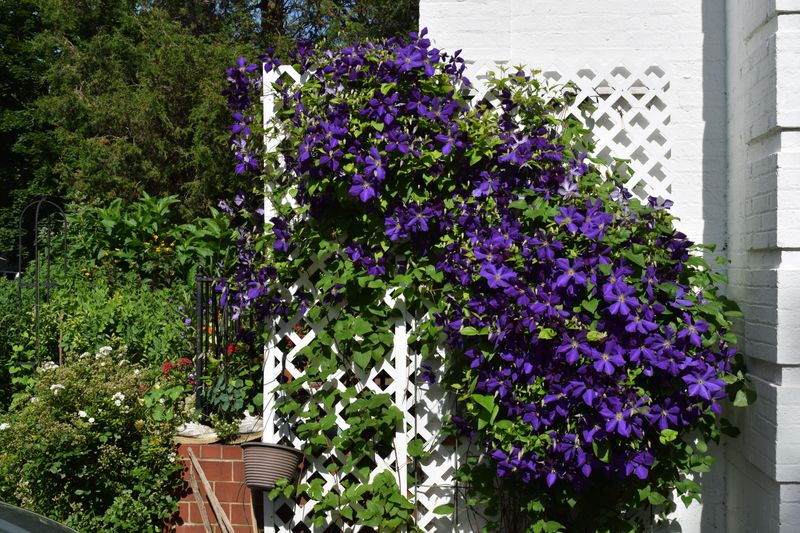
You planted a clematis hoping for a wall of flowers, but all you got were long green vines and hardly a bloom in sight. It’s a frustrating puzzle, because the plant clearly looks healthy and full of energy.
The good news is that a shy-blooming clematis usually points to a handful of fixable mistakes, not a doomed plant. Let’s walk through the nine quiet culprits so you can turn all that climbing into color.
1. Pruning at the Wrong Time
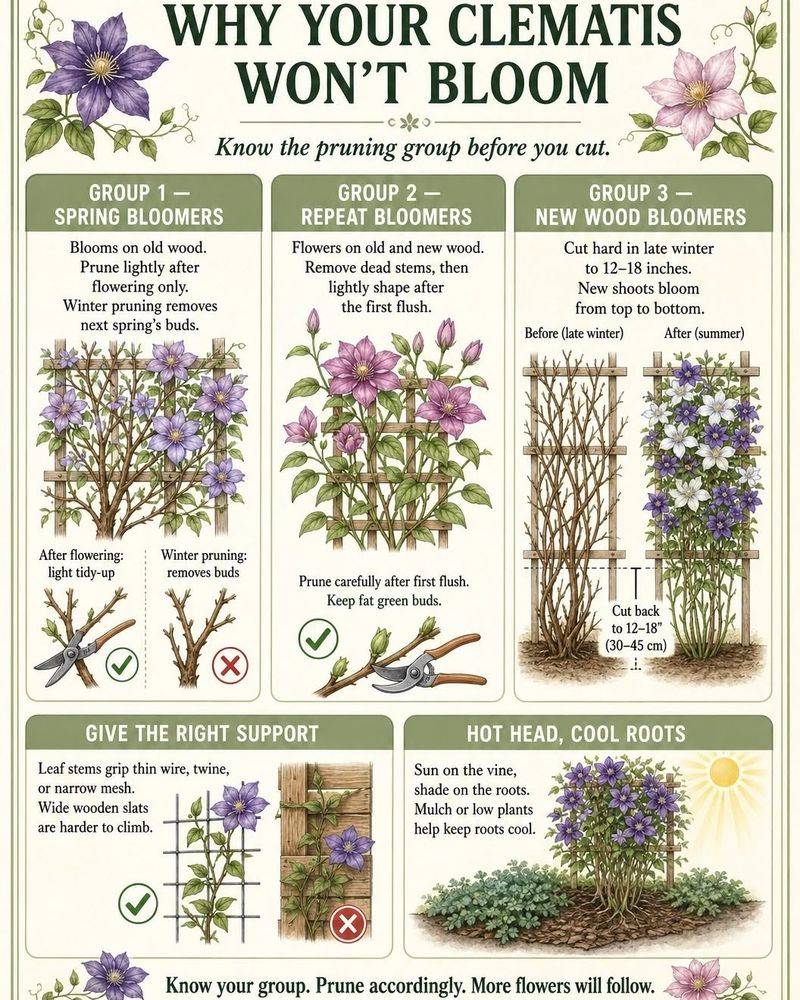
One snip at the wrong moment can undo a whole year of hidden work. Clematis form their flower buds well in advance, so a careless cut in late winter can quietly remove every bloom before the season even starts.
The trick is knowing your pruning group. Group 1 (early spring bloomers) flower on old wood and only need a light shaping right after they finish blooming.
Group 2 blooms on both old and new wood, so it wants a gentle early-spring cleanup, trimming dead sections back to strong living buds.
Group 3 flowers only on fresh growth and loves a hard cut in early spring, right down to about 12 inches from the ground. If you have no idea which group you own, prune very lightly for one season and simply watch when it flowers.
That single observation tells you everything you need for next year.
2. Not Enough Sunlight
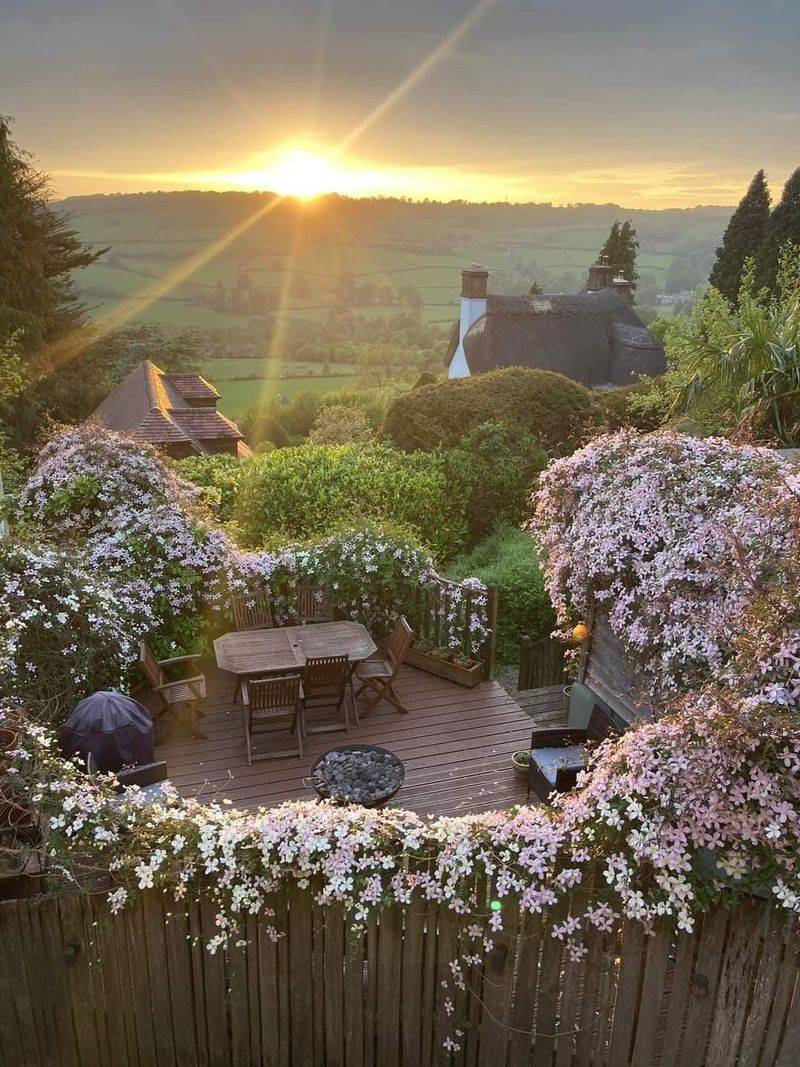
Lots of leaves and no flowers is the classic sign of a clematis that’s simply too shady. Vines can grow just fine in dim spots, but making buds takes real energy, and that energy comes from sun.
Most clematis want at least six hours of direct light each day to bloom generously. Sometimes a plant that flowered beautifully years ago slowly fades as nearby trees or shrubs grow up and steal the light.
Take a look at your vine’s spot over the course of a sunny day. If it’s stuck in shadow most of the time, thin out the branches shading it, or move the clematis in early spring to a brighter location.
That extra sunshine is often the whole difference between a green wall and a flowering one.
3. Inconsistent Watering
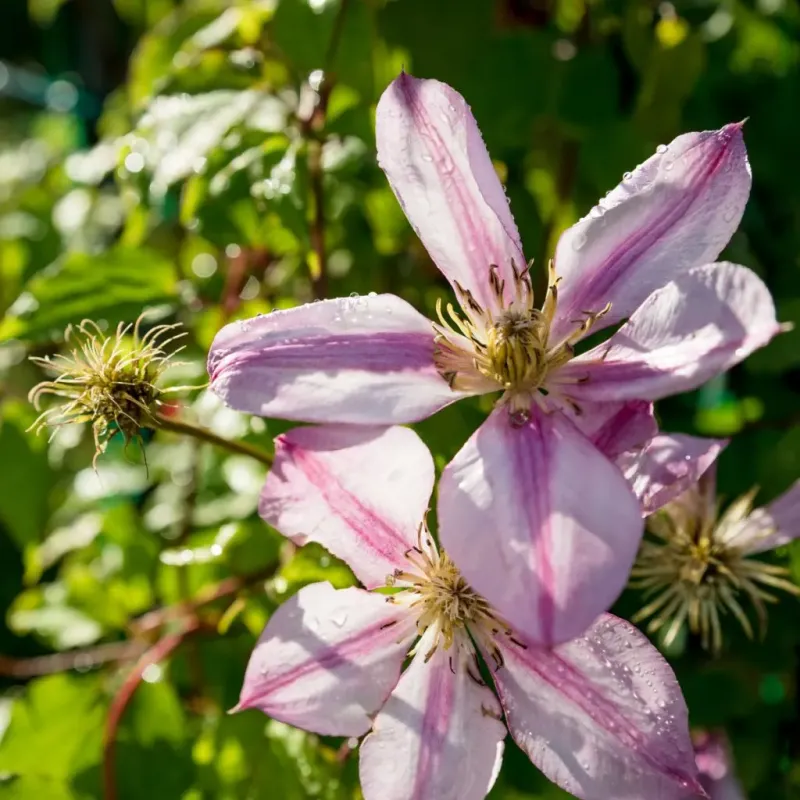
Clematis are surprisingly fussy about steady moisture, and swinging between bone-dry and soaked can make them drop buds in protest. When roots dry out during a hot spell, the plant simply skips flower production to survive.
On the flip side, soggy, waterlogged soil invites root rot and the dreaded clematis wilt. The goal is that middle ground: consistently moist, never swampy.
Aim for about an inch of water a week, and more during heat waves. Poke a finger a couple inches into the soil, and if it feels dry down there, water deeply and slowly at the base.
Deep, even watering keeps buds forming instead of falling.
4. Too Much Nitrogen
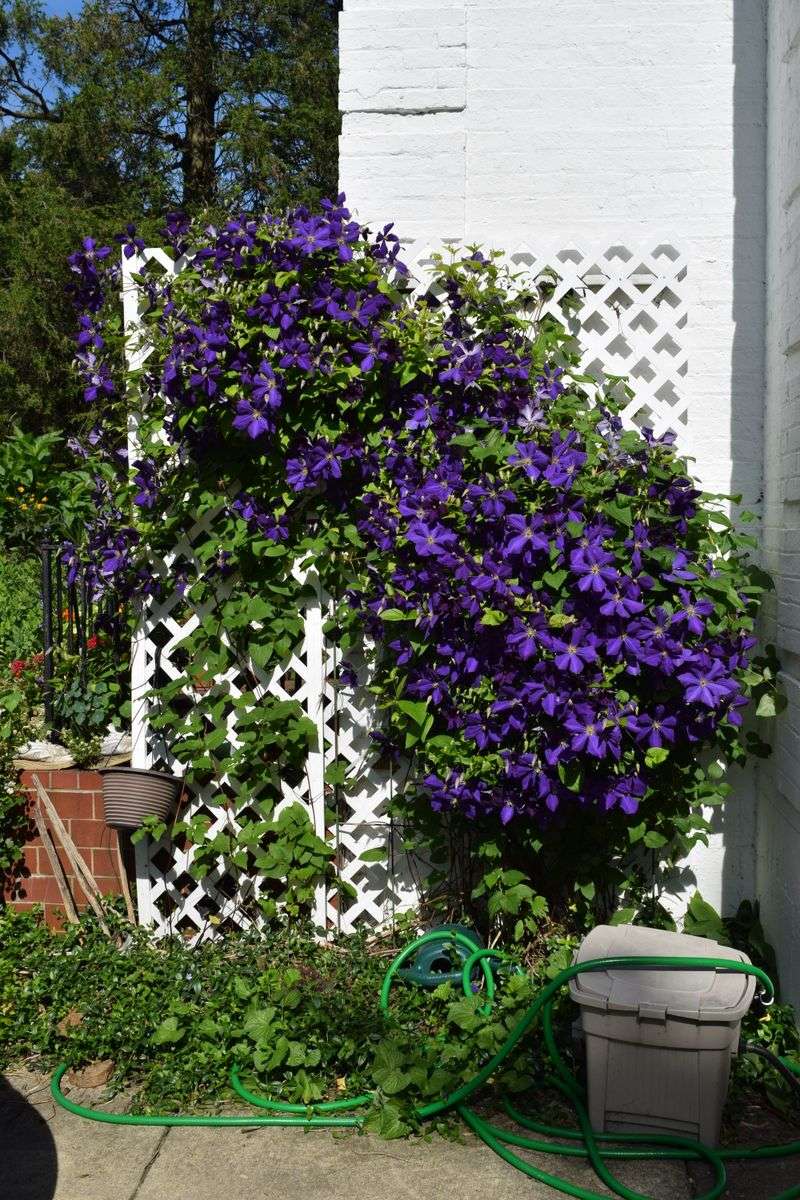
Feeding your clematis the wrong food can backfire in a big way. High-nitrogen fertilizers push out gorgeous, jungle-thick foliage while quietly telling the plant to skip flowers.
Think of nitrogen as the leaf-and-vine nutrient. What you actually want for blooms is more phosphorus, the middle number on the bag.
Reach for something like a 5-10-10 formula, or even a tomato or rose fertilizer, applied in spring as buds are forming. A balanced 10-10-10 now and then through the season works too.
And keep your clematis away from lawn edges, since all that grass fertilizer can wash right into its roots and stall the show.
5. Hot Roots
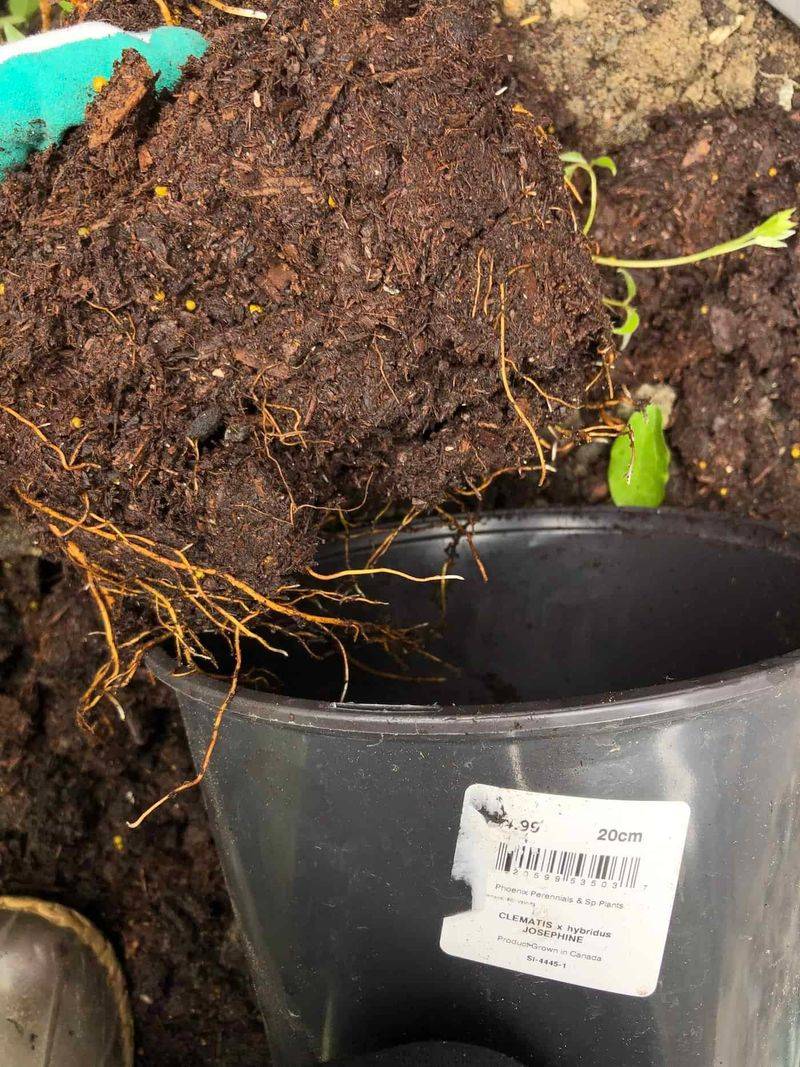
Old-time gardeners have a saying: clematis like their heads in the sun and their feet in the shade. That quirky preference is easy to overlook, and hot roots can quietly shut down blooming.
When soil around the base bakes in summer heat, the plant gets stressed and stops putting energy into flowers. Cool, moist roots keep it happy and productive.
You can shade the base by tucking a few shallow-rooted perennials or a low groundcover around it. A two-inch layer of mulch does the same job.
Planting the crown a few inches deeper than the surrounding soil also protects the roots and helps guard those precious dormant buds.
6. Young Plant Syndrome
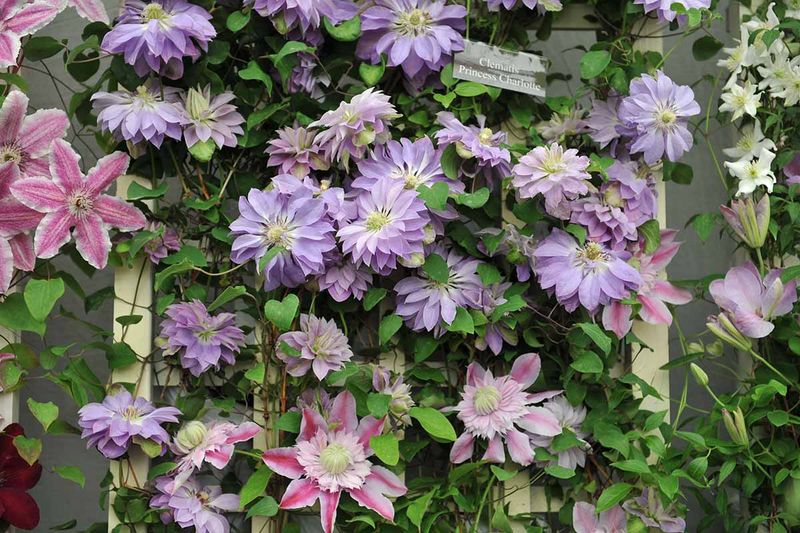
Sometimes the reason for a bloomless clematis is nothing you did wrong at all. It’s just young.
New plants spend their first year or two building roots and vines before they bother with a big flower display.
Gardeners even have a rhyme for it: the first year they sleep, the second year they creep, and the third year they leap. That third-season leap is often when the flowers finally arrive in force.
Your job during this stretch is patience and steady care. Plant the crown two to four inches below the soil line, water consistently, and resist the urge to yank out a plant that’s simply establishing itself.
Give it time, and the payoff is worth the wait.
7. Pests and Diseases
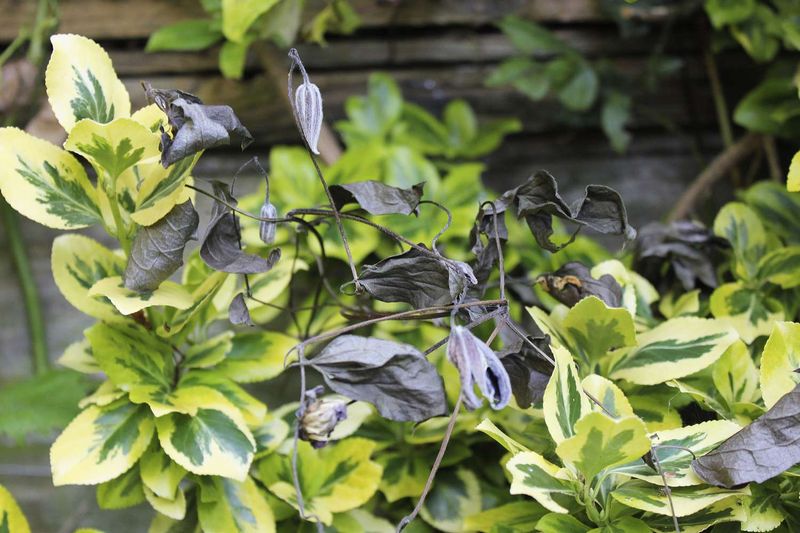
A clematis can look fine one day and collapse the next, which is the unnerving signature of clematis wilt. Stems suddenly droop, blacken, and die back, often right before the buds would have opened.
Root rot from soggy soil can be just as deadly, and smaller troublemakers like slugs, snails, aphids, and earwigs love to nibble on tender buds and leaves.
Good airflow is your best defense, so space and prune to keep the vine from becoming a dense, damp tangle. Water at the base rather than over the leaves to discourage fungus.
If wilt strikes, cut affected stems back to healthy tissue and toss the trimmings in the trash, not the compost. Many clematis bounce right back from the roots.
8. Weak or Missing Support

Clematis climb by wrapping their leaf stems around slender supports, so they need something to grab from the very beginning. Without it, the vine sprawls into a messy heap and can’t grow efficiently.
A jumbled, tangled plant spends its energy fighting gravity instead of making flowers. It also gets crowded and shaded within its own mass, which doesn’t help bloom production.
Set up a sturdy trellis, arbor, fence, or netting right when you plant. Just make sure the material is thin enough for those delicate leaf tendrils to wrap around, since clematis can’t cling to thick posts.
A little guidance early on keeps the vine open, airy, and ready to flower.
9. Late Frost Damage
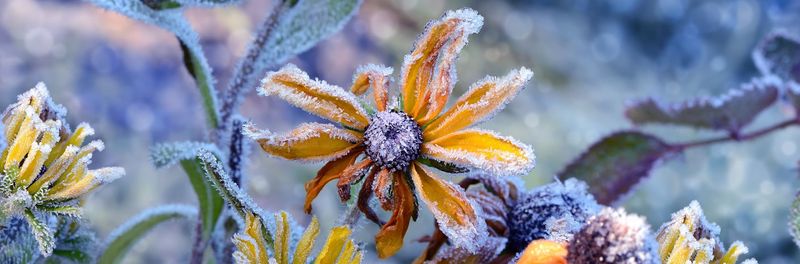
Just when spring seems safe, a surprise cold snap can sneak in and nip your clematis. Tender new growth and developing buds are especially vulnerable, and frost can stop them from ever opening.
You might see the vine leaf out beautifully, then watch those early buds shrivel after one chilly night. It’s heartbreaking after a whole season of anticipation.
If late frosts are common where you live, keep a frost cloth or some burlap handy to drape over emerging buds when a cold night is forecast. Choosing varieties suited to your USDA hardiness zone also stacks the odds in your favor.
A little protection at the right moment can rescue an entire flush of flowers.