
If Your Clematis Pours Out Vines But Skips The Flowers, Here’s The One Pruning Mistake Quietly Costing You Blooms
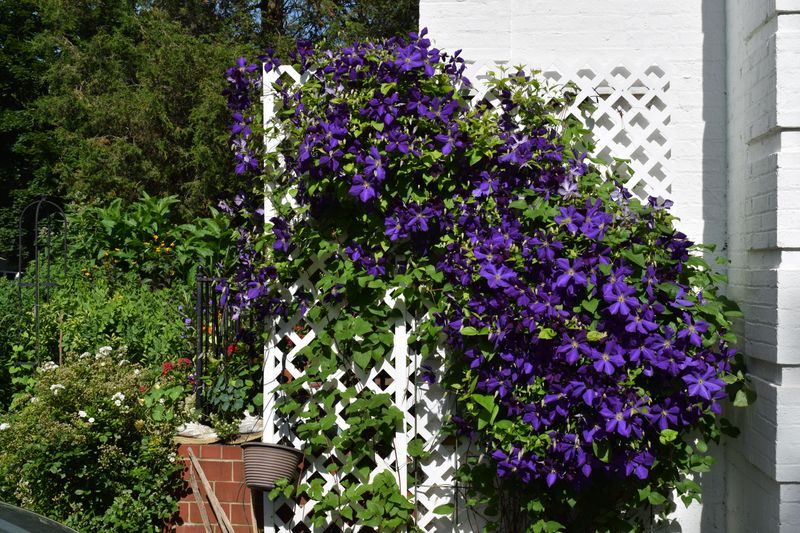
Few garden frustrations match watching a clematis explode with leafy growth season after season while producing barely a single flower. Before you reach for the shears or assume the worst, know that a hard cut at the wrong time is one possible culprit, but it is not the only explanation for a vine that refuses to bloom.
The pruning group your clematis belongs to, and whether you accidentally removed stems that carried this year’s flower buds, matters far more than how severe the cut looked. Understanding that difference can save next season’s display and help you figure out what actually went wrong.
A hard cut can cost blooms—but it is not the only reason clematis fails to flower
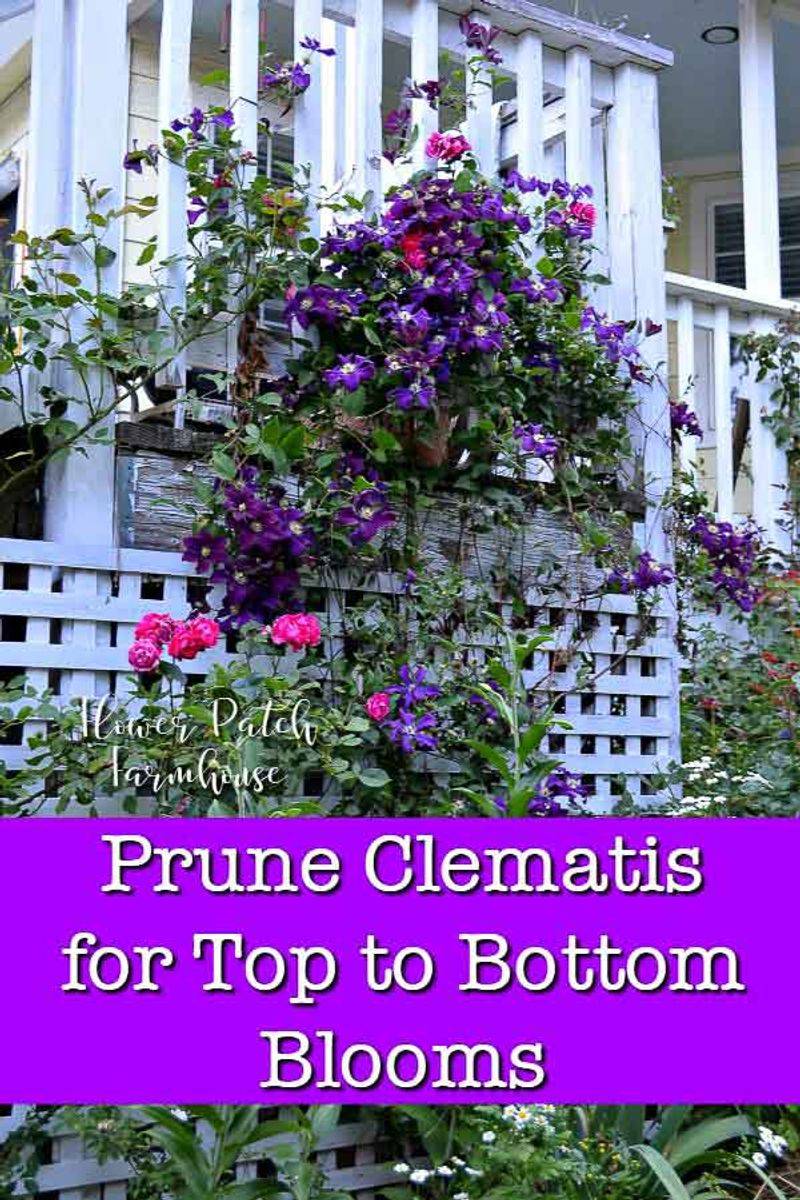
An established clematis loaded with leafy vines and almost no flowers is one of those problems that feels like it must have a single, obvious cause. Sometimes it does.
A hard cut at the wrong time of year can remove the very stems that were supposed to carry flowers, leaving a plant that rebounds vigorously with foliage but nothing to show for it. That said, pruning is one possible explanation, not a guaranteed diagnosis for every nonflowering clematis.
Shade, immaturity, winter dieback, poor drainage, and nutrient imbalance can all produce the same leafy-but-flowerless result. UC Statewide IPM guidance on clematis notes that flowering depends on adequate light, root-zone conditions, and overall plant health alongside proper pruning.
A vine sitting in too much shade or still establishing its root system after transplanting may simply need more time and better conditions, not a different cut.
What makes clematis pruning genuinely confusing is that the same severe cut can help one plant and hurt another. RHS clematis pruning guidance divides clematis into three groups based on whether they flower on growth made the previous season, current-season growth, or both.
Cut a Group 3 clematis nearly to the ground each late winter and it will likely flower beautifully. Make that same cut on a Group 1 or Group 2 plant before it blooms and you have just removed the stems carrying this year’s buds.
The good news, as Colorado State University Extension pruning guidance points out, is that severe pruning rarely kills a clematis outright. The plant can regrow, though flowering may be delayed or lighter for that season.
The central question worth asking is whether your clematis flowers on growth it made last season, growth it makes this season, or both, because the answer changes everything about how and when you should prune.
Old wood means last season’s growth, not ancient branches
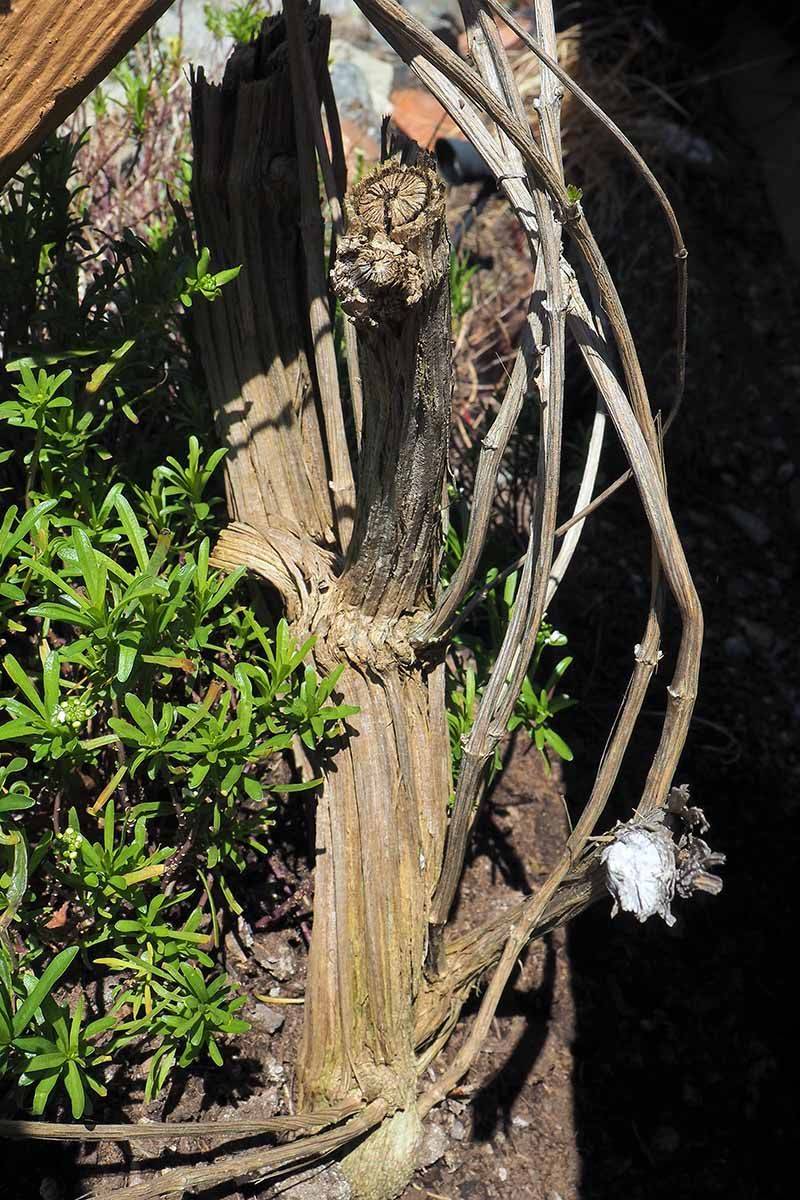
Gardeners sometimes picture “old wood” as thick, gnarled, visibly aged branches, the kind you might see on an apple tree trained for decades. On a clematis, old wood simply means stems produced during the previous growing season.
Those stems can look bare, brown, and even a little ragged in late winter, which is precisely why so many gardeners mistake them for dead growth and cut them away before the plant has a chance to bloom.
RHS guidance on how plants age makes clear that the value of a stem is not determined by how old or woody it appears but by whether it carries viable buds. On Group 1 clematis, those previous-season stems hold the flower buds for the coming spring.
Remove them in fall or late winter and the plant simply has nothing left to bloom from until it grows an entirely new set of stems, which will not flower until the following year.
Group 2 large-flowered hybrids rely on the same principle for their first and most impressive flush of blooms. University of Delaware Cooperative Extension explains that these cultivars produce their main early display from short shoots that grow off last year’s stems.
They may produce a second, lighter flush later in the season on new growth, but that first wave, often the showiest, depends entirely on old-season growth surviving intact.
Group 3 clematis flip this entirely. Types such as many C. viticella and C. x jackmanii cultivars flower on growth produced during the current season, so last year’s stems are essentially spent.
Removing them in late winter clears the way for vigorous new shoots that will carry this year’s flowers. RHS pruning group guidance underscores why the same ground-level cut that rescues a Group 3 plant can rob a Group 1 or Group 2 clematis of an entire bloom season.
Confirm the pruning group before you reach for the shears
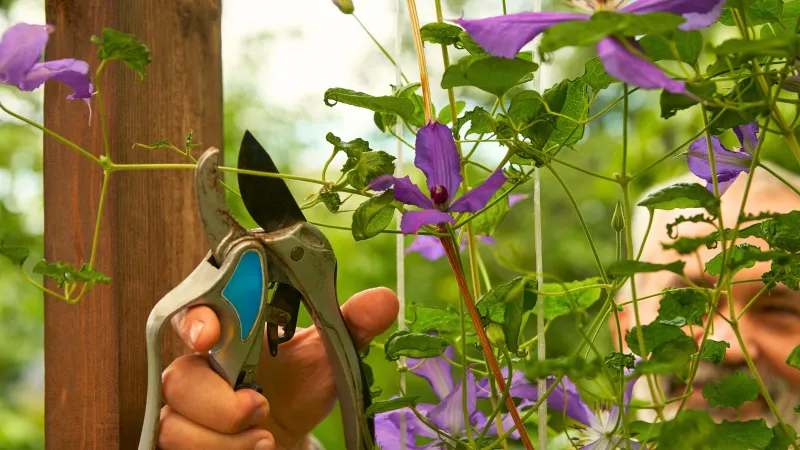
Knowing the pruning group of your clematis before making any significant cut is the single most protective step you can take. Start with the plant tag if you still have it, or search the cultivar name alongside a reputable pruning guide.
Many nurseries label clematis with their pruning group, and major extension databases list hundreds of cultivars with specific guidance. University of Illinois Extension’s clematis resource recommends identifying the group from the plant tag or cultivar name before deciding how or when to prune.
Flowering time can help narrow the possibilities when you have no tag and no cultivar name, but treat it as a clue rather than a definitive answer. A clematis that blooms heavily in early spring almost certainly belongs to Group 1, while a plant that flowers from midsummer onward is more likely a Group 3 type.
Penn State Extension pruning guidance notes that cultivars can overlap in bloom time, repeat-flower, and vary by regional climate, so timing alone is not reliable enough to stake a whole season’s blooms on.
When the group is genuinely unknown, a cautious fallback can protect you from the worst outcome. RHS clematis growing guidance advises that plants flowering before early summer generally should not be pruned beforehand.
If your clematis blooms in early spring or early summer and you cannot confirm its group, hold off on major pruning until after the flowers fade, then observe the pattern for a full season. This approach preserves potentially flower-bearing stems and gives you the information you need to prune correctly the following year.
Resist the urge to cut first and research later. One missed bloom season spent observing is far less costly than removing the wrong stems and waiting another year for a flower that never comes.
Group 1 and Group 2 need selective handling of old-season growth
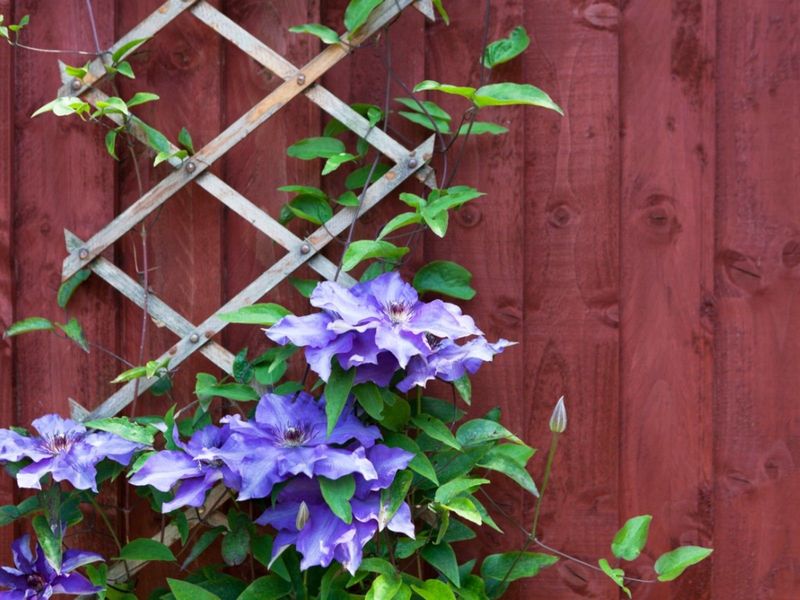
Group 1 and Group 2 clematis both depend on previous-season growth to flower, but they are not identical in their needs, and treating them the same way can cost you blooms on one while leaving the other overgrown.
Group 1 includes early spring bloomers such as Clematis montana, C. alpina, C. macropetala, and C. armandii. These plants carry their flower buds on growth made the prior season, so the only safe pruning window is right after flowering ends.
At that point, remove dead, damaged, or noticeably weak stems and trim for shape if the plant has outgrown its space. Clemson Extension’s clematis factsheet is clear that routine hard pruning before the spring bloom on Group 1 plants removes the stems that carry this year’s buds.
Shaping after bloom lets the plant spend the rest of the growing season producing the new stems that will flower next spring.
Group 2 large-flowered hybrids such as ‘Nelly Moser,’ ‘The President,’ ‘Duchess of Edinburgh,’ and ‘Bees’ Jubilee’ require a more nuanced approach. Their first and typically most spectacular flush of flowers develops from short shoots growing off last year’s stems.
RHS guidance for Group 2 clematis recommends light pruning in late winter or early spring: remove dead or obviously weak stems and cut remaining growth back only to the nearest strong, plump bud. That selective approach preserves the old-season growth the plant needs for its first display.
After that first bloom fades, some Group 2 cultivars can produce a second, lighter flush on new growth. At that stage, selected stems can be shortened to a strong bud or healthy side shoot just below the spent flowers to encourage later flowering.
University of Delaware Cooperative Extension notes that a severe pre-bloom cut on a Group 2 plant can sacrifice the first display without necessarily killing the plant, but it does mean waiting another season for that showy early wave.
The key distinction between the two groups is timing. Group 1 gets its cleanup after flowering with minimal intervention before bloom.
Group 2 gets a careful, selective tidy in late winter followed by optional light shaping after the first flush. Neither group benefits from a hard ground-level cut in fall, late winter, or early spring before blooming.
Group 3 clematis can usually take the hard late-winter cut
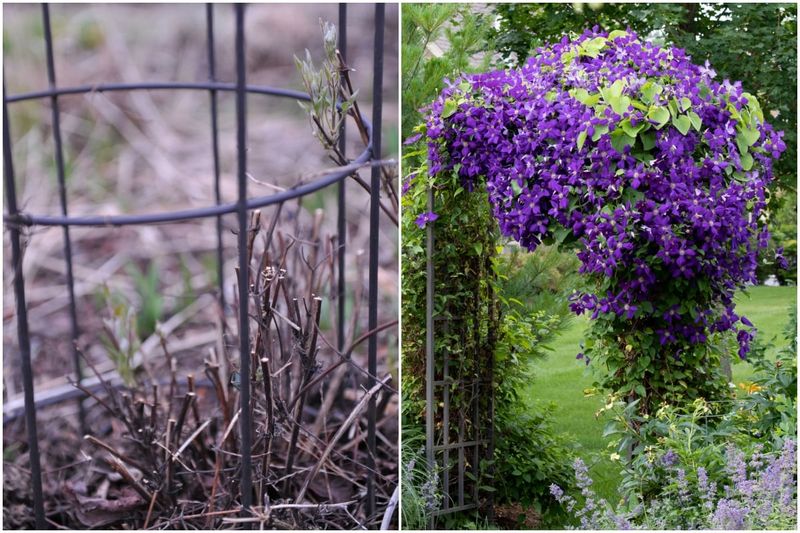
Not every clematis needs careful preservation of old stems. Many of the most popular late-flowering types actually perform better when cut back hard in late winter or early spring, and leaving last year’s growth in place on these plants does not help flowering at all.
Group 3 clematis, which includes many C. viticella cultivars and the widely grown C. x jackmanii types, flower on growth produced during the current season. RHS guidance for Group 3 clematis recommends cutting these plants back hard in late winter or early spring, typically to the lowest healthy pair of buds, often roughly 6 to 12 inches above the ground depending on the cultivar and the condition of the plant.
Removing last year’s stems clears the structure and channels the plant’s energy into strong new shoots that will carry the season’s flowers.
University of Delaware Cooperative Extension confirms that late-flowering clematis on new wood benefit from this seasonal cut, which keeps the plant tidy and prevents a tangled mass of old stems from accumulating year after year. Skipping the hard cut on a Group 3 plant does not cause bloom failure, but it can lead to flowers concentrated high up on a sprawling, woody base over time.
A further nuance worth knowing: some mid- to late-summer cultivars can be managed with either a lighter Group 2-style approach or a harder Group 3-style cut. Clemson Extension notes that this choice affects plant height and how many waves of flowers you receive in a season.
A lighter cut produces a taller plant with an earlier start; a harder cut produces a shorter plant with a slightly later, often very full display.
The important distinction is context. A hard late-winter cut on a confirmed Group 3 clematis is exactly the right move.
That same cut on an unidentified early spring bloomer, or on a Group 2 hybrid, removes the flower-bearing wood before the plant ever has a chance to show what it can do.
After a mistake, let the plant recover while checking other causes
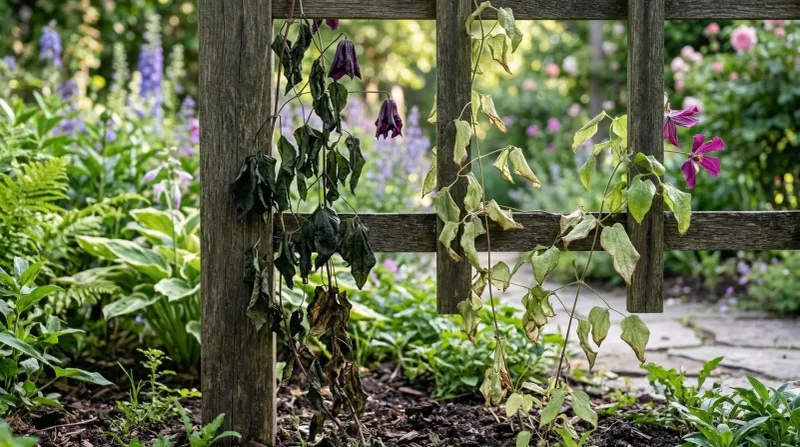
Realizing you made a hard cut on the wrong clematis at the wrong time is frustrating, but it is rarely a fatal situation. Colorado State University Extension pruning guidance confirms that clematis can regrow after severe pruning, though flowering in the current season may be reduced or delayed if old flowering wood was removed.
The plant is not dead; it simply needs time to rebuild the growth that carries blooms.
Avoid making another indiscriminate cut while the plant recovers. Support new growth by checking conditions rather than reaching for the pruners again.
UC Statewide IPM guidance recommends that clematis foliage and flowers receive substantial light, often around six or more hours of direct sun, while the root zone stays cool, moist, and well drained. If the vine is growing in heavy shade or competing with surface roots from a nearby tree, correcting those conditions matters as much as any pruning adjustment.
Abundant leafy growth with few flowers can point to several problems beyond pruning. Excess nitrogen can encourage vigorous foliage at the expense of flowers, but Iowa State University Extension’s clematis guide notes that shade, immaturity, winter dieback, and poor growing conditions are equally plausible explanations.
Lush foliage alone is not proof of overfertilization. Assess light, drainage, root-zone moisture, plant age, and winter survival before adjusting any fertilizer program.
A separate concern deserves attention if the symptoms look different from ordinary slow recovery. Sudden wilting and blackening of stems near flowering time, especially in large-flowered hybrids, may indicate clematis wilt rather than pruning damage.
Missouri Botanical Garden’s clematis wilt resource recommends removing and discarding affected stems rather than leaving them on the plant or in the garden. When removing diseased material, clean your tools between cuts.
Iowa State University Extension’s tool sanitation guidance suggests 70-percent isopropyl alcohol as a convenient and effective homeowner option. University of Maryland Extension recommends sharp bypass pruners for clean cuts that minimize wound size and stress on the plant.
Never mix bleach with other cleaners when disinfecting tools.
Clemson Extension and the Missouri Botanical Garden Plant Finder both note that flowering depends on a combination of factors, including light, root conditions, plant maturity, and overall health. Correct pruning preserves the right growth at the right time, but it is one piece of a larger picture.
Use the pruning group—not a blanket rule—to protect next year’s flowers
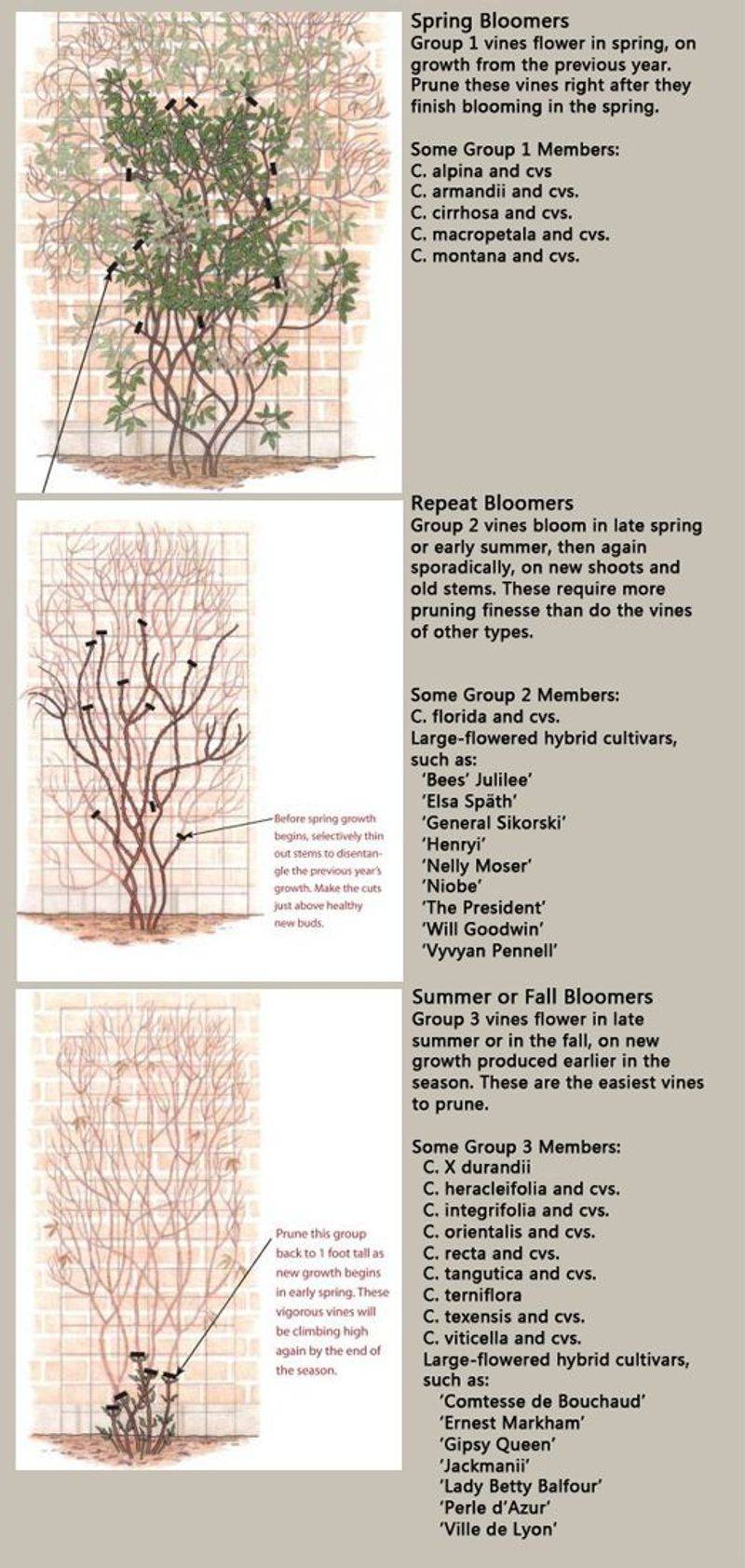
The clearest rule for preventing a repeat of this problem comes down to one question: which group does your clematis belong to? Confirm the group from the plant tag or cultivar name, then match your pruning timing and severity to that group.
RHS clematis pruning guidance lays out the three-group framework specifically because a single blanket rule cannot serve plants with such different flowering habits.
For Group 1 and Group 2 types, preserving enough previous-season growth is the priority. Remove dead, damaged, or weak stems, but leave healthy old-season growth intact until you know the plant has had the chance to flower from it.
For Group 3 types, the hard late-winter or early-spring cut is not only safe but generally beneficial. RHS Group 3 pruning guidance confirms that cutting back to the lowest healthy buds each late winter keeps these plants vigorous and productive season after season.
Missing one bloom season because of a pruning mistake does not mean the plant is gone. Clematis are resilient, and most will rebuild with time.
Future flowering still depends on light, root conditions, winter survival, plant maturity, and nutrition alongside the right pruning approach. RHS growing guidance is a reliable starting point for matching all of those conditions to your specific cultivar.
Before making the next major cut, look up the cultivar name. That one step is what separates a plant that blooms reliably from one that pours out vines and little else.