
If Your Fall Garlic Sprouts Fast In Autumn But Gives You Only Tiny Bulbs Next Summer, You Planted It Too Early
Garlic poking up through fall soil can send a gardener into a panic, but those little green shoots are not a warning sign on their own. The real story of what drives bulb size is more nuanced than any single planting date, and getting it wrong in either direction, too early or too late, can shrink your harvest. Understanding what fall growth actually does for garlic, and what genuinely puts it at risk over winter, gives you far better tools than a blanket rule ever could.
Autumn Sprouts Do Not Prove You Planted Too Early
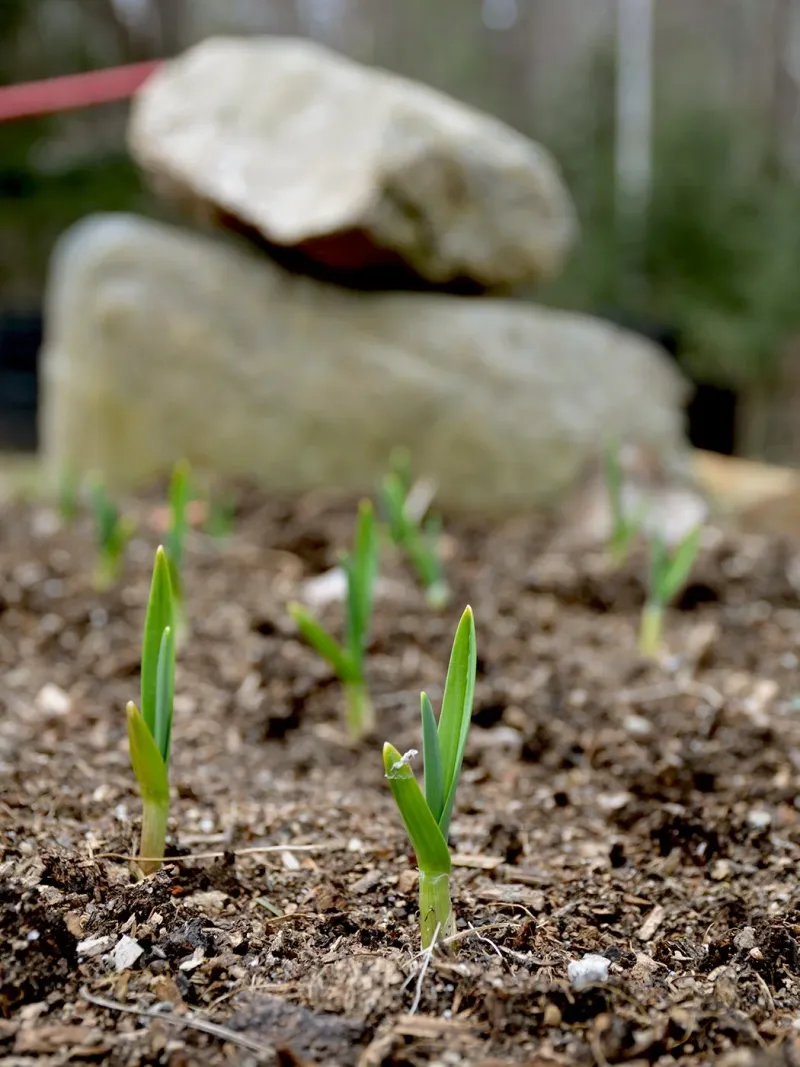
Seeing green garlic shoots push up before the first hard freeze feels alarming, but most extension horticulturists do not treat autumn emergence as evidence of a mistake. University of New Hampshire Extension notes that fall shoots often survive winter without serious harm, and that gardeners generally should not panic when foliage appears before cold weather fully arrives.
The distinction that actually matters is between modest, survivable growth and extensive tender foliage that faces repeated hard freezes with no protection. A short green tip emerging in October is a very different situation from a lush stand of several inches of leafy growth heading into a Minnesota January without mulch. Sprouting speed also depends on soil temperature, moisture, planting depth, cultivar, and recent weather, not just the date you dropped the cloves in the ground.
A better diagnostic question than “did it sprout?” is “how much did it grow, and did that growth suffer severe winter injury?” Iowa State University Extension acknowledges that early foliage commonly regrows after cold exposure, meaning an autumn shoot does not automatically signal a ruined crop. Treat sprouting as information worth watching, not as a verdict on your planting date.
Fall Growth Helps Garlic Build a Larger Bulb
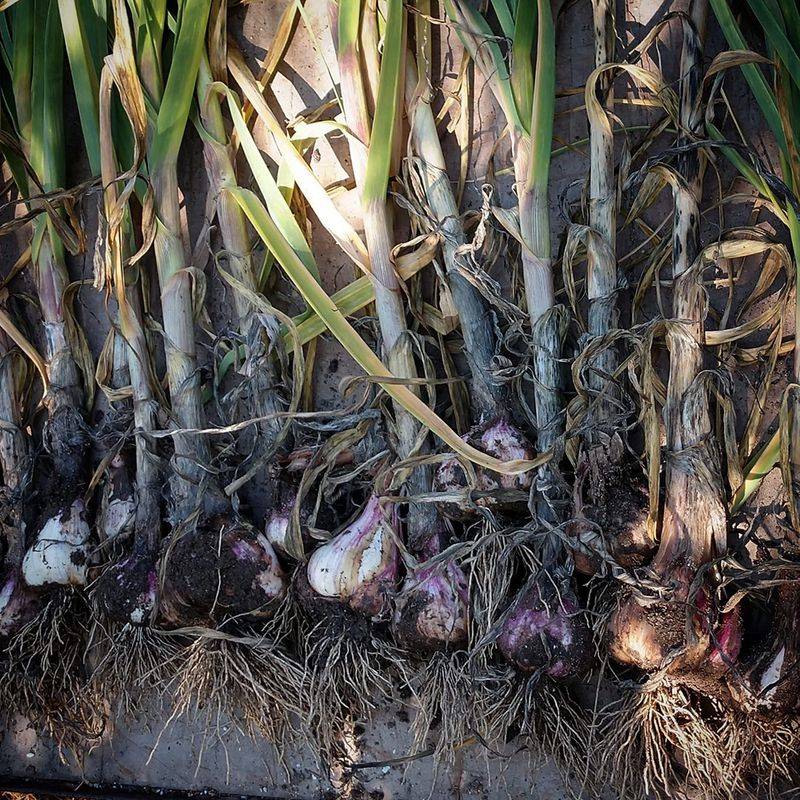
Garlic leaves are not competing with the bulb during the fall and early winter months. Before bulbing begins in spring, vegetative growth is genuinely useful because the foliage the plant builds above ground supports the energy it will redirect into the bulb later. University of Georgia Cooperative Extension describes a roughly six- to eight-week period of cool temperatures as important for vernalization, the cold exposure that triggers bulb formation, while also emphasizing that fall planting gives plants time to develop roots and foliage before that process begins.
Bulb enlargement is driven by an interaction among cold exposure, accumulated vegetative growth, warming spring temperatures, and increasing day length. A plant that enters spring with a strong root system and healthy leaves has more capacity to swell a large bulb than one that barely established before bulbing began. Oregon State University Extension reinforces this point, noting that large, healthy tops are important because bulb enlargement starts later as day length and temperatures rise.
Planting too late creates the mirror-image problem. University of Maryland Extension reports that spring-planted garlic often produces smaller bulbs because plants may not receive adequate cold exposure or enough time to develop useful foliage before bulbing is triggered. UC IPM adds that later planting is acceptable in mild-winter climates but may still result in smaller bulbs. The takeaway is that “plant as late as possible to prevent tiny bulbs” is not a reliable correction, and it can introduce its own yield problems.
Winter-Damaged Foliage Creates the More Specific Risk
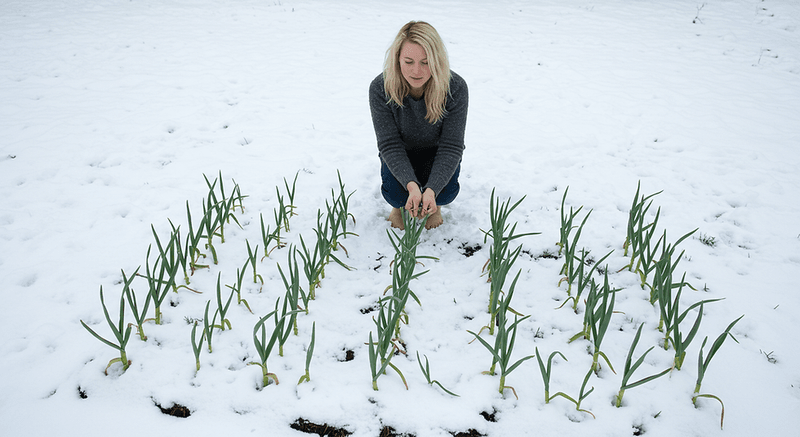
The more credible concern with unusually early planting is not ordinary autumn growth, it is what happens to substantial tender foliage when severe winter cold arrives. When a plant produces several inches of leafy growth before temperatures drop hard, that foliage can suffer serious injury. Losing already-built leaves forces the plant to spend energy regrowing them rather than continuing toward bulb development in spring.
Iowa State Extension explains that garlic foliage can generally tolerate temperatures into the lower 20s°F, and that severe cold below roughly that range, especially without insulating snow cover or mulch, poses the more meaningful risk of injury. The same source notes that garlic commonly regrows after cold damage, so even a setback does not automatically mean crop failure. The concern is repeated, severe foliage loss that keeps forcing the plant to rebuild rather than progress.
Snow cover and mulch both affect how much cold actually reaches the plant, so no single temperature works as a universal damage line for every garden in every region. A bed in Minnesota with four inches of straw mulch and reliable snow cover faces a very different exposure than an unprotected raised bed in an area that gets sudden deep freezes with no insulation. Oregon State Extension underscores that healthy established foliage supports bulb development, which is why protecting what the plant has built matters more than trying to prevent any growth at all.
Choose the Planting Window for Your Region
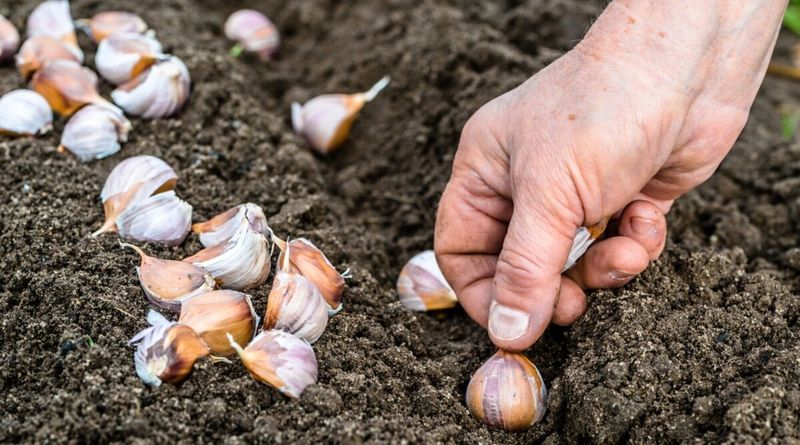
A practical timing rule that works across most growing situations is to plant early enough that roots can establish before the ground freezes, while avoiding a prolonged period of vigorous top growth before dependable cold arrives. That balance point falls on very different calendar dates depending on where you garden. University of Minnesota Extension generally recommends planting one to two weeks after the first killing frost, while University of Maryland Extension suggests mid- to late October for that region.
University of New Hampshire Extension lists October for northern sites in the state and November for locations further south, and explicitly recommends giving roots enough time to establish without necessarily expecting shoots to grow before winter. Utah State University Extension gives a wider window of mid-September through early November, reflecting the range of elevations and climates within that single state.
Cultivar type adds another layer of variation. Hardneck varieties generally have higher cold requirements than softneck types, and their ideal planting window may shift accordingly. A date that works well for a Rocambole hardneck in Vermont is not necessarily the right date for a softneck artichoke type grown in Georgia or California. Soil drainage, raised versus in-ground beds, and the typical severity of your local winters all shift the calculation further.
The most reliable step is to check your nearest cooperative extension service for region-specific garlic planting recommendations rather than relying on a single national date. Extension offices publish guidance calibrated to local frost dates, soil conditions, and typical winter patterns that no general article can replicate for your specific yard.
Mulch the Bed and Leave Emerging Shoots Alone
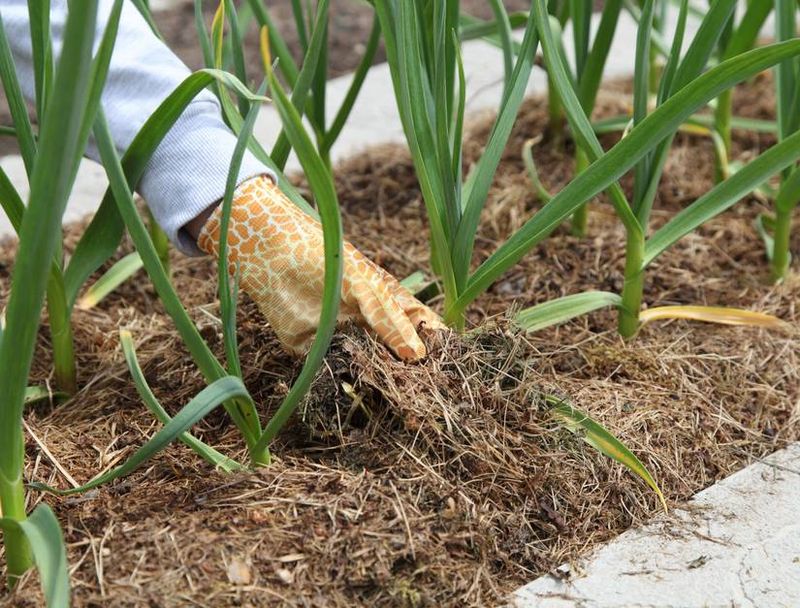
Once garlic is in the ground, the most productive thing most gardeners can do before winter is apply mulch and resist the urge to dig up or cut back any shoots that appear. Pulling emerging foliage does not help the plant, and disturbing cloves that have already begun rooting can set back establishment at exactly the wrong time.
University of Minnesota Extension and University of New Hampshire Extension both recommend three to four inches of straw or leaf mulch applied after planting or once the ground begins to freeze. That layer moderates temperature swings, reduces frost heaving that can push cloves out of the soil, conserves soil moisture, and provides a buffer against the most damaging cold snaps.
Timing the mulch application matters. Putting it down too early while soils are still warm can encourage more top growth than you want before winter. Waiting until the ground starts to firm up, or until a hard freeze is forecast, is a reasonable approach in most regions. Iowa State Extension specifically suggests adding mulch if temperatures are expected to drop severely and snow cover is limited, which is the scenario where unprotected foliage faces the most risk.
Think of mulch as managing the plant’s exposure to extremes, not as a way to force dormancy or undo an early planting date.
Summer Bulb Size Depends on More Than Planting Date
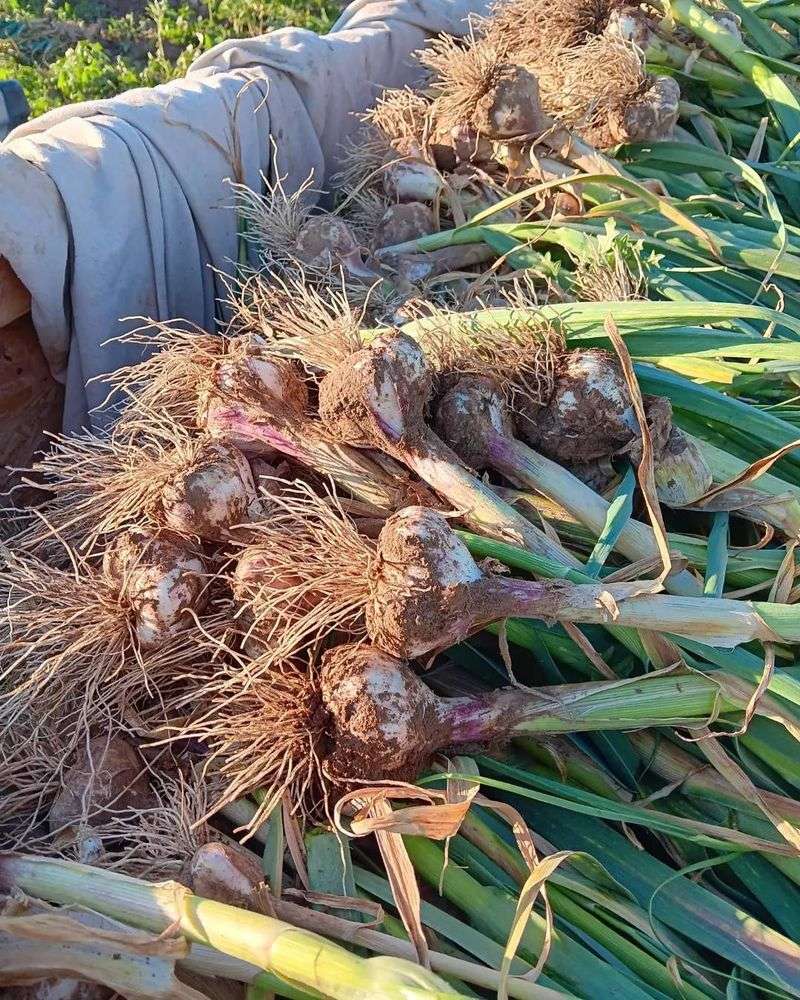
Small bulbs at harvest are frustrating, but the cause is rarely a single factor. Starting with large, healthy planting cloves is one of the most consistent predictors of bulb size. Oregon State University Extension emphasizes selecting the largest cloves from your best bulbs rather than assuming planting date is the main variable controlling what you pull from the ground in summer.
Water is another major factor. Utah State University Extension reports that drought stress reduces both yield and bulb size, while Minnesota Extension recommends about one inch of water weekly during the growing season. Weed pressure is equally important: garlic competes poorly with weeds, and both Minnesota and Wisconsin Extension sources warn that unchecked weeds can significantly reduce plant growth and final bulb size. Clearing weeds early and consistently through spring gives garlic the best chance to put its energy into the bulb.
Nitrogen timing matters too. Minnesota Extension advises stopping nitrogen applications after the first week of May because late-season fertilizer can delay bulbing rather than support it. Fertilizer decisions should follow your soil conditions and local extension guidance rather than a general rescue instinct when plants look small.
For hardneck garlic specifically, removing the scape when it curls is a straightforward step that redirects energy toward the underground bulb. University of Maryland Extension and University of New Hampshire Extension both recommend scape removal when maximizing bulb size is the goal. Disease, cultivar differences, and soil fertility all contribute to the final tally as well, which is why a thorough diagnosis considers the whole growing season rather than stopping at autumn sprouting.
Harvest Timing Can Make a Good Bulb Seem Too Small
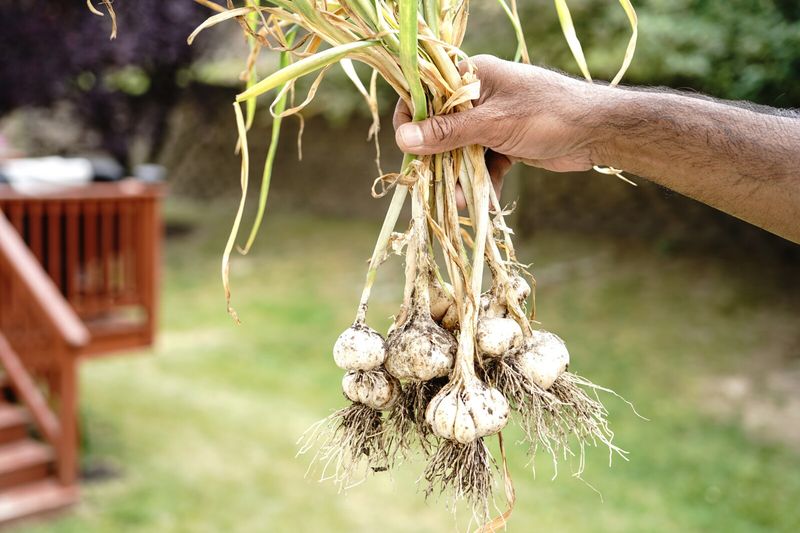
Before changing your fall planting schedule based on disappointing results, check when you actually harvested. Pulling garlic too soon is one of the most common reasons for small bulbs, and it is entirely separate from anything that happened in autumn. Bulbs need the full arc of spring and early summer growth to fill out their cloves, and cutting that short by even a week or two can leave them noticeably undersized.
University of Minnesota Extension gives a reliable field signal: the lower leaves will have browned while roughly half or slightly more of the upper leaves remain green. That combination indicates the bulbs are mature but the wrappers are still intact enough to protect them in storage. Waiting too long past that window carries its own risk because the cloves can begin to separate from the bulb, reducing both storage life and appearance.
Cultivar and climate shift that timing somewhat, so treat the foliage signal as a general guide rather than a precise countdown. Softneck varieties and hardnecks can differ by a week or more in their readiness, and a cooler-than-average spring may push maturity later. Keeping notes on harvest dates alongside bulb quality across two or three seasons gives you far more useful data for your specific garden than any general rule about autumn sprouting. A disappointing bulb does not identify early fall growth as the cause without accounting for the full growing history, from clove size and winter protection all the way through to the day you pulled the plant.
Aim for Established Roots, Not a Sprout-Free Autumn
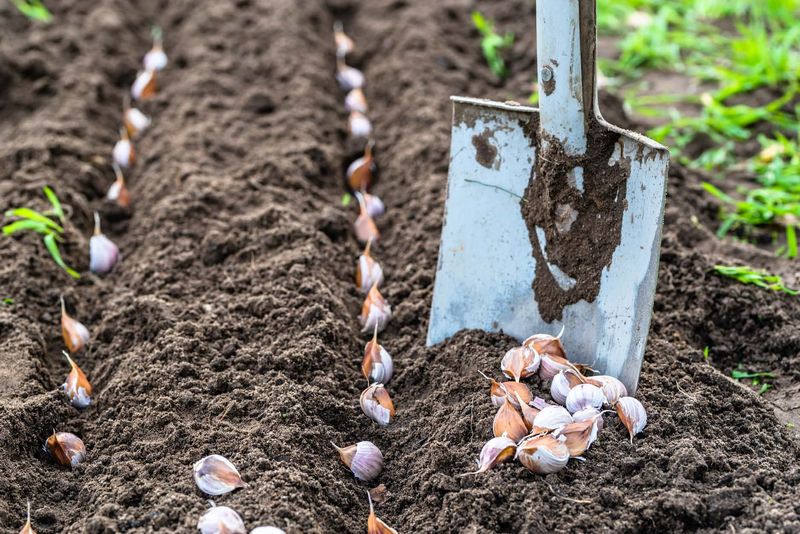
A modest autumn shoot is a signal to observe and protect, not a problem to fix. University of New Hampshire Extension puts it plainly: fall shoots often survive winter, and most gardeners can leave them alone. The goal of fall planting is to allow enough time for root establishment and some useful vegetative growth, while avoiding excessive tender foliage before severe cold arrives. Iowa State Extension reinforces that even damaged foliage commonly regrows.
Before adjusting your planting date next fall, run through the full checklist first. Ask whether the foliage suffered severe winter injury, whether you started with large healthy cloves, whether the bed stayed adequately moist through spring, whether weeds were controlled early, whether nitrogen was stopped before bulbing, whether hardneck scapes were removed, whether any disease was present, and whether you harvested at the right time. Minnesota Extension documents all of these as independent contributors to bulb size. A garden that gets those details right tends to produce good bulbs regardless of whether a few green tips showed up in October.