
If Your Fall Mums And Asters Draw Bees But No Butterflies, Skip These 4 Plants And Add These 7 Instead
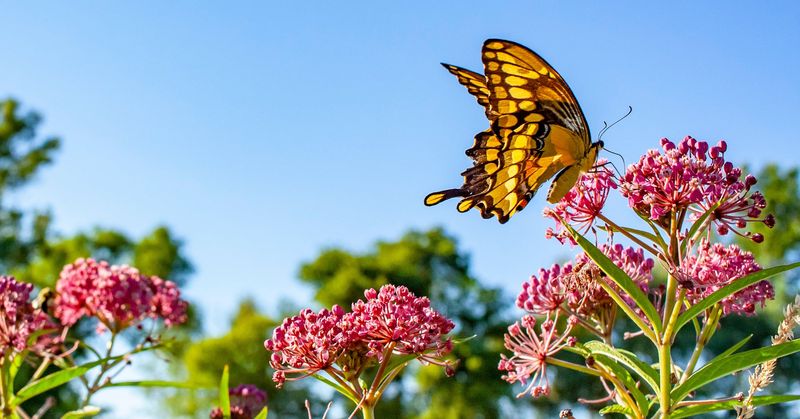
Bees are wonderful, but if your fall garden is buzzing without a single butterfly floating by, something is off. Classic mums and asters look pretty, yet many of the show-stopping varieties sold in stores are bred for looks and offer little to fluttering visitors. The good news is that a few smart swaps can turn your autumn beds into a butterfly rest stop before they head south. Here is what to leave behind and what to plant instead so monarchs and swallowtails actually show up.
1. Skip: Florist Garden Mums (Chrysanthemum)
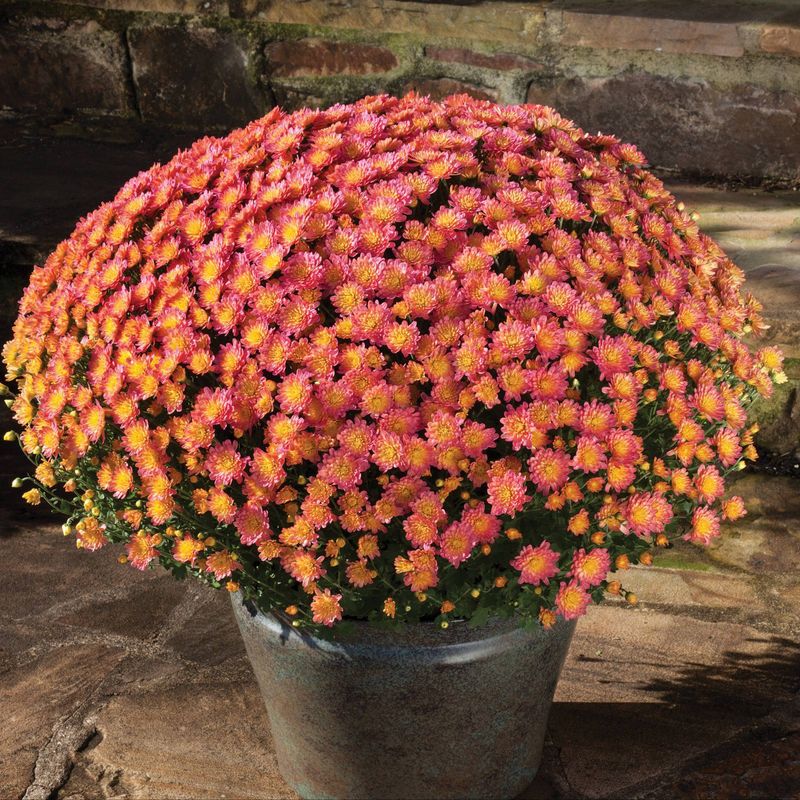
Walk into any US garden center in September and you will trip over pyramids of potted mums. They are cheap, colorful, and everywhere, which is exactly why so many backyards rely on them for fall color.
The problem is that most of these florist mums have been bred into tight, double-petaled pom-poms. All those extra petals crowd out the flower’s center, so butterflies can’t reach nectar even when they try. Bees will still work the edges, but a monarch’s long tongue finds nothing useful.
Many of these plants are also sold as disposable annuals in cold zones, dosed with growth regulators and pesticides that linger in the leaves. That residue may discourage the very pollinators you want. If you love the mum look, keep one or two for the porch, then give butterflies real food elsewhere in the yard. Think of store mums as decoration, not habitat.
2. Skip: Double-Flowered Asters
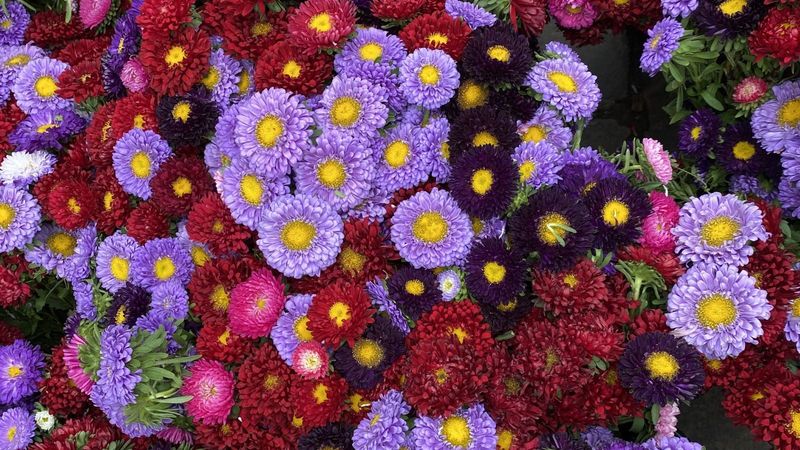
Asters get a lot of credit as fall pollinator plants, and the wild, single-flowered kinds absolutely earn it. The trouble starts when breeders pack in extra rows of petals to create those fluffy, showroom-perfect blooms.
Double and pompom aster cultivars often hide or eliminate the flower’s central disk, which is where the nectar and pollen live. A bee might squeeze in for a snack, but a butterfly perched on top finds a dead end. You end up with a plant that photographs beautifully and feeds almost nothing.
There is an easy fix here, and it does not mean giving up asters entirely. Look for open, daisy-shaped native asters instead of the frilly hybrids, and check the flower center before buying. If you can see a clear yellow eye in the middle, butterflies can probably use it. If the middle is buried in petals, leave it on the shelf.
3. Skip: Ornamental Kale and Cabbage
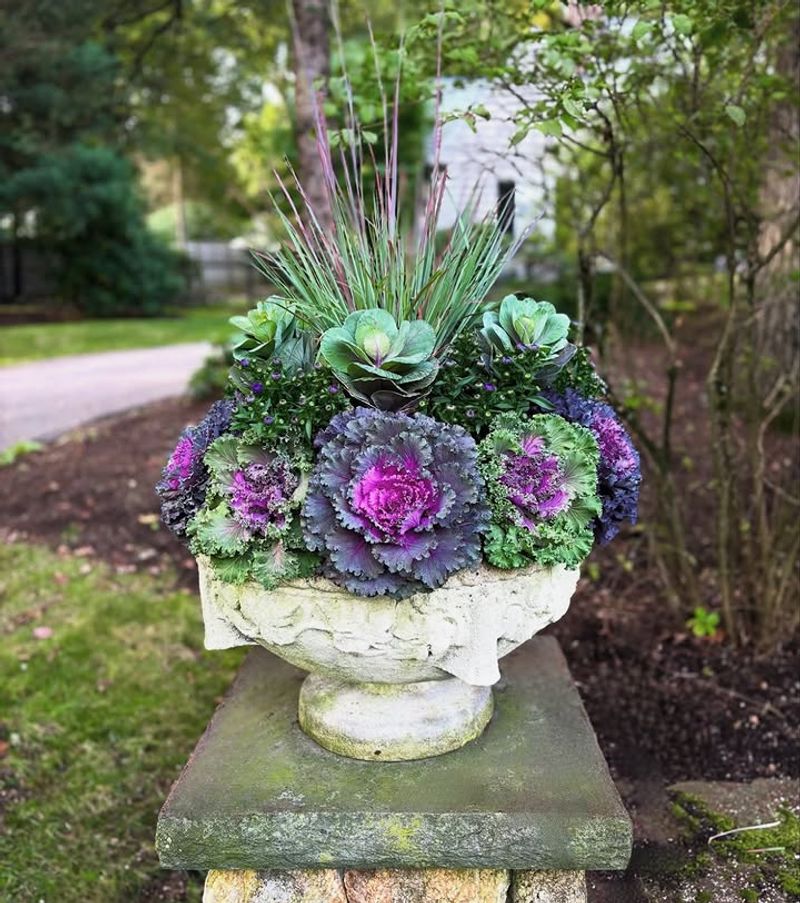
Every fall the ornamental kale trays roll out, and gardeners scoop them up for that ruffled purple-and-cream color that shrugs off frost. As a cool-season filler they are honestly hard to beat.
Here is the catch: ornamental kale is grown for its leaves, not its flowers, and you typically pull it before it ever blooms. No blooms means no nectar, which means no reason for a butterfly to visit. It is a leafy sculpture, not a food source.
Worth knowing is that if you did let it flower the following spring, cabbage-family plants can actually attract cabbage white butterflies and their hungry caterpillars, which most gardeners consider pests. So in a butterfly-friendly bed, ornamental kale gives you cold-hardy looks but zero payoff for the migrating monarchs and swallowtails you are hoping to see. Enjoy it in containers, and save your prime bed space for something that pours out nectar.
4. Skip: Sterile Hybrid Marigolds (French Pompom Types)
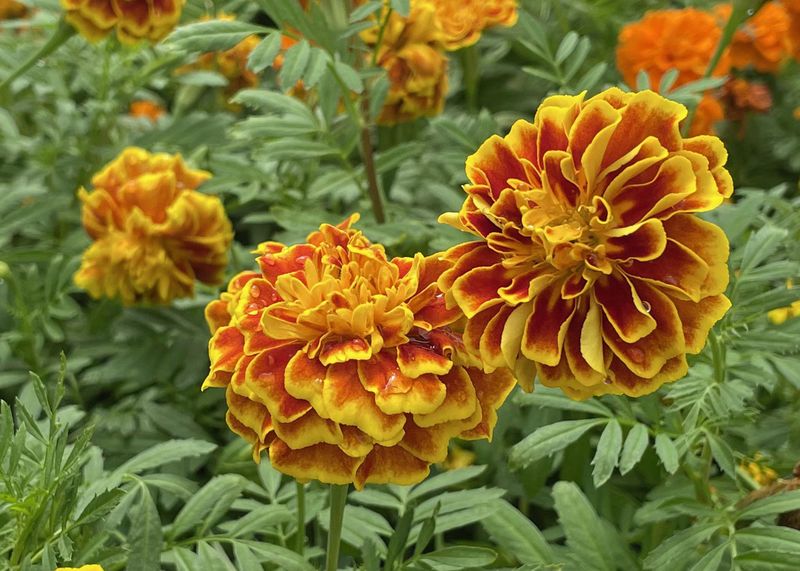
Marigolds have a golden reputation in the fall garden, and the big French pompom hybrids look like little suns lining a walkway. Gardeners plant them by the flat, expecting butterflies to swarm in.
Most of those swarms never arrive. The tightly stacked, sterile pompom marigolds bury their nectar under layer after layer of petals, and many hybrids produce little pollen at all. A butterfly simply cannot get in, so it moves on to a neighbor’s yard.
Not all marigolds are guilty, which is the frustrating part. Single-flowered signet marigolds with open faces do feed pollinators, but the dense hybrid pompoms that dominate store shelves are mostly ornamental. If you already have a border of them, no need to rip it out. Just tuck the real nectar plants from this list nearby so the visitors passing through actually find a reason to land.
5. Add: New England Aster (Symphyotrichum novae-angliae)
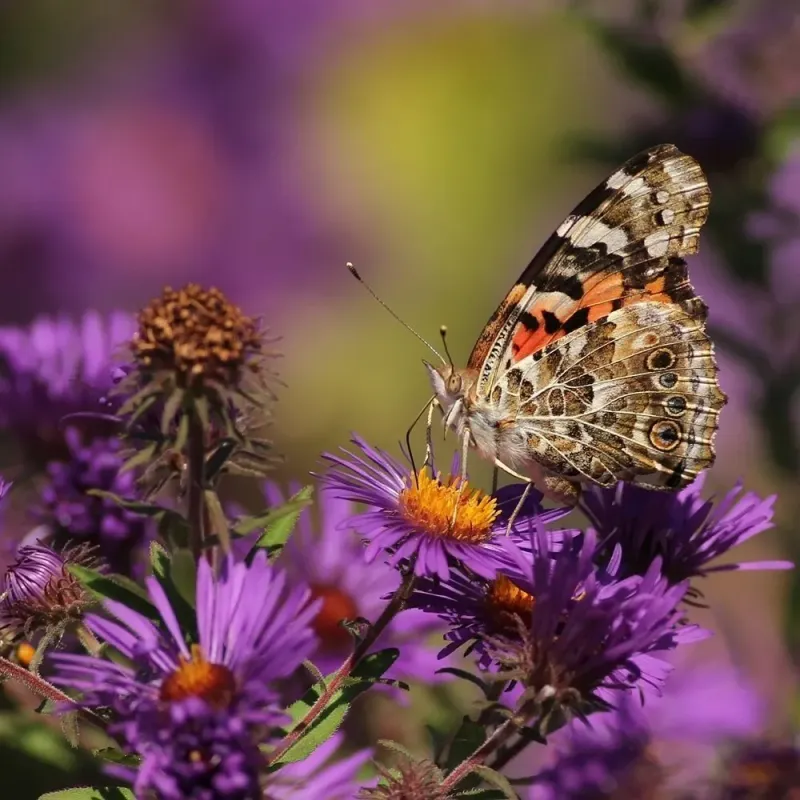
Meet the aster that actually earns its pollinator hype. New England aster is the wild native cousin of those frilly store hybrids, and its open purple daisies with sunny yellow centers are basically a landing pad with a dinner bell attached.
Blooming from late August through October across most of the eastern and central US, it hits its peak right as monarchs are fueling up for the long flight to Mexico. Migrating monarchs have been documented crowding these plants late in the season when almost nothing else is flowering. The nectar sits right out in the open, so a butterfly’s long tongue reaches it with no struggle.
Give it full sun and it will reward you with a shrubby, three-to-four-foot mound of blooms. Pinch it back in early summer if you want a bushier, less floppy plant. Once established, it is drought-tolerant and comes back bigger every year. Plant it where the florist mums used to sit and watch the difference by October.
6. Add: Goldenrod (Solidago)
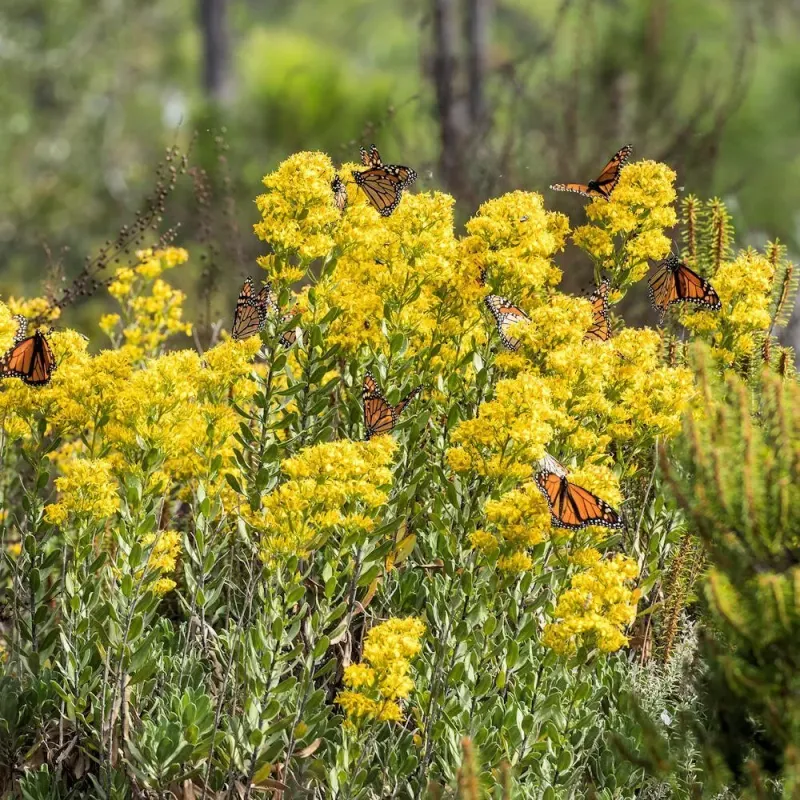
Goldenrod has been blamed for fall allergies for decades, and that reputation is flat-out wrong. The real culprit is ragweed blooming at the same time. Goldenrod’s pollen is heavy and sticky, carried by insects rather than the wind, which is exactly why butterflies love it.
Those arching plumes of tiny gold flowers turn into one of the busiest nectar stations of the season. Monarchs, sulphurs, and painted ladies all work the blooms, and goldenrod supports a huge number of native bees too, so your whole yard hums. It is one of the most valuable late-season nectar sources in North America.
Tough as nails, goldenrod thrives in poor soil and full sun where fussier plants sulk. If you worry about it spreading, choose a clumping variety like ‘Fireworks’ instead of the aggressive roadside types. Pair it with purple asters and you get that classic gold-and-violet fall combo that pollinators can’t resist.
7. Add: Zinnia (Zinnia elegans, Single-Flowered)
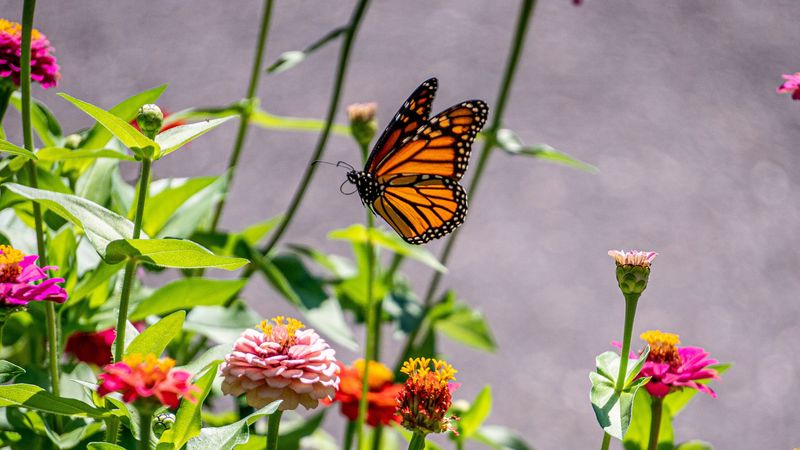
If you want instant butterfly traffic on a budget, few plants deliver like a row of single-flowered zinnias. They are grown from a pinch of cheap seed, bloom in weeks, and keep going right up until a hard frost knocks them back.
Butterflies adore the flat, wide-open flower heads because they make a perfect landing platform with easy-to-reach nectar. Swallowtails, monarchs, and painted ladies will visit the same patch again and again through the afternoon. Stick with single or semi-double ‘Zahara’ or ‘State Fair’ types rather than the tightly stuffed dahlia-flowered pompoms, which hide their centers.
Keep them deadheaded and they bloom harder, giving you cutting flowers for the kitchen table and food for pollinators at the same time. Full sun and decent drainage are all they ask. Sow a fresh handful in midsummer and you will have color and butterflies well into the fall shoulder season when your neighbors’ gardens are winding down.
8. Add: Joe-Pye Weed (Eutrochium)
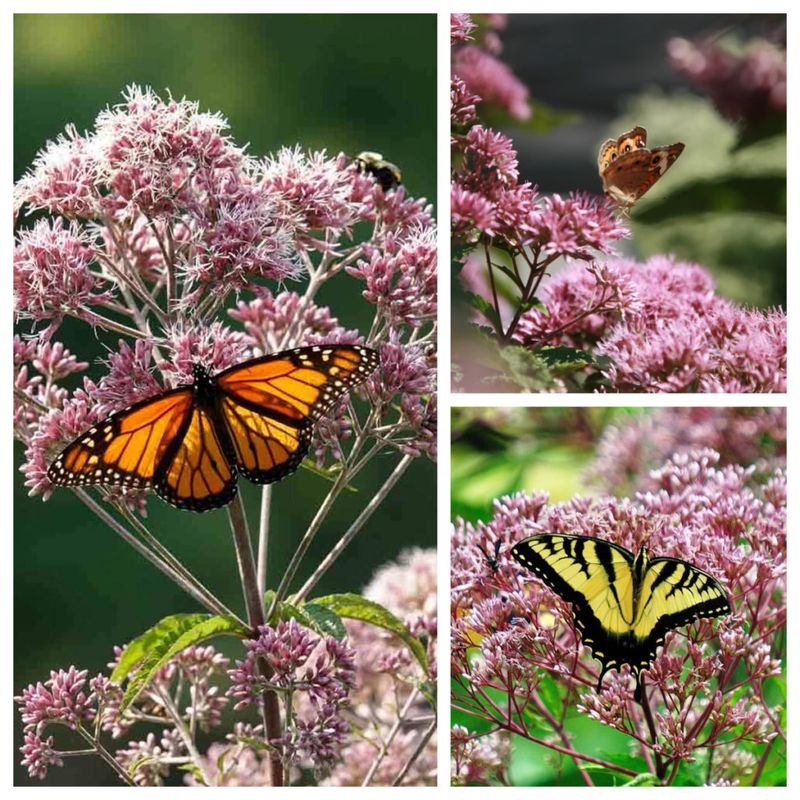
Do not let the word ‘weed’ fool you. Joe-Pye weed is a towering native perennial with dusty-rose flower clusters that butterflies treat like a rooftop buffet. In a big border it becomes the anchor everyone photographs.
Growing anywhere from four to seven feet tall, it puts its nectar right at butterfly cruising height, and the huge domed flower heads give dozens of insects room to feed at once. Tiger swallowtails and monarchs are especially fond of it during late summer and early fall. The mauve blooms also carry a soft vanilla scent on warm afternoons.
Legend says it was named for a Native American healer who used the plant medicinally, which is a fun bit of backstory for a plant this striking. It likes moist soil and does great near a downspout, rain garden, or low spot that stays damp. Give it room at the back of the bed and let it tower over your asters and goldenrod for a layered, wildlife-packed fall display.
9. Add: Mexican Sunflower (Tithonia rotundifolia)
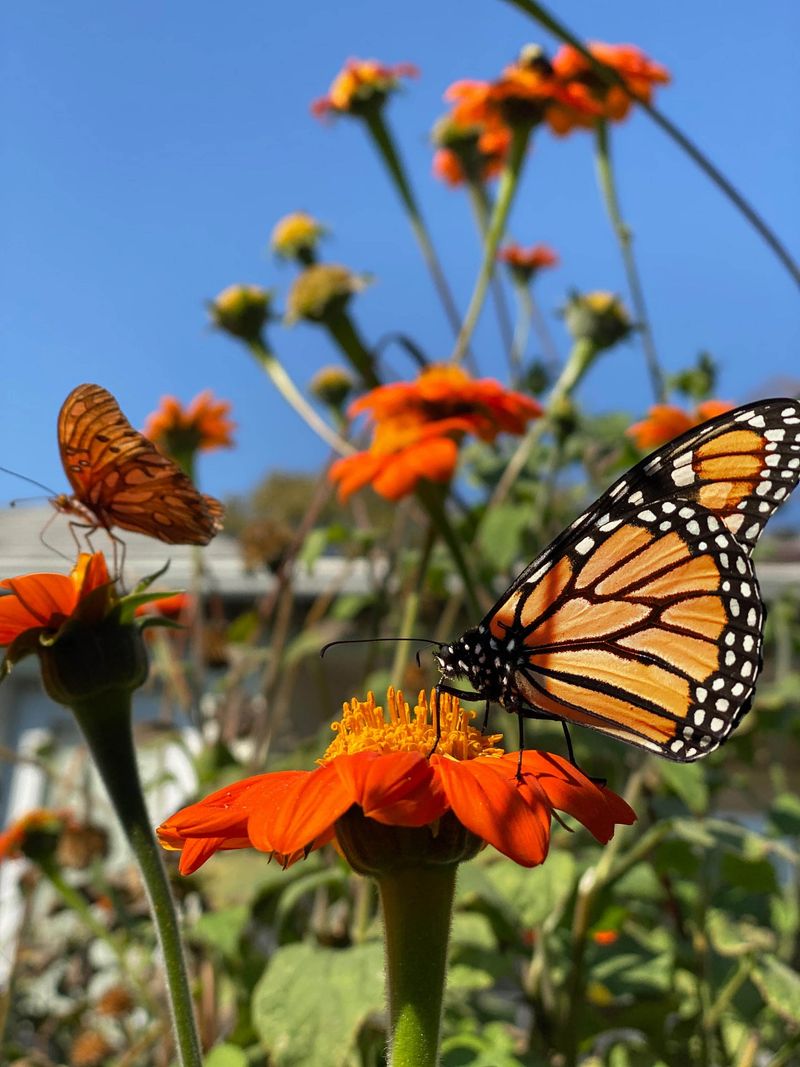
For sheer butterfly magnetism, Mexican sunflower might be the loudest plant on this list. Its fiery orange blooms sit on tall, branching stems that seem to flag down every winged thing in the neighborhood.
Monarchs in particular go wild for it, and gardeners often report five or six butterflies working a single plant on a warm afternoon. The bright, open flowers hold generous nectar, and the plant blooms nonstop from summer until frost, making it a reliable late-season fuel stop during monarch migration. Bonus: hummingbirds crash the party too.
Start it from seed after your soil warms and it will rocket up to five or six feet, so plant it at the back or as a temporary screen. It laughs at heat and poor soil, which suits many US backyards perfectly. Just give it sun and a little space, then stand back and watch the orange become the busiest corner of your entire fall garden.
10. Add: Sedum ‘Autumn Joy’ (Hylotelephium)
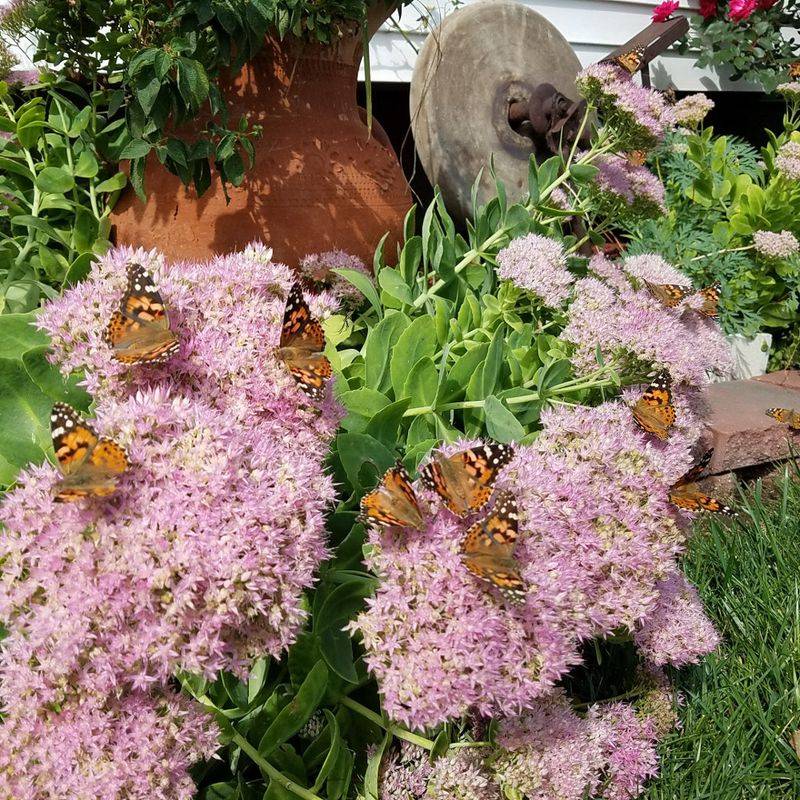
Some plants ask for constant babying, and then there is Sedum ‘Autumn Joy,’ which practically thrives on neglect. This succulent perennial forms tidy mounds topped with broad, flat flower heads that shift from pale pink to deep rust as fall settles in.
The flat-topped bloom clusters work like a communal dinner table, giving butterflies a sturdy place to perch while they sip. Painted ladies and small coppers are frequent guests, and the plant’s late timing fills the gap when summer flowers fade. Because it is so drought-tolerant, it keeps producing nectar even during dry autumn stretches that wilt neighboring plants.
It handles poor soil, heat, and forgetful watering without complaint, which makes it a great pick for containers or the sunny edge of a bed. Leave the dried flower heads standing through winter for structure and seed-eating birds. Come next fall, the same tough clumps return and the butterflies find them all over again.
11. Add: Blue Mistflower (Conoclinium coelestinum)
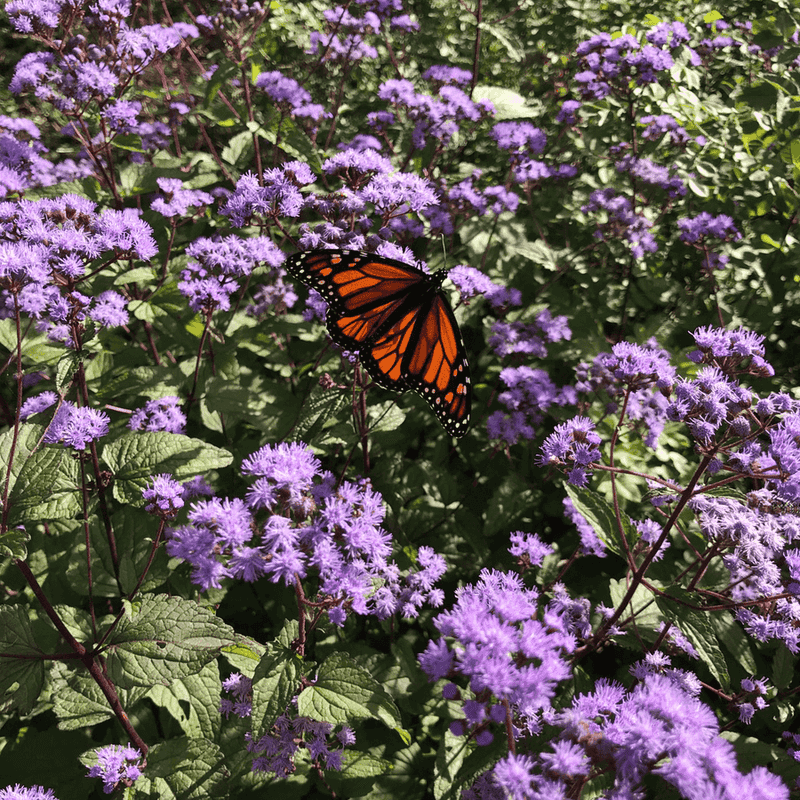
Saving a quiet showstopper for last, blue mistflower brings a cloud of fuzzy, powder-blue blooms right when the garden is drowning in yellows and purples. That cool color alone makes it stand out, but the butterflies are what really steal the show.
The threadlike flowers are irresistible to skippers, sulphurs, and especially monarchs during migration, and the plant blooms heavily from late summer straight through fall. Because its nectar sits in loose, open clusters, even short-tongued butterflies can feed easily. On a sunny October morning a patch of it can look like it is trembling with wings.
Native across much of the eastern and southern US, it spreads by underground runners, so give it a spot where it can wander a bit or grow it in a container to keep it polite. Part shade to full sun both work, and it tolerates damp ground. Tuck it in front of your goldenrod for a fall picture that pollinators simply cannot pass up.