
If Your Fall Spinach Leaves Turn Yellow From The Bottom Up, The Soil Ran Out Of One Thing
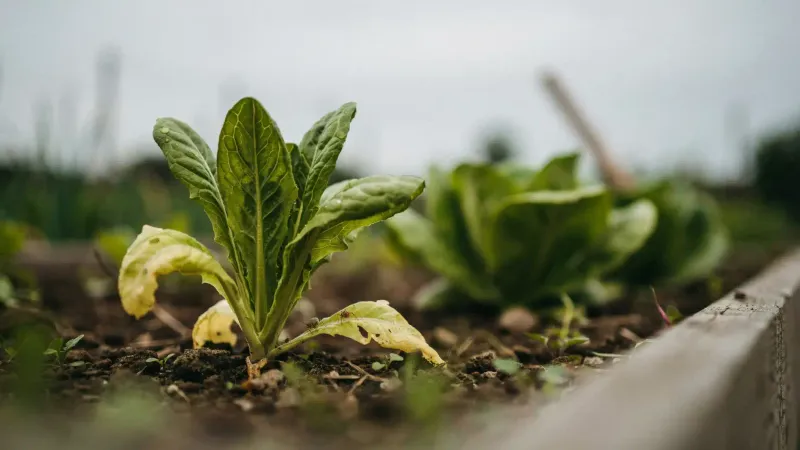
Watching your fall spinach go pale from the bottom up is one of those garden moments that feels alarming but actually gives you a useful clue. Those older, lower leaves are telling you something specific about what might be happening with nitrogen in your soil. Understanding what that pattern means, and what else could cause it, puts you in a much better position than just reaching for a bag of fertilizer. A little detective work now can save your crop and keep your bed in good shape for the rest of the season.
The oldest leaves provide the first nitrogen clue
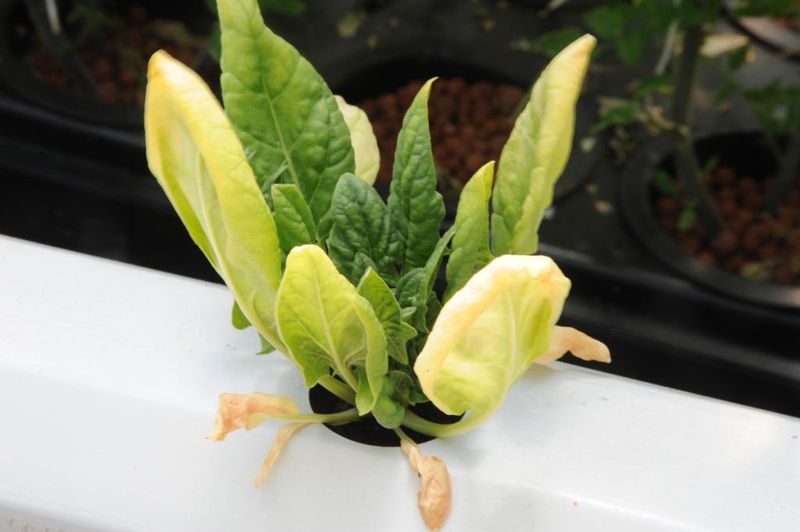
Spinach keeps its priorities straight even when resources run thin. When nitrogen supply drops below what the plant needs, it moves whatever nitrogen it has toward the youngest, most actively growing tissue, leaving the oldest leaves to fade first. That bottom-up pattern, where the lowest leaves turn a uniform pale green or yellow while the top of the plant still looks relatively healthy, is a recognized sign of nitrogen stress in leafy vegetables.
Nitrogen is what plant scientists call a mobile nutrient. University of Minnesota Extension guidance on fertilizing plants explains that mobile nutrients can be pulled from older tissue and redirected to newer growth when the overall supply is limited. Spinach and other leafy greens are particularly sensitive to nitrogen shortfalls because so much of what you harvest is leaf tissue, which requires a steady supply to develop properly.
As the shortage continues, growth slows noticeably and the plant may take on a generally washed-out look from top to bottom. University of Georgia Extension’s nutrient deficiency guide describes this progression clearly for vegetable crops: older leaves go pale first, then the whole plant loses color if the problem is not addressed. The pattern is consistent enough that many experienced gardeners recognize it quickly.
Fall spinach is especially worth watching because the crop grows fast in cool weather and can draw down available nitrogen before the season ends. That said, uniform bottom-up yellowing supports a nitrogen hypothesis rather than confirming it. University of Maryland Extension notes that similar symptoms can appear with other nutrient problems, root damage, and disease, so the leaf pattern is a starting point for investigation, not a final answer.
Why fall beds can leave less nitrogen available
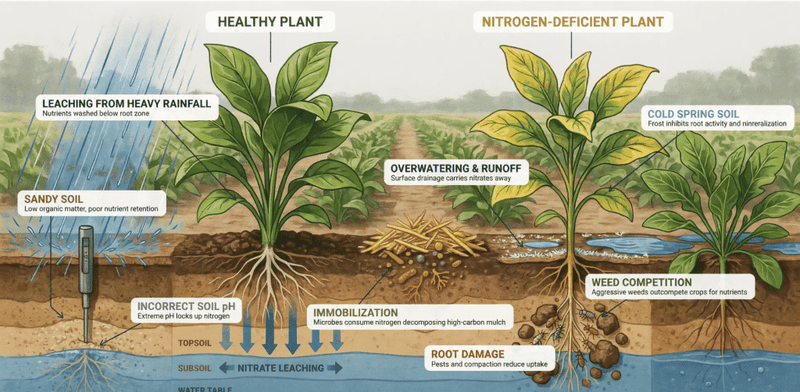
Nitrogen in garden soil does not sit still. The form plants use most readily, nitrate, dissolves easily in water and moves wherever water moves. When rainfall or irrigation pushes more water through the soil than the soil can hold, that water carries nitrate down past the root zone where spinach roots cannot reach it. University of Minnesota Extension’s overview of nitrogen in soils describes this leaching process and notes that sandy or coarse-textured soils are especially vulnerable because they hold less water and drain faster.
Fall weather often delivers exactly the conditions that encourage leaching. A stretch of heavy rain after a dry summer, or continued irrigation that does not account for cooler temperatures and slower plant uptake, can move nitrate well below the active root zone in a matter of days. NRCS guidance on nitrogen management confirms that nitrate losses through leaching are a real and measurable concern in many garden and farm settings, particularly where drainage is good and rainfall is heavy.
Cool soil adds a second layer of complexity. Soil microbes break down organic matter and release nitrogen as part of that process, but microbial activity slows considerably when soil temperatures drop. A bed that was releasing a steady supply of nitrogen from compost or aged organic matter during summer may release much less once fall arrives. Oregon State University Extension’s nutrient management publication for vegetable systems addresses this seasonal shift and its practical implications for fall crops.
Nitrogen can also become temporarily unavailable for other reasons. When fresh high-carbon materials like wood chips or unfinished compost are worked into soil, microbes use available nitrogen to break down that carbon, tying it up during decomposition. Compacted or waterlogged soil can limit root reach, and damaged roots cannot take up nutrients even when those nutrients are present. The phrase “the soil ran out” covers several distinct situations, and knowing which one applies changes what you should do next.
Before blaming nitrogen, read the rest of the plant
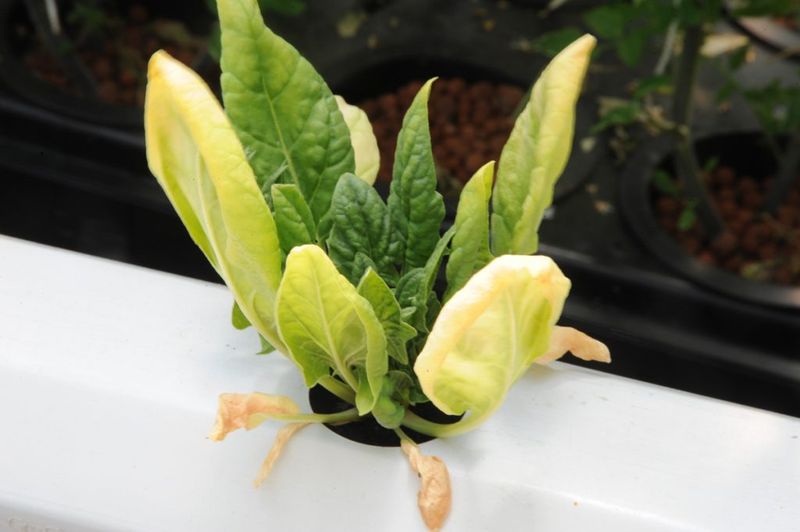
Older leaves turning uniformly pale or yellow from the bottom of the plant upward is a strong nitrogen clue, but several other problems can produce a similar picture. Running through a quick visual checklist before treating for nitrogen can save you from applying fertilizer to a plant that actually has a disease, a pest problem, or a root issue that fertilizer will not fix.
Start at the newest growth. If the youngest leaves at the top of the plant are yellow while the veins stay green, that pattern points toward an iron or manganese deficiency rather than nitrogen. UGA Extension’s nutrient deficiency guide distinguishes nitrogen deficiency, which shows first on older leaves, from sulfur deficiency, which typically appears on younger leaves first. Getting that distinction right matters because the corrections are completely different.
Next, look at the surface and underside of the affected leaves. Irregular yellow spots, water-soaked patches, or a grayish fuzzy coating on the underside of leaves are signs of downy mildew, a fungal disease that thrives in exactly the cool, wet conditions that fall spinach grows in. University of Minnesota Extension’s spinach leaf problem diagnostic tool lists downy mildew alongside nutrient deficiency as a common cause of discolored spinach leaves and describes the distinguishing features of each.
Tunnels or tiny feeding trails in the leaf tissue suggest leafminer activity. A mosaic pattern of light and dark green, sometimes with puckering or distortion, can indicate a viral infection spread by aphids. Severe wilting that does not improve after watering, especially combined with yellowing, often points to root damage rather than a simple nutrient gap. University of Maryland Extension’s nutrient deficiency resource reinforces the point that overlapping symptoms make visual diagnosis unreliable on its own, which is why checking multiple parts of the plant before acting is worth the extra few minutes.
Cool, wet fall weather can favor both downy mildew and root problems at the same time nitrogen might be limited, so the season itself does not settle the question. Look at the full picture: leaf pattern, vein color, spots, undersides, and the plant’s overall posture before drawing a conclusion.
Wet soil makes a root check worthwhile
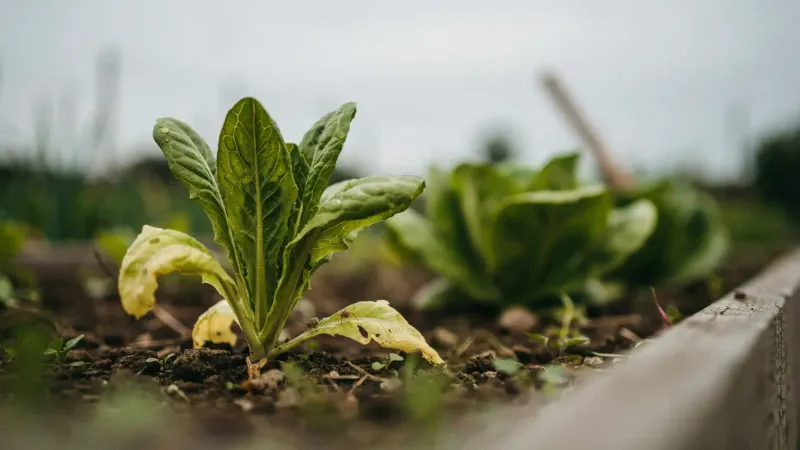
Yellow leaves on a spinach plant sitting in persistently wet soil deserve a closer look below the surface. When yellowing shows up alongside wilting that does not recover even though the soil feels damp, damaged roots are a more likely explanation than a nitrogen shortage. Roots that cannot function properly cannot deliver water or nutrients to the plant, and the leaves show the stress regardless of what the soil contains.
Spinach root rot is a real possibility in fall beds that stay wet for extended periods. University of Minnesota Extension’s spinach diagnostic tool identifies root-rot complexes as a cause of yellowing followed by wilt in spinach, and describes affected roots as dark, sunken, and lacking the fine root hairs that healthy roots use to absorb water and nutrients. Pulling a plant gently from the soil and comparing its roots to what you would expect, firm and light-colored with visible fine hairs, takes about thirty seconds and gives you information that no amount of leaf examination can provide.
Overwatering connects to yellowing through two separate pathways that are worth keeping distinct. First, roots sitting in saturated soil can suffocate and rot, which cuts off nutrient uptake and produces yellowing that looks similar to a deficiency. Second, heavy or repeated irrigation can flush nitrate below the root zone through leaching, as covered earlier. Minnesota Extension’s soil nitrogen overview explains this leaching mechanism, and it is worth noting that both pathways can operate at the same time in a poorly drained bed.
If roots look dark and mushy, the fix is improved drainage and possibly removing affected plants, not a nitrogen application. Adding fertilizer to a plant with compromised roots is unlikely to help and may stress the remaining healthy tissue further. Save the fertilizer question for after you have confirmed that the roots are intact and the soil conditions are reasonable.
Confirm the bed before adding a nitrogen source
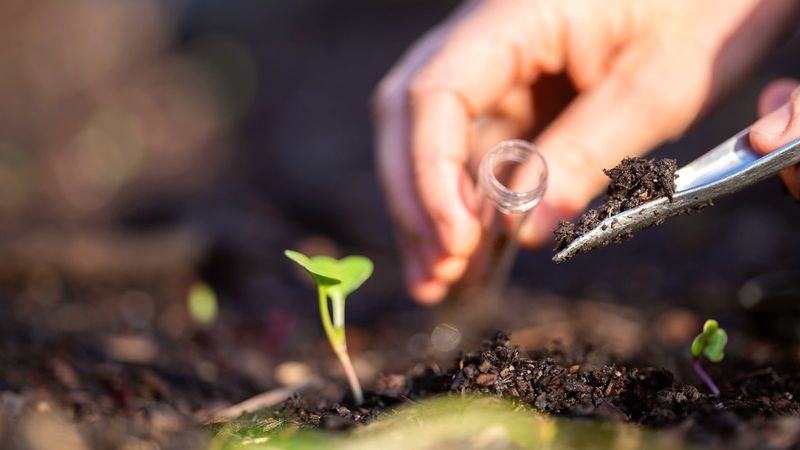
Leaf color gives you a hypothesis. Confirming that hypothesis before reaching for fertilizer protects your plants, your wallet, and the soil. A laboratory soil test is the most reliable way to find out whether nitrogen or another nutrient is actually short, and most state land-grant university extension services offer low-cost testing that includes recommendations tailored to your region and crops.
University of Maryland Extension’s vegetable garden fertilizing guide recommends using soil test results to guide fertilizer decisions rather than relying on visual symptoms alone, precisely because so many different problems can produce similar leaf color changes. Compaction, poor drainage, crowding, root injury, pH problems, and nutrient imbalances can all mimic nitrogen deficiency, and applying nitrogen to a plant suffering from any of those other issues will not correct the underlying problem.
While you wait for test results, or if you decide to make a field assessment, think through what has happened in the bed recently. Heavy rain or irrigation in the weeks before symptoms appeared is a meaningful clue, especially in a sandy or fast-draining bed. Minnesota Extension’s nitrogen overview notes that nitrate moves with water, so recent drainage events are worth factoring into your assessment.
Consider what organic amendments went into the bed and when. Fresh high-carbon materials can tie up nitrogen temporarily during decomposition. Check whether plants are crowded, which limits root development and air circulation. Inspect the soil surface for compaction that might restrict root growth.
Penn State Extension’s soil management guidance reinforces that soil structure, drainage, and organic matter all affect how well roots can access whatever nutrients are present. When damaged roots cannot take up nitrogen, the problem is physical, not chemical, and the correction needs to match.
Maryland Extension’s vegetable garden starting guide also points out that pH outside the appropriate range can lock nutrients in forms plants cannot use, even when those nutrients are technically present in the soil. A soil test covers pH alongside nutrient levels, making it a two-for-one diagnostic step worth taking seriously.
A measured fertilizer application is the safer fix
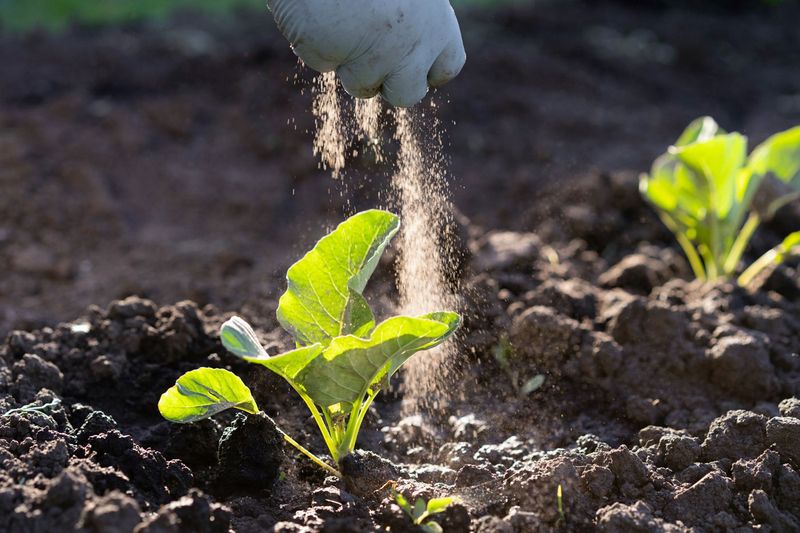
Once you have gone through the visual check, looked at the roots, and considered the recent soil conditions, and nitrogen deficiency still looks like the most reasonable explanation, a modest, targeted fertilizer application is the appropriate next step. The key word is measured. More fertilizer does not mean faster recovery, and excess nitrogen can burn roots or foliage, create overly lush growth that is more attractive to pests, and contribute to runoff that harms nearby water sources.
University of Maryland Extension’s vegetable fertilizing guide recommends applying fertilizer according to soil test results and product label directions, not by estimating from leaf color alone. Choose a labeled vegetable fertilizer or nitrogen source and follow the rate on the product label for the crop you are growing. Nitrogen recommendations vary by soil test result, soil texture, planting system, and fertilizer analysis, so a single universal rate does not exist. Commercial spinach production guides list rates in pounds per acre that are not directly transferable to a backyard bed without accounting for your specific bed area and fertilizer concentration.
Side-dressing is the standard technique for an in-season nitrogen application. Apply granular fertilizer in a narrow band beside the row rather than against the stems, keep granules off the leaf surfaces, and work the material lightly into the top inch of soil if the label directs it. Oregon State University Extension’s home growing guide covers side-dressing as a practical method for supplying nutrients to actively growing vegetables. Water the bed after application if rain is not expected within a day or two, which helps move the nitrogen into the root zone.
Some remedies that circulate online are worth setting aside. Epsom salt supplies magnesium and sulfur, not nitrogen, and UGA Extension notes that sulfur deficiency typically shows up on younger leaves first, the opposite of the nitrogen pattern. It is not a general yellow-leaf remedy. Fresh manure introduces pathogen, salt, and weed-seed risks around edible crops; Oregon State University Extension recommends finished compost or a labeled fertilizer instead, and notes that raw-manure waiting periods apply depending on whether the edible portion contacts the soil.
Finished compost can support soil health over time but releases nitrogen slowly and is not a quick fix for an active deficiency. EPA guidance on yard nutrient management also cautions against applying more fertilizer than plants can use, since excess nitrogen can move into groundwater or nearby waterways. A greener plant after fertilizing is not automatically a healthier or more productive one if the application exceeded what the crop actually needed.
Healthy fall spinach starts before the leaves fade
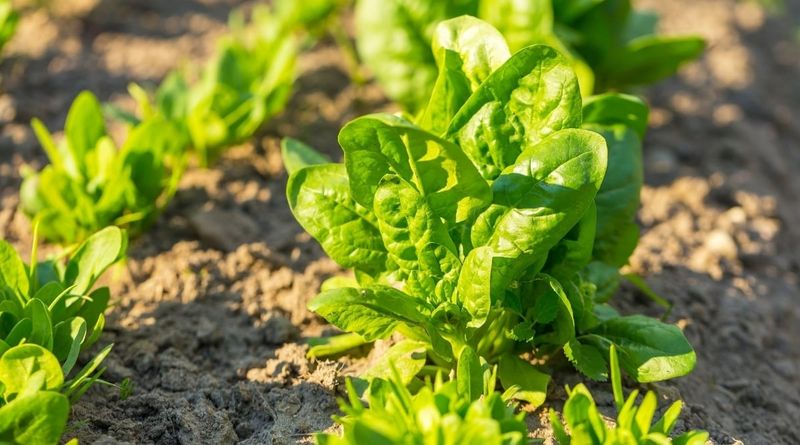
Fall spinach is a genuinely rewarding crop window. University of Minnesota Extension recommends sowing a fall crop about two months before the average first frost, giving plants enough time to reach harvest size before cold shuts things down. Planning fertility around that timeline from the start, rather than reacting to yellowing leaves mid-season, keeps the crop on track with less guesswork.
A soil test taken in late summer before fall planting gives you a baseline for pH and nutrients so you can amend the bed with purpose. University of Maryland Extension’s spinach production guide outlines separate fertility programs for spring, fall, and overwintered spinach, which reflects how much the crop’s nitrogen needs and the soil’s nitrogen behavior can shift by season. Matching your inputs to the actual season and soil test result is more reliable than applying the same rate year-round.
After planting, keep an eye on irrigation and drainage, especially after heavy fall rain. Maryland Extension’s fertilizing guide and Penn State Extension’s nitrogen efficiency resource both point to managing drainage and timing fertilizer applications as practical ways to reduce nitrogen loss. Avoiding excess irrigation after the soil is already moist limits leaching risk without stressing the plants.
Bottom-up yellowing in fall spinach is always worth investigating, and nitrogen is a reasonable first suspect when the pattern is uniform, starts on the oldest leaves, and the roots and leaf surfaces look clean. The pattern is a useful signal, not a verdict. Matching the clue to the soil conditions, the roots, and the full leaf picture before treating is what turns a yellow leaf into a solved problem rather than a guessing game.