
If Your Fall Tomatoes Won’t Ripen Before The First Frost, One Late-Season Cut Pushes Them Over The Finish Line
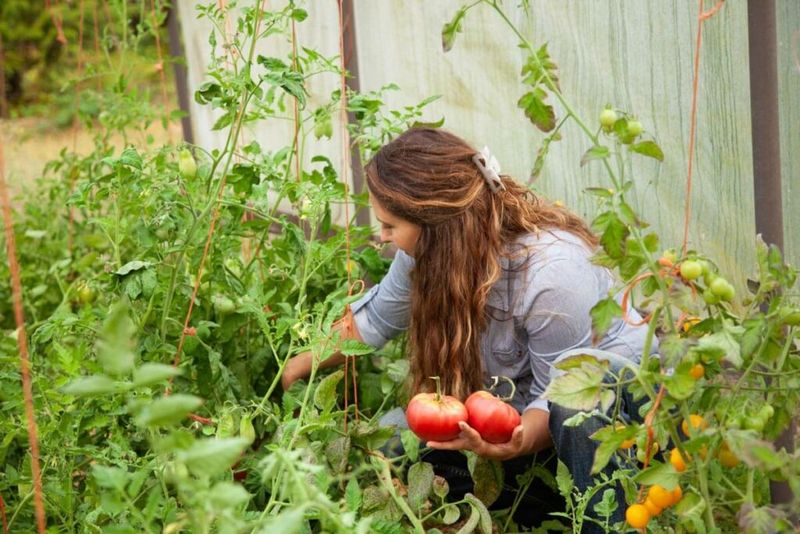
Every fall, gardeners across the country watch their tomato plants loaded with green fruit while the calendar creeps toward first frost. A single late-season topping session, done at the right time on the right type of plant, can stop new growth and give existing fruit a better shot at ripening before cold shuts the garden down. The trick is knowing which plants qualify, when to make the cut, and what the cut can realistically do. Get those three things right, and you give your harvest a genuine fighting chance.
Start with the right kind of tomato
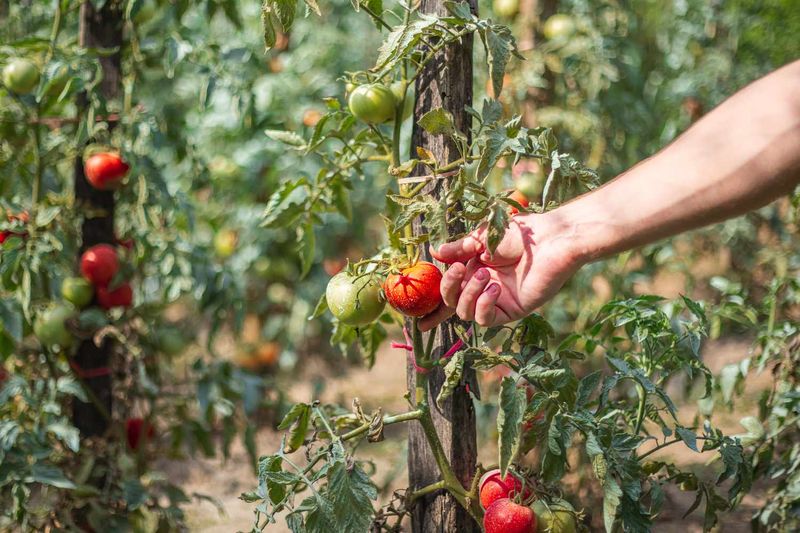
Not every tomato in your garden is a good candidate for late-season topping. The technique is aimed at indeterminate, vining tomatoes, which keep producing new stems, leaves, flowers, and fruit continuously until cold weather or frost stops them. Popular varieties like Brandywine, Cherokee Purple, Sun Gold, and most heirloom beefsteaks fall into this category. If your plant has been climbing its stake all summer and shows no sign of slowing down on its own, you are almost certainly looking at an indeterminate type.
Determinate, or bush-type, tomatoes behave quite differently. As Oregon State University Extension’s tomato growing guide explains, determinate varieties naturally stop growing after terminal flower clusters form, setting a compact flush of fruit that ripens within a short window. Removing the growing tip from a determinate plant can interfere with that natural process and reduce your harvest. Leave determinate tomatoes alone at the end of the season.
For indeterminate plants, the late-season topping session makes the most sense when the plant is already carrying substantial fruit worth maturing. A vigorous plant loaded with golf-ball-to-baseball-sized green tomatoes is a much better candidate than a small or sparsely fruited one. University of Minnesota Extension’s tomato growing resource notes that indeterminate types continue setting fruit all season, which is exactly the growth habit that makes a well-timed topping session worthwhile.
Before you reach for your pruners, take a close look at the plant. If it has only a handful of small fruits, topping now could limit the growth it still needs to produce a meaningful harvest. The best scenario is an established, well-fed plant that has been growing vigorously and is now carrying more fruit than it can realistically ripen before your local frost window closes.
Use your local first frost to choose the date
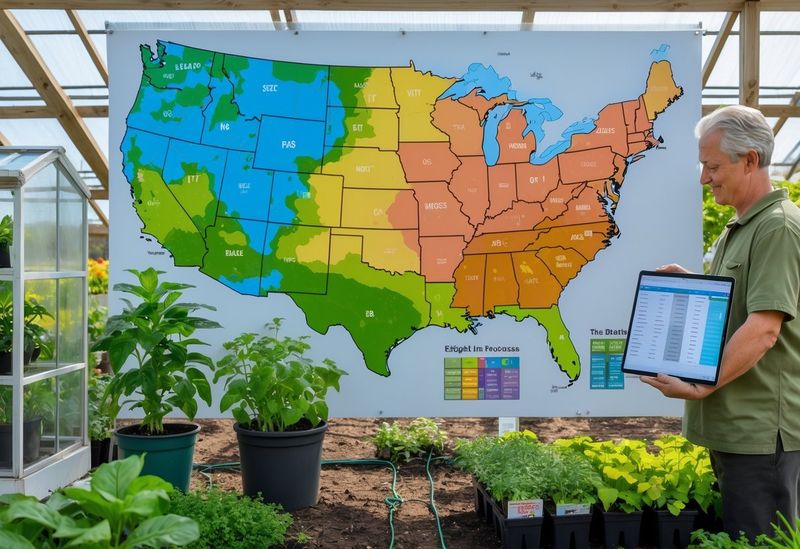
Forget any advice that tells you to top your tomatoes on a specific calendar date like early August. The continental United States spans dozens of frost zones, and first frost can arrive anywhere from early September in northern Minnesota to late November along the Gulf Coast. A date that works perfectly in Vermont could cost a gardener in Georgia weeks of productive growth. Your local expected first frost date is the only reliable anchor for this decision.
Iowa State University Extension’s tomato pruning guidance places late-season topping approximately four to six weeks before the locally expected first frost. Oregon State Extension similarly recommends topping about one month before frost is expected. Keep in mind that these are approximate windows, not hard deadlines, because actual frost dates shift from year to year depending on weather patterns.
To find your local average first frost date, check with your county cooperative extension office, the USDA Plant Hardiness Zone map resources, or a reliable weather service that provides historical frost data for your zip code. Once you have that date, count back four to six weeks and mark it on your calendar as your topping window. Then go out to the garden and look at what you actually have.
Timing too early carries a real cost. A plant topped weeks before it has set enough fruit loses the productive growth it would have used to build that fruit load. University of Minnesota Extension’s garden planning resource points out that local conditions and year-to-year variation mean no single calendar rule fits every garden. Wait until your plant is carrying a worthwhile amount of fruit, confirm you are inside that four-to-six-week pre-frost window, and then make your move.
Understand what the cut can—and cannot—do
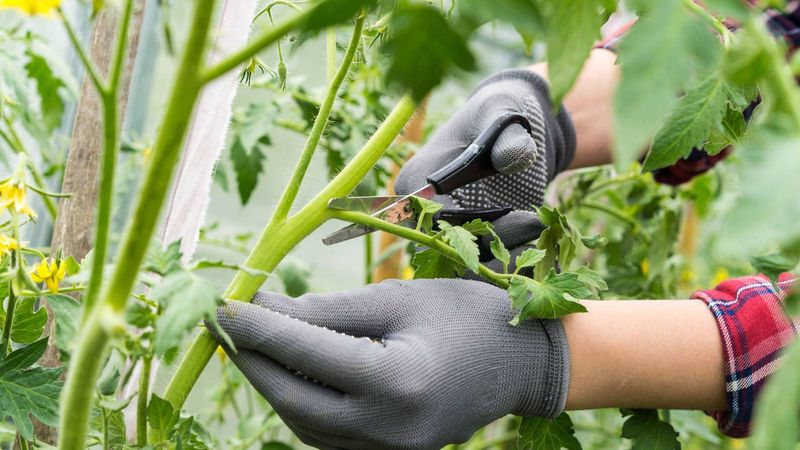
Removing the growing tip from a tomato plant’s main stem stops new vertical growth at that point. Without a growing tip to push upward, the plant produces fewer new leaves, fewer new lateral shoots, and no more flowers from that stem. The practical result is that the plant is no longer putting resources into building brand-new structures, which may improve the odds that the fruit already set has enough time to mature before frost arrives.
What the cut cannot do is make tomatoes ripen faster in any instant or guaranteed way. Fruit ripening still depends on temperature, available sunlight, the variety you are growing, the overall health of the plant, how far along each fruit already is in its development, and how much time actually remains before your first frost. Oregon State University Extension’s tomato guide describes topping as a tactic to favor ripening of existing fruit, not as a process that speeds the clock on any individual tomato.
Temperature deserves special attention here. Tomatoes ripen best between roughly 65 and 85 degrees Fahrenheit. As nights cool in late summer and fall, ripening naturally slows regardless of what you do with the plant. University of Minnesota Extension’s guide on heat and vegetable gardens also notes that sustained high temperatures can delay color development, meaning the weather works against ripening from both extremes.
Variety matters too. A fast-maturing cherry tomato variety may have plenty of time to finish ripening after a late-season top, while a large beefsteak type that needs 85 or more days to full maturity may struggle to finish even with the cut. Treat topping as one helpful tool among several, not as a fix that overrides the limits of weather, biology, and the calendar.
Top every main leader in one careful session
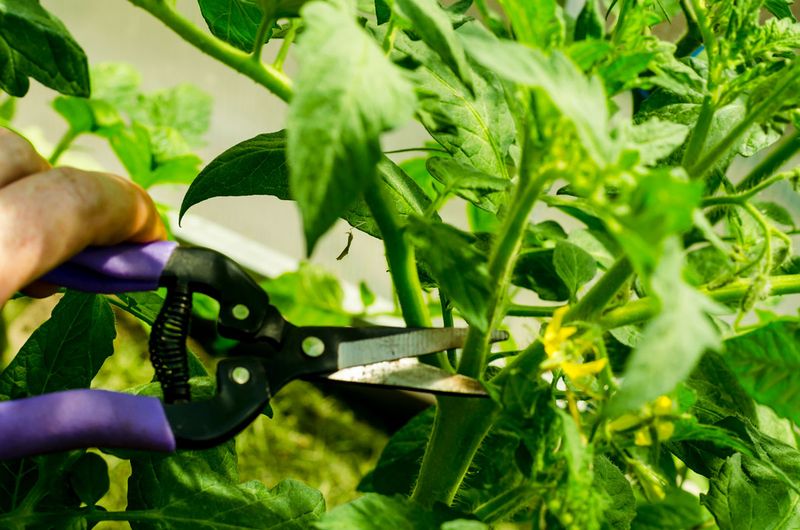
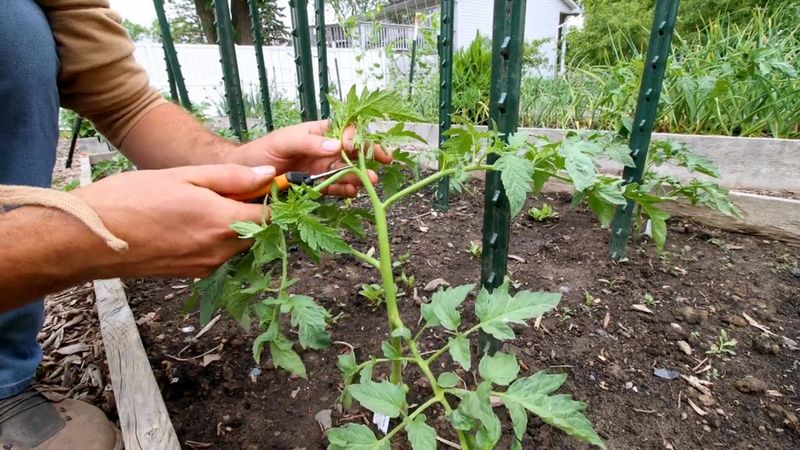
When people hear “one cut,” they sometimes picture a single snip somewhere on the plant that magically does the job. The reality is more hands-on. A multi-leader indeterminate plant, which is most backyard tomatoes trained with two or three main stems, needs the growing tip removed from each of those main stems. Think of it as one focused topping session rather than one isolated cut.
For each main leader, locate the growing tip, which is the soft, actively growing point at the very top of the stem, usually identifiable by its small, tightly clustered new leaves. Cut just above a leaf or fruit cluster, leaving a clean stub rather than a raw open end dangling in the air. Iowa State University Extension’s tomato pruning guide recommends cutting just above a leaf or cluster and using clean, sharp tools to make the cut as precise as possible.
Sharp, clean pruners matter more than most gardeners realize. Ragged cuts made with dull blades create larger wounds that take longer to dry and are more vulnerable to fungal and bacterial entry. Wipe your pruner blades with rubbing alcohol or a diluted bleach solution between plants, and wash your hands if you have been handling tobacco products, since tobacco mosaic virus can transfer on contaminated hands. Iowa State’s tomato disease and pest management resource emphasizes sanitation as a key step in preventing pathogen spread during any pruning work.
Choose a dry day for the session. Cuts made during wet or humid weather stay moist longer and are more susceptible to disease. Postpone the whole operation if your plants are already showing signs of significant stress from drought, disease, or nutrient deficiency. A plant in poor health is not a good candidate for topping, and cutting it further can push it into a steeper decline rather than helping it finish its fruit.
University of New Hampshire Extension’s pruning fact sheet reinforces the importance of working with healthy plants and maintaining a clean, intact canopy rather than removing large amounts of foliage in the same session.
Remove late flowers without stripping healthy leaves
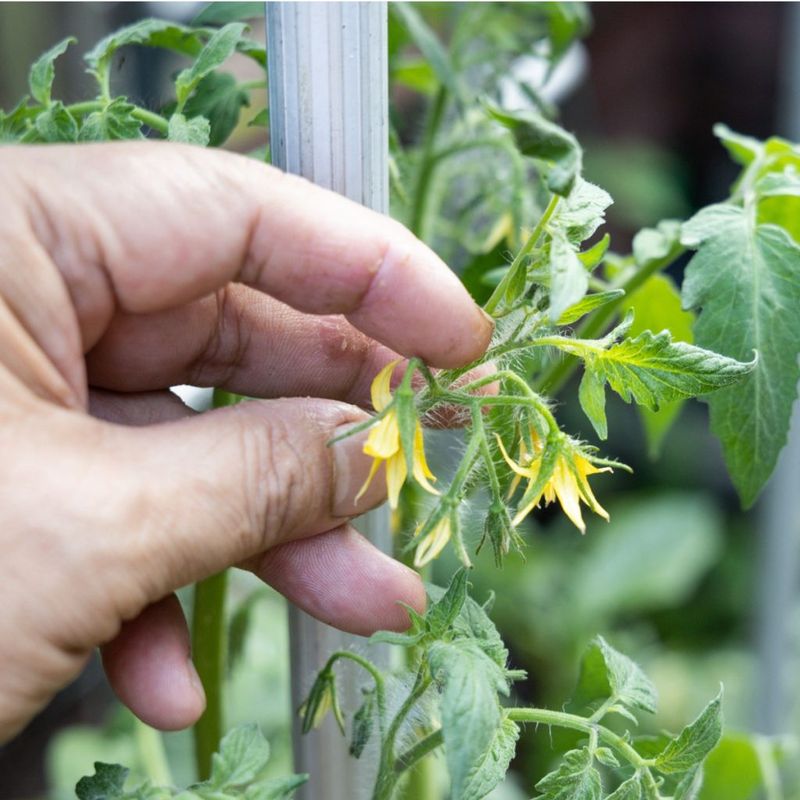
After you have topped the main leaders, take a walk around each plant and look for flowers that have just opened or are still in bud. Any flower that forms four or more weeks before your expected first frost has a slim chance of producing fruit that will ripen in time. Removing those late flowers is an optional step that complements the topping session, focusing whatever the plant has left on the fruit already hanging on the vine rather than on new development that will almost certainly be cut short by cold.
Iowa State University Extension notes that removing flowers beginning about four weeks before the first fall frost is a recognized late-season option for home gardeners. Pinch or snip each flower cleanly at its base. This is not a guarantee that every remaining tomato will ripen, but it does remove one more competing demand on a plant that is already running low on time.
What you should not do is strip the plant of its healthy leaves in the same session. Foliage is where the plant makes the energy it needs to finish ripening the fruit it already has. Removing most of the canopy in one pass can expose tomatoes directly to intense afternoon sun, leading to sunscald, a condition where pale or white bleached patches form on the fruit’s skin. University of Minnesota Extension’s tomato disorders resource identifies sunscald as a direct consequence of excessive foliage removal.
Keep watering and feeding on a reasonably consistent schedule through this period. A plant that swings between drought stress and sudden overwatering is more prone to cracking and blossom-end rot, both of which can ruin fruit that would otherwise have made it to harvest. Selective flower removal combined with a stable growing environment gives the remaining tomatoes the best realistic shot at finishing out the season.
Treat earlier ripening as a possible tradeoff
Late-season topping is not a free lunch. Stopping new growth means stopping potential new fruit, and on a plant that had several more weeks of productive season ahead, that tradeoff is real. The question is whether getting more of the existing fruit to ripen before frost is worth the reduction in total possible yield, and for most home gardeners facing an imminent frost date, the answer is usually yes.
Research from Oregon State University offers some useful context, though it requires careful interpretation. An Oregon State field trial on tomato pruning methods found that severe pruning and staking produced earlier ripening on early fruit and somewhat larger individual fruit compared to unpruned plants, but also reduced total yield per plant and increased the risk of cracking and blossom-end rot when moisture and nutrients were not carefully managed. Those results came from tested pruning and staking systems that are not identical to a single late-season topping session, so it would be a mistake to assume the exact same yield losses or quality problems will occur from the targeted cut described here.
What the Oregon State findings do reinforce is the general principle that more aggressive pruning tends to concentrate resources on fewer fruits while reducing the overall number that reach harvest. A targeted topping session is considerably less drastic than severe canopy pruning, but the directional tradeoff still applies. You are trading some potential future production for a better chance that what is already on the vine crosses the finish line.
Going into this with realistic expectations protects you from disappointment. Some years, the weather cooperates and the topped plant delivers a satisfying late harvest. Other years, an early cold snap arrives ahead of schedule and limits what any management tactic could accomplish. Topping improves your odds; it does not rewrite the forecast.
Harvest before frost and finish ripening indoors
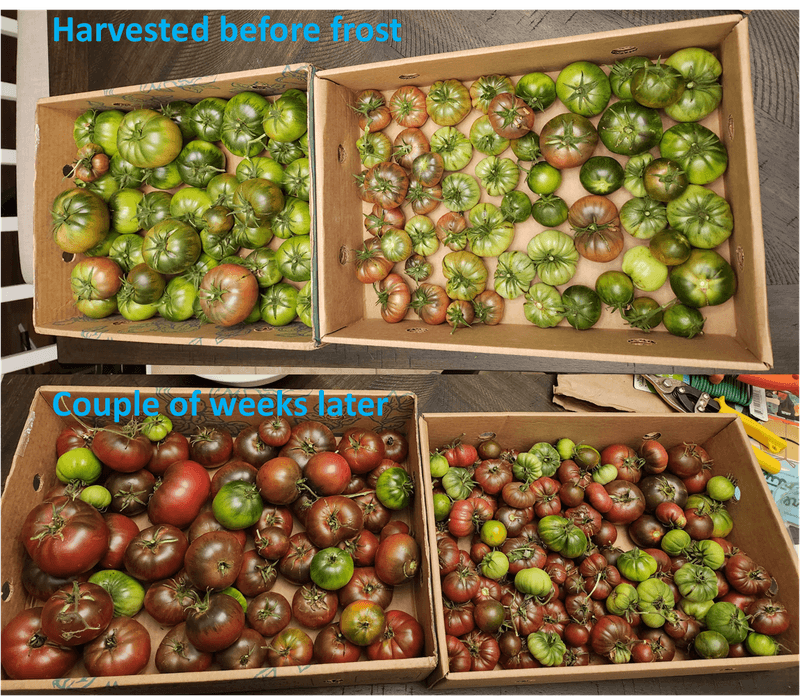
Even with a well-timed topping session behind you, a killing frost can arrive before every tomato on the vine turns red. When a frost is forecast, the right move is to harvest every tomato that has a realistic chance of ripening and bring it inside, rather than leaving it on the vine and hoping the cold holds off one more night.
Not all green tomatoes are equal candidates for indoor ripening. A mature-green tomato, one that has reached its full size and whose interior has begun to develop gel around the seeds, will often ripen successfully at room temperature over the course of a week or two. A very small, hard, uniformly green tomato that is still weeks away from maturity is unlikely to develop good flavor indoors, no matter how long you wait. University of Minnesota Extension’s tomato growing guide notes that fully developed mature-green fruit can ripen indoors, while very immature fruit may not reach acceptable quality.
For storage and ripening, keep harvested tomatoes at approximately 65 to 70 degrees Fahrenheit, out of the refrigerator, and arranged in a single layer with a little space between each fruit. Refrigeration can damage flavor compounds and cause chilling injury, leaving tomatoes mealy and bland. Oregon State University Extension’s tomato guide confirms that light is not required for the ripening process, so a countertop, spare room shelf, or basement table at the right temperature works just as well as a sunny windowsill.
One important caution: tomatoes that have been damaged, frozen, or killed by frost are not safe to can at home. University of Minnesota Extension’s home canning guidance for tomatoes is clear that damaged or frost-killed fruit should not go into the canning pot. If you are preserving the harvest, use only sound, undamaged fruit and follow a tested, evidence-based canning recipe. Colorado State University Extension’s tomato resource also notes that a light frost can sometimes be managed with row covers or sheets, but a killing frost warrants harvesting usable fruit before it arrives rather than gambling on protection holding overnight.
Late-season topping creates a better opportunity for your tomatoes to finish strong, but the weather always has the final word, and the gardener who harvests early and ripens indoors often ends up with more usable tomatoes than the one who waits for the vine to do all the work.