
If Your Hydrangeas Grow Leaves But Refuse To Bloom, Here Are 15 Fixes Before Summer Slips Away
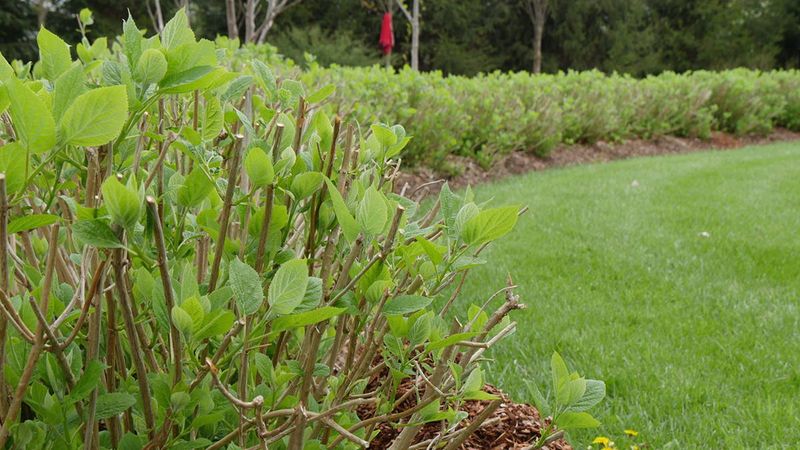
Few things sting more than a hydrangea covered in big, healthy leaves and not a single flower in sight. You water it, you talk to it, and still nothing shows up.
The good news is that a leafy-but-flowerless hydrangea usually points to one small mistake you can fix. Here are 15 practical fixes to try right now, while there is still time to catch blooms before summer fades.
1. Understand Your Hydrangea Type
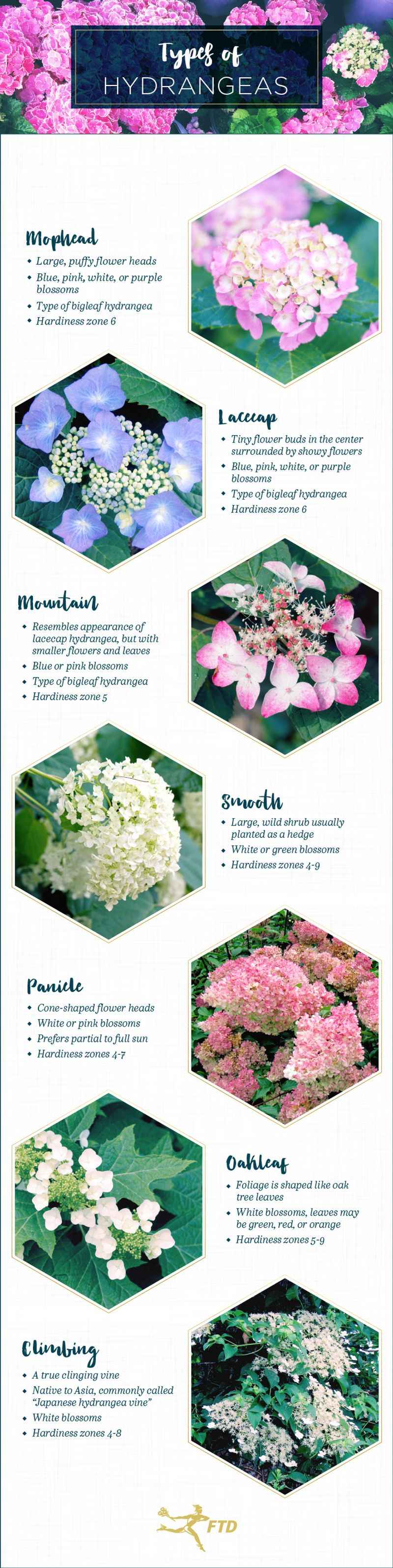
Before you change a single thing, figure out which hydrangea you actually own. That one detail decides almost everything else on this list, from when to prune to whether frost is your real enemy.
The big ones to know are Bigleaf (Hydrangea macrophylla), Oakleaf (H. quercifolia), Mountain (H. serrata), Panicle (H. paniculata), and Smooth (H. arborescens). Some bloom on old wood, meaning stems that grew last year, while others bloom on new wood that sprouts this season.
Look at the leaves and old flower stems, or check the plant tag if you still have it. Once you know your type, the rest of these fixes stop being guesswork and start making real sense.
2. Prune Old Wood Hydrangeas Correctly
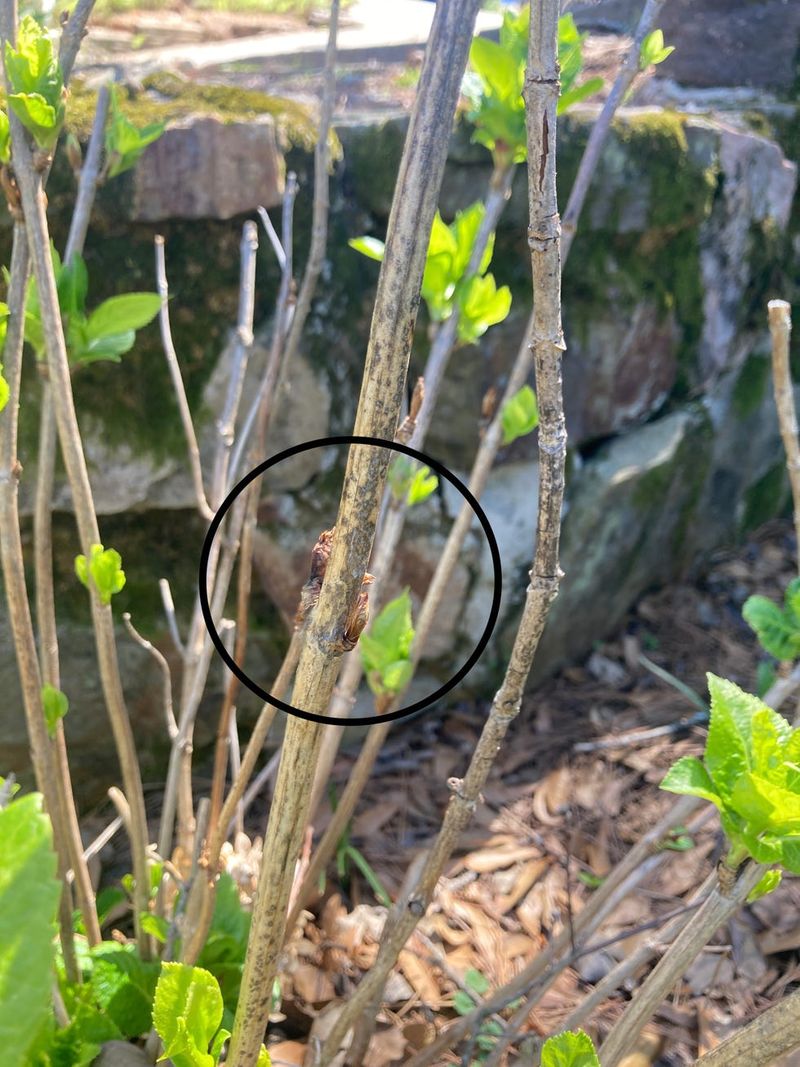
Here is where so many good intentions go wrong. If you own a Bigleaf, Oakleaf, or Mountain hydrangea, chopping it back at the wrong time quietly deletes next year’s flowers.
Old wood types set their buds during summer for the following year. When you prune in fall, winter, or early spring, you are snipping off the very buds that were about to bloom.
The safe window is right after the plant finishes flowering, usually in mid to late summer. Trim then, step back, and leave those stems alone until the next season.
A leafy plant with zero flowers often traces straight back to a well-meaning but poorly timed haircut.
3. Prune New Wood Hydrangeas Correctly
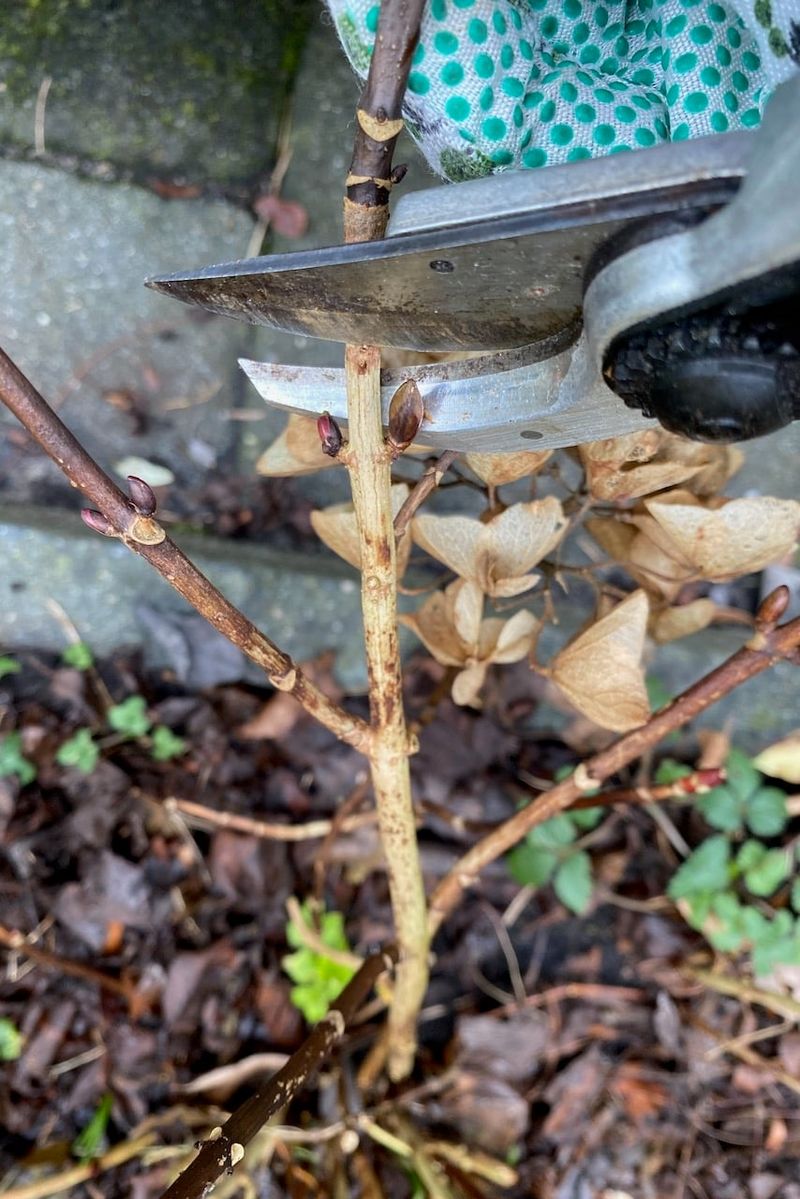
Panicle and Smooth hydrangeas play by a friendlier rulebook, and honestly, they forgive a lot. They bloom on new wood, so the growth they push out this year is exactly what carries the flowers.
Cut these back in late winter or early spring, before fresh growth wakes up. A good trim actually encourages strong new stems, and those stems reward you with blooms.
If you have been babying a Panicle hydrangea and skipping the pruning out of fear, that caution might be working against you. A confident spring cut is your friend with these varieties.
4. Provide Adequate Sunlight
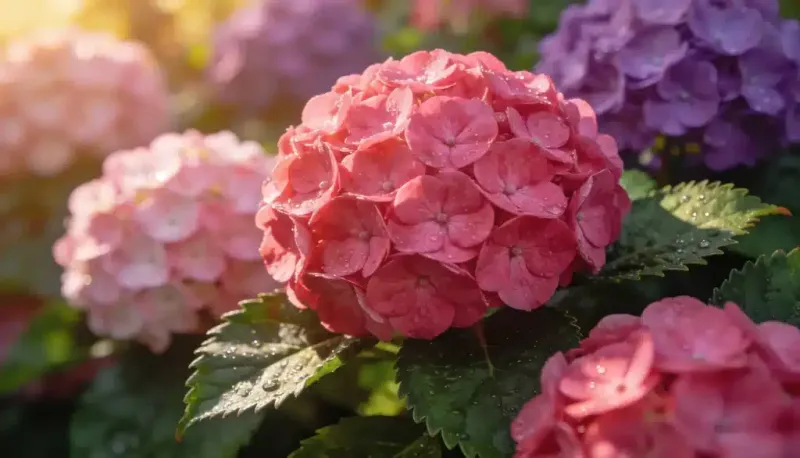
Plants stuck in deep shade have a habit of growing gorgeous, jungle-like leaves and forgetting to flower entirely. Sunlight is the fuel that powers bloom production, and without enough of it, the plant simply coasts on foliage.
Most hydrangeas want at least 4 to 6 hours of direct sun each day. The sweet spot is morning sun paired with a little afternoon relief.
If yours sits under a thick tree canopy or against a shady wall, that could be the whole story. Moving a potted hydrangea or thinning nearby branches may be all it takes to flip the switch on flowering.
5. Shield from Harsh Afternoon Sun
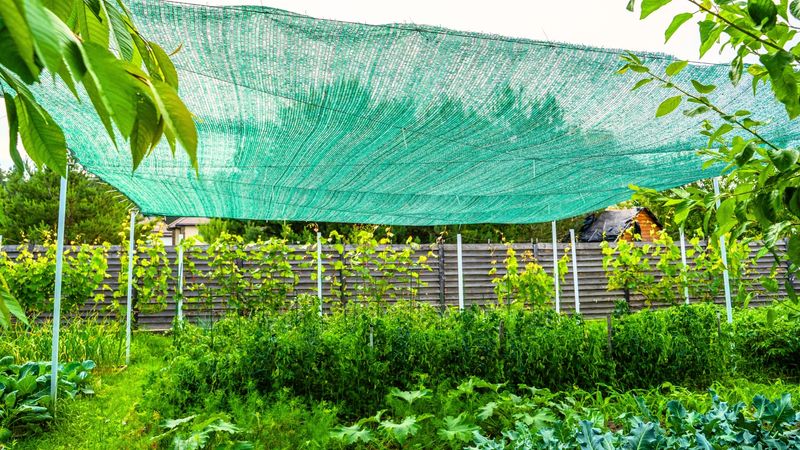
Sun is great, until it turns brutal. In hotter regions, that blazing afternoon light can scorch leaves, trigger wilting, and drain the energy your plant needs to make flowers.
A stressed hydrangea puts survival first and blooms last. When it is fighting to stay hydrated at 3 p.m., flower buds fall way down the priority list.
Try giving it a break during the hottest stretch of the day with a shade cloth, a strategically placed shrub, or a spot that catches shade from your house. Conserving that energy can be the nudge it needs to bloom.
6. Use a Bloom-Promoting Fertilizer
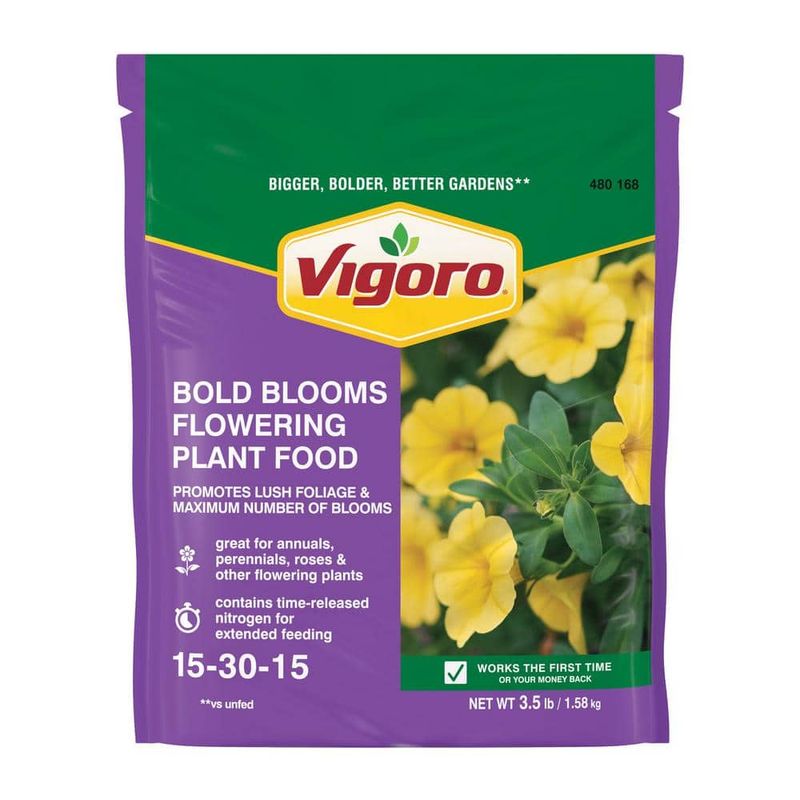
Think of phosphorus as the ingredient that whispers “make flowers” to your hydrangea. When blooms are missing, the right fertilizer can gently point the plant’s energy in the direction you want.
Reach for a slow-release, balanced granular blend with a higher middle number, like a 10-20-10 or 15-30-15 formula, and apply it in early spring. The extra phosphorus supports flower development while keeping the plant healthy overall.
Go easy and follow the label. More is not better here, and a light, well-timed feeding often does more than a heavy dose ever could.
7. Avoid Excess Nitrogen
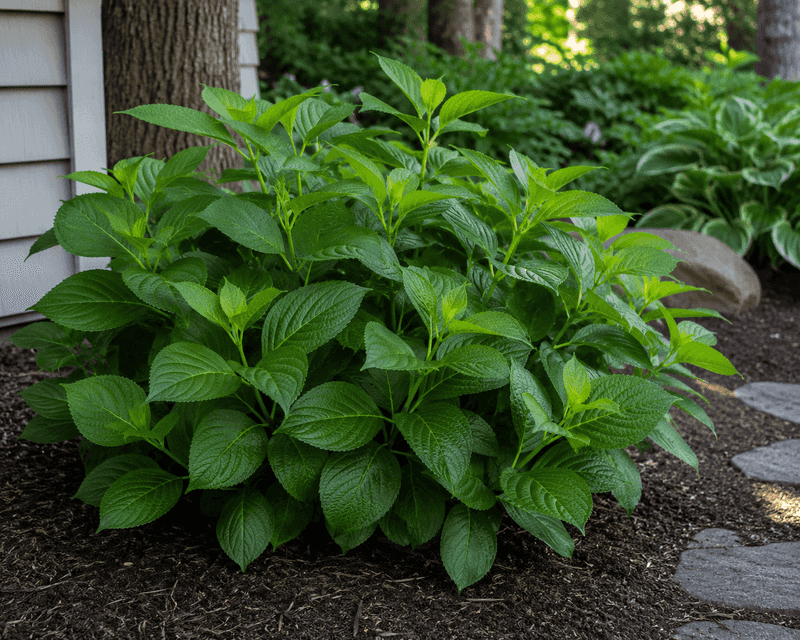
If your hydrangea looks like it belongs in a leafy magazine spread but refuses to bloom, nitrogen might be the sneaky villain. Too much of it tells the plant to grow leaves, leaves, and more leaves.
The usual source is lawn fertilizer drifting into your beds. Those high-nitrogen products are built to green up grass, and hydrangeas planted near a fed lawn often soak up the leftovers.
Cut back on nitrogen-heavy feeds and keep lawn products away from the root zone. Once that leafy overdrive settles down, the plant can finally redirect its effort toward flowers.
8. Water Deeply and Consistently
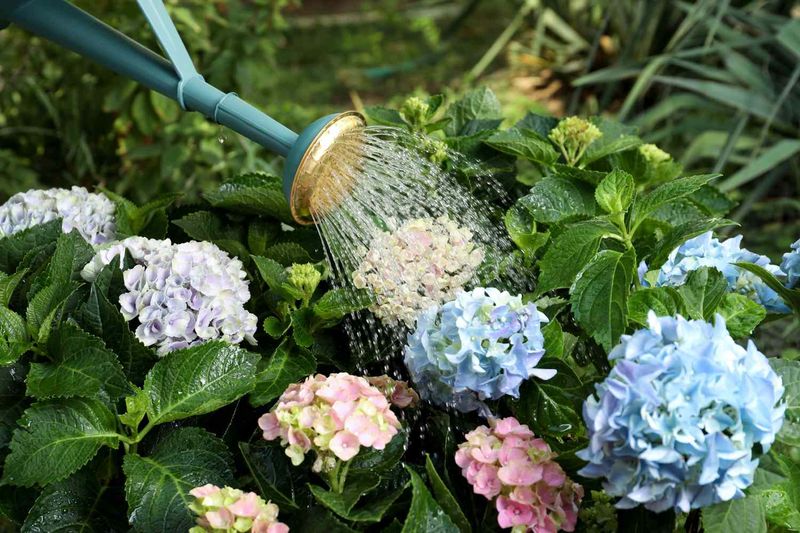
Hydrangeas earned their name for a reason, and thirst shows up fast in these plants. When moisture swings between soggy and bone-dry, forming flower buds falls apart.
Aim for about 2 inches of water per week, and water deeply so the moisture reaches down into the roots rather than just wetting the surface. Dry spells and heat waves mean you may need to water even more.
Consistency beats guesswork every time. A hydrangea that never fully dries out is far more likely to hold onto its buds and open them into blooms.
9. Improve Soil Drainage
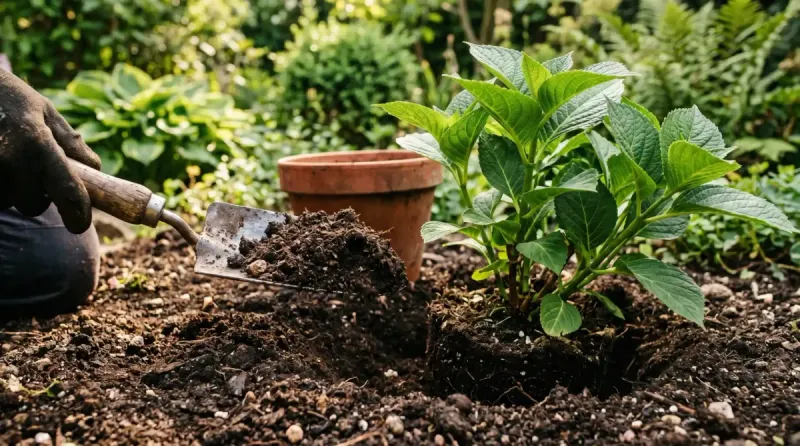
There is a fine line between thirsty and drowning, and hydrangeas hate crossing it. They love steady moisture but sulk in waterlogged soil where roots sit in a puddle.
Heavy clay is the common troublemaker. Water pools, roots struggle, and a stressed root system just cannot support a flush of flowers.
Work in plenty of compost or other organic matter to loosen things up and get water moving. Fertile, well-draining soil gives the roots the breathing room they need to finally push out blooms.
10. Protect Buds from Winter and Late Frost Damage
Sometimes the reason for a bloomless summer happened months earlier, on a cold night you barely noticed. Old-wood hydrangeas carry their flower buds through winter, and a harsh freeze or surprise spring frost can wipe them out.
Guard those buds early. In late fall, pile a thick 4 to 8 inch layer of organic mulch, such as compost, leaves, or straw, around the base to insulate the roots.
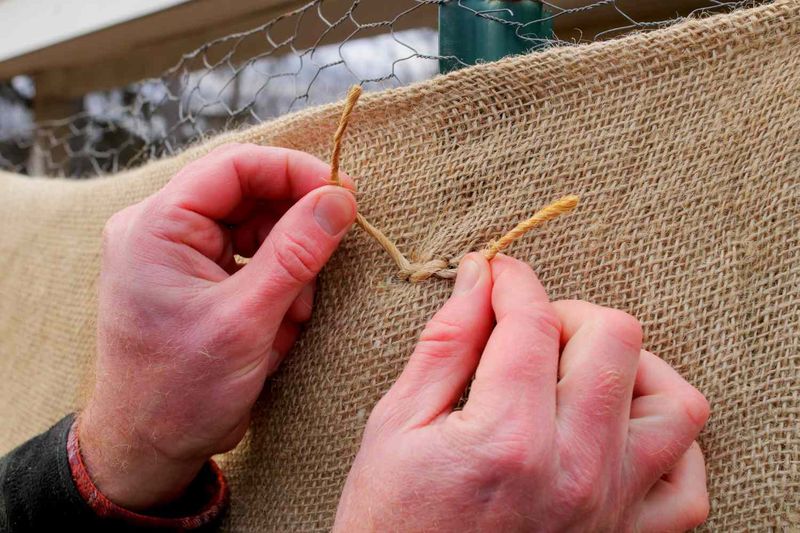
When a late frost gets predicted in spring, throw a burlap wrap or frost blanket over the plant overnight. Saving those buds is often the difference between a full show and nothing but greenery.
11. Ensure Plant Maturity
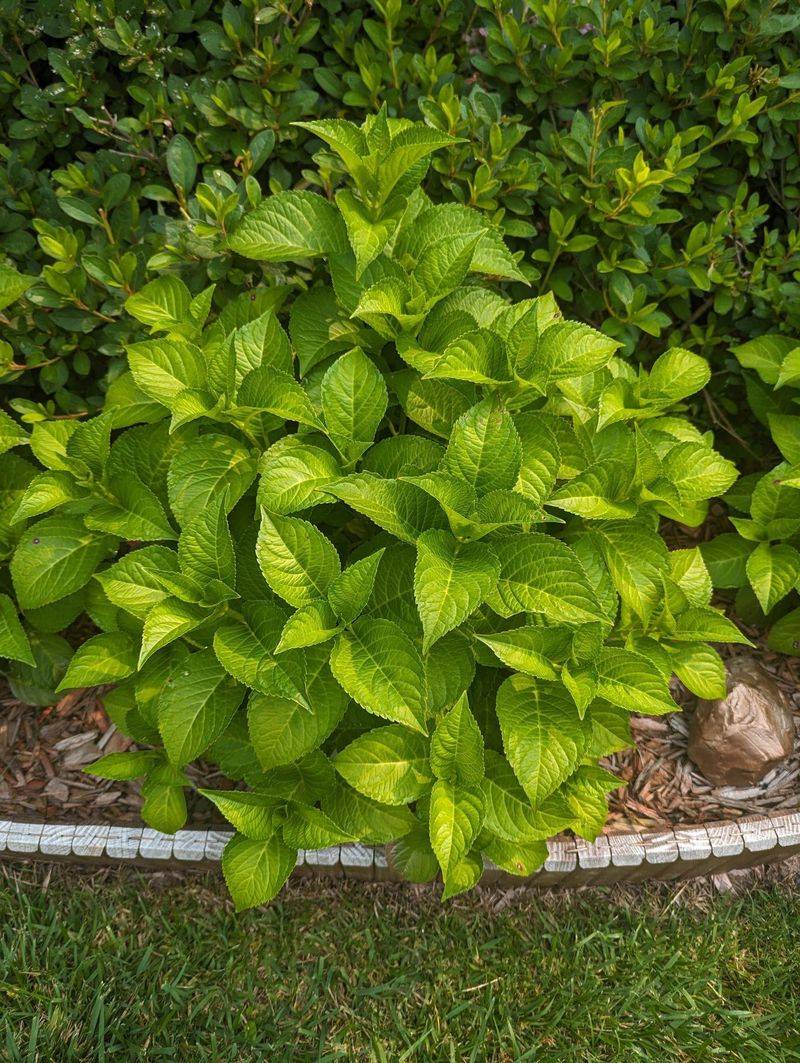
Patience is not the most exciting fix, but for a young hydrangea it might be the honest answer. Newly planted or recently transplanted shrubs often spend their first couple of years building roots instead of showing off flowers.
A plant busy establishing itself underground simply has not gotten to the blooming stage yet. That can take one to three years depending on the variety and conditions.
If everything else on this list checks out and your hydrangea is still a youngster, give it time. Keep it healthy and well cared for, and the blooms will arrive once it settles in.
12. Deter Pests Like Deer
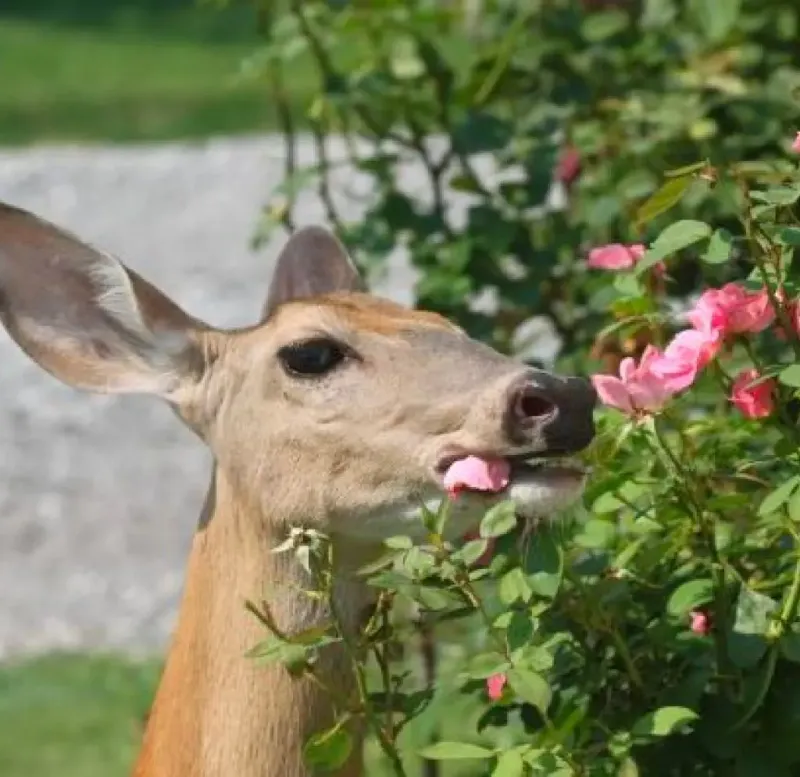
Picture waking up to your hydrangea looking oddly trimmed, with the tender tips and buds mysteriously gone. Deer and rabbits love that fresh new growth, and they will happily eat your future flowers.
When browsing animals snack on developing buds, blooms never get a chance to form. It is an easy problem to miss because the damage looks almost like natural growth.
Fencing, netting, or repellents can keep the nibblers away. If you live where deer roam, protecting the plant from hungry visitors may be the missing piece.
13. Select Climate-Appropriate Varieties
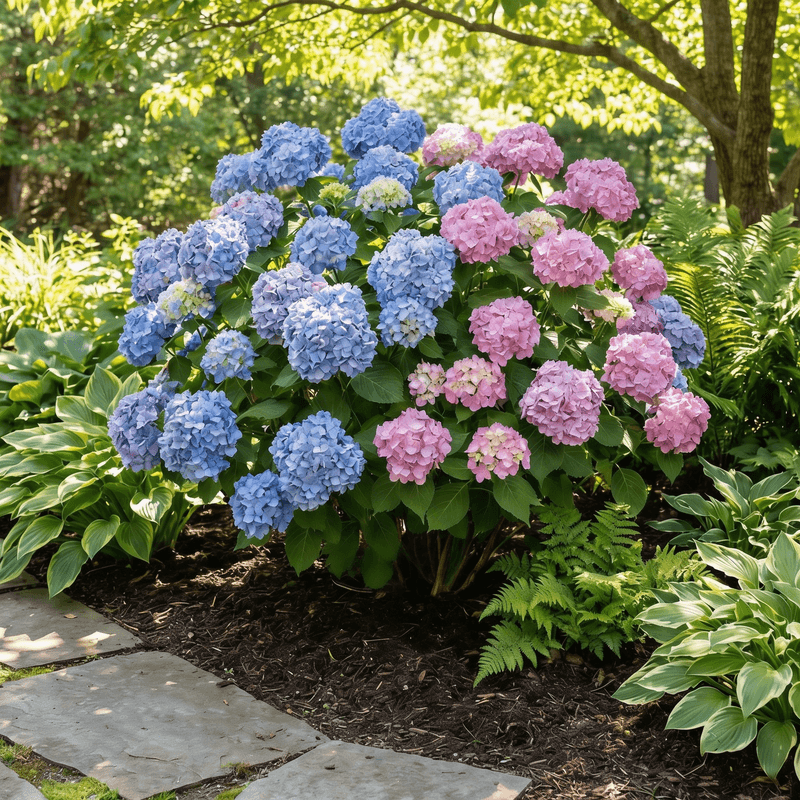
Not every hydrangea is built for every backyard, and picking the wrong one sets you up for disappointment. Some varieties simply cannot handle cold winters and lose their buds year after year.
Check your USDA growing zone and choose types known to be reliable bloomers where you live. Matching the plant to your climate takes a lot of the frustration out of the equation.
Reblooming varieties are worth a serious look, since they flower on both old and new wood. That double chance means one rough winter is far less likely to leave you flowerless.
14. Use Mulch to Retain Moisture and Regulate Temperature
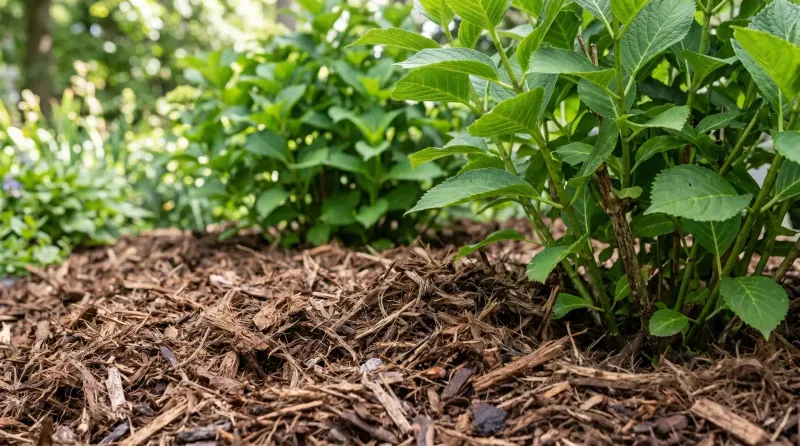
A simple ring of mulch does more quiet work than most gardeners realize. It steadies soil moisture, softens temperature swings, and blocks weeds from stealing nutrients, all of which keep your hydrangea calm and happy.
Spread a 2 to 3 inch layer of organic mulch around the base, keeping it slightly away from the stems. As it breaks down, it even feeds the soil over time.
A stress-free plant is a blooming plant. When the roots stay cool and evenly moist, your hydrangea can put its energy toward flowers instead of just coping.
15. Address Soil pH (for Bigleaf/Mountain Hydrangeas)
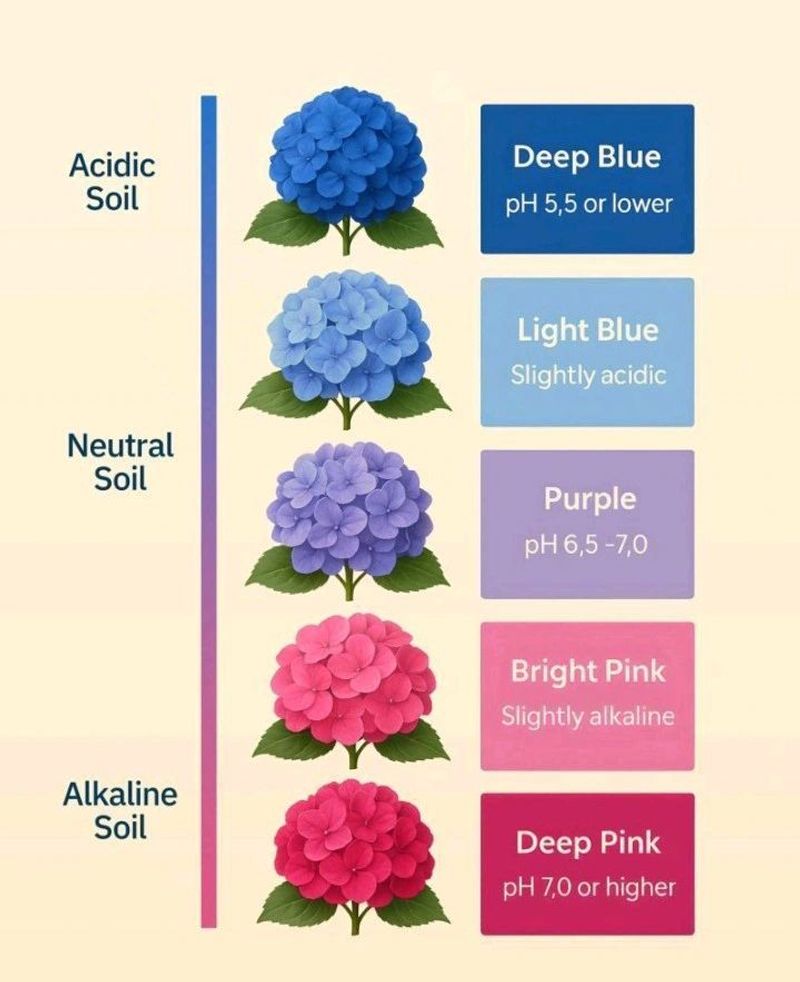
Soil pH is famous for changing bloom color, but it also plays a quieter role in overall plant health. For Bigleaf and Mountain hydrangeas, extreme pH can lock up nutrients the plant needs to thrive.
Grab a simple soil test to see where you stand. A range around 6.0 to 7.0 keeps things generally healthy, while acidic soil leans blue and alkaline soil leans pink.
Adjust gradually if you are far outside the ideal range. Adding aluminum sulfate lowers pH toward blue, and lime raises it toward pink, but easy does it so you do not shock the plant.