
What It Really Means When A Skink Loses Its Blue Tail In Your North Carolina Yard
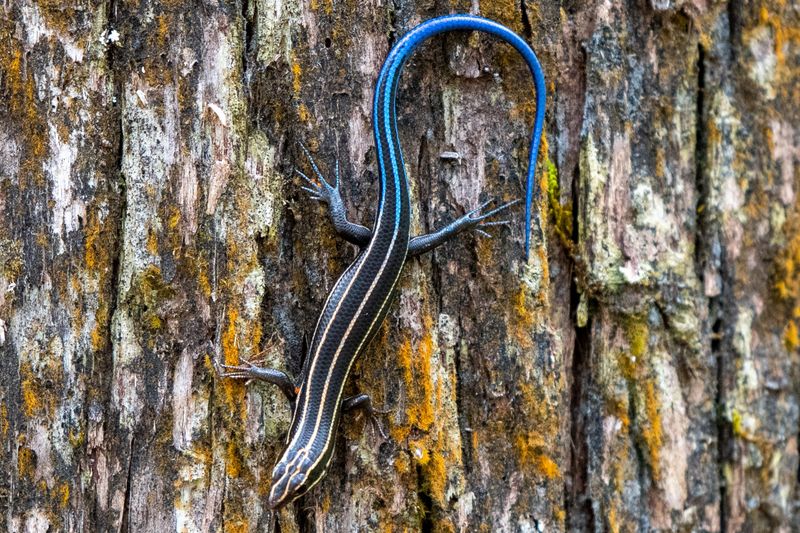
Spotting a small lizard with a vivid blue tail darting through your yard is one of those backyard moments that sticks with you. Then one day you notice the tail is gone, or the color has faded, and suddenly you’re wondering whether something went wrong.
Most North Carolina homeowners misread both of those changes, treating them as signs of injury, illness, or a troubled yard. Understanding what is actually happening can turn a moment of worry into a genuine window into the wildlife living right outside your door.
That blue tail usually belongs to a young North Carolina skink
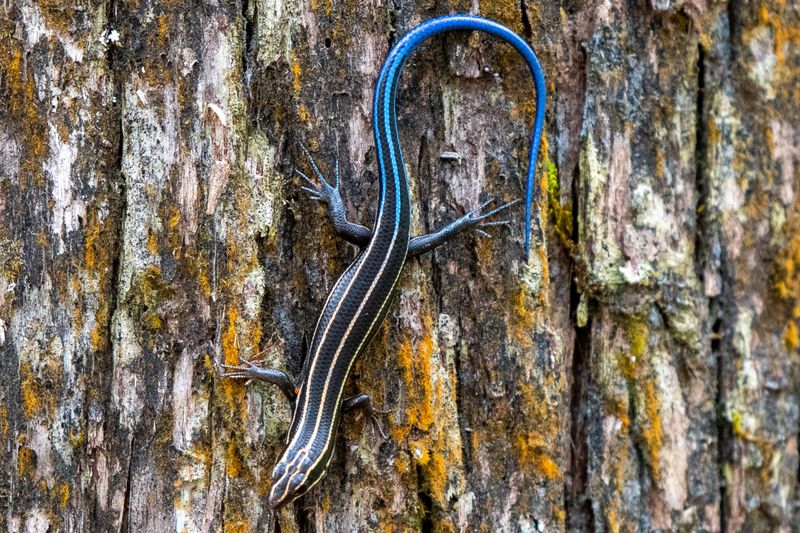
Catch a glimpse of that electric blue tail and your first instinct might be to reach for your phone and search “blue-tailed skink.” The problem is that “blue-tailed skink” is not a precise species name for any lizard living in North Carolina. It is a loose, common description that fits juveniles of three related species: the five-lined skink, the southeastern five-lined skink, and the broad-headed skink.
The NC Wildlife Resources Commission confirms that all three species are found in the state, and young animals from each one can show the same striking blue-tailed pattern.
The best visual clues are a dark body, five pale or yellowish stripes running from nose to tail base, and that unmistakable blue tail. Juveniles of all three species share this look closely enough that telling them apart in the field can be genuinely difficult.
Even experienced observers sometimes need to study scale counts or head proportions to make a confident call, so avoid presenting a backyard sighting as a certain identification of one particular species.
Here is something worth knowing before you start worrying about a color change: the blue fades on its own as the animal grows. Research on ontogenetic color change in blue-tailed skinks shows that the vivid tail color is a feature of youth, and it gradually shifts toward gray, brown, or olive as the skink matures.
A tail that has lost its brightness is not signaling disease, poisoning, or an old wound. The animal is simply growing up, and the color shift is a normal part of that process.
Knowing this distinction is the first step toward reading your yard’s skink population accurately.
A missing tail is usually an escape tactic, not a diagnosis
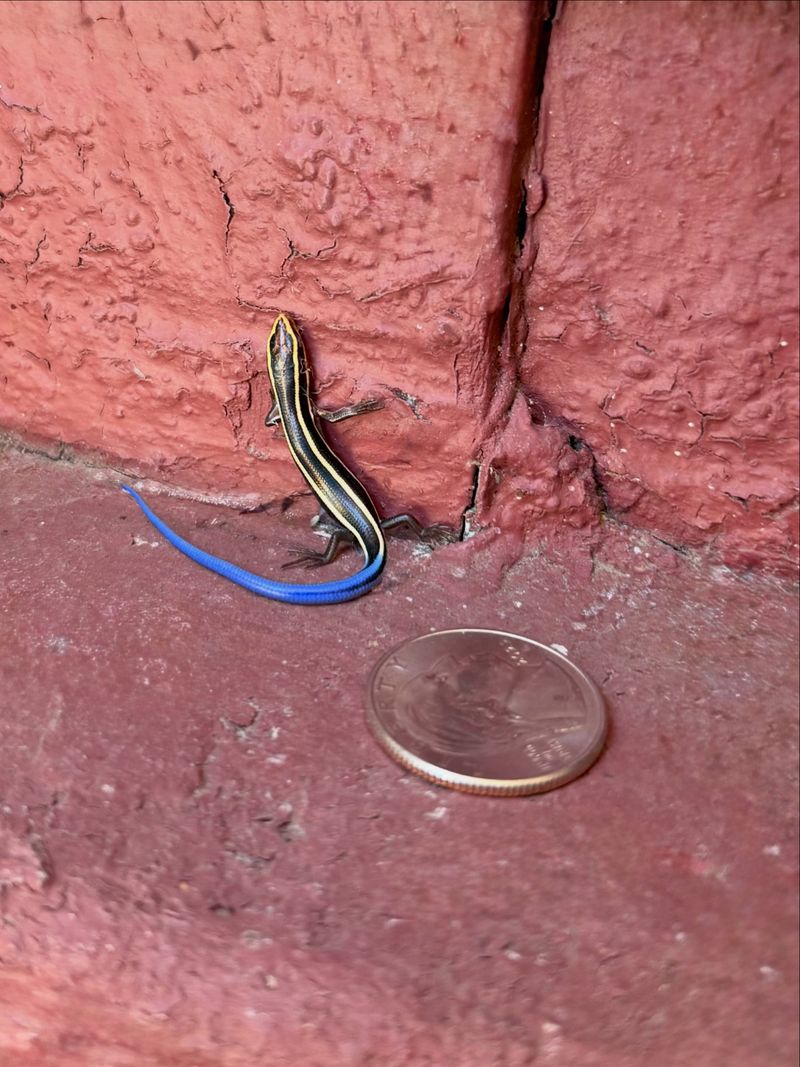
Finding a skink without a tail, or watching one drop its tail right in front of you, is startling. The biological term for what just happened is autotomy, and it is one of the more remarkable defensive tools in the reptile world.
When a skink is seized by a predator, grabbed by a curious pet, or physically disturbed by another animal, it can voluntarily release part or all of its tail. Specialized fracture planes in the tail vertebrae allow this to happen cleanly and quickly.
The detached tail does not just fall limp. According to the NC Wildlife five-lined skink profile, the dropped tail continues to wriggle and thrash after separation, which can hold an attacker’s attention long enough for the skink to escape.
That tail movement is not random; it appears to function as a deliberate misdirection. The skink runs, and the predator, pet, or person is left with a moving tail fragment instead of a lizard.
What autotomy cannot do is tell you who or what was involved. A broad review of lizard autotomy studies makes clear that tail loss reflects an immediate threat or physical disturbance, not a named attacker.
A cat, a snake, a bird, a child, a dog, or even rough handling by a well-meaning homeowner can all trigger the same response. Seeing a tailless skink means something recently put the animal in enough danger that it used its best escape card.
It does not identify the cause, and it does not mean the skink was badly injured. Research on caudal autotomy in lizards frames the behavior as an adaptive defense, while also noting that tail loss is not entirely without consequence.
The skink paid a real biological price to survive, and that cost is worth understanding.
Regrowth helps the skink survive, but it does not restore the original tail
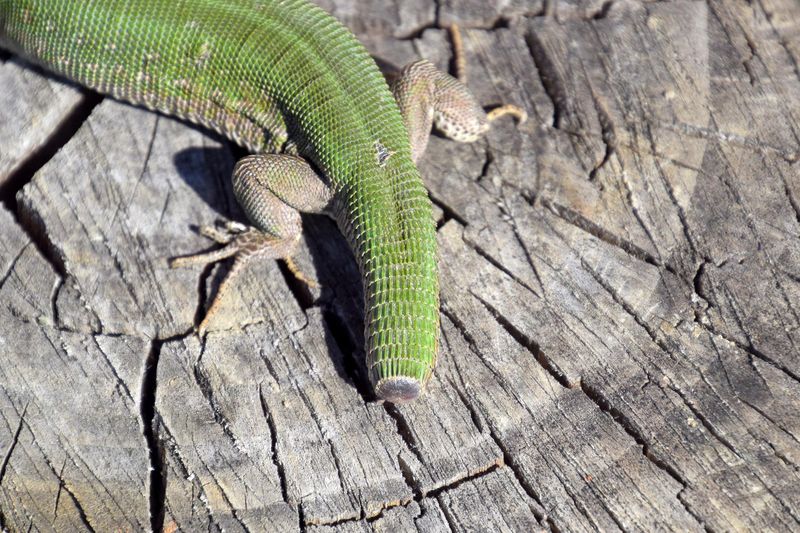
After a skink loses its tail, regeneration begins, but the process is not a perfect repair job. The replacement tail that grows back is typically shorter than the original and noticeably duller in color.
In juveniles, the bright blue that made the tail so eye-catching in the first place rarely returns at the same intensity. The new structure is also built differently internally: instead of bone, the regenerated tail is supported by a cartilage rod, which is why it looks and feels unlike the original.
A peer-reviewed review of energetic trade-offs in lizard tail regeneration explains that rebuilding a tail draws heavily on the animal’s energy reserves. Those are calories that might otherwise go toward growth, reproduction, immune function, or surviving a cold stretch.
The skink is not simply regrowing a decorative appendage; it is investing significant resources into a structure that helps with balance, fat storage, and social signaling. How much that investment costs the individual depends on the species, the animal’s age and sex, its nutritional state, and how much of the tail was actually lost.
A separate review of caudal autotomy and regeneration across lizard species documents that some individuals show measurable effects on running speed and maneuverability after tail loss, while others appear to compensate quickly. There is no single recovery timeline that applies to every North Carolina skink.
Avoid assuming the animal will be back to normal within a set number of weeks, or that the replacement tail will look identical to what was there before. The skink may function well with its new tail, but “functional” and “identical” are not the same thing.
What the tail can—and cannot—tell you about your yard
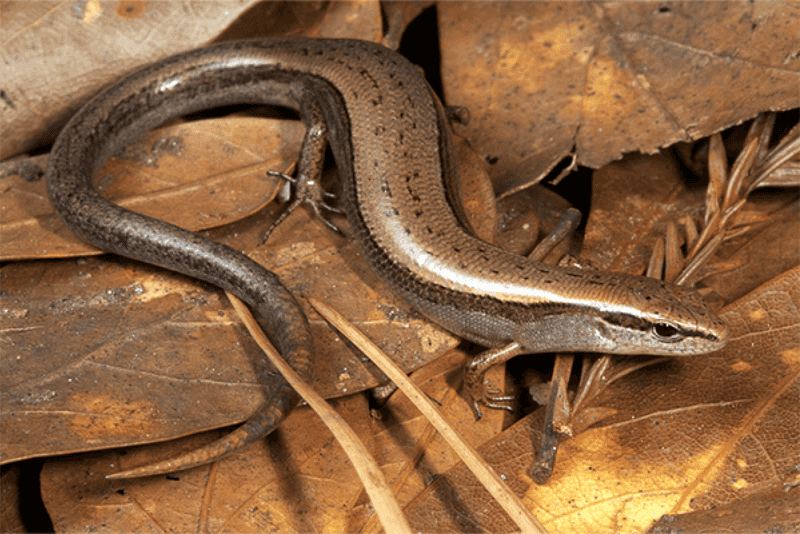
A missing tail is easy to over-interpret. Homeowners often jump from “the skink lost its tail” to “something is hunting in my yard” or “my yard must be unhealthy.” Both conclusions reach further than the evidence allows.
Tail loss points to a single recent encounter, not to a pattern, a specific predator, or a failing habitat.
The NC Wildlife five-lined skink profile notes that these animals use a wide range of residential settings, including spots with logs, rock edges, old structures, and leaf litter. A skink living in a well-maintained native-plant garden and one sheltering under a woodpile in a disturbed suburban lot can both end up tailless after a bad moment with a neighborhood cat or a territorial rival.
The quality of the yard did not cause the tail loss, and the tail loss does not grade the yard.
The same caution applies to predator identification. The autotomy literature is consistent on this point: the behavior is triggered by immediate threat or physical contact, which can come from many sources.
Naming a hawk, a snake, or a raccoon from a single tailless sighting is guesswork. Even controlled studies of lizard autotomy that deliberately triggered tail loss in lab settings could not predict which individual encounters would lead to the response and which would not.
Ordinary yard activity, noise, drought, and general landscape conditions are not established causes of autotomy. The trigger is an immediate physical disturbance, and that is a narrow, specific thing.
Read the missing tail as a clue about one moment, not a verdict on everything happening in your yard.
A layered North Carolina yard gives skinks places to hide and hunt

Skinks do not need a manicured landscape, but they do benefit from a yard that offers variety. Logs left to decay slowly, rock piles along a fence line, sections of leaf litter under shrubs, and brush edges near a garden bed all serve as cover, basking spots, and hunting grounds.
NC State Extension’s guide to backyard reptiles and amphibians specifically recommends retaining these kinds of features in selected areas rather than clearing the entire yard of natural debris.
The food side of the equation is straightforward. Five-lined skinks and their relatives eat insects, spiders, and other arthropods, along with occasional worms, snails, and small vertebrates.
A yard with diverse plantings and minimal pesticide use tends to support more invertebrate life, which in turn gives foraging skinks more to work with. That said, describing skinks as a reliable tick-control service goes beyond what the evidence supports.
Their diet is broad, and they may eat ticks when they encounter them, but no species-specific data backs a promise of meaningful tick suppression in residential yards.
NC Wildlife’s suburban backyard habitat guidance encourages layering native plants of different heights, which creates the kind of sheltered edges that reptiles and other wildlife use for both cover and movement corridors. The skink profile from NC Wildlife associates these animals with moist woodland edges, clearings, and mixed deciduous woods, all of which can be loosely approximated in a residential yard with thoughtful planting.
Habitat improvements raise the odds that skinks will find your yard useful, but they do not guarantee a resident population or prevent every predator encounter.
Protect the skink by reducing avoidable encounters
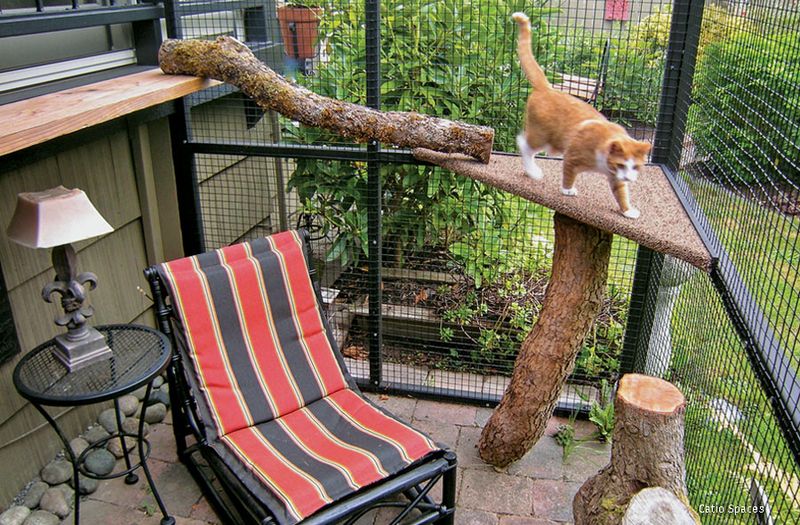
The most effective thing most homeowners can do for skinks is also the simplest: keep cats from hunting in the yard. Outdoor and free-roaming cats are among the most consistent threats to lizards and other small wildlife in residential areas.
NC State Extension’s backyard reptile guide specifically names outdoor cats as a major hazard to herpetofauna, and NC Wildlife echoes that concern. A cat does not need to kill a skink outright to cause serious harm; even a brief capture can trigger tail loss, cause puncture wounds, or deliver bacteria that lead to infection.
Supervised outdoor time or a fully enclosed catio are practical options for cat owners who also value their yard’s wildlife.
Pesticide and insecticide use is the other lever worth adjusting. Skinks eat invertebrates, so a yard heavily treated with broad-spectrum insecticides can quietly reduce their food supply while also exposing the animals to chemical residues.
Follow product labels carefully, avoid applying near water features or wildlife cover, and question whether a chemical application is truly necessary before reaching for the sprayer. Targeted treatments for specific pest problems are a better fit for a wildlife-friendly yard than routine blanket applications.
NC Wildlife’s guidance on living with backyard wildlife is consistent on one point: wild animals generally do best when left alone. Do not pick up a skink to examine its tail.
Handling can trigger another autotomy event, cause additional injury, or stress the animal unnecessarily. The NC Wildlife suburban backyard resource also reinforces the value of retaining some cover rather than removing every log, leaf pile, and rock pile in an attempt to eliminate predators.
Those features shelter the skink as much as they shelter anything else.
When a missing tail does require professional advice
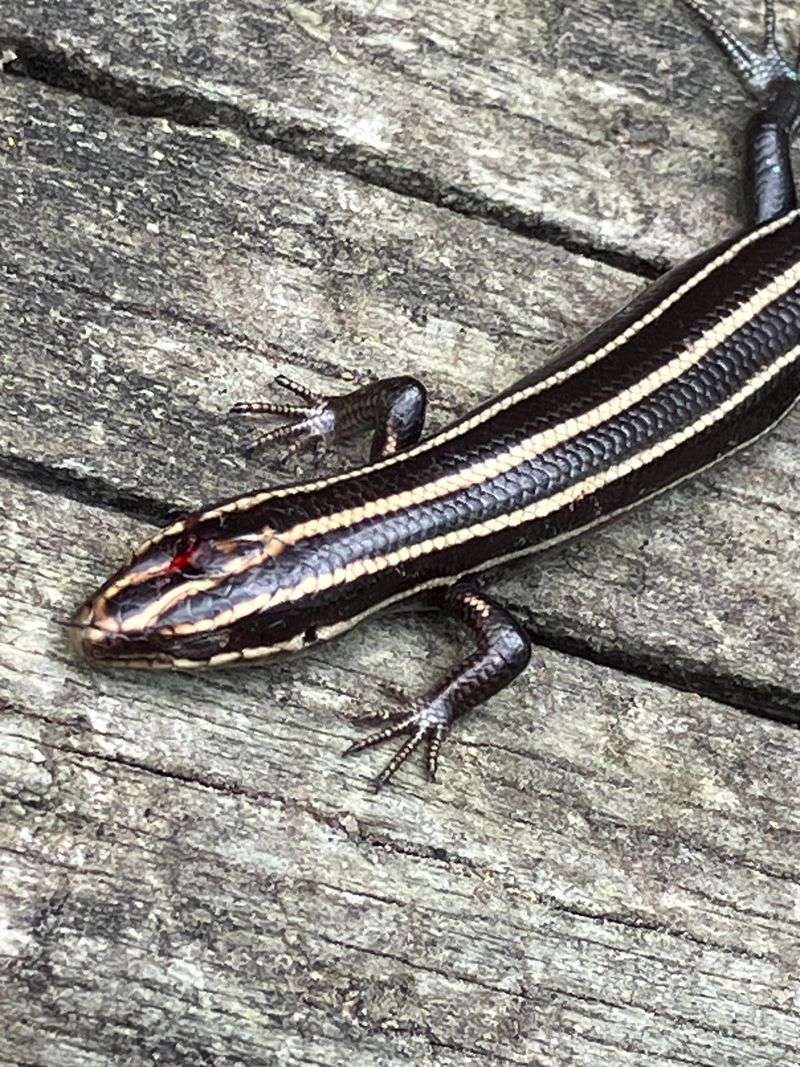
An active skink that can run, climb, and hide after losing its tail is probably not in crisis. Autotomy is stressful and costly, but a skink that moves normally and seeks cover on its own is doing exactly what it is built to do.
Watching from a distance and leaving the animal alone is the right call in that situation. The threshold for concern shifts when the animal cannot move normally or shows signs of a more serious problem.
Visible bleeding, a wound on the body rather than just the tail base, paralysis, inability to right itself, or pronounced lethargy are all reasons to seek guidance rather than wait and watch. NC Wildlife’s injured and orphaned wildlife page explains that seriously injured wildlife should be referred to licensed rehabilitators, and that taking an animal into human care unnecessarily can do more harm than good.
Contact a licensed wildlife rehabilitator or NC Wildlife before attempting to capture the skink, because an improper capture attempt can cause additional injury or trigger another escape response.
Cat captures deserve their own category. NC Wildlife guidance on handling backyard wildlife makes clear that a cat-caught animal may appear unharmed while carrying puncture wounds or internal injuries that are not visible from the outside.
Bacteria from cat saliva can cause rapid infection in reptiles even when no obvious wound is present. If you know or strongly suspect your cat caught the skink, contact a wildlife rehabilitator promptly rather than waiting to see whether the animal seems fine.
Do not attempt to clean a wound, apply ointment, offer food, or house the skink yourself. Those steps are well-intentioned but can delay proper care and may cause additional harm.
Read the missing tail as a wildlife lesson, not a yard verdict
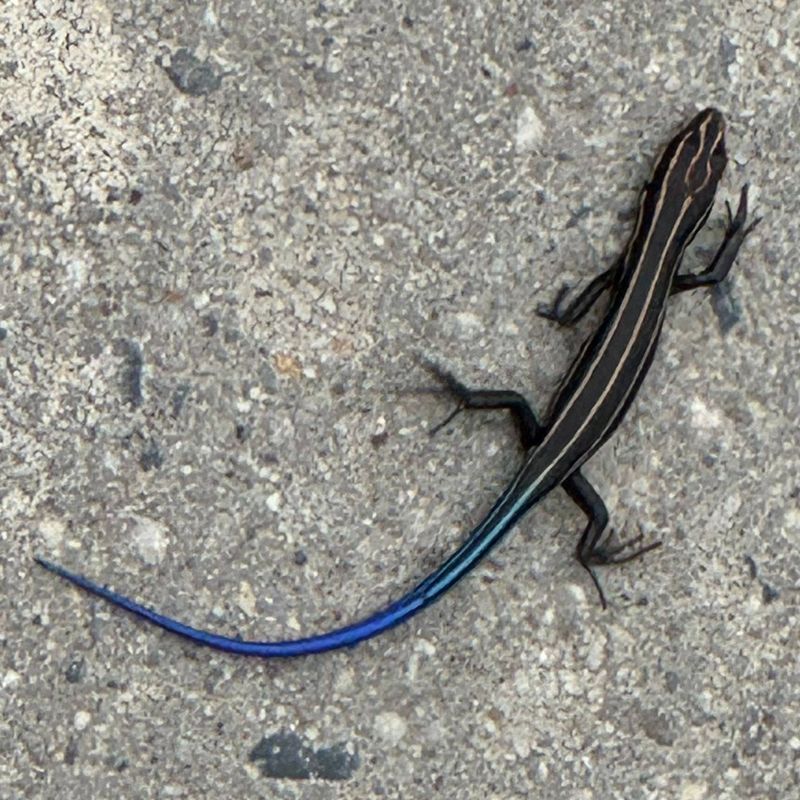
A bright blue tail in your yard almost certainly belongs to a juvenile of one of North Carolina’s three five-lined skink species, and a tail that has faded to brown or olive is simply showing you that the animal has grown up. NC Wildlife’s five-lined skink page and the species profile both confirm that color change is a normal part of maturation, not evidence of something going wrong.
A missing tail points to one recent encounter with a threat, handled the way skinks have handled threats for a very long time. Regeneration will follow, imperfectly and at some biological cost, but the animal that bolted into your leaf litter is likely capable of surviving and foraging on its own.
Your job as a yard steward is to watch from a distance, preserve some useful cover, keep cats from hunting freely, and minimize unnecessary pesticide use.
Reach out to a licensed wildlife rehabilitator or NC Wildlife if the skink is visibly bleeding, unable to move normally, or has been caught by a cat. Otherwise, the most useful thing you can do is let the yard keep doing its job.
A skink that can still outrun its problems is already telling you something good about the habitat you have built.