
If Your Hydrangeas Grow Lush Green Leaves But Skip Every Bloom, One Fall Pruning Cut Is Erasing Next Year’s Flowers
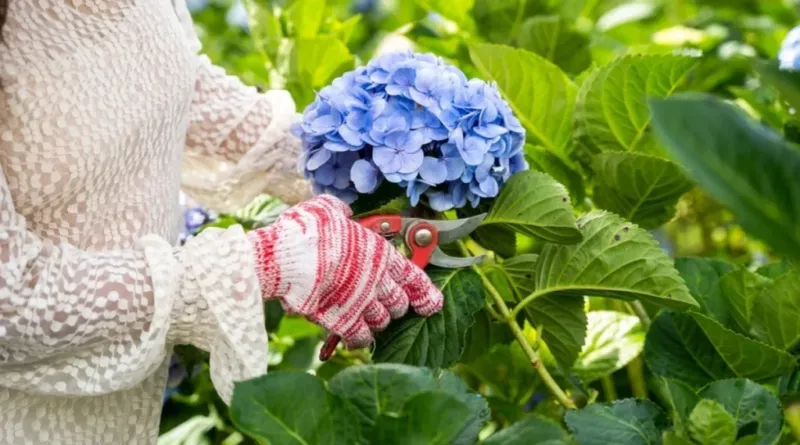
Your hydrangea looks perfectly healthy, full of big green leaves, yet spring and summer pass without a single flower. For many gardeners, the culprit turns out to be a well-meaning fall cleanup that quietly removed the buds the plant had already set for next year. Knowing which type of hydrangea you have, and when its buds form, is the key to finally getting those blooms back.
A late-season cut can remove flowers—but only on some hydrangeas
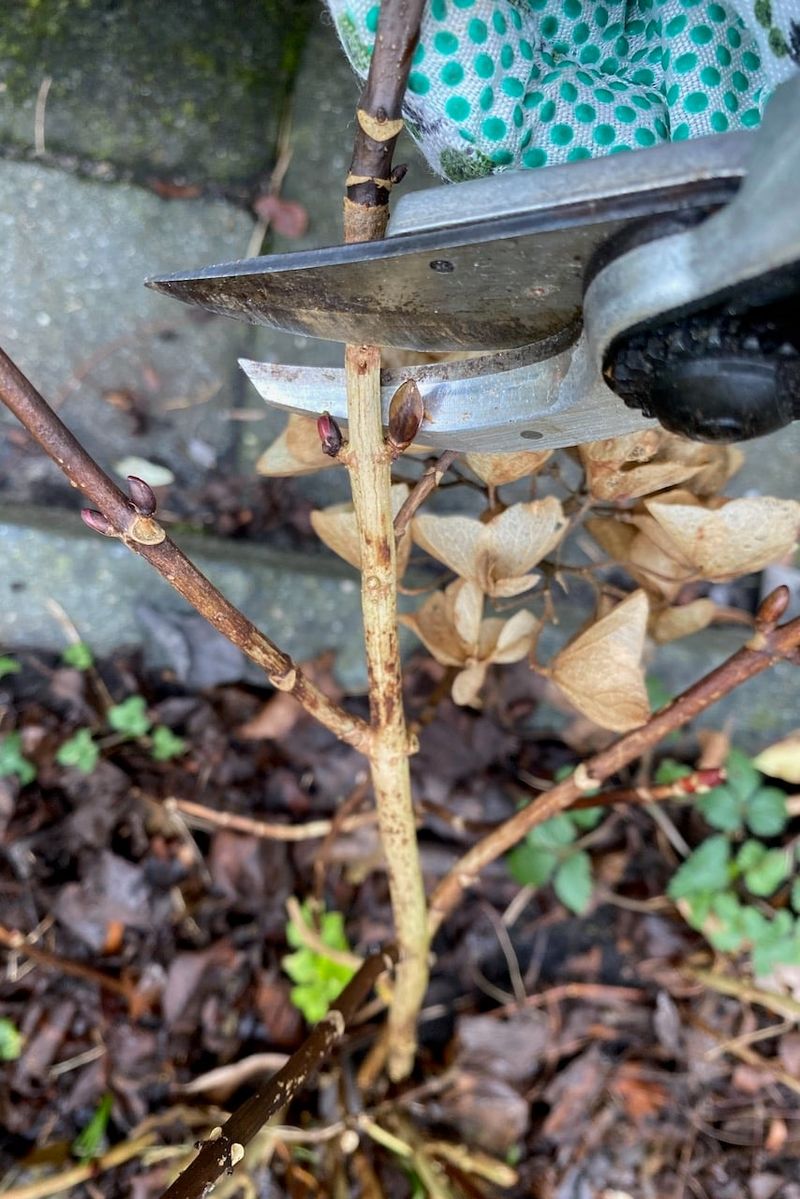
Hydrangeas that bloom on “old wood” carry next year’s flower buds on the stems they grew during the current season. Bigleaf hydrangeas (Hydrangea macrophylla), oakleaf hydrangeas (H. quercifolia), and climbing hydrangeas are the most common examples. When those stems are cut back hard in fall or winter, the buds go with them, and the plant responds the following spring exactly as yours did: plenty of vigorous green growth, no flowers.
The phrase “old wood” can be confusing. Penn State Extension’s hydrangea bloom guide explains that old wood simply means stems produced during the previous growing season, not that the plant itself is old or declining. A three-year-old bigleaf hydrangea and a fifteen-year-old one face the same risk when their bud-bearing stems are removed at the wrong time.
The timing of bud set matters as much as the pruning itself. Many old-wood types finish flowering and then begin forming buds for the following year in late summer or early fall. A cut made after that process begins can remove a full season’s worth of flowers while leaving the roots and crown untouched, which is why the shrub looks so robust.
That said, University of Minnesota Extension’s pruning guide is clear that this mechanism does not apply to every hydrangea. Smooth hydrangeas and panicle hydrangeas bloom on new wood produced each spring, so a fall cut does not remove the same type of overwintering flower buds. Before assuming the pruner is to blame, you need to know which group your plant belongs to.
Identify the hydrangea before you pick up the pruners
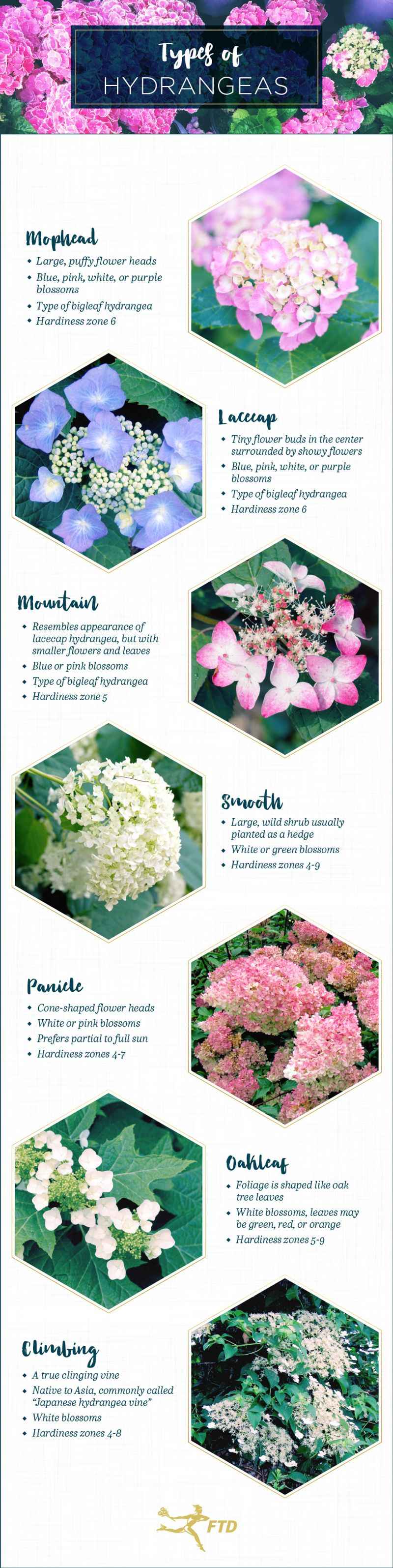
Getting identification right before you prune is the single most useful thing you can do for a non-blooming hydrangea. The five types commonly grown in US home gardens look and behave differently enough that a pruning schedule that helps one can seriously hurt another.
Bigleaf hydrangeas are the ones most people picture first: large, often serrated leaves and either rounded mophead blooms or flatter, ring-shaped lacecap flowers. Oakleaf hydrangeas are easy to spot by their distinctively lobed leaves that resemble a red oak’s foliage, along with elongated white flower clusters that age to parchment. Climbing hydrangeas attach to walls or trellises and typically need very little pruning at all. All three of these groups generally bloom on old wood, meaning a fall or winter cut through live stems can cost next year’s flowers.
Oregon State University Extension’s hydrangea overview recommends removing dead, damaged, or weak stems and avoiding removal of more than one-third of the plant at a time as a baseline rule for these types.
Smooth hydrangeas, the group that includes the well-known ‘Annabelle’ cultivar with its enormous white globes, bloom on new wood and follow a completely different pruning schedule. Panicle hydrangeas, including ‘Limelight’ and ‘Quick Fire,’ produce cone-shaped flower heads and also bloom on new wood. Neither group sets overwintering flower buds on last year’s stems, so a late-season cut does not pose the same risk to their blooms.
One important exception: reblooming bigleaf cultivars, including many selections in the Endless Summer and Let’s Dance series, can flower on both old and new wood. Penn State Extension’s species-specific pruning guide and University of Illinois Extension’s pruning blog both recommend checking the cultivar tag rather than assuming behavior based on flower shape alone, because individual reblooming varieties can still differ in how reliably they flower after damage or incorrect pruning.
After the pruning window, usually preserve live stems on old-wood types
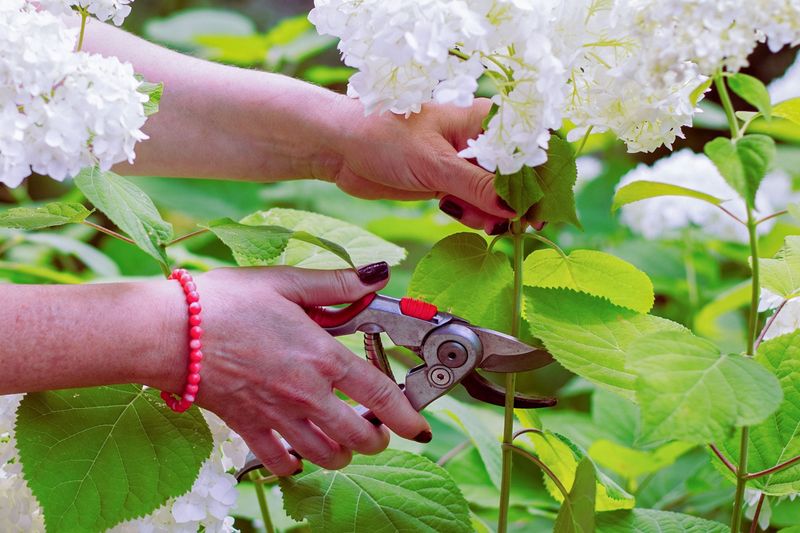
Once fall arrives and an old-wood hydrangea has already set its buds for next year, the safest default is to leave live stems alone. Those stems are carrying the flower buds you want to see open in summer, and removing them now means starting the wait all over again. When you are uncertain about the plant’s identity or pruning requirements, stick to removing only what is obviously dead, broken, diseased, or so weak it is unlikely to contribute to the plant’s health.
Penn State Extension’s species-specific pruning resource reinforces this approach: for old-wood bloomers, the right window for any meaningful stem reduction is shortly after flowering, while the plant still has enough of the season left to produce replacement growth before the next round of buds develops. Cutting during that post-flowering window gives you the most control and the least risk.
The “prune by August 1” recommendation that circulates widely comes from University of Illinois Extension’s regional timing guidance, which identifies August and September as an important bud-setting period in its area. That date is a useful rule of thumb for parts of the Midwest, but it is not a universal deadline. Gardeners in the South may have a longer post-flowering window because bloom times vary; gardeners in the North may have less flexibility. The underlying principle holds regardless of region: prune old-wood types soon after they finish blooming and before new buds develop, rather than waiting until fall or winter.
If you missed that window this year, the practical answer is patience. Leave the live stems in place through the coming season, note when the plant finishes flowering, and plan a light cleanup immediately after. University of Minnesota Extension confirms that this post-flowering timing protects the buds that will become next summer’s display.
New-wood hydrangeas use a later pruning schedule
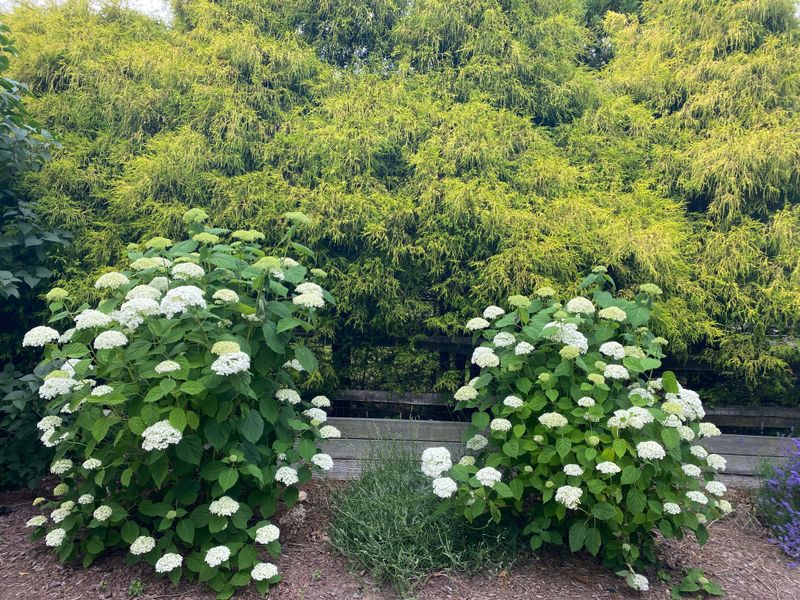
Smooth hydrangeas and panicle hydrangeas operate on a completely different biological clock than old-wood types, and applying old-wood caution to them can lead to overgrown, floppy plants when they actually needed a firm cut. Because both groups flower on growth produced during the current season, late winter or early spring is the preferred time for major size reduction, just before the plant breaks dormancy and pushes new shoots.
University of Illinois Extension’s timing guidance notes that smooth and panicle hydrangeas can handle more substantial pruning than old-wood types, with one-third to one-half of the plant’s mass as a possible range depending on the plant’s condition and the shape you want. That flexibility is one reason ‘Annabelle’ and ‘Limelight’ are popular choices for gardeners who want a shrub they can manage more freely. Still, repeatedly cutting these plants to the ground every year can weaken them over time, so a measured approach remains worthwhile.
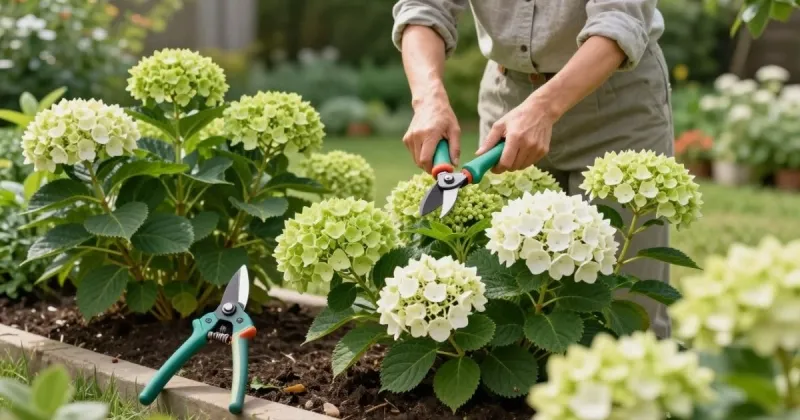
Cutting technique matters for any hydrangea, regardless of type. Penn State Extension’s plant grooming guide describes the goal: make each heading cut about one-quarter inch above a healthy bud, angling slightly away from the bud so water drains off rather than pooling at the cut. When shaping the plant, favor an outward-facing bud so new growth extends away from the center and keeps the shrub open and airy. Avoid leaving long stubs above the bud, which can die back and invite disease, and do not cut directly into the bud itself.
University of Illinois Extension’s pruning blog and University of Minnesota Extension’s pruning guide both emphasize that clean, well-placed cuts heal faster and reduce the chance of disease entry, making the few extra seconds of attention worthwhile on every stem you remove.
Check winter damage before blaming the pruning cut
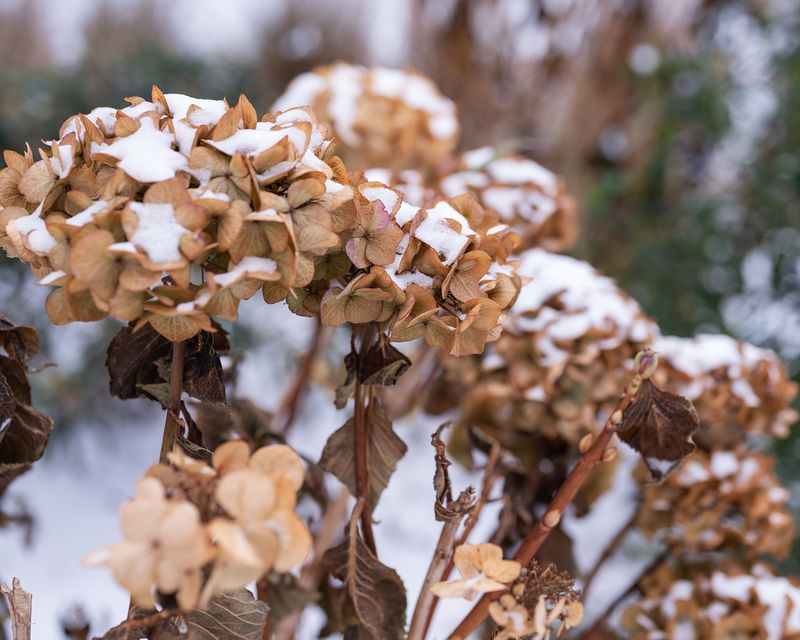
A bigleaf hydrangea can survive winter with its roots fully intact, push out a flush of healthy green leaves in spring, and still produce no flowers. When that happens and the plant was never pruned in fall, winter damage is the more likely explanation. Bigleaf hydrangea flower buds are notably vulnerable to cold, and they can be killed by a single hard freeze, a rapid temperature swing in late winter, or a frost that arrives after the plant has already begun to wake up in spring.
Penn State Extension’s bloom troubleshooting page describes this pattern clearly: the crown and roots survive, new vegetative growth emerges normally, but the stems that carried the flower buds either died back or had their buds killed by cold before they could develop. The plant looks vigorous because it is vigorous. The flowers are simply gone before the season begins.
University of Georgia Extension’s spring freeze guidance notes that late frosts are a particularly tricky threat because they can damage buds on plants that were otherwise uninjured through the coldest part of winter. A warm spell in late February or March can encourage early growth, and then a return to freezing temperatures wipes out tender new bud tissue. Gardeners in USDA zones 5 and 6 with bigleaf hydrangeas know this cycle well.
University of Illinois Extension’s hydrangea care blog points out that cultivar choice matters here. Some bigleaf selections are bred specifically for improved cold hardiness or for the ability to rebloom on new wood, which gives them a second chance after bud damage. If your plant has missed blooms for several consecutive years without any fall pruning, cold hardiness and cultivar fit for your zone are worth investigating alongside pruning timing.
Lush foliage can point to growing conditions, too
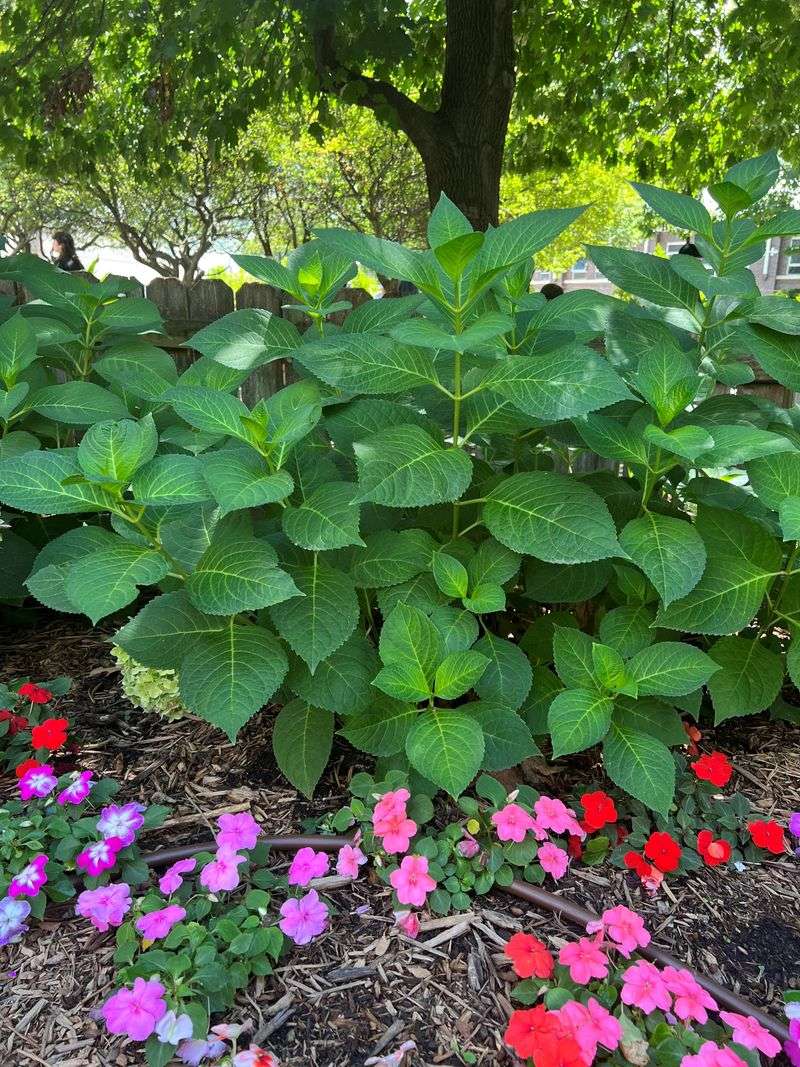
Abundant, healthy-looking leaves are a sign of active growth, but they do not confirm that the plant has everything it needs to flower. Several common growing conditions can push a hydrangea toward leafy vegetative growth at the expense of blooms, and they are worth checking when pruning and winter injury do not fully account for the problem.
Light is one of the most straightforward factors. University of Georgia Extension’s hydrangea publication notes that most hydrangeas need several hours of direct light daily to flower well. A plant that was originally sited in a sunny spot may now be shaded by a tree that has grown considerably over the years, or by a new structure. The foliage can still look full and green under moderate shade, but flower production often drops noticeably.
Excess nitrogen is another possibility worth considering. When a plant receives more nitrogen than it can use for normal growth, it tends to invest that energy in leaves and stems rather than flowers. This can happen from over-application of a high-nitrogen lawn fertilizer that drifts into nearby beds, or from repeated use of a general-purpose fertilizer without a soil test to guide the rate. Penn State Extension lists excess nitrogen as a recognized contributor to bloom failure in hydrangeas.
That does not mean adding a different fertilizer will fix the problem; without knowing your soil’s current nutrient levels, adding more of anything carries its own risks.
Moisture stress, both drought and waterlogged soil, can also interfere with flowering even when the plant looks outwardly green. A hydrangea under chronic water stress may redirect resources away from reproduction. Checking drainage and watering consistency is a reasonable diagnostic step, though it rarely produces instant results. These factors are worth investigating as possibilities, not as guaranteed fixes.
Use a smaller, better-timed pruning plan next year
The most useful thing you can do right now, regardless of what caused this year’s bloom failure, is build a simple plan for next season that accounts for your specific plant. Start by recording the species or cultivar name, which you can often find on the original plant tag, a nursery receipt, or by using one of the identification clues from earlier in this article. That one piece of information will tell you more about when and how to prune than any general rule.
For confirmed old-wood types, plan to do any meaningful stem reduction shortly after the plant finishes blooming, while the season still has enough time left for replacement growth before next year’s buds develop. Oregon State University Extension recommends keeping reductions to no more than one-third of the plant at a time and focusing on dead, damaged, or weak stems rather than across-the-board size cuts. When you are still uncertain about the plant’s identity, that same conservative approach is the safest default.
For smooth and panicle hydrangeas, schedule major pruning for late winter or early spring before new growth begins. University of Minnesota Extension’s pruning guide outlines the timing differences between groups clearly and is worth bookmarking as a seasonal reference.
Tool hygiene belongs in the plan too. Clean your pruners before you start, and wipe the blades between plants if you notice any signs of disease on the stems you are cutting. University of Minnesota Extension’s tool disinfection guide lists 70% or stronger isopropyl alcohol as a practical option for small hand tools, with a reminder to follow label directions for any disinfectant product. Clean cuts on clean tools heal more quickly and reduce the chance of spreading problems from one plant to the next.
Protect the buds that match your hydrangea type
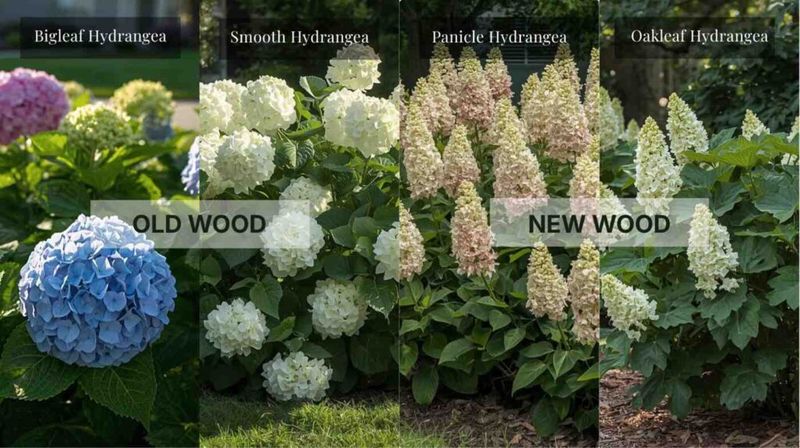
The clearest decision rule for a non-blooming hydrangea starts with identification. Once you know whether your plant blooms on old wood or new wood, almost every other pruning question becomes easier to answer. University of Minnesota Extension and Penn State Extension both frame their hydrangea guidance around species identity for exactly this reason.
For old-wood types, bigleaf, oakleaf, and climbing hydrangeas in particular, preserve live stems after their post-flowering pruning window has passed and remove only what is clearly dead, broken, or diseased. For new-wood types, smooth and panicle hydrangeas, schedule major work for late winter or early spring and use sound cutting technique on every stem.
When pruning does not explain the missing flowers, work through the other possibilities: late frost or winter bud damage, insufficient light, excess nitrogen, inconsistent moisture, or a cultivar that is not well matched to your hardiness zone. Penn State Extension’s bloom troubleshooting resource covers most of these in one place and is a practical starting point for a more thorough diagnosis.
Green leaves show that your hydrangea is alive and growing. They do not show whether it still has the buds it needs to flower. Protecting those buds, at the right time and for the right type of plant, is the work that actually brings the blooms back.