
If Your Hydrangeas Look Healthy But Won’t Bloom, Here Are 13 Cutting Mistakes Quietly Keeping The Flowers Away
You water your hydrangea, you feed it, and the leaves look green and full, but the flowers just never show up. Sad, right?
Nine times out of ten the problem is not the plant at all, it is when and how you cut it. Once you learn the small snipping mistakes below, you can fix them fast and get your blooms back next season.
1. Pruning Old-Wood Hydrangeas in Winter or Early Spring
Here is the single most common flower-killer of them all. Bigleaf, oakleaf, mountain, and climbing hydrangeas set their flower buds on last year’s stems way back in late summer or fall.
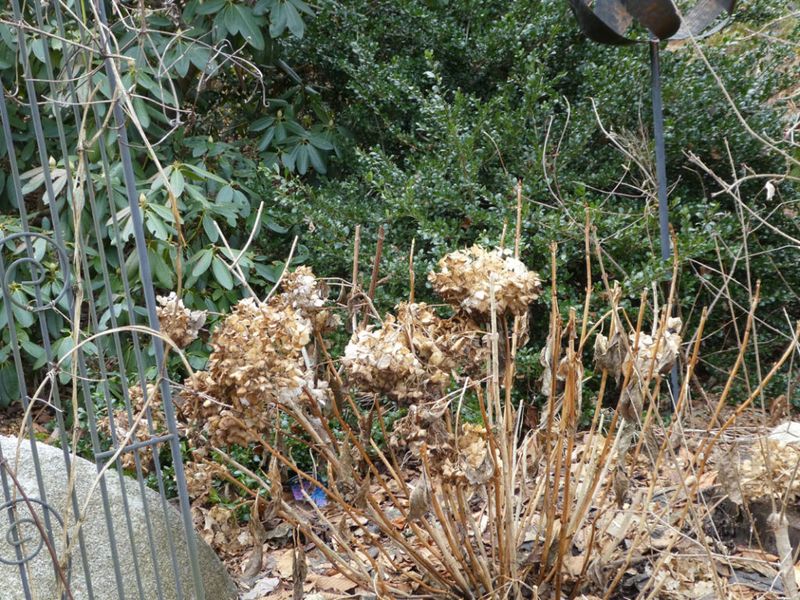
So when you march out in February or March and cut those stems down, you are chopping off every bloom before it ever opens. The plant still grows leaves like a champ, which is exactly why it looks healthy while giving you nothing.
The fix is simple. Prune these types only right after they finish flowering in summer, never during the cold months.
If you missed the window, just leave it alone this year and let those buds ride out the winter.
2. Pruning New-Wood Hydrangeas Too Late in the Season
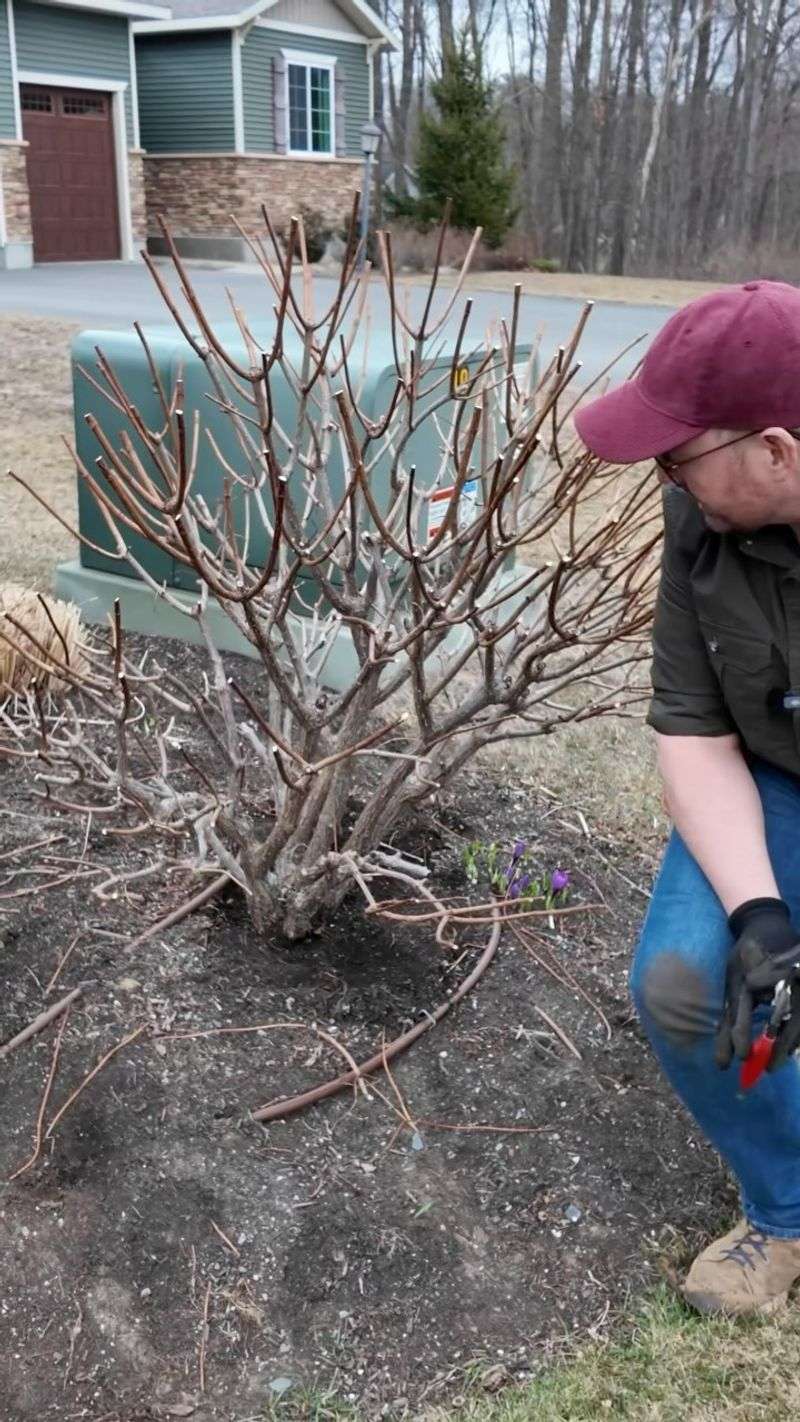
Panicle and smooth hydrangeas play by opposite rules. They bloom on this year’s new growth, so a good haircut in late winter is actually great for them.
The trouble starts when you wait too long. If you cut deep into spring or summer after the plant has already started building its flower buds, you snip away the very display you were waiting for.
Aim to prune these varieties in late winter or very early spring while they are still sleeping. Once you see fresh growth pushing out, put the shears away and let the season play out.
3. Not Identifying Your Hydrangea Type Before You Cut
Imagine following a recipe without knowing if you are baking bread or grilling steak. That is what pruning a hydrangea without knowing its type feels like.
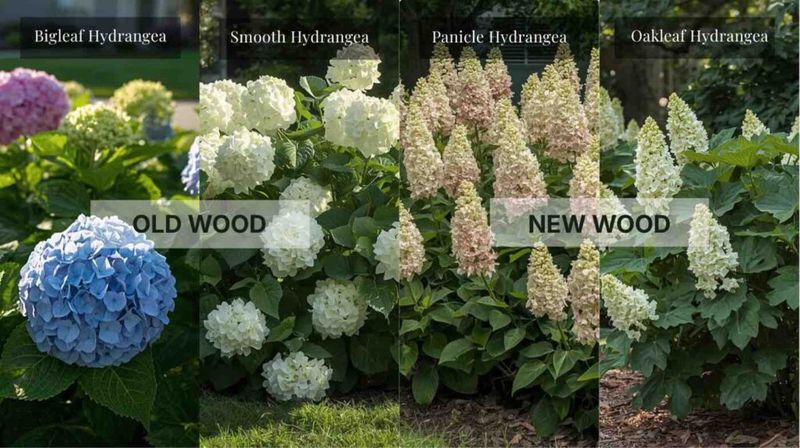
Old-wood bloomers and new-wood bloomers need opposite schedules. Cut the wrong one at the wrong time and you lose your flowers, no matter how careful your technique.
Before you touch a single stem, figure out what you have. Mophead and lacecap flowers usually mean bigleaf, tall cone-shaped blooms usually mean panicle, and rounded white heads on soft stems point to smooth types like Annabelle.
A plant tag or a quick photo search settles it in minutes.
4. Pruning Old-Wood Hydrangeas in the Fall
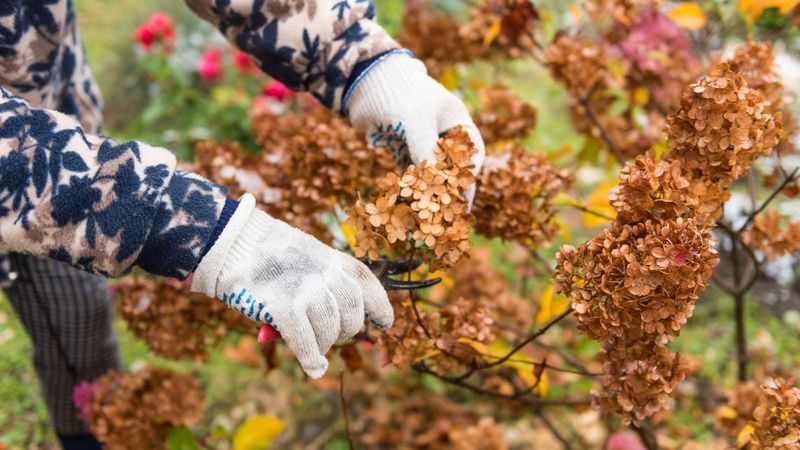
Fall feels like clean-up season, so it is tempting to tidy everything before winter. For old-wood hydrangeas, that instinct backfires hard.
By autumn, next year’s flower buds are already tucked into those stems. Cutting in fall removes them just like winter pruning does, and you head into spring with a bald bloom count.
There is a second problem too. Fall cuts can wake the plant up and push tender new growth that has no time to harden before frost hits, leaving it open to cold damage.
Resist the urge and leave the old stems standing through winter.
5. Pruning Old-Wood Hydrangeas Too Heavily
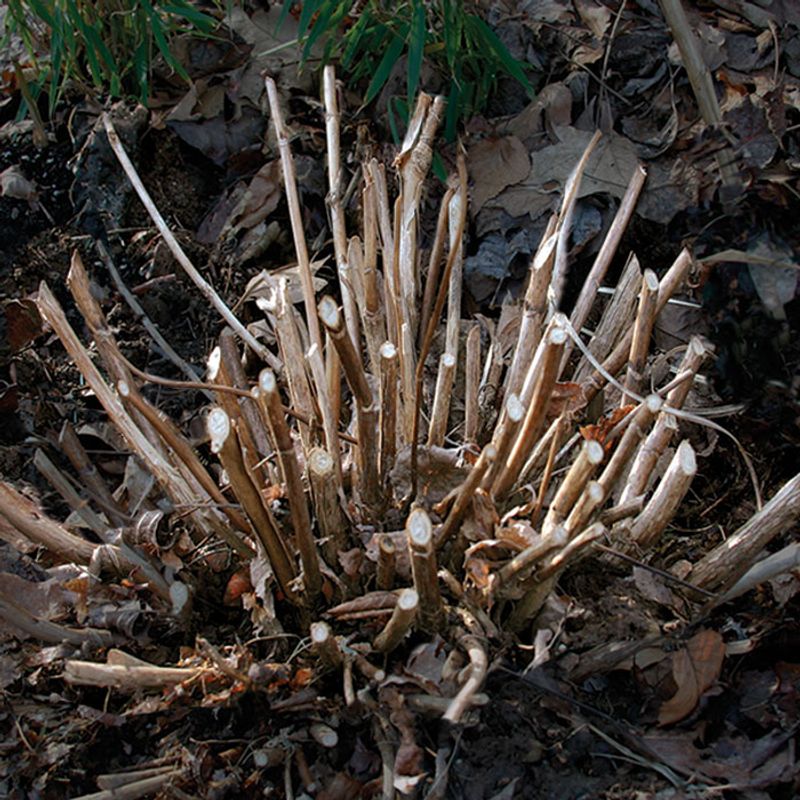
Even if you get the timing perfect and prune right after flowering, going overboard still costs you blooms.
Every mature stem you remove is a stem that could have carried flowers next year. A hard chop leaves the plant scrambling to rebuild instead of blooming.
A gentle hand wins here. Take out no more than about one-third of the oldest stems, plus anything dead or damaged.
That opens up the shrub, sparks fresh growth, and still protects the wood that will flower for you.
6. Cutting Healthy Old-Wood Stems Just for Tidiness
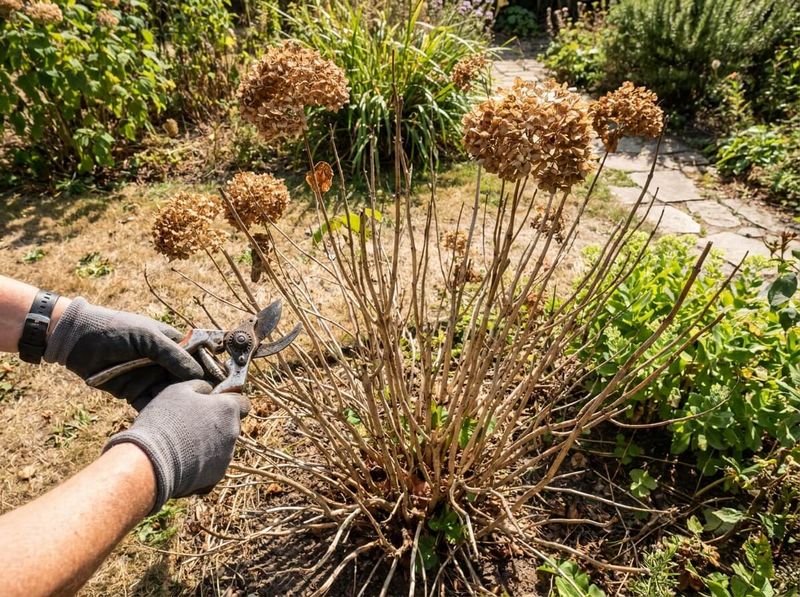
Some of us just love a tidy shrub. But with old-wood hydrangeas, neatness can quietly steal your flowers.
These plants bloom best when you mostly leave them be. Every healthy stem you snip off for looks is a bloom you are trading away for a cleaner silhouette.
Think of it this way: the messy-looking stems are the ones holding your future flowers. Instead of shaping for appearance, only remove wood that is clearly dead, broken, or crossing awkwardly.
Let the plant do its thing and it will reward you.
7. Pruning Old-Wood Types Just to Shrink Their Size
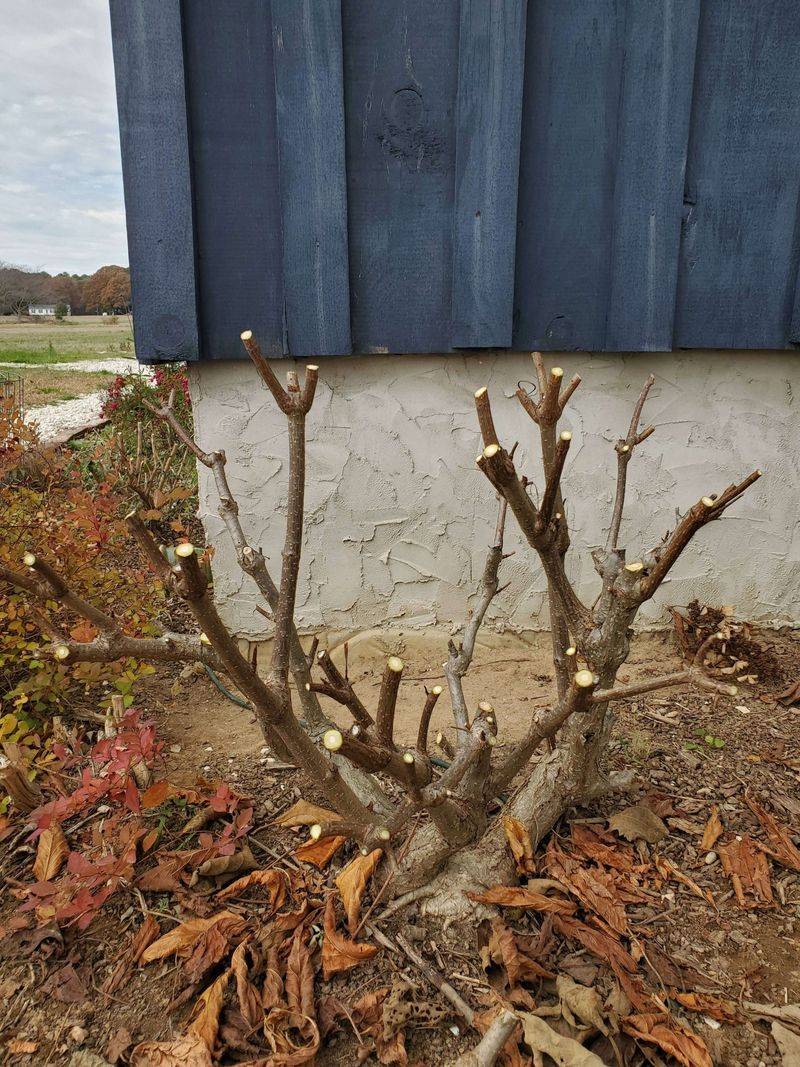
When a hydrangea gets big and bossy, cutting it down to size seems like the obvious answer. Sadly, it rarely works the way you hope.
Old-wood hydrangeas usually bounce right back to their original height, so the shrinking is temporary at best. Meanwhile, that big cut takes your flower buds with it.
If the plant is simply too large for its spot, the real fix is not the shears. Move it to a roomier location, or replace it with a naturally compact variety bred to stay small.
Your future self will thank you when the blooms return.
8. Removing Too Much Framework on New-Wood Hydrangeas
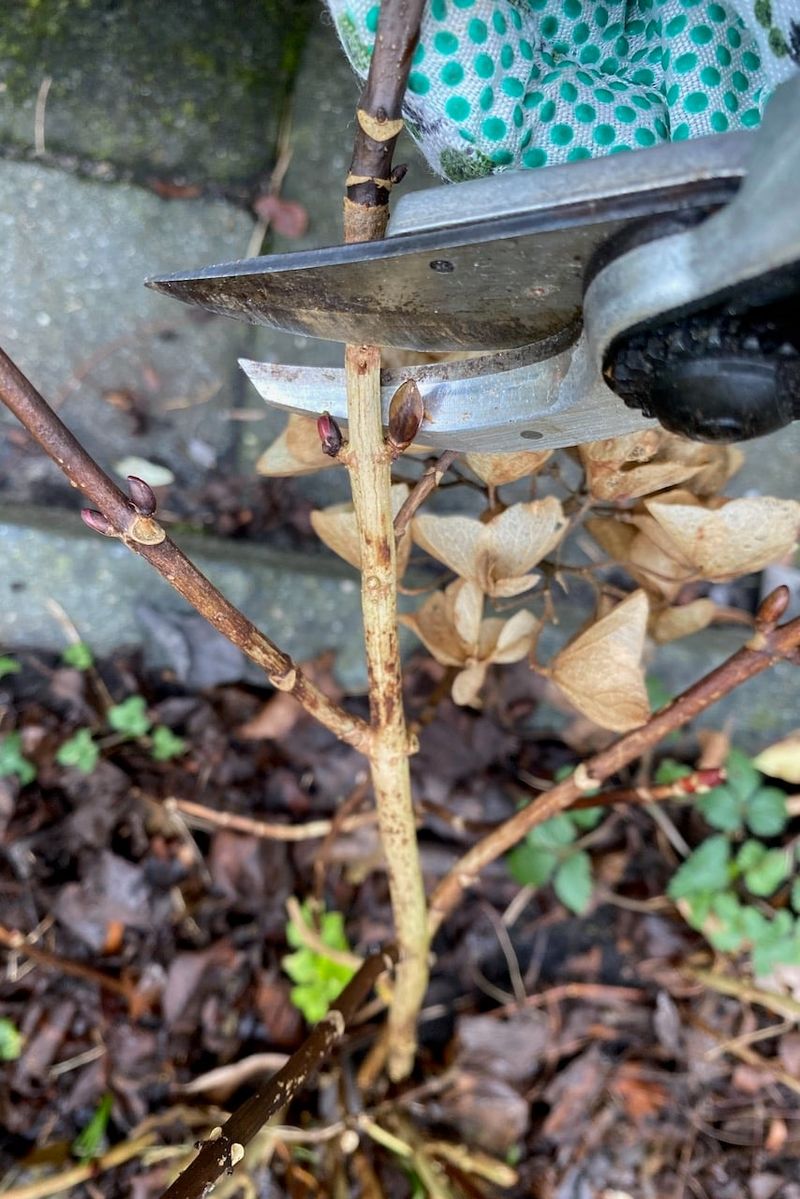
New-wood hydrangeas are the forgiving ones, and they can handle a firmer trim. That freedom fools people into cutting way too far.
Strip away more than about a third of the plant’s height and width and you get a rush of weak, spindly new stems. Those thin stems then flop over the moment big flowers weigh them down.
Leave a sturdy woody base, sometimes called the framework, when you prune. Cutting back to that low scaffold rather than to the ground gives the plant strong shoulders to hold its blooms upright.
9. Skipping Annual Pruning on New-Wood Hydrangeas
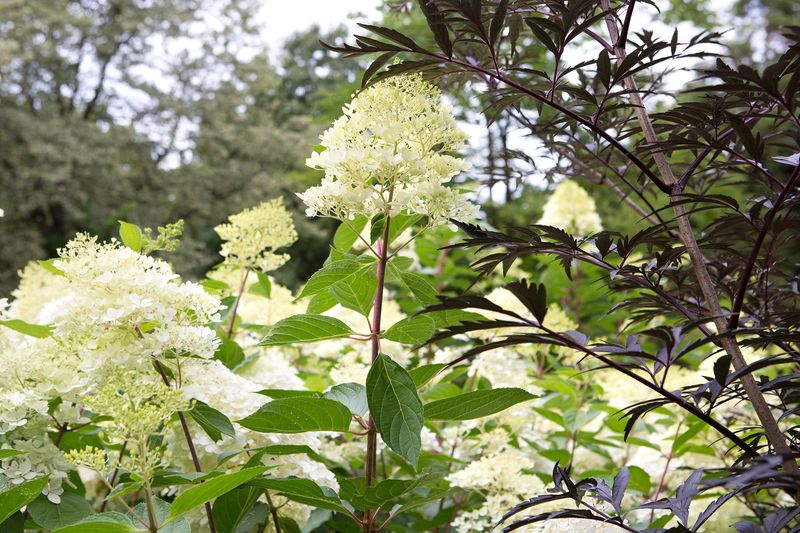
Missing one year of pruning will not leave a new-wood hydrangea flowerless, so it is easy to keep skipping it. Over time, though, the plant pays a price.
Without a yearly trim in late winter, these hydrangeas turn leggy and tired. Stems get thin, blooms get smaller, and the whole shrub starts to flop and sprawl.
A quick annual cut keeps them dense and vigorous. You get thicker stems, fuller shape, and bigger, showier flowers instead of a scraggly plant limping along on old habits.
10. Confusing Deadheading With a Hard Prune
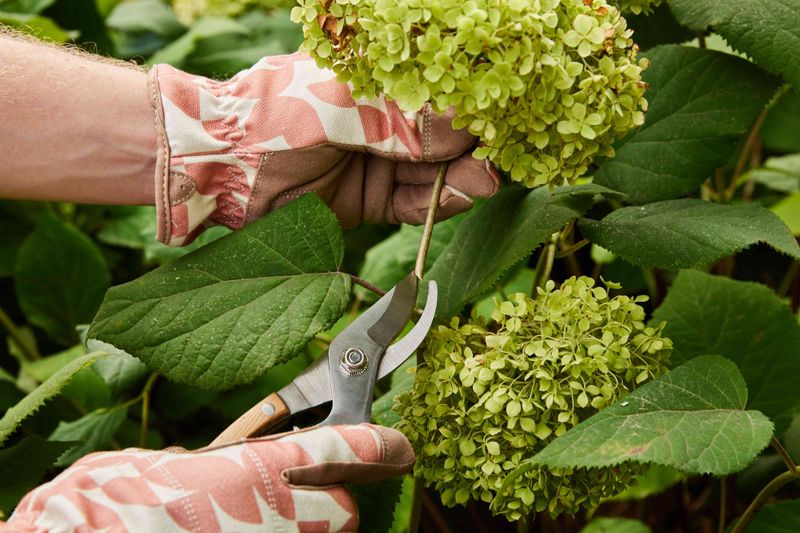
Deadheading and pruning sound similar, but they are two very different jobs. Mixing them up can quietly wipe out next season’s flowers.
Deadheading just means clipping off the spent, brown flower right below the bloom. It cleans up the look and, on reblooming types, can even nudge out a few more flowers.
Trouble comes when a light deadhead turns into a deep cut down the stem. On old-wood plants, that extra inch or two often carries dormant buds.
Snip only the faded flower, and stop before you reach healthy wood.
11. Making Random Cuts Without Watching Bud Placement
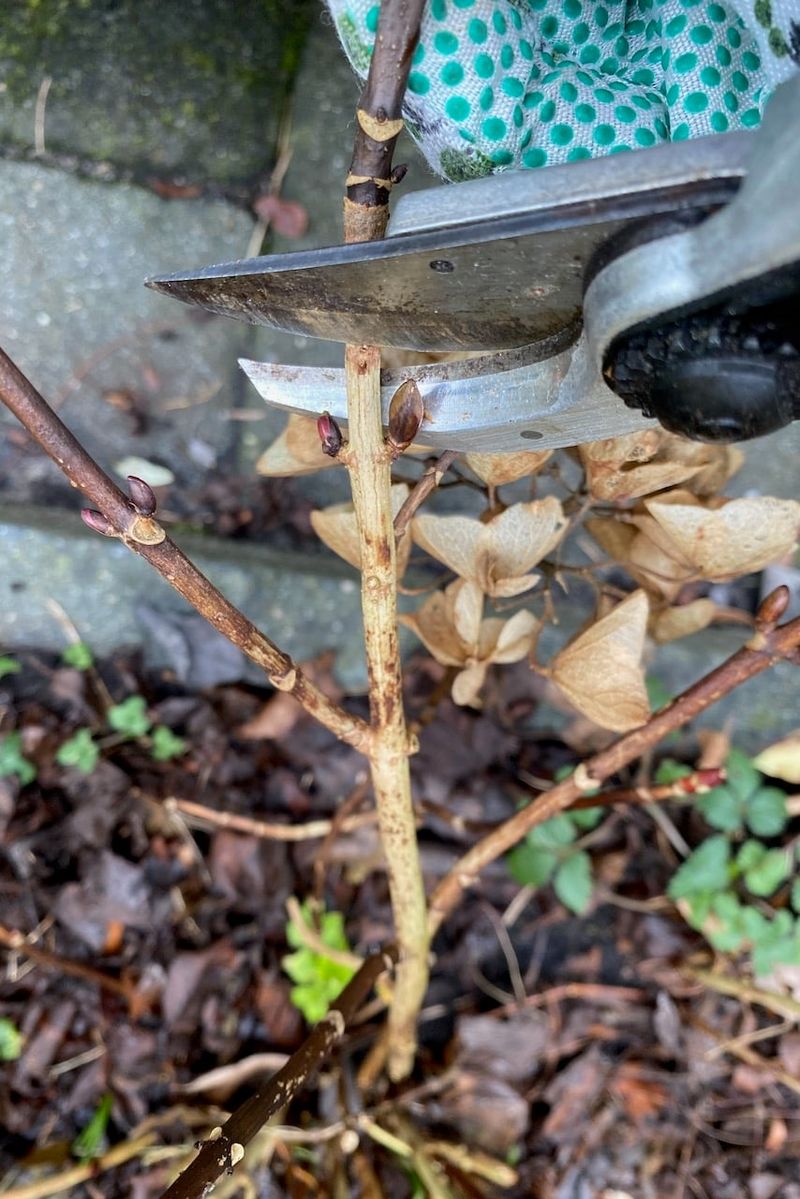
Where you cut matters just as much as when. Careless, random snips leave the plant weaker and thinner on blooms.
Good cuts land just above a healthy pair of buds or back at the branch collar where a stem meets a larger one. That tells the plant exactly where to send its energy.
Chop in the middle of nowhere and you get awkward dieback, ugly shape, and fewer flowers. Slow down, spot the buds, and aim your shears with purpose.
A few thoughtful cuts beat a dozen sloppy ones.
12. Cutting Off Dead-Looking Stems Too Early in Spring
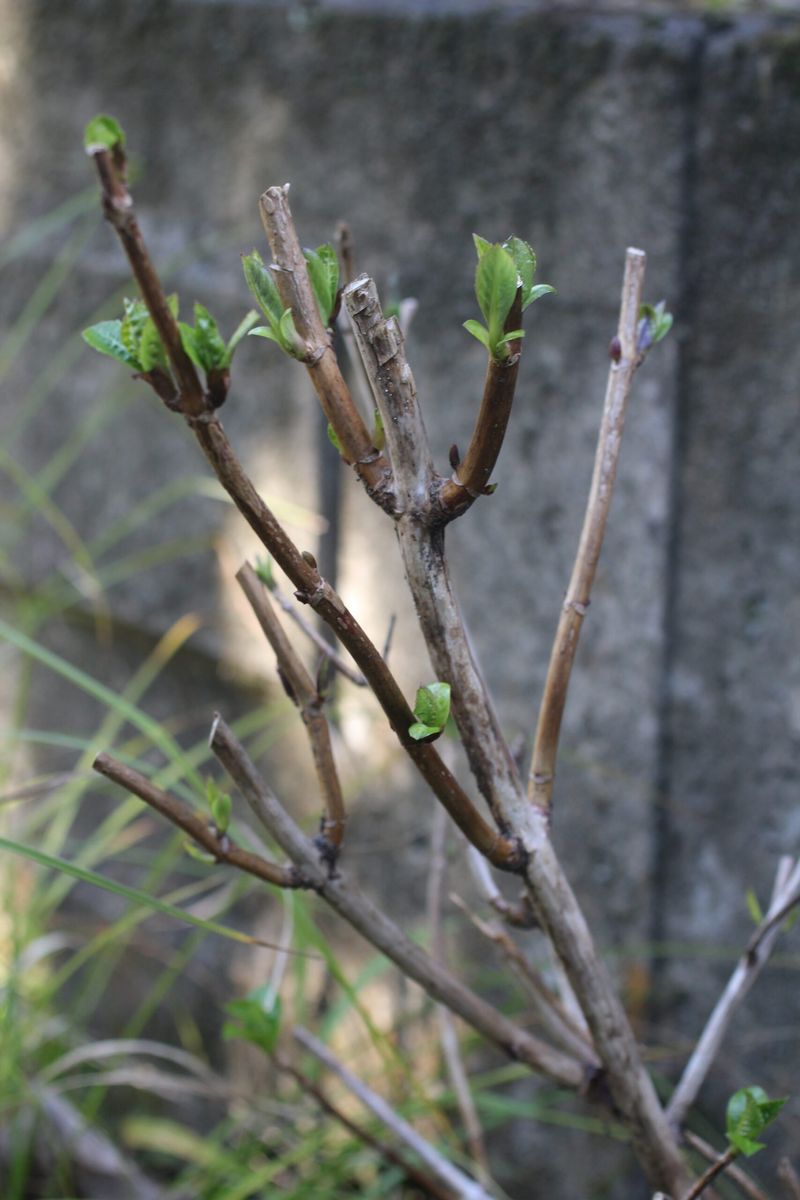
After a long winter, old-wood hydrangeas can look downright dead. Bare, brown, brittle-seeming stems tempt you to grab the shears in a hurry.
Do not trust your eyes yet. Many of those sad-looking stems are still very much alive and packed with flower buds just waiting for warmer days.
Give the plant time to show you the truth. Wait until new growth appears in spring, then scratch a stem with your fingernail.
Green underneath means it lives; brown and dry all the way through means it is safe to remove. Patience here saves a whole season of blooms.
13. Using Dull or Dirty Pruning Tools
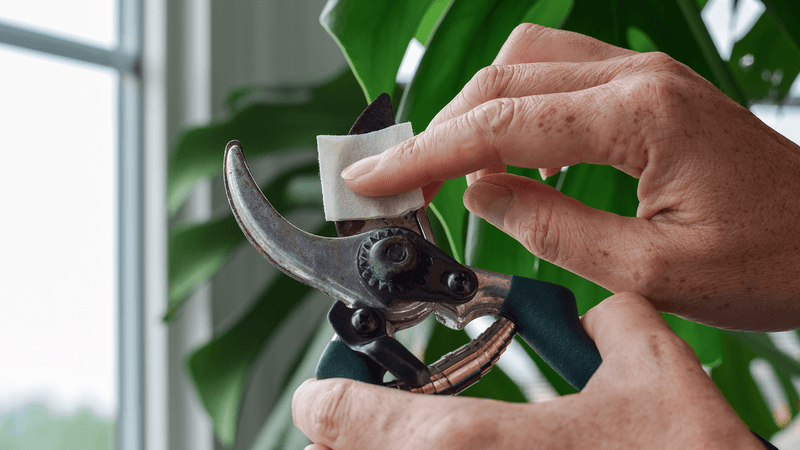
This one does not remove buds directly, but it works against your flowers in a sneakier way.
Dull blades crush and tear stems instead of slicing them clean. Those ragged, mangled cuts heal slowly and roll out the welcome mat for disease and pests.
Dirty tools make it worse by carrying germs from one plant straight into fresh wounds. A stressed, infected hydrangea puts its energy into surviving, not blooming.
Keep your shears sharp and wipe the blades with rubbing alcohol between plants, and your hydrangea can spend its strength on flowers instead.