
If Your Lawn Turns Brown And Patchy In The August Heat, Here’s The No-Equipment Fix That Brings It Back
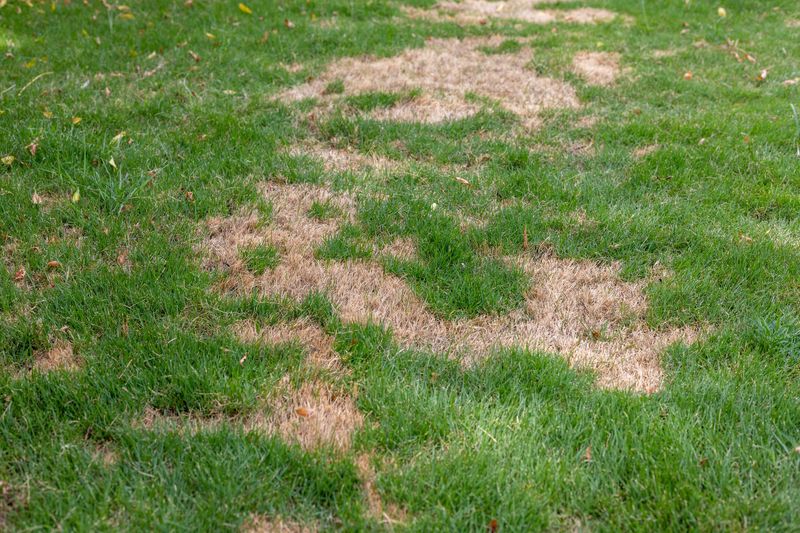
August heat can turn a lawn brown and patchy almost overnight, and the instinct to grab the hose and soak everything is understandable. But brown grass is a symptom, not a diagnosis, and treating the wrong cause can make things worse.
The good news is that you can figure out what your lawn actually needs using nothing more than your own two feet, your hands, and a few minutes of observation. That simple process of checking before treating is the real no-special-equipment skill this article will walk you through.
Brown grass does not identify the cause
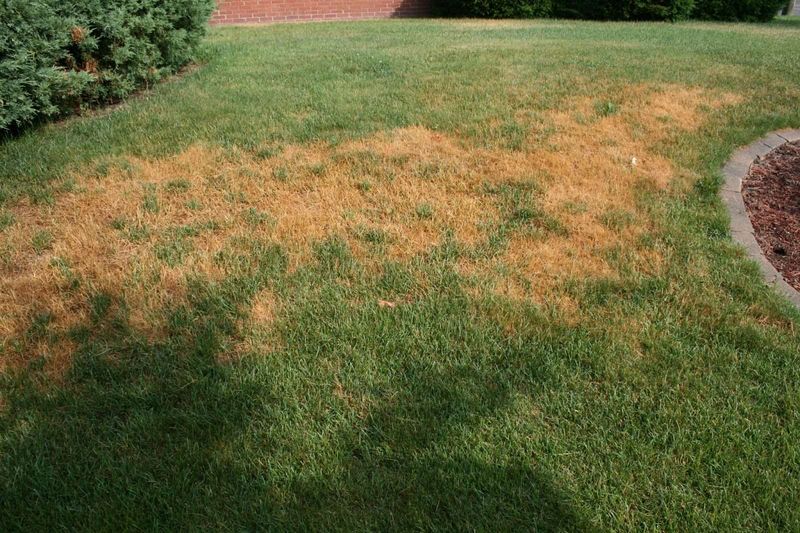
Walking out to a brown, patchy yard in August feels alarming, but the color alone does not tell you what went wrong. Utah State University Extension notes that drought, summer dormancy, fungal disease, insect damage, pet injury, soil compaction, excess thatch, heat reflected off pavement, and uneven irrigation coverage can all produce brown or patchy turf that looks nearly identical at a glance.
Adding more water across the whole lawn when the real problem is disease or insects will not help, and in some cases it will actively encourage more damage.
Start by comparing the brown areas with the green ones nearby. Notice whether the brown patches follow a recognizable pattern: scattered throughout the yard, concentrated near a driveway or sidewalk, clustered in circles, or limited to a slope or low spot.
Each of those patterns points toward a different explanation, and the location of the damage is your first clue.
Before you do anything else, resist the urge to react across the entire lawn. A problem in one corner does not mean every part of the yard needs the same treatment.
Overwatering healthy turf wastes water, can create conditions that favor disease, and may mask the real signal you are trying to read.
What this article offers is a no-special-equipment way to screen your lawn and decide whether targeted watering makes sense. The checks described in the following sections use observation and touch rather than gauges or meters.
They can help you make a more informed decision, but they do not replace a professional diagnosis if the problem turns out to be disease, insects, or something structural. Think of them as a useful first filter, not a guaranteed fix that restores every lawn to full green.
Some turf turns brown without dying
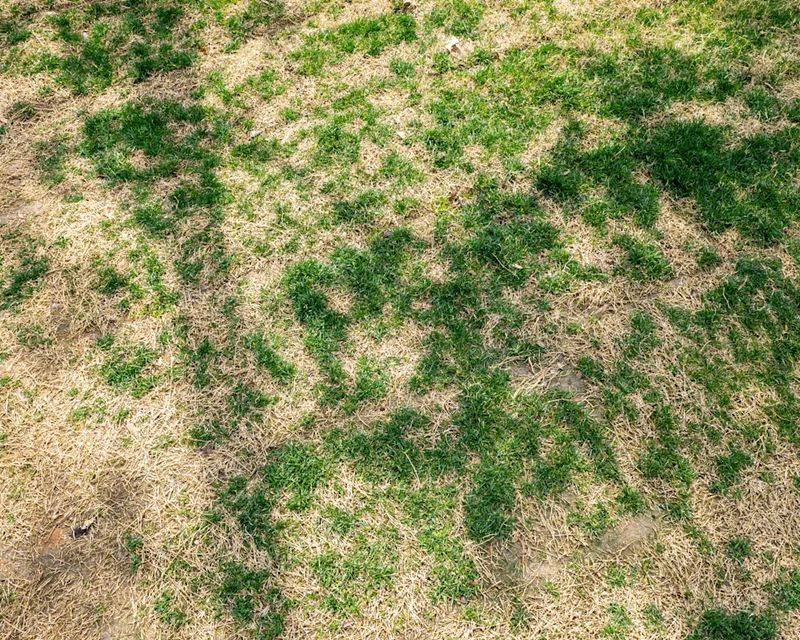
One of the least obvious facts about lawns is that brown blades are not always dead blades. Many grasses protect themselves from summer heat and water shortage by going dormant, shutting down the visible leaf tissue while keeping the crown and root system alive underground.
University of Minnesota Extension explains that cool-season grasses such as Kentucky bluegrass and fine fescues are especially prone to this response, naturally slowing growth and browning off during the hottest stretch of summer before greening up again when temperatures drop and moisture returns.
Warm-season grasses tell a different story. Species like bermudagrass, zoysiagrass, St. Augustinegrass, and buffalograss are better built for summer heat and generally stay greener longer.
Oklahoma State University Extension notes that these grasses are more heat-tolerant by nature, though they can still thin out or suffer real damage during an unusually severe or extended drought.
The critical distinction to make is between turf that is dormant or stressed and turf that is genuinely dead. A dormant lawn still has living crowns at the base of each plant, and the roots remain attached and functional.
Dead turf, by contrast, has lost that living tissue entirely. University of Minnesota’s turf diagnostic tool cautions that severe or prolonged heat and drought can kill or permanently thin portions of a lawn, so dormancy should not be assumed to guarantee recovery.
Knowing your grass type helps set realistic expectations. A cool-season lawn that browns in August may simply be resting.
But if the heat has been extreme and persistent, some of that browning may be permanent, no matter how much water eventually arrives.
Three quick checks can screen for drought stress
Before reaching for a hose, spend a few minutes running through three simple observations that can help you tell drought stress apart from other causes. None of these require any tools, and together they give you a much clearer picture of what the lawn actually needs.
Check one: walk across the lawn and watch the grass. EPA WaterSense guidance identifies persistent footprints and blades that fail to spring back as reliable early signs of water stress.
Healthy, well-hydrated turf bounces back quickly after you step on it. Drought-stressed grass stays flattened because the cells have lost the water pressure that normally keeps them firm.
A dull bluish-gray or grayish cast across the surface, or visible wilting and curling of the blades, also points toward drought rather than disease or insects.
Check two: feel the soil in both brown and green areas. Push your fingers an inch or two into the ground in the brown patch, then do the same in a nearby green section.
Utah State University Extension recommends the screwdriver test as a quick soil-moisture screen: if a screwdriver or similar object pushes easily into the ground, the soil has moisture; if it meets hard resistance, the soil is likely dry. You can approximate the same result with your fingers.
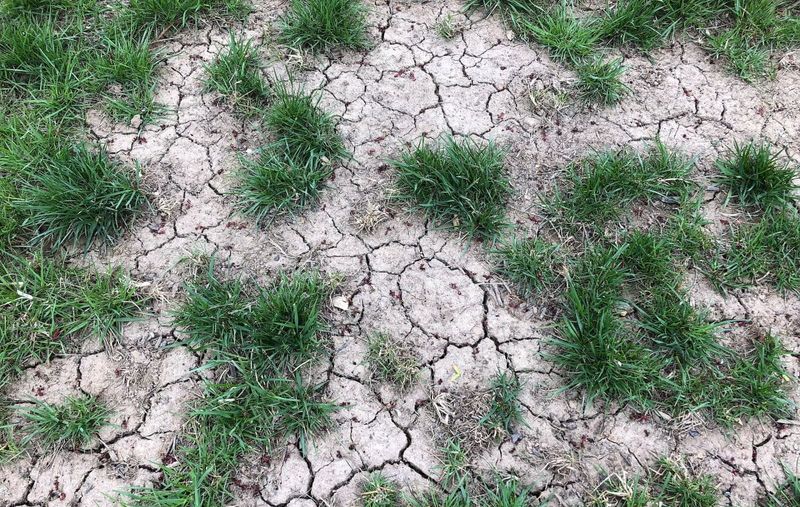
Hard, cracked, or powdery soil under a brown patch supports drought as the cause. Soil that feels moist or cool suggests something else is going on.
Check three: gently tug a handful of brown grass. Grab a small clump near the soil line and pull with moderate pressure.
Drought-stressed grass resists the tug because the roots are still intact and anchored. If the grass lifts away easily, like a piece of loose carpet pulling up from the floor, with little resistance and few roots attached, that pattern points toward insect damage rather than water shortage, and watering will not address it.
These three checks are a useful screening sequence, not a definitive diagnosis. They can narrow the field considerably, but circular or expanding patches, unusual colors, or damage that keeps spreading even after rain all call for a closer look from a local Extension office or plant clinic.
Water genuinely dry turf slowly in the morning
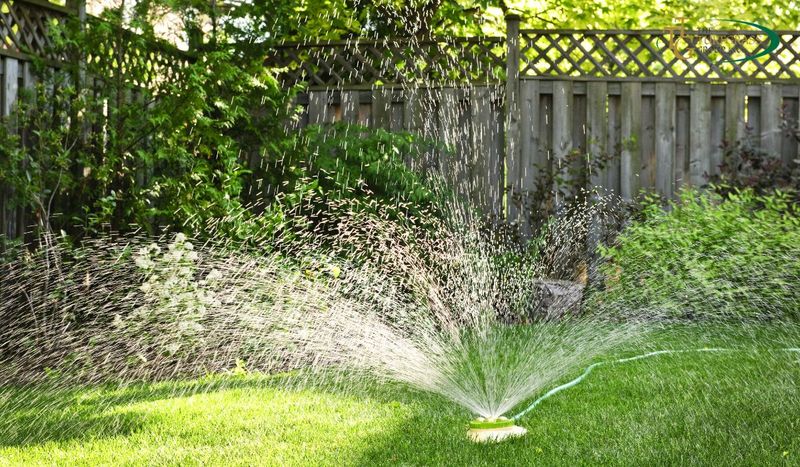
Once your checks confirm that the soil is genuinely dry and the grass shows signs of drought stress, targeted watering is the right response. You do not need a specialized irrigation system to do this.
A standard garden hose, a basic oscillating sprinkler, or even a portable hose-end sprinkler you already own is enough, as long as you apply the water in a way that lets it reach the root zone.
The method matters as much as the timing. EPA WaterSense recommends deep, infrequent watering rather than short daily sessions.
Applying water slowly gives it time to soak in rather than pool on the surface or run off down a slope. The goal is to wet the soil several inches down, where the roots actually live, rather than just dampening the top layer.
Shallow daily watering keeps moisture near the surface, which encourages roots to stay shallow and can increase the likelihood of runoff and disease problems over time.
Early morning is the broadly recommended window for watering. EPA WaterSense guidance on hot weather notes that midday watering loses more moisture to evaporation before it reaches the soil, while watering late in the evening can leave grass blades wet through the night, which creates conditions that some fungal diseases prefer.
Morning watering allows leaves to dry during the day while giving roots a long, uninterrupted window to absorb moisture. Always check local water utility schedules and any restrictions in your area, since some communities assign specific watering days or times.
A common starting point cited by the EPA is roughly 1 inch of water per week, counting rainfall. Colorado State University Extension’s watering efficiency guidance makes clear that actual needs vary with grass species, soil texture, wind, sun exposure, slope, and irrigation efficiency.
Sandy soil drains faster and may need different scheduling than clay soil. A week of 95-degree days requires more than a mild week in the low 80s.
Treat 1 inch as a flexible reference point to adjust from, not a rule that applies to every lawn in every condition.
Treat isolated patches differently from the whole lawn
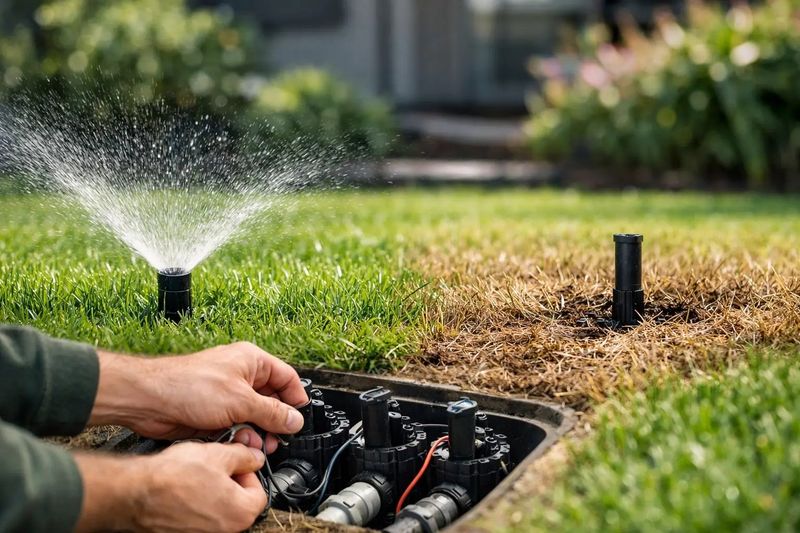
A single brown patch in an otherwise green yard is a specific problem, not a signal to water the entire lawn more heavily. Responding to one struggling area by running the sprinklers longer everywhere else can overwater the healthy turf, push moisture into areas that do not need it, and create the kind of prolonged leaf wetness that some fungal diseases prefer.
Isolated patches often have site-specific causes worth identifying before adjusting any watering. Colorado State University Extension’s watering efficiency resource points to uneven irrigation coverage as one common culprit: a clogged or broken sprinkler head may leave one section consistently under-watered while the surrounding turf gets adequate moisture.
Checking whether each zone of an irrigation system is actually delivering water where it should is a faster fix than guessing at timing.
Physical site conditions also concentrate stress in specific spots. Soil that has become compacted near a high-traffic path resists water infiltration.
Thatch buildup can prevent moisture from reaching roots even when the surface looks wet. Pavement, concrete, and dark mulch can radiate heat and dry out nearby turf faster than the open lawn.
Slopes let water run off before it soaks in. Each of those situations calls for a targeted correction rather than a blanket increase in irrigation.
Colorado State’s irrigation scheduling guidance notes that matching water delivery to the actual conditions of each area produces better results than applying a single schedule across varied terrain.
When you find an isolated patch, focus your attention there first. Check the soil moisture in that specific spot, look for coverage gaps nearby, and consider what is physically different about that location compared to the rest of the lawn.
The answer is usually in the details of that particular corner, not in the watering schedule for the whole yard.
Protect stressed turf during the recovery period
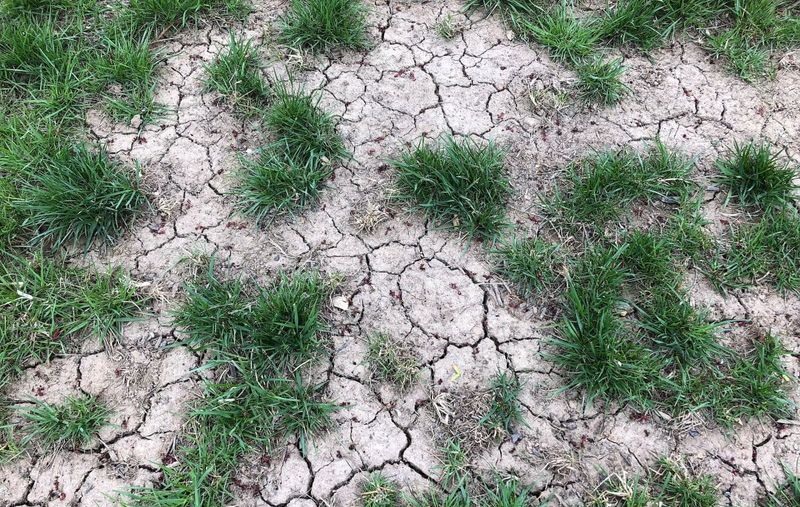
After confirming drought stress and applying a thorough, targeted watering, the next job is to stop making things harder for the grass while it tries to recover. Stressed turf is more fragile than healthy turf, and a few common habits can set back recovery significantly.
Foot traffic is one of the biggest overlooked threats. University of Minnesota Extension advises minimizing mowing and foot traffic on dormant or visibly stressed grass because heat and physical pressure can injure the crowns.
The crown is the living hub of each grass plant, and once it is damaged, the blade cannot regrow from that spot. If children, pets, or regular foot paths cross the stressed area, try to redirect that traffic until the turf shows signs of recovery.
Mowing deserves special care during this period. If the grass is dormant or clearly struggling, skipping a mow entirely is often better than cutting on schedule.
When growth resumes and mowing becomes necessary, remove no more than one-third of the blade length at a time, and set the mower deck at a higher cutting height appropriate for your grass type. Cutting too short stresses the plant further by removing the leaf area it needs for photosynthesis.
Fertilizer is one treatment to leave on the shelf entirely during a heat or drought event. Applying nitrogen to dormant or stressed turf will not produce the quick green-up that some products imply.
The roots may not be actively absorbing nutrients, and fertilizer salts can injure already-stressed root tissue. Beyond that, excess nitrogen raises the risk of certain fungal diseases that thrive in warm, humid conditions.
Minnesota Extension’s lawn care calendar places fertilizer applications in the cooler, active-growth windows of the year, not during August heat stress. Wait until the lawn is growing actively and conditions have stabilized before feeding.
Know when water will not solve the patch
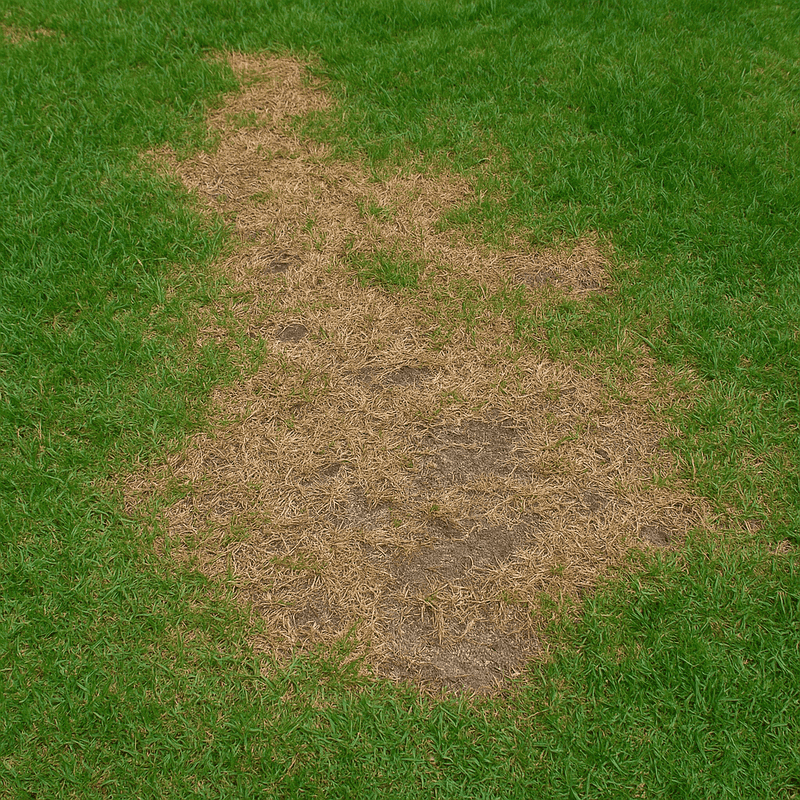
Some brown patches are not drought problems, and watering them will not help. Recognizing those situations early saves time, water, and the risk of accidentally making the underlying problem worse.
Circular or expanding patches are a pattern worth taking seriously. University of Illinois Extension notes that fungal diseases such as brown patch, summer patch, and necrotic ring spot can produce circular or ring-shaped damage that spreads outward over time.
These diseases tend to appear in warm weather, and they are often associated with prolonged leaf wetness, excessive irrigation, close mowing, thatch buildup, or unbalanced fertilization. If the surrounding soil feels moist but the patch keeps growing, disease is a more likely explanation than drought.
Grass that lifts away from the soil with little resistance is another clear signal to investigate further before adding water. Utah State University Extension points to that loose-carpet sensation as a possible sign of insect damage.
Grubs, billbugs, and sod webworms feed on grass roots, and once the roots are gone, the turf has no anchor. Simply irrigating an area with root damage does not restore the roots or address the insects causing the loss.
Herbicide is another tool to leave alone when a brown patch has no clear diagnosis. High summer temperatures increase the risk of herbicide injury to surrounding grass, and spraying will not correct drought, disease, or insect damage regardless of the product used.
University of Minnesota’s turf diagnostic resource makes the point plainly: when symptoms are unclear, or when a patch keeps spreading after moisture and cooler conditions return, a local Cooperative Extension office or university plant clinic is the right next step. Many offer free or low-cost sample testing and can identify disease or insects with confidence that an in-yard visual check cannot provide.
Recheck before you expect new growth
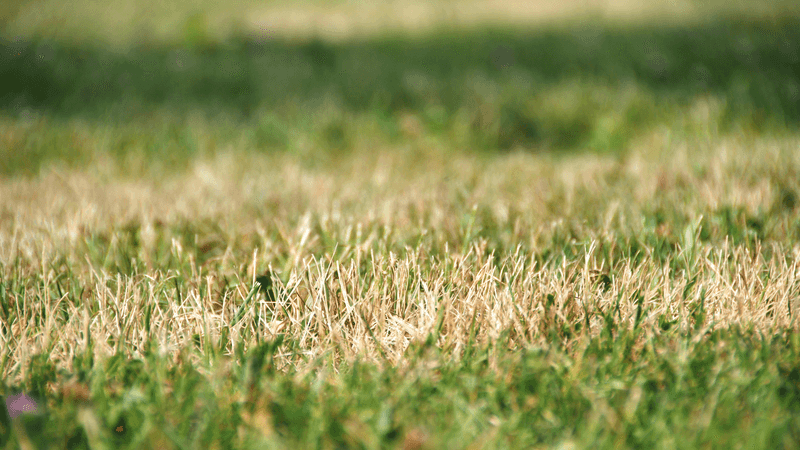
Recovery from drought stress rarely happens overnight, and the most useful thing you can do after watering is to keep checking rather than waiting and hoping. Return to the same brown area a few days later and repeat the basic observations: press your fingers into the soil to confirm it is retaining some moisture, tug a few blades to verify the roots are still holding, and walk across to see whether footprints are recovering faster than before.
Gradual improvement in those indicators is a reasonable sign that the turf is responding.
If cooler temperatures or natural rainfall arrive after your initial watering, reassess before continuing on the same schedule. Soil that was dry last week may be adequately moist this week, and continuing to apply water at the same rate once conditions have changed can shift the problem from drought to overwatering.
The checks that helped you identify drought stress in the first place are just as useful for deciding when to ease off.
University of Minnesota Extension is direct about the limits of recovery: some dormant turf does green up once moisture and cooler temperatures return, but severe or prolonged heat and drought can leave permanently thin or dead areas that no amount of water will restore. Minnesota’s turf diagnostic guidance echoes this, noting that dead crowns cannot regenerate.
If an area remains bare after conditions improve, overseeding or patching in the fall, when temperatures favor germination, is a more realistic path forward than continued summer watering.
The value of the approach in this article is in the decisions it helps you make, not in a promise of instant green-up. A lawn that gets the right diagnosis and the right response has a better chance than one that gets treated by instinct alone.