
If Your Spider Plant Keeps Pushing Out Babies, Here’s The Distress Signal It’s Sending Before You Repot
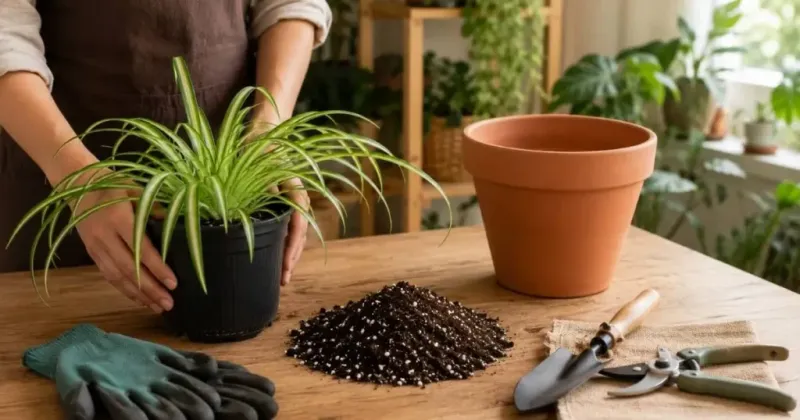
Spider plants are champion reproducers, and all those dangling little plantlets can make even a calm plant owner start to worry. Before you grab a bigger pot and fresh soil, there’s something worth knowing: those babies are almost never a cry for help.
Understanding what spiderettes actually mean, and what genuinely warrants a repot, can save your plant from unnecessary stress and save you from unnecessary guesswork.
Spiderettes Show Reproduction, Not a Plant in Panic
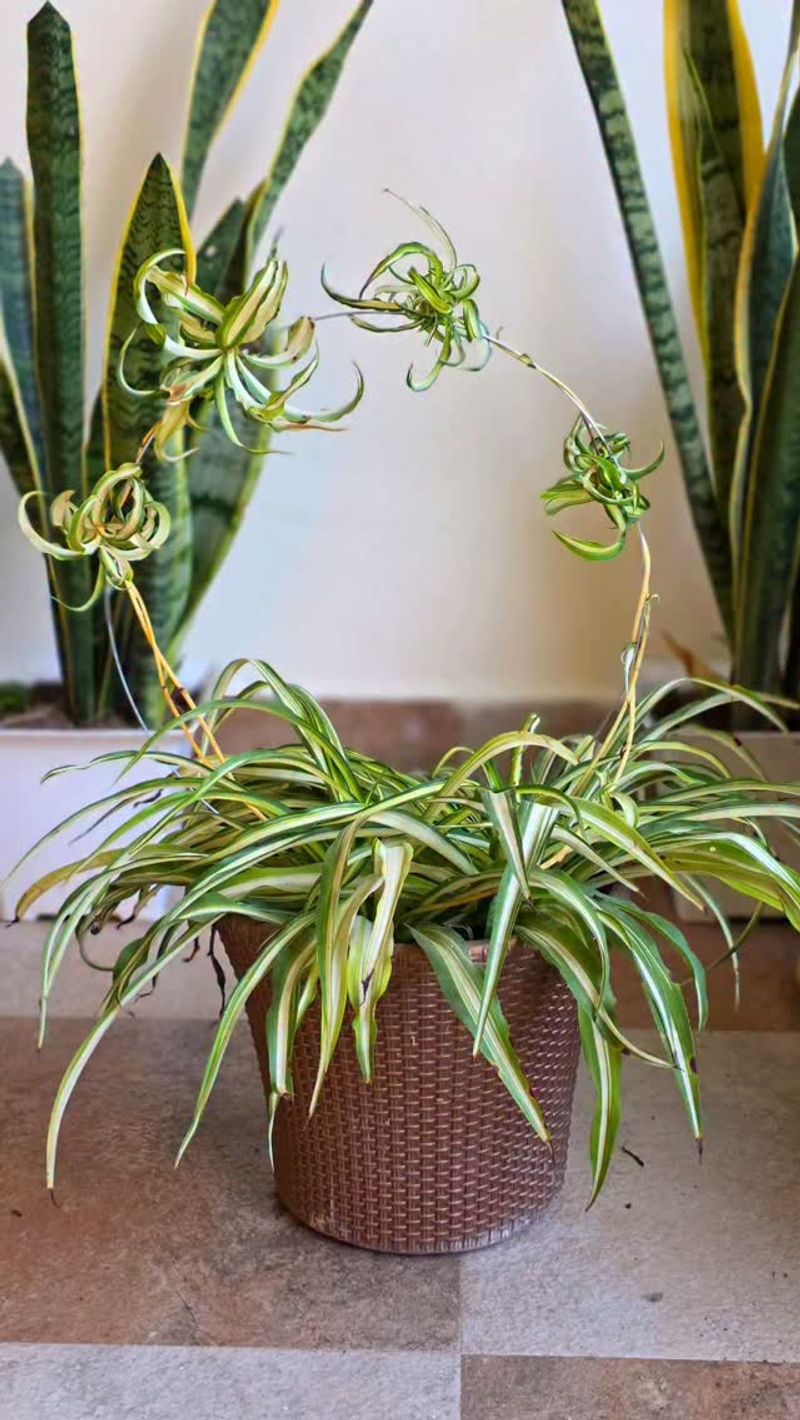
Miniature plantlets dangling from long, arching runners are one of the most recognizable things about a spider plant, and they have a precise name: spiderettes. Each one forms on a stolon, often after the parent plant produces small white flowers, and many develop tiny aerial roots while still attached to the mother plant.
Illinois Extension’s guide to specialized houseplant structures explains that these plantlets are standard propagation structures, not indicators of trouble.
Seeing a lot of them at once can feel alarming, especially when articles online describe the babies as a warning sign or a panic response. That framing is not supported by mainstream horticultural guidance.
Wisconsin Horticulture’s spider plant profile describes spiderette production as a normal part of the plant’s life cycle, one that a healthy, mature plant commonly enters on its own schedule.
A more accurate way to read abundant babies is this: the parent plant has reached a stage of maturity and sufficient vigor to reproduce. That is genuinely good news.
It means the plant has the energy reserves to invest in the next generation, which is not something a plant on the verge of collapse typically does.
None of that means the plant is guaranteed to be thriving in every way. A spider plant can produce spiderettes and still be dealing with unrelated problems like overwatering, low light, or mineral buildup in the soil.
The babies themselves, though, cannot tell you which problem is present or whether one exists at all. Spiderette production alone cannot diagnose distress, and it certainly cannot justify an emergency repot.
The number of babies is simply not a reliable gauge of the plant’s overall condition.
Why Slightly Crowded Roots Can Produce More Babies
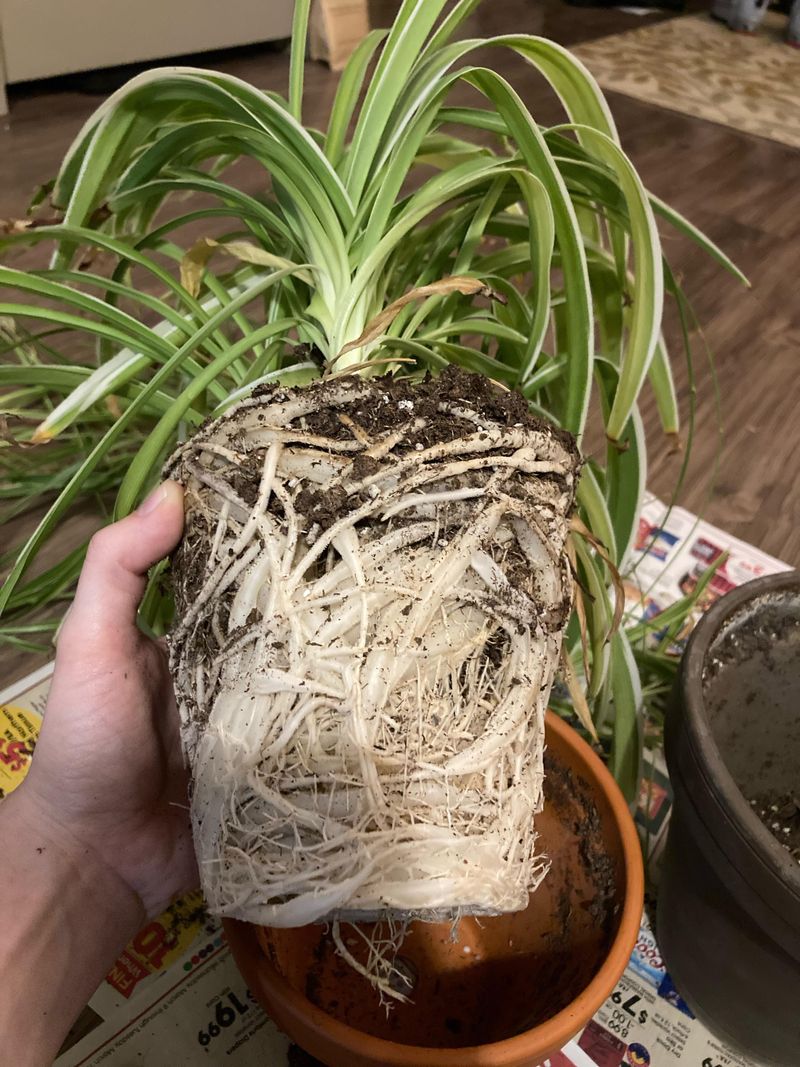
Pot size does play a role in spiderette production, but the relationship is more nuanced than most people expect. Illinois Extension’s spider plant care page notes that spider plants produce plantlets when pot-bound, and Wisconsin Horticulture adds that they perform best when slightly pot-bound.
What both sources are describing is a mild, manageable level of crowding, not a severely root-choked container.
A slightly pot-bound spider plant has roots that fill the container comfortably and may be approaching its edges, but the plant is still taking up water normally, growing at a reasonable pace, and showing no signs of serious stress. That mild crowding seems to nudge the plant toward flowering and, in turn, toward producing runners and plantlets.
It is a reproductive strategy that works in the plant’s favor under the right conditions.
Severe root-binding is a different situation entirely. When roots are densely packed and circling with nowhere to go, the plant can struggle to absorb water evenly, growth may slow noticeably, and overall health can decline.
Confusing these two conditions is where repotting decisions go wrong. A plant that is slightly pot-bound and producing babies is not the same as one that is severely root-choked and suffering.
Beyond pot size, several other factors influence whether a spider plant produces babies at all. The RHS growing guide for spider plants notes that many plants do not produce plantlets until they are at least a year old, and some cultivars simply do not produce offsets.
Kansas State’s houseplant publication and published flowering research in the Journal of the American Society for Horticultural Science both identify photoperiod, meaning the length of daylight, as a factor in flowering and stolon formation. Light intensity, age, cultivar traits, and overall growing conditions all contribute.
Many babies can mean a healthy, mature plant in the right light, not necessarily a root-bound one in crisis.
Let Root Condition and Plant Performance Guide Repotting
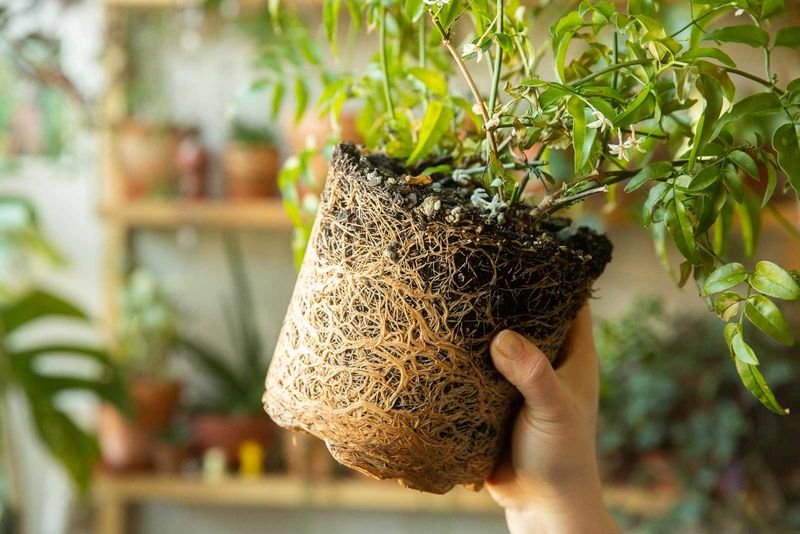
Roots emerging from the drainage holes at the bottom of the pot are one of the clearest physical signals that a spider plant has outgrown its container. Roots visible at the soil surface, or a dense mass of pale, circling roots that hold the shape of the pot when you slide the root ball out, tell a similar story.
Illinois Extension’s repotting guidance and Penn State Extension’s repotting resource both point to these root-based observations as reliable repotting triggers, not the presence of spiderettes.
Soil behavior offers additional clues. If the potting mix dries out unusually fast after a thorough watering, the root mass may have displaced so much soil that there is simply not enough mix left to hold adequate moisture.
Wilting between normal waterings, when the plant is not in a heat wave and watering habits have not changed, can point to the same problem. Slowed or stalled growth, especially in a season when the plant would normally be pushing new leaves, is worth noting as well.
Container condition matters too. A plastic nursery pot that looks distorted, bulging, or cracked at the sides has likely been pushed by expanding roots.
That kind of physical deformation is a more concrete repotting signal than a cluster of dangling babies.
Soil quality is another legitimate reason to repot, even when roots are not dramatically overgrown. Old potting mix can compact over time, losing the airy structure that allows water to drain evenly and roots to breathe.
It can also accumulate mineral salts from fertilizer or tap water. NC State Extension’s repotting article reinforces that degraded mix and drainage problems can justify repotting independently of root crowding.
A healthy, slightly pot-bound plant with good drainage and normal growth does not need to be disturbed just because it is producing runners.
Brown Tips Need Separate Troubleshooting
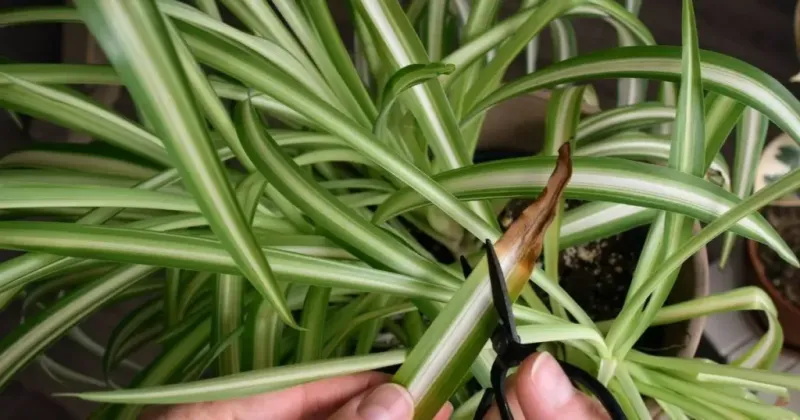
Brown leaf tips on a spider plant often appear at the same time as a flush of spiderettes, which makes it tempting to blame root crowding for both symptoms. That connection is not reliable.
Brown tips have several well-documented causes that have nothing to do with pot size, and treating a watering or humidity problem with a repot will not fix the underlying issue.
Wisconsin Horticulture’s spider plant profile and Ask Extension’s spider plant FAQ both list fluoride and chlorine in tap water as common culprits for tip burn. Spider plants are sensitive to these minerals, and over time, regular watering with fluoridated or chlorinated municipal water can cause the tips to brown and dry even in an otherwise healthy plant.
Switching to filtered or distilled water, or letting tap water sit overnight before using it, can reduce this effect.
Salt buildup from fertilizer is another frequent cause. When fertilizer is applied regularly without occasional deep flushing of the soil, mineral salts accumulate at the root zone and can scorch the leaf tips.
Iowa State Extension’s plant care guidance notes that flushing the pot thoroughly with water and reducing fertilizer frequency can help manage this kind of tip damage.
Low humidity, soil that dries out too much between waterings, overwatering that has damaged roots, and light that is too intense can all produce the same brown-tip symptom. Before concluding that the plant needs a new pot, check the moisture level in the soil, observe how much direct sun the leaves receive, and consider the humidity around the plant.
Each of these is easier to correct than a repot, and correcting the right one will actually solve the problem.
Fresh Soil Helps When the Growing Medium Has Declined
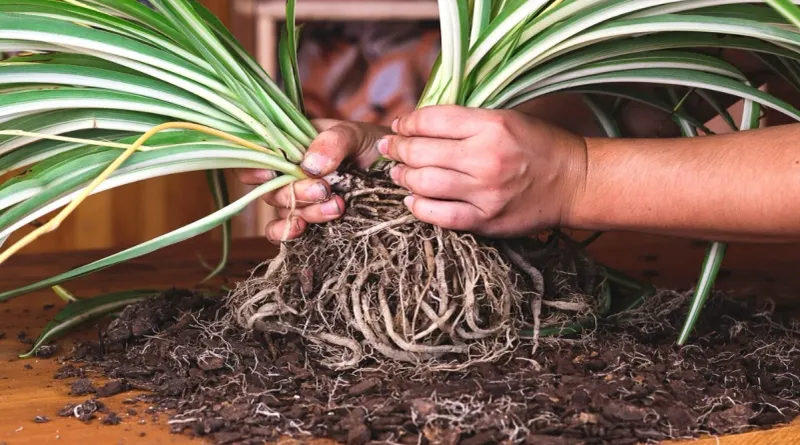
Fresh potting mix can make a real difference, but only when the current soil has actually deteriorated. Commercial potting mix breaks down over time.
The organic particles that give it a light, airy structure gradually compact, reducing the space between particles where air and water move through the root zone. When that happens, drainage slows, roots struggle to access oxygen, and the plant may start to decline even if the roots themselves are not severely crowded.
Penn State Extension’s repotting guide explains that fresh mix can restore drainage, improve aeration, and provide a renewed nutrient base when existing soil has compacted, depleted, or accumulated salts. Those are genuine benefits when the growing medium is the problem.
What fresh soil cannot do is stop a healthy spider plant from producing spiderettes. Spiderette production is driven by the plant’s maturity, light exposure, cultivar, and other factors that a new pot of soil will not change.
Timing matters in a practical sense. University of Minnesota Extension’s spring houseplant care advice suggests that spring or a period of active growth is generally a favorable window for repotting, because the plant’s energy is directed toward new growth and recovery happens more smoothly.
That said, a clear need, such as severely compacted soil or persistent drainage trouble, can justify repotting at another time of year.
One thing worth knowing before repotting: root disturbance can temporarily slow or pause new growth while the plant settles into its new container. A plant that was producing spiderettes freely may quiet down for a few weeks afterward.
Repotting when the soil genuinely warrants it is still the right call, but going in with realistic expectations helps avoid the frustration of thinking something went wrong during recovery.
Repot With a Small Size Increase and Good Drainage
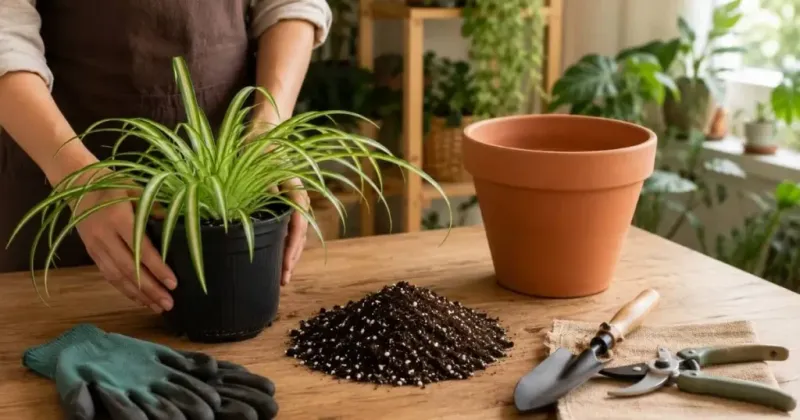
Choosing the right container is the first decision that matters when repotting a spider plant. A pot only one to two inches larger in diameter than the current one is the right move, not a dramatically bigger container.
Penn State Extension’s repotting resource and University of Minnesota Extension’s winter houseplant tips both caution against oversized pots. A container that is much larger than the root ball holds a lot of soil that the roots cannot yet reach, and that excess soil stays wet for extended periods, increasing the risk of root problems.
Drainage holes are non-negotiable. Every container used for a spider plant should have at least one clear, unobstructed hole at the bottom.
Without it, water accumulates below the root zone and creates conditions that roots cannot tolerate over time. Do not add a layer of gravel, stones, or broken pot shards to the bottom of the container in an attempt to improve drainage.
NC State Extension’s repotting guidance and Penn State Extension’s garden myths resource explain that a gravel layer actually raises the perched water table inside the pot, keeping moisture closer to the roots rather than moving it away.
Use a commercial potting mix rather than garden soil. Garden soil compacts heavily in containers and does not provide the drainage or aeration that container roots need.
Moisten the potting mix before adding it to the new pot so that it is evenly damp but not waterlogged when the plant goes in.
When removing the root ball, check for roots that are circling tightly. Gently loosen them with your fingers, or use clean scissors or pruners to cut through severely bound sections.
Place the plant at approximately the same depth it was growing before, fill in around it with the pre-moistened mix, and water thoroughly. Let all excess water drain completely before returning the pot to its spot.
The plant may look a little tired for the first week or two while it adjusts, and that is normal.
Keep the Runners While You Correct Basic Care
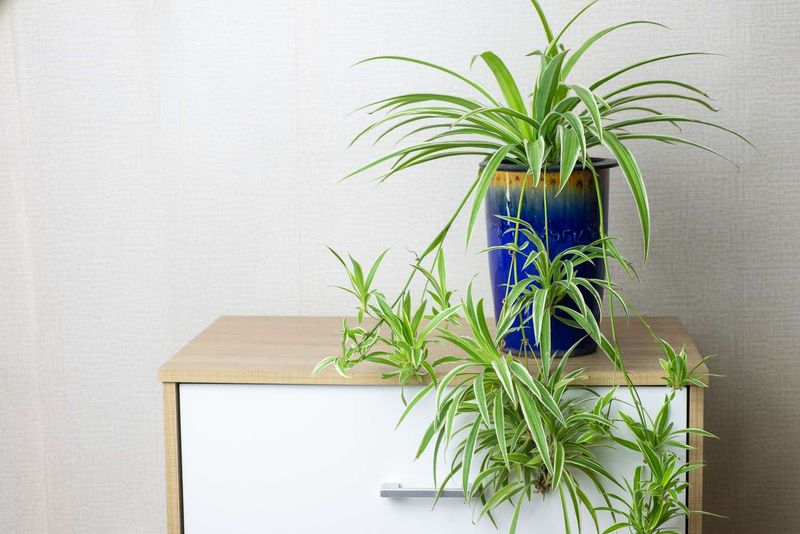
When the root ball looks fine and the plant is otherwise healthy, repotting is not the answer. The better move is to confirm that basic care conditions are working well, then enjoy the runners for what they are.
University of Florida IFAS’s spider plant page and Illinois Extension’s spider plant care guide both recommend bright to moderate indirect light as the right environment. A spot near a window that receives good light without hours of direct midday sun suits spider plants well.
Watering by calendar date is one of the most common care mistakes with container plants. Colorado State Extension’s PlantTalk resource on spider plants and Wisconsin Horticulture both suggest checking the upper portion of the potting mix before watering rather than following a fixed schedule.
Water demand shifts with season, pot size, light level, and temperature. When the top inch or two of mix feels dry, water thoroughly until excess runs from the drainage holes, then let the pot drain completely.
Leaving the pot sitting in a saucer of collected water invites root problems over time.
As for the spiderettes themselves, you have options. A plantlet can stay attached to the parent plant while it develops its own root system, which it will often do on its own if a runner touches or is pinned to moist soil nearby.
Once a spiderette has a usable cluster of roots, you can detach it and pot it in a small container of moist commercial potting mix. Illinois Extension notes that rooting can take roughly two to three weeks when a plantlet is pinned to soil, though University of Tennessee Extension’s propagation publication treats this as an approximation that varies with conditions.
Either way, propagating healthy spiderettes is a rewarding step, not an emergency measure.
Use the Whole Plant—not the Number of Babies—to Decide
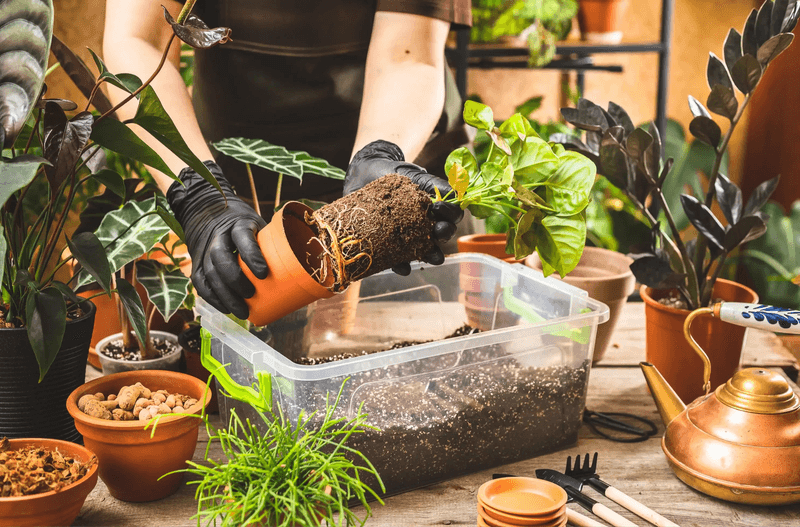
A practical repotting decision comes from reading the whole plant, not counting its babies. Root condition is central: look for roots pushing out of drainage holes, circling densely at the surface, or holding the shape of the container when the root ball is removed.
Pair that with soil behavior, checking whether the mix drains freely, holds moisture reasonably, and has not compacted into a hard, water-resistant block. Add overall plant performance to the picture, including growth rate, watering response, and leaf color.
Illinois Extension’s repotting guidance and Penn State Extension both support using these combined observations rather than a single trigger.
If those checks come back clear, correct any basic care issues first: adjust light, revisit watering habits, flush accumulated salts, or switch water sources if brown tips are the concern. Wisconsin Horticulture reinforces that many spider plant symptoms have straightforward care-based explanations that do not require disturbing the root system at all.
Repotting into fresh mix is worth doing when root crowding is genuine, soil has degraded, drainage is failing, or overall health is declining without another clear cause. Do not expect it to reduce spiderette production, because it probably will not.
A spider plant that is mature, well-lit, and in good health will keep doing what healthy spider plants do.