
If Your Tomatoes Are Still Green In Late August, Here Are 8 Reasons They’re Stalling (And The Fix For Each)
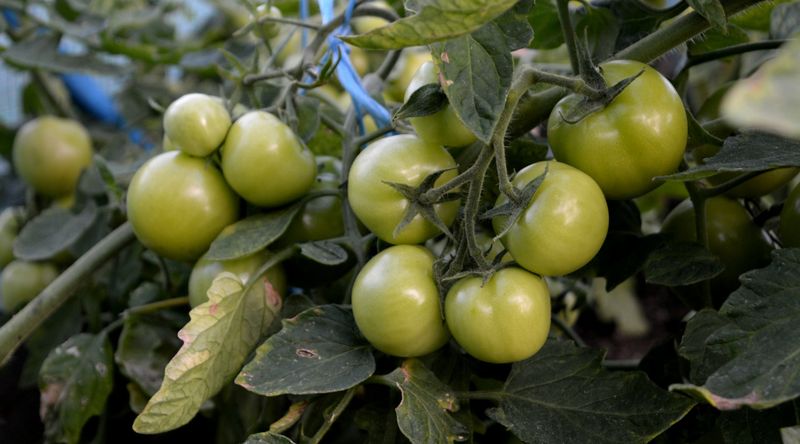
You’ve watched your tomato plants all summer, and the fruit is big and healthy but stubbornly green. Late August rolls around and you start to worry you did something wrong.
The good news is that stalled ripening usually comes down to a handful of common causes, and most have quick fixes. Let’s walk through what might be holding your tomatoes back and how to nudge them toward red.
1. Extreme Temperatures (Too Hot or Too Cold)
Tomatoes are pickier about temperature than most gardeners realize. They ripen best when it stays between 68 and 77 degrees Fahrenheit.
Once the thermometer climbs past 85 or drops below 50, the plant stops making lycopene and carotene, the pigments that turn fruit red.
Container tomatoes get hit especially hard because their soil heats up fast. A run of scorching afternoons can freeze ripening in place even while everything looks green and healthy.
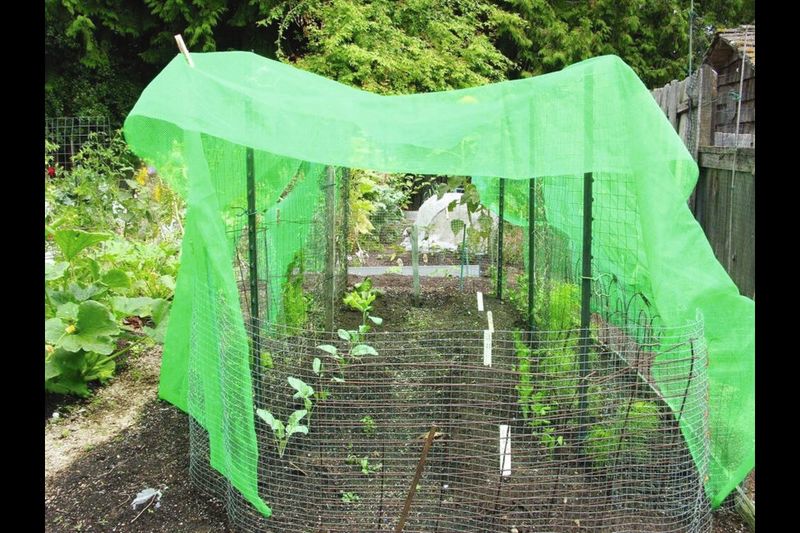
The fix depends on which way the mercury is swinging. During a heatwave, drape shade cloth over your plants in the afternoon and pile mulch thick around the base to keep roots cool.
When nights turn chilly late in the season, toss row covers over the plants overnight. And if frost is on the way, go ahead and pick your mature green tomatoes to finish ripening on a windowsill indoors.
2. Too Much Nitrogen Fertilizer
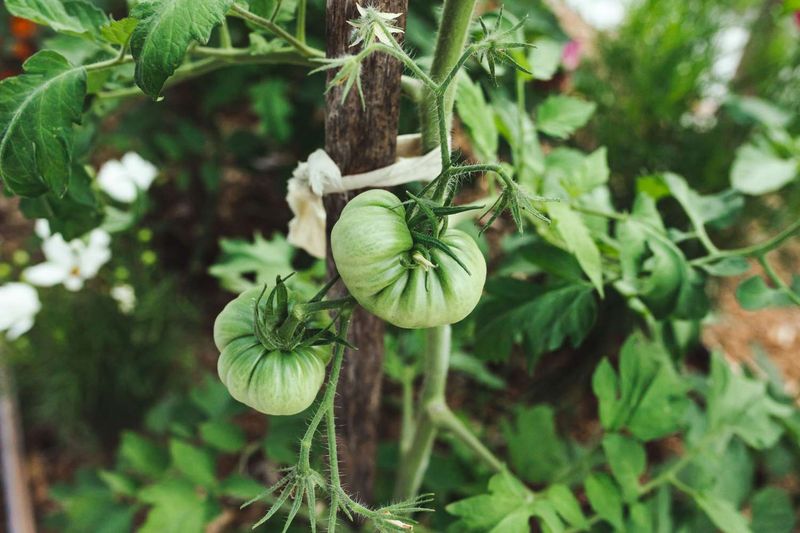
Ever notice a tomato plant that looks like a jungle but barely fruits? That leafy explosion is often a sign you’ve been too generous with nitrogen.
The plant reads all that nitrogen as a signal to grow more foliage instead of ripening the fruit it already has.
Cutting back is simple. Stop using any high-nitrogen feed and switch to something heavier in phosphorus and potassium, often sold as tomato feed with a ratio like 5-10-10.
You can also snip away some of that extra leafy growth. Pruning reroutes the plant’s energy from making leaves to finishing the tomatoes on the vine.
3. Potassium Deficiency
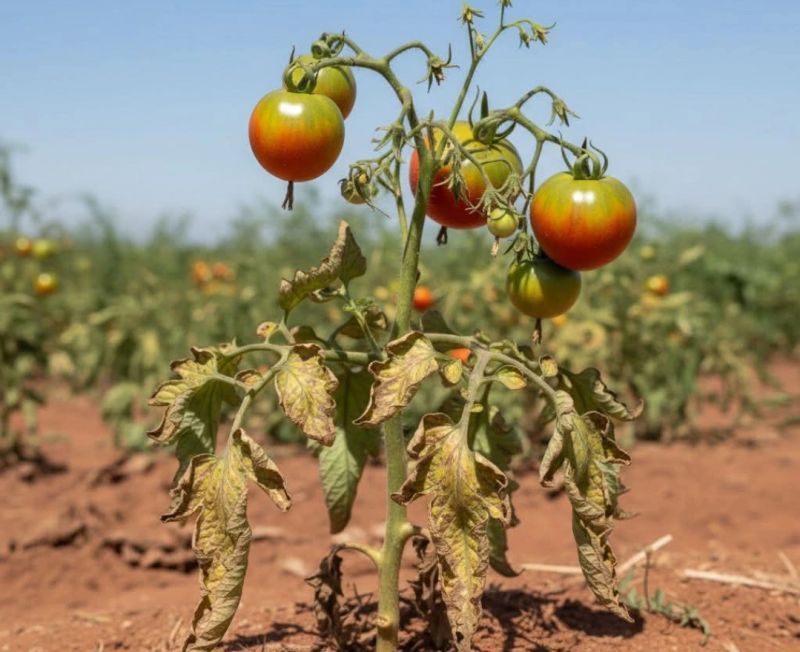
When potassium runs low, tomatoes start ripening in weird patches. You might see blotchy color, stubborn yellow shoulders that never redden, or hard white tissue inside once you slice them open.
Sometimes ripening just grinds to a halt entirely.
A quick soil test is the smartest first move here, since guessing can lead you to overcorrect. If the test confirms a shortage, work in a potassium-rich fertilizer.
Sometimes the potassium is there but the plant can’t grab it, often because heat is interfering with uptake. In that case, a light layer of mulch to cool the soil can help the roots absorb what’s already available.
4. Not Enough Sunlight or Too Much Shade
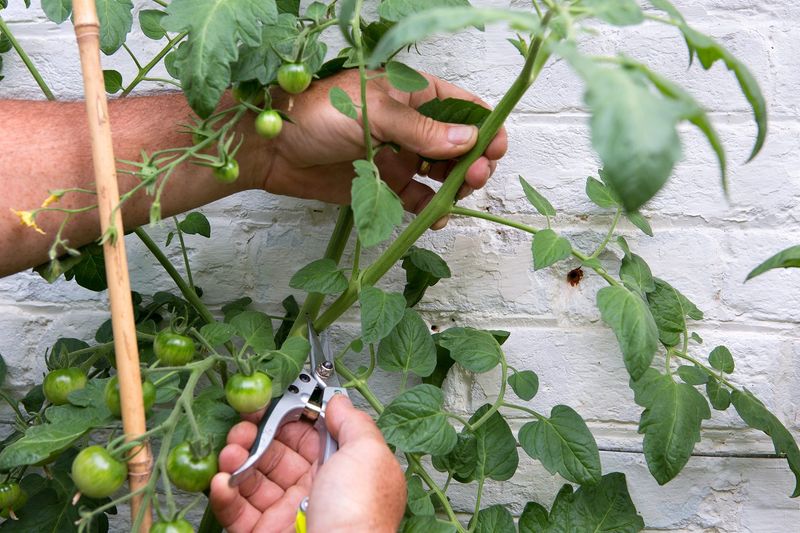
Sunlight is fuel for a fruiting tomato plant, and six to eight hours of direct light a day is the baseline. When the plant’s own leaves grow so thick they shade the fruit, ripening slows to a crawl.
Nearby plants or a fence can steal that light too.
Grab your pruners and thin out the non-essential side shoots and older leaves, especially the ones casting shadows over the fruit clusters. More light and airflow reaching the tomatoes makes a real difference.
Got tomatoes in pots stuck in a dim corner? Just wheel or carry them to the brightest spot you have.
It’s the easiest fix on this whole list.
5. Inconsistent Watering
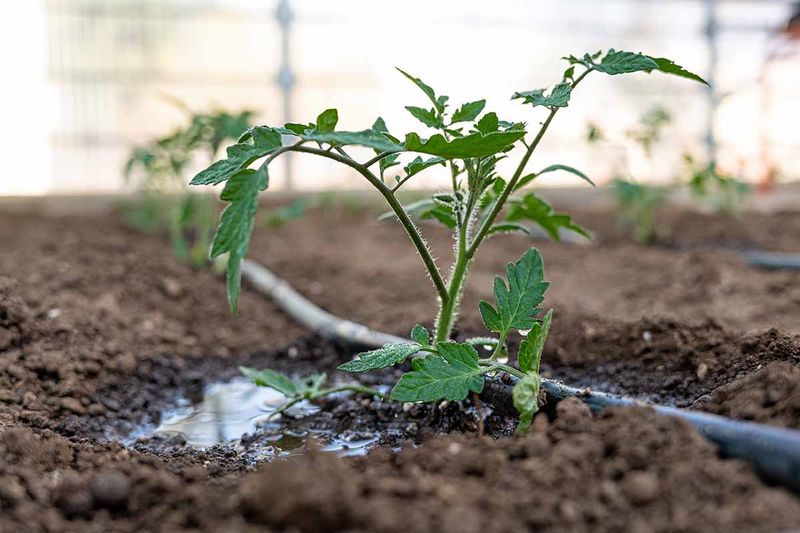
Tomatoes hate surprises when it comes to water. Swinging between bone-dry soil and soggy roots stresses the plant and scrambles the hormone signals it needs to ripen.
That same stress shows up as splitting fruit, uneven color, and blossom end rot.
Aim for deep, steady watering of about one to two inches per week, adjusting for heat and rain. A drip line or soaker hose keeps things consistent by sending water straight to the roots instead of the leaves.
Spread three to four inches of straw or wood chip mulch around the base to lock in even moisture. As fruit nears ripeness, you can ease off the water slightly for better flavor, but never let the soil go completely dry.
6. Too Much Fruit Load on the Plant
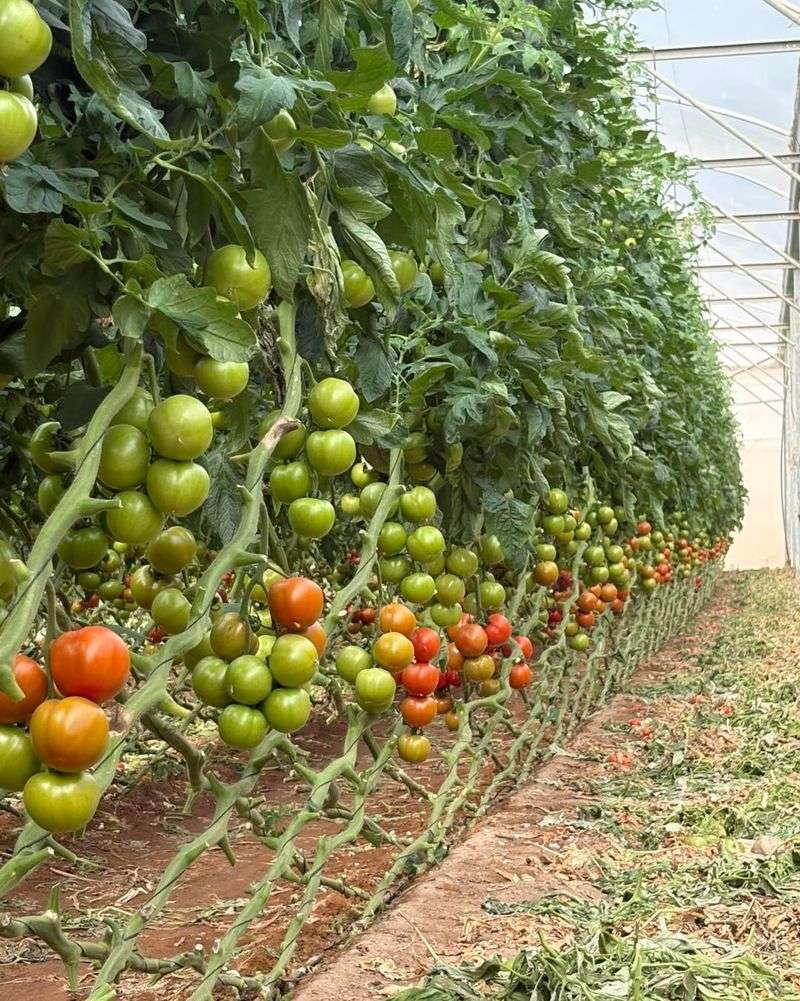
Sometimes a plant is simply overachieving. When it sets more fruit than it can handle, there isn’t enough energy to go around, and dozens of tomatoes end up half-finished.
The plant spreads itself so thin that nothing ripens on time.
Think of it as helping your plant prioritize. Pull off the tiny, deformed, or latecomer tomatoes that clearly won’t make it before the season ends.
Late in the summer, pinch out the growing tips and remove new blossoms so no fresh fruit starts forming. Every bit of energy the plant saves goes toward ripening the tomatoes you actually want to keep.
7. Plant Age or Variety
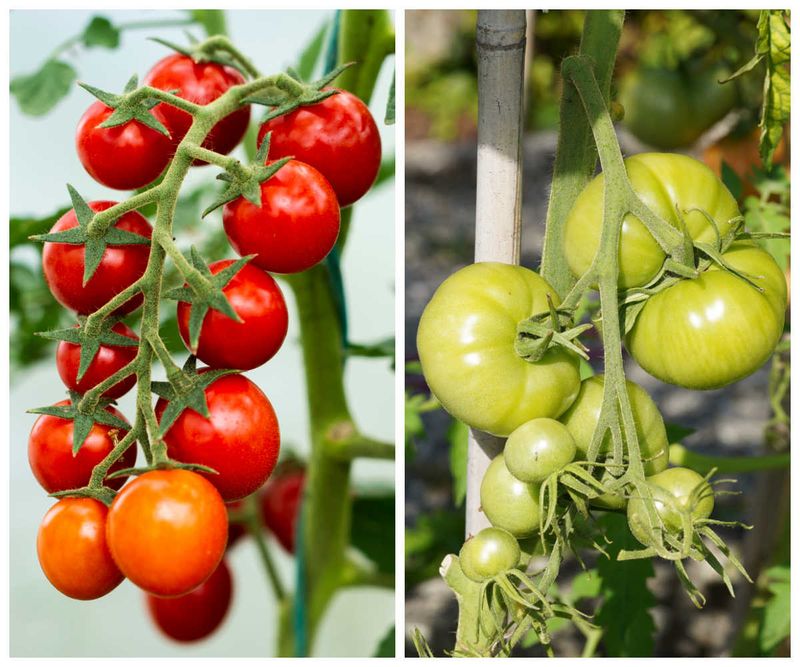
Not every tomato ripens on the same clock. Big beefsteak types take their sweet time compared to speedy little cherry tomatoes, so a slow variety planted late may simply run out of warm days.
If you got your seedlings in the ground late, biology is working against you.
Older plants play a role too. As late summer wears on, a tired plant loses vigor and ripens more sluggishly than it did in July.
For next year, look for early-ripening varieties if your growing season is short. With this year’s slowpokes, patience helps, but if frost threatens, harvest the mature green ones and let them finish indoors where it’s warm.
8. Pest or Disease Damage / Stressed Roots
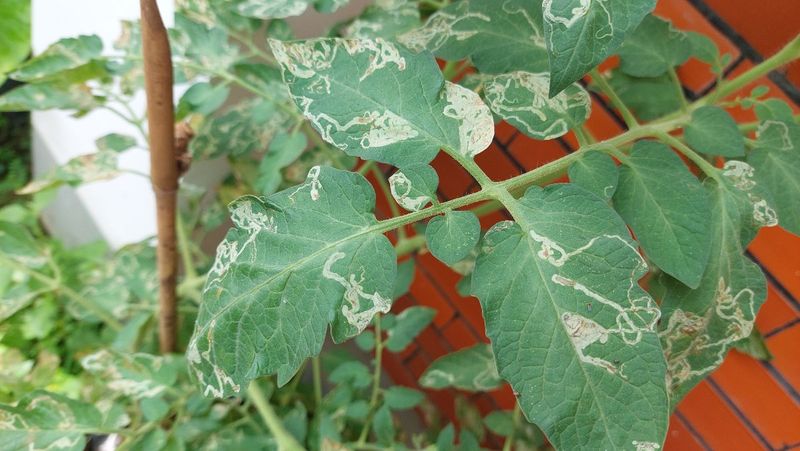
A plant fighting off bugs or disease has bigger problems than ripening fruit. When pests chew away or a fungal infection sets in, the plant pours its energy into survival, and the tomatoes get put on hold.
Roots that are damaged, compacted, or sitting in poor drainage cause the same slowdown by choking off water and nutrients.
Make it a habit to check your plants often, flipping leaves to catch trouble early. Tackle any pests or disease right away with organic sprays or good garden practices before it spreads.
Down below the soil, make sure water drains well so roots don’t rot or sit in muck. Healthy, unstressed roots are what let a plant get back to the business of turning fruit red.