
Is That Purple Banana Blossom Just Trash, or a Hidden Edible?
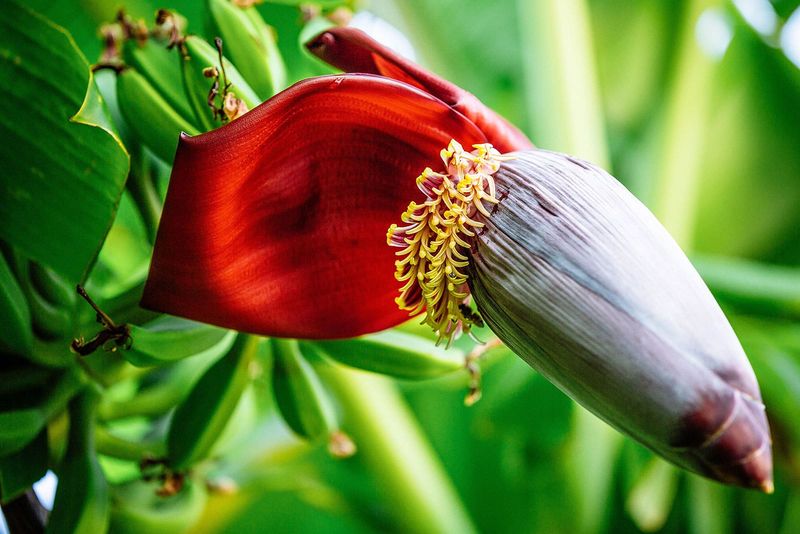
That big purple teardrop hanging under your banana bunch looks like something to chop off and toss. In many kitchens, it is actually food.
But cut it at the wrong moment and you could cost yourself fruit. Here is what the blossom is, when to leave it alone, and what the research really says about eating it or brewing it.
The purple hanging bud is part of the plant’s flowering structure
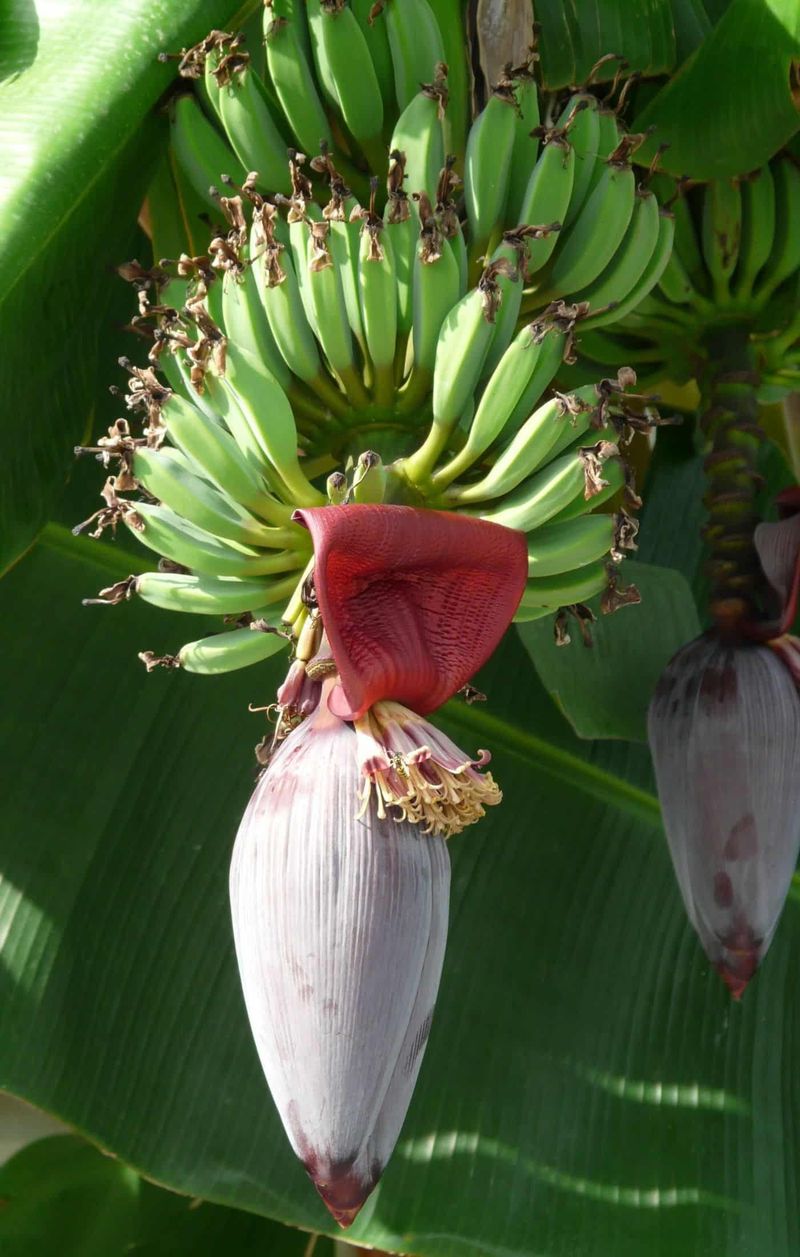
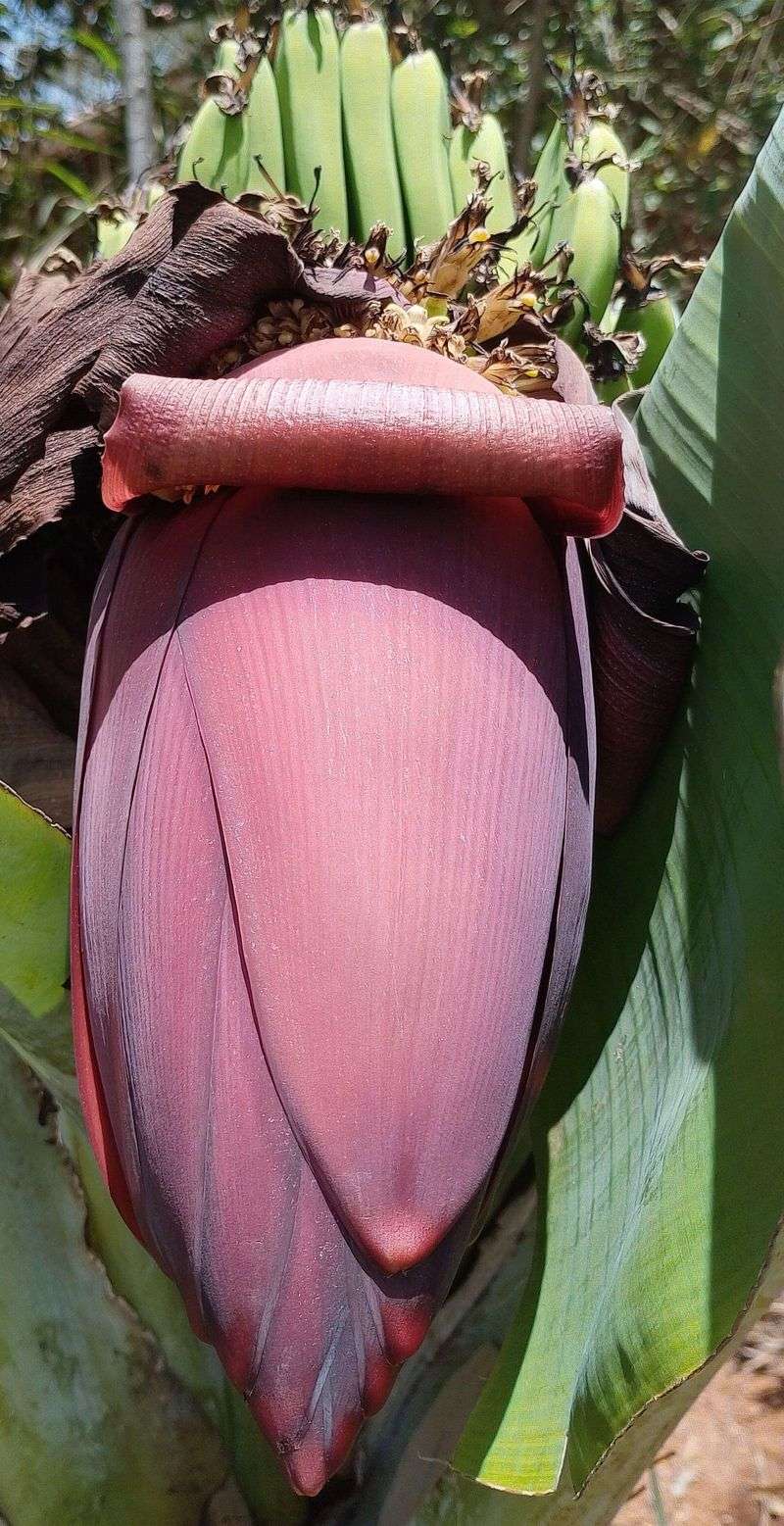
Picture a banana plant in your yard with a fat purple teardrop dangling at the end of a long stalk. That teardrop is the plant’s inflorescence, the full flowering structure.
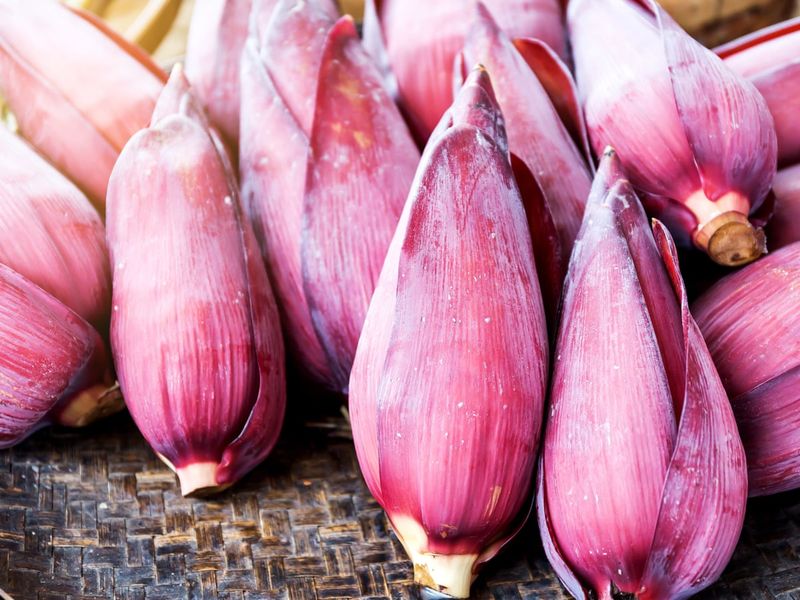
Overlapping purple bracts, which are modified leaves, wrap around the flowers like the layers of a closed artichoke.
People say “banana flower” loosely, and it can mean three different things: the whole bud, the bracts, or the tiny individual flowers tucked under each bract. They are not the same part.
Studies may look at one portion and report different results from another, so it helps to keep them straight.
The flowering order matters for everything that follows. According to University of Florida IFAS Extension, the flowers closest to the stalk emerge first.
In edible cultivars, those early female flowers develop into the hands of bananas you hope to harvest.
As the stalk keeps growing, the bract layers peel back and reveal later flowers farther along. Those are male flowers, and they do not make fruit.
The hanging bud at the end is mostly made up of this later, non-fruiting part.
So the purple bud is not a strange growth or a disease. It is the plant finishing its flowering sequence, with the fruit-producing flowers coming first and the non-fruiting ones last.
Wait for the fruit-setting flowers before removing the blossom
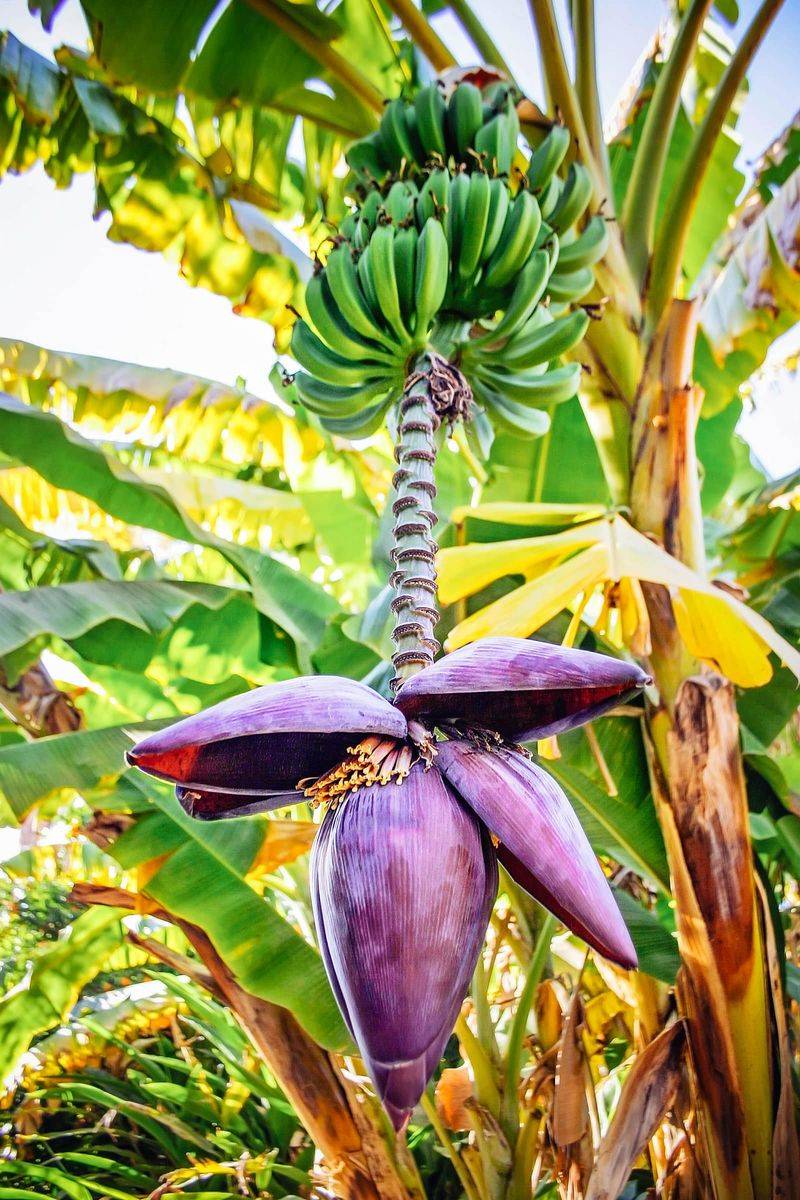
Here is the mistake to dodge: grabbing the pruners the moment you spot purple. If the fruit-setting flowers have not appeared yet, cutting the stalk or removing the whole inflorescence can end your harvest from that stem.
The bud is how the plant delivers the flowers that become bananas.
Look for small green fingers forming in rows along the stalk above the bud. Once those hands are visible, the female flowering is done.
As UF/IFAS Extension in Indian River County notes, no more bananas will form after that point, so the hanging blossom can stay or go.
Removing that late, non-fruiting bud is a very different job from cutting the fruit-bearing stalk early. One trims the tail end of the flowering sequence.
The other removes the whole fruit source. Check the stalk first, and only snip below the last hand of fruit.
Why would anyone bother? Some growers remove the bud to tidy the bunch or to harvest it as food, and the IFAS landscape guide describes the same flower order that makes this timing possible.
Leaving it hanging is fine too.
A simple rule works for most backyards: wait until you can see bananas forming, then decide what to do with the bud.
Banana blossom already has a place in the kitchen
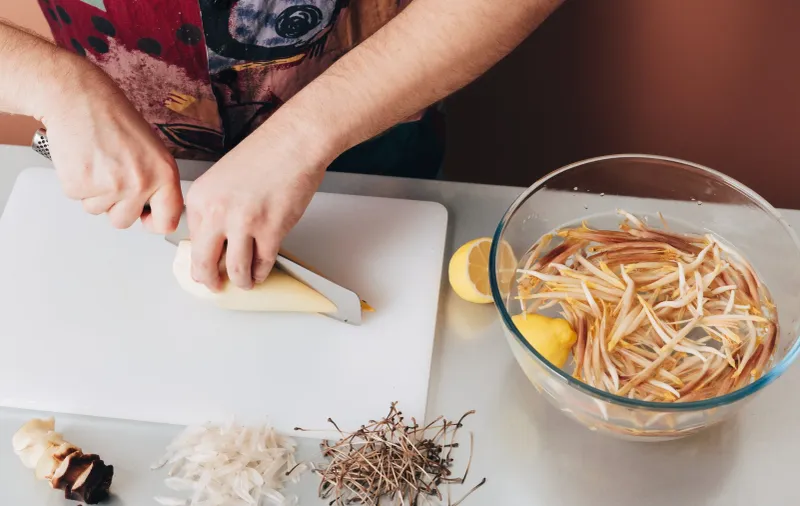
Plenty of cooks do not see banana blossom as garden waste at all. It is eaten as a vegetable in salads, soups, curries, and other cooked dishes in parts of Asia and the Pacific.
The mild, slightly tart bite is often compared to artichoke hearts.
The University of Hawai’i Pacific Food Guide gives the basic routine. Peel away the tough outer layers, slice the bud, and wash the pieces in salted water to pull out the sticky sap.
Then rinse them well.
Wear old clothes or an apron. The sap can stain fabric, and it clings to hands and knives too, so keep a rag handy.
Before you cook anything, check your plant. Use only a positively identified, food-use banana variety, and only material that has not been treated with products unsuitable for food crops.
Garden appearance alone will not tell you. As UF/IFAS Extension points out, not every ornamental banana produces edible fruit.
If you cannot say what variety you have, or you sprayed it with something not labeled for edibles, leave the blossom for the compost pile.
Thai studies document blossom infusions, not a pan-Asian tea tradition
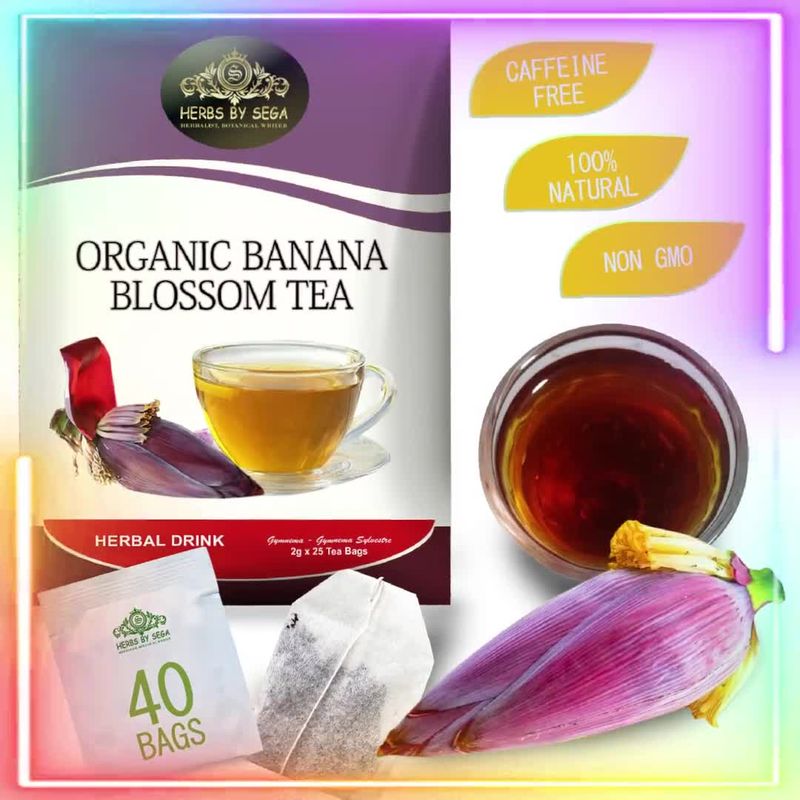
The tea idea has real roots, just narrower ones than the popular claim suggests. Thai research has documented banana blossom as food and as an herbal tea.
A Thai exploratory study of foods from banana inflorescences covered both uses and tested antioxidant properties in the lab.
More specific work followed. A 2025 study of Tanee banana blossom tea screened infusions for phytochemicals and antioxidant activity.
A 2026 product-development study combined dried blossom with dried ginger in an herbal tea beverage.
Those are Thai research and product-development examples. Eating the blossom as a vegetable is a separate, wider tradition.
Neither body of work shows that people across Asia have brewed dried-blossom tea for generations, so that claim is best left out.
Steeping times in these studies belong to the experiments. One study tested short infusions, but that does not make them a home recipe, a validated dose, or a safety standard.
A batch you dry in your kitchen from your own plant has not been tested the way a lab sample was.
If you are curious, treat tea as an experiment with food-safe, correctly identified material, not as a proven tradition or a remedy.
The blossom’s promise is not proof of superior nutrition or health benefits
“Worth more than the bananas” makes a fun hook, but it is a figure of speech. No study here sets a price or a nutrition score that puts the blossom ahead of the fruit.
Think of it as a question worth asking, not an answer.
Nutrient numbers are slippery. A 2023 review of banana by-products notes that composition varies with cultivar, plant part, growing conditions, and whether values are given fresh-weight or dry-weight.
A single figure for “the blossom” can hide a bract, a flower, or the whole bud.
Eating and drinking differ too. Chewing the plant material gives you the fiber and everything in it.
A brewed cup is a different thing, so a tea does not automatically offer the same fiber or nutrition as a plate of cooked blossom.
Lab findings need care. The Thai inflorescence study measured antioxidant properties in samples.
That tells us what is in the material, not that drinking it improves anyone’s health.
The human evidence is thin. In a 2025 randomized trial of 42 prediabetic Thai adults, people took freeze-dried blossom powder, not tea.
After eight weeks, there was no significant difference between groups in blood sugar or HbA1c. The authors called for larger, longer trials.
So banana blossom is no diabetes treatment and no stand-in for medical care. It is a vegetable.
Treat the blossom as an edible bonus, not a better banana
Think of the blossom as a bonus crop riding along with your bananas. People do eat it, and Thai researchers have studied it as an infusion, but that does not make it a better banana or an ancient pan-Asian tea custom.
Let the fruit come first. Wait until the bananas have formed, as UF/IFAS advises, then follow the Hawai’i prep steps only if the plant is food-use and untreated.
The purple bud is not the star of the plant, but it is not trash either.