
If Your Thanksgiving Cactus Is Dropping Segments Instead Of Setting Buds, Here’s The Cool-Room Fix
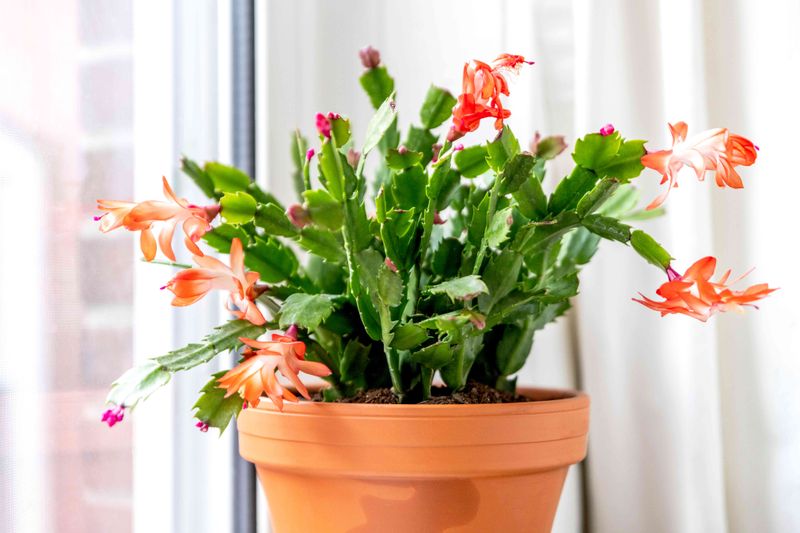
A Thanksgiving cactus that starts shedding stem segments can make any plant owner nervous. It is easy to guess that the plant wants a cooler room or is struggling to bud.
The real story is more helpful, because a few simple checks can tell you where to start. Here is how to look at the soil, the pot, and your plant’s recent changes before you act.
Segment loss does not diagnose the problem
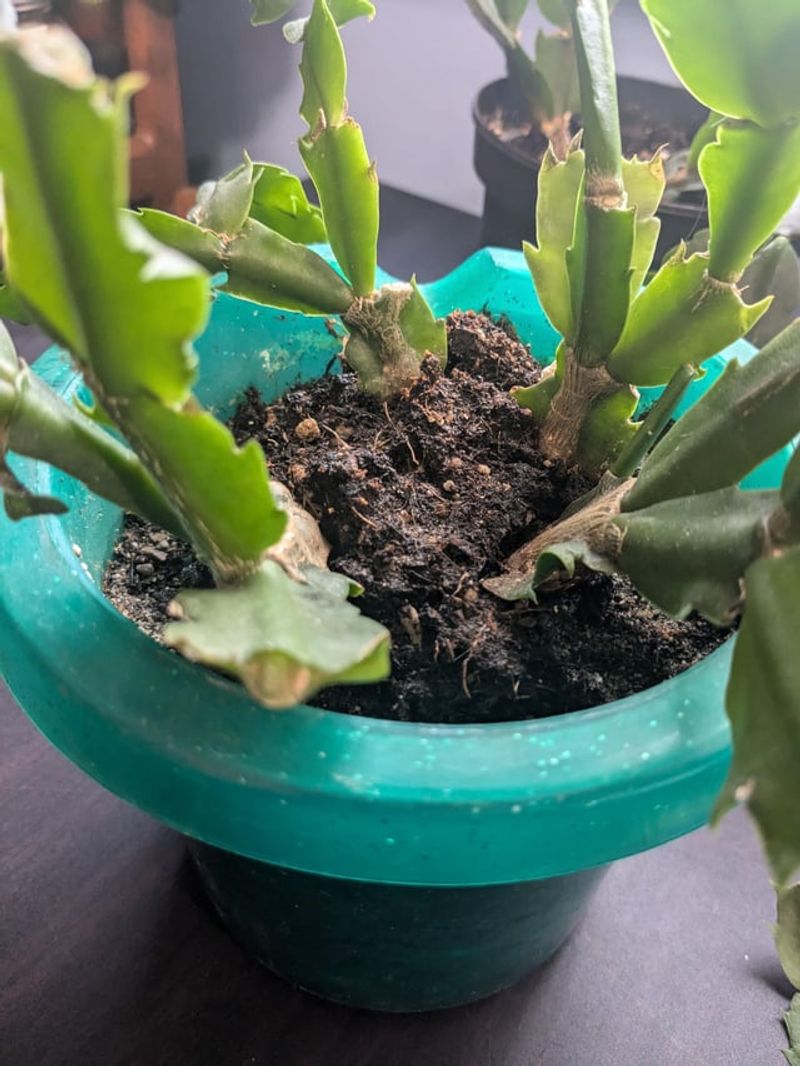
Dropping stem segments is a symptom, not a verdict. It does not tell you the plant needs a cooler room, and it does not mean your cactus is failing to set buds.
Those are two separate issues, and mixing them up can send you down the wrong path.
According to University of Arkansas Extension, segment drop can be a sign of stress from conditions that are too wet or too dry, or from changes in the plant’s surroundings. Another expert response on Ask Extension points out that damaged roots can also leave a plant unable to take up water normally.
So the cause could be too much water, too little water, a recent change, or root trouble. You cannot tell which from the fallen pieces alone, and that is okay.
Nobody can diagnose your plant from a photo, so the goal is to gather clues.
This article starts with plant care: the soil, the drainage, and steady conditions. Flowering comes later, as its own goal.
Cool nights and long dark nights are covered in the fifth section, as Clemson Extension describes, because they relate to buds rather than to segments.
Check the mix and the pot’s drainage
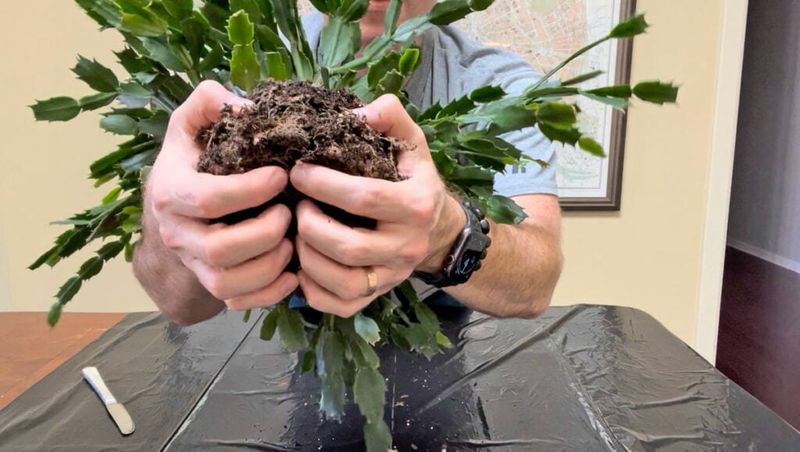
Start with your finger. Push it about an inch into the potting mix and notice whether it feels soggy, damp, or dry and crumbly.
Then lift the pot. A very heavy pot usually holds a lot of water, while a very light one suggests the mix is dry.
Next, look at the drainage. Check that the holes in the bottom are not blocked by roots or packed soil.
Look in the saucer or decorative container too, because standing water there keeps the mix wet from below.
Holiday cacti are not desert cacti. They are rainforest plants that grow on trees, so as Clemson Extension explains, they should not stay waterlogged, but they should not be left to shrivel either.
The usual guidance is to let the mix dry a bit between waterings rather than keeping it constantly wet.
The University of Minnesota Extension also stresses good drainage and warns that overwatering can lead to root rot.
Write down what you find before you change anything. Is the mix wet, dry, or in between?
Does water run freely out of the bottom? Those notes will guide your next move.
Match the watering change to what you find
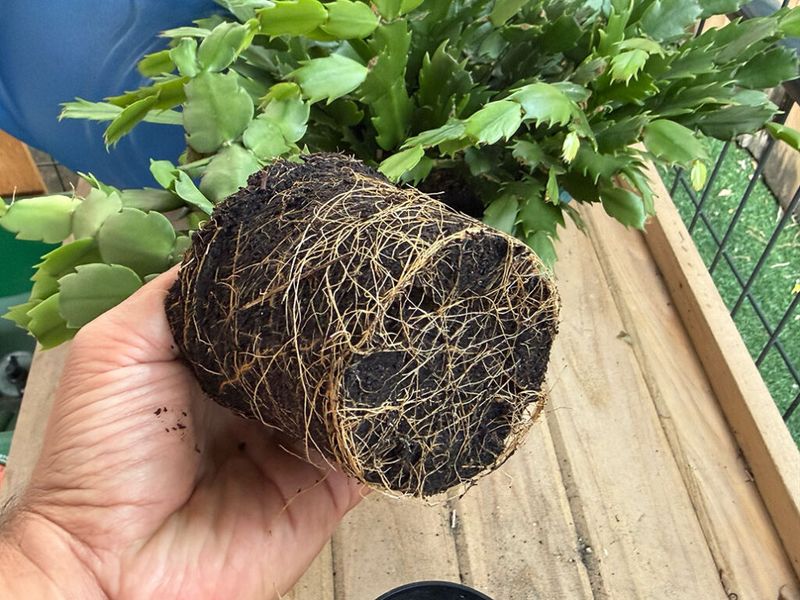
Let the soil tell you what to do. If the mix stays soggy, fix the cause.
Empty any water from the saucer or decorative pot, make sure the drainage holes are open, and hold off on watering until the mix has dried somewhat.
If the mix is severely dry, give it a thorough drink and let the extra water drain out. Prolonging the drought does not help this plant, and Iowa State Extension cautions against both excessive wetness and excessive dryness.
There is no universal schedule here. A small clay pot in a bright room dries faster than a large plastic one in a dim corner, so check the mix each time rather than watering by the calendar.
A wilted plant in wet soil is a special case. Do not assume it wants more water.
As the University of Minnesota Extension notes, poor drainage can cause root rot, and an Ask Extension response describes root loss as a reason a plant may not take up water.
Root trouble is a possibility, not a confirmed diagnosis. These steps may help the plant recover, but they cannot promise that segment loss will stop.
Keep care steady while you reassess
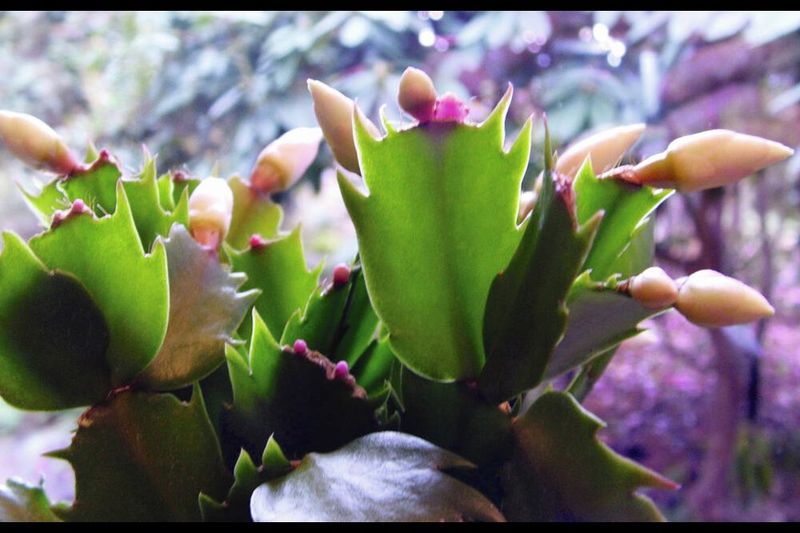
Think back over the last few weeks. Did you bring the plant home from a store, move it to a new room, repot it, or change how often you water?
Environmental changes are among the possibilities that University of Arkansas Extension lists for segment drop.
If something did change, you have a useful clue. It does not prove the cause, but it tells you what to keep an eye on.
Once you have found a moisture or drainage problem, fix that one thing. Resist the urge to move the plant, repot it, change the light, and adjust the watering all in the same week.
Several changes at once make it hard to know what helped and can add stress.
You may have read that drafts or sudden humidity shifts cause trouble. That advice, like the guidance from University of Minnesota Extension, concerns flower buds dropping, which is a different symptom.
It has not been shown to cause segment loss, so treat it as a reason for steadiness, not as a diagnosis.
Cool nights can support flowering, not cure segment loss
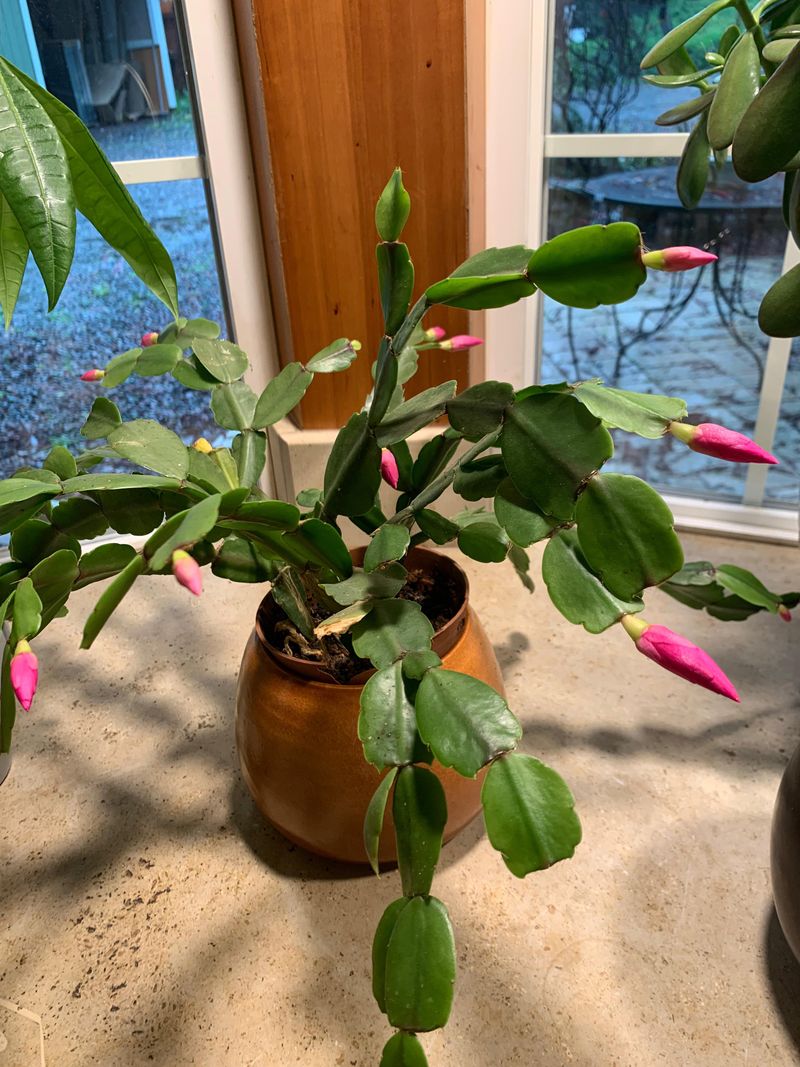
Here is the straight answer on the cool-room question. Suitable cool nights and long, uninterrupted darkness can support flower-bud formation.
They have not been shown to treat segment loss, so a cool room is not a fix for dropping segments.
Temperature is only part of the flowering recipe. Clemson Extension notes that holiday cacti respond to both temperature and day length.
Light at night, from a lamp or a hallway bulb, can break up the long dark period many plants need.
Guidance on numbers varies. University of Illinois Extension and Iowa State Extension give somewhat different ranges, such as nights around 50 to 55°F or 55 to 65°F.
No single number works for every home or every plant.
Colder is not better. Avoid drafts and temperature extremes, and do not expose the plant to temperatures below 50°F.
University of Connecticut Extension advises bringing holiday cacti indoors when temperatures drop below that mark.
Once buds appear, steadiness matters. University of Minnesota Extension says drafts, sudden temperature or humidity changes, and shifts in light or watering can contribute to bud drop.
That is a separate worry from segment loss.
Make one targeted change, then reassess
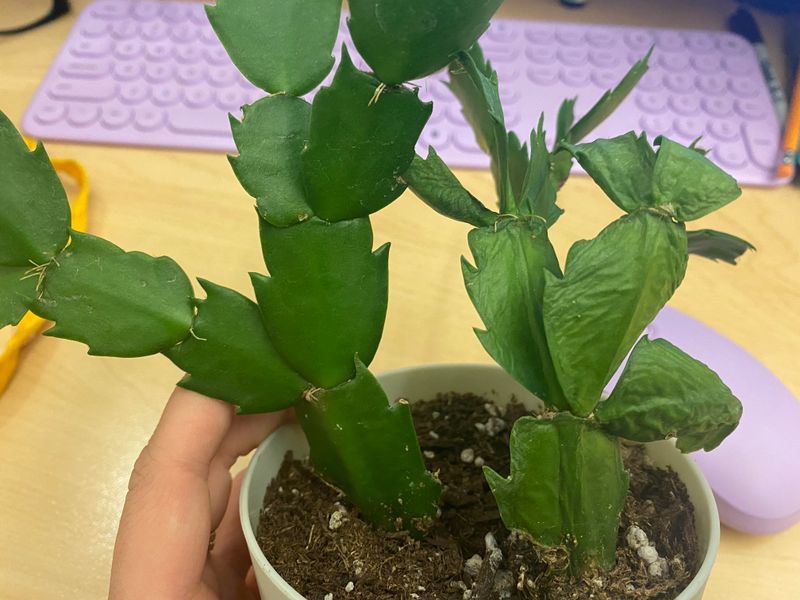
Pick the step that matches what the pot told you. If the mix is soggy, improve drainage and empty the saucer.
If it is bone dry, water it well. Either way, avoid swinging between too wet and too dry, and keep the plant’s conditions steady, as University of Minnesota Extension recommends.
Give it a couple of weeks and check the mix again before changing anything else. If you want blooms, plan cool, dark nights as a separate project, as described by Clemson Extension.
Flowering conditions are a goal of their own, not a proven cure for dropped segments. Your plant is more likely to settle when you change one thing at a time.