
If Your Christmas Cactus Stem Segments Look Soft And Wrinkled, Here’s What It’s Telling You Before Bud Season
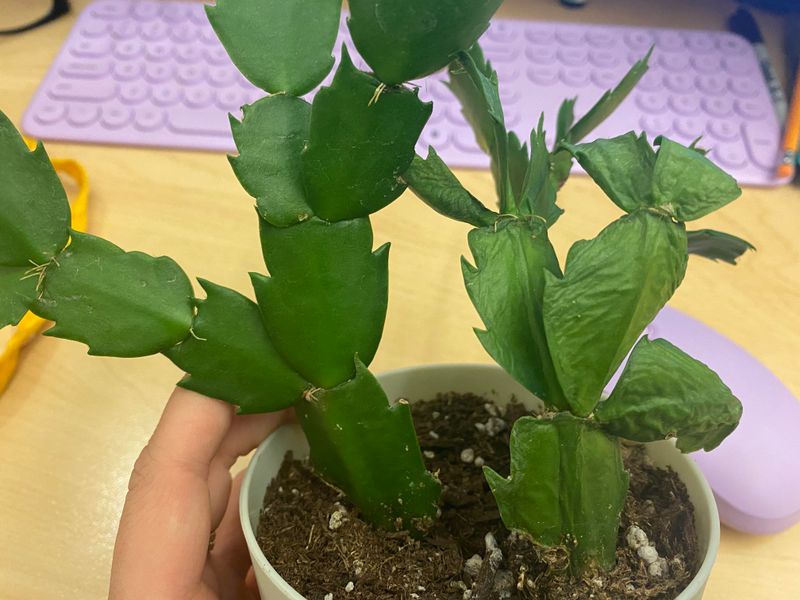
Those soft, wrinkled stem segments on your Christmas cactus are hard to ignore, especially when the holidays are just around the corner. Many gardeners assume the plant is thirsty and reach straight for the watering can, but that quick reaction can sometimes make things worse.
The wrinkles are a warning worth paying attention to, and understanding what they really mean gives you the best shot at a healthy plant heading into bud season.
Wrinkled segments warn of water stress, not a specific cause
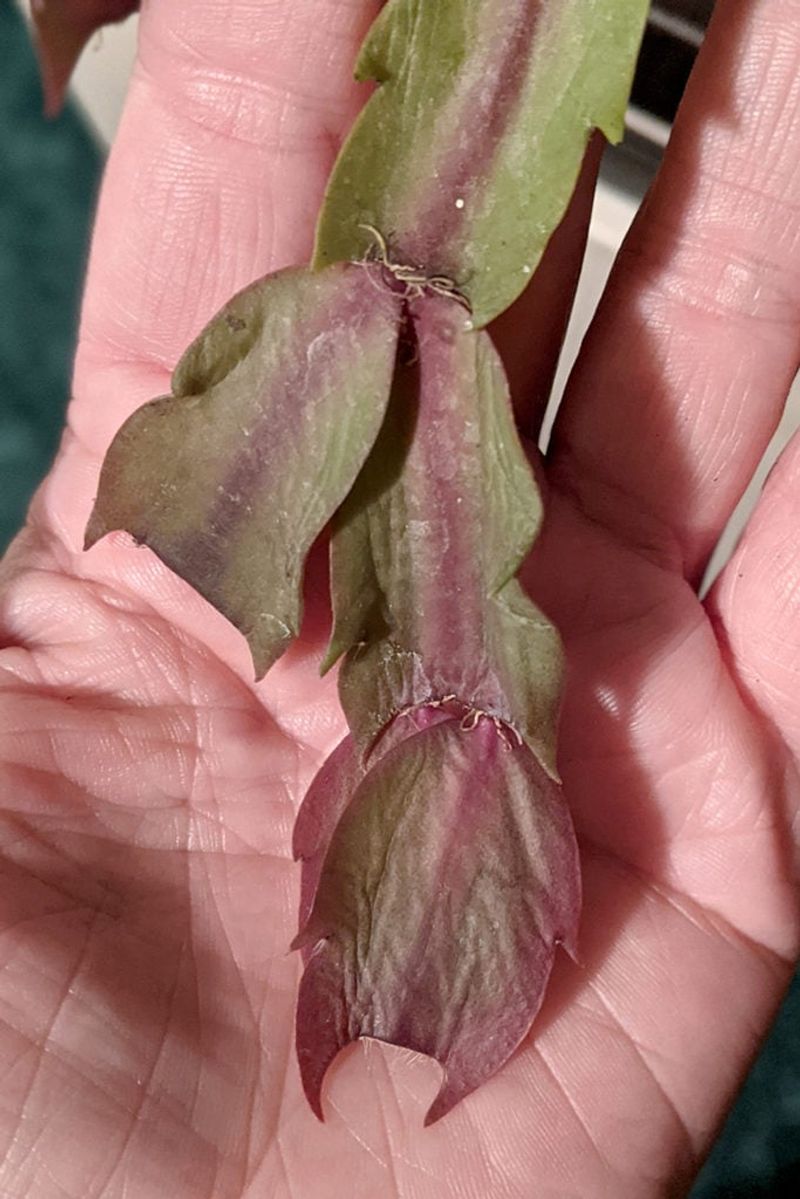
Flat, fleshy stem segments are what most people call the “leaves” of a Christmas cactus, but they are actually modified stems. Each segment stores water and supports the plant’s ability to photosynthesize and eventually set buds.
When those segments begin to look soft, shriveled, or wrinkled, the plant is signaling that something is off with its water balance.
The tricky part is that wrinkling alone cannot tell you whether the plant has too little water or too much. Illinois Extension guidance on holiday cacti points out that both underwatering and overwatering can cause wilting or wrinkling, because overwatered plants often have damaged roots that can no longer move water into the stems.
In that situation, the segments shrivel even though the potting mix is soaking wet.
Treating wrinkled segments as an automatic signal to water is the most common mistake gardeners make at this stage. The symptom is real, but the cause requires a little investigation before you act.
Think of the wrinkling as a dashboard warning light: it tells you to pull over and check, not to assume you already know the problem.
Before touching the watering can, look at the overall plant. Are the segments limp all over, or just on one side?
Is the soil surface dry and pulling away from the pot, or does it look dark and damp? Those early observations will shape what you do next, and the next step is always to check the potting mix directly.
Check the potting mix before you water
Before adding any water to your Christmas cactus, push your finger about an inch into the potting mix. That single action gives you more useful information than looking at the segments alone.
If the mix at that depth feels dry and crumbly, watering is appropriate. If it still feels moist or outright wet, stop and hold off.
University of California Agriculture and Natural Resources guidance on holiday plants recommends checking soil moisture before watering and allowing excess water to drain fully after each watering session. Leaving a pot sitting in a saucer full of water keeps the roots in contact with standing moisture, which creates the exact conditions that lead to root trouble over time.
When the mix is dry and you decide to water, do it thoroughly enough that water flows out of the drainage holes. Then empty the saucer within an hour or so.
This approach gives the roots a full drink without letting the pot stew in excess water.
One thing to avoid is putting yourself on a fixed weekly or biweekly watering calendar. How quickly a pot dries out depends on the pot size, the mix, the humidity in your home, the season, and how much light the plant receives.
Illinois Extension emphasizes checking soil and drainage conditions rather than following a fixed schedule, because watering needs shift throughout the year. Checking the mix each time takes about five seconds and removes most of the guesswork.
When the mix stays wet, investigate the roots
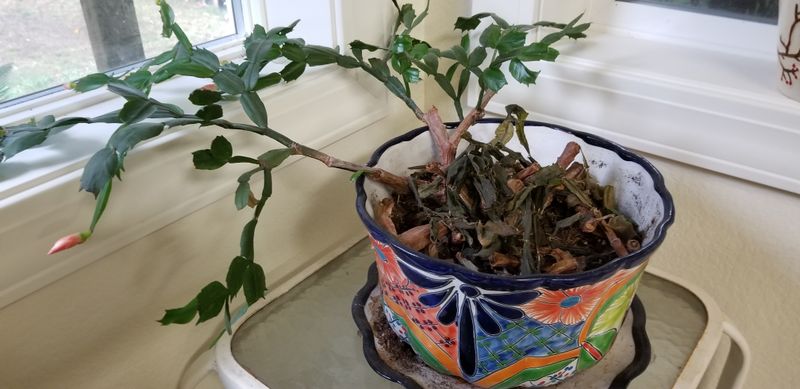
A plant can look genuinely thirsty even when its potting mix is still wet. That contradiction is one of the most confusing things about holiday cactus care, and it usually points toward root trouble rather than drought.
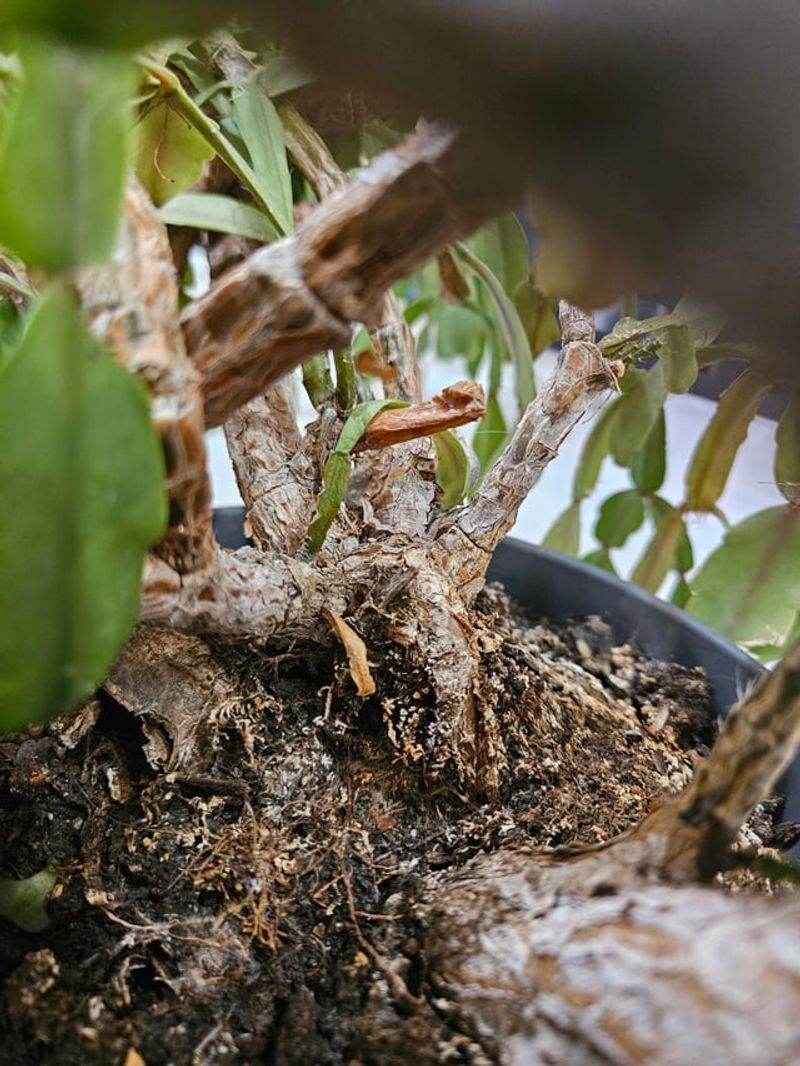
When roots are damaged, whether from sitting in water for too long or from a fungal problem at the soil line, they lose the ability to move water up into the stems. The segments then wrinkle from the inside out, regardless of how wet the mix is.
If you check the mix and find it is still damp or wet while the plant continues to look stressed, the first thing to do is confirm that the pot actually drains. Hold it over a sink and see whether water flows freely from the drainage holes.
A pot with blocked drainage or no holes at all can trap moisture for weeks without any visible sign on the surface.
Next, look for warning signs that suggest something more serious is happening. University of Minnesota Extension lists dark or mushy roots, gray-green foliage, stem rot at the soil line, and collapsing branches as signs associated with root and stem rot in holiday cacti.
Illinois Extension notes that persistently wet mix combined with continued wilting can indicate root damage rather than simple thirst.
These signs do not confirm a specific diagnosis on their own. They are clues that something beyond ordinary dryness may be at work.
What they do tell you clearly is to stop adding water to the pot until you understand what is happening. Adding more moisture to an already wet mix with potentially compromised roots is very unlikely to help and may deepen the problem.
A severely dry plant needs a gradual reset
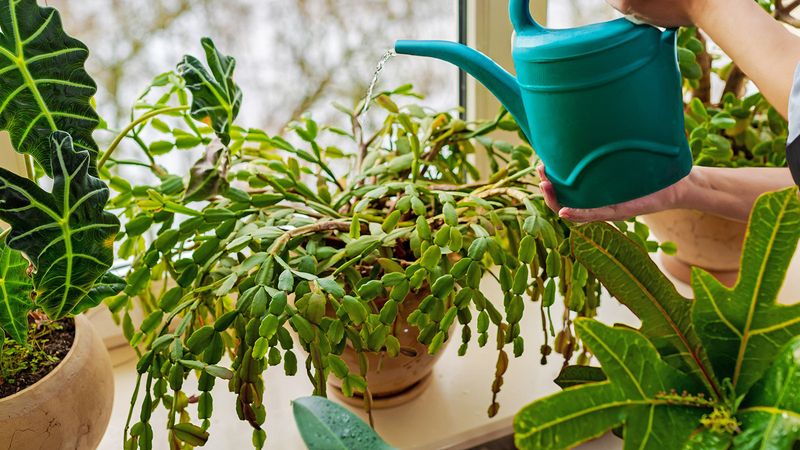
Finding a bone-dry mix under a badly wilted Christmas cactus does confirm that water stress from underwatering is at least part of the problem. The natural instinct is to give the plant a big, generous soaking right away, but that approach carries its own risk.
Roots that have dried out severely may have lost some of their capacity to absorb water, and flooding a stressed root system all at once can add physical stress on top of the drought stress already present.
University of Connecticut Extension guidance on holiday cacti specifically recommends smaller, more frequent waterings for a severely underwatered plant rather than a sudden large dose. This gradual approach gives recovering roots a chance to begin absorbing moisture again without being overwhelmed.
Water until you see a little seeping from the drainage holes, then wait and check the mix again before watering a second time.
Be realistic about recovery timelines. Segments that have been wrinkled for a long time may not plump back up quickly, and a plant that has lost a substantial portion of its root system may recover slowly or only partially.
Consistent, careful watering from this point forward gives the plant its best opportunity, but the outcome depends on how much root function remains.
Patience matters more here than urgency. Resist the urge to keep adding water just because the segments still look wrinkled after the first careful watering.
Give the mix time to cycle through moisture before checking again, and let the soil, not the appearance of the segments, tell you when the next drink is due.
Good drainage protects this rainforest cactus
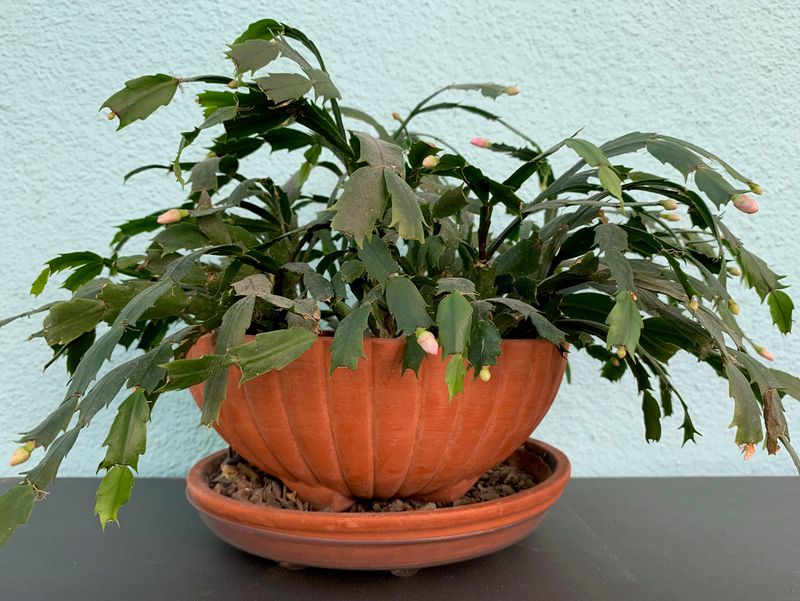
Holiday cacti have a reputation for being tough, low-maintenance plants, and in many ways they are. However, calling them cacti can lead gardeners to treat them like desert succulents that thrive on neglect and dry conditions.
Illinois Extension explains that holiday cacti are rainforest epiphytes, meaning they grow naturally in the forks of trees in humid tropical forests where their roots get moisture but also plenty of air circulation. They are not built for prolonged drought, and they are not built for waterlogged soil either.
Matching that natural growing condition at home starts with the right potting mix. A mix that drains quickly but retains some moisture, such as a blend of standard potting soil with perlite or coarse sand, keeps roots from sitting in stagnant water between waterings.
Avoid heavy, dense mixes that compact over time and hold too much moisture.
The pot itself matters just as much. Choose one with clear drainage holes, and make sure nothing is blocking them.
After watering, empty the saucer rather than letting the pot stand in collected runoff. Even an inch of standing water in a saucer can keep the bottom of the root zone wet for days.
University of New Hampshire Extension guidance on watering Christmas cacti reinforces that watering frequency should respond to actual soil conditions rather than a fixed schedule. Setting up good drainage from the start reduces how often you face the guesswork of whether wrinkled segments mean too much or too little water.
Bud season depends on more than watering
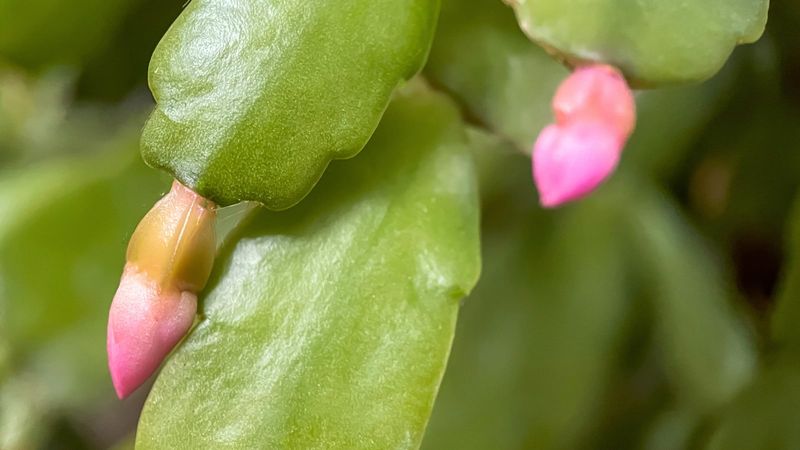
Sorting out the watering situation is genuinely important for your plant’s health, but fixing wrinkled segments does not automatically put buds on the calendar. Holiday cacti flower in response to specific environmental conditions, and those conditions have nothing to do with whether the segments look plump or shriveled.
The two biggest triggers for bud formation are long, uninterrupted nights and cool temperatures. Illinois Extension notes that bud formation is influenced by extended dark periods and cooler conditions, and that exact requirements can vary by cultivar.
A plant kept in a room where lights stay on late into the evening may not receive the darkness it needs, even if everything else is managed well. Temperatures in the mid-50s to mid-60s Fahrenheit at night are often cited as favorable, though the precise range shifts depending on the plant type and the source consulted.
Water management during the bud-forming period still matters, but not in the direction some gardeners expect. UMass Amherst Extension research on commercial holiday cactus production indicates that water stress during flower induction can reduce bud set rather than encourage it.
Deliberately withholding water to push the plant into bloom is not a reliable strategy and may cost you buds. UConn Extension advises keeping care consistent during bud development, avoiding both severe dryness and overwatering.
One more thing worth knowing: many plants sold under the name Christmas cactus are actually Thanksgiving cacti, which typically bloom several weeks earlier. Illinois Extension notes that the common name alone does not tell you which plant you have or when it will bloom.
Observing your plant’s actual bloom timing over a season or two is the most reliable way to understand its individual rhythm. Addressing water stress now gives the plant a better foundation, but light, temperature, plant type, and timing all shape what happens come bud season.
Let the soil—not the wrinkles—guide your next step
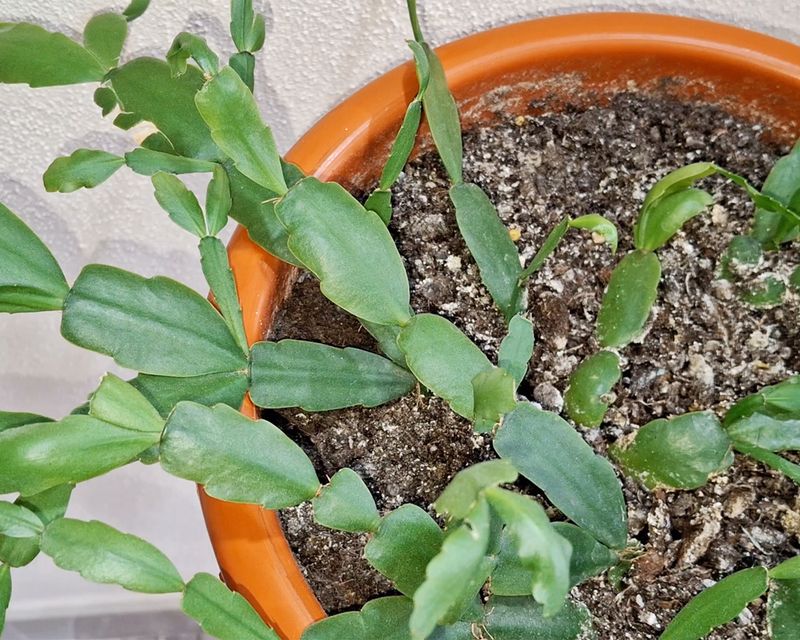
Wrinkled segments on a Christmas cactus earn your attention, but they should send you to the soil, not straight to the tap. Check the mix about an inch down: if it is dry, water carefully and let the excess drain.
If it is still wet, hold off and look for signs of drainage problems or root trouble before adding more moisture.
Correcting water stress supports the plant and removes one obstacle heading into bud season. Illinois Extension is clear that flowering also depends on light, temperature, plant type, and timing, so steady, attentive care matters more than any single watering decision.
A plant that gets consistent, informed attention has a much better chance of reaching bud season in good shape than one watered on impulse.