
If Your Christmas Cactus Looks Tired And Wrinkled Right Now, Here’s The September Reset That Wakes It Up Before Winter
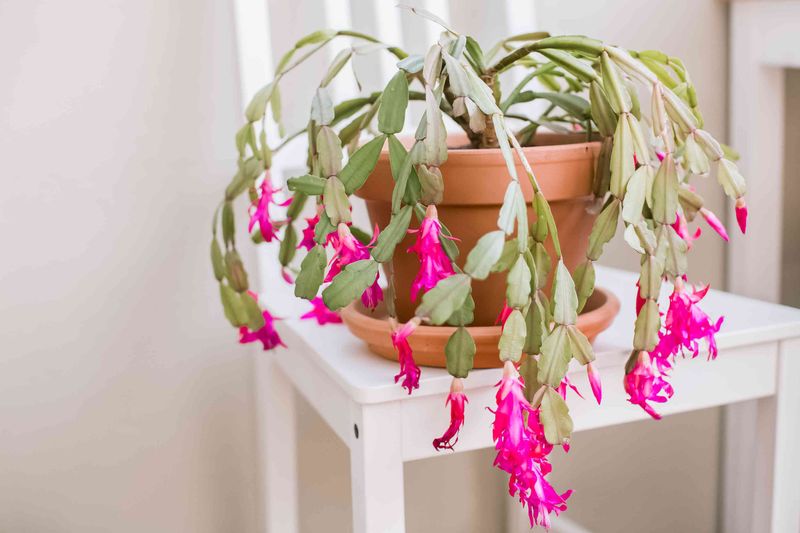
Late summer is a tough time for holiday cacti. The stems look flat, wrinkled, or dull, and most people’s first instinct is to grab the watering can.
Before you do that, though, it helps to understand what’s actually going on, because the fix depends on the cause, not just the symptom. This guide walks you through a practical, step-by-step check that gives your plant the best shot at recovering before the bloom season arrives.
Wrinkled stems signal stress, not one specific watering mistake
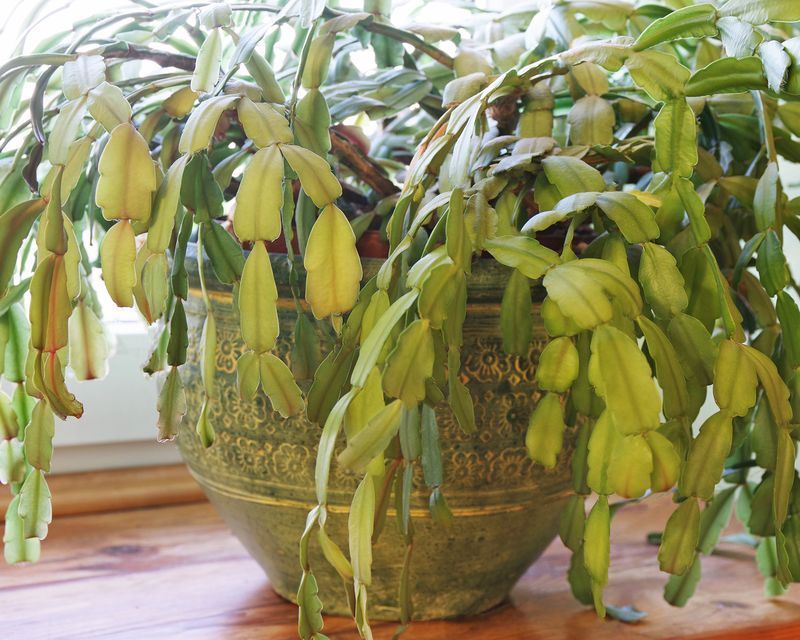
Flat, wrinkled, or dull-gray-green stem segments are the symptom that brings most holiday cactus owners to a near-panic in early September. The stems look deflated, the plant seems to be collapsing inward, and the most natural assumption is that it just needs a drink.
That assumption is understandable, but it skips an important diagnostic step.
Holiday cacti are rainforest epiphytes, not desert plants. University of Minnesota Extension and the Royal Horticultural Society both describe them as plants that prefer humidity, bright filtered light, and a well-drained but consistently moist growing medium.
They are adapted to anchor themselves to trees and absorb moisture from their surroundings, which means they need reliable moisture and good drainage working together, not a drought-and-drench cycle.
The complication is that wrinkling can show up in two completely different situations. A plant that has genuinely dried out will wrinkle because the stem segments are losing water.
But a plant sitting in soggy, poorly drained mix can wrinkle for the same reason, because root damage from excess moisture prevents the roots from taking up water at all. University of Illinois Extension specifically notes that shriveled, wrinkled stems can result from either under- or overwatering, with overwatering being especially common precisely because it damages the roots that would otherwise deliver moisture to the rest of the plant.
The September plan described in this article is a diagnostic and corrective-care process, not a magic reset. It may help when the underlying problem is still reversible.
Whether it leads to flowering before winter depends on the plant’s condition, its type, your local temperatures, and a few other factors that vary from household to household.
Check the mix and drainage before you water
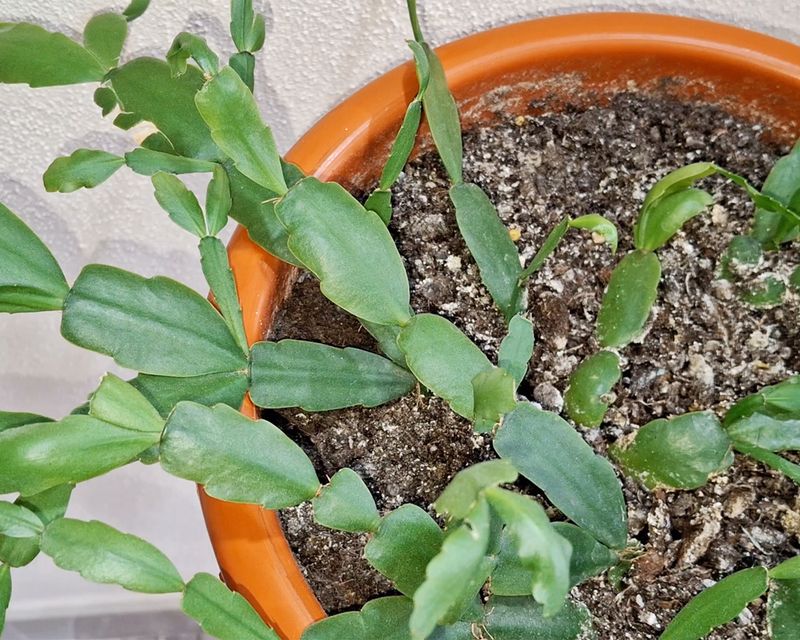
The single most useful thing you can do when you spot wrinkled stems is to push a finger about an inch into the potting mix before you do anything else. Watering on a fixed weekly schedule is one of the most common mistakes holiday cactus owners make, and University of New Hampshire Extension is clear that frequency should be guided by the condition of the mix, not the calendar.
Several variables affect how quickly the mix dries out. A small pot in a warm, sunny room with a coarse, fast-draining mix will dry faster than a large plastic pot in a cool, dim corner.
Summer heat speeds up drying; the transition into fall can slow it considerably. Knowing your specific setup matters more than following a generic schedule.
Once you have a sense of the moisture level, check the drainage situation. Lift the pot and confirm that the drainage holes are open and unobstructed.
If the plant is sitting inside a decorative outer pot or on a saucer, look for standing water. Minnesota Extension recommends removing any water that collects in a saucer or cachepot after watering, because roots sitting in pooled water can deteriorate even when the upper mix feels dry.
If the mix has begun to dry and the roots show no signs of trouble, the plant is a good candidate for a thorough watering. If the mix still feels wet or damp even though the stems are wrinkled, that combination is a signal to pause.
Penn State Extension advises against adding more water to a mix that has not yet dried, because persistent moisture can compound any root damage that may already be developing. Let the diagnosis guide the action, not habit.
Persistent wetness plus limp stems raises a root-rot concern
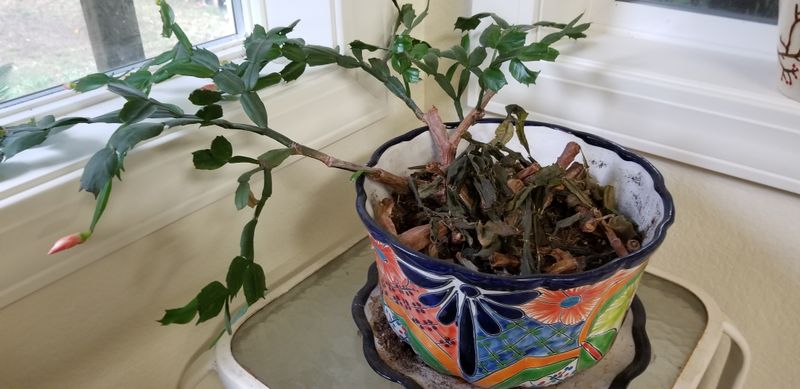
Wet soil by itself does not prove root damage, especially if you watered within the last day or two and the mix simply has not had time to drain. The concern rises when the mix stays wet for an unusually long time, starts to smell sour or stale, or the plant continues to look limp and wrinkled despite adequate moisture at the root level.
When those warning signs appear together, the next step is to look at the roots directly. Gently tip the plant out of its pot and examine the root ball.
University of Illinois Extension describes healthy roots as firm and pale, while roots affected by rot tend to be black, mushy, or disintegrating when touched. A sour odor from the root zone is another reliable indicator that something has gone wrong below the surface.
If you find only minor darkening at the tips, you may be catching the problem early. Remove any clearly dead or mushy root material, let the roots air briefly, and repot into fresh, well-draining mix only if the drainage in the current container is genuinely compromised.
University of Connecticut Extension notes that holiday cacti can tolerate being somewhat pot-bound and that unnecessary repotting during the bud-formation period can cause more harm than good.
If the rot is extensive and most of the root system is gone, stop watering and do not try to rescue the plant by soaking it. Instead, take cuttings from healthy stem segments near the top of the plant.
Ask Extension guidance on holiday cactus health problems and root-rot diagnosis resources both support using propagation as an insurance strategy when the parent plant has lost too much of its root system to recover reliably. Let the healthy segments callous for a day or two before placing them in fresh, lightly moist mix.
Water a dry plant thoroughly, then let it drain
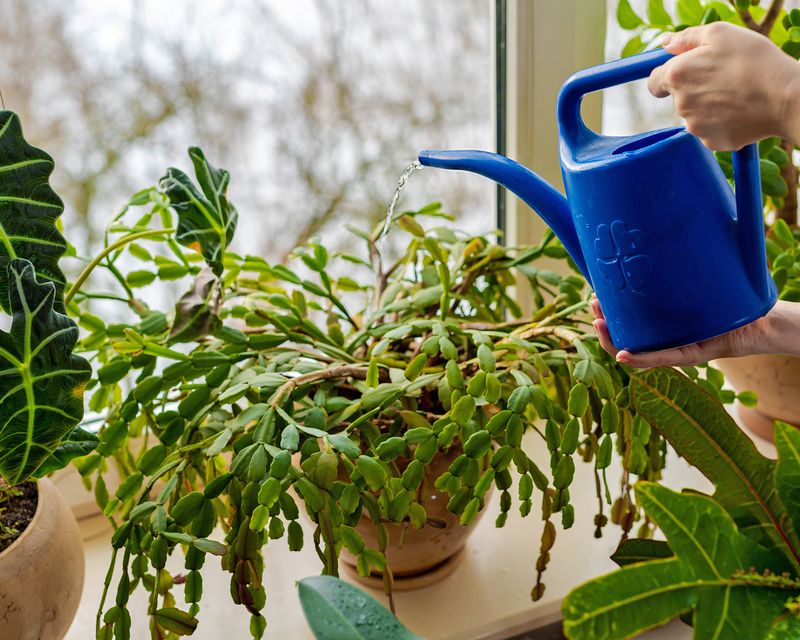
When the potting mix has begun to dry and the roots look pale and firm, the right move is a thorough watering. Pour water slowly and evenly over the entire surface of the mix until you see it running freely out of the drainage holes.
That steady flow tells you the water has reached the full root ball rather than channeling down one side and leaving dry pockets behind.
After watering, give the pot a few minutes to finish draining, then empty the saucer or outer container completely. University of New Hampshire Extension is specific about this point: standing water in a saucer keeps the roots in contact with excess moisture long after the initial watering and can lead to the same kind of root damage you were trying to avoid.
The goal is thorough saturation followed by complete drainage, not prolonged wetness.
One thorough watering does not set a new weekly schedule. Return to the finger-test method and water again only when the top inch or so of mix has dried out.
Penn State Extension recommends this condition-based approach because watering frequency varies with season, pot size, mix composition, and indoor temperature, none of which stay constant year-round.
A genuinely dry plant with healthy roots should not be left in that state for an extended period as a supposed way to push it into flowering. UMass Amherst research on commercial holiday cactus production found that water stress has not been shown to reliably trigger bud set and may actually reduce bud numbers.
Correct moisture management, not deliberate drought, is the foundation of a healthy plant heading into bloom season.
Use bright filtered light and cooler nights
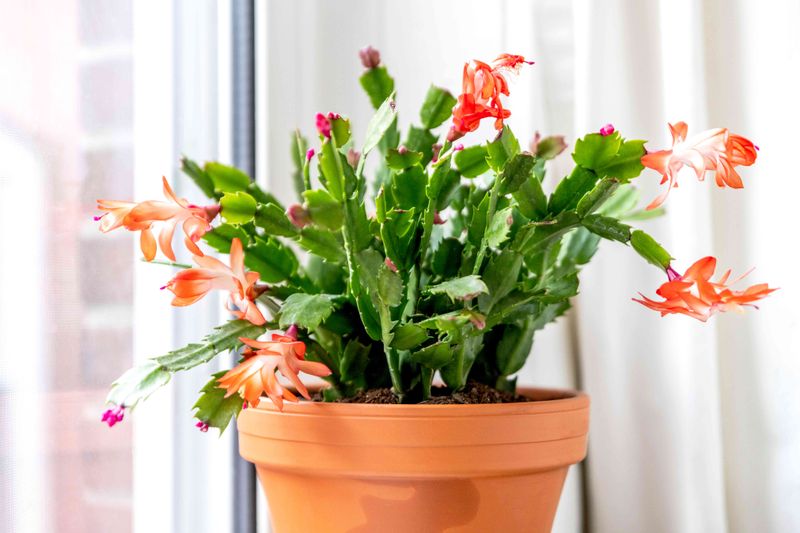
Placement matters more than most people realize once watering is under control. Holiday cacti do best in bright, filtered, or indirect light, not in a south-facing window where direct afternoon sun beats down on the stems.
Excessive direct sun can cause pale, washed-out growth and adds heat stress on top of whatever moisture problem the plant is already managing. A spot near a north- or east-facing window, or a few feet back from a bright south or west window with a sheer curtain, tends to work well for most households.
Minnesota Extension recommends a daytime temperature of roughly 65 to 70 degrees Fahrenheit and nighttime temperatures in the 55 to 65 degree range as a practical indoor target during the period leading up to bud formation. Nights that stay above about 65 degrees may interfere with flowering, so a cooler bedroom, a basement with good light, or a spot near an exterior wall can be genuinely useful in early fall.
If your plant has been spending the summer outdoors, September is a good time to bring it inside before the first frost threatens. Before moving it, Penn State Extension and Minnesota Extension both recommend inspecting the plant carefully for hitchhiking pests such as fungus gnats, mealybugs, or spider mites.
Remove any dead, yellowed, or diseased stem segments, and double-check that the drainage holes are open and the container drains freely before it comes indoors.
A plant moving from outdoor shade to indoor conditions may look slightly stressed for a week or two while it adjusts. That adjustment period is normal, and maintaining stable light and temperature during it helps minimize leaf or bud drop later in the season.
Match the dark period to the type of holiday cactus
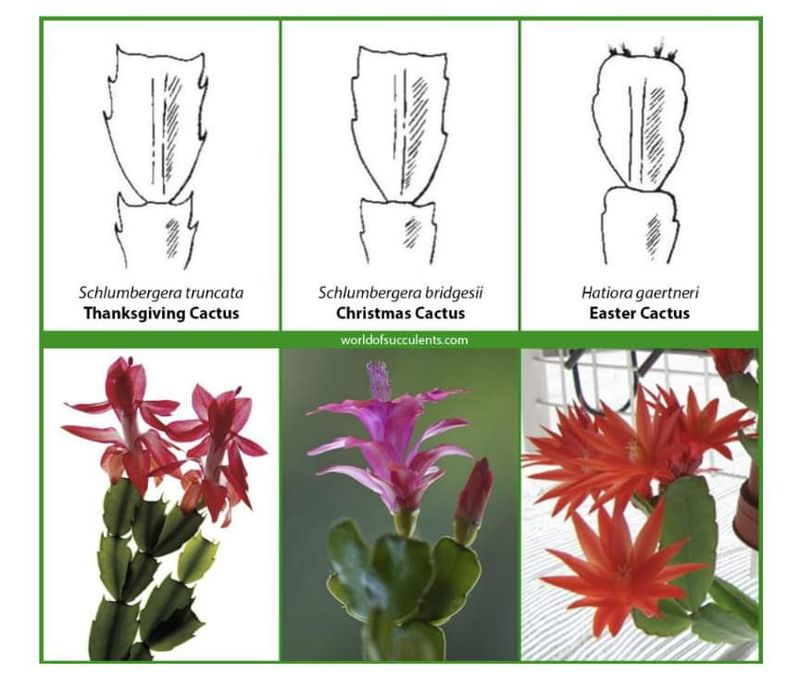
Before you set up a dark-period routine, it helps to know which plant you actually have. Most plants sold under the label “Christmas cactus” in US garden centers are actually Thanksgiving cactus, and the two have different natural bloom windows.
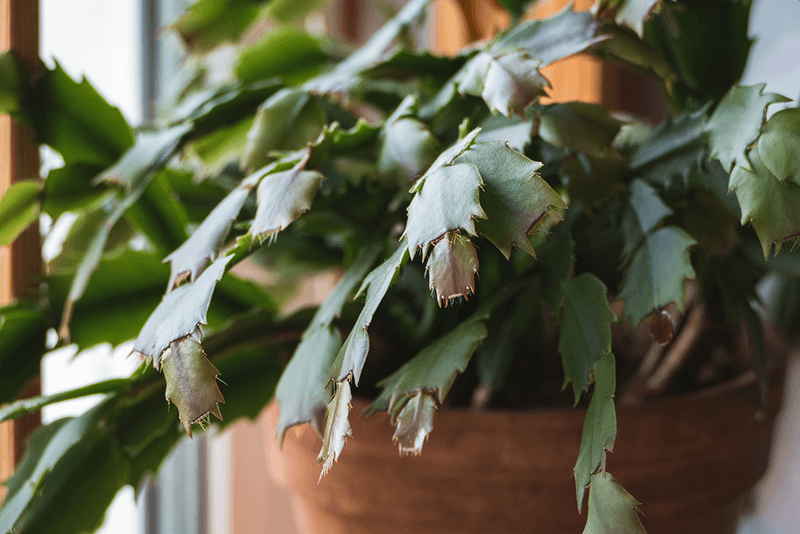
University of Illinois Extension explains that Thanksgiving cactus stem segments have pointed, claw-like teeth along the edges, while true Christmas cactus segments have smoother, rounded, or scalloped margins. If you own a Thanksgiving cactus but expect Christmas flowers, you may be disappointed simply because the bloom timing is earlier.
Both types respond to long, uninterrupted nights and cooler temperatures as cues to begin forming buds. Roughly 12 hours of complete darkness per night over a period of about six weeks is a commonly recommended starting point, though the exact timing varies by cultivar, local temperature, and the bloom date you are aiming for.
University of Connecticut Extension suggests beginning the short-day treatment around September 1 for Thanksgiving cactus and closer to October 1 for true Christmas cactus, while other sources place the start date in early to mid-September. The right time for your plant depends on its type and your local conditions, not a single universal date.
Minnesota Extension and Penn State Extension both note that artificial light at night can interrupt the dark period and prevent bud initiation, even a brief exposure from a lamp, a hallway, or a phone screen can be enough. A spare bedroom that you keep dark in the evenings, a closet with a ventilation gap, or any naturally dark room works better than trying to cover the plant inconsistently with a box or bag.
University of Florida IFAS reinforces that the dark period must be truly uninterrupted to be effective. Once the plant is in its dark-period routine, keep that schedule as consistent as possible until you see buds beginning to form.
Keep conditions steady once buds appear
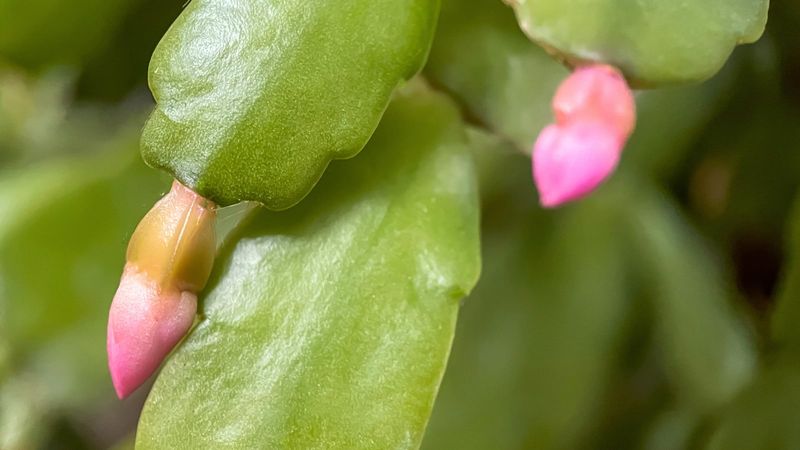
Seeing the first small buds emerge at the stem tips is genuinely exciting, but it is also the moment when a few common mistakes can undo everything. Bud initiation and bud survival are two separate stages, and the plant becomes more sensitive to environmental disruption once buds are visible.
Moving the plant to a new location, rotating the pot significantly, placing it near a heating vent or a drafty window, or letting the mix dry out severely can all trigger bud drop. Penn State Extension and University of Connecticut Extension both identify sudden changes in light, temperature, or moisture as leading causes of bud drop after formation.
Once you find a spot that works, leave the plant there.
Repotting is another temptation to resist at this stage. Pot-bound conditions are often well-tolerated by holiday cacti and may actually support flowering rather than hinder it.
University of Illinois Extension and Minnesota Extension recommend repotting every few years, generally in spring or right after flowering, not during active bud formation. The exception is a genuine drainage failure or extensive root rot that requires immediate intervention.
Continue watering based on the condition of the mix, not on a fixed schedule. Once buds are visible, the goal is stability rather than any dramatic change in care.
Deliberate water stress is not a reliable way to push more flowers. UMass Amherst commercial production research indicates that water stress can reduce bud set rather than increase it, so maintaining appropriate soil moisture remains the safer path through the blooming period.
Treat the September plan as a decision tree
The September plan comes down to a short sequence of decisions. Start by checking the mix.
If it has begun to dry and the roots look pale and firm, water thoroughly and let the container drain completely. If the mix is still wet and the stems are wrinkled or limp, hold off on watering and look at the roots before doing anything else.
Once moisture and root health are addressed, move the plant to bright indirect light with cooler nights, and set up a consistent dark period appropriate for its type. University of Illinois Extension, Minnesota Extension, and University of New Hampshire Extension all support this condition-based approach as the most reliable framework for a struggling holiday cactus.
Some wrinkled plants do recover once the underlying cause is corrected, but extensive root loss may prevent a full comeback, and no plan can guarantee winter flowers. A plant that stabilizes and pushes through a healthy bloom is a success; one that does not recover despite your best effort may simply have been too far gone when the problem was caught.