
If Your Christmas Cactus Fades Every Summer, Here’s The One Watering Habit Quietly Wearing It Down
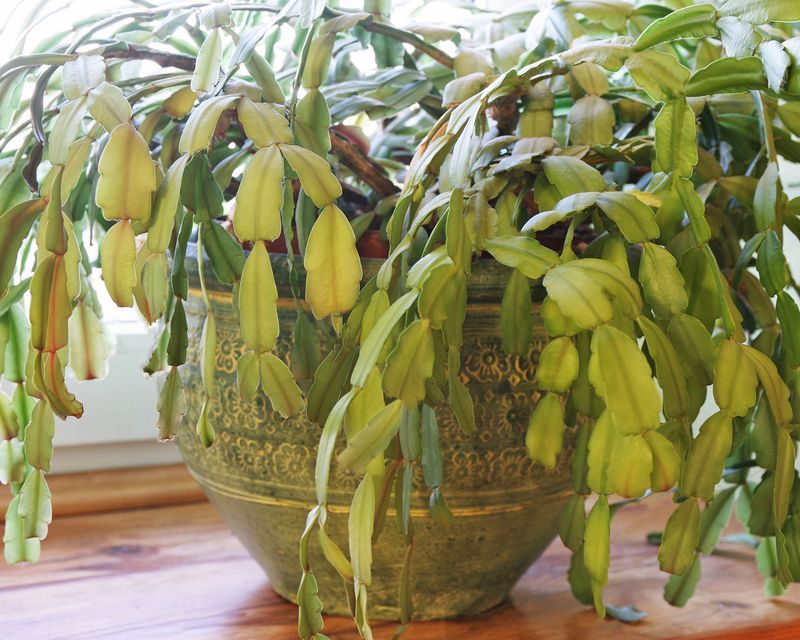
A Christmas cactus that looked healthy all winter can turn pale, limp, or washed-out by July, and most gardeners immediately reach for the watering can. The real culprit is often sitting right in front of a sunny window or baking on a bright porch.
Understanding why this rainforest plant behaves so differently from a typical cactus can save you a season of guesswork and keep your plant looking its best.
Holiday cactus needs moisture, but it is not a desert cactus
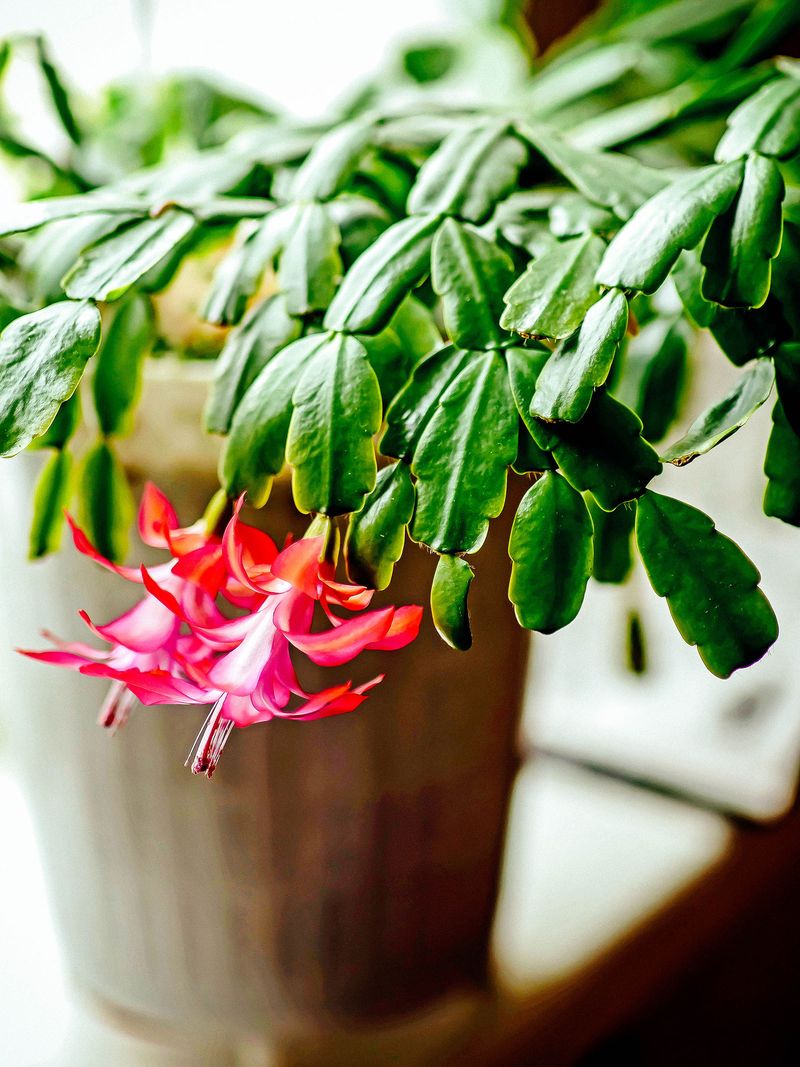
Many gardeners hear the word “cactus” and picture something that thrives on neglect and dry spells. That assumption quietly sets the stage for trouble, because the plant sold as a Christmas cactus belongs to a completely different world than a desert succulent.
According to University of New Hampshire Extension, holiday cacti are rainforest or tree-dwelling epiphytes that grow naturally in humid, shaded forest canopies, not in dry, sandy soil. They anchor themselves to tree branches and absorb moisture from rainfall, mist, and organic debris rather than pulling water from deep ground reserves the way desert cacti do.
That background matters for every care decision you make.
What that means in practice is a balanced rule: do not leave the plant bone-dry for extended stretches, but do not keep its roots sitting in continuously wet soil either. The sweet spot is somewhere between those two extremes, and finding it requires paying attention to the plant and its environment rather than following a rigid calendar.
A quick note on names: the plant labeled “Christmas cactus” at most garden centers is often actually a Thanksgiving cactus or a hybrid of the two. University of Wisconsin-Madison Extension notes that true Christmas cactus, Thanksgiving cactus, and Easter cactus differ in leaf segment shape and bloom timing, but their basic care needs are close enough that the same principles apply across all three.
For simplicity, this guide uses “Christmas cactus” as the umbrella term throughout.
Before you adjust your watering at all, take a good look at where your plant is sitting and exactly what symptoms you are seeing. Diagnosing the right problem first will make every correction you try far more effective.
Check summer sunlight before blaming water
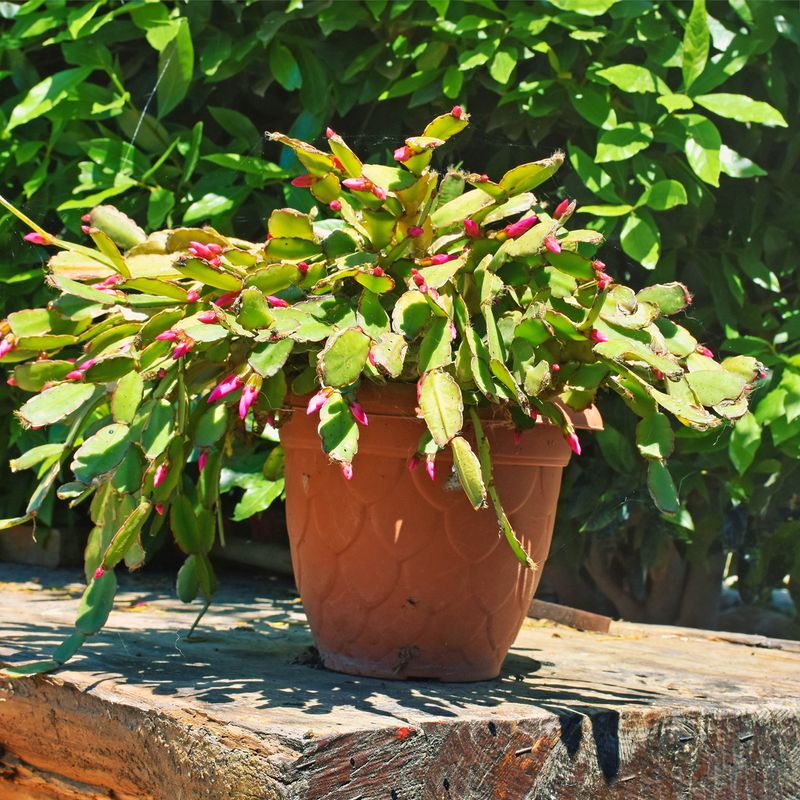
Pale or yellow-green branches on a holiday cactus during summer are easy to misread as a watering problem, but the most likely explanation is closer to the ceiling than the soil. Excessive direct sunlight is the first thing worth checking when the color drains out of your plant between June and August.
University of Minnesota Extension specifically lists excessive summer sunlight as a cause of pale-green branches, drought stress, and sunburn in holiday cacti. Virginia Cooperative Extension similarly warns that strong summer light can burn or yellow the foliage.
If your plant is sitting in a south- or west-facing window that gets hours of direct afternoon sun, or on a porch where the sun hits it without a filter, the branches may be telling you they are overwhelmed by light, not thirsty.
The fix is straightforward. Move the plant to a spot with bright, filtered, or indirect light.
Inside the house, a few feet back from a sunny window, or near a window screened by a sheer curtain, usually works well. Outdoors, look for dappled shade under a tree, a covered porch that stays bright but blocks direct rays, or the north or east side of a structure.
Outdoor placement during summer can genuinely benefit the plant, but only with the right conditions. University of Wisconsin-Madison Extension notes that the plant must be protected from direct sun, heavy rain that saturates the soil, standing water, and temperature extremes.
A shaded porch with good airflow is a good setup; a spot that catches full afternoon sun or sits in a low-lying area that holds water after rain is not.
Light is the first check when you see pale or washed-out growth, not a guaranteed explanation for every case. Once you have ruled out sun stress or corrected the plant’s position, you can look at moisture habits with a clearer picture of what might still need adjusting.
Stop watering by the calendar
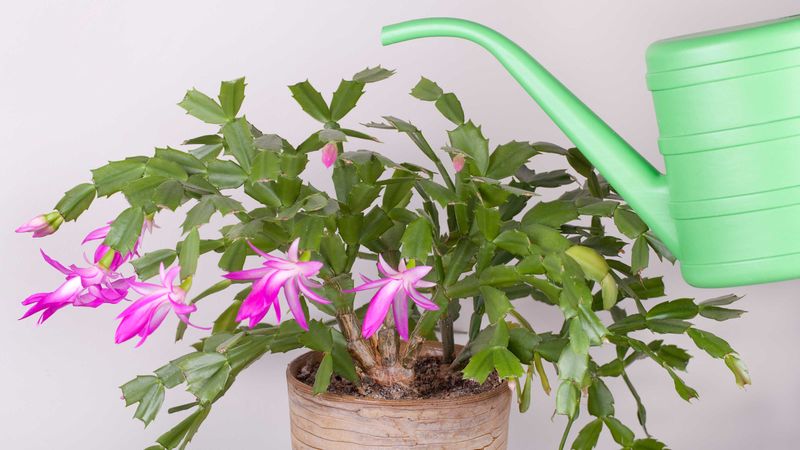
Watering on a fixed weekly schedule feels organized, but for a holiday cactus it can quietly become the habit that does the most damage. The problem is not the act of watering itself; it is watering again before the plant actually needs it.
When you water every Tuesday regardless of conditions, some weeks you will water into soil that is already wet from the last session. Do that repeatedly and the roots sit in soggy mix longer than they should.
Over time, that kind of chronic moisture without adequate drying can damage roots and open the door to rot. Leaving the pot sitting in a saucer full of drainage water compounds the problem, because the bottom of the root zone never fully drains and stays saturated even when the top of the mix feels dry.
University of New Hampshire Extension recommends checking the potting mix and watering when the surface or top inch has dried out, rather than following a set schedule. NC State Cooperative Extension echoes that approach, and UF/IFAS Extension similarly emphasizes checking the mix before adding more water.
It is worth noting that extension sources are not perfectly uniform on exactly how dry the mix should become before the next watering. Some recommend watering when the top inch is dry; others suggest allowing the mix to dry a bit more substantially.
What they agree on is the shared principle: avoid both prolonged, bone-dry conditions and continuously soggy soil. Neither extreme suits a rainforest plant.
The variables that actually determine how fast your mix dries include pot size, pot material, the type of potting mix, the ambient temperature, airflow around the plant, and how much light it receives. A small clay pot in a warm, breezy spot dries faster than a large plastic pot in a cool corner.
University of Minnesota Extension underscores that these environmental factors must be part of the assessment, not just the calendar date.
Replacing the weekly rule with a quick finger-check before you water is a small habit shift that can make a meaningful difference in how your plant holds up through summer.
Water thoroughly, then let the container drain
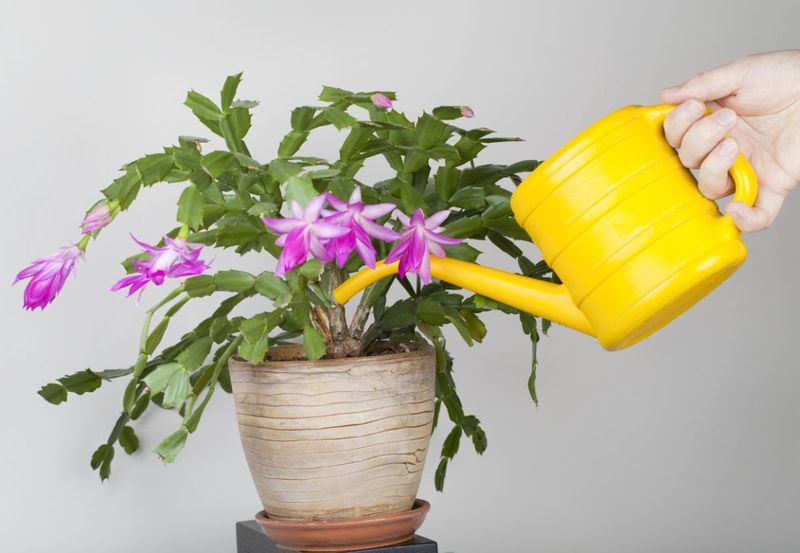
Once you have confirmed the mix is ready for water, the method matters just as much as the timing. A light splash on top of the soil may wet the surface without ever reaching the deeper roots, leaving the plant under-watered even though it looks like it was watered.
The approach that works consistently is to water slowly and thoroughly until water runs freely out of the drainage holes at the bottom of the pot. That tells you the entire root zone has been moistened, not just the top layer.
NC State Cooperative Extension and UF/IFAS Extension both recommend this thorough-soak approach, followed by allowing the pot to drain completely before returning it to its saucer or decorative outer pot.
After the water has drained, empty the saucer. That step is easy to skip, but leaving an inch of water sitting under the pot means the roots at the bottom are still in contact with standing moisture.
The goal is for the mix to be thoroughly wet and then to dry at its own pace from the top down, not to keep the bottom layer perpetually saturated.
The container itself matters here. Open drainage holes are not optional for this plant.
A pot without holes, or one where the holes are blocked by compacted mix, turns every watering into a slow flood that the roots cannot escape. University of Wisconsin-Madison Extension notes that a light, well-drained, aerated potting mix also plays a key role in keeping roots healthy between waterings.
Heavy, dense mixes hold moisture far longer than the plant prefers.
Repotting is not something every fading plant needs right away. If water drains freely, the mix still feels loose and airy, and the roots look healthy, there is no urgent reason to disturb the plant.
A new container or fresh mix becomes relevant when drainage is consistently poor, the mix has broken down into a dense, compacted mass, or you find evidence of root damage when you investigate a limp plant.
Match the response to the symptom
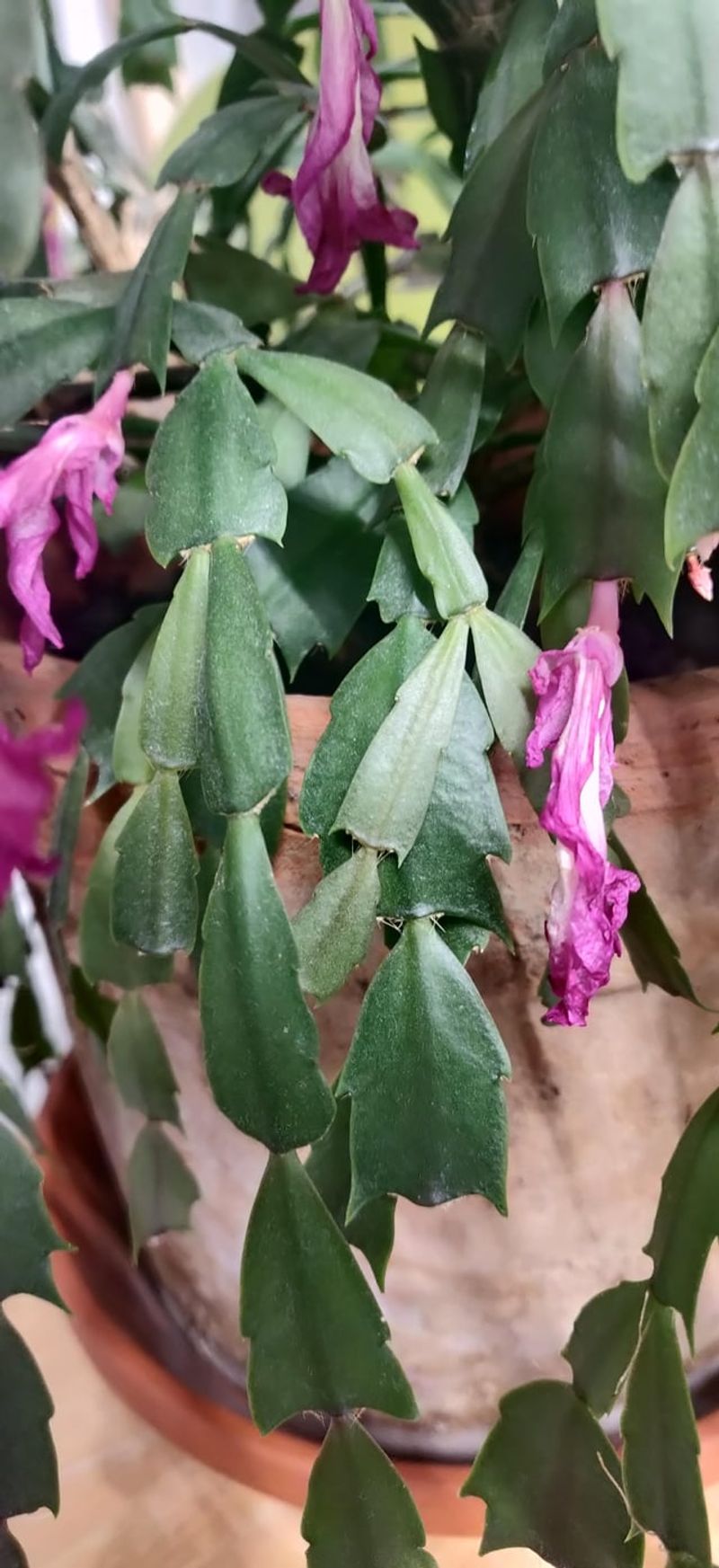
Not every sign of trouble in a holiday cactus points to the same cause, and reaching for a single fix regardless of what you are actually seeing can make things worse. Reading the specific symptom first puts you in a much better position to help the plant.
Pale or yellow-green stems during summer are most directly associated with excessive light exposure. As noted earlier, University of Minnesota Extension links pale-green branches specifically to excessive summer sun.
If that is what you see, start with the plant’s light situation rather than its water supply.
Wrinkled, limp, or drooping stems tell a different story and have more possible explanations. They can reflect underwatering, root loss from overwatering, intense heat, or sun stress.
The tricky part is that a plant with a wet pot can still show limp growth if its roots are damaged and can no longer move water into the stems effectively. Checking the moisture level of the soil before adding more water is especially important when you see drooping, because pouring more water onto already-wet soil around struggling roots is unlikely to help and may cause further harm.
University of Wisconsin-Madison Extension notes that wrinkled or limp growth can result from both too little and too much water, which is why the soil condition has to be part of the assessment.
Fading flowers are worth treating separately from fading stems. Flowers naturally age and drop after blooming, and that process should not be mistaken for a care problem.
Bud drop, on the other hand, can have several triggers. UF/IFAS Extension and University of Connecticut Extension both point to drought, excess moisture, sudden temperature changes, drafts, low light, and low humidity as possible causes of bud drop.
Blaming it automatically on watering misses several of those possibilities.
Use the symptom as the starting point. Pale stems send you toward the light situation first.
Limp stems send you toward both light and soil moisture. Dropping buds prompt a wider check of temperature stability, drafts, and humidity.
No single symptom locks in a single diagnosis.
Wet soil and limp growth may point to damaged roots
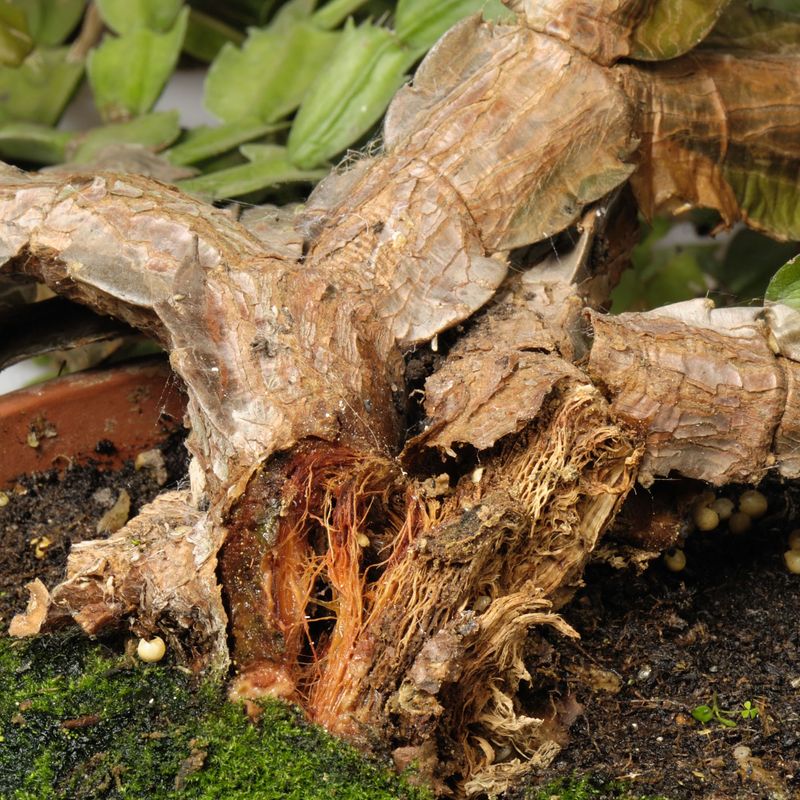
A limp or wilted holiday cactus is alarming enough on its own. Finding that the soil is already wet when you check makes the situation more confusing, because the instinct to water more is exactly the wrong move.
When stems are drooping despite wet or damp soil, damaged or rotting roots are a possible explanation worth investigating. Healthy roots absorb water and move it up through the plant; roots that have been sitting in waterlogged conditions for too long can break down and lose that ability.
The stems then show water stress even though the soil is not dry, because the roots are no longer functioning well enough to supply moisture.
University of Minnesota Extension identifies dark, mushy roots, gray-green foliage, stem collapse, and rot beginning near the soil line as warning signs that point toward root damage. Wet soil plus limp growth alone is not enough to confirm root rot; it is a reason to look more carefully.
Gently removing the plant from its pot and examining the roots can give you a clearer picture. Firm, light-colored roots are healthy; dark, soft, or foul-smelling roots are not.
If you do find damaged roots, remove the affected portions with clean scissors or pruning shears, let the cut ends dry briefly, and repot into fresh, well-draining mix in a clean container with open drainage holes. University of Wisconsin-Madison Extension emphasizes that an airy, well-drained medium is central to preventing this situation from recurring.
Prevention comes down to the habits already covered: check the mix before watering, soak thoroughly and then drain completely, and never leave the pot sitting in standing water. Keep in mind that heat, prolonged sun stress, and underwatering can also cause limp growth, so the presence of wet soil is an important clue but not the only factor to consider when you are trying to understand what went wrong.
Adjust the routine as seasons and flowering change
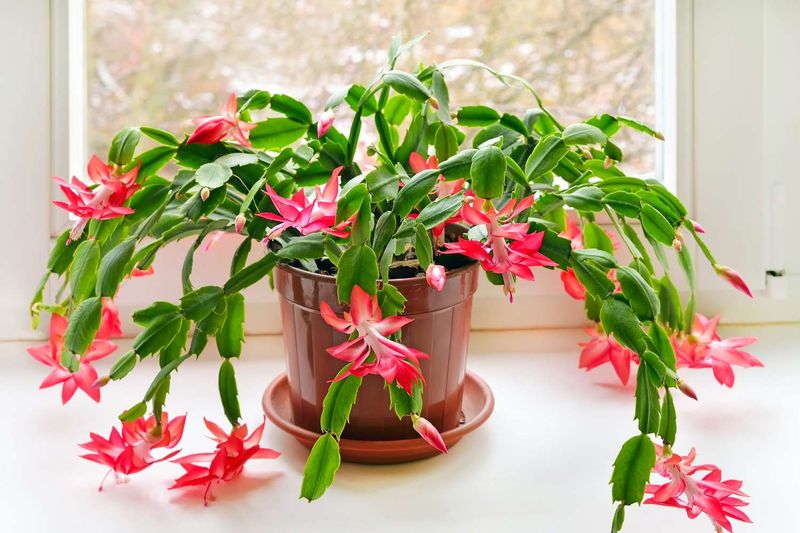
One of the quieter mistakes holiday cactus owners make is treating the plant the same way year-round. Its needs shift with the seasons, and a routine that worked in March can be too much or too little by August or November.
During active spring and summer growth, the plant is producing new stem segments and generally benefits from more frequent monitoring of the soil. Warmer temperatures and brighter light speed up evaporation, so the mix may dry faster than it did in cooler months.
University of Minnesota Extension notes that watering needs increase during active growth and decrease after flowering and during cooler, lower-light periods. Virginia Cooperative Extension similarly ties watering frequency to the plant’s growth cycle rather than a fixed schedule.
After the plant finishes blooming, it typically enters a quieter period. The mix dries more slowly, and watering less often is generally appropriate.
Continuing to water at the same rate as during peak summer can push the roots back into overly wet conditions at exactly the time the plant is least equipped to handle them.
Many gardeners ask whether good summer care guarantees a strong bloom in fall. Healthy summer management does support overall plant vigor, which gives the plant a better foundation heading into the flowering season.
But fall bloom initiation depends mainly on shorter days, uninterrupted darkness at night, and cool nighttime temperatures, not on watering habits alone. Iowa State University Extension explains that holiday cacti are short-day plants that need specific light and temperature cues to set buds, regardless of how well they were watered over the summer.
The practical sequence for any summer fade is simple: move pale growth away from harsh direct sun, check the mix with your finger before watering, soak thoroughly when the mix has partly dried, drain the container completely, and then reassess rather than repeat the same calendar habit. A plant that gets those fundamentals right has a much better chance of arriving at fall in good shape, ready to respond to the cues that actually trigger a holiday bloom.