
Your Christmas Cactus Looks Pale And Limp – Here’s The Summer Reset It Needs Before Fall
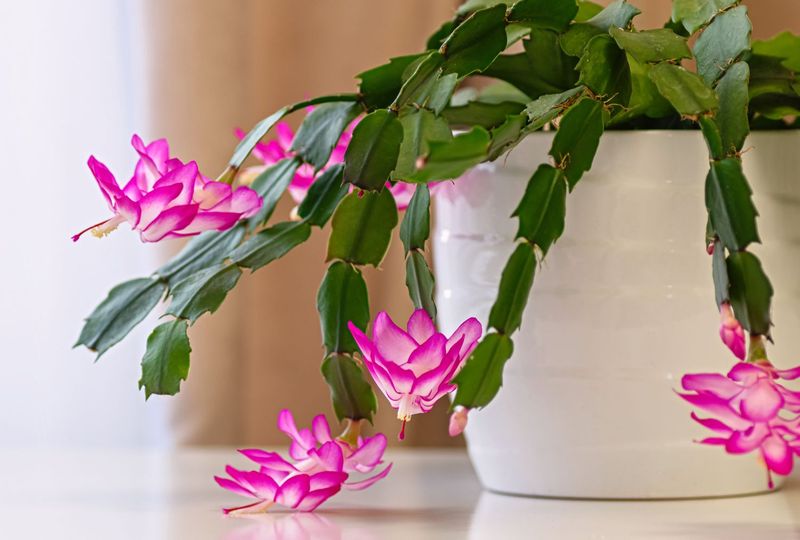
If your Christmas cactus has been looking washed out and droopy all summer, you are not alone – and the plant is not necessarily beyond saving. The tricky part is that pale, limp growth does not point to just one problem, so the fix depends on what is actually going wrong.
Checking the soil and roots first will tell you far more than guessing, and that simple inspection is where a good recovery routine starts.
Diagnose the symptom before you reset the plant
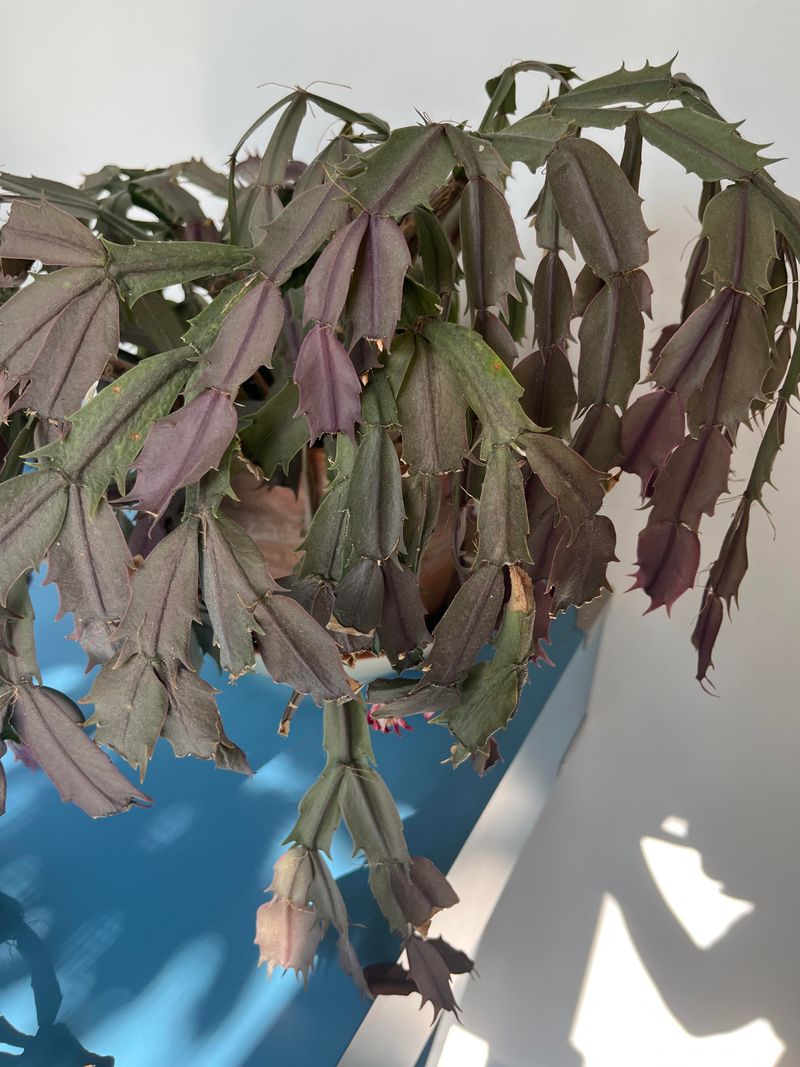
Pale, limp stem segments get blamed on a lot of things – underwatering, too much sun, overfertilizing – but none of those guesses is guaranteed correct just from looking at the plant. The same tired, faded appearance can come from very different causes, including a potting mix that dried out too far, roots damaged by sitting in persistently wet soil, excessive summer sun exposure, or even a compacted mix that has stopped draining properly.
Treating the wrong problem can make things worse, so the first move is to gather a little information before reaching for the watering can or fertilizer bottle.
Start by pressing a finger about an inch into the potting mix. If it feels completely dry and the stem segments look shriveled or wrinkled alongside the limpness, the plant may simply need water.
That is a relatively straightforward situation to correct. However, if the mix feels wet or even soggy and the stems are still limp, that combination is a warning sign worth taking seriously – University Extension guidance on Christmas cactus limpness notes that limpness does not reliably distinguish underwatering from root damage caused by overwatering, which is exactly why checking the mix matters before doing anything else.
Next, look at the drainage setup. Confirm the pot has working drainage holes and that the plant is not sitting in a saucer full of standing water.
If everything looks fine there, consider whether the roots themselves need a closer look – especially if the mix has been wet for a while. University of Minnesota Extension points out that holiday cacti showing gray-green, wilted growth alongside wet soil may be dealing with root or stem rot rather than drought.
Recovery from that situation is possible, but plants that have lost a substantial portion of their root system can be genuinely difficult to bring back. The care steps that follow are conditional on what you find at this stage – not a one-size-fits-all summer reset.
Move the plant out of harsh summer sun
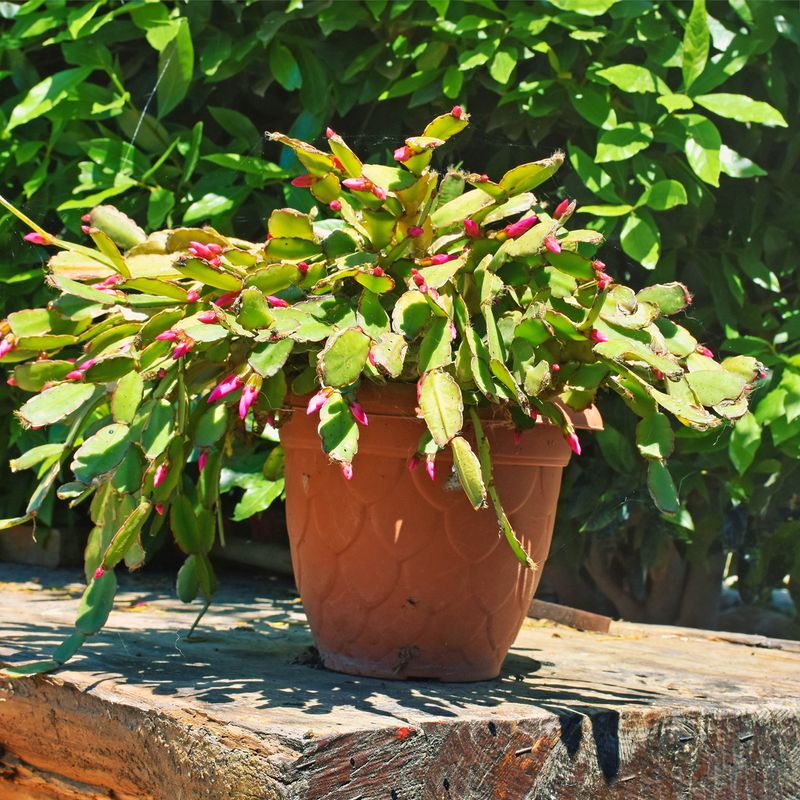
Holiday cacti did not evolve in a desert. They are rainforest epiphytes – plants that grow in the filtered shade of forest canopies in South America, clinging to tree branches where bright light reaches them but direct, intense sun rarely does.
That background matters a lot in summer, when a south- or west-facing windowsill or an unshaded patio can expose the plant to far more light than it is built to handle.
Excessive summer sun is a well-supported cause of pale-green or bleached stem segments and sunburn in holiday cacti. Penn State Extension’s holiday cacti care guide confirms that these plants prefer bright, filtered light rather than intense direct exposure – a quality that sets them apart from the true desert cacti most people picture when they hear the word “cactus.” If the plant has been sitting in a spot with full afternoon sun, moving it to a location with bright, indirect light or protected part shade is one of the most straightforward corrections available.
A few practical options: a spot a few feet back from a bright window, a covered porch that gets morning light but is shaded by midday, or a spot under a tree canopy with dappled light can all work well. What the plant needs is consistent brightness without the scorching intensity of direct summer rays.
One important thing to keep in mind: moving the plant to better light protects the tissue that remains healthy and supports stronger new growth going forward. Stem segments that have already turned pale or bleached from sun damage are unlikely to fully regain their original deep green color.
The goal at this stage is to stop further damage and give the plant a better environment to work from, not to reverse what has already happened.
Water according to the potting mix
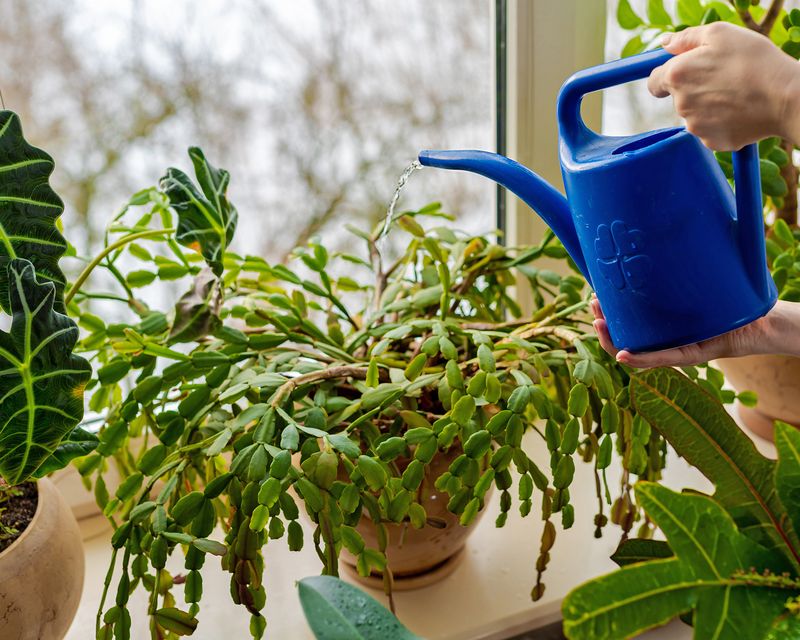
One of the most common mistakes with holiday cacti is treating them like desert plants – either watering on a rigid weekly schedule without checking the soil first, or letting the mix dry out completely between waterings. Both approaches can cause problems for a plant that naturally grows in a humid rainforest environment, where moisture is present but drainage is excellent because the roots are anchored in tree bark and organic debris rather than compacted ground.
A more reliable approach is to let the potting mix guide the timing. Wait until the top inch or so of the medium has begun to dry out, then water thoroughly – meaning water flows all the way through the mix and out the drainage holes at the bottom.
The University of Connecticut’s holiday cacti factsheet reinforces that during active growth, these plants do best when kept moderately moist rather than allowed to fully dry out the way a desert cactus might tolerate.
After watering, empty any water that has collected in the saucer beneath the pot. Decorative cachepots – those outer containers without drainage holes that nursery pots often sit inside – can silently trap water at the base of the roots and create the exact waterlogged conditions that cause root rot.
Check those regularly and pour out any standing water.
University of Minnesota Extension notes that watering frequency should be adjusted based on pot size, mix type, temperature, humidity, and light levels rather than a fixed calendar interval. A plant in a small clay pot in a warm, bright room will dry out faster than one in a large plastic pot in a cooler corner.
If the mix still feels wet when you check it, do not water again – and if wet soil is paired with limp growth, that combination calls for a closer look at the roots rather than another round of watering.
Treat wet-soil limpness as a possible root problem
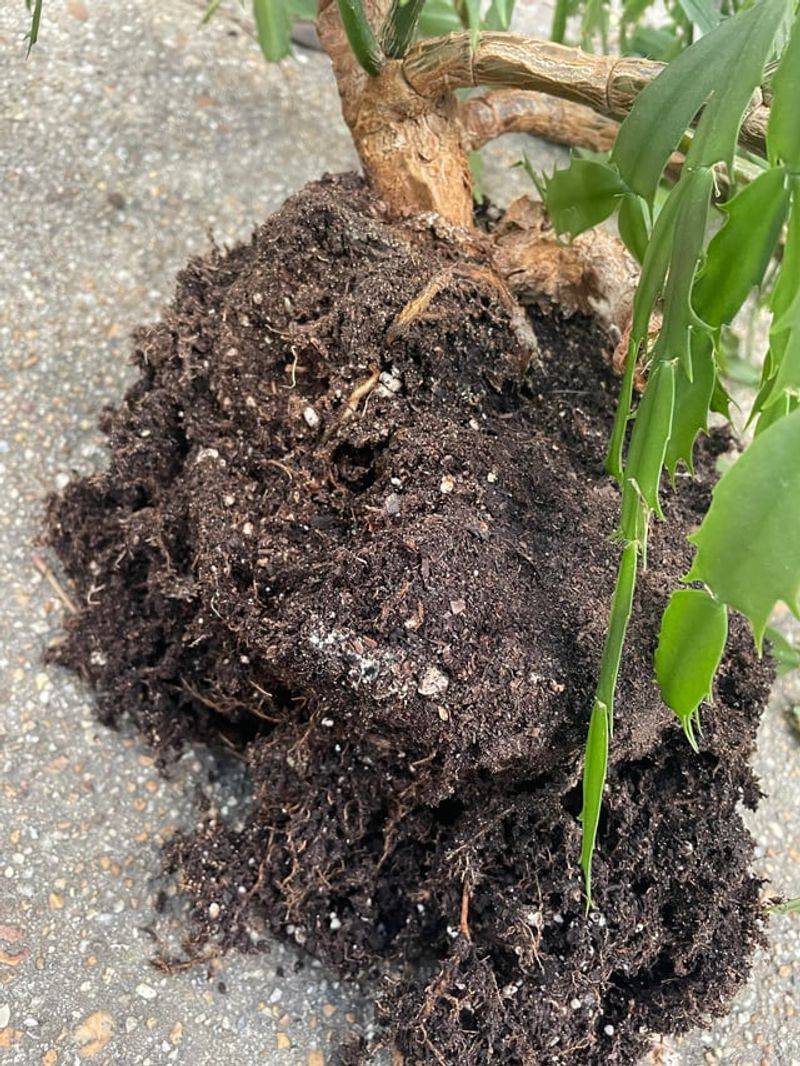
Finding a limp Christmas cactus sitting in wet soil is not a reason to panic, but it is a reason to act thoughtfully. When stems are soft and drooping while the potting mix has been consistently wet, root or stem rot becomes a real possibility.
Affected roots typically turn dark and mushy rather than firm and white, and rot can also appear at the base of the stems near the soil line – sometimes showing up as discolored, soft tissue that looks nothing like the healthy green above it.
If you suspect root damage, the next step is to unpot the plant carefully and take a look. Gently shake or rinse away the old potting mix so you can see the roots clearly.
Remove any tissue that is clearly dead, darkened, or mushy, cutting back to healthy material. University of Wisconsin Horticulture’s holiday cactus guide recommends allowing the cut root surfaces to dry briefly before repotting – this short drying period gives the wounds a chance to callus slightly rather than sitting wet in fresh mix.
Repot the plant into fresh, well-drained medium. A mix formulated for cacti and succulents, or a standard houseplant mix amended with perlite for extra drainage, works well.
Make sure the new pot has functional drainage holes.
Keep any firm, green stem segments intact – do not remove healthy tissue just because the plant looks rough overall. Those segments can serve as propagation material if the main plant does not recover.
Iowa State University Extension explains that healthy cuttings of two to five segments can be allowed to callus overnight or for a couple of days, then planted in moist but not saturated perlite, sand, or well-drained mix to root. Taking a few cuttings as insurance before or during the rescue attempt is a practical way to hedge your bets.
Recovery after significant root loss is genuinely possible – stem segments retain some moisture on their own, which buys a little time – but a plant that has lost most of its root system faces a real challenge. University of Minnesota Extension is clear that severely damaged plants can be difficult to save.
Treat the rescue as a reasonable attempt, not a guaranteed outcome.
Use fertilizer and repotting only when they fit the diagnosis
Fertilizer is sometimes treated as a general pick-me-up for struggling plants, but that framing can lead to problems. Pale foliage does not automatically mean the plant is hungry.
Excess sun, root damage, and watering issues can all produce pale or faded segments, and applying fertilizer to a plant with compromised roots or waterlogged soil adds unnecessary stress rather than helping. Address light, moisture, and drainage concerns first.
Once those basics are in order and the plant appears to be in active growth – producing new segments or showing signs of recovery – routine summer feeding makes sense. Penn State Extension recommends a balanced houseplant fertilizer applied according to label directions during the growing season.
Many extension resources suggest monthly feeding at half strength as a reasonable approach. The point of summer fertilizer is to support normal growth, not to cure limpness or reverse bleaching.
A word on Epsom salts: some gardeners add them routinely to holiday cactus care, but Ask Extension guidance on Epsom salts for Christmas cactus makes clear that magnesium supplementation is only warranted when a deficiency has actually been identified. Routine use without a diagnosed need can contribute to salt buildup in the potting mix and is not a substitute for correcting the underlying care issues.
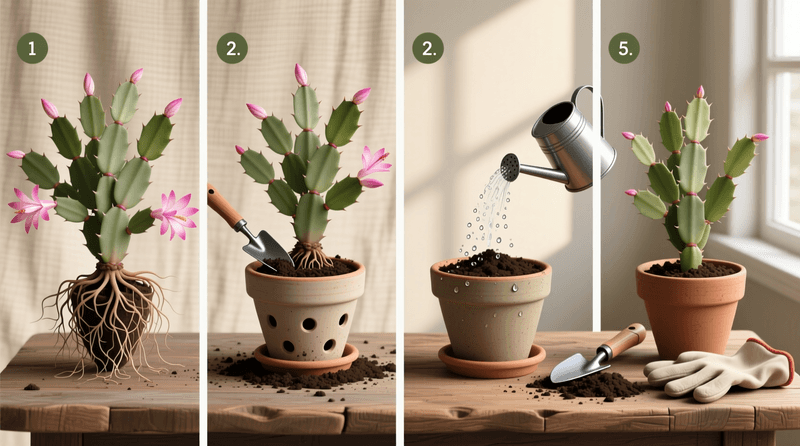
Repotting falls into the same conditional category. University of Minnesota Extension notes that holiday cacti actually prefer being somewhat pot-bound and typically need repotting only every three to five years – or sooner if the potting mix has broken down, drainage has become poor, or roots are damaged by rot.
A limp plant is not automatically a plant that needs a new pot. Save repotting for situations where the roots or medium are genuinely compromised, and avoid disturbing the plant entirely once it begins to set buds or bloom, since that kind of disruption can cause bud drop.
Prepare a healthy plant for fall bud formation
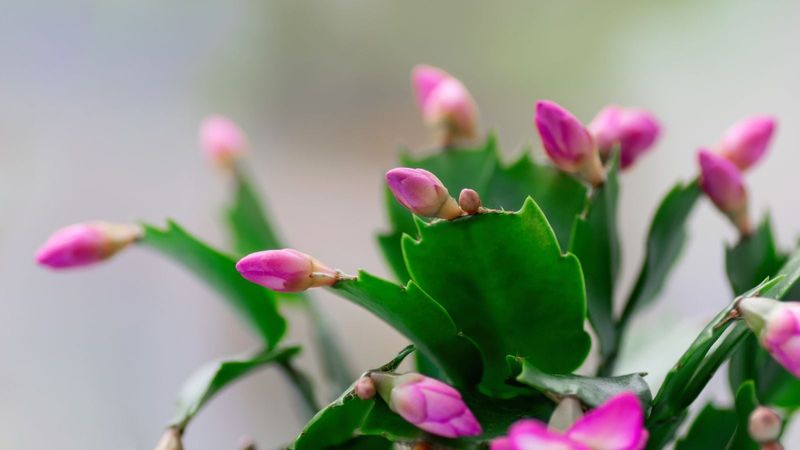
Getting a holiday cactus to flower in fall or winter is genuinely satisfying, but it helps to understand what actually triggers that process – and what can get in the way. Flower bud initiation in these plants is driven by an interaction between shorter days and cooler nighttime temperatures, not by the calendar date or by any single care step.
University of Minnesota Extension describes the general requirement as roughly 12 to 14 hours of uninterrupted darkness each night, combined with nighttime temperatures around 55 to 65 degrees Fahrenheit, sustained over several weeks. Those are approximate ranges, and responses vary by cultivar and plant type.
The first practical step in fall preparation is bringing the plant indoors before outdoor temperatures approach approximately 50 degrees Fahrenheit, and well before any frost risk. Sudden cold exposure can damage the plant and interfere with bud development.
The exact timing for this varies quite a bit across the United States – gardeners in the South may have more flexibility, while those in northern states may need to act earlier. Watch nighttime lows rather than waiting for a specific date on the calendar.
Once indoors, the plant needs a spot with bright daytime light and genuinely dark nights. North Carolina Extension’s profile of Schlumbergera x buckleyi notes that artificial light from lamps, kitchen lighting, or even streetlights coming through a window can interrupt the long-night signal and delay or prevent bud formation in some plants.
A spare bedroom, a room that is not used in the evenings, or a spot away from active light sources at night can all work well.
In many homes, naturally shortening fall days provide enough of the dark-period signal without a strict blackout routine – especially if the plant is kept away from artificial light. After buds begin to form, stability matters.
North Carolina Extension’s Schlumbergera overview and UF/IFAS Extension’s Christmas cactus preparation guidance both highlight that sudden changes in temperature, humidity, light, or location after bud set can trigger bud drop. Once the plant is settled and buds are visible, resist the urge to move it.
Let the plant’s condition—not the calendar—set the next step
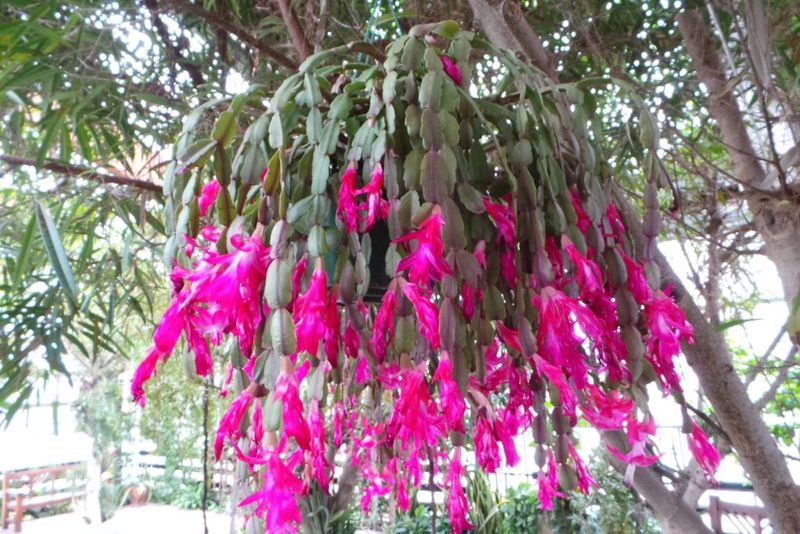
Bringing a struggling holiday cactus back to reasonable health is a process of checking, adjusting, and waiting – not a single reset that guarantees results. The practical sequence looks like this: inspect the potting mix and roots before doing anything else, move the plant away from harsh direct sun, water only when the medium has begun to dry and drain completely afterward, correct any drainage problems, treat root rot conditionally if wet soil and limpness are present together, and feed moderately only after the basics are in order.
Whether the plant stabilizes depends on how much damage occurred and how long the stressful conditions lasted. Corrected care gives a recoverable plant a real chance – but it does not guarantee that bleached segments will return to their original color or that the plant will bounce back on any particular schedule.
Watch for new growth and stable stems as signs that conditions are improving, without reading too much into small day-to-day changes.
One last thing worth knowing before fall arrives: North Carolina Extension’s Schlumbergera overview points out that many plants sold under the name “Christmas cactus” are actually Thanksgiving cactus or hybrids, identifiable by the pointed, claw-like teeth on their stem segments rather than the rounded edges of a true Christmas cactus. University of Minnesota Extension confirms that these types differ in bloom timing – so a healthy plant that flowers in November rather than December has not failed.
It may simply be exactly what it was always going to be.