
Your Hydrangeas Grow Leaves But No Flowers – Here’s The Bloom Reset To Try Before Summer Passes
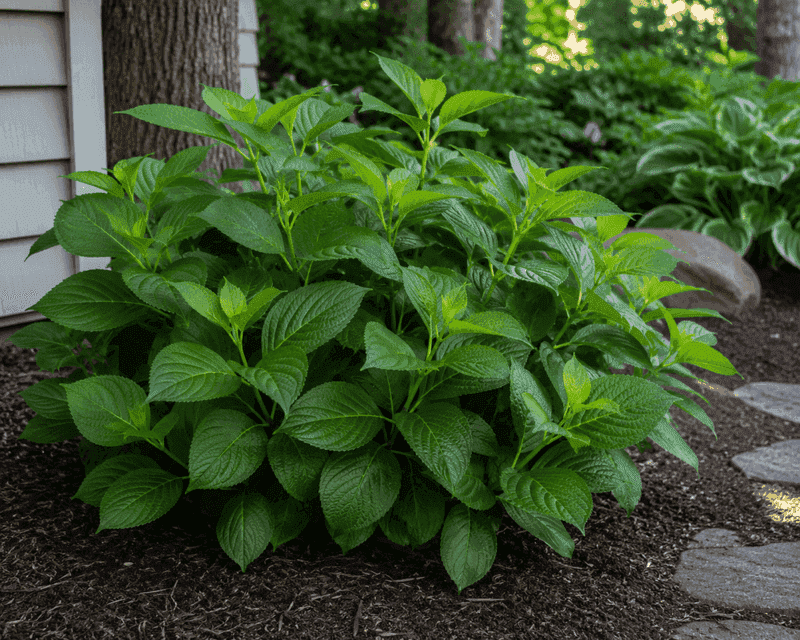
You step outside expecting a burst of blooms and instead find a hydrangea loaded with lush green leaves and absolutely nothing else. That leafy-but-flowerless situation is one of the most common summer garden frustrations, and the good news is that your plant is probably not dying.
Whether you can still coax flowers out of it this season depends on what type of hydrangea you have and what happened to its buds, so the first move is figuring out exactly what you’re growing before you reach for the pruners.
Identify the hydrangea before you touch the pruners
Grabbing the pruners before you know what kind of hydrangea you have is one of the fastest ways to accidentally eliminate next year’s flowers. Pull out the plant tag if you still have it, or search the cultivar name online.
If the tag is long gone, look at the flower shape, leaf shape, and bark on older stems to get a reasonable identification before making any cuts. University of Georgia Extension guidance on identifying hydrangeas explains that knowing the species is the essential first step because bloom type, not calendar date, determines which pruning actions are safe.
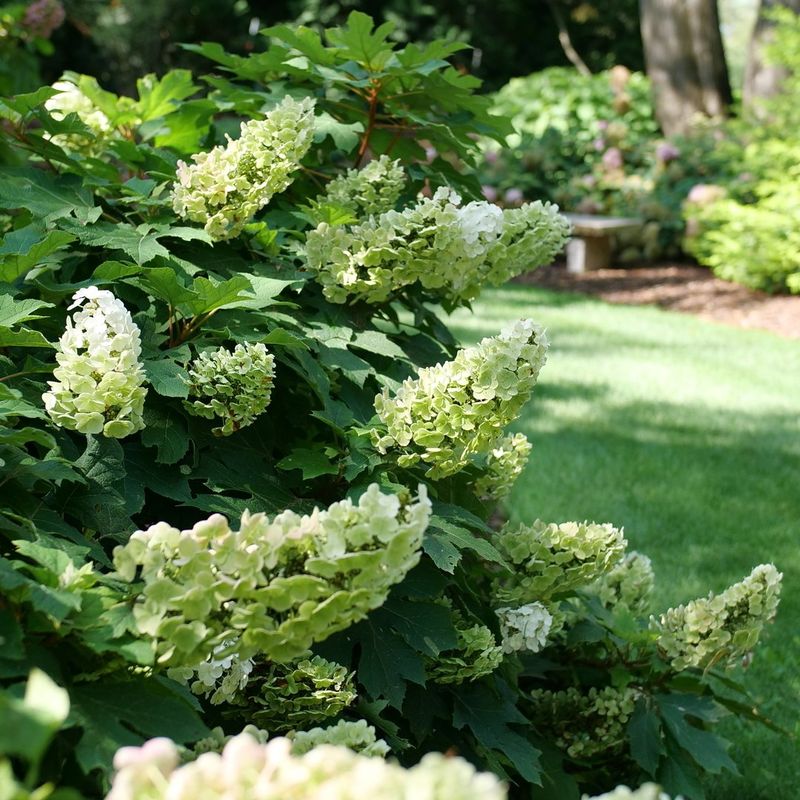
Traditional bigleaf hydrangeas (Hydrangea macrophylla) produce the classic round mophead or flat lacecap flower clusters and have broad, glossy leaves with serrated edges. Oakleaf hydrangeas (Hydrangea quercifolia) are easy to spot by their deeply lobed, oak-shaped leaves and elongated white flower cones that age to parchment brown.
Panicle hydrangeas (Hydrangea paniculata) also produce cone-shaped flowers but have smaller, matte leaves, while smooth hydrangeas (Hydrangea arborescens), like the familiar ‘Annabelle,’ form large round white clusters on flexible stems that die back close to the ground in cold winters.
Reblooming bigleaf cultivars such as those in the Endless Summer series look similar to traditional mopheads or lacecaps, so the cultivar name matters here. One important special case: florist or gift hydrangeas sold in pots are often greenhouse-forced bigleaf types that may not be reliably winter-hardy outdoors in colder regions, even if the plant leafs out the following spring.
Once you have a working identification, you understand where flowers form on that plant. That knowledge guides pruning decisions, but it does not tell you whether viable buds are still present or whether your plant will flower this season.
Shade, transplant stress, winter injury, rabbit browsing, immaturity, and poorly timed pruning can all leave a hydrangea leafy and flowerless regardless of type. Penn State Extension’s overview of hydrangea bloom failure lists multiple contributing causes and cautions against assuming a single universal explanation.
If you cannot make a confident identification, pause any hard pruning until you can.
Use bloom wood to choose pruning—not to predict flowers
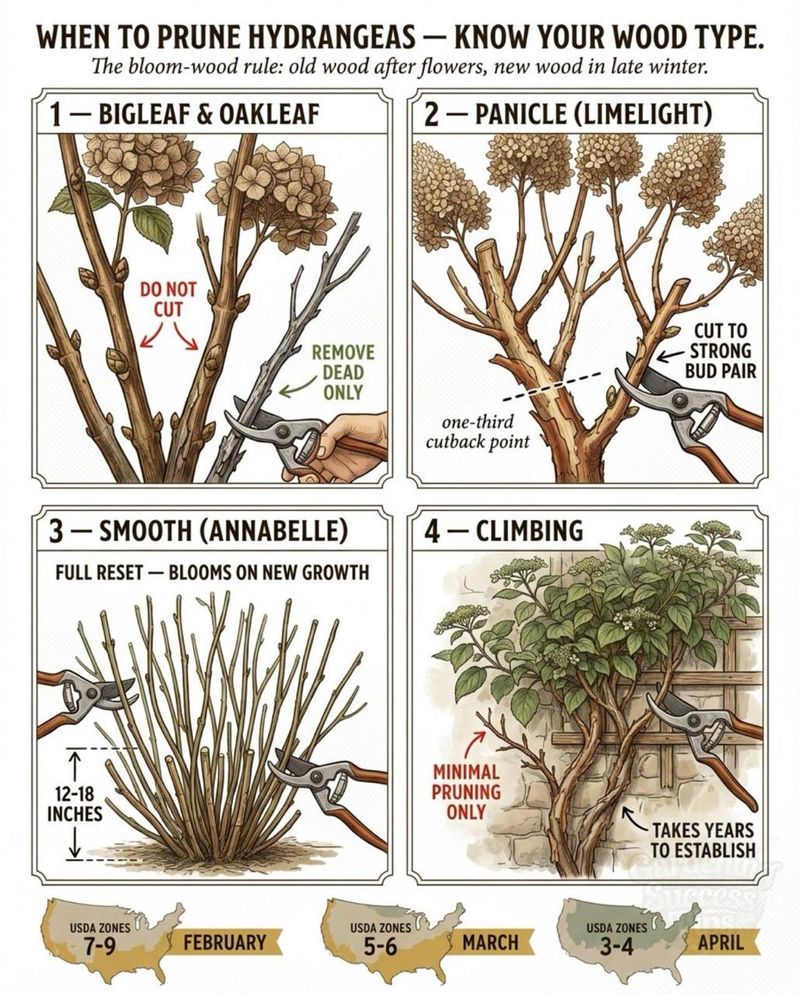
Where a hydrangea forms its flower buds is the central pruning question, and the answer separates plants into three groups: old wood, new wood, and both. University of Minnesota Extension’s pruning guide explains that traditional bigleaf and oakleaf hydrangeas set their flower buds on stems that grew the previous season.
Those buds are present on the plant going into winter, which means a harsh freeze, a late spring frost, hungry rabbits, or pruning at the wrong time can eliminate the current season’s display entirely before summer even begins.
Panicle and smooth hydrangeas operate differently. Both bloom on new wood, meaning stems that grew during the current growing season.
A hard pruning in late winter or early spring removes last year’s stems but does not remove any flower buds because those buds have not formed yet. That is why ‘Limelight’ panicle hydrangeas and ‘Annabelle’ smooth hydrangeas can be cut back aggressively and still flower reliably each summer.
Illinois Extension’s pruning breakdown makes clear that applying the same approach to a traditional mophead would likely eliminate its flowers for the year.
Reblooming bigleaf cultivars occupy a middle category because they can produce flowers on both old wood from the previous season and new wood formed during the current season. That flexibility gives them a second chance when old-wood buds are lost to winter damage.
However, reblooming performance is not guaranteed. Cultivar genetics, winter severity, climate zone, growing conditions, and plant maturity all influence whether a rebloom flush actually appears.
Understanding bloom wood tells you which pruning moves are safe right now. What it cannot do is confirm that your specific plant still has viable flower buds waiting to open.
A new-wood or reblooming hydrangea in deep shade, a recently transplanted specimen, or a young plant that has not reached flowering maturity may remain flowerless despite perfect pruning. Penn State Extension notes that bloom failure can reflect multiple overlapping causes, so bloom wood is a pruning guide, not a flowering promise.
Start with restraint while the diagnosis remains uncertain
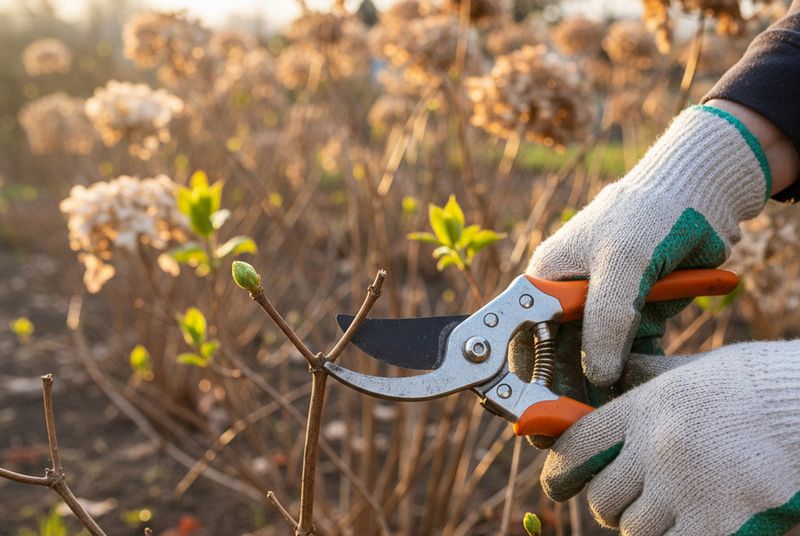
When you are not yet sure what type of hydrangea you have, or why it skipped flowering, the safest first action is to do less rather than more. Stop any planned hard pruning and instead walk the plant slowly, stem by stem.
You are looking for wood that is clearly dead, meaning it snaps rather than bends, shows no green tissue under the bark, and carries no live buds. Broken stems that are hanging or creating hazards are also fair game.
Everything else stays for now.
University of Minnesota Extension’s pruning guidance for shrubs recommends using clean, sharp tools and making selective cuts just above a healthy bud or at a branch junction rather than shearing the entire plant. Dull blades crush tissue and create ragged wounds that heal slowly, so sharpen or replace your pruner blades before you start.
Wipe the blades with rubbing alcohol between cuts if you suspect any disease is present on the plant.
Suspected diseased wood deserves a different approach than dead or broken wood. Do not remove it as a generic rescue step without first identifying the problem.
Diseases like botrytis, cercospora leaf spot, or powdery mildew each require specific handling, and some call for careful disposal of clippings to avoid spreading spores. If you notice cankers, unusual spotting, or stem discoloration that does not look like simple winter dieback, contact your local Cooperative Extension office or a certified arborist before cutting.
University of Georgia Extension’s hydrangea pruning advice reinforces that the right intervention depends on accurate identification of both the plant and the problem.
Removing dead and broken wood tidies the shrub and improves airflow, but be clear-eyed about what it accomplishes. Safe cleanup does not force a bloom flush.
Flower buds that were killed by frost or removed by earlier pruning are gone, and no amount of structural tidying brings them back this season. The value of restraint right now is that it protects whatever viable buds may still be on the plant.
Reserve targeted deadheading for confirmed rebloomers
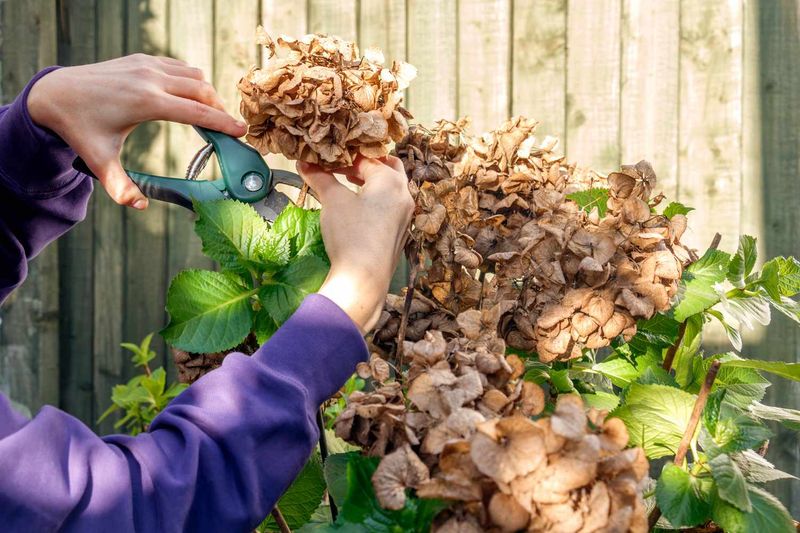
Deadheading is not the same thing as pruning, and that distinction matters a great deal for hydrangeas. Removing a spent flower head from a confirmed reblooming bigleaf hydrangea can support another bloom cycle by redirecting the plant’s energy away from seed development.
The recommended cut is made just below the faded flower head and above the next substantial set of large leaves on the stem. Endless Summer’s deadheading guidance describes this technique specifically for reblooming cultivars and notes that the goal is to encourage a second flush of buds lower on the stem.
The key word in that advice is “confirmed.” Deadheading a traditional mophead, lacecap, or oakleaf hydrangea the same way does not trigger rebloom because those plants do not carry the genetics to flower reliably on new wood. Cutting below a spent head on a traditional bigleaf may simply remove stem tissue that holds next year’s buds further down.
If you are not certain your plant is a reblooming cultivar, hold off on this step until you can verify the cultivar name.
Even for genuine rebloomers, deadheading is not a guaranteed reset. A second flush depends on the cultivar’s specific performance, the local climate, how much winter damage occurred, and whether current growing conditions support bud development.
Some gardeners see a strong second wave; others get a handful of small flowers or nothing additional at all. Think of deadheading as a reasonable, low-risk action for confirmed reblooming plants rather than a certain path to a full bloom repeat.
Penn State Extension echoes this by noting that reblooming performance varies widely and is not automatic.
Improve light and moisture without forcing leafy growth
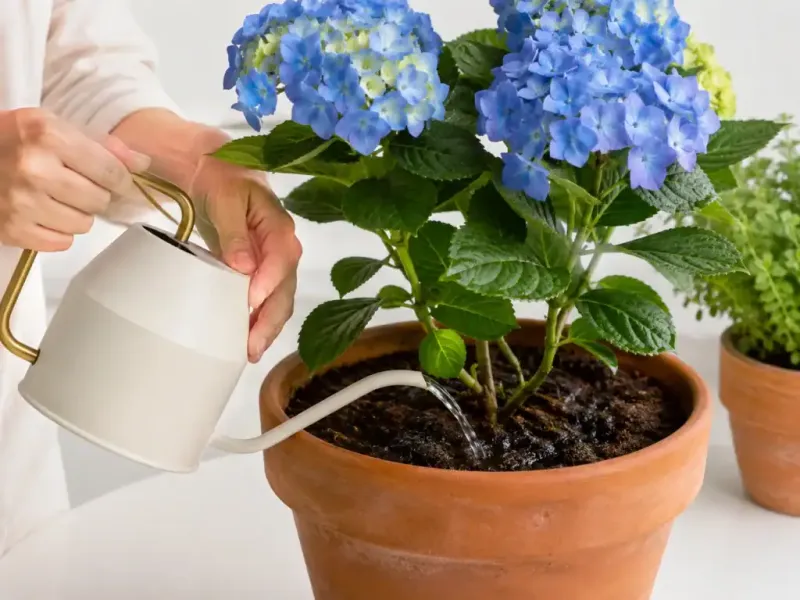
Light is often the overlooked culprit when a hydrangea pushes out plenty of leaves but refuses to flower. Many hydrangea types perform best with morning sun and afternoon shade, particularly in warmer parts of the country where intense afternoon heat can stress the plant.
Illinois Extension’s hydrangea care overview lists inadequate light as one of the primary reasons a hydrangea produces foliage without flowers. Panicle hydrangeas generally tolerate more sun than bigleaf types, especially when soil moisture is adequate, but most hydrangeas struggle to bloom in heavy shade.
If your plant sits in a spot that receives fewer than three or four hours of direct sun daily, consider whether relocating it after the current growing season is worth exploring. For now, trim any overhanging branches that are casting unnecessary shade, and observe how the light changes through the day.
Moving a hydrangea mid-summer is stressful for the plant, so treat that as a fall or early-spring project rather than an emergency intervention.
Consistent soil moisture is equally important. Oregon State Extension’s hydrangea guidance describes hydrangeas as preferring evenly moist, well-drained soil, and notes that drought stress can reduce overall performance.
Water at the base of the plant rather than overhead to keep foliage dry and reduce disease risk. A two-to-three-inch layer of organic mulch around the root zone moderates soil temperature and slows moisture loss between waterings without creating the waterlogged conditions that damage roots.
On the fertilizer question, resist the urge to apply a high-nitrogen product as an emergency bloom treatment. Excess nitrogen pushes leafy vegetative growth at the expense of flowers, which is the opposite of what you need.
Oregon State Extension’s general hydrangea care page and Illinois Extension’s fertilizer Q&A for hydrangeas both favor restrained, balanced, or slow-release feeding applied at appropriate times rather than repeated or heavy applications. If you do feed, once in spring with a balanced slow-release formula is a reasonable starting point for most established plants.
Finally, soil-pH adjustments are sometimes suggested as a bloom fix, but this is a misconception worth clearing up: pH primarily influences flower color in susceptible bigleaf hydrangeas and does not solve missing buds caused by frost, pruning, or shade.
Treat late summer as a pruning warning, not a bloom deadline
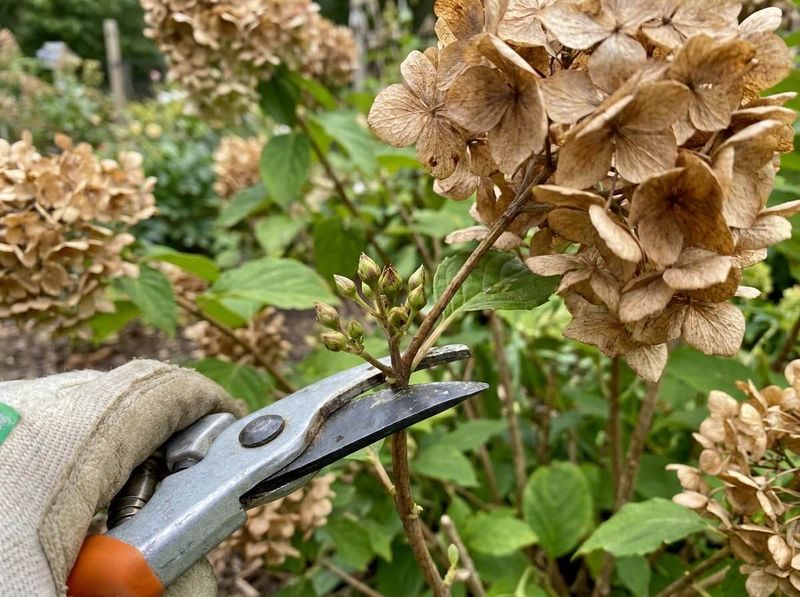
As summer moves into its later weeks, the risk calculus around pruning old-wood hydrangeas shifts. Traditional bigleaf and oakleaf hydrangeas begin forming the flower buds that will open the following year during late summer and into early fall.
Any structural pruning made after those buds start developing removes next season’s display along with the stems you cut. The window for safe old-wood pruning is immediately after the plant finishes flowering, and that window closes as bud formation approaches.
University of Georgia Extension’s Paulding County hydrangea guide uses August 1 as a practical local cutoff for certain old-wood hydrangeas in Georgia, while University of Minnesota Extension describes bud formation occurring across August and into September for plants in that region. Those two reference points alone span a full two months of variation, and neither applies universally across the United States.
Climate zone, local temperatures, cultivar genetics, and the specific plant’s condition all influence exactly when bud formation begins.
Rather than following a fixed national date, check with your state’s Cooperative Extension service or the cultivar’s published guidance for regionally relevant timing. The practical rule is straightforward: once you are approaching the end of summer in your area, stop structural pruning of old-wood types and limit any cutting to clearly dead or broken wood only.
Illinois Extension’s pruning guide reinforces that late-season cuts on old-wood hydrangeas can sacrifice the following year’s flowers even when the intent is to rescue the plant.
For new-wood types like panicle and smooth hydrangeas, late summer is less of a structural pruning concern because those plants bloom on growth that forms the following spring. Reblooming bigleaf cultivars occupy a middle ground: deadheading faded flowers may still be appropriate, but hold off on heavy structural cuts as the season winds down.
When in doubt, do less and plan a proper pruning for the correct window next year.
Protect the next flowering opportunity when this season is lost
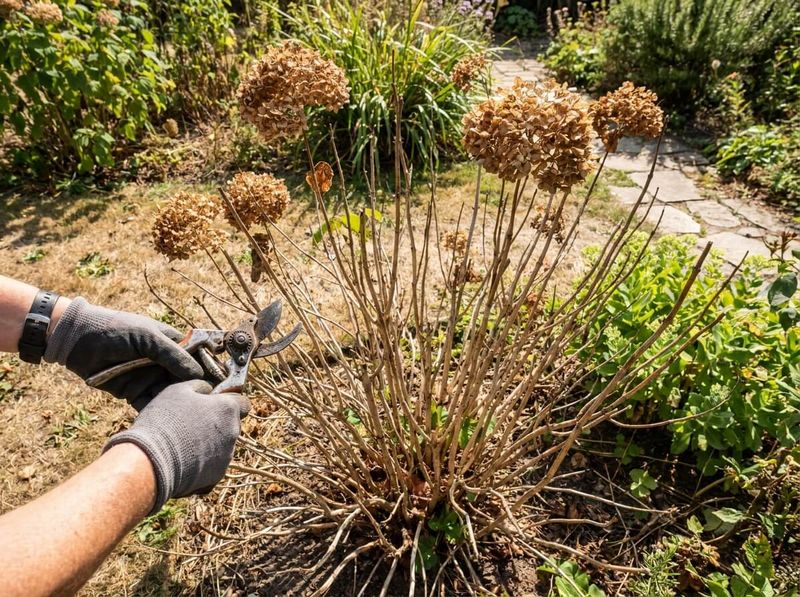
A hydrangea covered in healthy leaves but carrying no flowers is not a ruined plant. It is a plant that ran into one or more specific obstacles, and most of those obstacles are correctable over time.
The honest part of that reassurance is this: if your hydrangea is a traditional old-wood type that lost its buds to a hard freeze, a late frost, rabbit browsing, or pruning at the wrong time, no action you take right now will produce flowers before summer ends. Those buds are gone, and the plant’s energy will go toward setting next year’s buds instead.
Penn State Extension and Missouri Botanical Garden’s hydrangea resource both acknowledge that a completely healthy-looking plant can simply have no viable flower buds remaining for the current season.
The decision path from here is straightforward. Identify the plant first.
Make only safe cuts, which means dead and broken wood only until you know what you have. Deadhead only if you have confirmed the plant is a reblooming bigleaf cultivar.
Stabilize light and moisture, avoid nitrogen-driven emergency feeding, and stop structural pruning of old-wood types as late summer approaches in your region. University of Minnesota Extension underscores that protecting next year’s buds is often the most valuable thing a gardener can do once this season’s opportunity has passed.
Some plants following this plan may still produce flowers before the season closes, particularly reblooming cultivars and new-wood types with favorable growing conditions. Others will simply reward you next summer.
A leafy hydrangea tended carefully through late summer is already building toward a better season ahead.