
Leaving a Few Suitable Flowers to Seed This Fall May Produce Volunteer Seedlings Next Season
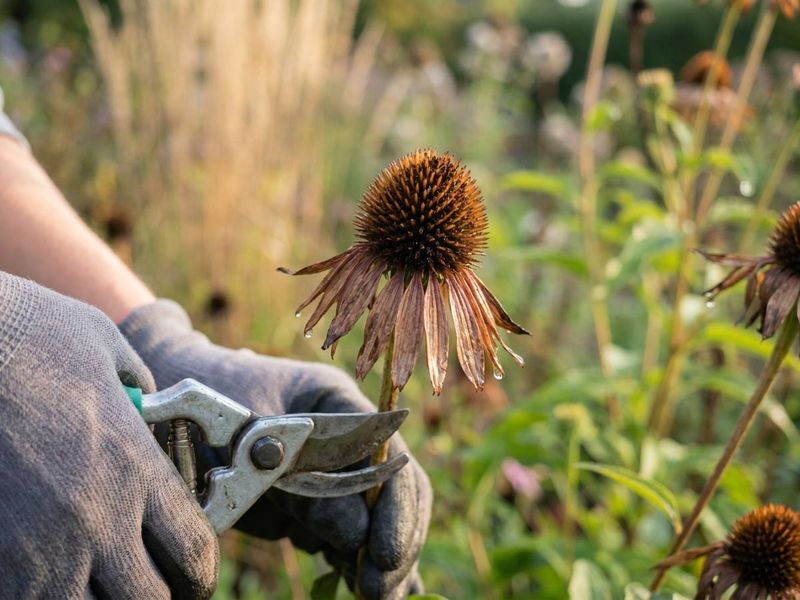
Pinching off every faded bloom keeps many flowers looking tidy and blooming longer. But that same habit can stop some plants from making the seeds they need to sprout again next year.
If you let just a few well-chosen flowers finish their job, you may find volunteer seedlings popping up in spring. Here is how to pick the right plants, handle the tradeoff, and keep your expectations realistic.
Deadheading trades seed for more flowers
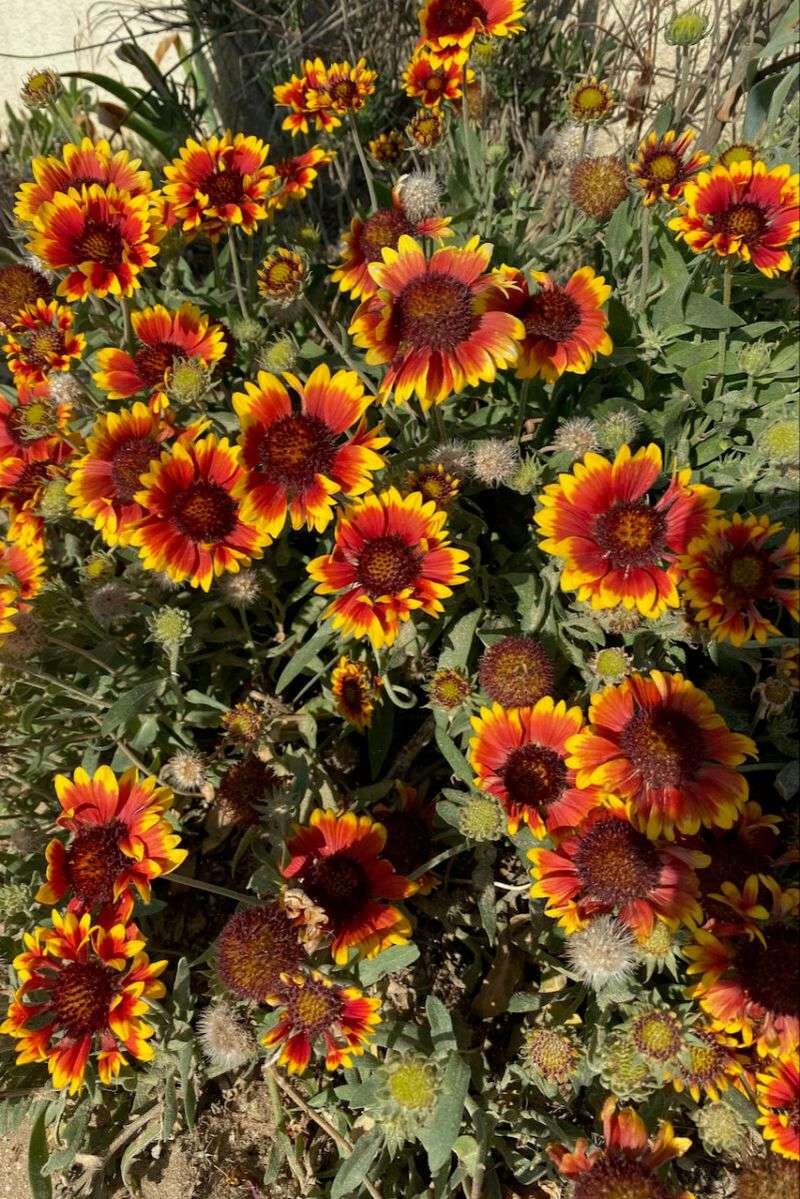
Here is the catch with that tidy fall habit: every spent bloom you snip is a seedhead that never gets made. Plants flower to produce seed, so when you remove the fading flower, many of them respond by sending up more blooms.
That is why Illinois Extension guidance on deadheading describes the chore as a way to prolong and encourage flowering.
The flip side is simple. A flower that is allowed to finish forms seed, and seed is what gives a plant a chance to sprout again on its own.
You cannot fully have both from the same bloom, so the trick is to decide which flowers get which job.
That does not mean you should quit deadheading across the whole garden. Keep snipping while you still want color, especially on the plants that are putting on a show right now.
Then, when the season starts to wind down and you are ready to trade some blooms for a shot at seedlings, pick a few plants to leave alone.
UNH Extension takes this same middle path. As described in its guide to self-sowing annuals, you can keep deadheading earlier blooms to stretch the flowering season, then let some seedheads mature.
Think of it as a small experiment rather than a total change in routine. A handful of plants left to seed costs you very little, and it shows you what your garden is willing to do on its own.
Which flowers should you leave?
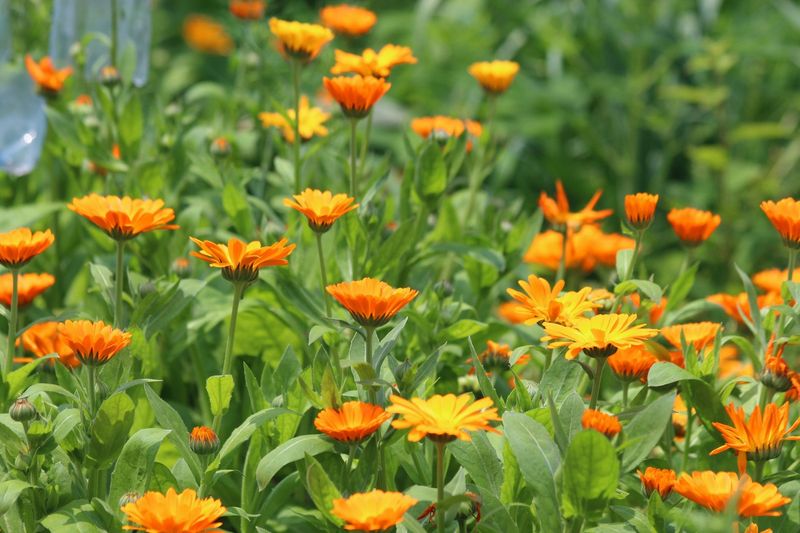
Not every flower is a good candidate, so choose with care. Cosmos and calendula are two of the friendliest examples, since both are annuals that readily drop seed in many gardens.
Leave a few of the healthiest plants rather than every one you have.
Oregon State University Extension lists other possibilities too, including common garden poppies, sweet peas, sunflowers, borage, nasturtiums, and alyssum. Treat that list as a menu of candidates, not a promise.
A variety that self-sows happily in one yard may sulk in another because of soil, weather, or the exact type you planted.
Hollyhocks deserve a special note. The old-fashioned kind is a biennial, which means a plant grows leaves in its first season and flowers in its second.
Wisconsin Extension describes these hollyhocks as freely reseeding. So if seedlings do show up next spring, expect a leafy rosette first, and flowers the year after.
A good rule is to pick plants that look strong, have plenty of ripening seedheads, and sit in a spot where a few extra plants would be welcome. Skip anything diseased or already crowding its neighbors.
Wait for the seedheads to mature
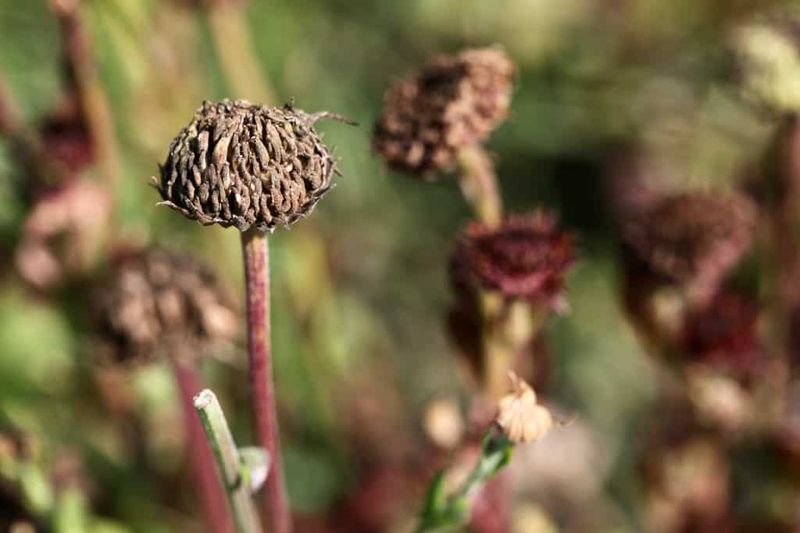
Seed that is picked or scattered too early is unlikely to do much. Mature seedheads give you clear signs.
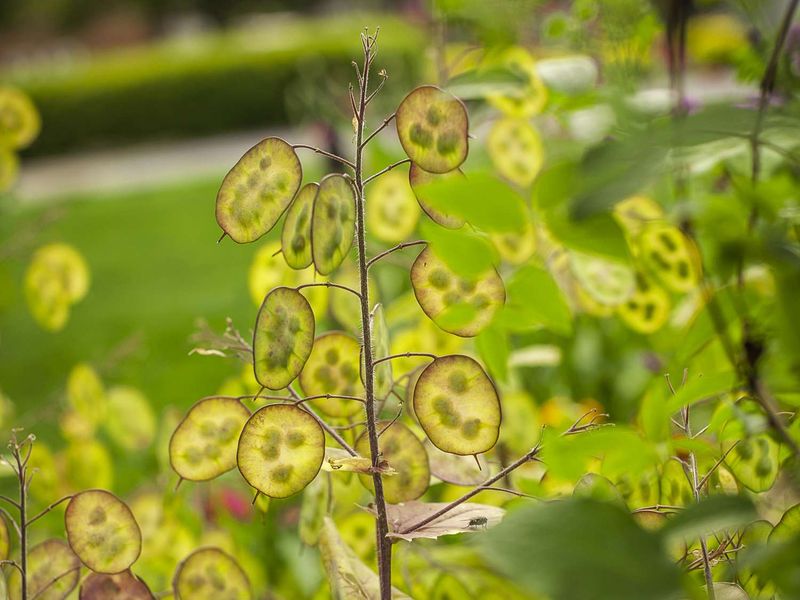
UNH Extension says to look for heads that are brown and dry, and Oregon State describes heads that have dried and started to droop.
Green, plump, or still-soft heads need more time. Give them a few more weeks and check again.
Timing depends on where you garden, so skip the calendar. You may see the right look in early fall in one region and well into autumn in another.
Oregon State’s September timing is regional guidance, not a national deadline, so let the plants tell you when they are ready.
Once the heads are dry, one simple option is to gently shake them over the soil where you would like seedlings. It is a handy move for plants with loose seed, but it is not required for every plant.
Some will drop seed on their own if you just leave the heads standing. If you want, you can also leave a few heads in place through winter and let nature handle the scattering.
Give seeds a place to reach the soil
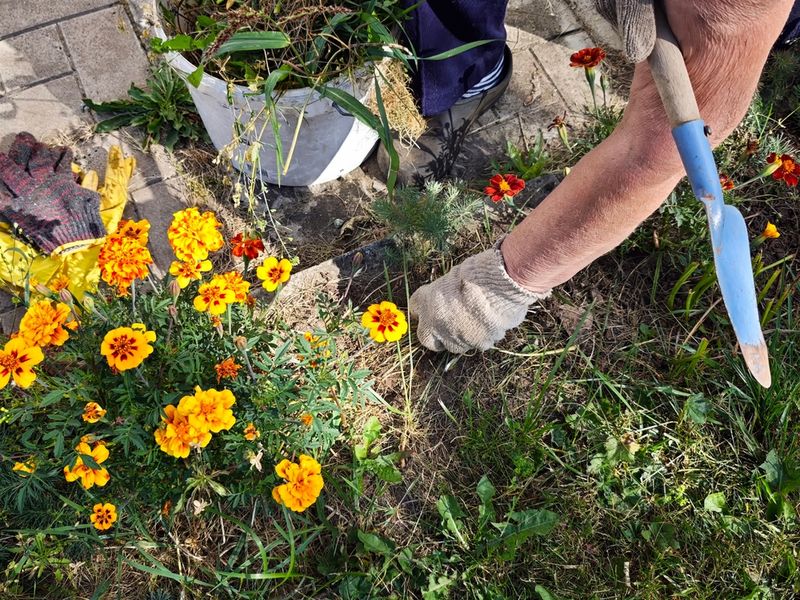
Seeds can only sprout if they actually touch soil. Picture a tiny seed dropping into a thick blanket of bark chips: it may never reach the ground at all.
UNH Extension advises leaving the sowing area bare or using only a thin layer of fine mulch that breaks down, and notes that heavy bark or wood mulch can keep seeds from contacting soil.
You do not need to strip your whole garden bare. Pick one small, intentional landing spot near the plants you left to seed.
A patch a foot or two wide is plenty for a trial run.
Gently rake or pull back any chunky mulch from that area. If you like a bit of cover, use a light dusting of fine compost or shredded leaves rather than a deep layer.
Also think about where you actually want seedlings. A bare strip along a path or the edge of a sunny bed makes more sense than the middle of a crowded perennial border.
Choosing the spot ahead of time makes spring much easier, because you will know which sprouts belong and which are strays.
Spring volunteers still need a gardener
If seedlings do appear, think of them as a starting point, not a finished garden. You will want to identify what is coming up, keep the ones in useful spots, and thin, move, or pull the rest.
Crowded seedlings compete, so a little editing helps the keepers grow stronger.
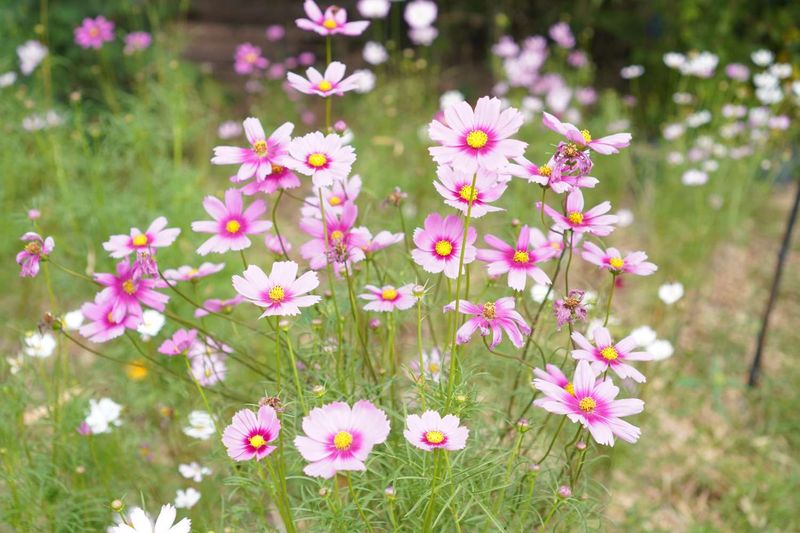
Cosmos shows how quickly things can get busy. Utah State Extension says cosmos self-sows heavily, and it can produce enough seedlings to become a nuisance.
That is great if you wanted a drift of color and less great if your tidy border is suddenly full of cosmos.
Some flowers go further than a nuisance. Utah State Extension also notes that certain flowers can turn into weeds.
Before you encourage any plant to spread, check local invasive-plant guidance from your state or county extension office.
Deadheading needs vary by plant too, as the NC State Extension Gardener Handbook points out, and prolific self-seeders can wander beyond their intended spot. Plan on a quick spring check-in.
Pull extras while they are small, and pot up a few to share with neighbors.
A volunteer crop is never guaranteed
Even with perfect timing, nothing says seedlings must show up. Plant variety, winter severity, site conditions, and germination needs all play a part.
A harsh winter or soggy spring can wipe out seed that would have sprouted in a milder year.
Oregon State’s guidance is careful here: leaving seedheads may yield volunteers, but it does not ensure germination, survival, or blooms. Hybrid annuals do not produce uniform offspring, so what comes up may not look like the plant you loved.
Penn State Extension adds that seed from crossed annuals can differ in color, size, or growth habit. Your tall pink flower might give you a shorter white one, or something in between.
Some people enjoy that surprise, and others find it annoying.
So treat volunteers as a bonus. If you need a specific color or height in a specific spot, buy seed or plants as usual and let self-sown flowers fill in around them.
That way a no-show spring does not leave a hole in your plan.
Leave a few, not everything
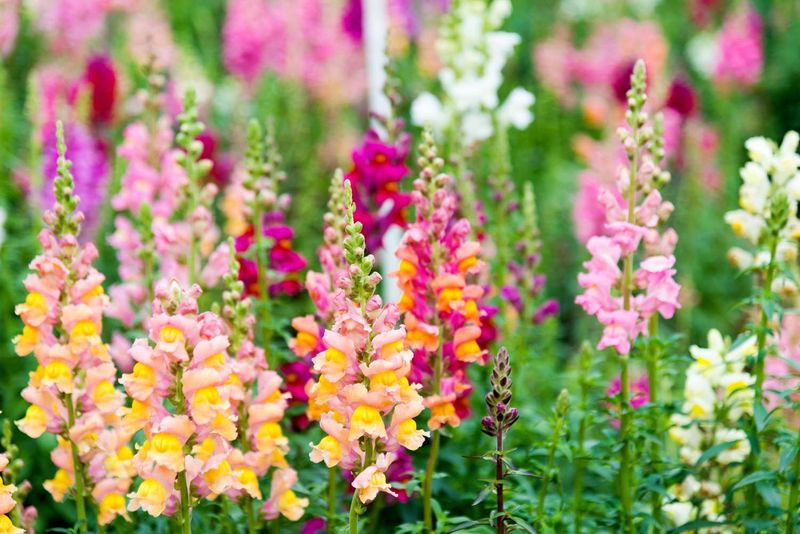
Keep deadheading while you want more blooms, then choose a few healthy plants and let their seedheads turn brown and dry. Clear a small patch of soil, and follow your plants’ timing instead of the calendar.
Some volunteers may greet you in spring, and some may not. Either way, a few seedheads cost you almost nothing, and the garden gets to surprise you.