
New England Aster in North Carolina: A Late-Season Nectar Source for Butterflies, Where It Fits
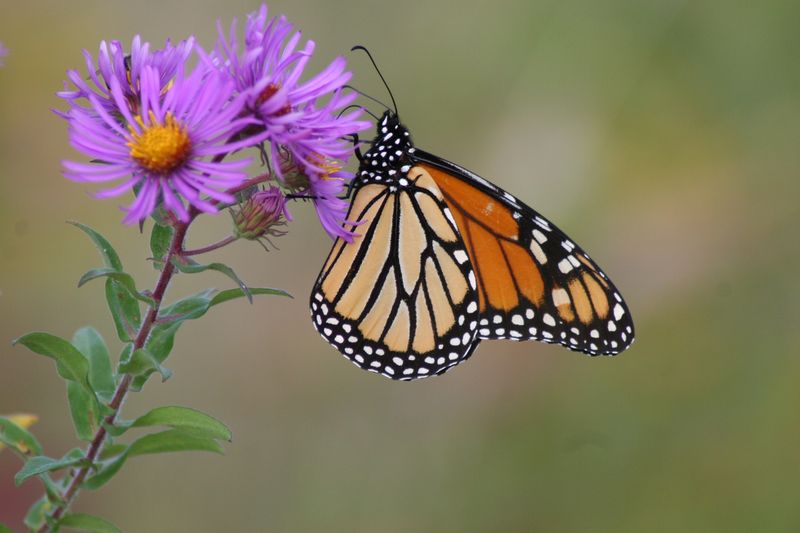
Late summer can leave a yard looking tired, and hungry butterflies still need fuel for the trip ahead. New England aster is a tall purple perennial that blooms when many other flowers are slowing down.
Its nectar can help adult monarchs and other butterflies, though visits are never certain. Before you plant it, it helps to know where it belongs in North Carolina and how to give it a good spot.
Its North Carolina native status depends on where you garden
Few plant labels cause more confusion than the word native. For New England aster, the answer changes with the map.
The Vascular Plants of North Carolina account places its natural distribution in the state’s mountains and calls it rare or locally uncommon there.
The same account says records farther east are likely from cultivation or escape from gardens. In other words, a plant found along a Piedmont roadside may have started life in someone’s flower bed rather than as a wild population.
NC State Extension tells a broader story. Its Plant Toolbox profile lists the plant for the mountains, Piedmont, and Coastal Plain.
The two sources do not describe its statewide status the same way, and neither one settles the question for your particular street.
So here is a practical way to read it. If you garden in the mountains, New England aster has a strong case as a local native.
If you garden in the Piedmont or Coastal Plain, treat it as a regional plant that may be well suited to your yard, but check with your county Extension office or a native plant society before calling it native there. Ask what local asters grow wild near you, because those may be the better match for nearby wildlife.
Being honest about this up front lets you plant with confidence and still keep your yard a good fit for the creatures that live in it.
Its purple display rises above the fading summer bed
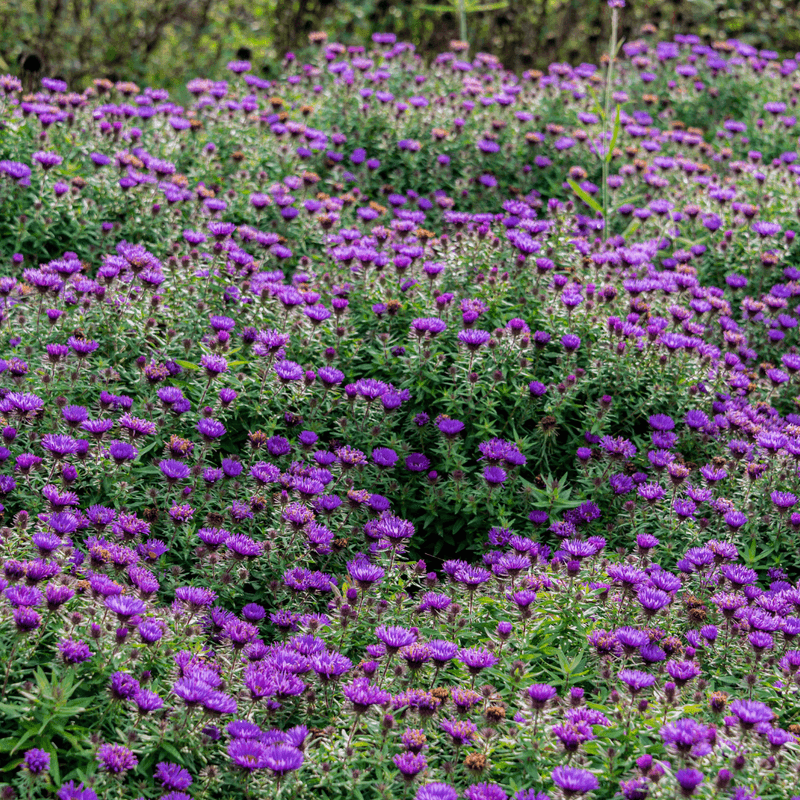
Picture a back border in September, where the daylilies have faded and a tall, bushy plant is covered in purple. That is New England aster at its best.
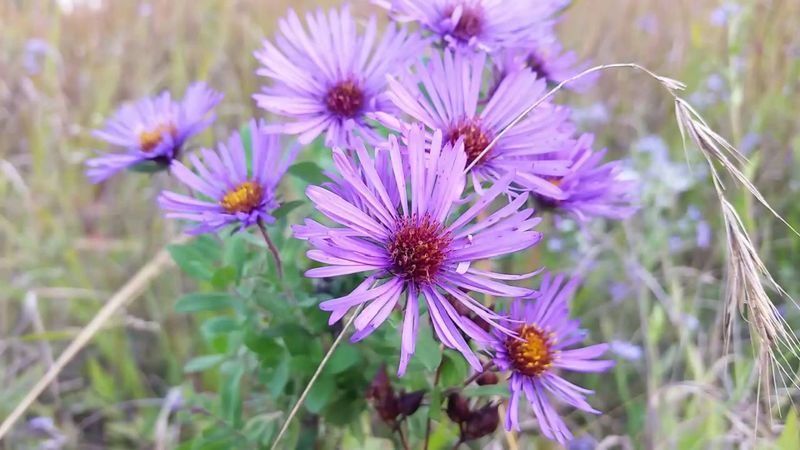
Its upright stems are hairy, and the daisy-like flower heads have purple-to-lavender rays around yellow centers.
NC State Extension gives a typical height of 3 to 6 feet and a bloom window of August to October. That height makes it a natural fit for the middle or back of a bed, where it can rise behind shorter plants.
The word fluffy fits the overall habit, which is full and bushy. The flowers themselves are not plumes.
They are classic composite heads, like a small daisy with many narrow rays.
One thing to plan around is the lower stems. A North Carolina Cooperative Extension article on native asters for fall notes that stems may lose lower leaves by flowering.
Shorter plants in front can hide those bare legs nicely.
Bloom timing also varies. August to October is a general range, not a promise that every plant will flower nonstop.
Weather, location, and growing conditions all shift the calendar, and it will not necessarily bloom after your other flowers are finished.
Aster nectar feeds adult butterflies, not monarch caterpillars
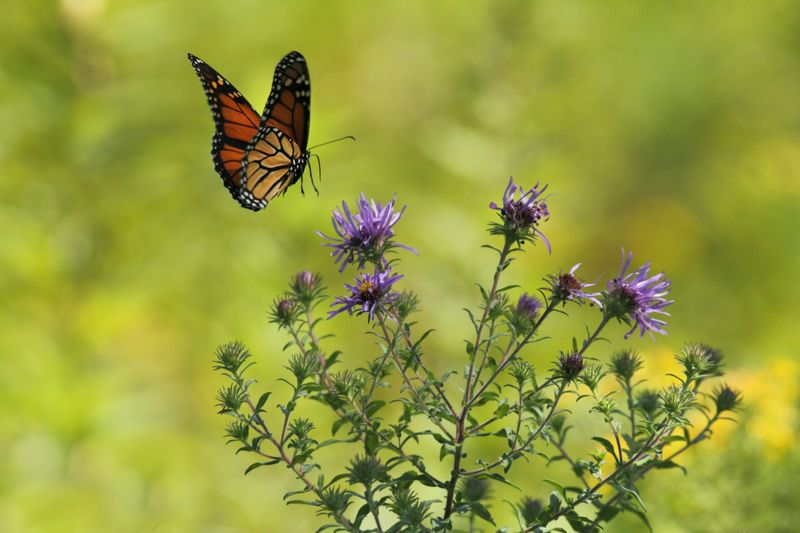
Adult butterflies and caterpillars have different menus, and mixing them up is an easy mistake. New England aster offers nectar.
NC State says the flowers attract bees, hoverflies, and migrating monarchs, according to its plant profile.
The same profile lists the plant as a host for Pearl Crescent caterpillars. That means a small orange-and-brown butterfly may lay eggs on it, and you might see chewed leaves as a normal sign of a living garden.
Monarch caterpillars are different. They feed only on milkweed, so an aster bed will not raise monarchs.
Monarch Joint Venture habitat guidance describes both needs: milkweed for larvae and nectar plants for adults.
A simple way to remember it is that aster is a fuel stop for adult monarchs, while milkweed is the nursery. If you want to help monarchs from start to finish, you need both in the yard, or at least in the neighborhood.
Avoid spraying insecticides on blooming plants. The same habitat guidance names pesticides as a risk to monarchs, and a chewed leaf or two is a fair price for a wildlife-friendly yard.
Butterfly visits are possible, not a backyard guarantee
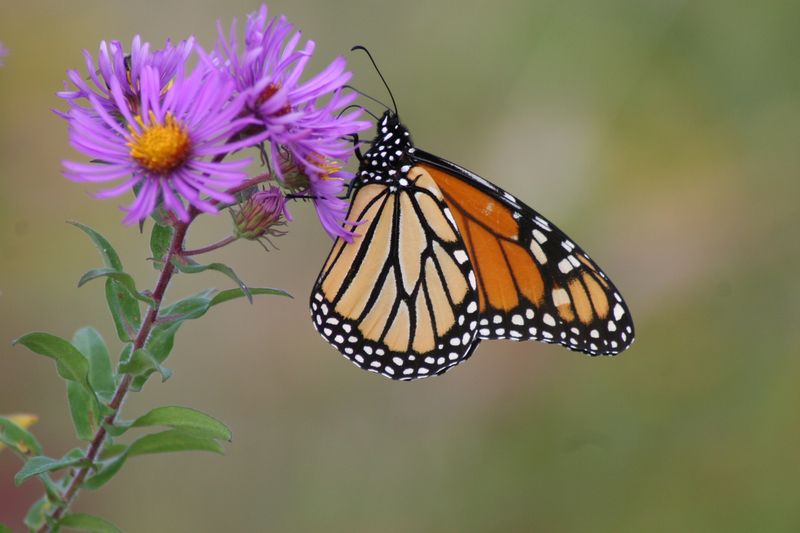
Researchers have watched butterflies use this plant, which is encouraging. A 2024 field study at a reconstructed prairie observed monarchs on New England aster, along with other flowers.
The team also recorded several skipper species at the site.
Notice the careful wording there. The skippers were recorded at the prairie, not specifically on aster, so the study does not tell us that skippers favor it.
A prairie also differs from a North Carolina backyard. It is large, planted with many species, and managed for wildlife.
Your yard may have a different mix of flowers, neighbors, and weather, so the same numbers should not be expected.
That does not make the plant a poor choice. It still offers nectar in late summer and fall, when adult monarchs on migration need it.
Monarch habitat guidance stresses the surrounding conditions and a variety of resources.
Think of aster as an invitation. Some years you may see a monarch or two, and some years none.
Planting it alone will not raise monarch numbers, but it can be one useful piece.
Pair it with flowers that extend nectar through the season
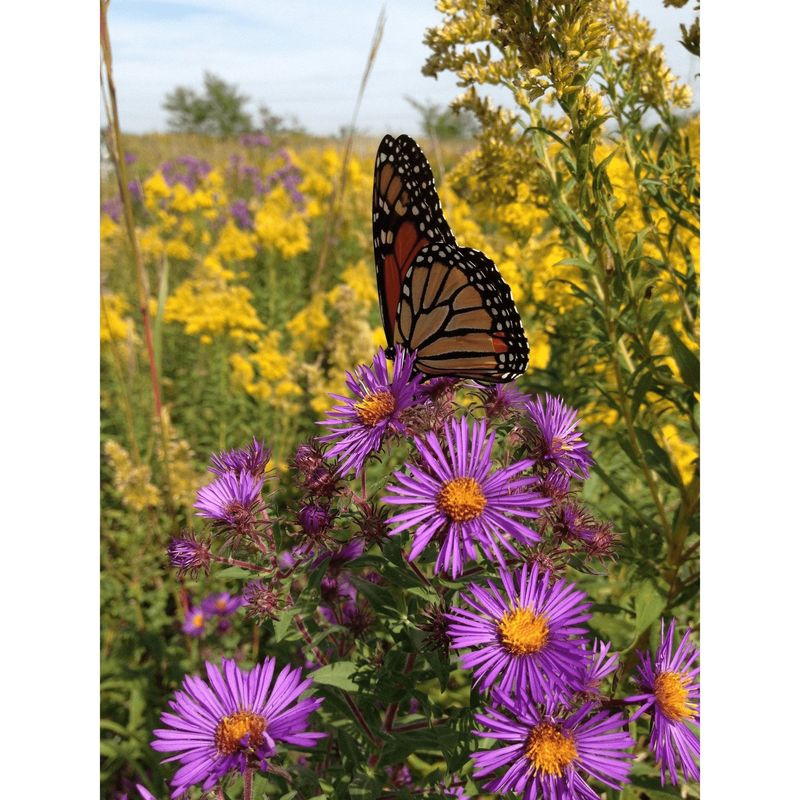
A single plant cannot feed butterflies from spring to frost. The better plan is a calendar of blooms, with something flowering in every month butterflies are active.
Monarch Joint Venture explains that monarchs benefit from a mix of regionally appropriate nectar plants plus native milkweeds, with blooms spread across the season.
Start by listing what blooms in your yard in spring, early summer, midsummer, and fall. Gaps show you where to add plants.
New England aster can fill part of the late-season slot, but it should not be the only one.
Choose plants that suit your region. A Piedmont gardener might look to local milkweeds and coneflowers for earlier color, while a mountain gardener has different options.
Your county Extension office can point you to species that grow well nearby.
Native milkweeds deserve a spot too, since monarch larvae need them. Habitat guidance from the same group also reminds gardeners to limit pesticide use.
Try tucking asters behind earlier bloomers, so that when those fade, the purple takes over. Do not count on aster to bloom after everything else quits, because timing changes from year to year.
Give a tall aster sun, space, and room for airflow
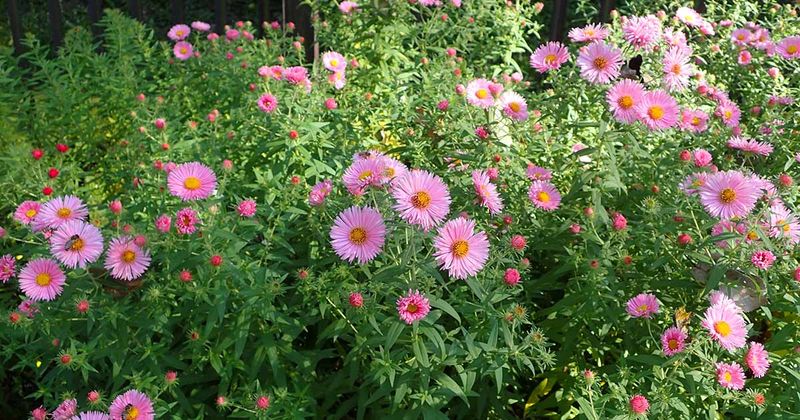
Site choice does most of the work with this plant. NC State’s profile says it prefers full sun and moist, well-drained soil.
It also allows several soil textures and says the plant can tolerate occasional dry spells.
That flexibility has limits. A spot that stays baked and dry all summer, or one that stays soggy, may leave you with a stressed plant.
Watch how water moves in your yard before choosing a place.
Room matters as much as light. With a mature height that can reach several feet, an aster tucked against a fence or crowded by neighbors will struggle for airflow.
The profile notes susceptibility to powdery mildew, a whitish coating on leaves that tends to show up where air is stagnant.
Give each plant generous space, and place it where breezes can pass through. If you see mildew, remove badly affected leaves rather than reaching for a spray, since blooming plants draw pollinators.
Tall stems may also flop in wind or rain. The profile mentions that staking may be needed, so a simple stake or ring set early in the season can save a lot of trouble.
No plant succeeds in every yard, and that includes this one. Start small, observe, and adjust.
Shape its growth without promising extra blooms
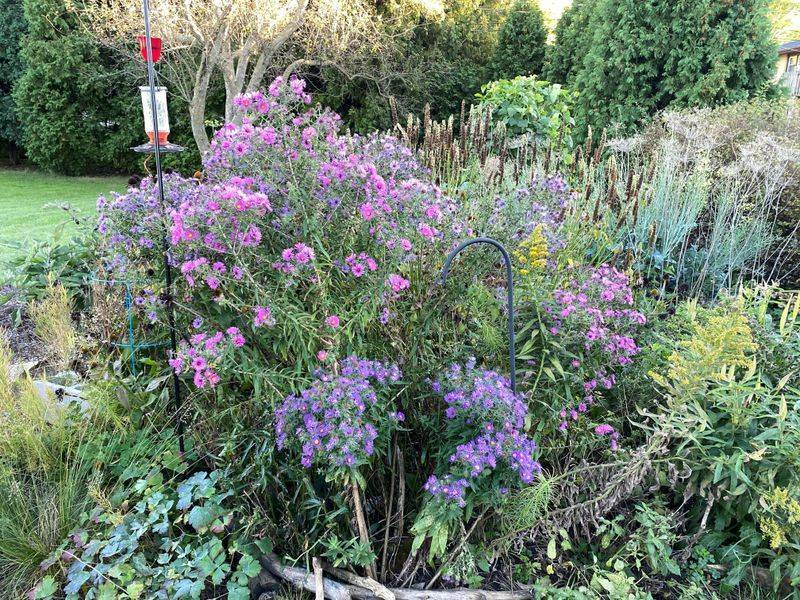
Pruning can tame a tall aster, but it works on timing and shape, not on a flower guarantee. In spring, pinching the growing tips can help.
NC State says spring pinching can delay bloom while encouraging bushier growth.
A midsummer cutback is a related but different tool. A North Carolina Cooperative Extension article suggests cutting some tall asters back by one-third to one-half in midsummer.
The idea is a sturdier, more compact plant, though results can vary by plant, weather, and region.
Try both on a small scale first. Pinch one clump, cut back another, and leave a third alone, then compare notes next fall.
You will learn what your own soil and sun can do.
Neither method promises extra blooms on every plant. Think of them as ways to steer height and bloom timing, which can also reduce staking.
Before you plant, confirm that aster suits your part of North Carolina. Then build a garden with blooms across the seasons, including native milkweeds and a mix of nectar plants.
Some autumns a monarch will stop by, and some it will not. Enjoy the purple either way.