
Peace Lily Not Flowering Indoors? Check Your Light Before Reaching for Fertilizer
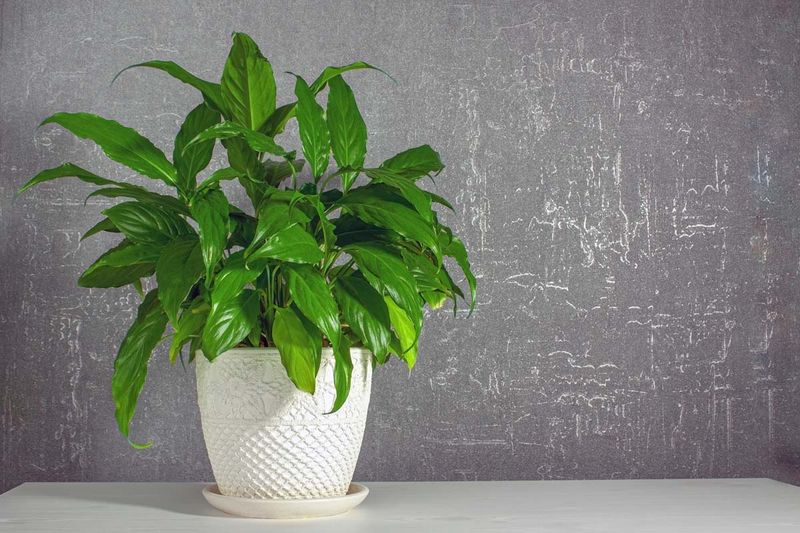
Your peace lily has glossy green leaves, but not a single white bloom in sight. It is easy to blame the plant food and start adding more.
Light placement is a simpler thing to check first, and it costs nothing. Here is how to look at your plant’s spot with fresh eyes, and what else might be going on.
Why might a peace lily skip flowers?
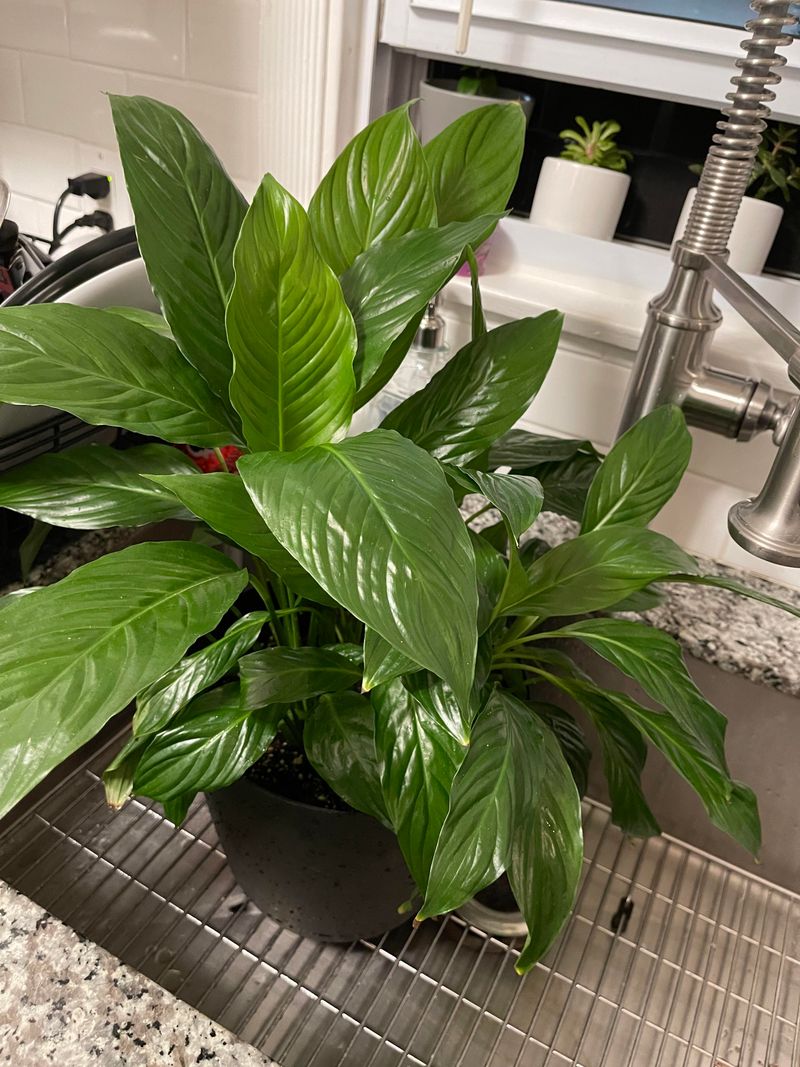
A leafy peace lily with no blooms can feel like a small failure. Take a breath, because the plant is probably not in trouble.
Peace lilies are known for putting up with dim rooms, which is part of why they are so common in homes and offices.
Tolerating low light is not the same as thriving in it, though. Clemson Extension says peace lilies grow best in bright, indirect light, and it lists too little light as one cause of a plant that will not flower.
Notice the wording: one cause, not the only one. Your plant may have a light problem, or it may have something else entirely.
That is why plant food is a shaky first move. If the real limit is a dim corner, extra fertilizer does not fix it.
University of Missouri Extension notes that fertilizer does not make up for too little light, and feeding a plant in poor conditions can injure it.
So think of this guide as a careful check of your plant’s growing conditions. We will look at the light it actually gets, make one gentle move if needed, and consider age, variety, and temperature.
Nothing here can promise flowers, but each step is low risk and easy to undo.
Winter light depends on the plant’s actual spot
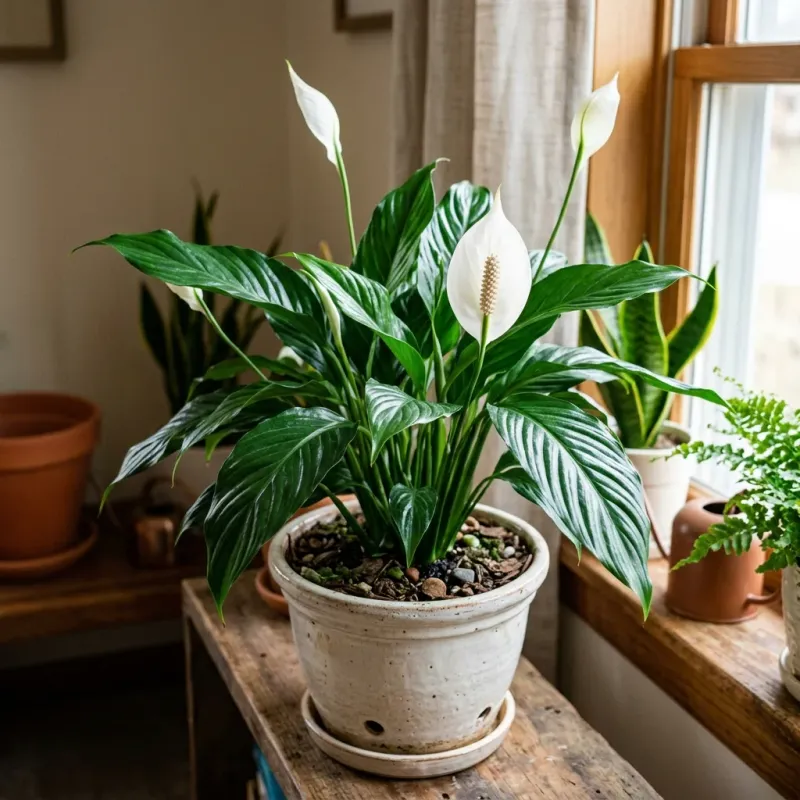
Many people assume winter means dim rooms across the board. The truth is more specific to your home.
A peace lily sitting two feet back from a south-facing window may get more usable light in January than one tucked behind a bookshelf in July.
Walk over to your plant and look at its surroundings. Which direction does the window face?
How far away is the pot? Is a curtain, a tree outside, or a piece of furniture blocking the glow?
Does the sun reach that spot at all during the day, and does that change from season to season?
Bright, indirect light, the kind Clemson Extension recommends, means a spot that is well lit without sunbeams landing directly on the leaves. A simple test is to see whether you could comfortably read there in the middle of the day without a lamp.
There is no magic number for how much light triggers blooms indoors. Research has not pinned one down, so treat this as a practical placement check rather than a measurement.
Even day length is not a simple switch. UF/IFAS research found that flowering responses differ by cultivar, and some begin forming flowers during short days.
Short days alone do not doom your plant.
Move the plant gradually toward brighter, indirect light
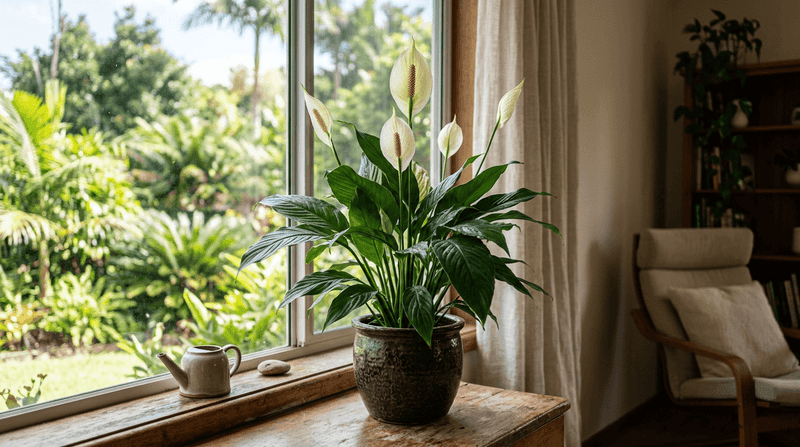
If your light check showed a dim spot, a small shift may be worth trying. Pick a place that is brighter but still shielded from direct sun.
An east window, a spot a few feet back from a south or west window, or a location behind a sheer curtain often fits the bill.
Go slowly. University of Missouri Extension warns that moving a plant suddenly into much stronger light, especially direct sun, can bleach or burn the leaves.
A plant used to a shady shelf needs time to adjust.
One easy approach is to move it halfway first. Leave it there for a week or two, then nudge it closer if the leaves look happy.
Dark green, glossy foliage is a good sign. Pale, yellowing, or scorched patches mean the light is too strong, so step back.
Direct sun is the thing to avoid. Clemson Extension notes it can scorch peace lily foliage.
Winter sun through glass can feel gentle, but it can still mark leaves that are not prepared for it.
Be honest with yourself about what this move does. It deals with one possible limit on flowering.
It cannot guarantee blooms, and it may take weeks or months before you see any change in how the plant grows.
A healthy plant may not be ready to flower
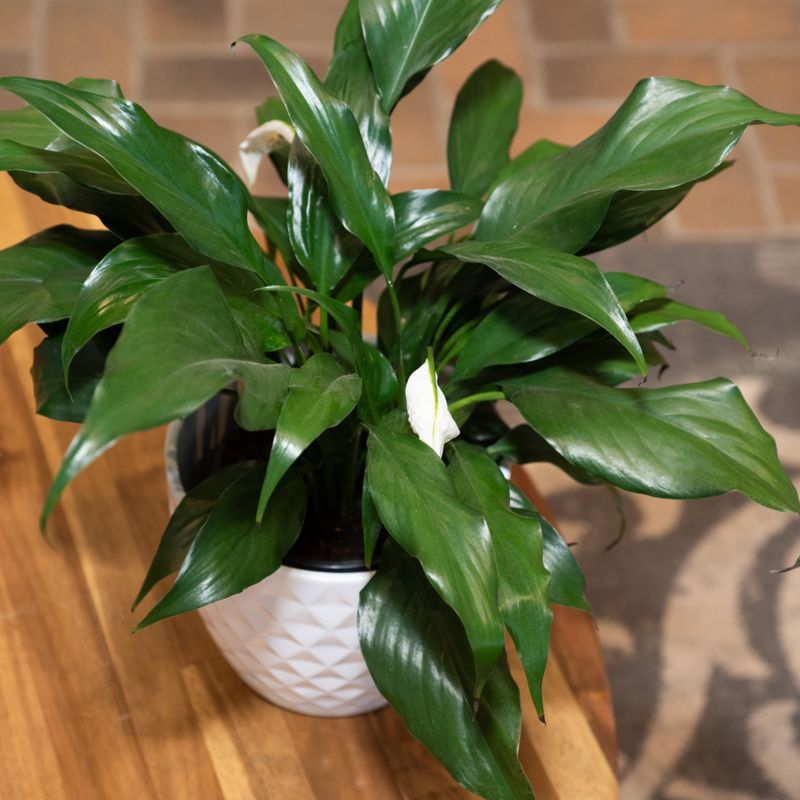
Sometimes the plant is simply not at the blooming stage. A peace lily that is under a year old may not flower yet, according to Clemson Extension.
If you brought yours home recently or split it from a larger plant, patience may be the main fix.
Variety matters too. Peace lilies come in many cultivars, from compact types to large floor plants, and they do not all behave alike.
UF/IFAS research describes flowering as shaped by a mix of cultivar, maturity, temperature, and season.
That same research is why the idea that winter’s short days stop blooms does not hold up as a rule. Some cultivars start forming flowers during short-day periods.
A bare plant in December is not proof that the calendar is working against you.
Temperature can also play a part, which is one reason a plant may bloom in one season and rest in another. You may not be able to pin down a single cause, and that is fine.
Look at the overall picture. Are the leaves firm and green?
Is there any new growth? A plant like that is healthy, even without flowers.
Treating it as a failure can lead to overwatering, overfeeding, and constant repotting, which cause more harm than a quiet season ever could.
Fertilizer cannot make up for poor growing conditions
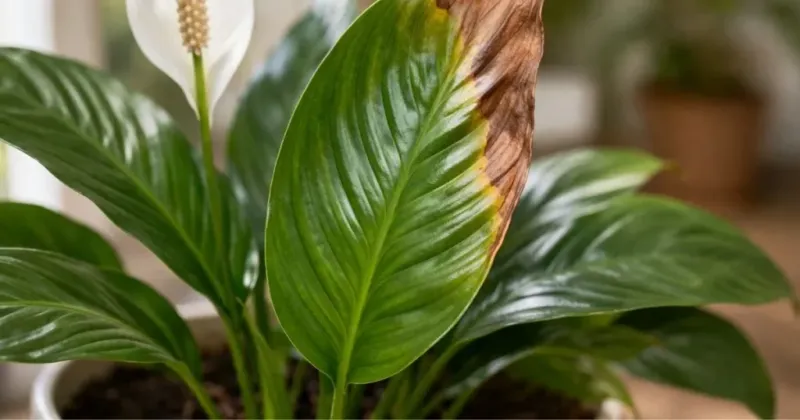
Reaching for the plant food feels productive, but it works best as a supporting player. Fertilizer is not a substitute for enough light, and it is not a bloom switch.
University of Missouri Extension says it does not correct insufficient light and can injure plants when used to push growth in poor conditions.
More is not better here. Too much fertilizer can burn roots and leaf tips, which often shows up as brown edges.
That damage can make a struggling plant look even worse.
None of this means fertilizer never matters. Peace lilies do use nutrients while they grow.
Clemson Extension suggests a balanced liquid fertilizer at quarter strength about every six to eight weeks, and only in spring and summer.
Advice varies a bit between sources. UF/IFAS recommends a low dose about three times a year.
The shared message is to feed lightly and follow a trusted, plant-specific label rather than one universal schedule.
For winter, check for new growth first. Missouri Extension says plants showing no new growth generally do not need fertilizer then.
If your peace lily is pushing out fresh leaves, light feeding may be reasonable. If it is resting, skip it, and do not use plant food as a quick fix for missing flowers.
Keep a brighter window spot warm and draft-free
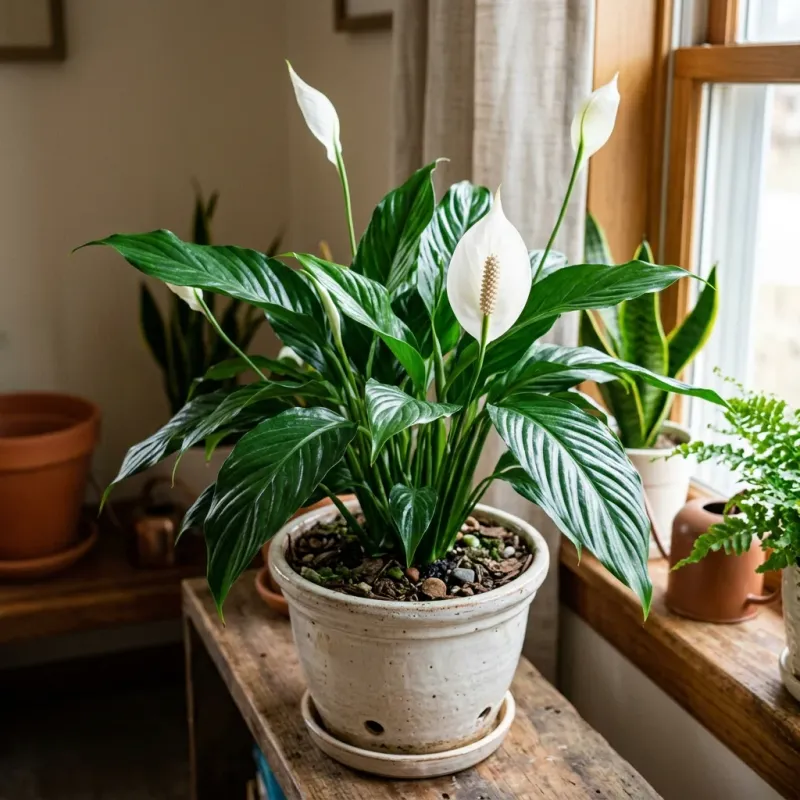
Windows bring light, but they also bring chilly glass and drafts. In winter, the spot with the best light can be the coldest in the room, and peace lilies are tropical plants that do not enjoy a chill.
Clemson Extension advises avoiding temperatures below 60°F and keeping the plant away from direct airflow from heating or air-conditioning vents. A blast of hot, dry air can stress leaves just as cold air can.
Before you commit to a new location, spend a day checking it. Hold your hand near the leaves and feel for moving air.
Look at where the vents are and whether they point toward the pot. Notice whether the glass feels cold, especially at night.
If the window is cold, pull the plant back a bit rather than leaving it pressed against the pane. Leaves touching cold glass can get damaged.
A small stand or table a foot or two back often gives you light without the chill.
Closing curtains at night can help in a drafty room, and moving the plant off a windowsill after dark is another easy option. The goal is a spot that is bright, steady, and comfortable.
Check the light first, then give the plant time
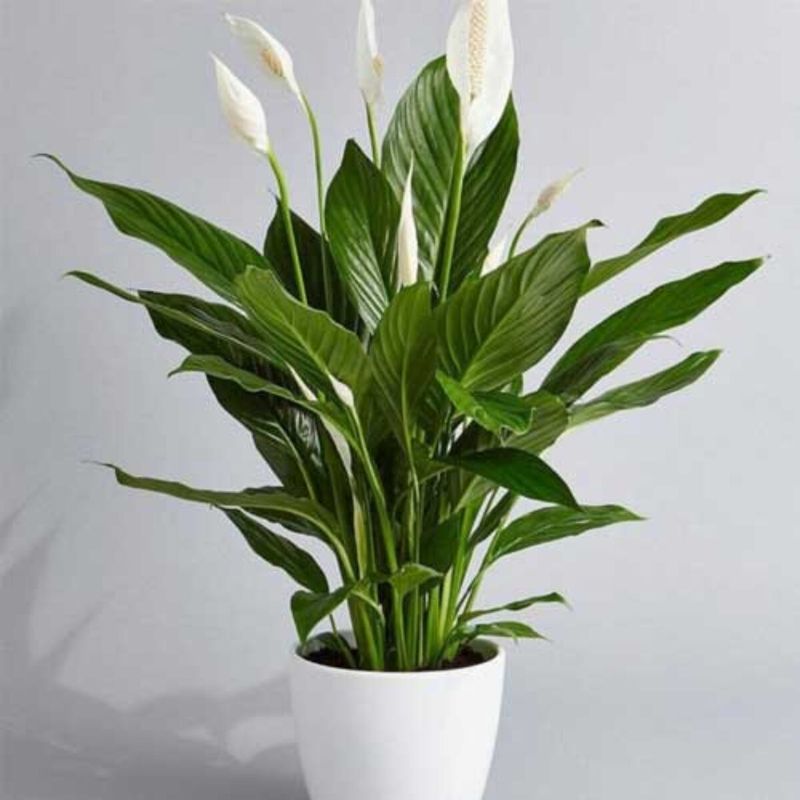
Start by looking at where the plant sits now. If it is dim, move it a little at a time toward brighter, indirect light, as Clemson Extension suggests.
Skip the winter fertilizer boost if there is no new growth, per Missouri Extension.
Then wait. Age and cultivar both shape when a peace lily blooms.
A calm, well-placed plant often tells you more over a few months than any quick fix could.