
What It May Mean When a Box Turtle Stops Showing Up in Your North Carolina Yard This Late in Fall
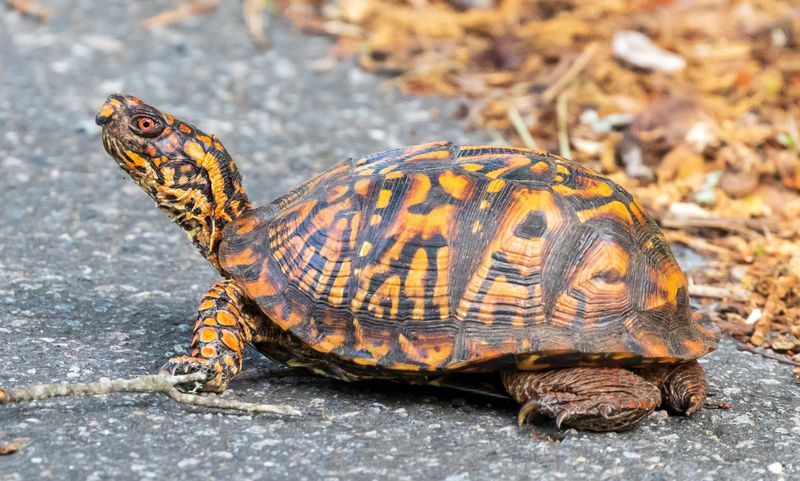
You saw a box turtle plodding across your lawn all summer, and now it has not shown up for weeks. Many North Carolina homeowners notice this quiet change as the days get shorter.
The empty yard can mean several things, and none of them can be confirmed just by looking out the window. Knowing the possibilities helps you protect the turtle and the little patch of habitat you keep.
What might a late-fall disappearance mean?
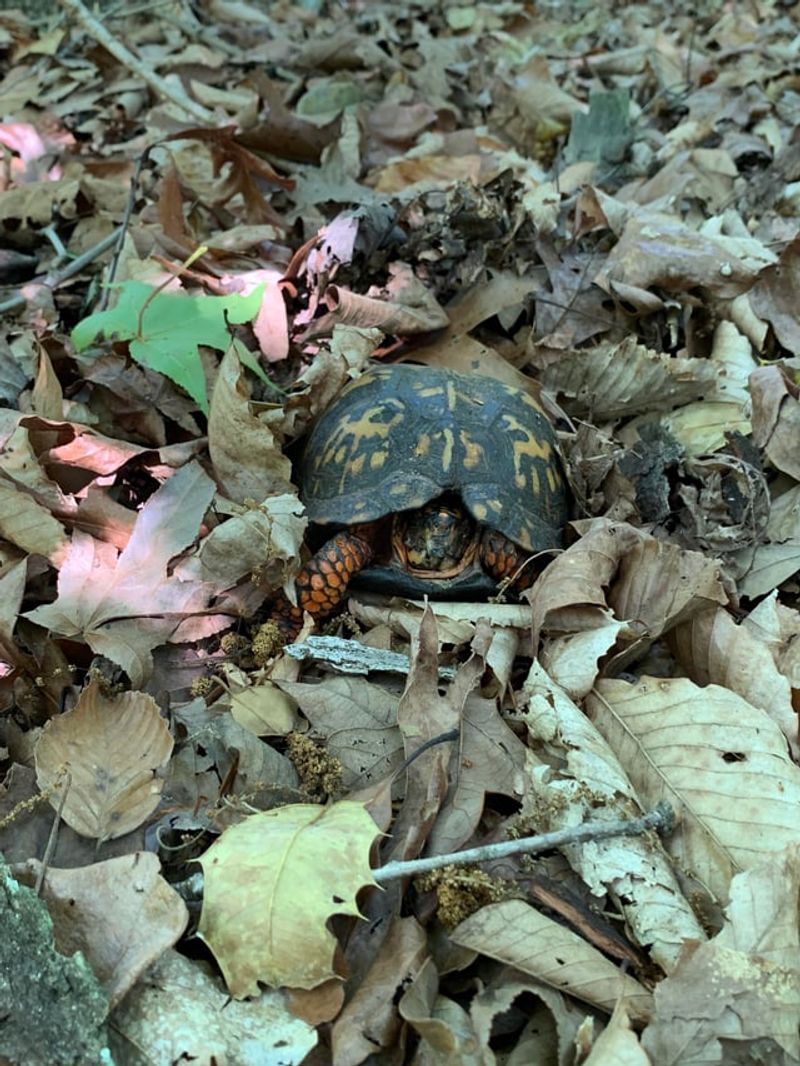
Cooler weather often brings a change in what box turtles do. When one stops turning up near your garden or porch, winter dormancy is a plausible reason.
Some people call it brumation, which is a reptile’s version of a long winter rest.
The NC Wildlife Resources Commission explains in its eastern box turtle species profile that these turtles typically bury into soil or forest-floor leaf litter and become dormant in winter. The same profile notes that box turtles have been observed in every month of the year.
So dormancy is a common pattern, not a rule that every turtle follows.
That detail matters for how you read the silence. A missing turtle might be resting under leaves.
It might also be wandering through a neighbor’s woods, or simply out of your line of sight on a mild afternoon. From the kitchen window, you cannot tell which one is true.
Winter timing is not the same across our state either. The Coastal Plain, the Piedmont, and the mountains all have different cold snaps and warm spells, so there is no single start date or temperature that applies everywhere.
A turtle in Wilmington may keep a different schedule than one near Asheville.
The helpful way to think about it is this. Dormancy is a reasonable guess, and an absence is only a clue.
Treat it as a reason to be gentle with your yard, not as a map to a hiding spot.
Winter shelter varies from turtle to turtle
Not every box turtle picks the same bedroom. Some settle into loose soil, some tuck beneath thick leaf litter, and others may use stump holes, root masses, or similar sheltered pockets.
Each animal makes its own choice.
Depth varies too. The state wildlife agency says box turtles typically bury in soil or leaf litter, but that does not mean each one digs far down.
A study of overwintering behavior in forests managed with prescribed fire found that turtles differed in where they spent the winter and how deeply they were sheltered. That range is the main takeaway, rather than a recipe for one perfect spot.
For a homeowner, this means there is no way to pinpoint where a turtle went. It could be under a shrub border, along a fence line, in a woodlot edge, or well beyond your property.
A pile of leaves is not proof of anything, and a bare patch of ground is not proof of nothing.
Warm spells add another twist. Some turtles may stir and come near the surface on a mild day, then settle again.
A winter sighting does not automatically mean something is wrong.
Because the possibilities are so wide, the practical answer is to avoid guessing. Do not poke, rake, or dig to check.
A resting turtle depends on being left alone, and your curiosity can cost it the cover it chose.
A yard visit is not proof of a resident turtle
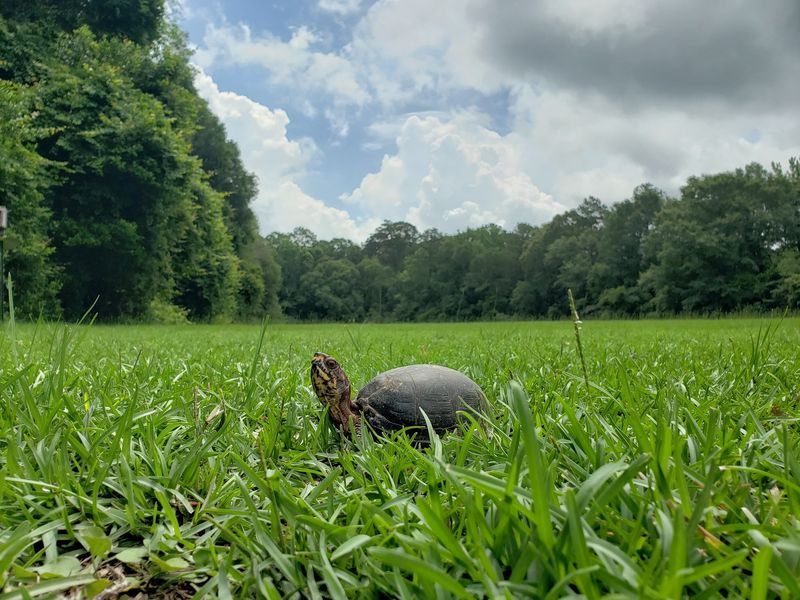
Seeing a turtle by your hydrangeas feels like meeting a neighbor. It is natural to assume it lives there and is tucked in nearby.
A single sighting does not quite say that.
It does show that the turtle used your yard, at least for a moment. Box turtles use varied habitats, and the North Carolina State Parks reptile account describes seasonal movement and shifts among habitat types.
Your lawn edge may have been one stop in a much larger home area.
So the turtle may have been passing through. It might return next spring, or it might not.
Its disappearance does not prove it is underground on your lot, under a certain leaf pile, or planning to come back to the same spot.
A sighting also does not grade your yard. It suggests that the local landscape is open to box turtles, but it cannot show that you have top-quality habitat, a resident group, or a breeding population.
The NC Wildlife Resources Commission reports statewide population concerns and keeps monitoring box turtles through its eastern box turtle page, which is a good reason to treat every visit as meaningful without over-reading it.
Whether you are in a Piedmont subdivision, a coastal neighborhood, or a mountain hollow, the same humility applies. Enjoy the visit, keep your yard welcoming, and let the turtle’s wider story stay a little mysterious.
Leave natural shelter undisturbed

Here is a weekend plan that asks you to do less. Keep some leaf litter in place, especially under shrubs and along fence lines or the wooded edge of your lot.
Leave existing logs, brush corners, and natural cover where they are.
NC State Extension, in its guide to reptiles and amphibians in your backyard, points to leaf litter, shrubs, logs, and similar shelters as important habitat for reptiles. Keeping them supports box turtles and many other creatures you probably like seeing, such as skinks, toads, and ground-feeding birds.
Think of this as good stewardship, not turtle detective work. Leaving cover in place does not prove a turtle is there.
It simply keeps options open for any animal that might need shelter.
Just as important is what not to do. Do not dig, rake through piles, or lift heavy boards, stones, or brush to look for a turtle.
If you suspect a spot has been used, give it a wide berth and keep pets, kids, and tools away from it.
You can still tidy the places that need it, like walkways, patios, and vegetable beds. Choose a corner or a strip along the back edge to leave natural.
Equipment can be a disturbance risk in any season, so go slowly and look before you work near brushy edges, but there is no one date that fits every North Carolina yard.
If it appears again, respond calmly
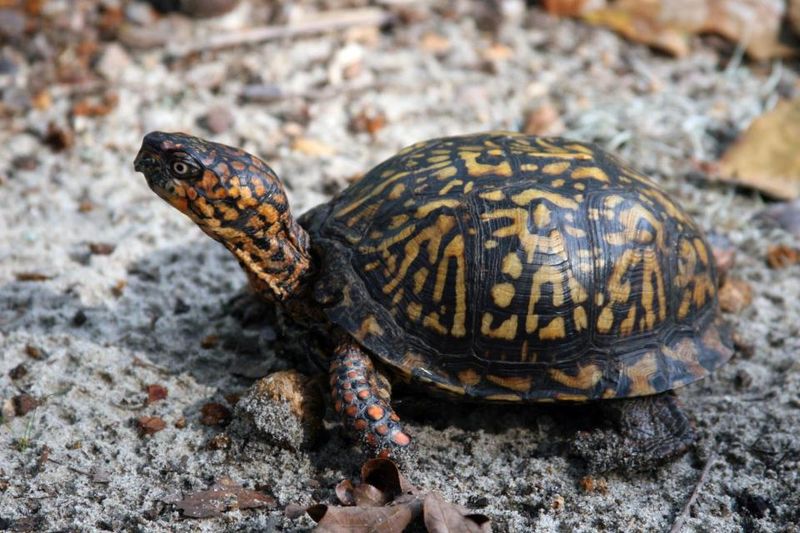
Sometimes the story gets a surprise ending. A box turtle may pop up on a warm winter day, and that is not automatically a problem.
The NC Wildlife Resources Commission notes in its species profile that warm spells can bring some turtles to the surface and that they have been seen in every month.
If the turtle is healthy and not in danger, the best move is to let it be. Watch from a distance, keep dogs away, and skip the urge to carry it somewhere.
Do not take a wild turtle home, and do not move it to woods, a park, or another property.
Box turtles have strong homing instincts, and moving one outside its home range can send it on a risky search for familiar ground. Even a kind relocation can cause harm.
The exception is immediate danger. If a turtle is in a spot where it could be hit or crushed, move it only the shortest distance needed.
For a road, carry it across in the direction it was already heading, and only if it is safe for you to do so. Pull over safely, watch for traffic, and hold it gently with both hands.
If a turtle is visibly injured, such as a cracked shell, bleeding, or serious wounds, contact a licensed reptile rehabilitator. The agency’s guidance on its eastern box turtle page points people to these trained helpers.
Make a quick call, note where you found the turtle, and follow their advice.
Let uncertainty guide your care
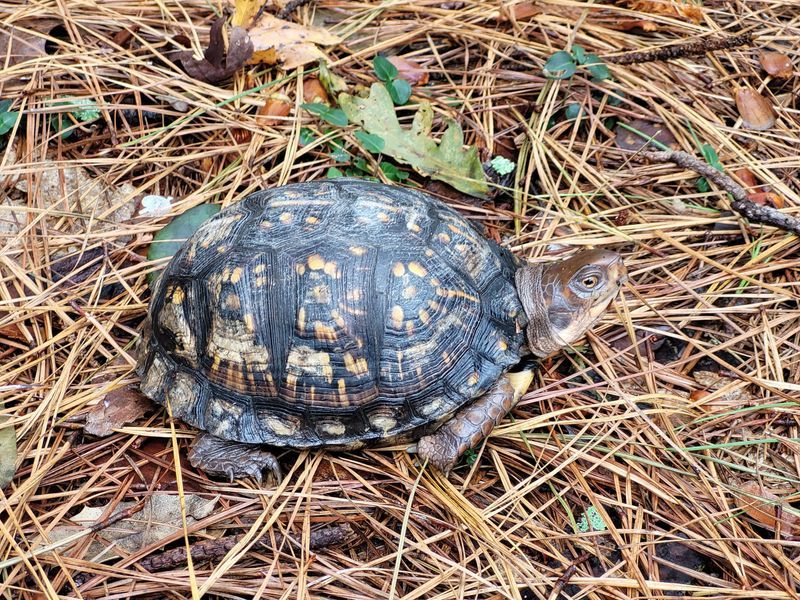
A box turtle may be dormant close by, but its silence does not tell you where it went or what its visit says about your yard. That uncertainty is fine.
NC State Extension’s backyard guide backs the simple response of keeping natural shelter in place.
Leave possible winter spots alone, and let the state’s note that turtles appear in every month remind you to stay flexible. The best care is the kind that asks nothing of the turtle.
Sometimes the kindest thing a yard can say to a turtle is nothing at all.