
Planting a Native Holly Screen This Fall May Give Your North Carolina Yard Long-Term Privacy
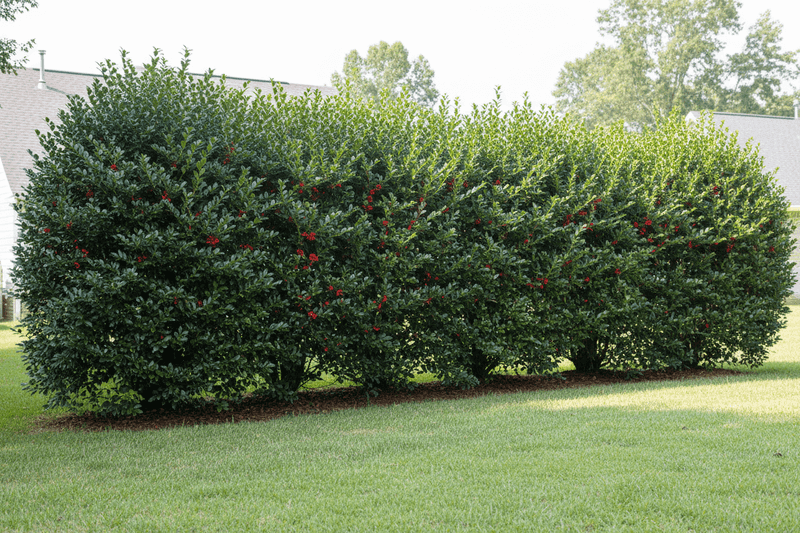
A tall green wall between you and the neighbors sounds great, but it takes more than a shovel and a Saturday. Native hollies stay green all winter and can grow into a solid screen that also shelters wildlife.
Fall is a good time to get them in the ground, and the choice of species matters a lot in North Carolina. Here is what to know before you buy.
A fall planting starts the screen, not the privacy
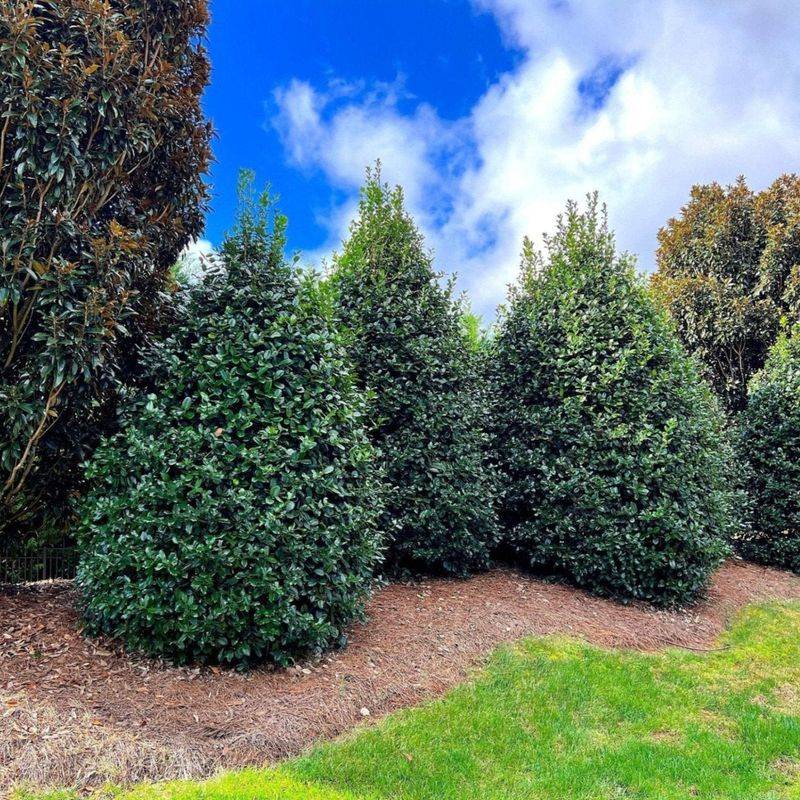
Planting in fall is a start, not a finish line. Small hollies set out this November will not block the view from the neighbor’s deck next week, and they will not do it next month either.
Privacy comes later, once the plants grow tall and thick enough to close the gaps.
Still, fall is a smart time to begin. NC State Extension’s privacy guidance points out that fall and winter are good times to plant evergreens because the plants get time to settle in before summer heat arrives.
Hollies are among the evergreens it lists for screening.
Cooler weather helps, but it does not replace care. The NC State Extension Gardener Handbook recommends late fall or early spring for most container-grown woody plants, and it expects you to water new plantings and mulch them.
Think of the first season as a job of keeping roots happy.
No one can say exactly how long a screen will take to fill in. Growth depends on the species, the soil, the weather, and how well the plants are looked after.
Expect gaps at first, and plan for a few seasons of patience. Once the plants reach a good size and density, evergreen leaves can give you screening in every season, including winter, when deciduous plants go bare.
If you need cover right away, a temporary fence or a row of tall potted plants can fill in while the hollies grow.
Choose the holly that fits your part of North Carolina
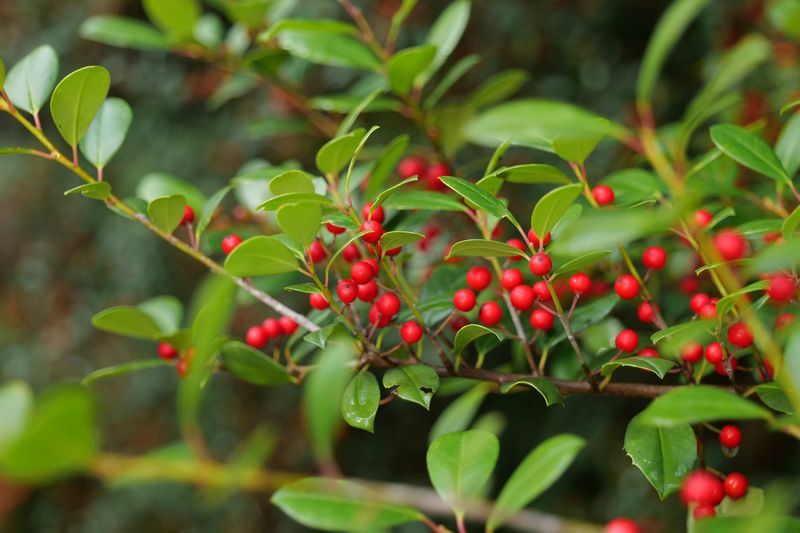
American holly and yaupon are both evergreen native hollies, but they are not interchangeable. Picking the wrong one can leave you with a plant that is too big, too slow, or wrong for your region.
NC State’s profile of American holly lists it as native across North Carolina. It grows slowly and can become a tree 40 to 60 feet tall, so NC State does not recommend it for small yards.
If you have a wide lot and want a tall, long-term screen, it can make sense. If you have a narrow side yard, look elsewhere.
Fire safety deserves a clear warning here. NC State rates American holly as highly flammable and advises against planting it within a home’s defensible space.
Keep it well back from the house, especially if you live near woods or dry brush.
The yaupon profile describes a plant that grows more quickly and typically reaches 10 to 20 feet tall and 8 to 12 feet wide. It is listed as native in the Coastal Plain and Piedmont.
The profile does not list the Mountain region, so mountain gardeners should not assume yaupon is a good fit and should check with their local extension office.
Before you shop, measure the space and decide how tall the screen needs to be. A 10-foot screen asks for a very different plant than a 40-foot one.
Plan for mature size instead of crowding plants for quick cover
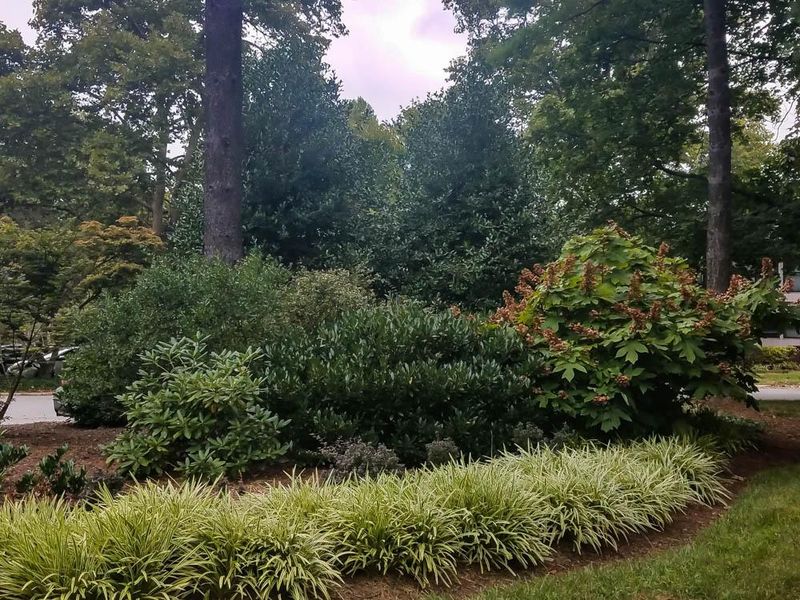
Crowding plants shoulder to shoulder makes a yard look finished on day one. Two years later, the plants fight for light and water, and the hedge can look thin or patchy.
NC State Extension advises spacing plants by their mature size. Look up the width a plant reaches, not the width of the nursery pot.
Yaupon, for example, typically spreads 8 to 12 feet, so the spacing you choose should reflect that.
Try a simple test. Lay a garden hose along the planned line, then mark each plant spot with a stake.
Stand back and picture each plant at full width. If the circles overlap heavily, you have too many plants for the space.
Resilience matters too. A row of one species can be hit hard if a pest or disease targets that plant.
NC State suggests that a mixed screen may reduce the chance that one problem wipes out the whole planting.
A mixed planting can use more than one native evergreen, with the layout repeating or alternating. Ask your local nursery or extension office which natives suit your soil and region.
Leave room to walk behind the hedge for pruning and checking plants. A gap of a few feet from the fence or property line makes upkeep easier.
Set the root ball at the right depth
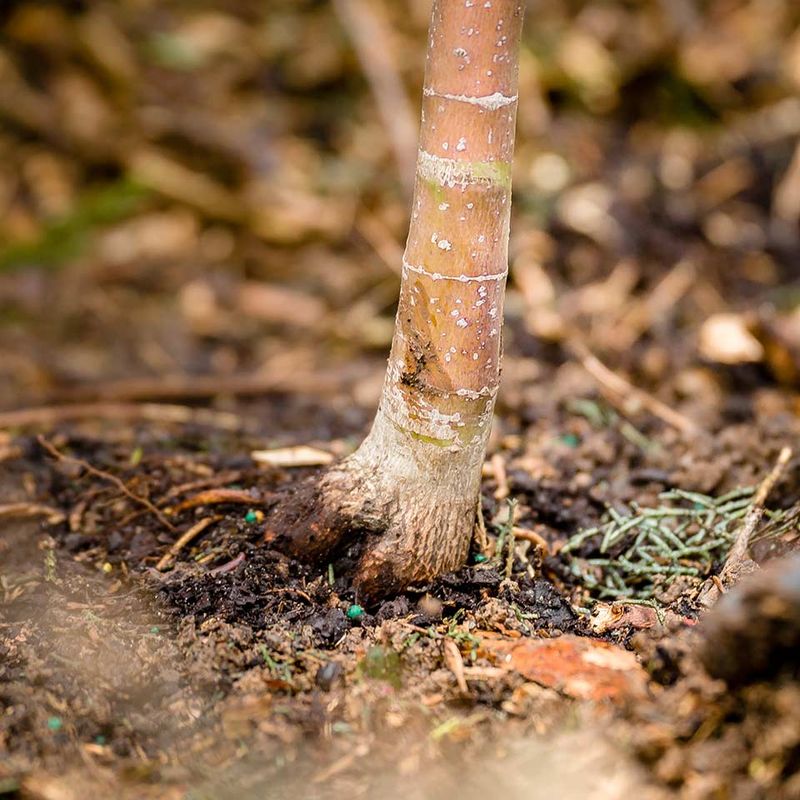
Planting depth is one of the easiest things to get wrong and one of the hardest to fix later. A few simple rules help.
NC State’s handbook recommends late fall or early spring for planting most container-grown woody plants. Dig the hole no deeper than the root ball and two to three times as wide.
The wide hole gives roots loose soil to push into, while the shallow depth keeps the plant from sinking.
Set the plant at or slightly above the surrounding grade. If the root ball sits too low, water can pool around the base and stress the plant.
A little extra height is safer than too little.
Gently loosen any roots circling the pot before you place the plant. Backfill with the soil you dug out, firm it lightly, and water right away to settle it.
Finish with 2 to 3 inches of organic mulch, such as shredded bark or pine straw. Pull the mulch back so it does not touch the crown or trunk.
Piled mulch against the stem holds moisture and can invite problems.
Check the mulch layer in late winter. Wind and rain can thin it, and it works best when the layer stays even across the planting bed.
Water while the roots establish
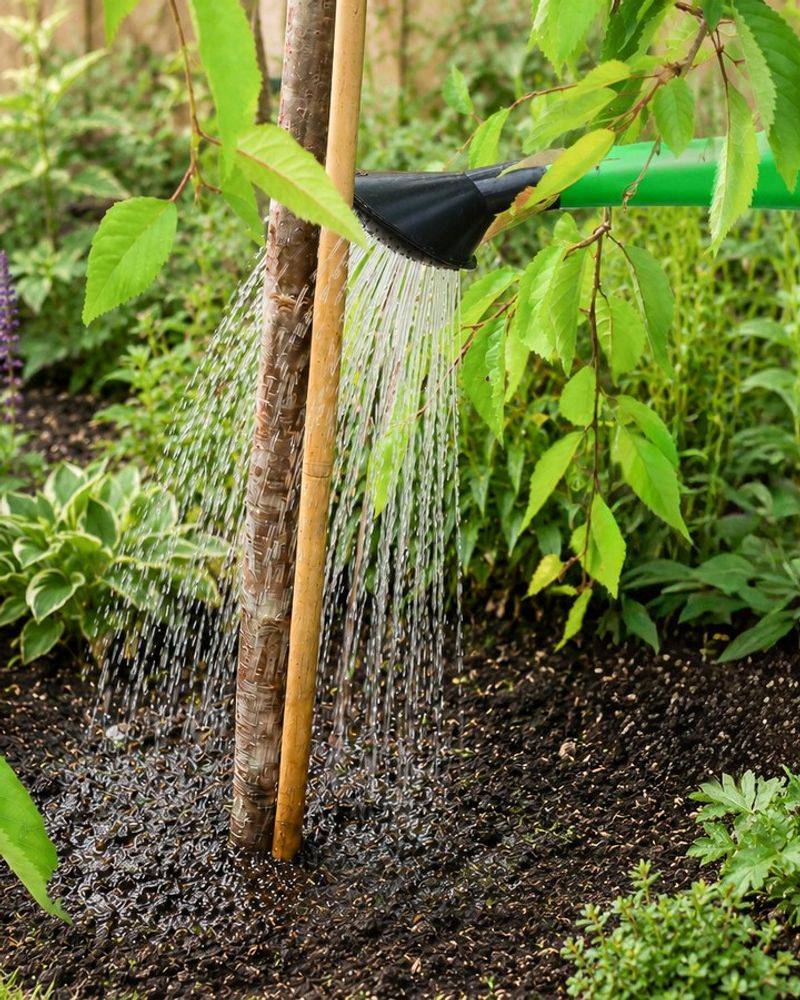
Cool fall weather does not mean you can walk away. Roots of a new plant have not yet grown into the surrounding soil, so they depend on you for moisture.
NC State’s handbook gives a general guide for 1 to 3 gallon trees and shrubs: about 3 to 5 gallons twice a week when it does not rain. That guidance applies roughly until roots grow into the surrounding soil, which is about three to four weeks.
Treat those numbers as a starting point, not a strict schedule. Plantings in cooler weather may need less.
Soil type, drainage, plant size, and the spot in your yard all change how fast the ground dries out. A sunny, sandy Coastal Plain bed will dry faster than a shaded, clay-heavy Piedmont one.
Check by feel. Push a finger a few inches into the soil near the root ball.
If it is damp, wait. If it is dry, water slowly so the moisture soaks in instead of running off.
Soggy soil is a problem too. Leaves that yellow or drop while the soil stays wet can be a sign of too much water or poor drainage.
Back off and look at the site.
After the first few weeks, keep an eye on the plants through dry spells in their first year.
Holly offers wildlife cover, but berries need planning
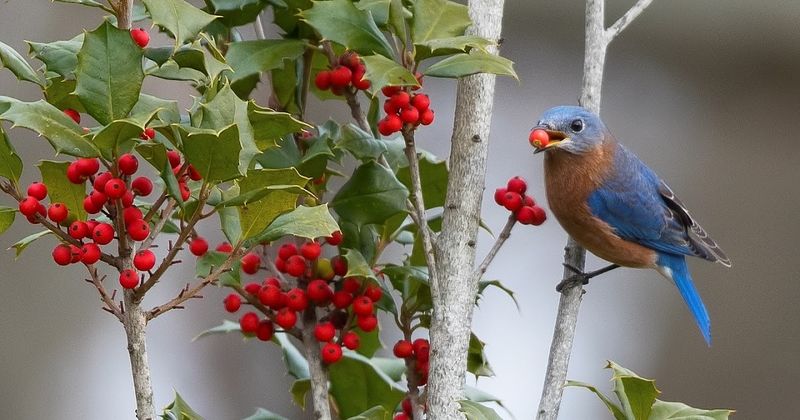
A holly screen can do more than block a view. NC State reports that wildlife eat American holly fruit and that the tree provides winter cover.
Its yaupon profile says songbirds and small mammals eat the fruit and that yaupon also offers winter cover. These are possible benefits, and no planting is guaranteed to draw any particular bird.
Berries take planning. Hollies are dioecious, meaning plants are male or female.
Only females make fruit, and they need a male nearby for fruit set. If you only want a green screen, berries are optional.
Safety comes with the berries. The ASPCA lists holly as toxic to dogs, cats, and horses.
It describes the toxicity as low, but vomiting or diarrhea can occur. If pets chew on fallen berries, talk with your vet.
Deer are another question. NC State describes both species as resistant to deer damage, which is not the same as deer-proof.
USDA’s yaupon plant guide reports that deer browse its foliage and twigs. Protect young plants with fencing or cages if deer visit your yard often.
A lasting hedge still needs the right kind of upkeep
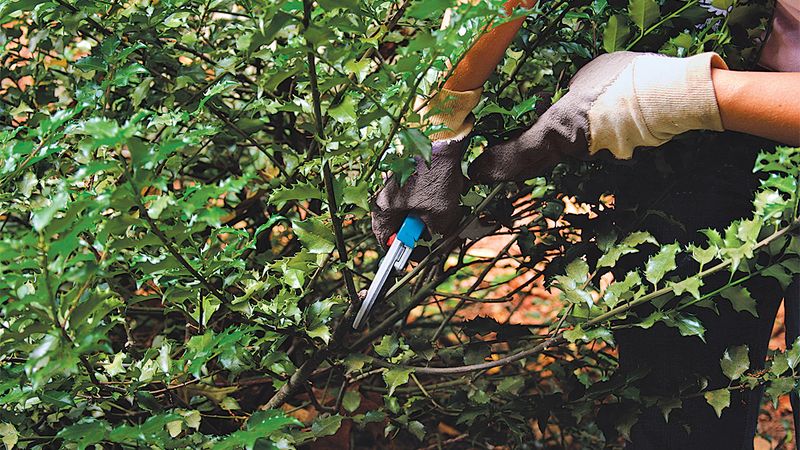
Hollies are not a no-trim plant. How often you prune depends on the look you want.
NC State’s handbook says formal hedges can need numerous shearings during the growing season. Informal hedges, which keep a looser natural shape, usually need one or two prunings a year.
Yaupon tolerates shearing, so it can be kept in a tidier shape if you are willing to do the work.
Do not assume holly takes less trimming than other screens. Any comparison depends on which plants you are comparing and how you want them to look.
NC State notes that some common screening plants, including Leyland cypress and boxwood, have disease and pest problems. That does not prove holly will always do better.
What about lifespan? USDA Forest Service material documents American hollies more than 100 years old, including one that was 144 years old.
Those records describe individual trees. They do not promise that a planted hedge will last as long or keep screening well without care.
A practical plan is to walk the hedge each season. Look for thin spots, damaged branches, and any sign of pests, then prune and replace as needed.
Choose a screen your yard can support
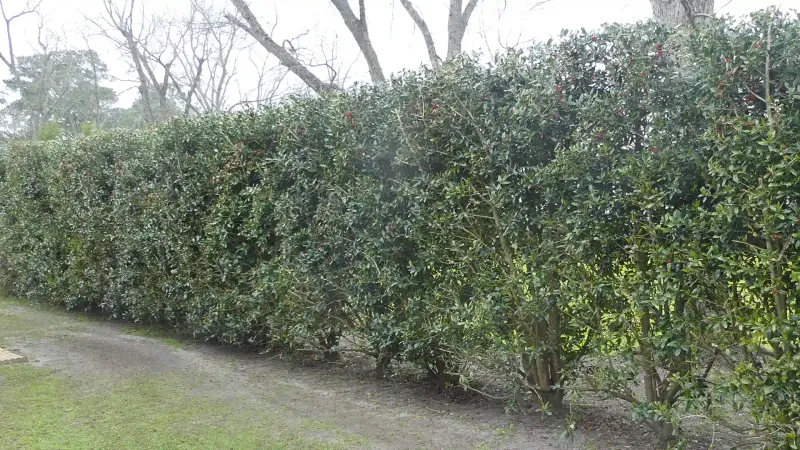
Start with your region and your space. American holly can suit large lots across the state if it stays well away from the house, while yaupon fits some Coastal Plain and Piedmont sites at a more modest size.
Plan around mature dimensions, and treat fall planting as the first step of establishment. Once plants are settled, you can get year-round foliage and potential wildlife cover.
A good screen is built slowly, and a yard that can support it will repay the wait.