
Protecting Hydrangea Buds Before Winter: What Helps and What Doesn’t
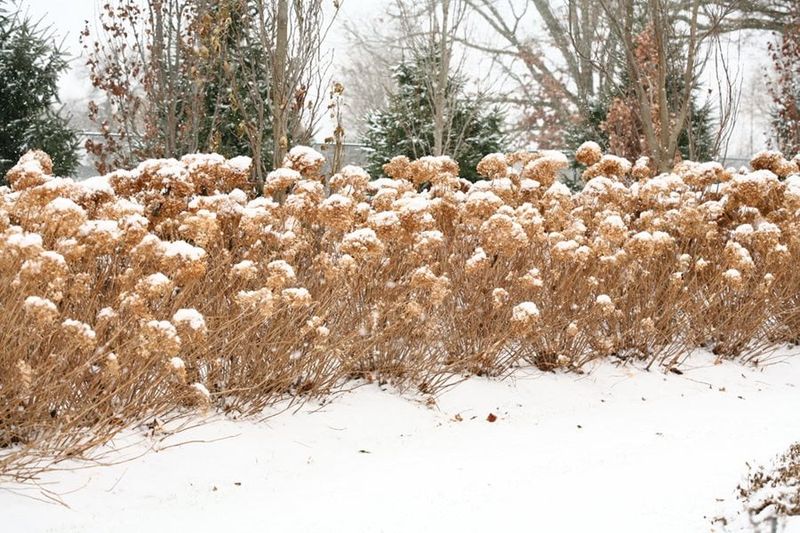
Some hydrangeas spend the summer quietly building next year’s flowers, and a cold winter can undo that work. Knowing which type you grow tells you whether to protect it, prune it, or leave it alone.
A little attention this fall can save you a lot of worry next spring. Here is how to decide what your shrub actually needs.
Hydrangeas do not all carry next year’s buds the same way
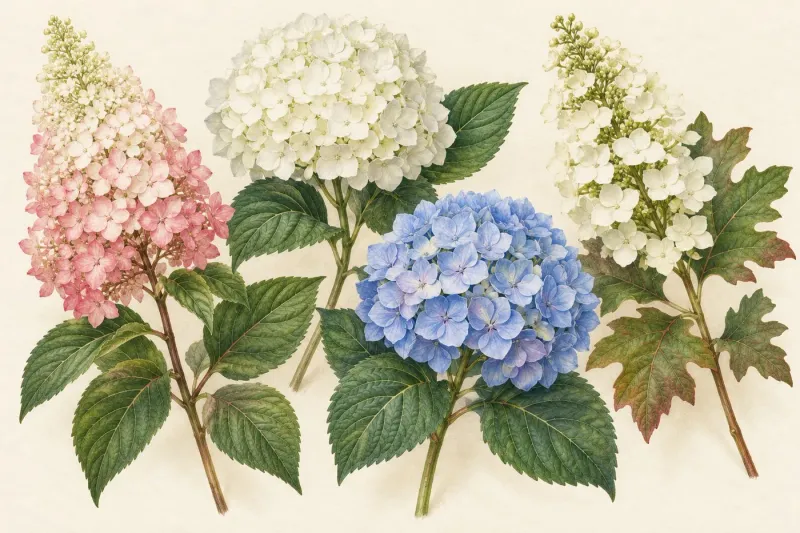
Before you reach for burlap or pruners, find out which hydrangea you own. The plant tag, the original receipt, or a nursery lookup by cultivar name will usually settle it.
No single leaf or flower shape tells you the answer for every cultivar, so guessing from looks alone can mislead you.
According to University of Maryland Extension, bigleaf (Hydrangea macrophylla), mountain (H. serrata), and oakleaf (H. quercifolia) hydrangeas generally bloom on old wood. That means flower buds form on stems grown the previous season and ride out the winter there.
Smooth (H. arborescens) and panicle (H. paniculata) hydrangeas bloom on new wood, so their flowers form on stems that grow in spring.
Reblooming cultivars add a twist. As UConn Extension notes, these plants may flower on both old and new wood.
They can still lose some blooms if the old stems are damaged or cut.
This matters because the idea that every hydrangea is already setting next year’s flowers is not true. Old stems carrying buds are worth protecting for the first group.
For smooth and panicle types, the buds you would be guarding simply are not there yet, so the old-wood advice in this article does not apply to them in the same way.
For old-wood bloomers, live stems carry potential flowers through winter
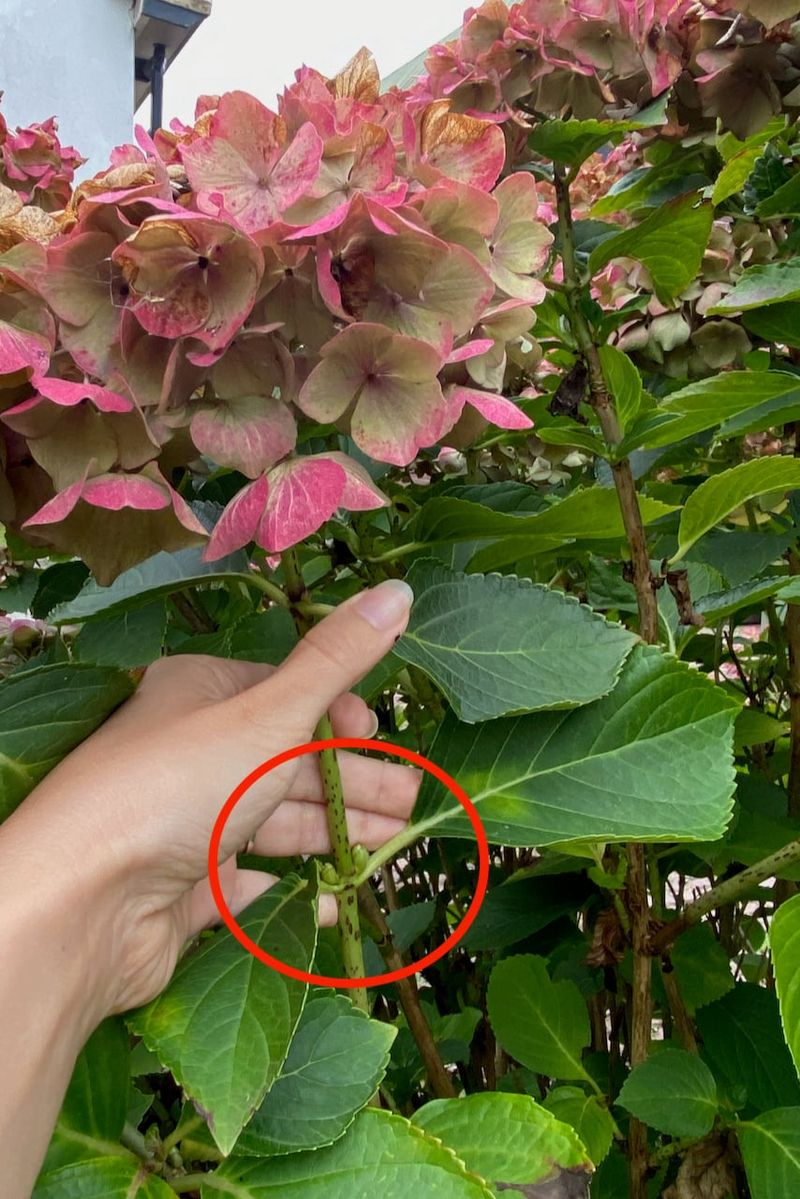
On an old-wood hydrangea, the stems you see in November are the ones holding dormant flower buds. Cut those live stems and you may be cutting next summer’s flowers.
That is why a tidy-up in fall can leave you with a healthy green shrub and no blooms.
If your bigleaf, mountain, or oakleaf hydrangea needs shaping, Maryland Extension points to the weeks soon after flowering as the usual window. Waiting until then gives the plant time to grow stems that can carry buds for the following year.
Spring is the time to judge damage. UNH Extension advises waiting to assess winter-killed growth rather than guessing in fall.
Stems that look dead in winter sometimes leaf out, so patience can save you from removing good wood.
Deadheading is a separate job from pruning. Removing faded flower heads is not necessary for plant health, and the dried blooms can stay up for winter interest.
If you like a neater look, snipping just the old flower head is far less risky than cutting live stems.
Does your hydrangea need its stems protected?
Not every hydrangea needs a winter wrap. Whether yours does depends on its type, how exposed the spot is, and how winter plays out.
A bigleaf in an open, windy yard faces more risk than one tucked against a sheltered wall.
Bud damage also depends on dormancy, how severe and how long the cold lasts, and whether spring growth has begun. A sudden freeze before the plant has gone dormant, or a cold snap after buds start swelling, can do more harm than steady winter cold.
Washington State University Extension lists winter cold damage among the reasons hydrangeas fail to bloom.
Mulch and stem protection are two different things. A layer of mulch on the soil helps the root zone, but it does not enclose the stems above it.
Guidance from UNH Extension on stem protection is about covering the above-ground growth, which is where the buds sit.
Finally, a shrub can come through winter alive and still lose its flowers. Green leaves in June do not prove the buds survived.
The Ask Extension response on bigleaf buds in winter is a helpful read if you are weighing the options.
A loose enclosure can shelter vulnerable bigleaf stems
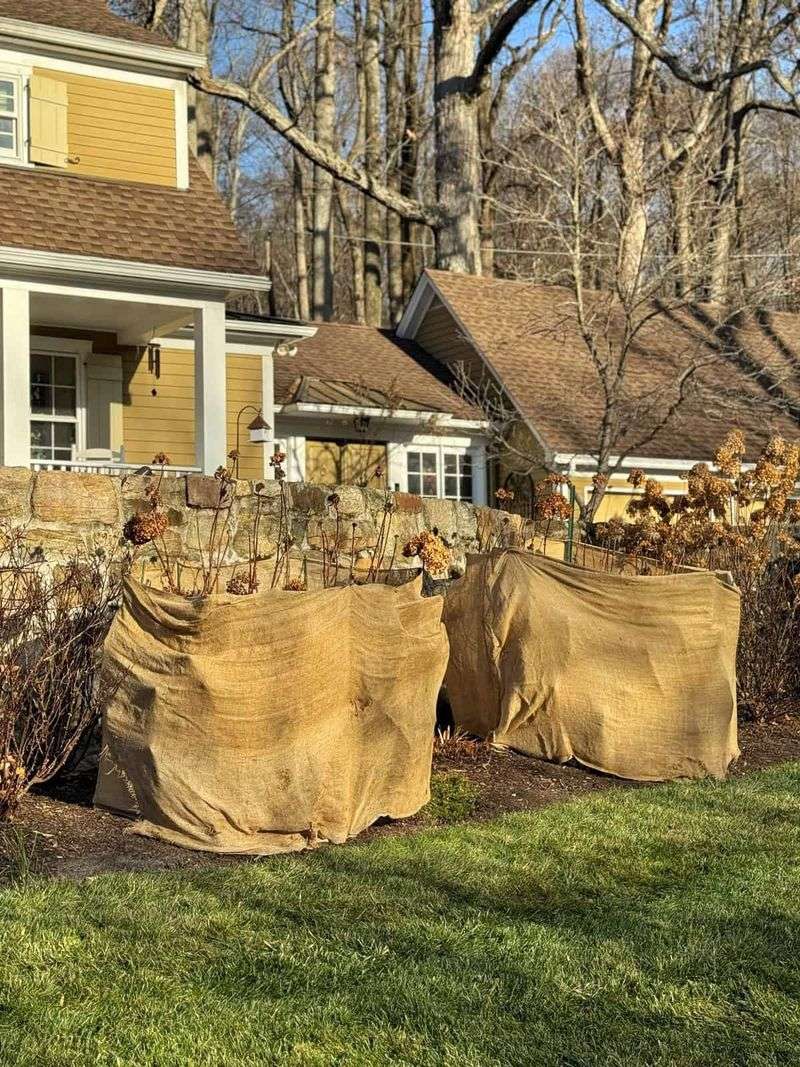
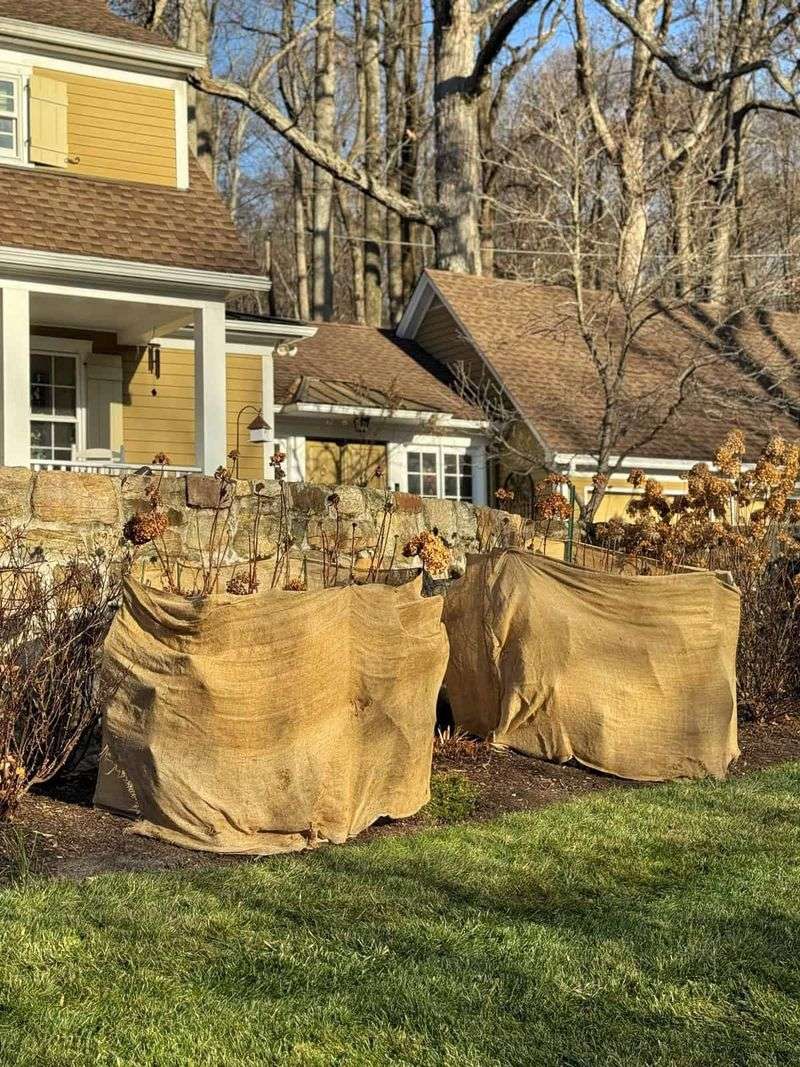
For a bigleaf hydrangea that is vulnerable where you live, UNH Extension describes two approaches. One is to wrap the shrub in burlap.
The other is to build an enclosure of chicken wire around it and fill that enclosure with leaves.
Both methods aim at the same target: sheltering the above-ground stems and the potential flower buds they carry. That is different from piling something at the base of the plant.
You can read the original advice in the UNH Extension answer about protecting an Endless Summer hydrangea.
Neither method is a sure thing. Extension guidance admits that protection can be imperfect, so an enclosure may reduce risk without erasing it.
A harsh winter or an exposed spot can still cost you blooms even when the shrub itself survives.
These options are also not required for every hydrangea or every climate. Smooth and panicle types do not need this kind of bud protection, and a bigleaf in a mild or sheltered site may do fine without it.
If you try an enclosure, treat it as a modest insurance step, not a promise of flowers.
Use frost as a cue to assess conditions, not as a universal deadline
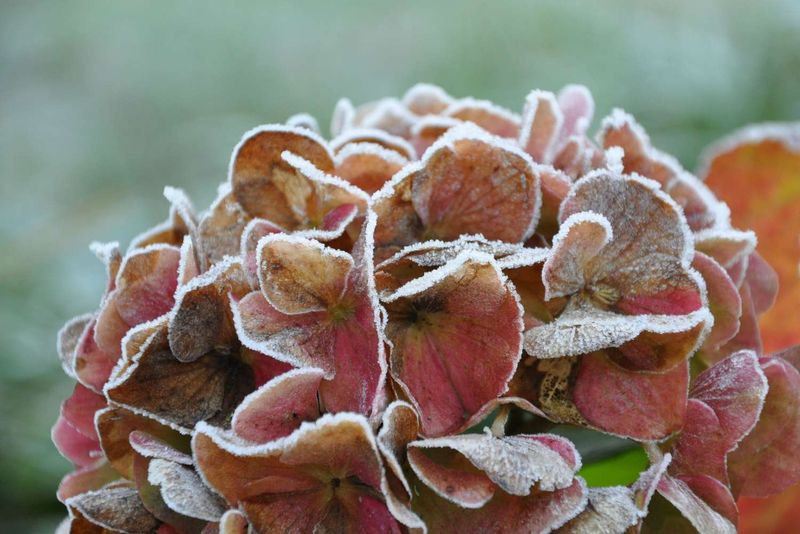
A first frost date varies from garden to garden, and it does not mark a single protection deadline. What counts is your plant, your site, and the forecast.
Treat the first frost as a nudge to look at your hydrangea and think about what the coming weeks might bring.
For a surprise early freeze, an Ask Extension response recommends three things. Keep the plant watered until the ground first freezes, mulch late in the season, and cover the plant if an early freeze is forecast.
Those are short-term steps for a particular risk.
That advice is not the same as a winter-long stem enclosure, and it is not a schedule for covering every hydrangea all winter. A cover thrown over a plant for one cold night is a different job from building a leaf-filled cage for the season.
Protection also has an end date. As spring temperatures rise, reassess what you put on and take it off so the plant gets light and air circulation.
Leaving an enclosure in place through warm days can trap moisture and block the light the shrub needs as new growth starts.
Protection may preserve potential blooms, but it cannot promise bigger ones
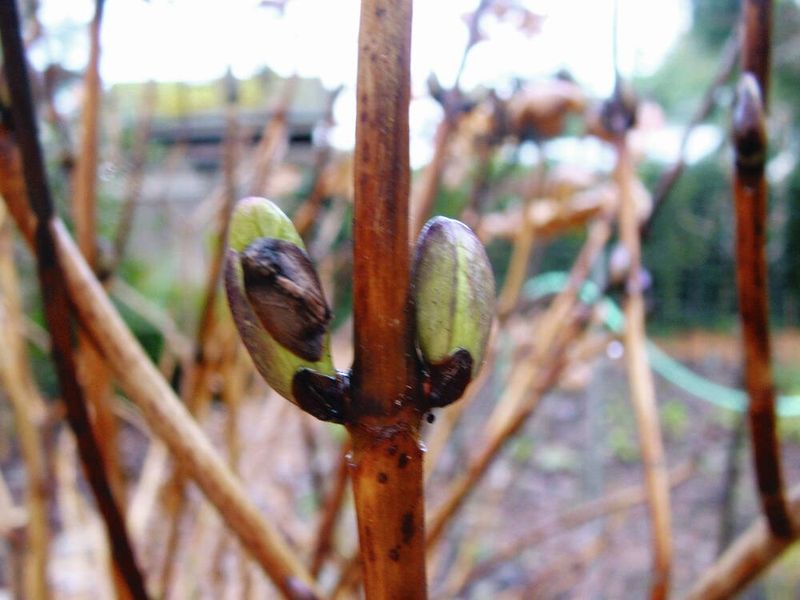
Start by identifying your hydrangea. If it blooms on old wood, leave live stems alone in fall and prune soon after flowering when needed.
Then look at your site and winter conditions, and protect vulnerable stems only when they warrant it.
Protection can be imperfect, as UNH Extension points out. For some gardens, a more sheltered location or a cultivar that flowers more readily on new wood may be the better fix.
Maryland Extension shows how bloom type shapes those choices.
No guidance promises bigger blooms, more flowers, or flowers every spring. The honest goal is to give surviving buds a better chance.
Sometimes the best winter job is simply knowing when to leave the plant alone.