
Spotting A Garden Spider Web Strung Across Your North Carolina Porch This Fall Is Actually Good News
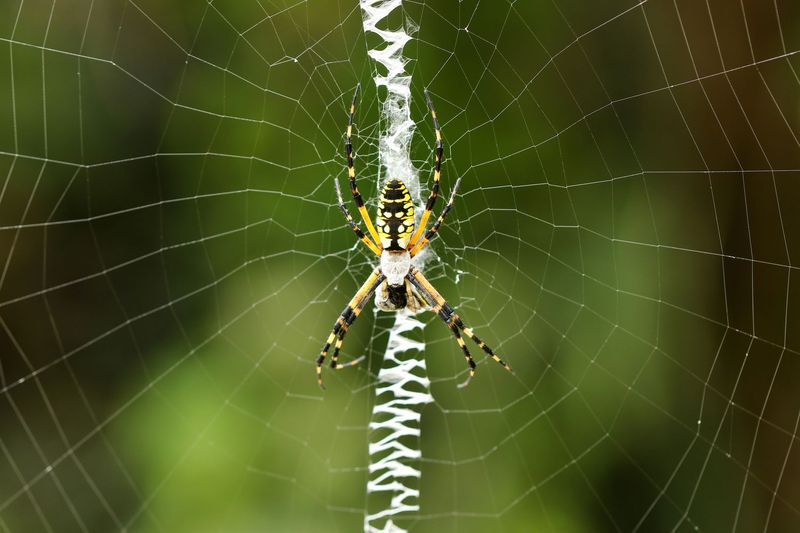
A big yellow-and-black spider hanging in the middle of a round web can stop you in your tracks on a fall evening. Many North Carolina homeowners spot one near the porch steps or garden beds and wonder if they should be worried or pleased.
For most people, the answer leans toward pleased, as long as the web is not in the way. Here is how to read what you are seeing, and what it can and cannot tell you.
The markings may point to a familiar garden spider
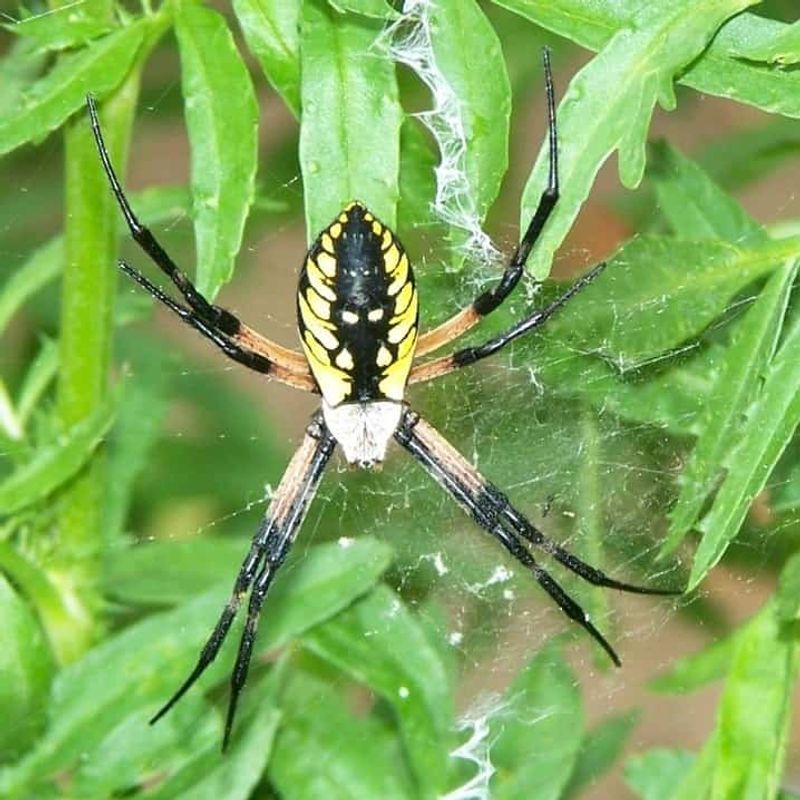
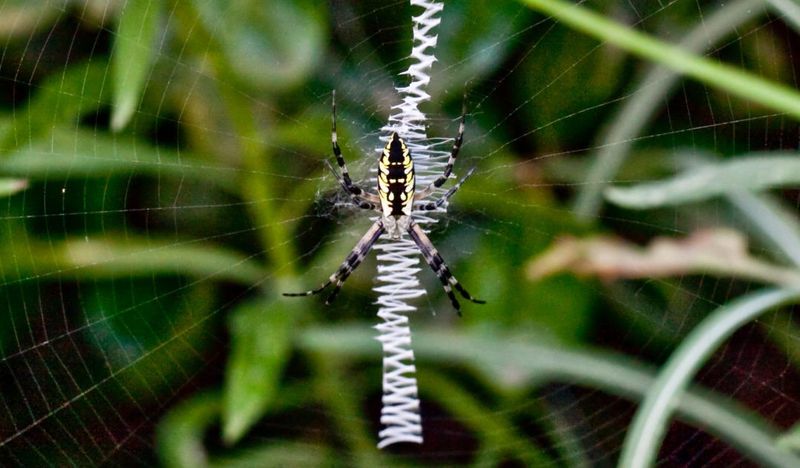
Picture a round web about as wide as a dinner plate, with a thick white zigzag of silk running down the middle. Sitting at the center is a large spider with a bright yellow-and-black body.
That combination fits the black-and-yellow garden spider, Argiope aurantia, which NC State Extension describes as a common sight in North Carolina gardens and yards.
The big spider you notice is almost certainly a female, since females are much larger than males. Males are small and easy to miss, often hanging out near the female’s web edge.
Size, color, and that zigzag are good clues, but they are clues and not proof.
Other large yellow-and-black orb-weavers live in our region too. Clemson Extension lists several look-alikes in the neighboring Carolinas, including golden silk orb-weavers and Jorō spiders.
Jorō spiders have been found in North Carolina, and NC State Extension Forestry notes clues such as silver striping on the abdomen, a reddish marking underneath, and golden web silk.
If you cannot tell which one you have, take a clear photo from a safe distance. When the exact species matters to you, ask your county Cooperative Extension office to help with identification.
Fall is when the spider becomes hard to miss
Timing explains a lot about why these spiders seem to appear overnight. Garden spiders hatch in spring, but they are small and tucked out of sight for much of the year.
By late summer they have grown large, and NC State Extension says they are especially noticeable then and often seen in North Carolina yards in fall.
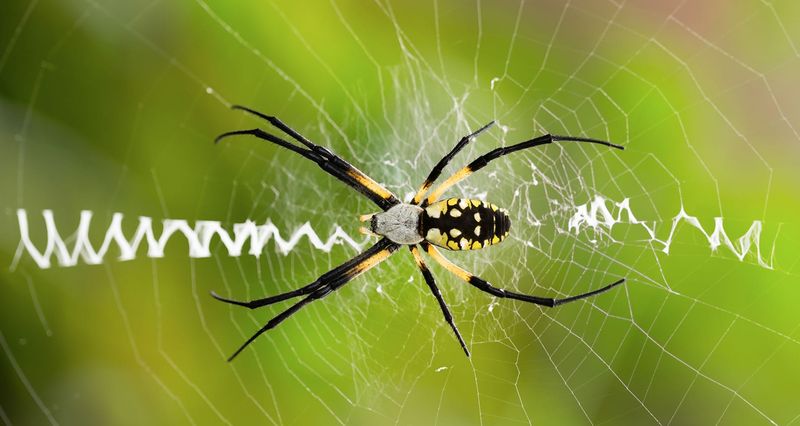
Their webs get bigger as the spiders grow, and the white zigzag becomes easier to spot. A web built across a porch corner or between shrubs is hard to ignore on a dewy morning.
Fall is also when the female’s year reaches its main goal. She mates and then lays egg cocoons in late summer or early fall.
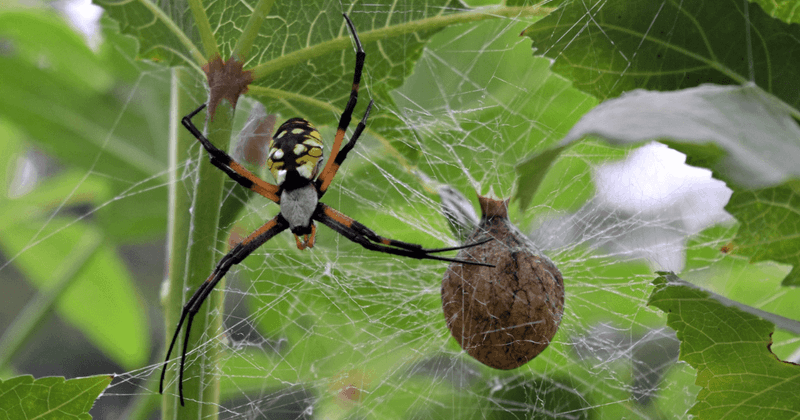
The cocoons are papery, tan, and roughly the size of a small grape, and she attaches them to plants or other supports near her web.
Inside, the spiderlings hatch but stay in the cocoon until spring. So the big spider you see in October is in the final chapter of her life, while the next generation is already tucked away and waiting.
If you want to watch the show, a quick look each evening or morning is enough. You may catch her tightening her web or tending her egg sac.
A web may be welcome, but it is not a yard health test
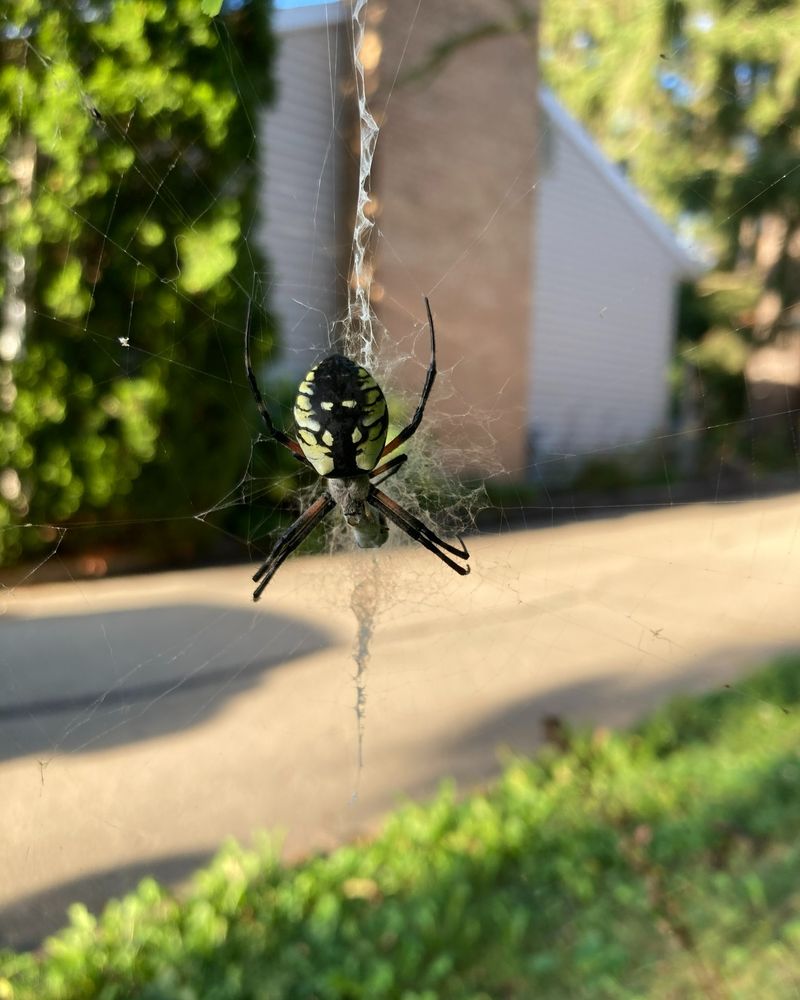
Finding a garden spider tells you something modest and useful. A spider found a spot with places to anchor a web and enough passing insects to eat.
UF/IFAS notes that this species turns up in gardens, fields, and other open, sunny habitats, so it is not picky about fancy surroundings.
That is where the good news stops. One web does not prove that your yard is healthy, packed with diverse wildlife, or unusually rich in insects.
A porch light, a sunny wall, and a few shrubs may be all this spider needed.
Scientists do study spiders as possible signals of environmental conditions. A research review on spider ecosystem services discusses how changes in spider populations and species mix across a habitat can reveal something.
That is a very different job from reading a single spider on a single porch.
If you want a better sense of your yard, look at the bigger picture over several seasons. Notice whether you see pollinators, birds, fireflies, and a mix of native plants, and whether you avoid unnecessary pesticides.
Treat the spider as a welcome neighbor, not a report card. It is a nice sign that a native predator is at home, and that is plenty.
The web catches more than pests
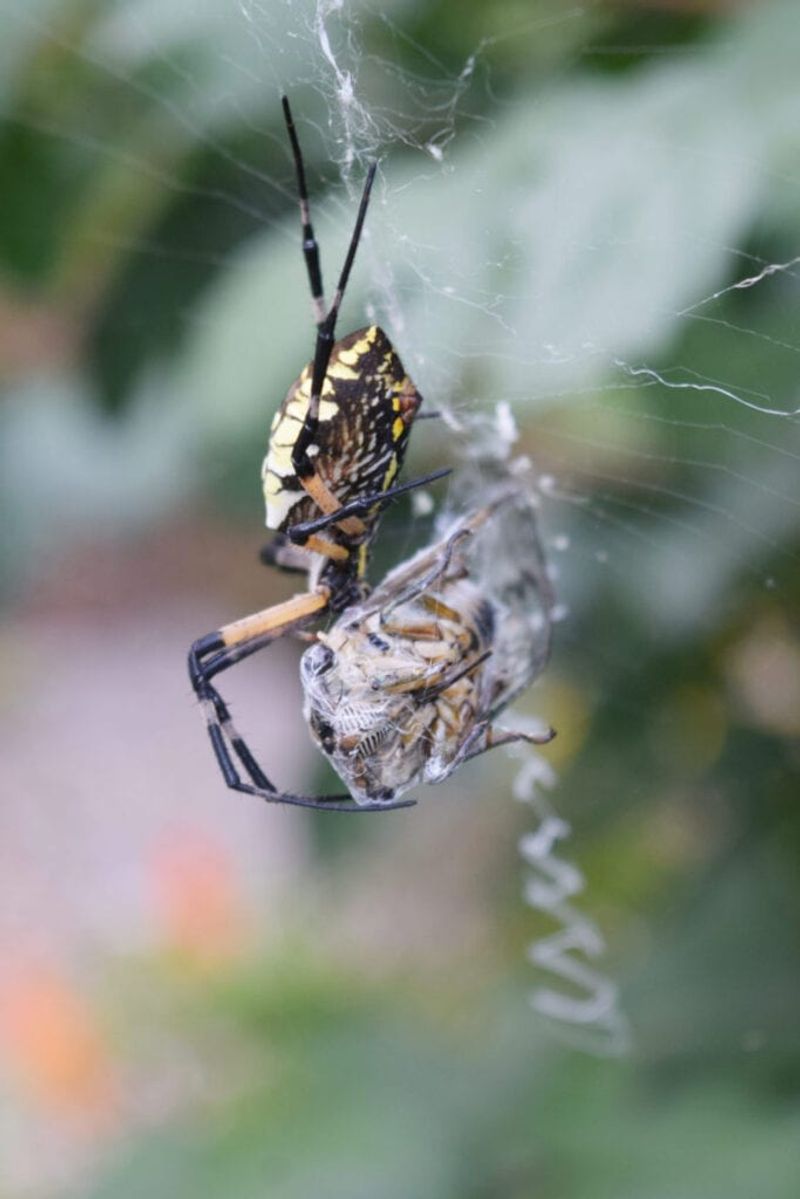
A garden spider’s web works like a sticky net strung across a flight path. Insects fly or hop into it, and the spider rushes over to wrap and eat them.
UF/IFAS lists prey that includes flies, grasshoppers, wasps, bees, and butterflies.
Some of those are things gardeners are glad to lose, like flies and grasshoppers that nibble on plants. Others are not.
Bees and butterflies pollinate your flowers, and the web cannot tell them apart.
That is what being a generalist predator means. As the NC Cooperative Extension office in Lee County explains, spiders are not selective about which insects they catch.
So what is a realistic payoff? One web adds a bit of insect predation to your yard, alongside birds, toads, wasps, and other hunters.
It will not target the beetle chewing your beans, and it cannot guarantee fewer pests.
If your goal is a garden that supports wildlife, think of the spider as one small part of a larger team. Skipping broad-spectrum sprays helps that whole team, including the spiders, do their quiet work.
Leave an unobstructive web alone
If the web is tucked in a corner, between shrubs, or along a fence, the easiest plan is also the kindest one: leave it be. NC State Extension says no control is necessary for this spider.
Its broader guidance on spiders in and around homes says outdoor pesticide treatments for spiders are generally unnecessary, and sprays can also harm the bees and butterflies you want around.
Access still matters. If the web stretches across a doorway, a mailbox path, or the steps your family uses every day, you do not have to put up with walking into it.
Use a broom or a long stick to gently move the silk and the spider to a nearby shrub or fence away from foot traffic, and expect it may rebuild nearby.
Keep your hands off the spider itself. It is not aggressive, and a bite would most likely come from careless handling, but that is no reason to test it.
Teach kids to look with their eyes, and keep curious dogs and cats from batting at the web.
A few feet of distance and a little patience keep both the spider and your household comfortable.
Adults generally die after a hard frost; egg cocoons may survive
Garden spiders live on a one-year schedule. According to South Dakota State University Extension, adults generally die after a hard frost, while the eggs survive the winter and spiderlings emerge in spring.
That is a broad seasonal pattern, not a calendar date, and it will vary by year and by spot in the Piedmont, Coastal Plain, or mountains.
Because of that, there is no set frost deadline for your porch. If a web blocks your door, you can move it now rather than waiting for cold weather.
An out-of-the-way spider can simply finish its season on its own schedule.
Once the adult is gone, the egg cocoon may still be hanging nearby. If it is not in a place you need to clear, leaving it alone gives the next generation a chance to emerge in spring.
Enjoy the neighbor while she is here, but do not treat her web as a grade for the whole yard. A single spider is a nice sign.
It is not the whole story.