
Raccoons Keep Raiding Your North Carolina Sweet Corn Patch Because The Ripening Ears Are Signaling Them In
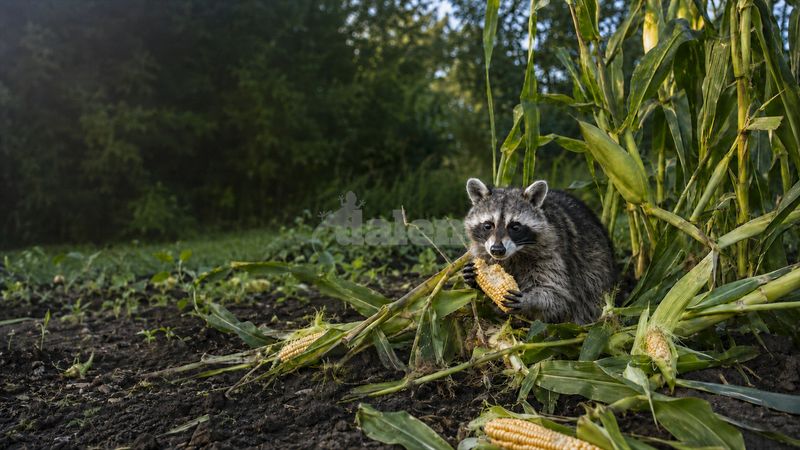
Walking out to your garden and finding shredded husks and half-eaten ears scattered across your sweet corn patch is one of the most frustrating moments of the growing season. Something got there before you did, and it probably happened overnight.
Knowing who did it, why they showed up right before harvest, and what you can do about it this weekend makes all the difference between losing your crop and actually getting to eat it.
The Damage Pattern Tells You What Visited the Corn
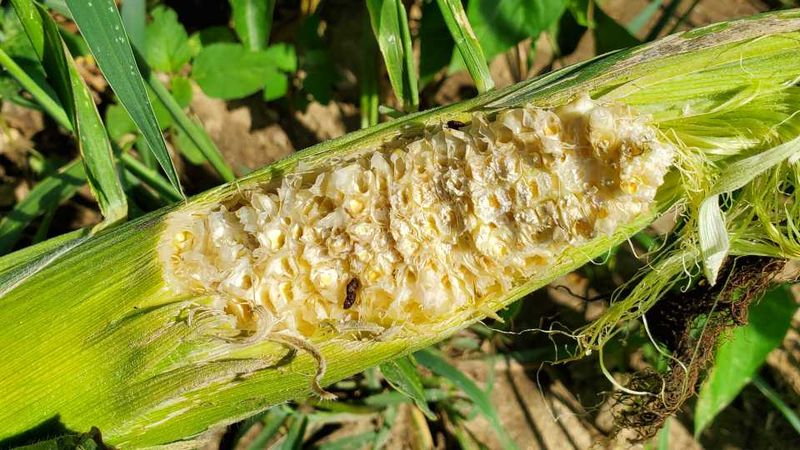
Scattered husks, half-eaten ears, and bent or broken stalks are a common morning discovery for North Carolina corn growers, but the mess alone does not confirm who caused it. Raccoons leave a recognizable calling card: husks pulled downward or shredded open from the side, ears partially eaten rather than stripped clean, and stalks broken or bent as the animal braces itself to reach the ear.
The NC State 2025 Agricultural Chemicals Manual lists ripening corn that has been opened and eaten alongside two- to three-inch handlike tracks in the soil as the characteristic signs of raccoon activity.
Tracks are one of the most reliable pieces of evidence you can find. Press a ruler next to any print you discover near the patch.
Raccoon front prints are narrow and long-fingered, almost resembling a small human hand, and they typically appear alongside similarly shaped hind prints. Mud, bare soil between rows, or moist ground around a nearby water source will hold these prints well enough to photograph and compare.
Other animals leave different evidence. University of Minnesota Extension vegetable IPM guidance notes that birds tend to shred husks from the tip downward and peck at the exposed kernels, while deer leave ragged, torn feeding damage and hoof prints in the soil.
Squirrels may chew through the husk and eat in a more contained area. Insects such as corn earworms or fall armyworms leave feeding damage inside the husk without pulling it open at all.
One opened ear is not proof of a raccoon visit. Before deciding on a response, check for tracks in multiple spots, look at how the stalks are damaged, note whether the feeding is concentrated at one end of the patch or spread across it, and consider what time the damage appeared.
Combining those clues gives you a much cleaner picture of who actually visited and helps you choose the right fix.
Why the Raid Begins at the Milk Stage
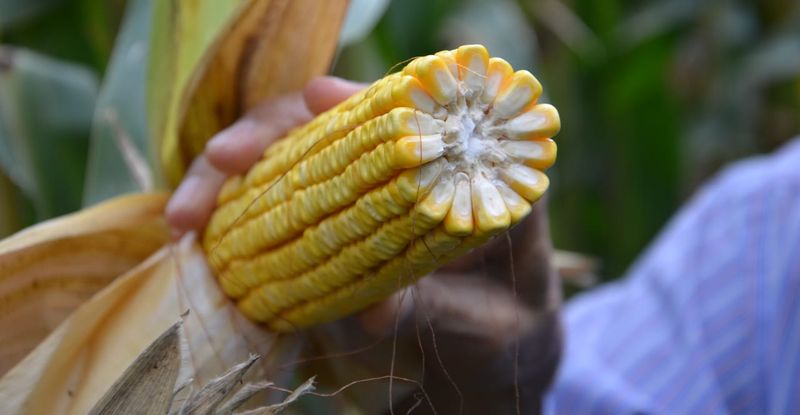
Sweet corn does not become a high-value target for raccoons the moment it sprouts or even when the silks first appear. The shift happens at the milk stage, a specific point in kernel development when the kernels are plump, sweet, and moist.
You can identify it yourself: the silks have turned dry and brown, the ear feels full when you squeeze it gently through the husk, and a punctured kernel releases a milky white liquid. NC State’s organic sweet corn production guidance notes that prime harvest typically occurs around 17 to 18 days after silking in warm conditions, though variety and summer weather in the Piedmont, Coastal Plain, or mountains can push that window earlier or later.
Raccoons are drawn to this stage because the kernels deliver maximum caloric and nutritional reward for the effort of opening the ear. Purdue Extension’s wildlife crop depredation research identifies the milk stage as the period when raccoon feeding pressure rises sharply, and NC State describes raccoons as heavy predators of corn specifically when kernels are in that milking stage.
The crop is most rewarding to them at almost exactly the moment it is most rewarding to you.
An individual plant may hold its milk stage for roughly seven to ten days, but a backyard patch rarely has every stalk maturing at once. Staggered planting dates, variety differences, or even slight shade variation across the patch can leave vulnerable ears available over a longer combined harvest window.
That extended window is why damage can seem to persist across multiple checks rather than happening in a single night.
The title’s suggestion that ripening ears are “signaling” raccoons in is best understood as a useful description of food value rather than a proven long-range scent mechanism. There is no reliable evidence that raccoons detect the smell of ripening sweet corn from a great distance and travel specifically for it.
The more accurate picture is that raccoons already living near wooded edges, waterways, or other cover in your neighborhood find the milk-stage ears when they are already moving through the area and the corn becomes the most rewarding stop on their route.
The Yard Around the Corn Determines How Much Pressure Arrives
Focusing only on the corn patch misses half the story. Research by Beasley and Rhodes on raccoon abundance and crop damage found that damage is more likely where corn grows near wooded edges, forest patches, streams, and marshes, because those landscape features support higher raccoon numbers and give animals easy travel routes to food sources.
A corn patch tucked against a tree line or near a creek in the North Carolina Piedmont or Coastal Plain is sitting in the middle of raccoon territory, not at its edge.
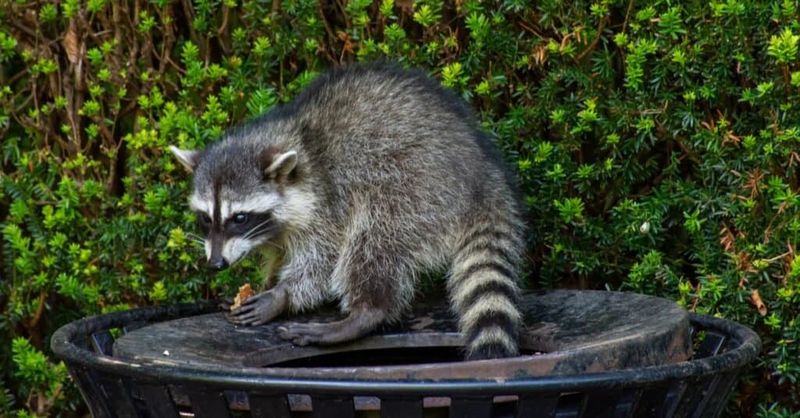
The yard itself can add to that pressure. Pet food left outside overnight, unsecured garbage cans, birdseed accessible from the ground, fallen fruit from backyard trees, ornamental fish ponds, and compost piles with food scraps are all reliable raccoon draws.
NC State’s Extension Gardener Handbook wildlife chapter identifies these attractants as key factors that sustain raccoon activity in residential yards and recommends addressing them alongside any garden protection.
Walking the yard with fresh eyes before the corn reaches the milk stage is a practical first step. Look for spots where raccoons would feel comfortable approaching: dense shrubs along the fence line, low decks or porches that offer shelter, brush piles close to the garden, or a water feature that doubles as a reliable drinking spot.
None of these features needs to be removed entirely. The goal is to reduce what is immediately accessible and rewarding in the conflict zone, not to strip the yard of every natural element that supports wildlife.
USDA APHIS wildlife feeding guidance and Iowa State Extension’s raccoon damage management resource both emphasize that removing accessible food is one of the most effective ways to reduce raccoon activity near a home. Even with every attractant addressed, raccoons using the surrounding woods or waterways may still pass through the yard.
The point of the assessment is to reduce the yard’s overall reward, not to expect the property to become wildlife-free.
Build the Barrier Before the Ears Become a Reward
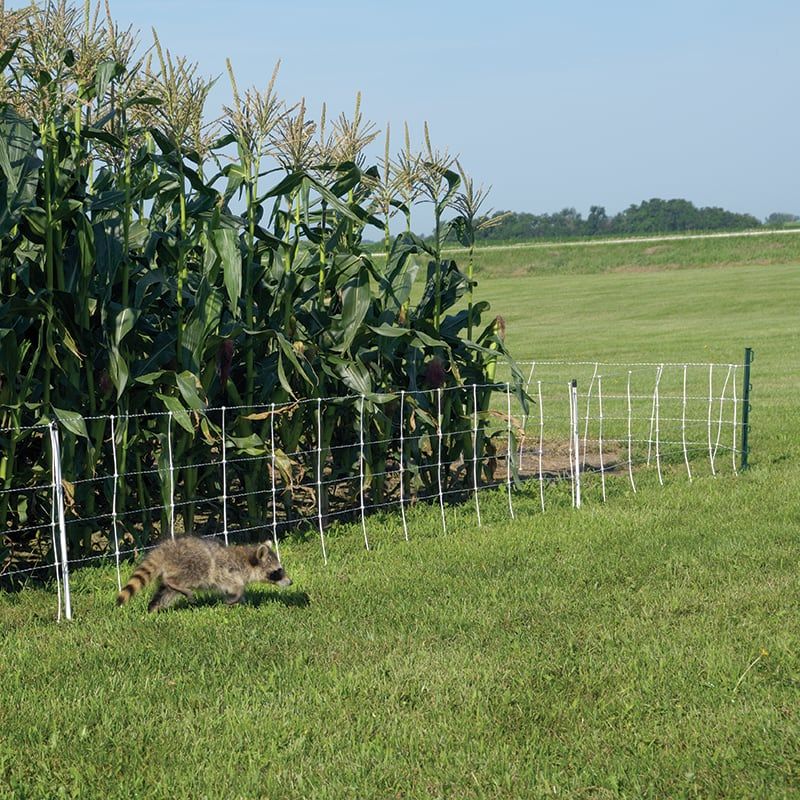
Exclusion is the most consistently recommended approach for protecting a corn patch from raccoons, and timing is the part that gardeners most often get wrong. Kansas State Extension’s raccoon and sweet corn guidance specifically warns that raccoons are much harder to discourage after they have already tasted the corn.
Installing a barrier after the first raid is possible, but you are working against an animal that has already learned your garden is worth revisiting. Getting the fence up before the silks start to dry is a far better position to be in.
NC State’s wildlife management guidance recommends a garden fence using two-inch mesh, standing roughly four feet tall, with the base buried a few inches underground or bent outward along the soil surface as a skirt to reduce digging. Raccoons are capable climbers, so a fence that simply stands upright without any deterrent at the top gives them a straightforward path over it.
A low electric fence adds a meaningful layer of discouragement. University of Illinois Extension corn gardening guidance describes a two-wire setup with wires positioned at roughly four and twelve inches above the ground, while other sources recommend beginning the lowest wire about five inches up with additional wires spaced several inches higher.
The exact configuration should follow the manufacturer’s instructions for the charger you are using, along with any local requirements for electrified fencing in a residential area.
Electric fencing requires careful setup and regular maintenance to work safely and effectively. The charger must be properly grounded according to its instructions, warning signs should be posted where children or visitors might approach the fence, and the system should be checked frequently to ensure it is functioning.
Kansas State’s raccoon prevention resource emphasizes that grass and weeds touching the wires can short the system and reduce its effectiveness, so keeping vegetation trimmed away from the fence line is part of the ongoing maintenance job. Children, pets, and neighbors should never be able to make unexpected contact with an energized wire.
Small Patches Can Buy Time With Covers and Prompt Harvest
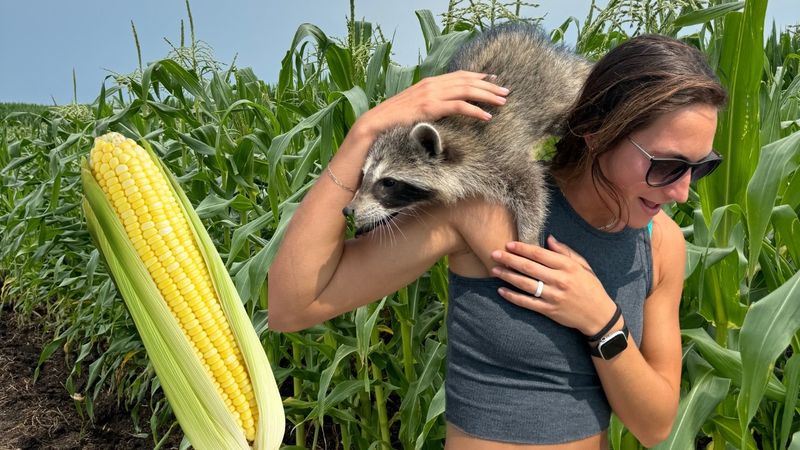
A homeowner growing a dozen or two dozen stalks in a Piedmont backyard may not need a full perimeter fence, especially if the problem is discovered late in the season. Physical covers applied directly to the ears can slow raccoon access and buy enough time to get the crop in.
NC State’s wildlife guidance recommends bags or netting placed over ripening ears as a practical option for small residential patches.
Reinforced filament tape wrapped around the middle of each ear is another approach that has shown results in research settings. Iowa State Extension’s raccoon damage management page describes this method, and Virginia Cooperative Extension has referenced study results suggesting it can reduce raccoon damage by roughly 70 percent under the conditions tested.
That figure is specific to the research setup it came from and should not be taken as a guaranteed outcome in every yard, but it gives the technique credibility as a supplemental option worth trying on a small patch.
Prompt harvest is the other tool in this category. Once an ear reaches eating quality, leaving it on the stalk is simply leaving a reward in place.
Checking the patch every day or two as the harvest window approaches, picking ears as soon as they are ready, and refrigerating them promptly shortens the period when fully developed ears remain exposed. NC State’s organic sweet corn production guidance notes that quality drops quickly after harvest anyway, so picking promptly protects both the crop from raccoons and its flavor from the heat.
Covers and prompt harvest work best as complements to exclusion, not replacements for it. A determined raccoon can work around a bag or tape, and a patch with no fence at all remains accessible every night.
Think of these measures as a second line that reduces exposure during the window when the ears are most vulnerable.
Remove the Backup Food Sources That Keep the Yard Attractive
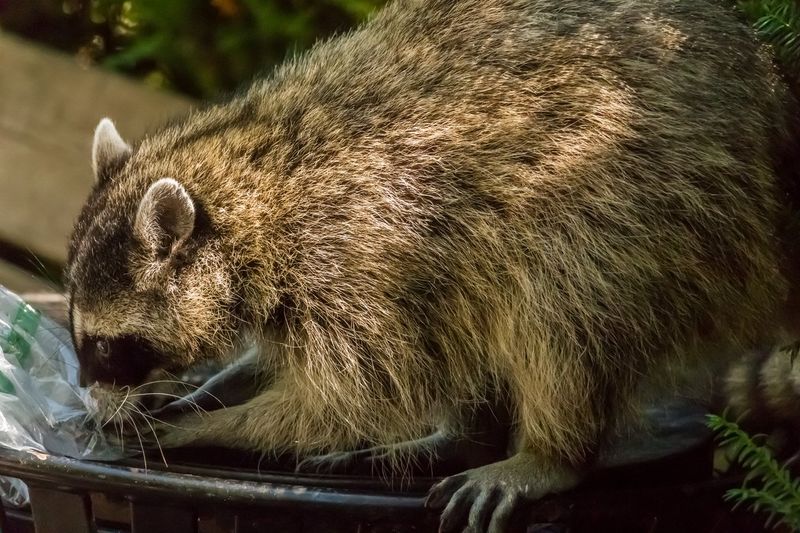
Even a well-fenced corn patch sits inside a yard that may be offering raccoons other reasons to visit. Addressing those backup food sources is what shifts the yard from a reliable nightly stop to a place that is simply less worth checking.
Feed pets indoors or remove bowls before dark, use garbage cans with lids that latch securely, and store birdseed in containers that raccoons cannot pry open. USDA APHIS guidance on not feeding wildlife frames accessible food as the primary driver of persistent wildlife visits to residential properties.
Bird feeders deserve a specific look during corn season. A feeder that spills seed onto the ground or sits at a height raccoons can reach is essentially a nightly meal station.
Temporarily suspending ground-level feeding or switching to a raccoon-resistant feeder pole can reduce that draw without permanently removing the feeder from the yard. NC State’s wildlife chapter identifies birdseed, pet food, and unsecured garbage as the most common yard-level attractants sustaining raccoon activity near gardens.
Lights, radios, and motion-activated sprinklers are sometimes suggested as frightening devices that disrupt raccoon visits. They can provide a short-term interruption, but raccoons are quick learners and often adapt within days or weeks.
Kansas State’s raccoon prevention resource treats these tools as temporary disruptions rather than dependable controls.
Predator scents, human hair, mothballs, ammonia, and similar household deterrents are not supported as reliable solutions. A 2025 study in Applied Animal Behaviour Science found that commercially available predator scents did not deter raccoons in the tested foraging setup.
Iowa State Extension notes that harsh chemicals such as ammonia and bleach are not approved for raccoon exclusion and can endanger people, pets, and other animals. Skip those products and put the effort into the attractant cleanup instead.
Protect People and Follow North Carolina’s Wildlife Rules
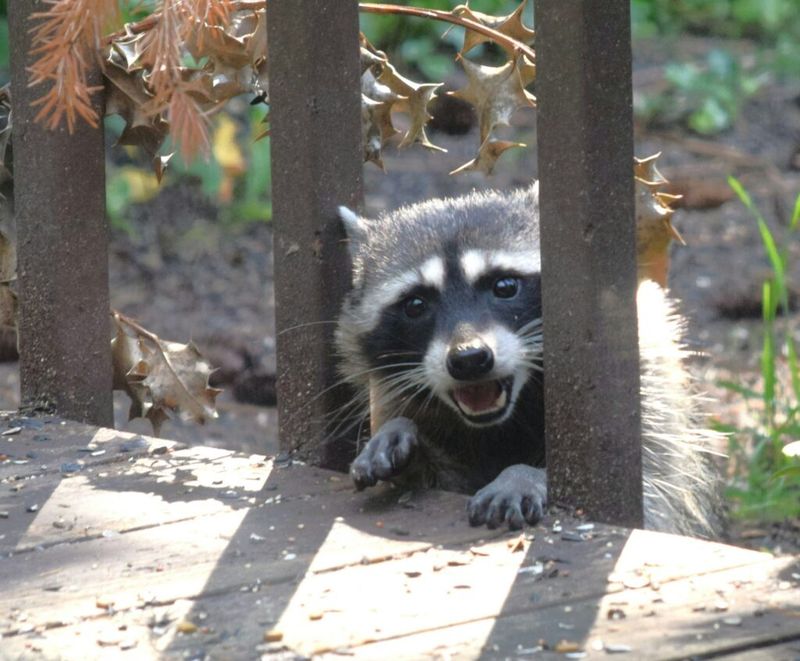
A raccoon visiting your corn patch at night is behaving normally. Raccoons are opportunistic and largely nocturnal, and a healthy animal finding food in a yard is doing exactly what raccoons do.
The situation changes if you observe an animal showing abnormal behavior during daylight hours, appearing disoriented or unsteady, moving in circles, showing unusual aggression without provocation, or appearing paralyzed. Raccoons are a recognized rabies-vector species, and those signs warrant keeping your distance and calling local animal control or your county public health department.
CDC rabies prevention guidance recommends maintaining distance from any wild animal showing unusual behavior and contacting authorities rather than attempting to handle it yourself.
Raccoon feces present a separate concern that garden visitors should take seriously. Raccoon latrines, spots where animals return repeatedly to defecate, can contain the eggs of Baylisascaris procyonis, a roundworm that poses a health risk if accidentally ingested.
CDC guidance on preventing raccoon roundworm recommends avoiding bare-handed contact with feces, washing hands thoroughly after working in the garden, and keeping children away from known latrine areas. If you find a latrine near the patch, clean it up carefully using gloves and dispose of the material properly.
North Carolina law also governs what you can do if you decide you want to remove a raccoon from the property. Raccoons are regulated furbearers under state law, and outside the regulated trapping season, a depredation permit may be required before trapping or removing one.
NC Wildlife Resources Commission depredation regulations cover those requirements in detail. Relocating raccoons is illegal in North Carolina, and improvised euthanasia is not an appropriate response for a homeowner dealing with a garden pest.
If the damage is severe enough that removal feels necessary, the right path is to contact NC Wildlife directly, reach the NC Wildlife Helpline, or hire a licensed wildlife-control professional. NC Wildlife’s problem wildlife FAQ page provides current guidance on what options are available and who to call.
Iowa State Extension’s damage management resource reinforces that working through proper channels protects both the homeowner and the animal.
Read the Raid as a Yard Signal, Not a Reason to Wage War
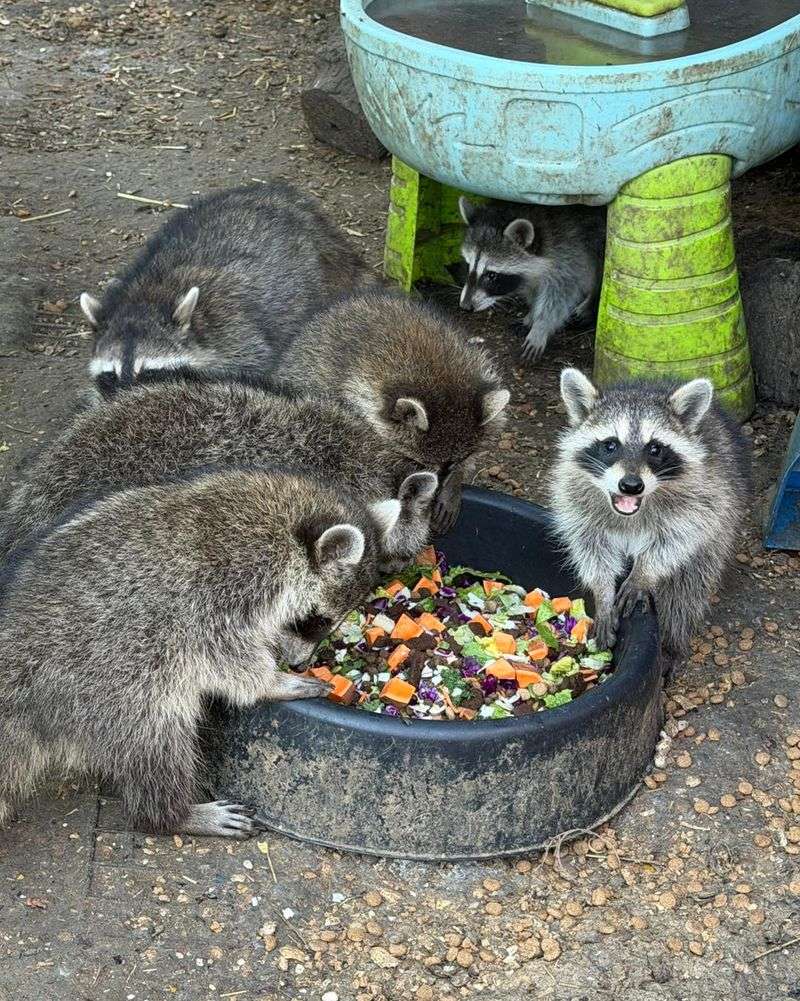
Finding your corn patch raided is genuinely aggravating, but the damage carries useful information. Your ears have reached the milk stage, which means they are exactly as rewarding to a raccoon as they are to you, and the yard is providing enough cover or food to make a visit worthwhile.
That is a yard signal, not a declaration of war.
The practical response is straightforward: confirm the culprit by checking tracks and feeding patterns, install a fence or ear covers before the ears mature rather than after the first loss, reduce the backup food sources that make the yard a reliable stop, and harvest promptly once the ears are ready. Purdue Extension’s crop depredation research and NC State’s wildlife guidance both support exclusion and attractant removal as the most reliable combination.
Avoid trapping or relocating animals without following NC Wildlife’s depredation rules, and skip the deterrents that research has not supported.
A North Carolina yard that includes a corn patch, a tree line, and a nearby creek is always going to be interesting to raccoons. Managing the patch well means protecting your harvest without dismantling the wildlife-friendly character of the property that makes it worth gardening in the first place.