
That Native Pawpaw Tree In Your North Carolina Yard Drops Custardy Fruit Nobody Else Is Growing
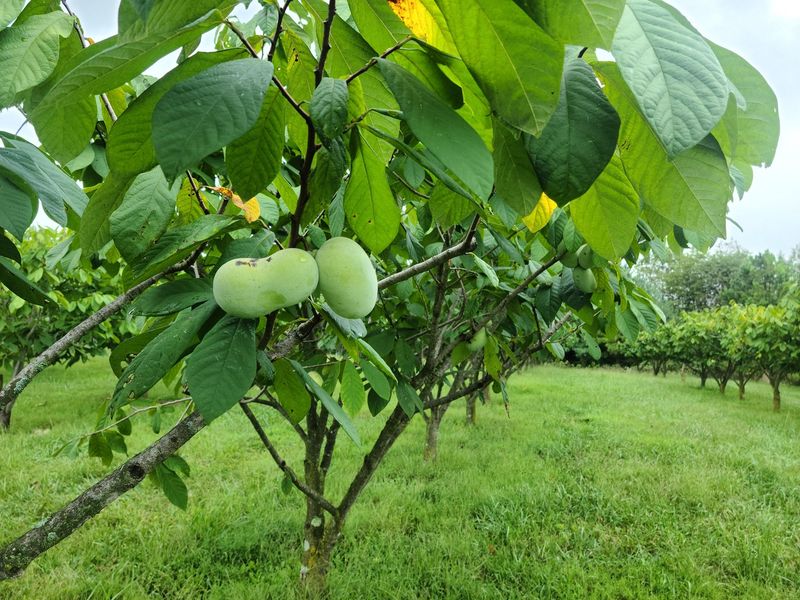
Most North Carolina homeowners walk past pawpaw trees without ever tasting what they carry. This native understory tree can produce soft, custardy fruit with a flavor some people compare to banana, mango, or pineapple – yet it rarely shows up in grocery stores or neighborhood gardens.
Whether you spotted a cluster of strange green fruit hanging from a backyard tree or always wondered what that big-leafed shrub near the creek is, there is a real possibility you are standing next to one of the most unusual edible trees in the state.
First, make sure that tree is a pawpaw
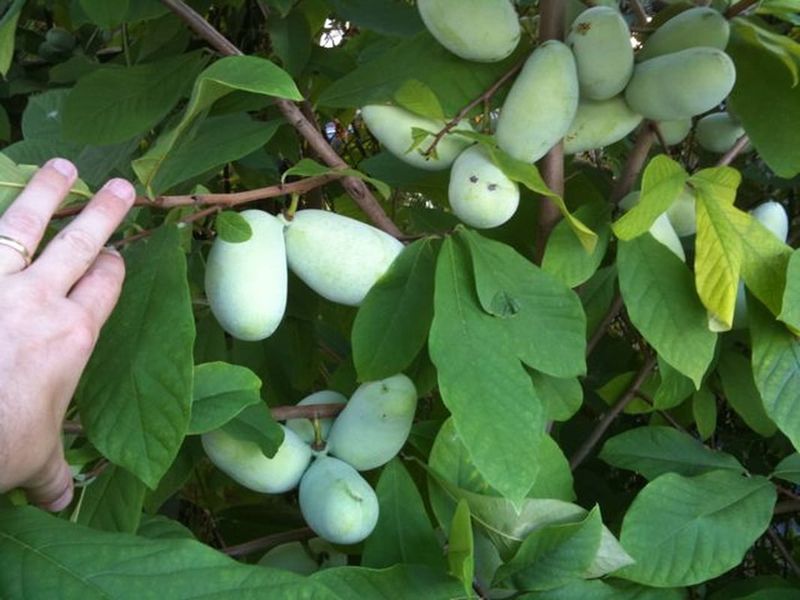
Before getting excited about a possible harvest, confirm what you are actually looking at. Common pawpaw (Asimina triloba) has a distinct set of features that, taken together, make it fairly straightforward to identify.
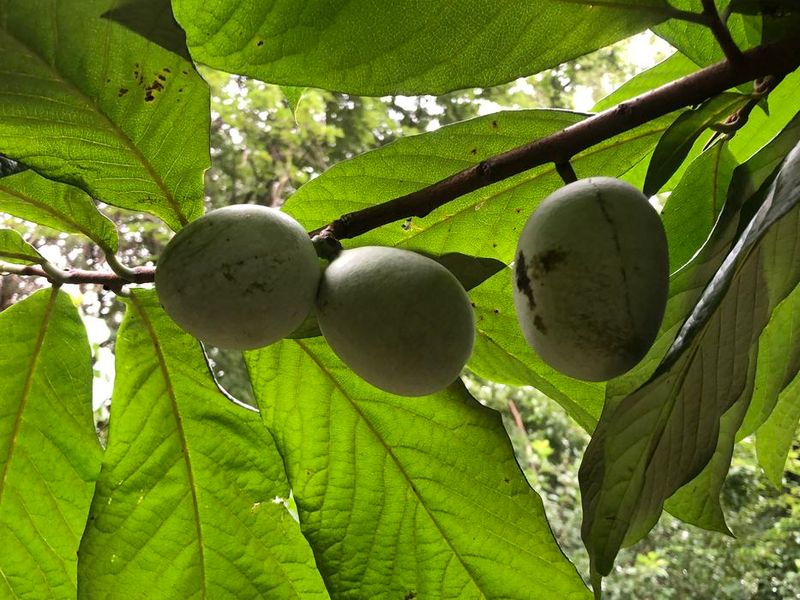
The leaves are the first thing most people notice: they are very large, sometimes reaching twelve to fourteen inches long, oblong, and widest near the tip. They droop slightly from the branch and feel smooth on top.
Crush a leaf between your fingers and you will get a strong, unpleasant odor that many people describe as green or medicinal. That smell alone is a useful field clue.
In early spring, before the leaves fully open, the tree produces small, purplish-brown flowers with six petals arranged in two whorls. The fruit, when it develops, is green and roughly mango-shaped, usually hanging in clusters of two to nine.
North Carolina’s vascular plant database lists common pawpaw as native across the Piedmont, much of the Coastal Plain, and the central and southern mountains, so finding one in a yard is not unusual, especially near a stream, ravine, or low wooded slope. That said, being native to the region does not mean every yard suits the tree equally well.
A pawpaw growing in dry, compacted, or highly alkaline soil may survive without ever producing a meaningful crop.
Location alone is not proof. Other large-leafed trees, including some magnolias, can fool a quick glance.
Check for the combination of leaf shape, crushed-leaf odor, flower color, and fruit form before drawing conclusions. NC State Extension’s plant toolbox entry for pawpaw includes photos and habitat notes that can help confirm an identification.
The discovery is worth the extra minute of checking, because a correctly identified, well-sited pawpaw is genuinely rare in a residential yard – even if other North Carolinians are actively growing and celebrating it.
The reward is possible, not automatic
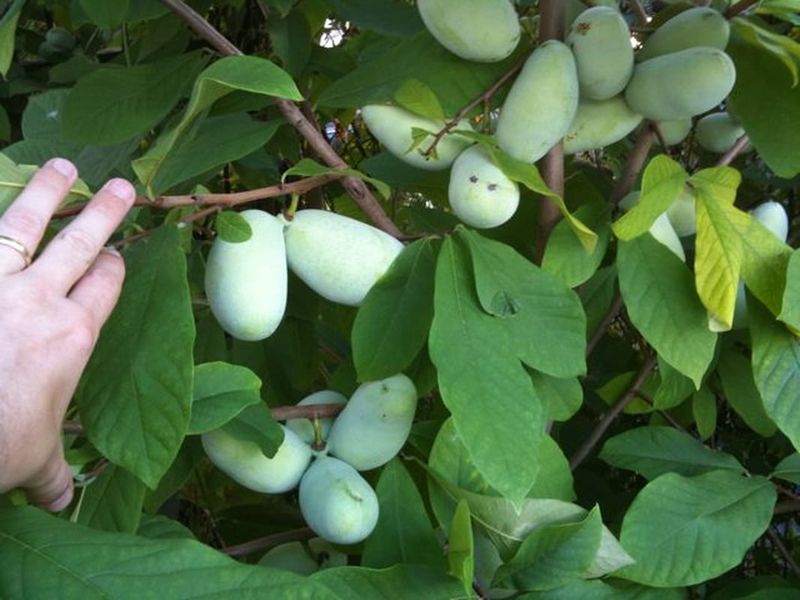
A pawpaw that has been correctly identified and is growing in a suitable spot may produce fruit in late summer to early fall, though the timing shifts depending on where you are in North Carolina, what the weather has done, and the particular tree involved. Lee County Extension reports August and September ripening in central North Carolina, while growers in the mountains or along the coast may see slightly different windows.
An unusually warm spring or a late frost can nudge the schedule in either direction.
When the fruit does arrive, the eating experience tends to catch people off guard. The flesh is soft and custard-like, and people often reach for tropical comparisons: banana, mango, pineapple.
Those descriptions are genuinely common, but they are also subjective. Cultivar, ripeness at harvest, and individual taste all shape what any given pawpaw actually tastes like.
Some people find the flavor mild and sweet; others find it intensely fragrant or slightly fermented if the fruit is past its peak. Treating the tropical comparison as a general guide rather than a guarantee sets a more honest expectation.
The fruit’s relative scarcity in grocery stores and most residential yards has less to do with a lack of growers and more to do with how poorly it ships and stores. North Carolina Extension actively promotes pawpaw cultivation, and specialty nurseries, orchards, and festivals across the state have built a real following around it.
What makes a backyard pawpaw crop unusual is not that the tree is secret – it is that most homeowners never taste the fruit from their own property, even when the tree is already there.
A suitable site improves the odds
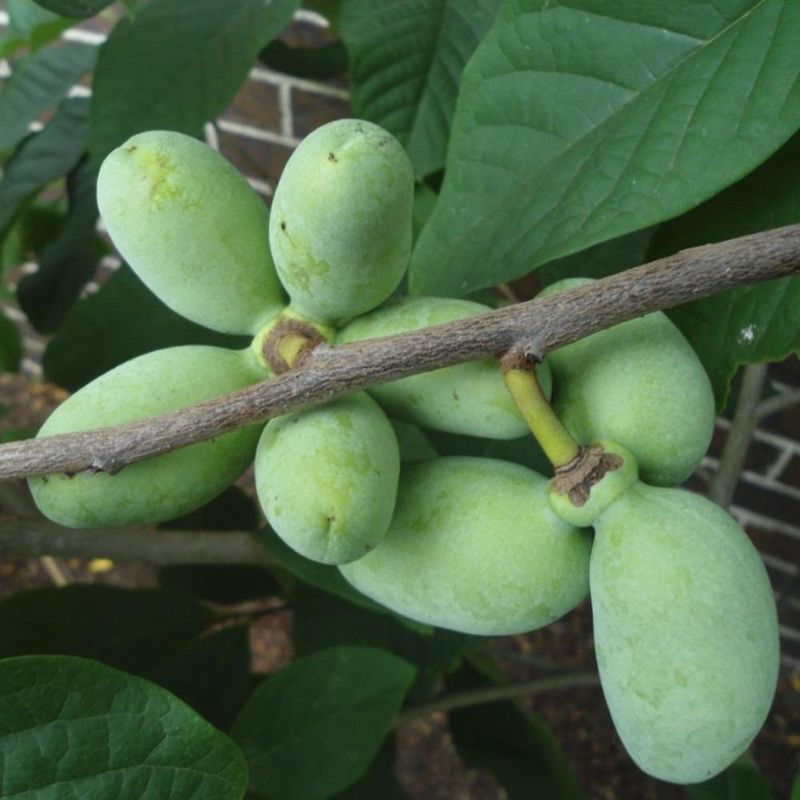
Knowing a tree is a pawpaw is one thing; knowing whether that particular tree is likely to fruit is another. Pawpaw naturally grows in rich, moist woods, along stream corridors, in ravines, and in bottomland areas where soil stays moisture-retentive without becoming permanently waterlogged.
Those habitat preferences carry over to residential settings. A tree growing near a backyard creek or in a low, sheltered spot with good organic soil is better positioned than one sitting on a dry, sunny ridge with compacted clay.
NC State Extension notes that pawpaw tolerates partial shade but tends to fruit more heavily when it receives full sun and adequate moisture. Young trees actually benefit from some shade protection while establishing, but a mature tree that has spent years under a dense canopy may flower sparsely or skip fruiting altogether.
If the tree in your yard is shaded by taller neighbors, that alone could explain a light or absent crop.
Drought is another limiting factor, especially during the establishment years for a newly planted tree. An older, deep-rooted pawpaw growing near a natural water source handles dry summers better than a recently transplanted one.
Wilkes County Extension’s pawpaw planting guide recommends supplemental watering during dry periods for trees that are not yet fully established.
Permanently saturated ground is not a good match either, even though pawpaw likes moisture. Standing water around the roots can cause stress and limit productivity.
The NC plant database describes pawpaw’s preferred habitat as moist but well-drained – a distinction that matters when evaluating a low-lying yard. Soil that drains after rain but holds some residual moisture is closer to ideal than either a bog or a dry slope.
Checking these conditions honestly gives a more realistic picture of what any existing tree can deliver.
Dependable fruit usually needs a genetic partner
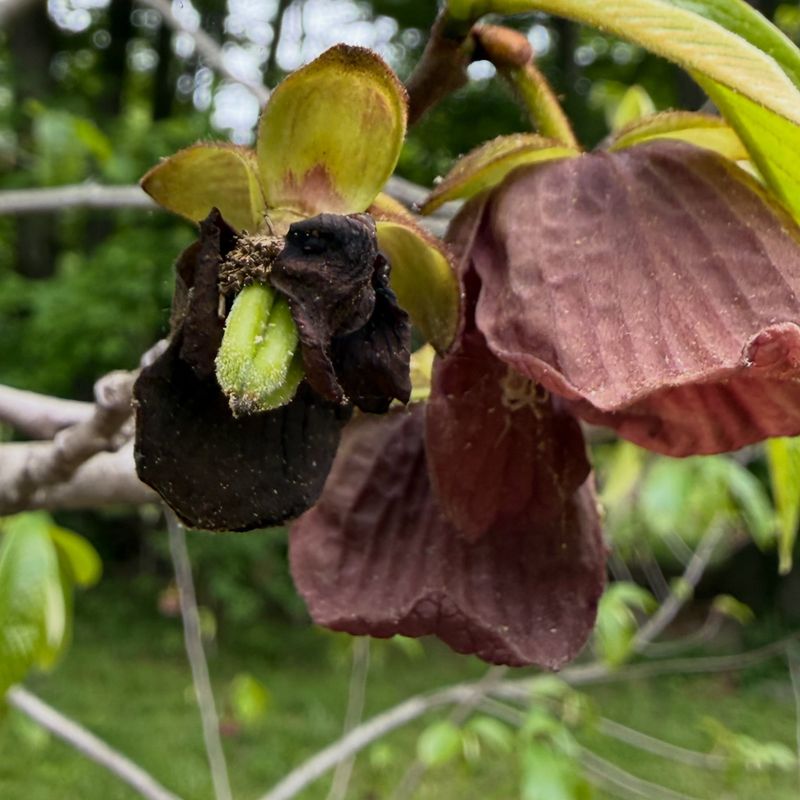
One of the most common reasons a pawpaw flowers every spring but produces little or no fruit comes down to pollination biology. Pawpaw flowers are generally self-incompatible, meaning pollen from the same tree typically cannot fertilize that tree’s own flowers.
They are also strongly protogynous: the female part of each flower is receptive before that flower’s own pollen is shed, so even a tree trying to pollinate itself is working against its own timing. NC State Extension confirms that dependable fruit set generally requires at least two genetically different trees.
Some individual trees or named cultivars may show limited self-compatibility, but counting on that for a reliable annual crop is risky.
Here is where a common misunderstanding trips up backyard growers. A cluster of pawpaw stems or a visible thicket may look like several separate trees, but those stems could all be connected underground through root suckers originating from one parent plant.
Ask Extension’s guidance on wild pawpaw patches explains that a grove of stems is not necessarily a grove of different genetic individuals. If all those trunks share the same root system, they share the same genetics, and pollen moving between them does not solve the compatibility problem.
The pollinators that move pollen between flowers are primarily flies and beetles, not bees. Pawpaw flowers produce a faint carrion-like scent that attracts these insects.
Some orchardists have experimented with hanging fish scraps or other odor sources to draw more flies during bloom, but that approach brings sanitation and wildlife-conflict concerns that make it a poor fit for most residential yards. Purdue Extension’s pawpaw growing guide recommends hand pollination as the cleaner practical option: collect pollen from a flower on one genetically different tree using a small artist’s brush and transfer it to a receptive flower on another tree.
The female phase, when the stigma is sticky and bright green, is the right window to target.
NC State’s small farms pawpaw orchard article describes hand pollination as a practical tool for improving fruit set when natural pollinator activity is low. If the yard has room for a second pawpaw from a different genetic source – either a named grafted cultivar or a seedling from a different provenance – retaining or planting that second tree is the most reliable long-term fix.
Harvest by feel, then move quickly
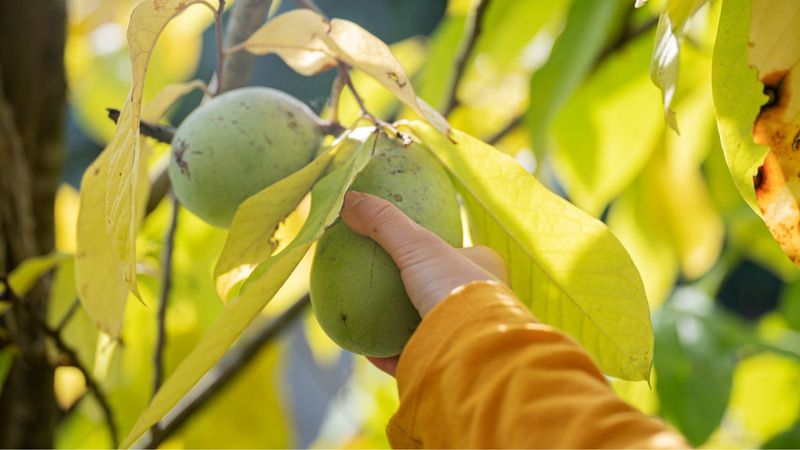
Pawpaw does not announce its ripeness the way an apple does by turning red or a tomato does by deepening in color. The fruit stays green, so the signal to watch for is texture and scent.
A ripe pawpaw softens under gentle pressure – not mushy, but yielding, similar to a ripe avocado. At the same time, the fruit develops a strong, sweet, fruity aroma that is hard to miss once you know what to look for.
UC Davis postharvest guidance for pawpaw notes that fruit can be harvested once softening begins and allowed to finish ripening indoors at room temperature, which gives a small window to work with before the fruit becomes difficult to handle.
Once fully ripe, pawpaws bruise easily and can deteriorate within a few days, even under refrigeration. This is the main reason the fruit almost never appears in conventional grocery stores – it simply does not hold up to commercial distribution.
Refrigeration can slow the process somewhat, but plan to use or freeze ripe fruit quickly rather than leaving it in a bowl on the counter.
Wildlife competition is real and worth taking seriously. Squirrels, raccoons, opossums, foxes, wild turkeys, and black bears all find ripe pawpaws appealing.
NC State Extension lists the fruit as a food source for a wide range of birds and mammals, which is part of what makes the tree valuable for a wildlife-friendly yard but also means the harvest window can close faster than expected. Checking the tree every day or two once the ripening period begins is a practical habit.
Not every fallen fruit is at peak quality. Lee County Extension advises that fruit dropping from the tree may have been knocked loose by wildlife or may have over-ripened on the branch.
Gently squeeze before committing to a batch, and look for fruit that is fragrant and yields evenly without feeling collapsed or fermented.
Eat the pulp, not the skin or seeds
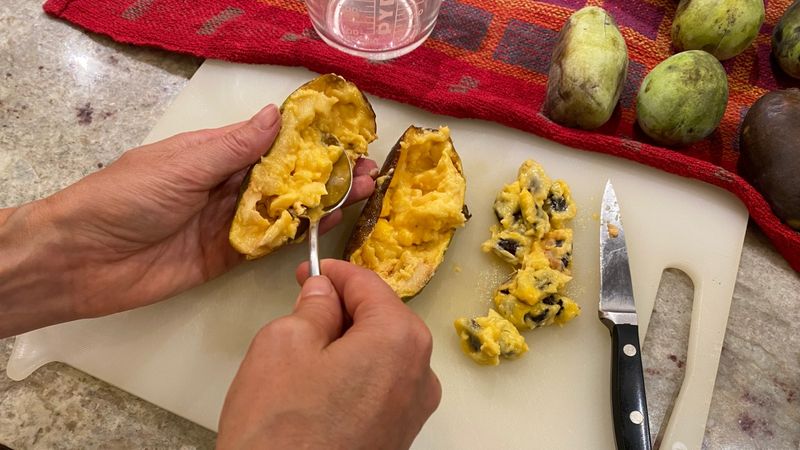
Getting the fruit from tree to table takes only a few steps, but following them correctly matters. Wash the outside of the fruit first, then cut it open lengthwise.
The interior reveals creamy, pale-yellow to orange flesh surrounding several large, dark brown seeds. Use a spoon to scoop out the pulp, working around the seeds, and discard both the skin and the seeds entirely.
Do not eat either one.
NC State Extension’s plant entry carries a clear warning: eating pawpaw skin or seeds can cause stomach and intestinal pain. Skin contact with the fruit’s skin or sap may also trigger irritation or contact dermatitis in sensitive individuals, so wearing gloves during harvesting and preparation is a reasonable precaution if you have sensitive skin.
These are not rare or catastrophic reactions, but they are worth knowing about before handling a large batch.
The pulp itself is versatile. Fresh pawpaw pulp can be eaten straight from the fruit, blended into smoothies, folded into ice cream, or used in baked goods such as muffins, quick breads, and custard-based desserts.
Penn State Extension notes that there are no research-based home-canning recipes for pawpaw, so freezing is the better-supported home preservation method. Pulp freezes well and can be portioned into zip-top bags or freezer containers for use through the winter.
A separate note on the science: laboratory studies have detected compounds called acetogenins, including annonacin, in pawpaw pulp. Published research on annonacin in pawpaw fruit has examined these compounds in isolated-cell assays and animal models.
Those findings are worth knowing about, but they do not establish that eating pawpaw as part of a normal diet causes neurodegenerative disease in humans, and they equally do not support claims that the fruit treats or prevents cancer. The practical takeaway is simply to eat the pulp in reasonable amounts and discard the skin and seeds as directed.
UC Davis postharvest guidance recommends refrigerating fresh-cut pulp and using it within a day or two for the best flavor and texture. Treat it more like a ripe avocado than an apple, and plan your recipes before you harvest rather than after.
Protect the patch and plant additions carefully
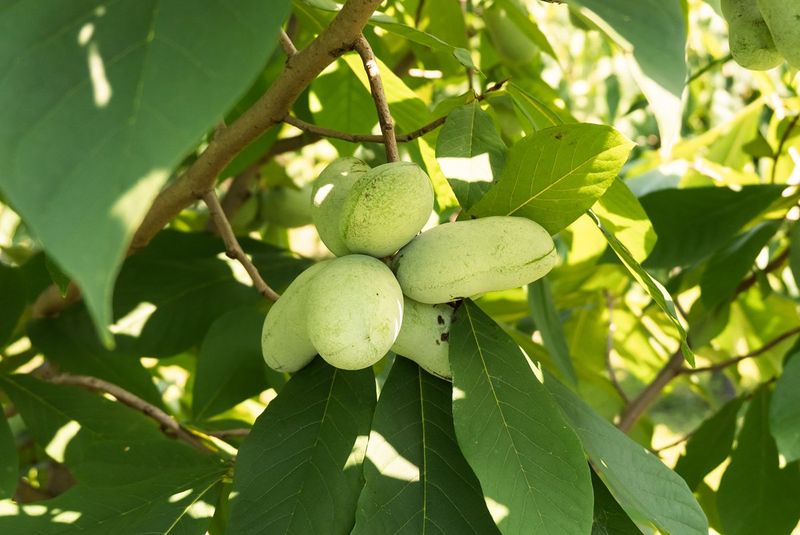
A pawpaw growing in a North Carolina yard does more than potentially feed the household. The tree is the sole larval host plant for the zebra swallowtail butterfly, a striking black-and-white striped species found across much of the state.
No pawpaw, no zebra swallowtails. That relationship alone gives the tree significant value in a wildlife-friendly landscape, separate from any fruit it may or may not produce in a given year.
The fruit supports a broader community as well. NC State Extension lists pawpaw fruit as a food source for squirrels, raccoons, opossums, foxes, wild turkeys, and black bears, among other birds and mammals.
Deer are sometimes described as avoiding pawpaw, but that resistance is moderate rather than absolute, and young trees in areas with heavy deer pressure may need protection while they establish. Ripe fruit on or near the ground will draw mammals regardless of how deer-resistant the foliage is.
If a naturally occurring patch is already on the property, the best first step is to leave it alone physically. Lee County Extension specifically advises against trying to move established wild pawpaw plants because their deep taproots are commonly damaged during transplanting, often fatally.
Digging up a wild tree to relocate it to a better spot in the yard usually kills the tree and harms the patch.
Adding compatible trees is a better strategy than moving existing ones. Container-grown or grafted pawpaw stock from a reputable nursery gives the new tree the best chance of surviving establishment.
Wilkes County Extension notes that seed-grown trees may take roughly five to eight years to fruit, while grafted trees from named cultivars may begin bearing in about three to four years under favorable conditions. Planting a named cultivar near an existing seedling or wild tree – assuming they are genetically different – addresses the pollination gap while adding a known-quality fruit source to the yard.
The unusual harvest depends on the right conditions
A pawpaw already growing in a North Carolina yard can turn into something genuinely rewarding, but the path from tree to table runs through several checkpoints. Correct identification comes first.
After that, an honest assessment of the site – soil moisture, sun exposure, and drainage – tells you whether the tree is positioned to fruit or just to survive. Maturity matters too, because young or recently stressed trees rarely produce a meaningful crop even under good conditions.
Pollination is the factor most homeowners overlook. NC State Extension’s guidance on pawpaw pollination is clear that a genetically different partner tree generally improves fruit set, and that a visible thicket of stems may represent one clone rather than several compatible individuals.
Identifying whether a second compatible tree is nearby – or whether one needs to be added – is the practical next question after site assessment.
When fruit does arrive, the harvest window is brief and the fruit perishable, so monitoring the tree daily during the ripening period and moving quickly once softening begins makes the difference between a good harvest and a lost one. Handle the pulp safely, freeze what you cannot eat fresh, and skip the skin and seeds entirely.
Protecting an existing patch serves the yard’s wildlife community whether or not the tree fruits in any particular season. Lee County Extension frames the pawpaw patch as a habitat asset worth preserving on its own terms.
A tree that feeds zebra swallowtails, raccoons, and the occasional lucky homeowner is doing its job even in a lean fruit year – which is a reasonable way to think about any native plant you choose to keep.