
Rain Barrels for North Carolina Container Gardens: Less Hose Work, Not Zero Oversight
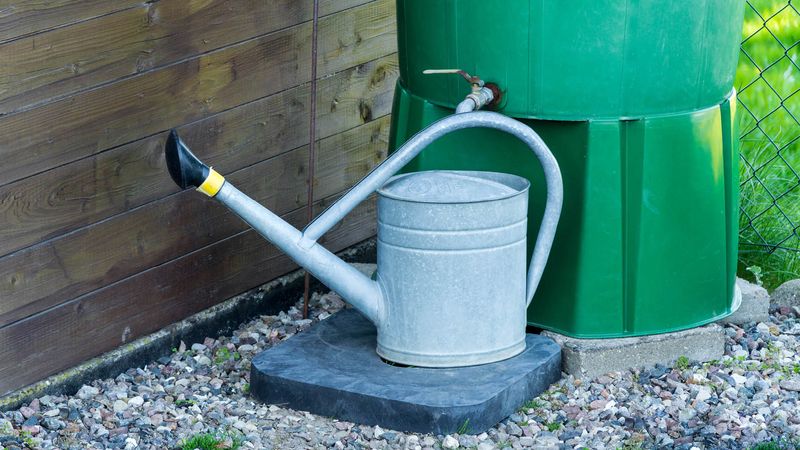
A rain barrel can turn the water running off your roof into a handy supply for your pots and planters. That means fewer trips with the watering can and less time dragging the hose around the patio.
It is not a magic fix, though, and the barrel will not water your plants forever on its own. Here is how to set one up so it really does lighten your load.
A rain barrel can reduce watering work, not eliminate it
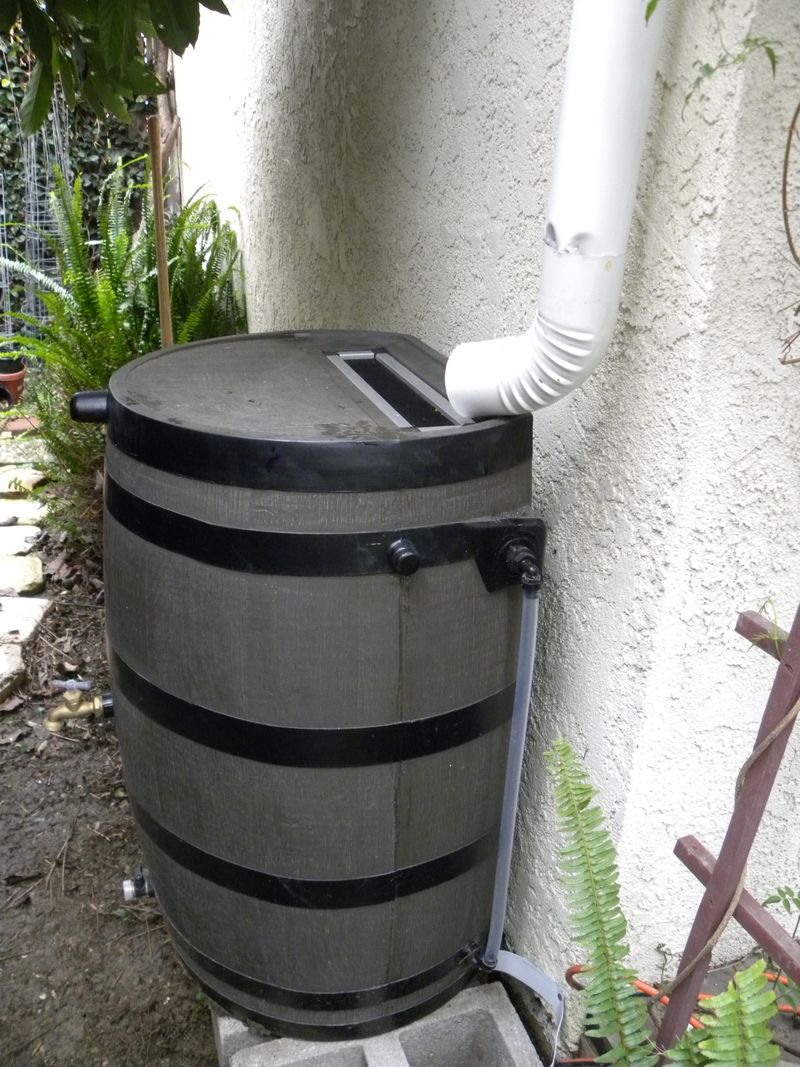
Picture a rain barrel as a small savings account for water. Rain fills it, your pots draw it down, and when it is empty, it is empty.
That is the honest starting point for this whole project.
A barrel can cut down on hand-watering and hose use, but it cannot promise uninterrupted watering. NC DEQ describes small rain barrels as a fit for modest demand, while larger cisterns serve bigger needs.
A typical barrel holds around 60 gallons, and a hot North Carolina week can use that up faster than you might expect.
So the title’s big promise needs a rewrite in your head. Think of this as a supplemental water source that you watch, not a set-it-once system.
If a dry stretch runs longer than your stored water, you will still need a backup plan, whether that is a watering can filled elsewhere or the hose.
Your plants need watching too. NC State Extension says container mix should be checked and watered when dry, and it notes that drip systems need routine maintenance.
Tubing can clog, screens can fill with leaves, and connections can loosen.
Gravity delivery is also tricky. NC State’s garden design guidance points out that flow depends on how the tank is set up.
The next sections walk through each piece, so you can judge what your own yard can realistically do.
Size the catchment around the downspout
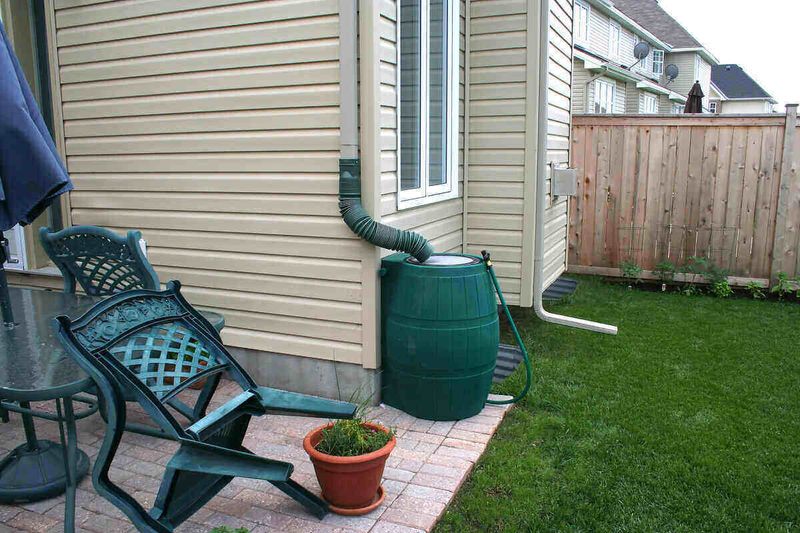
Before buying anything, figure out how much roof actually drains to the spot where the barrel will sit. Your whole roof does not feed one downspout.
Most houses split the runoff among several, so measure only the section that sends water to your chosen one.
Multiply the length and width of that roof section, measured as it sits on the ground, to get square feet. A rough count is fine for planning.
A small porch roof or garage section may be far smaller than you guess.
NC DEQ estimates that one inch of rain on 1,000 square feet of roof can yield about 600 gallons. That is an estimate, not a guaranteed amount, because wind, gutters, and splash all take their share.
Now compare it to the barrel. A typical 60-gallon barrel holds only a small slice of that 600 gallons, so a good soaking rain will fill it quickly and the rest will overflow.
That is normal, and it is why overflow planning matters.
Do not count on the barrel lasting any set number of days. Your usage depends on how many pots you have, how big they are, and how hot it gets.
Some gardeners add a second barrel linked to the first when they want more storage, but each barrel adds weight and another thing to maintain.
Build a stable base and plan the overflow route
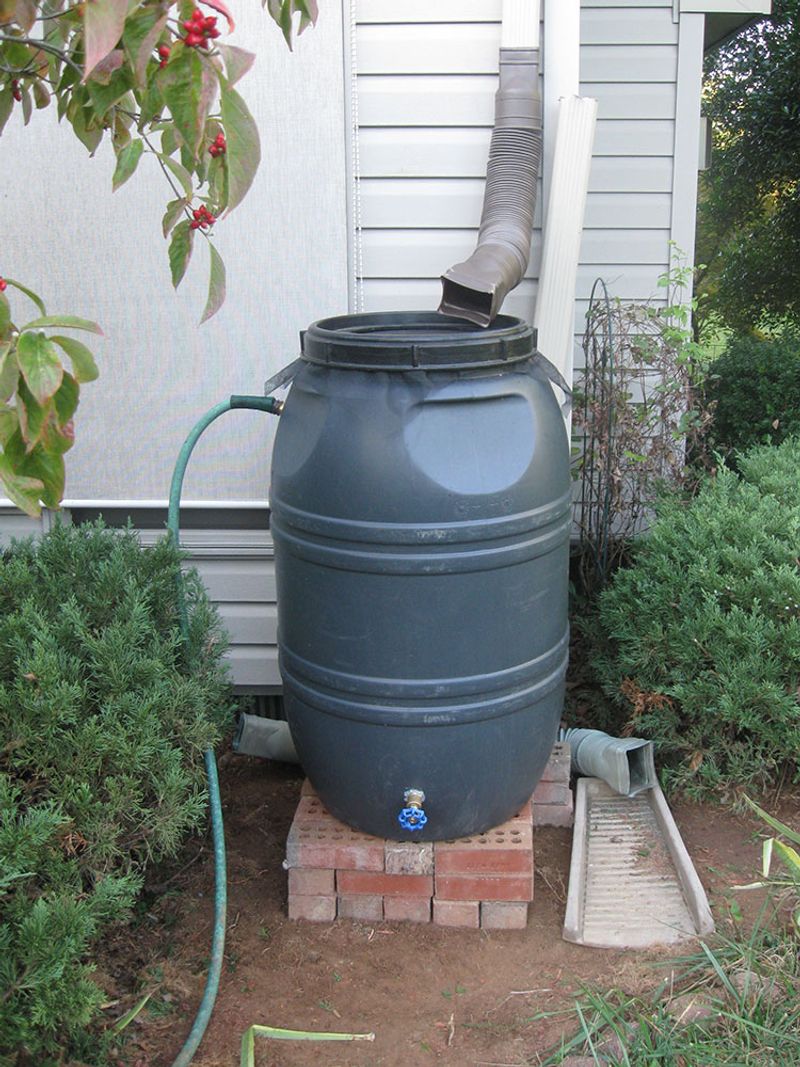
Water is heavy, and a full barrel proves it. According to Rutgers Cooperative Extension, a full 55-gallon barrel weighs roughly 460 pounds, and that is before counting the barrel itself.
Choose a spot near the downspout where the ground is flat and firm. A level pad of compacted gravel or pavers works well.
Clay soil in the Piedmont can soften after storms, so check that the base does not sink or tilt after rain.
Be careful about lifting the barrel for more pressure. Do not put a full barrel on a homemade stack of blocks or a wobbly platform.
A tip-over would be dangerous, and height only adds risk. Any raised support must be built to carry that load.
Overflow deserves as much thought as the barrel. University of Nebraska-Lincoln Extension covers directing excess water away so it does not cause problems.
Send it to a permeable area, like a lawn or planting bed, well away from the house foundation.
Walk the route during a real rain. Look for pooling, soggy spots, or soil washing out, and fix them with a longer hose, a splash pad, or a gentler slope.
Check again each season, since leaves and soil shift over time.
Screen the system against mosquitoes and debris
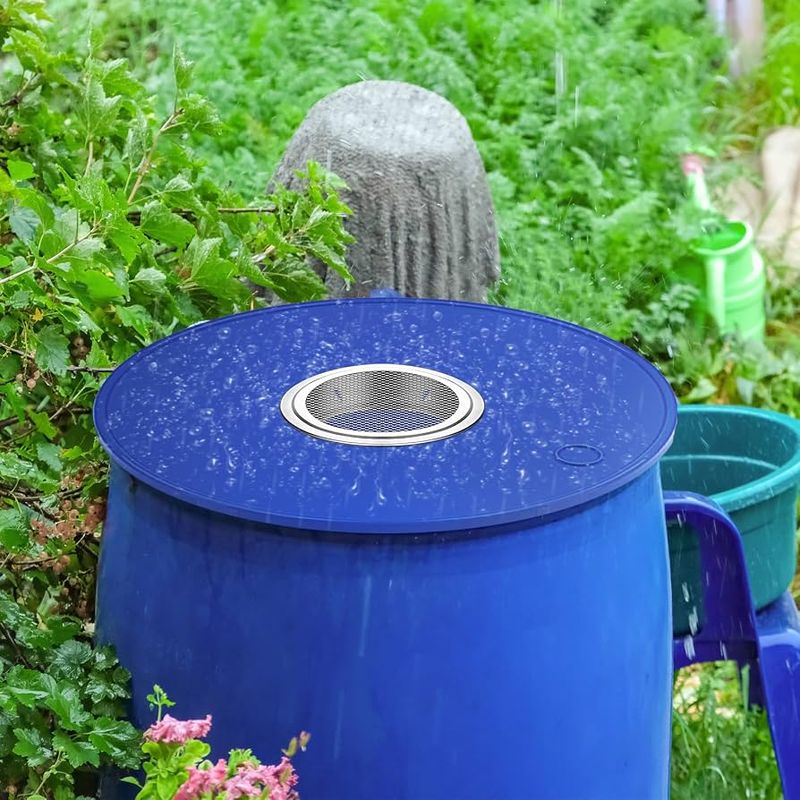
Standing water is an invitation to mosquitoes, and North Carolina summers have plenty of them. A tight cover and fine screens over every opening keep them from laying eggs in your barrel.
NC State Extension warns that rainwater systems need careful management to avoid mosquito problems. Do not forget the overflow opening, since a small gap there is all a mosquito needs.
Screens also catch leaves, pine needles, and grit from the roof. University of Nebraska-Lincoln Extension and Rutgers Cooperative Extension both stress covering openings and keeping screens clean.
A clogged screen can send rain spilling over the top instead of into the barrel.
Make a habit of checking the screens after storms and during leaf-drop in fall. Lift off debris with a brush or gloved hand and rinse the mesh if it looks gunky.
Look for tears, because a small hole defeats the purpose.
Remember what screens cannot do. They keep out bugs and big debris, but they do not make the water clean or safe to drink.
They are one layer of protection, and they only work while you keep up with them.
Check whether gravity can reach every container
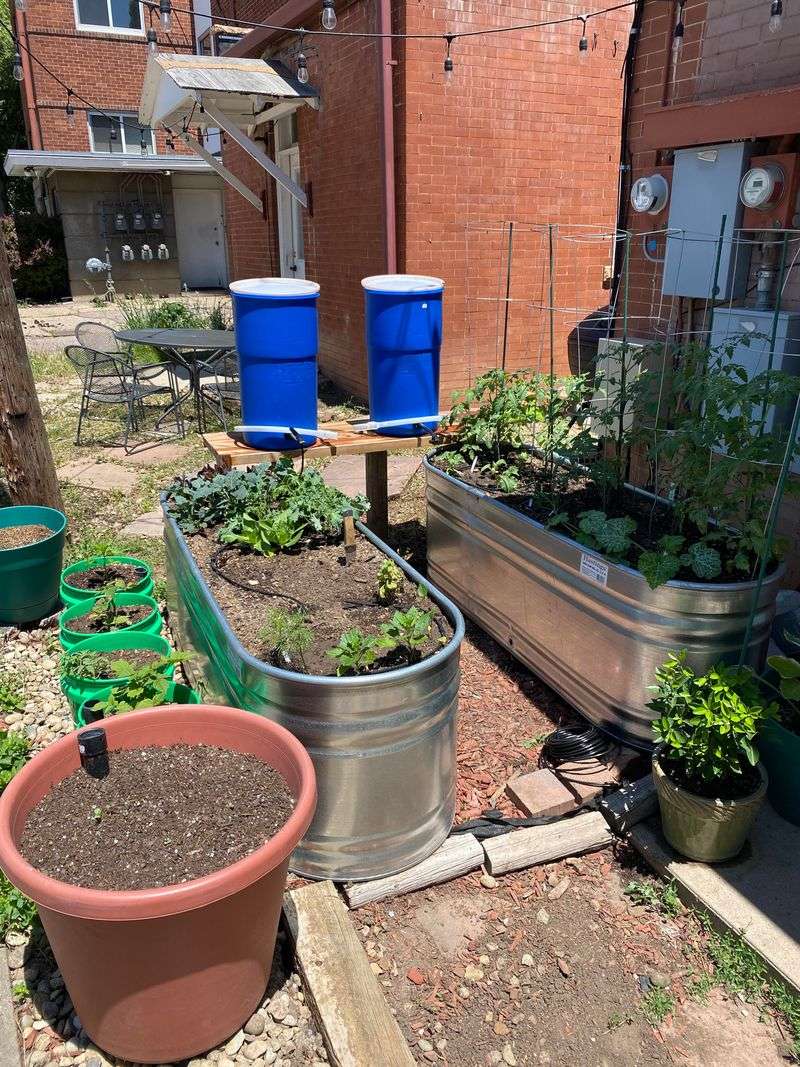
Here is where many setups disappoint. Water moves by gravity, and a barrel sitting low gives it very little push.
Whether it reaches your pots at a useful flow depends on barrel height, tubing length, and the equipment on the end.
NC State’s garden design guidance says standard-pressure gravity delivery requires the tank outlet to be 10 feet above the garden. Lower tanks flow more slowly and may need a pump.
A barrel on a short stand does not reach that height.
That matters because many drip kits are built for household pressure. Colorado State University Extension explains how drip irrigation depends on pressure.
A kit that works fine on a faucet may trickle or stall on a barrel.
Before you buy, read the product details for low-pressure use. If the maker does not say it works at low, changing pressure, do not assume it will.
Look for equipment made for gravity feed, or plan on a small pump.
Also remember that pressure drops as the barrel empties. Pots near the barrel may get plenty while far ones get little.
Test with a bucket or by watching emitters, and note which containers are not getting enough.
An ordinary timer or drip kit does not sense rain, soil moisture, or an empty barrel unless the specifications say so. Treat any automation as a convenience, not a guarantee.
Keep roof runoff off edible leaves
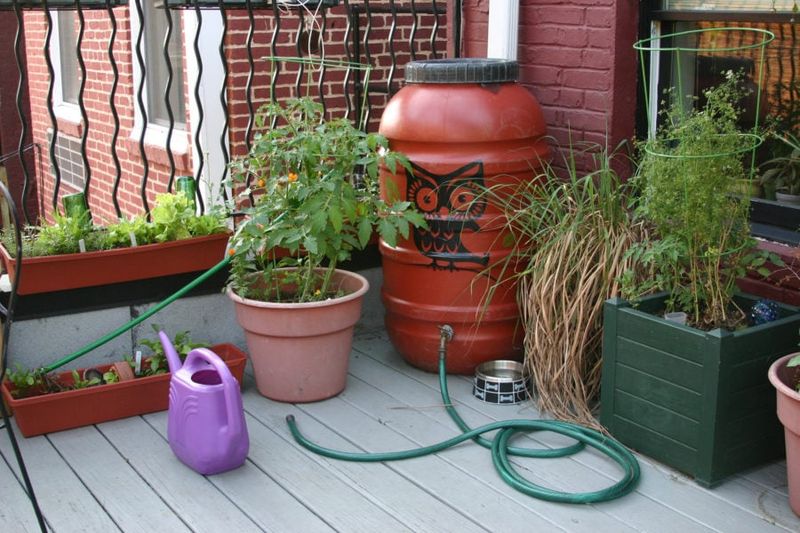
Roof water looks clean, but it is not. It can pick up bird and animal droppings, and roofing materials and other conditions can change its quality.
Treat it as non-potable, which means no drinking, cooking, or household use.
UConn Extension notes the potential for bacterial contamination and advises watering vegetables at the soil, avoiding contact with above-ground edible parts. That is especially important for leafy produce eaten raw, like lettuce and herbs.
In practice, aim tubing or emitters at the potting mix, not the foliage. If you hand-water from the barrel, pour at the base of the plant.
Skip overhead sprinkling on anything you plan to eat.
Some barrels include a first-flush diverter, which sends off the first dirty runoff of a rain. It can reduce some debris and contaminants.
It does not make the water potable or free of contamination, so keep following the same soil-only habits.
North Carolina’s building rules also address rainwater systems, and the North Carolina Residential Code is worth a look if you plan anything beyond a simple barrel. Keep the barrel clearly separate from your household plumbing.
Flowers, shrubs, and ornamental pots are the easiest fit for barrel water. For vegetables, wash your harvest well and keep your hands clean after handling the barrel.
Check the pots even when the tubing is working
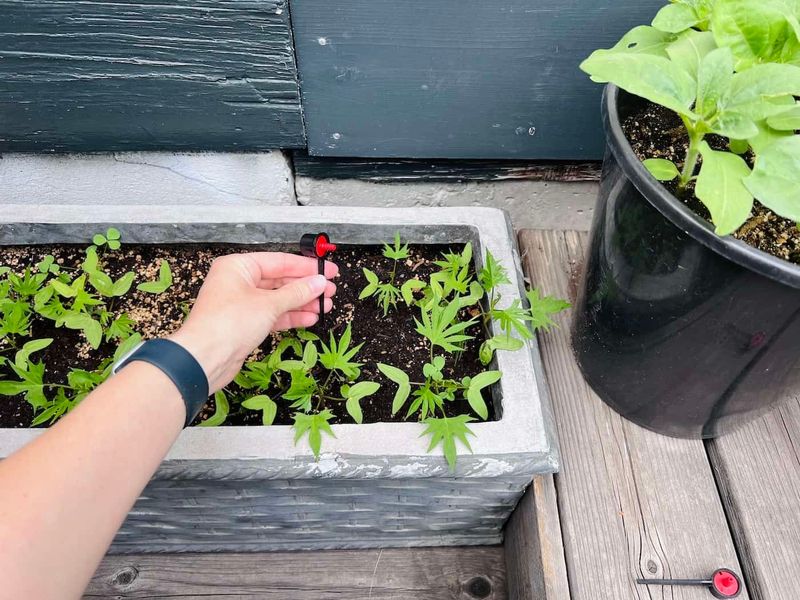
Dripping tubing can fool you into thinking everything is fine. The only way to know is to feel the mix.
NC State Extension recommends checking potting mix 2 to 3 inches down and watering when it is dry.
Push a finger into a few pots every couple of days, more often in July heat. A pot can be bone dry under a dripper that clogged, or soggy because the emitter ran too long after a rainstorm.
Both hurt roots, so aim for neither dry-out nor waterlogged mix.
A fixed schedule cannot replace this check. Weather swings in North Carolina, and a timer does not know it rained last night.
Unless a product’s specifications say it senses rain or soil moisture, assume it does not.
Mulch helps. A thin layer on top of the potting mix reduces moisture loss, but keep it back from the plant stem so the base stays dry and healthy.
Then look over the equipment. NC State notes that drip systems need routine checks, and the food garden design guidance also calls for careful management of rainwater systems.
Check filters for grit, connections for drips or pulled fittings, and emitters for clogs.
A weekly walk-around takes only a few minutes. Look at the barrel level, the screens, the tubing, and the plants themselves.
If a pot looks wilted but the mix is wet, stop watering and check drainage.
Aim for less hose work, not zero oversight
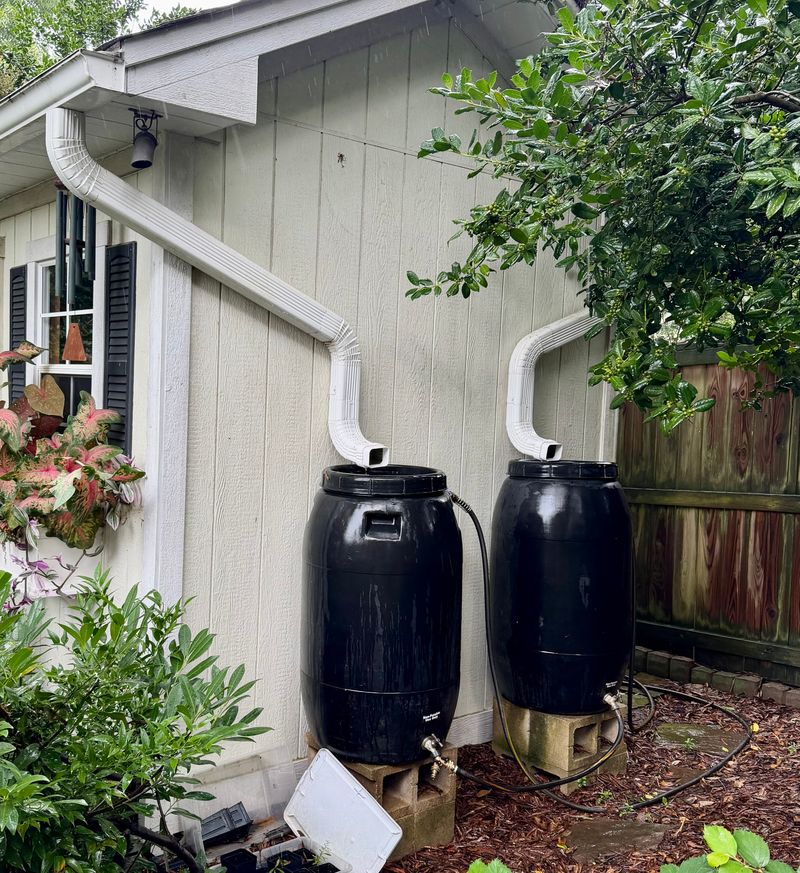
A well-planned barrel can take real work off your plate. It collects free water, gives you a place to fill a can, and, with the right equipment, can feed some containers on its own.
How much it helps depends on the roof area behind it, the stored volume, and whether your delivery gear works at low pressure.
It still cannot promise coverage through every dry spell. When the barrel runs low, you will need another source, and you will still check the mix, as NC State advises, and keep up with the equipment.
Treat the barrel as a helper, not a replacement for your attention. The best rain barrel is the one you keep an eye on.