
Recycle Your Spent Jack-O’-Lantern Into Your Vegetable Bed Soil This Fall
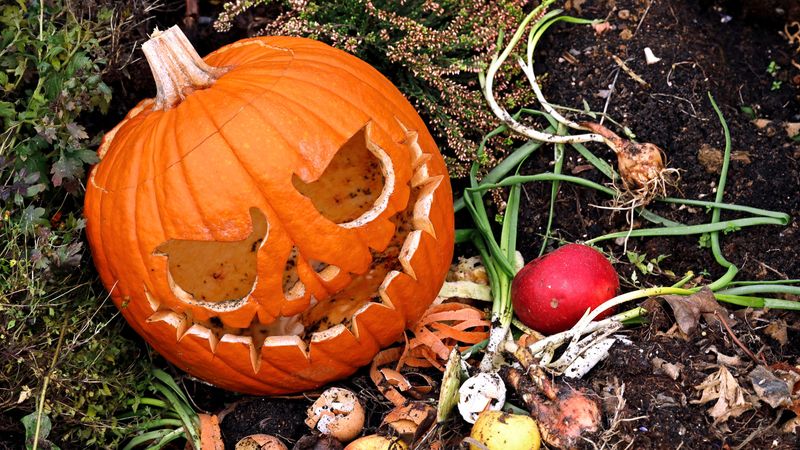
That slumping pumpkin on your porch still has a job to do. Instead of sending it to the curb, you can chop it up and tuck it into the soil of your vegetable bed.
It is a simple fall cleanup that returns plant material to the ground where you grow your food. A few careful steps keep it safe for your squash plants and out of the paws of hungry animals.
A pumpkin can go back into the garden
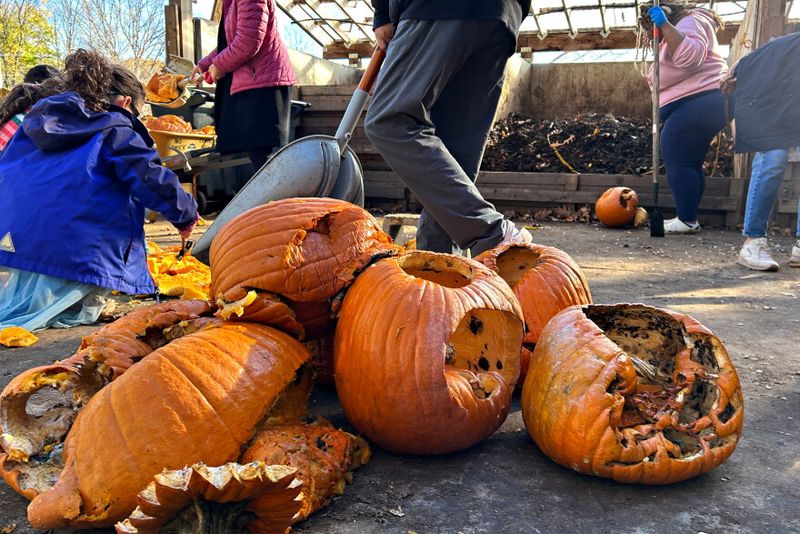
Once Halloween is over, a carved pumpkin is basically a pile of garden-bound organic material. Rather than treating it as trash, you can return it to the soil it came from.
Washington State University Extension specifically suggests chopping a pumpkin and burying it in a garden.
The method behind this is often called trench composting. You dig a hole or trench, add fruit and vegetable scraps, and cover them with soil.
University of Maryland Extension describes it as a way to feed soil organisms and build soil fertility over time, which is a gentle way of saying the scraps become food for the tiny creatures that live in your bed.
Think of this as a low-cost recycling habit, not a treatment with a guaranteed result. One pumpkin will not turn into a measured dose of fertilizer, and it may not be fully broken down by the time you plant squash next year.
Nobody can promise a payoff in two weeks, either. What you can do in about two weeks is finish the cleanup: check the fruit, prepare it, bury it, and mark the spot.
The next sections walk through each step in order, including when to skip burial altogether. If you grow squash, zucchini, cucumbers, or melons, a little caution up front keeps this chore from causing trouble later.
Check the pumpkin before you bury it
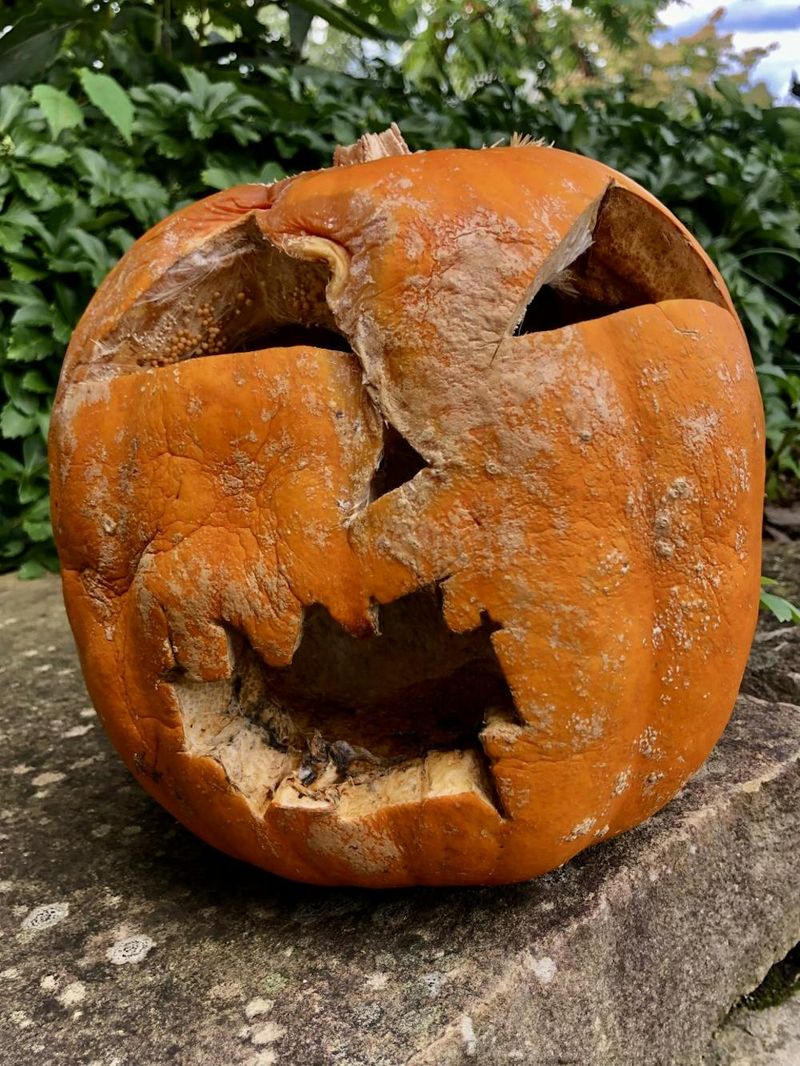
A pumpkin that is soft, wrinkled, or a little fuzzy after a few weeks on the porch is simply past its decorating prime. Ordinary decay like that does not mean your pumpkin has a specific plant disease.
Still, it pays to take a close look before it goes anywhere near your squash bed.
The thing to watch for is white mold. University of Minnesota Extension says not to compost pumpkins or other plant material infected with white mold, which can persist in soil and plant debris.
Typical clues are dense, cottony white growth, sometimes with hard dark lumps in it, though a soft pumpkin alone proves nothing.
If you suspect white mold, skip the garden bed. Do not bury the fruit casually near places where cucumbers, squash, melons, or pumpkins might grow later.
Look up disease-specific guidance from your local Extension office, and follow its advice for disposal.
If your pumpkin is just mushy with some ordinary surface mold and you see nothing that worries you, you can move on to preparation. When in doubt, the cautious choice is to keep it out of the vegetable bed.
A missed bit of compost is a small loss compared with carrying a problem into next year’s crop.
Remove decorations, chop the pumpkin, and consider the seeds
Start by taking off everything that is not pumpkin. Pull out candle stubs, wax drips, glitter, stickers, paint, and any wire or plastic.
Only the plain fruit should go into the soil.
Next, chop the pumpkin into smaller pieces with a sturdy knife or a spade. Texas A&M AgriLife Extension notes that smaller pieces break down faster than a whole pumpkin.
Fist-sized chunks or smaller are a practical goal.
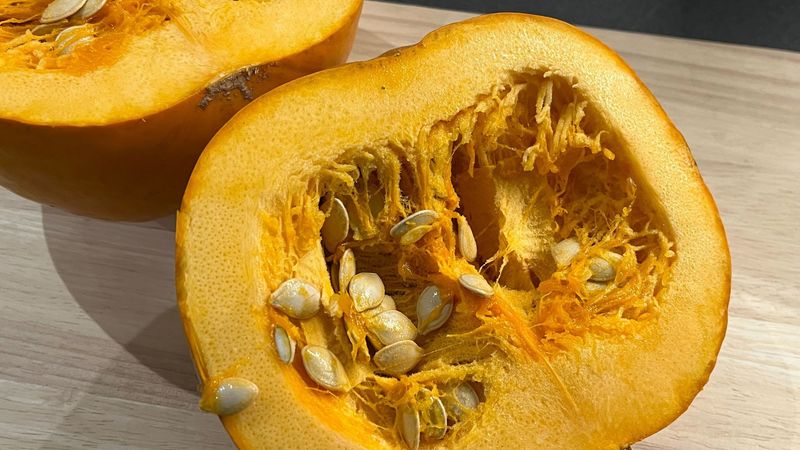
Then decide about the seeds. Intact seeds may sprout, so you might see volunteer pumpkin plants next summer.
The same Texas A&M source says seeds can germinate if they are not broken up, and WSU likewise warns that seeds left behind may sprout.
If you do not want surprise vines crowding your tomatoes or beans, scoop the seeds out before burial. You can roast them for a snack or toss them in the trash.
If you do not mind a volunteer or two, you can leave them in, but be ready to pull any seedlings that pop up where you do not want them.
Bury the pieces fully instead of leaving a whole pumpkin on the bed
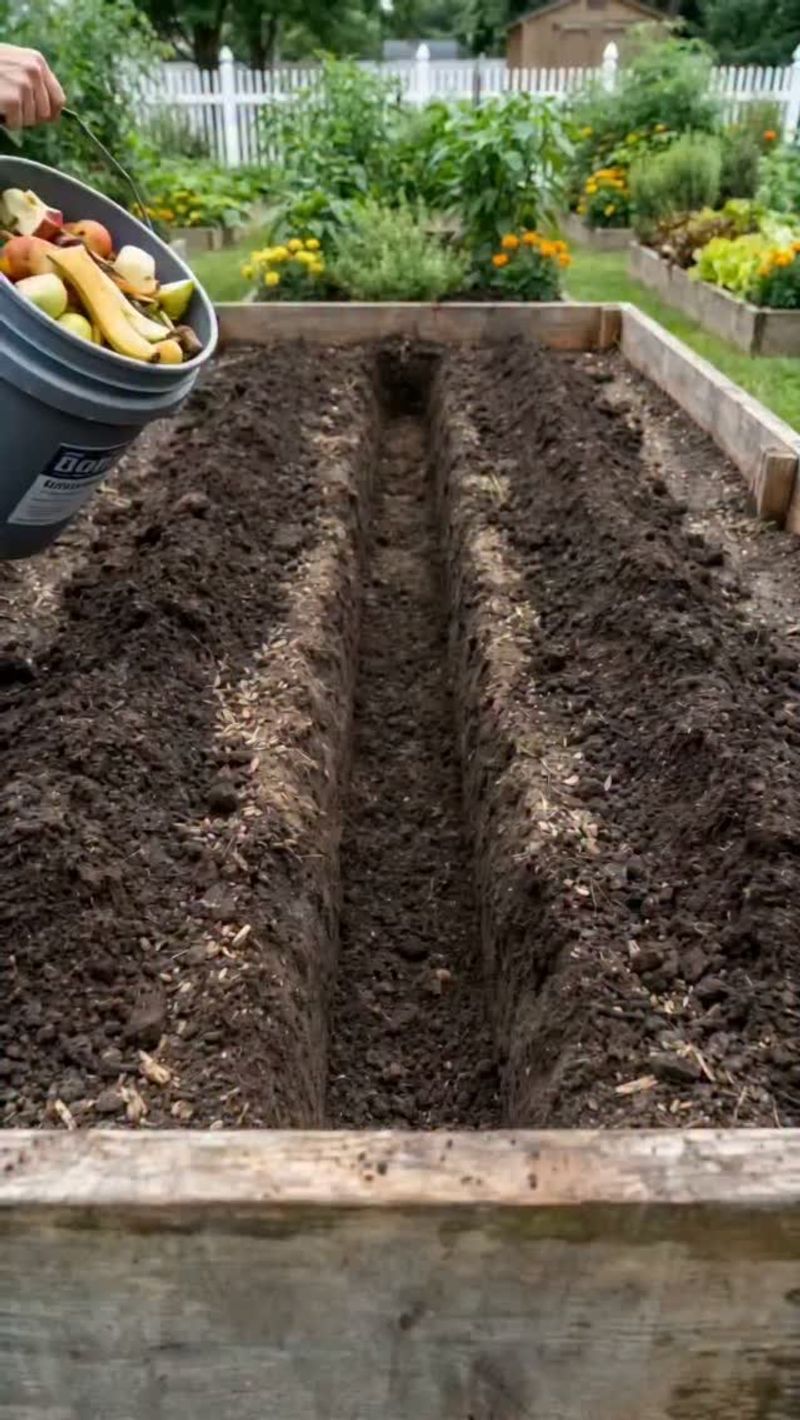
Dig a trench or hole in an empty part of the bed, drop in the chopped pieces, and cover them completely with soil. Depth advice depends on the method.
Maryland Extension describes trench composting in a hole about 8 to 12 inches deep.
If digging animals visit your yard, go deeper. Oregon State Extension recommends burying material at least 12 inches deep, with at least 8 inches of soil over it, to discourage animals.
Raccoons, squirrels, and dogs love a pumpkin snack, so the deeper option is the more cautious choice in many neighborhoods.
Burying chopped pieces is not the same as setting a whole pumpkin on top of the bed and hoping for the best. Illinois Extension cautions that pumpkins rotting on the surface can harbor overwintering insects and disease pathogens, and their seeds may sprout.
A whole pumpkin on the soil can also draw animals and leave a slimy mess in spring. Surface rotting is not an equal swap for burial.
Cover the pieces fully, tamp the soil down gently, and leave no orange peeking out.
Mark the spot and let the buried pumpkin break down
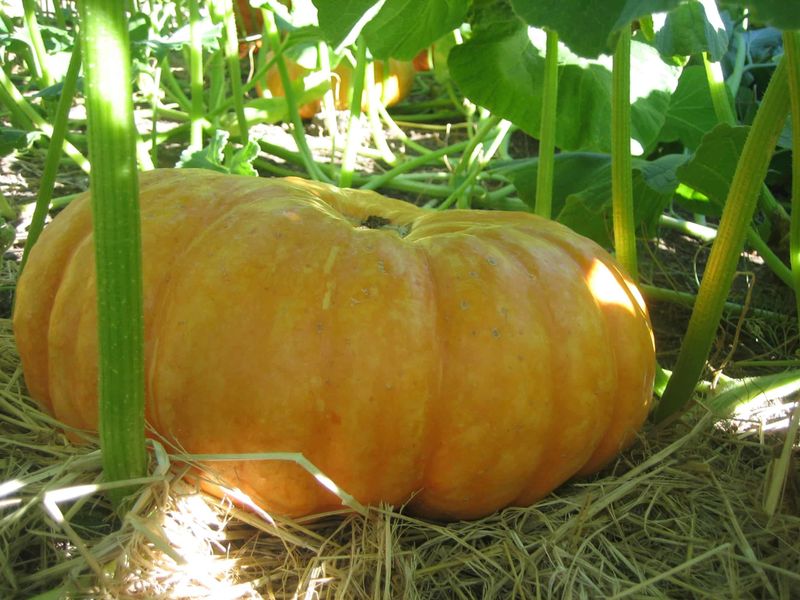
After the soil is back in place, put a stake or a stone on the spot. Write the date on it if you like.
You will thank yourself in spring when you are about to plant and cannot remember where you dug.
Choose a place you can leave alone while the pumpkin breaks down. Avoid areas where you plan to plant early crops or sink supports for peas.
If you can, bury it inside a fenced garden, since Oregon State Extension notes that trenching may work best where fencing keeps animals out.
Cold slows the whole process. Maryland Extension says trench composting slows significantly from November through March, and UConn Extension also notes that decomposition slows in cold weather.
So treat burying a pumpkin within two weeks of Halloween as a handy cleanup choice, not a promise. The pieces may not be gone by planting time, and they may not do anything for plants right away.
If you find chunks while digging in spring, simply cover them again or move them to a spot you will not plant in soon.
Think soil recycling, not a guaranteed squash fertilizer
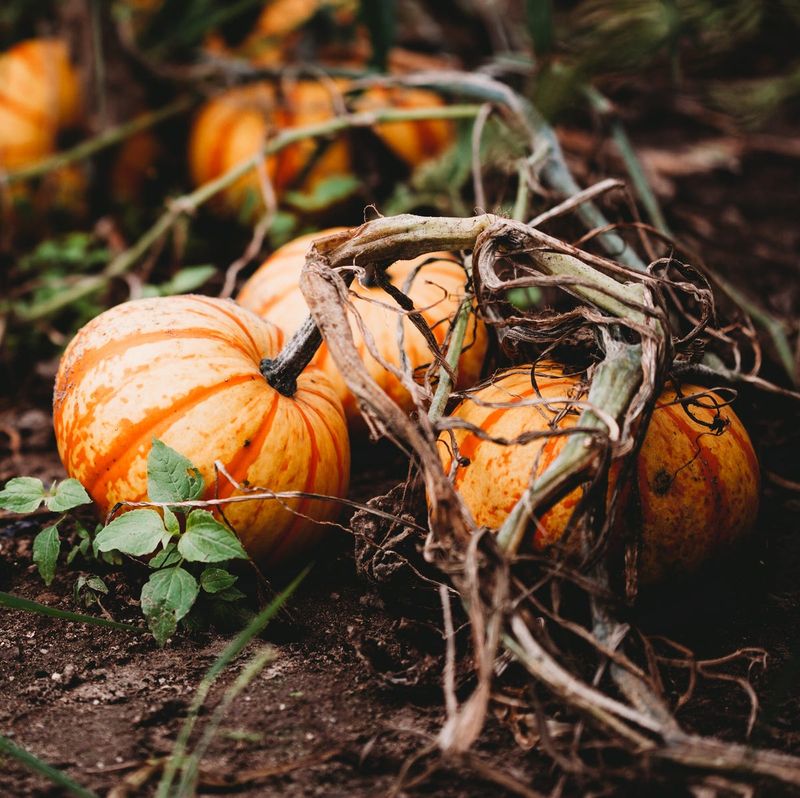
Burying a pumpkin adds organic matter to your soil, and organic matter can contribute to soil fertility as it breaks down. That is a modest, real benefit.
What nobody can tell you is how many nutrients one pumpkin supplies or whether next year’s squash will grow any better because of it.
Compost and decomposed material vary a lot depending on what went in and how it broke down. Oregon State Extension advises choosing and using compost based on its source and intended use, and the same thinking applies here.
If your squash seem hungry next summer, the better move is to look at your soil and your feeding plan, not to count on last October’s pumpkin. Trench composting, as Maryland Extension frames it, feeds soil life over time.
Think of the pumpkin as garden-bound material getting one more useful job. It is a tidy way to reuse something you were going to throw out, and nothing more needs to be claimed for it.