
Can Crape Myrtle Roots Lift a North Carolina Driveway? What Homeowners Should Check
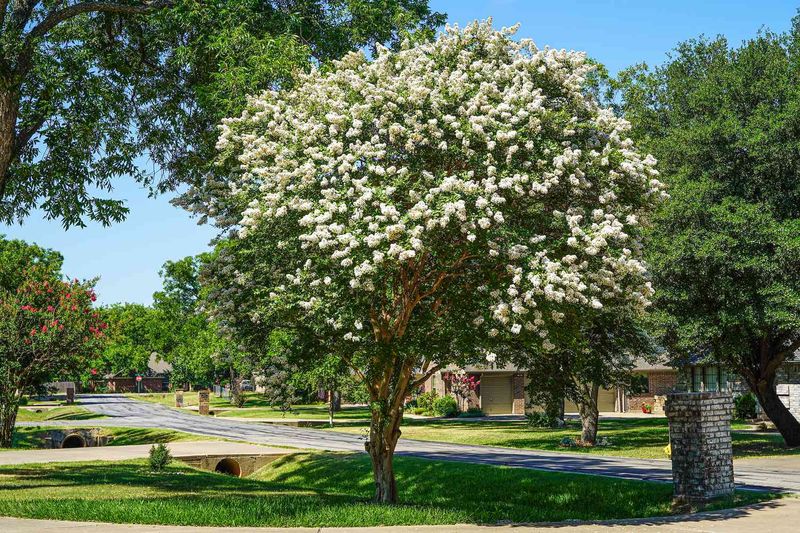
You spot a raised edge on your driveway, and a crape myrtle stands just a few feet away. It is natural to wonder if the tree is the culprit.
Roots can play a part in some cases, but cracks and uneven pavement have several possible causes. Knowing what to look for can help you protect both your driveway and your tree.
A nearby crape myrtle is a clue, not a diagnosis
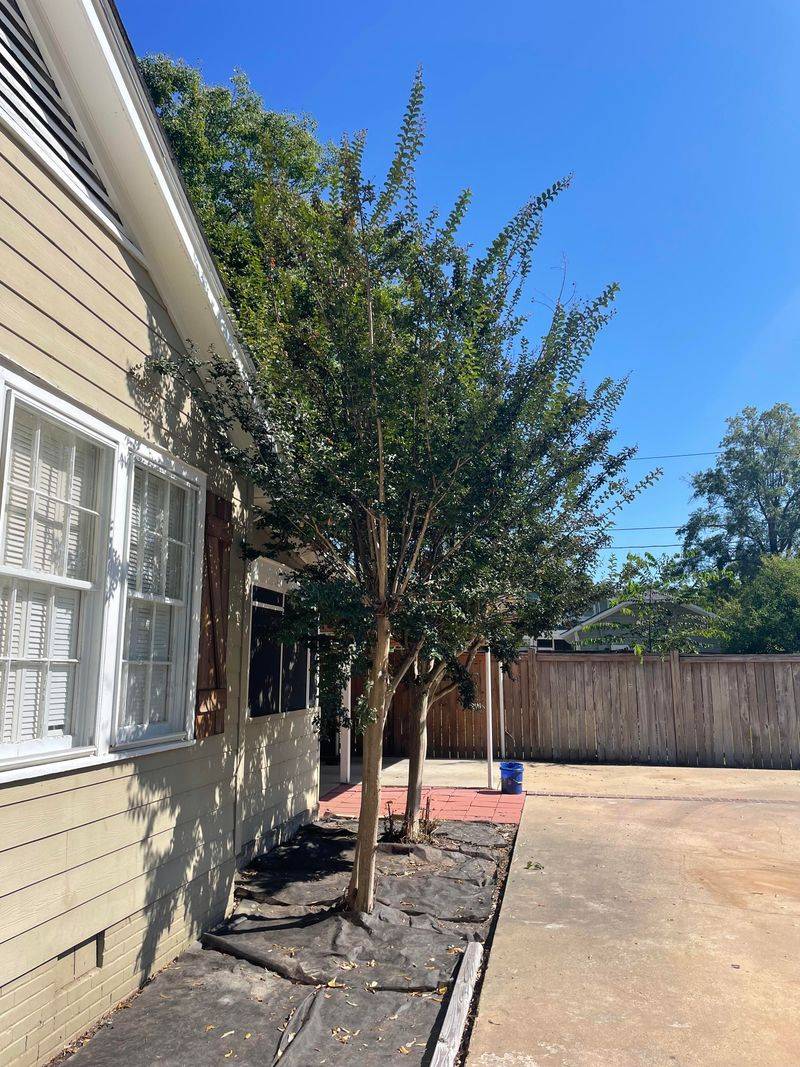
Seeing a crape myrtle beside a lifted slab makes the tree the obvious suspect. But a tree being close and a crack being present do not prove the tree caused the damage, and they say nothing about when it started.
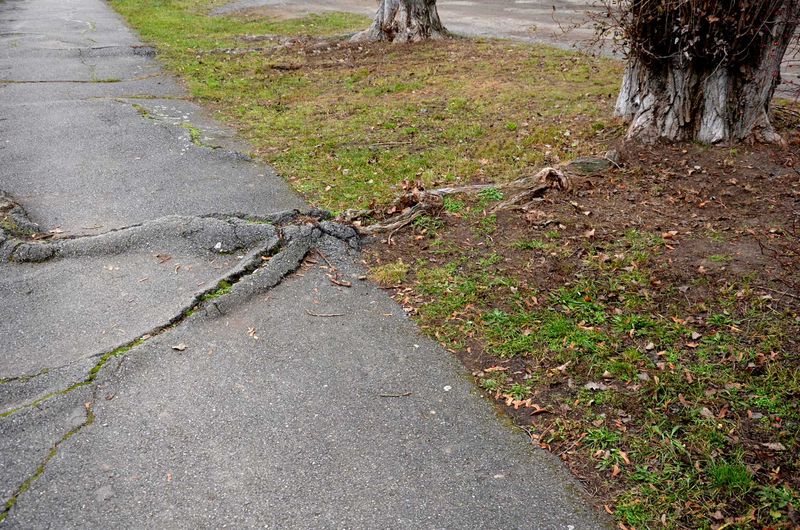
Tree roots can contribute to pavement lifting, yet UF/IFAS guidance on roots and pavement points out that sidewalks crack whether trees are nearby or not. Sometimes the pavement cracks first, and roots later grow into the gap.
That guidance is about sidewalks, so it is a useful comparison rather than proof about your driveway.
A 2026 UF/IFAS research summary on root-resistant sidewalks leaves real uncertainty about whether roots start cracks or exploit them. Nothing reviewed shows a dependable years-long warning period before a crack appears.
Crape myrtles also vary in size, and a University of Maryland Extension response does not describe them as having aggressive roots.
So the goal here is practical: weigh the likely causes and choose safe next steps before anyone grabs a saw.
Roots can exploit pavement weaknesses as well as lift it
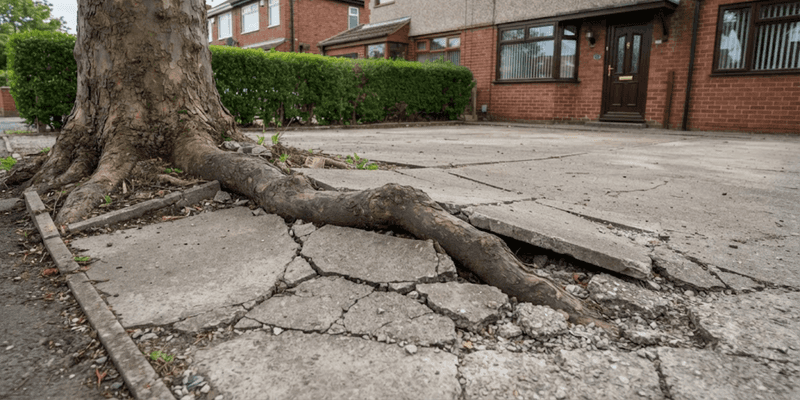
Two different stories often get blended together. In one, roots push up on sound pavement and crack it.
In the other, pavement cracks for some other reason, and roots then grow into the opening and help lift the slab. The UF/IFAS root and pavement guidance notes that cracks can invite root growth, so the tree may be a latecomer rather than the starter.
Roots tend to grow where conditions allow it. They are not hunting for your driveway.
University of Maryland Extension explains that compacted soil can limit root growth, and UF/IFAS Extension in Duval County describes roots following workable space. The loose, moist ground along a crack or beneath a slab edge can be exactly that kind of space.
The 2026 research summary covers root-growth experiments and modeling for sidewalks. It is not a field study of North Carolina driveways or of crape myrtle roots.
Treat all of this as a way to think about your driveway, not a verdict on it. Roots may contribute to lifting in some spots, and the same slab may be moving for other reasons too.
Unevenness offers clues, not an early-warning clock
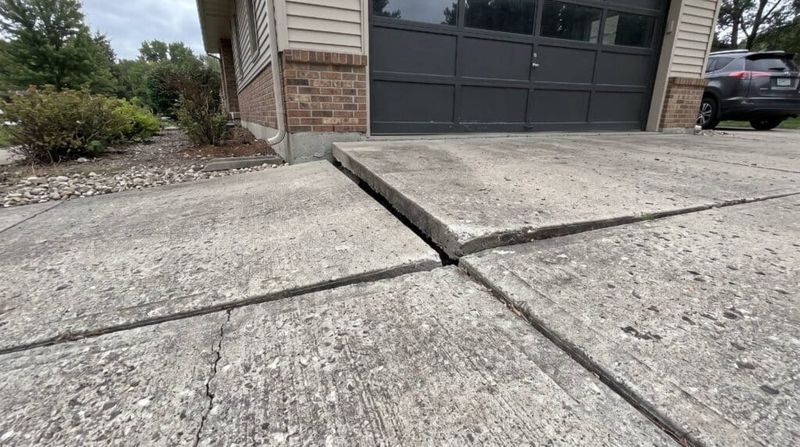
Grab your phone and a tape measure, because good notes beat guesses. Mark where the pavement is raised, uneven, or cracked, and photograph each spot with something for scale.
Repeat the photos every few months so you can see whether anything is actually changing.
Next, look at what sits near each problem area. Is the crape myrtle trunk close by?
Are roots visible at the surface? UF/IFAS advises checking whether roots are really responsible before choosing a repair, since cracking happens with or without trees.
Then watch the water. Note where rain runs off the driveway, where puddles linger, and whether soil beside the slab has washed out or sunk.
Roots grow where conditions suit them, as UF/IFAS Extension explains, so moisture patterns matter for roots and for soil alike.
These observations can guide a professional assessment. They cannot prove roots caused the damage, and they cannot tell you when a crack will show up.
A slightly raised edge may stay put for years or change quickly, and nobody can reliably call it ahead of time.
North Carolina soil can move beneath a driveway
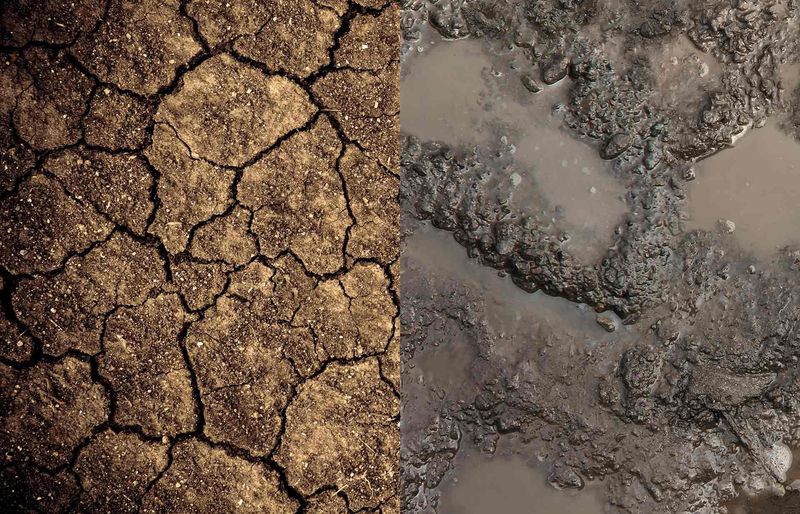
Some soil simply moves, with no tree involved. According to the North Carolina Department of Environmental Quality, expansive clay can swell when wet and shrink when dry.
That can cause heaving in some places and settlement in others.
Whether that applies to your yard depends on your soil. North Carolina varies from mountain slopes to Piedmont red clay to sandy Coastal Plain ground, and not every property has expansive clay.
Having clay in your yard does not automatically explain a specific crack either.
Picture a driveway where one corner rises after a wet spring and settles after a dry summer. A crape myrtle nearby might be innocent, partly involved, or the main factor.
Without site-specific evidence, nobody can say which.
That is why the nearest tree should not be the only suspect. Poor drainage, soft fill under the slab, and soil movement all belong on the list next to roots.
Considering all of them keeps you from removing a healthy tree or paying for a repair that fixes the wrong problem.
Crape myrtle size matters more than a blanket root label
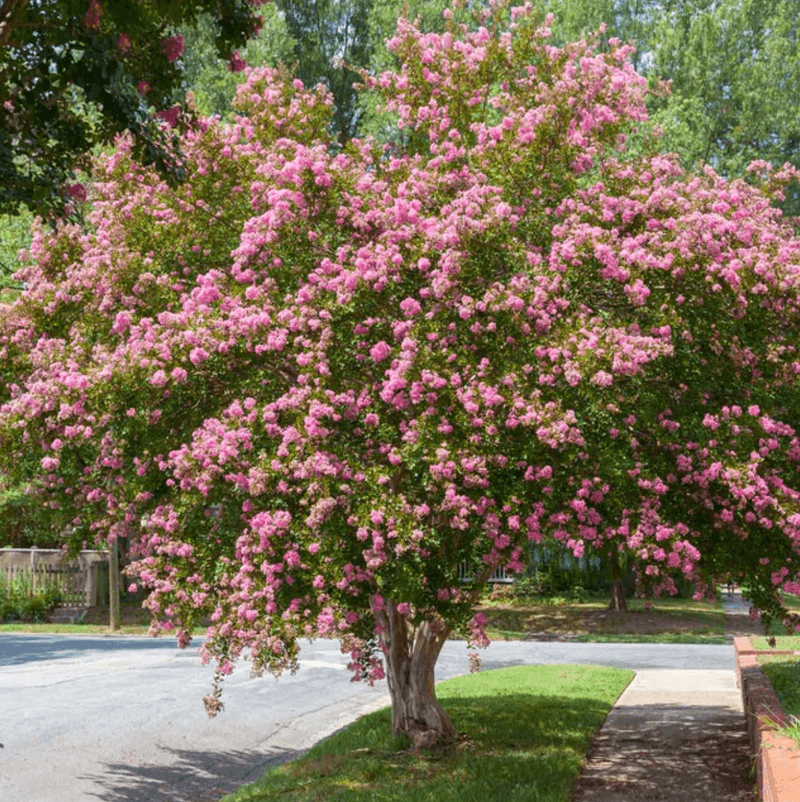
Crape myrtles come in everything from compact shrubs to tall multi-trunk trees, so one label for all of them does not hold up. Calling their roots harmless is too sweeping, and so is calling them destructive.
A University of Maryland Extension response notes that they vary in size and does not describe them as having aggressive roots.
Size and site conditions are what count. A large, mature tree planted tight against a slab has a different relationship with pavement than a small cultivar given breathing room.
Soil, moisture, and the state of the pavement all shape what happens underground.
If you are planting new, look up the cultivar before you buy. The NC State Plant Toolbox page on crape myrtle offers plant information, though it does not give a driveway setback or a root-damage threshold, so no magic distance exists to quote.
Instead, match the expected mature size to the space you really have. Measure the planting area, picture the full-grown tree, and choose a cultivar that fits without crowding the pavement.
Assess the tree before choosing a repair
Online advice often says to just cut the root. Resist that.
UF/IFAS warns that cutting roots close to the trunk can compromise a tree’s stability, and no generic rule says how much root is safe to remove. Root-killer products are not a safe shortcut either.
If roots look involved, call a qualified arborist before any pruning. A good one can check which roots are large and structural, how the tree is anchored, and whether the tree is healthy enough to tolerate changes.
That visit can also tell you whether roots are really the problem.
Establishing responsibility comes first. Pavement may be lifting from soil movement, drainage, or an old crack that roots have simply moved into.
Paying for a root fix when water is washing out the base would waste money and may hurt the tree.
When it is time to repair, ask contractors about options that avoid damaging major roots. Depending on the site, that might mean working around roots rather than removing them.
Get the assessment first, and let it shape the repair.
Investigate the clues without guessing at the cause
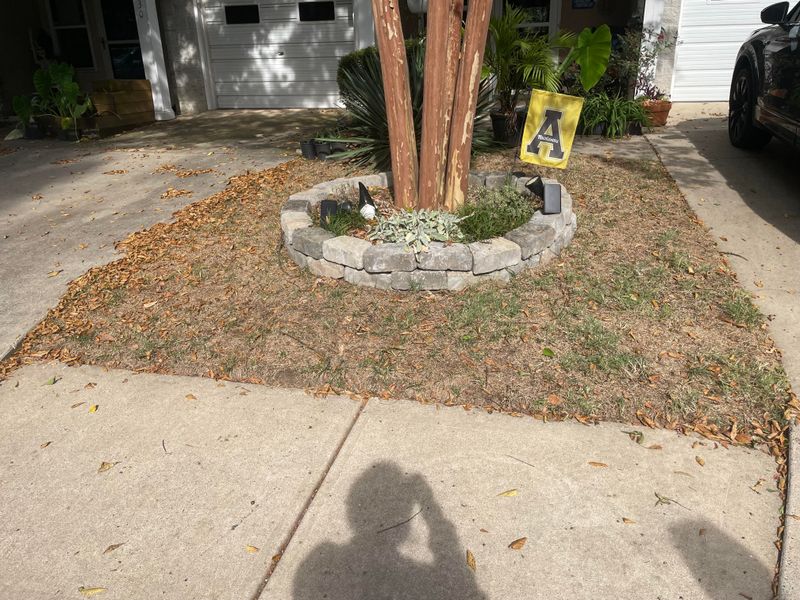
Start with notes and photos of what the pavement is doing. Treat roots and soil as evidence to investigate, since UF/IFAS and NC DEQ both point to more than one possible cause.
Ask a qualified arborist before cutting roots, and get expert input before settling on a repair. You can act responsibly without blaming the tree or waiting on a warning that may never come.
A crack near a tree is a question, not an answer.