
Skip the Hard Fall Cut on Your Hydrangeas: Gentle Winter Prep That May Help Protect Next Year’s Buds
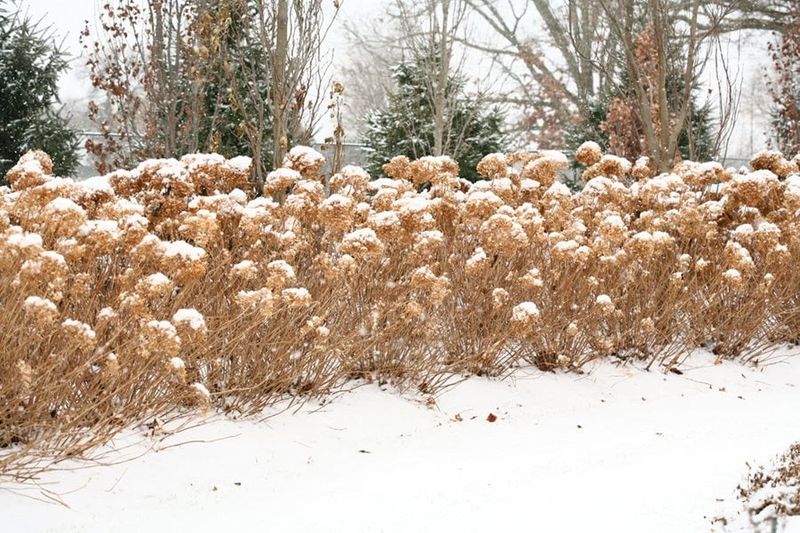
Fall cleanup makes many gardeners reach for the pruners, and hydrangeas often get caught in the sweep. But some hydrangeas already carry next summer’s flower buds on their stems by now.
A few simple, climate-aware steps can help your plants get through winter, even though no step can promise blooms.
A fall haircut can remove next year’s flowers
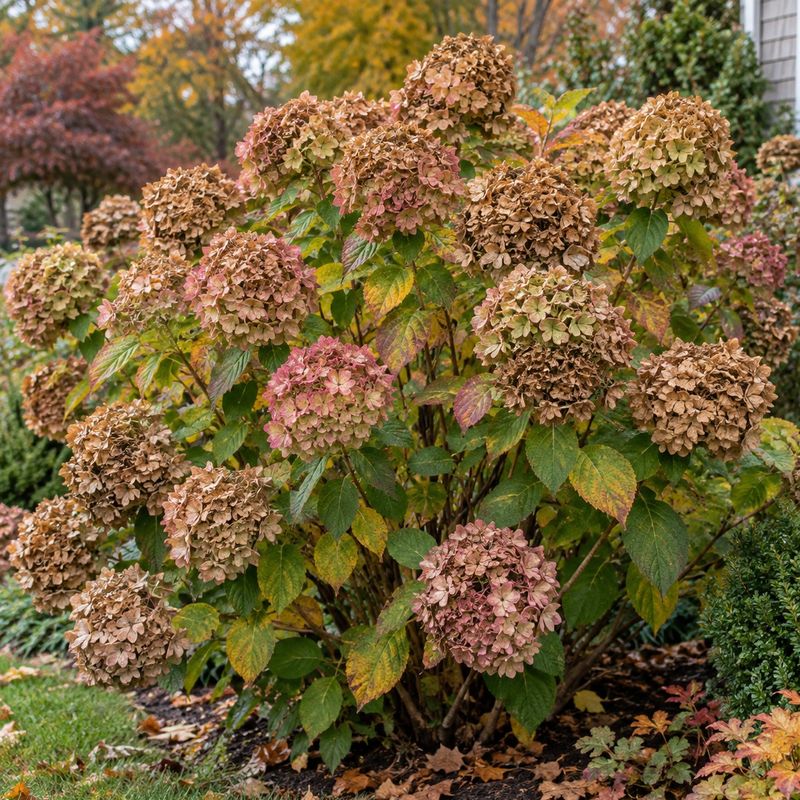
Bigleaf, oakleaf, and mountain hydrangeas generally set their flower buds on older stems. According to University of Minnesota Extension pruning guidance, these types bloom on old wood, so a hard cut in fall can remove the buds before they ever open.
The result is usually fewer flowers or none next summer.
The plant itself is rarely in danger. A hard fall cut on an old-wood hydrangea is more likely to cost you blooms than to kill the shrub, which can regrow leafy stems and try again the following year.
Winter weather adds its own risk. Bigleaf buds form from late summer into early fall, and Washington State University Extension notes that cold, drying winds and late frosts can damage those buds and reduce flowering.
So even a plant you leave unpruned may lose some blooms in a rough season.
It helps to think of two separate jobs. One is looking after the roots, which mulch can do.
The other is shielding exposed stems and buds, which takes a different, optional step. Neither one guarantees flowers, but both can improve your odds, and neither requires the pruners.
Which hydrangea do you have?
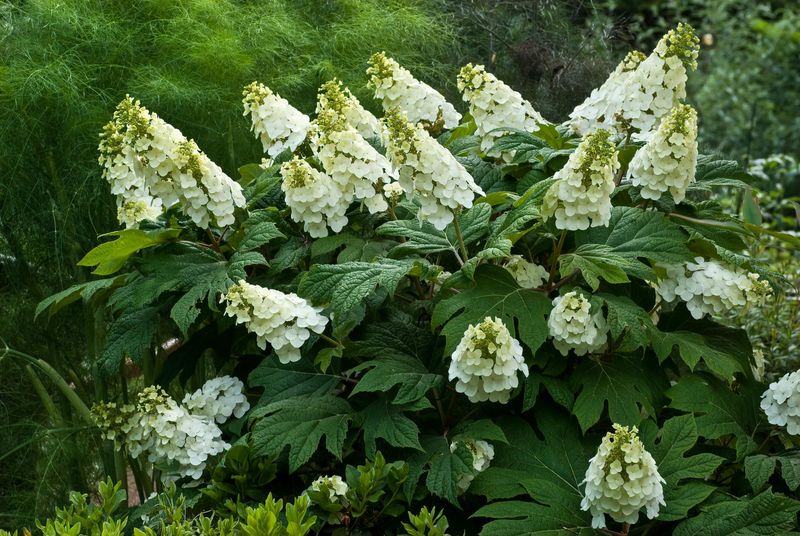
Before you do anything this fall, figure out what you are growing. Bigleaf (Hydrangea macrophylla), oakleaf (H. quercifolia), and mountain hydrangeas generally bloom on old wood, meaning stems that grew the previous season.
Those stems are the ones to leave alone in fall.
Panicle (H. paniculata) and smooth (H. arborescens) hydrangeas are different. They bloom on new growth, as University of Georgia Extension in Forsyth County explains, so they do not rely on the same old-stem buds.
They can be pruned at a different time, but that does not mean they need a hard fall cut. Waiting until late winter or early spring is a calm default.
Not sure which type you have? Look at the flowers and leaves.
Cone-shaped blooms point to panicle, big white snowball heads to smooth, and lobed leaves shaped like oak leaves to oakleaf. Plant tags and photos from the nursery can help too.
Reblooming bigleaf cultivars add a twist. Some can flower on both old and new wood, according to University of New Hampshire Extension.
That gives them a second chance, but a severe winter can still injure them, and reblooming is no promise of flowers.
Mulch the roots after the soil cools
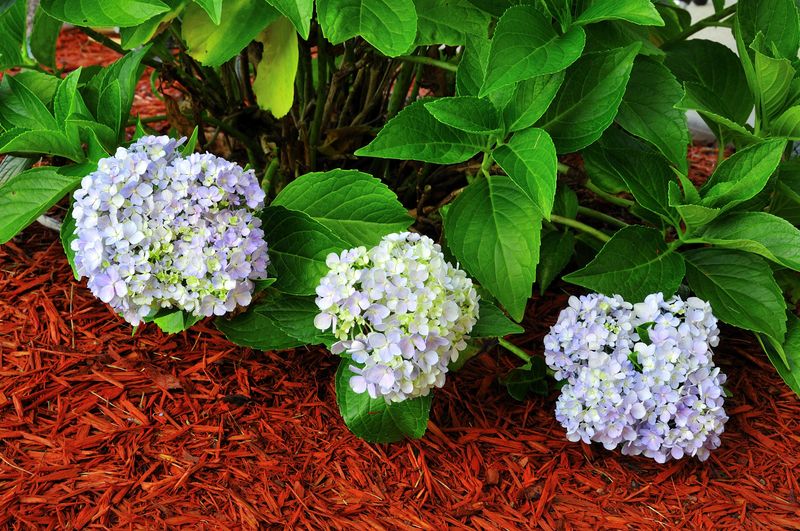
Mulch is a root-zone tool. A layer of organic material such as shredded bark or chopped leaves insulates the soil, helps hold moisture, and reduces sharp swings in soil temperature, as described by Colorado State University Extension.
It does not cover the flower buds on exposed stems, so think of it as protecting the roots only.
Depth and timing vary by place. Oregon State University Extension suggests about 3 to 4 inches after the soil cools, while University of Georgia Extension recommends 3 to 5 inches for bigleaf hydrangeas.
In colder states, the goal may be to mulch around the time the ground starts to freeze, as University of Minnesota Extension describes for perennials. No single date or depth fits every yard, so check with your local Extension office.
When you spread it, pull the mulch back an inch or two from the stems. Mulch piled against the wood can hold moisture where you do not want it.
A neat, donut-shaped ring does the job.
Shelter exposed old-wood stems only when winter calls for it
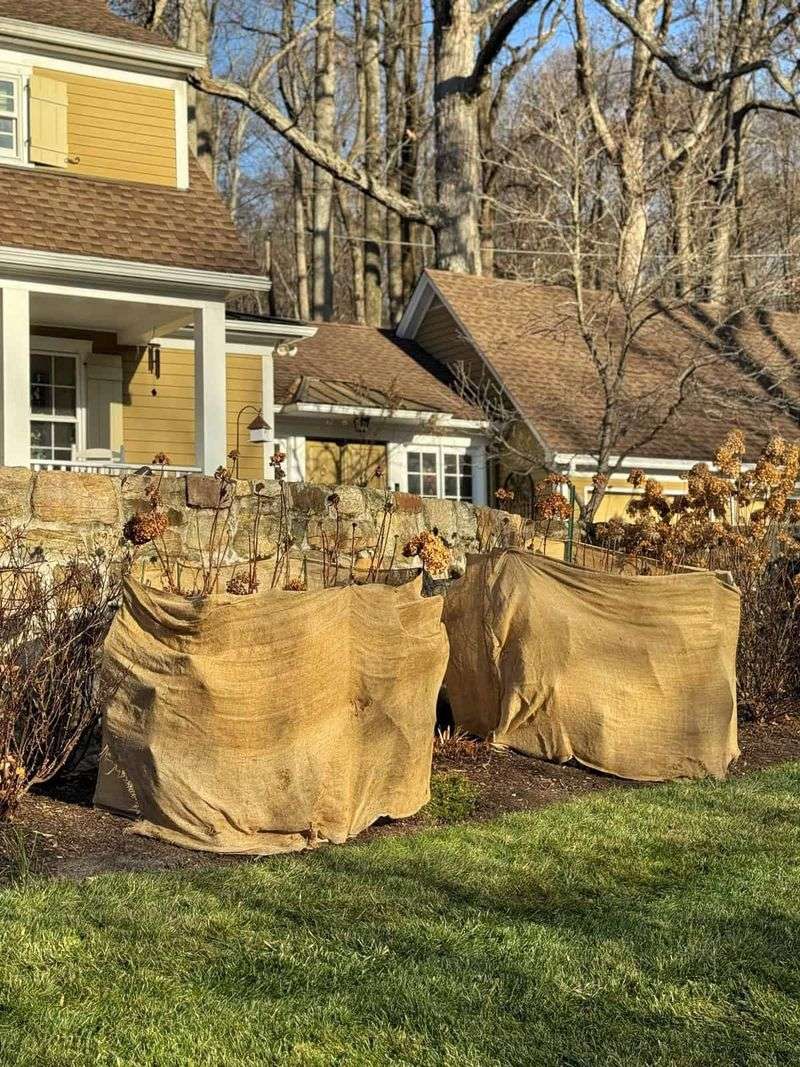
Some gardens need more than mulch. If you grow an old-wood hydrangea in a cold or windy spot, a wire-mesh cylinder loosely filled with leaves may offer some protection to stems and buds, as outlined by the University of Connecticut Extension.
It is an optional, targeted step, not a rule for every plant.
To build one, set stakes around the shrub and wrap wire mesh around them to make a loose ring. Work gently so you do not snap branches.
Then fill the space with dry leaves, keeping them loose rather than packed tight.
Panicle and smooth hydrangeas generally do not need this treatment, and neither do old-wood types growing in mild climates or sheltered corners. Need depends on the cultivar, the winter, and how exposed the site is.
Plan on taking it down in spring. University of New Hampshire Extension advises removing protection as buds begin to swell, or once local guidance says the danger of hard frost has passed.
Be realistic about the payoff. In harsh conditions, even wrapped plants may still lose blooms, as another UNH Extension post points out.
Water during a dry winter, not by the calendar
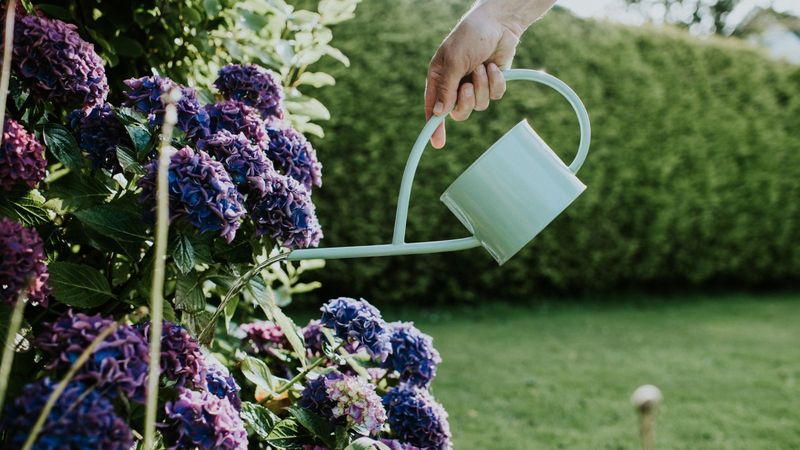
Hydrangeas do not need a winter watering routine. The trigger is a long stretch of dry weather in fall or winter, when roots can dry out and suffer damage.
If rain or snow has been normal, you can skip it.
When it is dry, timing matters. Colorado State University Extension advises watering only when air and soil temperatures are above 40°F and there is no snow cover.
That is guidance for Colorado’s dry climate, not a nationwide schedule.
Your own numbers may differ. A gardener in a wetter or warmer region may rarely need to water, while someone in a windy, dry spot may need to check more often.
Local Extension offices can tell you what counts as a dry spell where you live.
If you do water, a slow soak at the base of the plant on a mild afternoon is enough. Skip it when the soil is frozen, since the water will not soak in.
Wait for spring to make the final cut
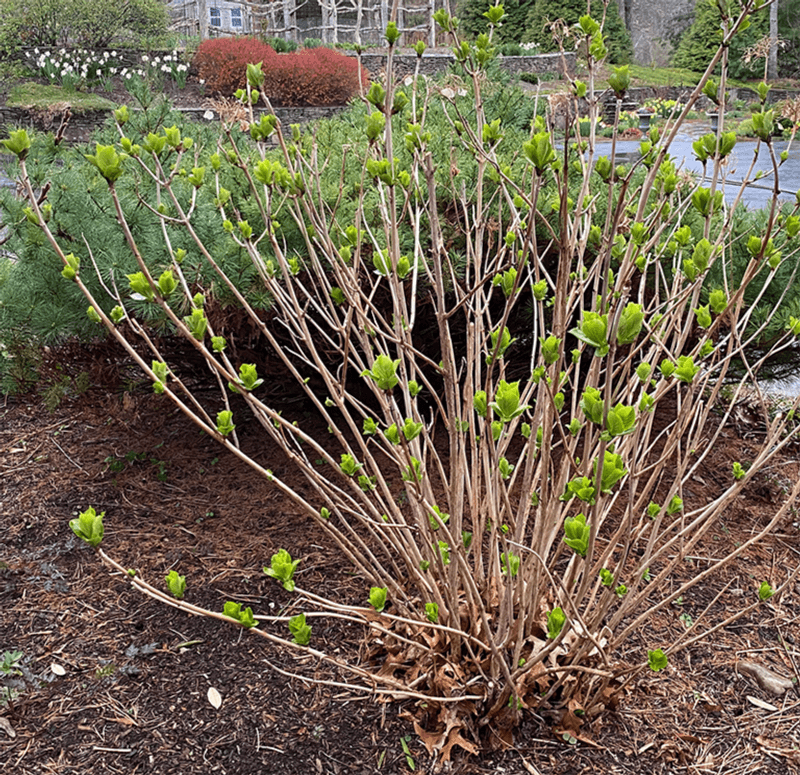
Put the shears away until the plant shows you what survived. In spring, once buds start to swell, you can see which stems are alive and which are dead or damaged.
That is the time to take off winter protection too, following your local frost cues.
Gentle tests help. Look for green tissue under the bark or fresh buds along a stem.
Remove only the growth you can clearly tell is dead or damaged, as University of Minnesota Extension and University of New Hampshire Extension both recommend assessing before cutting. Panicle and smooth types follow their own, later schedule.
Knowing your type, mulching the roots, and sheltering exposed stems where it makes sense can all help. None of them can promise flowers.
Sometimes the best pruning move is simply patience.