
Some Fallen Succulent Leaves On Your Windowsill Can Become New Plants, Here’s How
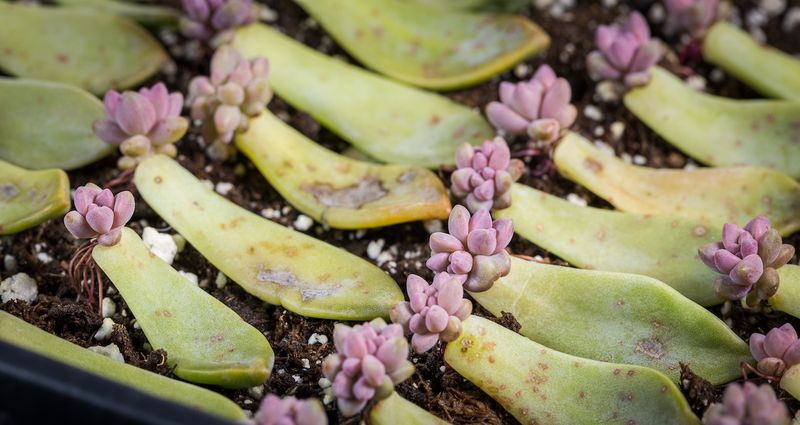
Found a few leaves on your windowsill beneath your jade or echeveria? Before you toss them, know that some of them can grow into brand new plants.
It takes a little sorting, a few simple supplies, and a lot of patience. Here is how to give those fallen leaves a fair shot without expecting miracles.
Which fallen leaves are worth saving?
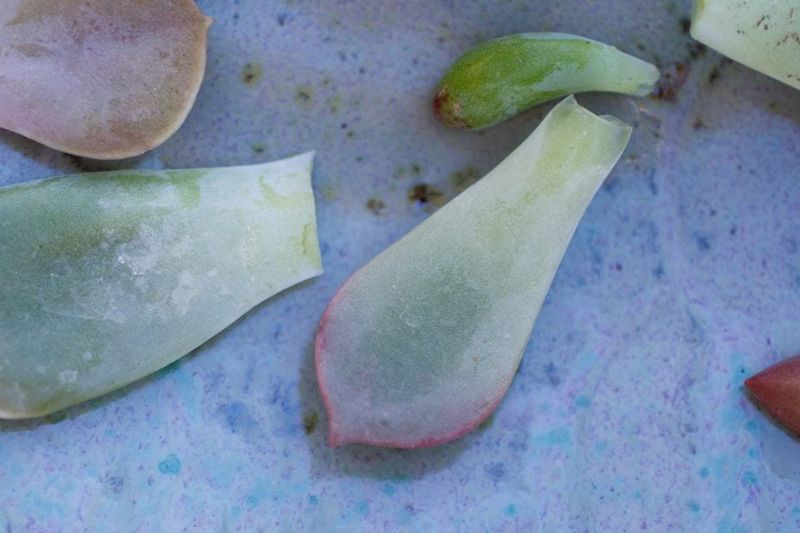
Scoop up everything that fell, then sort it into two piles. Firm, plump, fleshy green leaves go in the try-me pile.
Leaves that are shriveled, crispy, mushy, spotted, or visibly damaged go in the compost. West Virginia University Extension recommends healthy, fleshy green leaves for propagation, so freshness is your first filter.
A dry leaf is not a sign you did something wrong. Iowa State Extension explains that lower leaves on many succulents, especially rosette types like echeveria, sometimes dry out completely and drop as part of normal growth.
Those papery leaves have finished their job and will not root.
On the flip side, a plump leaf on the sill does not prove your plant is thriving, either. One or two fallen leaves tell you very little about the plant’s overall health.
If a lot of leaves are dropping suddenly, that is a separate question worth looking into on its own.
For now, keep the goal simple. You are only choosing which leaves deserve an experiment.
Expect that some of even your best-looking leaves may not make it, and that is perfectly normal.
The attachment point is the starting line
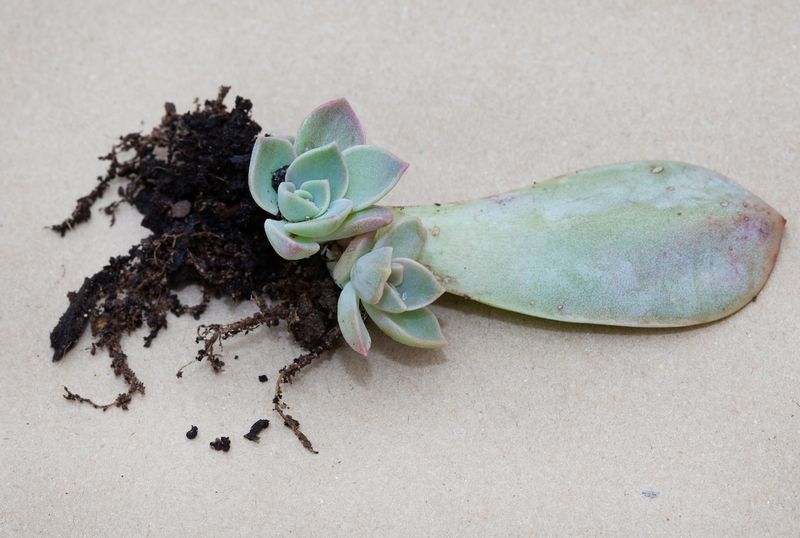
Look at the end of the leaf that used to touch the stem. That spot holds the tissue that can form new roots and shoots.
Iowa State Extension notes that for the usual leaf-cutting method, the whole leaf and its attachment tissue need to be intact. A leaf that snapped in half or tore off with a ragged stub is a long shot.
Not every succulent plays by the same rules. The method depends on the species and its growth habit.
Iowa State lists Graptopetalum, Pachyphytum, Sedum, Crassula, and Kalanchoe as examples that can be grown from leaf cuttings. Some other succulents need stem cuttings or offsets instead.
Jade is a handy example if you have one. Wisconsin Extension says jade leaves or pieces that break off and fall to the ground can root.
Treat these lists as a hint, not a guarantee. Being on the list means a plant has a chance, not that every leaf will succeed.
If you are unsure what you own, try a few leaves anyway and see what happens, since the cost is close to nothing.
Let the broken end callus
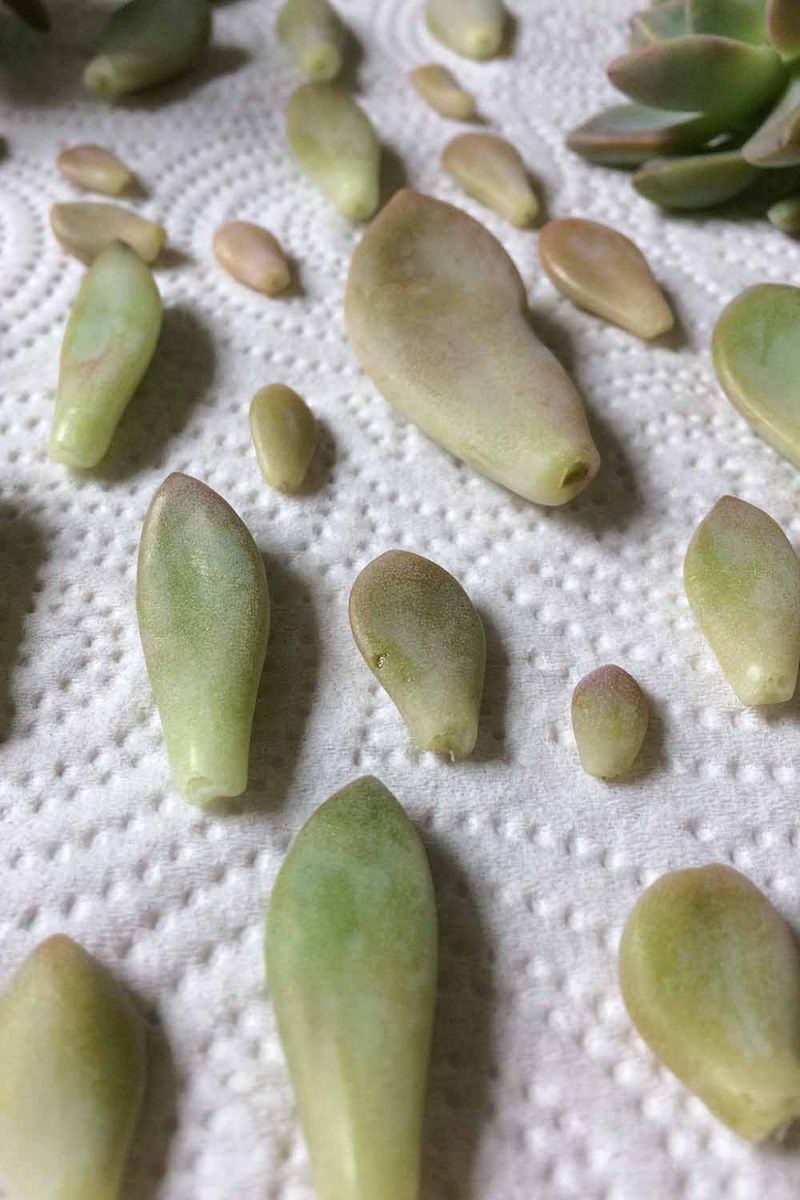
Cut or broken ends are open wounds, and wet soil can invite rot. So the first step is simply waiting.
Lay your chosen leaves on a dry tray or paper towel, out of direct harsh sun, and let the broken ends dry and form a callus.
How long does that take? Guidance varies.
Illinois Extension gives a window of four to seven days. For jade, Wisconsin Extension says a few days is enough.
Instead of counting on one magic number, check the leaf. The end should look dry and sealed, not wet or glistening.
Thicker leaves and humid rooms may take longer, while thin leaves in dry air may be ready sooner.
Here is the catch. The dry tray is just a waiting room.
Leaves will not turn into plants by sitting on it, and many will eventually shrivel if left there too long. Once the ends have calloused, move on to the next step.
Move the leaves onto rooting medium
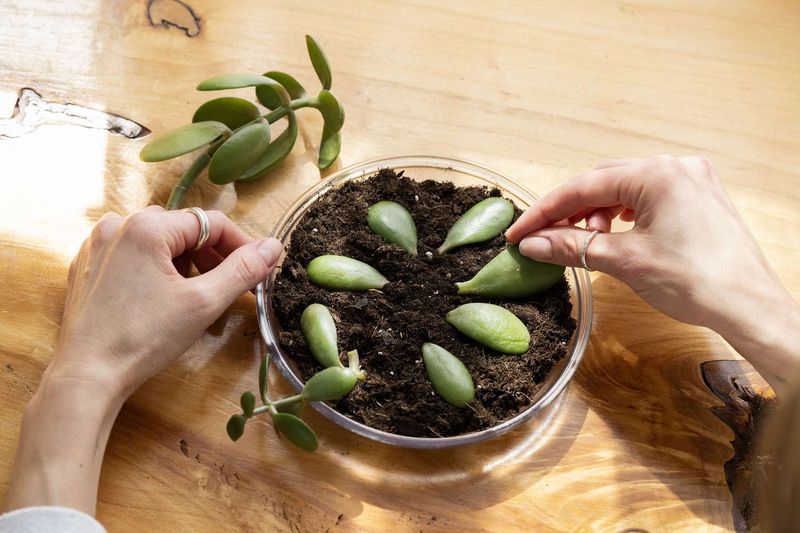
Once the ends have calloused, fill a shallow tray or pot with a well-drained mix, such as cactus and succulent soil. Mist it or moisten it lightly so it is slightly damp.
Heavy, soggy potting soil is the wrong choice here.
Now lay each leaf on top. Iowa State Extension advises placing the original attachment end at the surface rather than burying it.
You are resting the leaf on the medium, not planting it.
Give each leaf a little breathing room so they do not crowd or touch. A flat tray makes this easy, and it lets you check on them without disturbing anything.
This is where the free part meets reality. Your leaves cost nothing, but the tray alone is not enough.
You will need a bag of suitable soil or a gritty mix, and that small purchase is what turns a waiting room into a real propagation setup. Keep the medium damp, not wet, as the cuttings get started.
Give cuttings light without keeping them soggy
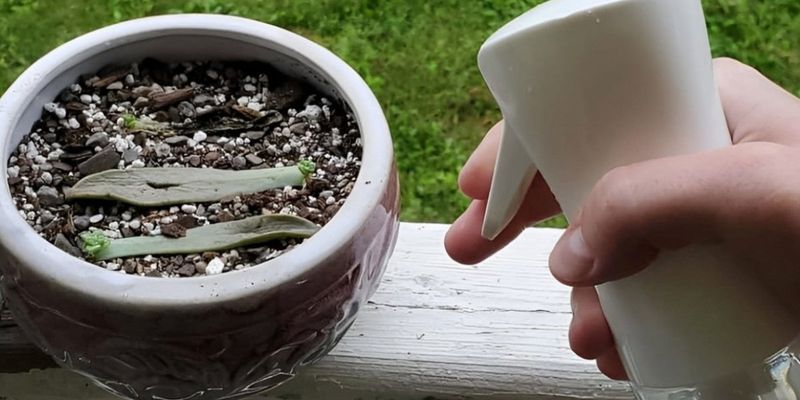
Park the tray where it gets bright, indirect light. A spot near a sunny window works well if a sheer curtain or distance softens the rays.
Iowa State Extension recommends bright indirect light for indoor succulents, and young cuttings are even more delicate than mature plants.
Water is where most people go wrong. West Virginia University Extension warns that excessive watering can cause cuttings to rot.
A soggy medium is the quickest way to lose your whole batch.
Aim for damp, not wet, the same standard Iowa State gives for the rooting setup. A light misting when the surface looks dry is often enough.
Skip a rigid schedule, because your room’s warmth, airflow, and humidity change how fast the medium dries.
Even with good light and careful watering, some leaves will fail. Shriveling, turning translucent, or going mushy are all possible outcomes.
Remove any rotting leaf so it does not affect its neighbors, and keep going with the rest.
When might you see roots or shoots?
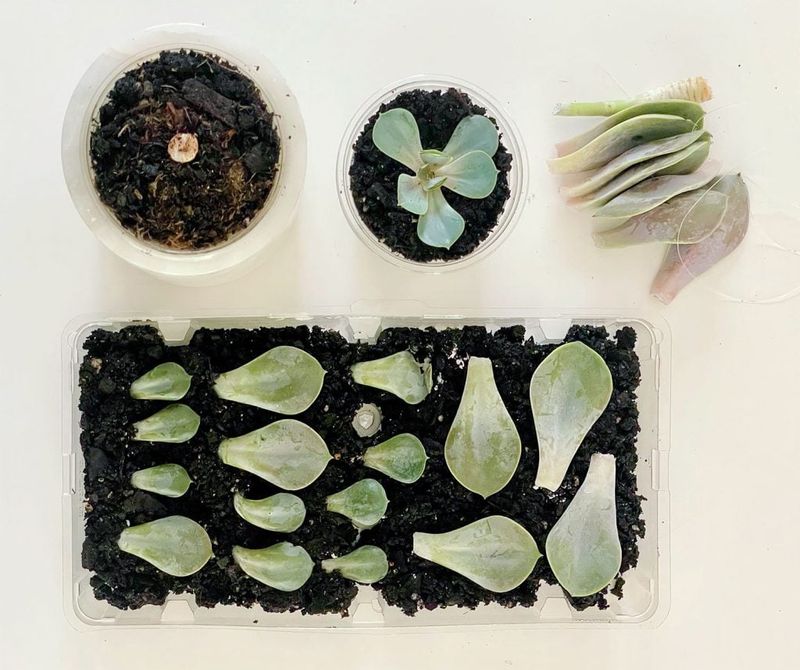
Patience is the main tool here. Iowa State Extension says new roots and shoots may form after several weeks.
Tiny pink threads or a miniature rosette at the leaf base are the first signs.
Illinois Extension describes small plants forming over a month or two, and notes that leaf cuttings take longer to become good-sized plants than stem cuttings do.
Results will vary by species and by the condition of each leaf. You may end up with a handful of baby plants from a pile of leaves, or just one or two.
A full tray is not the realistic goal.
Think of this as a slow, low-cost experiment with leaves you would have thrown away. Some will teach you something, and a few might surprise you with a tiny rosette.